Best Thermal Monocular
Thermal monoculars have dropped far enough in price that the question has shifted from whether to buy one to which one actually performs at the price you're willing to pay. The gap between a $300 entry-level unit and a $2000 professional device is real and measurable in detection range, image clarity, and display quality - but plenty of buyers overspend on specs they'll never use in the field. I've worked through seven models across different use cases, from casual wildlife observation to serious hunting, to find out where the value actually sits in this category.
The specs that matter most aren't always the ones listed prominently. Sensor resolution and detection range get the marketing attention, but display type, battery runtime, and lens size often determine whether a device is genuinely useful in cold, dark field conditions. Here's what to look at before buying.
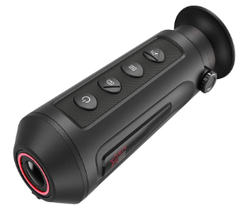
If you're short on time and looking for the best thermal imaging monocular, here's my top 2 recommendations:
We may earn a small commission if you buy via our links - it helps keep gagadget.com running.
Table of contents:
- Best Thermal Monocular - Buyer's Guide
- Best Thermal Monoculars - TOP 7
- Best Thermal Monocular for Hunting: Comparison
- FLIR Scout TK
- AGM Global Vision TM160
- Pulsar Helion 2 XP50 Pro
- MiLESEEY T-Recon Tactical TNV30
- ATN ODIN LT 320
- FLIR Scout III 320
- AGM Global Vision Fuzion LRF TM35-640
- FAQ about Best Thermal Monocular
Best Thermal Monocular - Buyer's Guide
Based on my experience, several factors make a significant difference in real-world performance that spec sheets don't always make obvious. Here's what to check before you buy.
Lens Material and Size
Unlike standard optics that use glass, thermal monoculars use germanium lenses because infrared light cannot pass through glass. Germanium is transparent to infrared wavelengths, allowing heat signatures to reach the sensor accurately. The larger the objective lens, the more infrared energy the sensor captures - which directly improves detection in low-light or nighttime conditions.
Lens diameter affects low-light sensitivity the same way it does in conventional optics - a larger aperture gathers more signal, which means cleaner images at longer ranges and in colder conditions where heat signatures are weaker and harder to distinguish from background temperature.
Sensor
The sensor, also called a microbolometer, converts infrared radiation into an electrical signal for processing. Sensor resolution determines image detail - a 384x288 sensor produces 110,592 pixels, while a 640x480 sensor more than doubles that to 307,200. The difference shows up clearly when trying to identify animals at distance rather than simply detecting their presence.
For example, Pulsar Helion 2 XQ38 has 384x288 pixels and the Pulsar Helion 2 XP50 has 640x480 pixels - the second produces noticeably more detailed images at the same range.
Resolution
Display resolution determines how much detail you see through the eyepiece after the sensor data is processed. High-end devices typically use HD resolution such as 1280x960, while entry-level models may output 720x540 or lower. Higher display resolution matters most when scanning for animals at the edge of detection range, where small details determine whether you can make a positive identification.
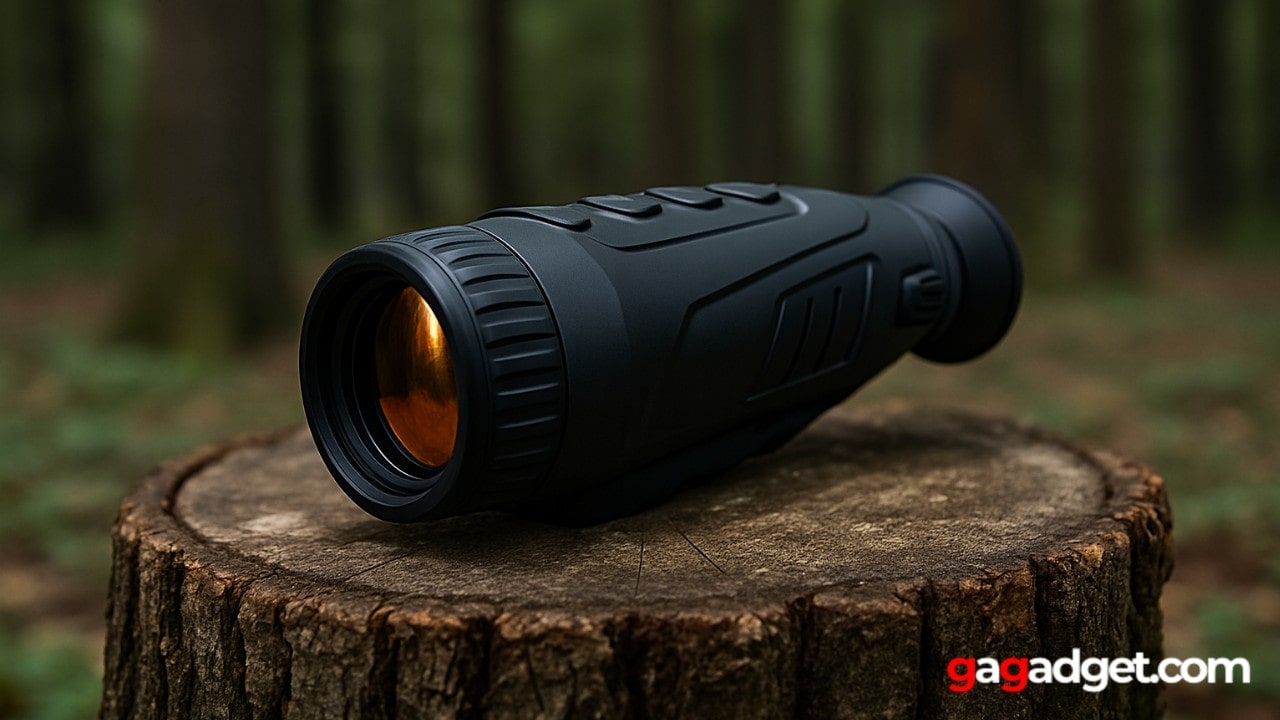
Best Thermal Monocular. Source: AI
Type of Display
LCD displays are common in lower-cost units but stop functioning reliably below 15°F - a real limitation for cold-weather hunting. AMOLED and OLED displays handle low temperatures without performance loss and produce better contrast, which helps in distinguishing heat signatures from cool backgrounds. If you hunt or operate in temperatures below freezing, display type is a non-negotiable spec.
Base Magnification
Most thermal monoculars offer between 2.5x and 4x base magnification. Higher magnification helps at longer ranges but narrows the field of view, making it harder to scan quickly. Lower magnification covers more ground faster but limits your ability to identify targets at distance. Your hunting environment and typical engagement distance should drive this choice.
Detection Range
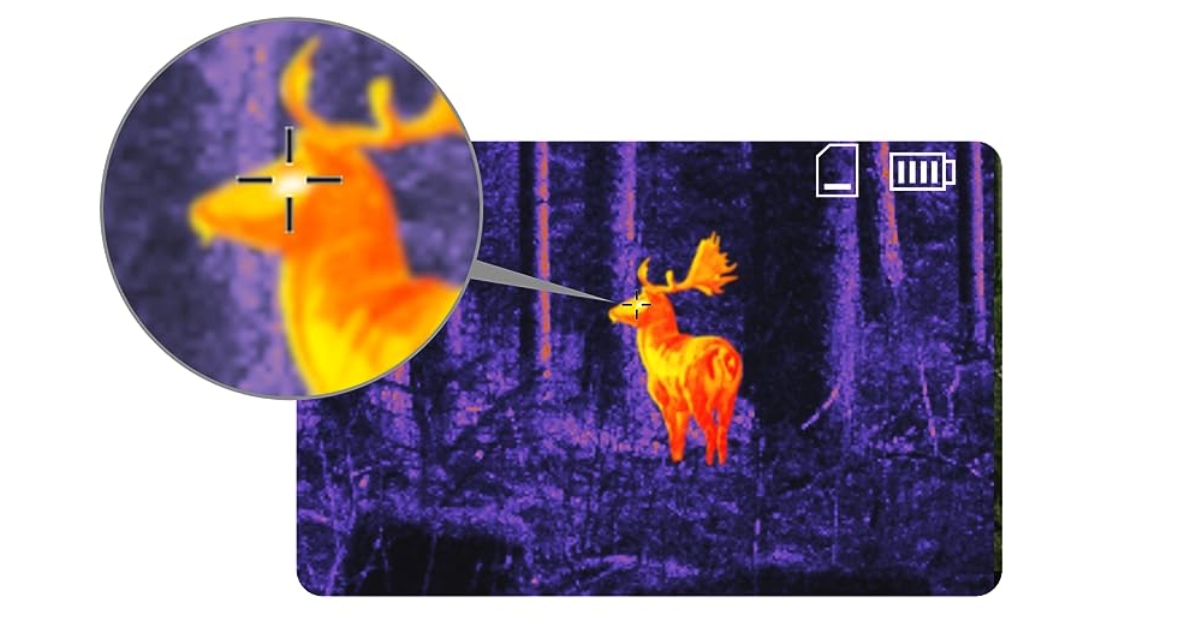
Detection range is determined by sensor size and zoom level - larger sensors and higher magnification extend how far out you can spot a heat signature. Keep in mind that detection range and identification range are different figures. Detection tells you something is there. Identification lets you determine size, shape, and species. Lens quality, display resolution, and focus speed all affect identification range more than they affect raw detection distance. You can read more in our related review - Exploring the Viewing Range of Binoculars.
Battery Life
Runtime varies from around 4 hours on compact units to 10 hours or more on larger devices. For full-day hunts, look for a model that either meets your expected field time on a single charge or supports user-replaceable batteries. Built-in rechargeable batteries are convenient but leave you without options if the charge runs out mid-session.
Waterproofing and Durability
Check the IP rating before buying for any outdoor application. An IP67 rating confirms the device is dustproof and can handle submersion in water for up to 30 minutes - adequate for rain and wet vegetation. Higher ratings offer more protection for harsher conditions. You can read more about waterproofing standards in our related review - Waterproof and Fogproof Features in Binoculars and Monoculars.
Best Thermal Monoculars - TOP 7
Discover my curated list of the best thermal monoculars, offering unmatched performance, durability, and unique features.
- Resolution: 160×120
- Detect Man: 100 yards (90 m)
- Batteries: 5-hour Rechargeable
- 2×, 4×, 8× digital zoom
- Identification range of 50 yards
- Resolution: 160×120
- IPX7 waterproof
- Built-in WiFi
- Detection distance up to 2000 yds ( 1828,8 m)
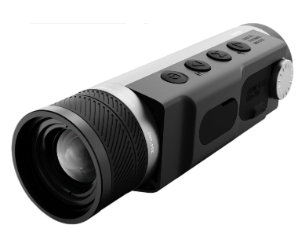
- Resolution: 384*288
- Detect Range: 1600 Yards
- Battery Life: up to 15 hours
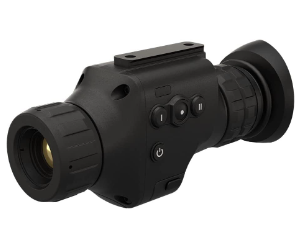
- Display Resolution: 1280x960 px
- IP rating: Weather resistant
- Charging: USB, type C port is on the Optional Rechargeable Battery
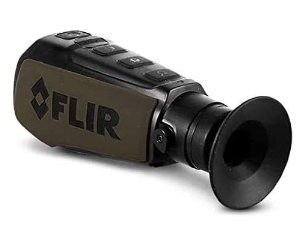
- Display: 640 x 480 LCD
- Detect Man: 550 M
- IP67 Waterproof
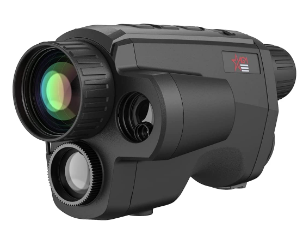
- Resolution: 1024×768
- Wi-Fi, Waterproof
- Up to 5 hours of continuous battery life
Best Thermal Monocular for Hunting: Comparison
Let's take a closer look at each Thermal Monocular to understand which one suits you better.
| Thermal Monocular | Resolution | Detect Range | Special Features |
|---|---|---|---|
| FLIR Scout TK | 160x120 pixels | Up to 100 yds (91 m.) | Compact, pocket-sized design, image and video recording |
| AGM Global Vision Asp-Micro TM160 | 160x120 pixels | Up to 200 yds (183 m.) | Compact, lightweight design, Wi-Fi connectivity |
| Pulsar Helion 2 XP50 Pro | 640x480 pixels | Up to 2,000 yds (1.8 km) | High-resolution imaging, image and video recording |
| MiLESEEY T-Recon Tactical | 384×288 pixels | Up to 1300 yds ( 1.1 km) | Rugged design, multiple color palettes |
| ATN ODIN LT 320 2-4X Compact | 320x240 pixels | Not specified | Compact design, image and video recording |
| FLIR Scout III 320 | 320x240 pixels | Up to 600 yds (549 m.) | Compact, lightweight design, image and video recording |
| AGM Global Vision Fuzion LRF TM35-640 | 640x512 pixels | Up to 2,000 yds (1.8 km) | Laser rangefinder, high-resolution imaging, Wi-Fi connectivity |
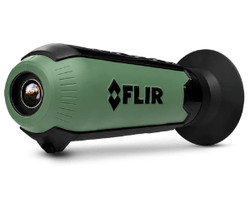
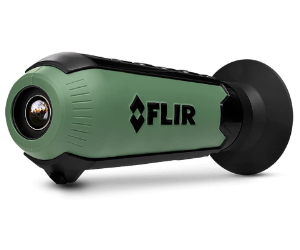
FLIR Scout TK Handheld Thermal Imaging Monocular Review
Editor's Choice
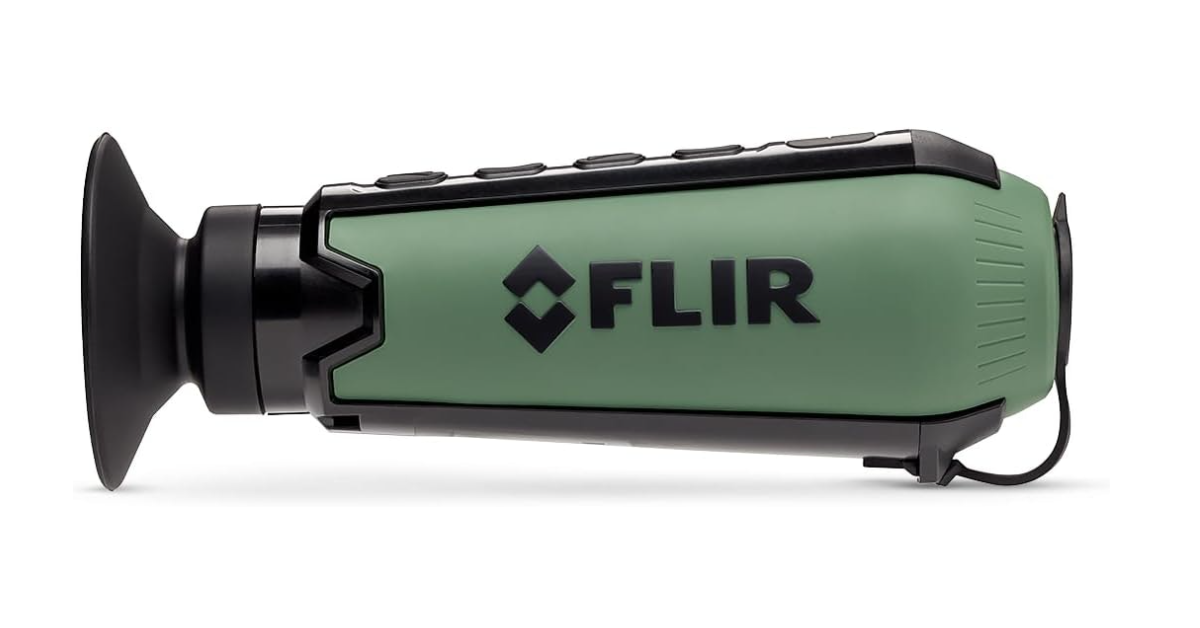
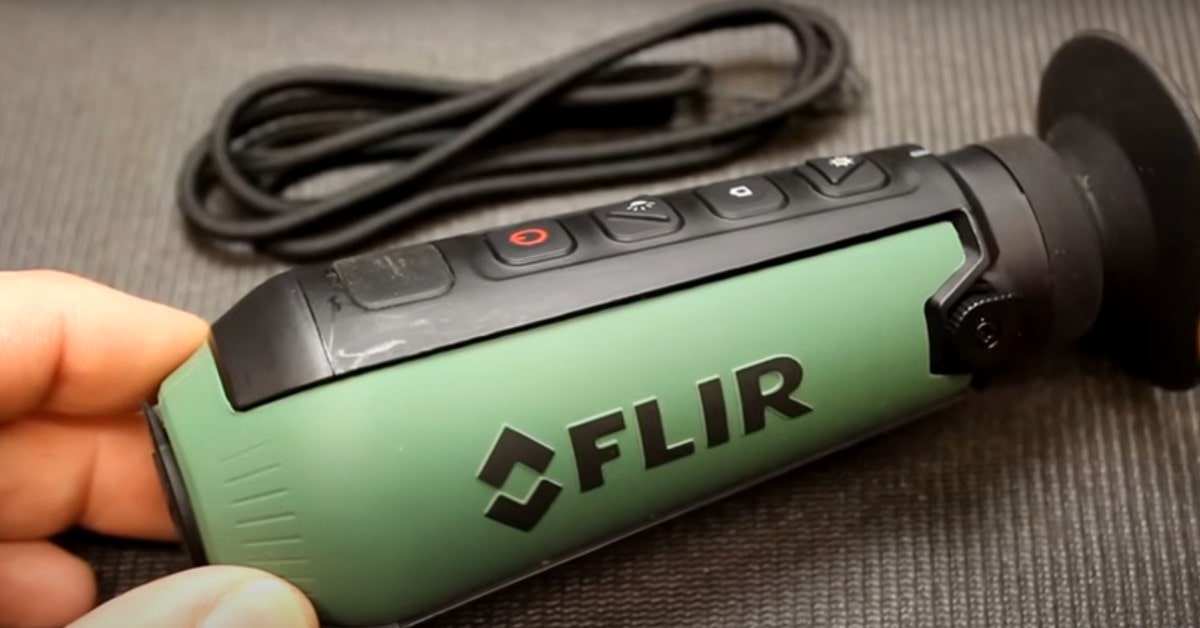

The FLIR Scout TK is a handheld thermal monocular that allows you to see thermal signatures in total darkness. It is pocket sized and designed for one-handed use, with a simple four button design and an intuitive interface. The Scout TK is also a great everyday tool for personal safety and security at home at night, for exploring outdoors at night and in low light conditions, and for hunting.
The Scout TK reveals your surroundings and helps you see people, objects and animals from over 100 yards (90 m) away. Supplied with: Handheld thermal monocular, neck lanyard, USB cable, lens cap. image capture: short press for image capture, long press for video capture.
Pros:
- Detector: VOx Microbolometer
- Resolution: 160×120
- Display: 640X480 LCD
- FOV (HxV): 20°×16°
- Batteries: 5-hour Rechargeable
- Weight: 6 oz (170 g)
- Size: 6.0"x2"x2"
Cons:
- The battery lasts for hours, but if you do not use it for a long time, it also runs down by itself, Detects a Human: 100 yards (90 m)
Summary: After trying out this product, I can say that the FLIR Scout TK is a compact, one-handed thermal monocular designed for detecting thermal signatures in complete darkness and helps in personal safety, night exploration, and hunting by identifying people, objects, and animals from over 100 yards away.
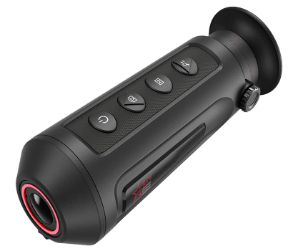
AGM Global Vision Asp-Micro TM160 Thermal Monocular Review
Best Overall
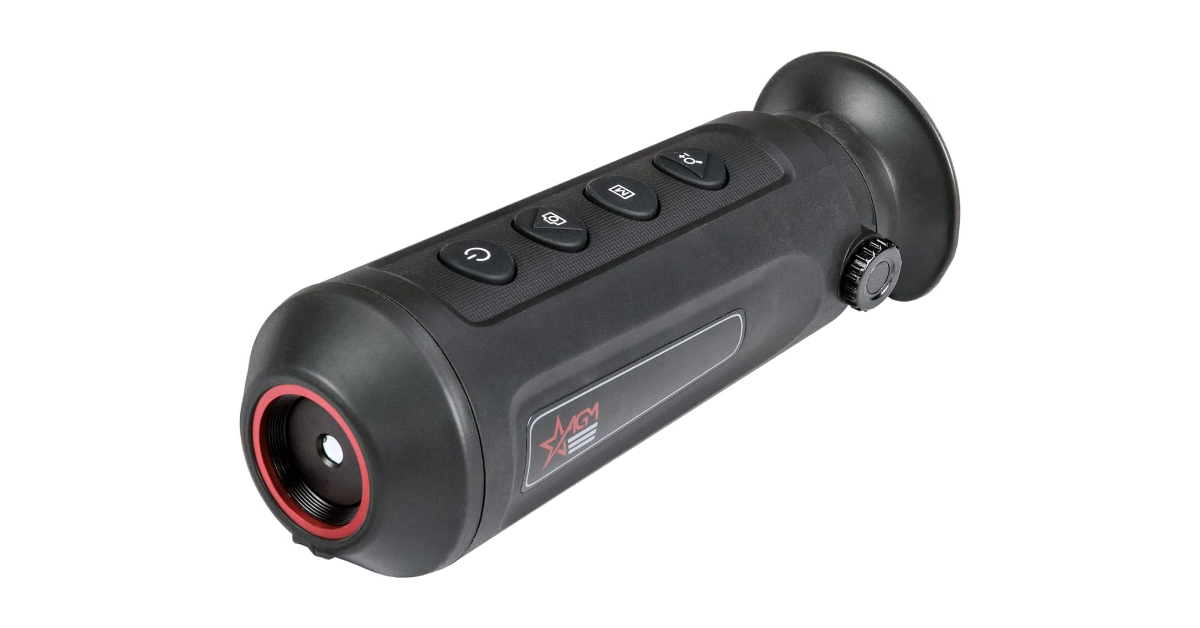
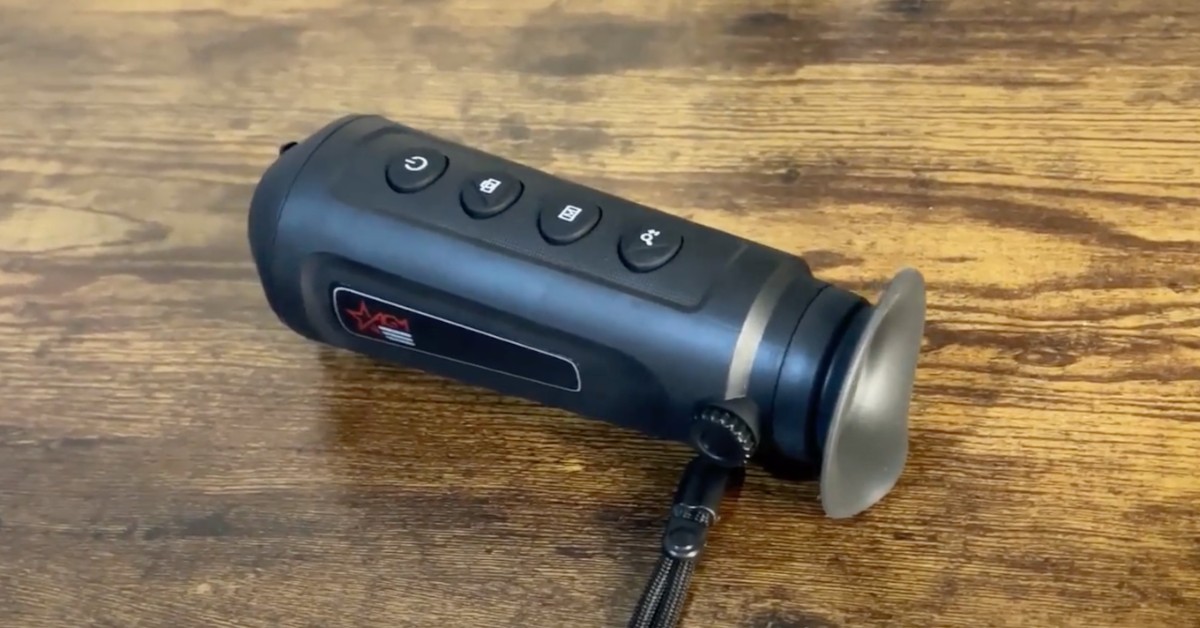
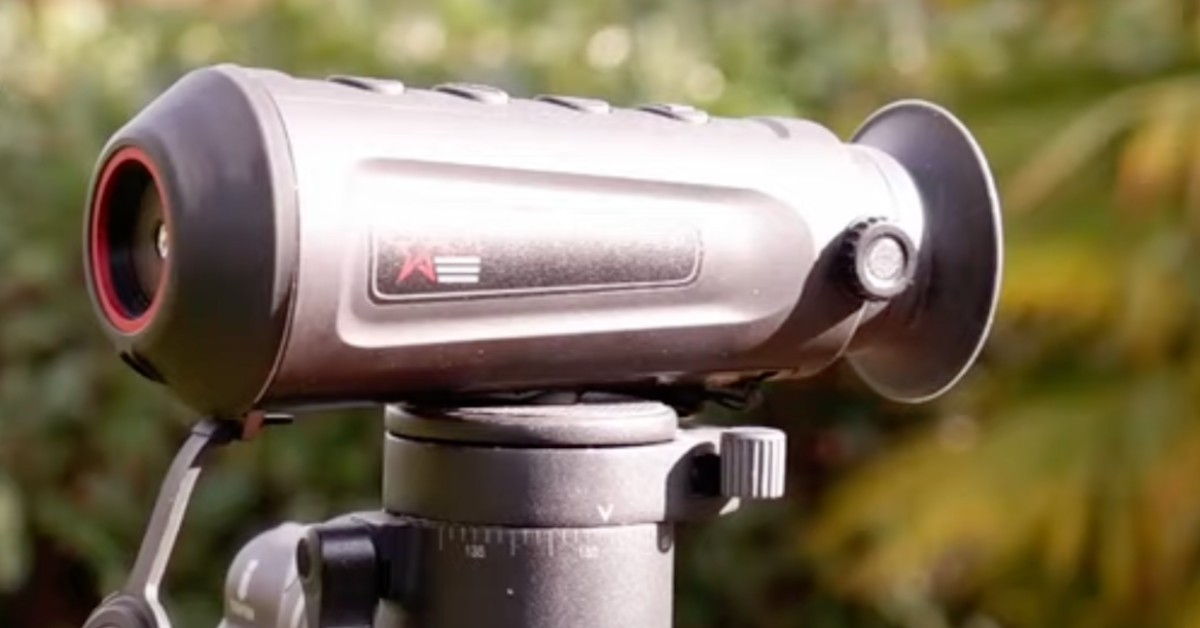
The AGM Global Vision Thermal monocular Asp-Micro TM160 is a handheld observational thermal monocular that is equipped with a 160×120 infrared detector and a 720×540 Lcos display. It has an adaptive AGC, DDE, and 3D DNR. The TM 160 thermal monocular also supports functions of observation, highest temperature target tracking, and distance measurement. The Asp-Micro short range thermal imaging monocular realizes the distance measurement function after marking the top and bottom of the target and inputting the target height. This thermal monocular for hunting also detects and marks the hot spot of highest temperature.
The AGM global vision of Thermal Hunting monocular has a 6.2 mm lens (focal length) and comes with 2×, 4×, 8× digital zoom. The detector type of these monoculars is vanadium oxide uncooled focal plane arrays. The AGM Global Vision Thermal monocular Asp-Micro TM160 is the best short range thermal monocular for hunting with a magnification of 1-8X and an identification range of 50 yards. The infrared recognition range is 125 yards. You can also check out the more advanced Asp Global Vision TM25-384.
Pros:
- 2×, 4×, 8× digital zoom
- Identification range of 50 yards
- Resolution: 160×120
- Lens (focal length): 6.2 mm
- Field of view (H × X) 15.61° × 11.74°
- Display: 720×540, 0.2 inch, LCOS
- Storage: Built-in 8 GB
Cons:
- Works well in the declared functions but not for long distances
Summary: The AGM Global Vision Asp-Micro TM160 Thermal Imaging Monocular is a 160×120 infrared detector handheld device that offers features such as surveillance, tracking of targets with the highest temperature, distance measurement, and unique distance estimation based on target height.
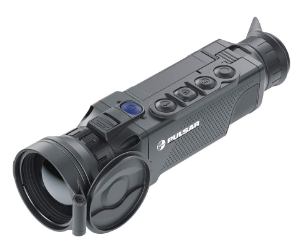
Pulsar Helion 2 XP50 Pro Thermal Monocular Review
Premium Choice
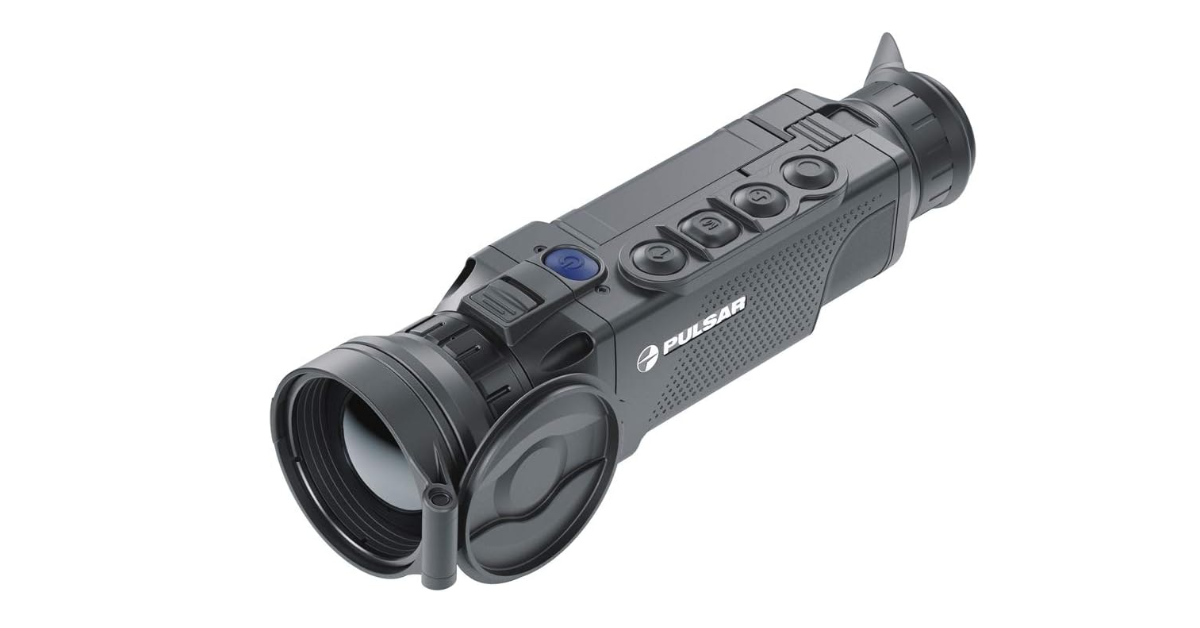
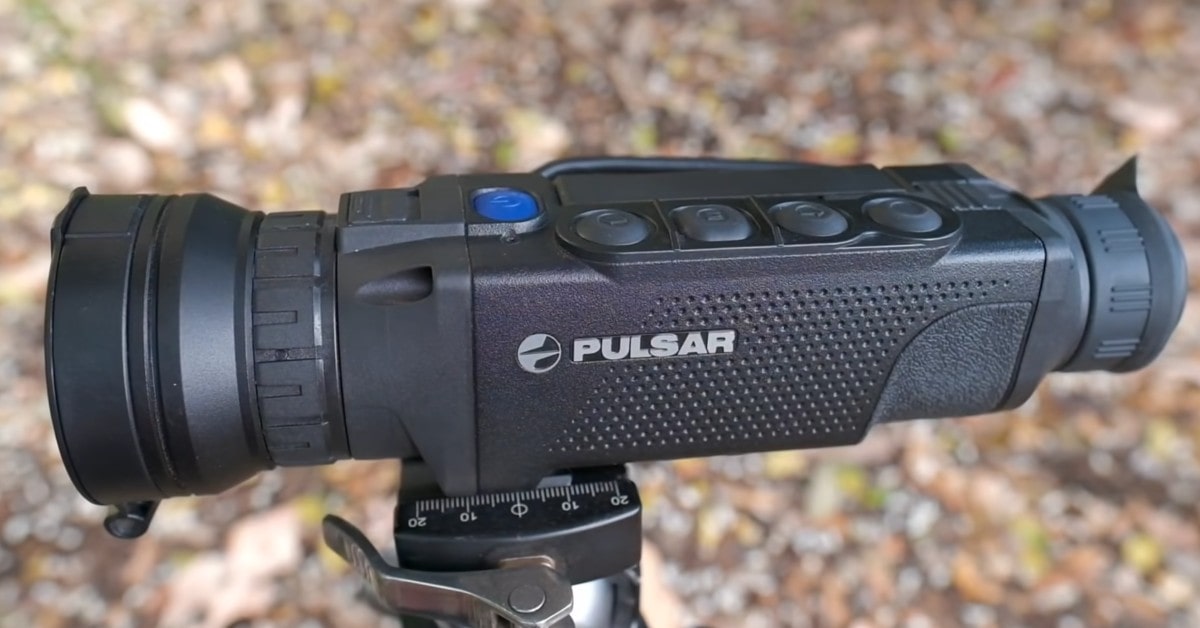
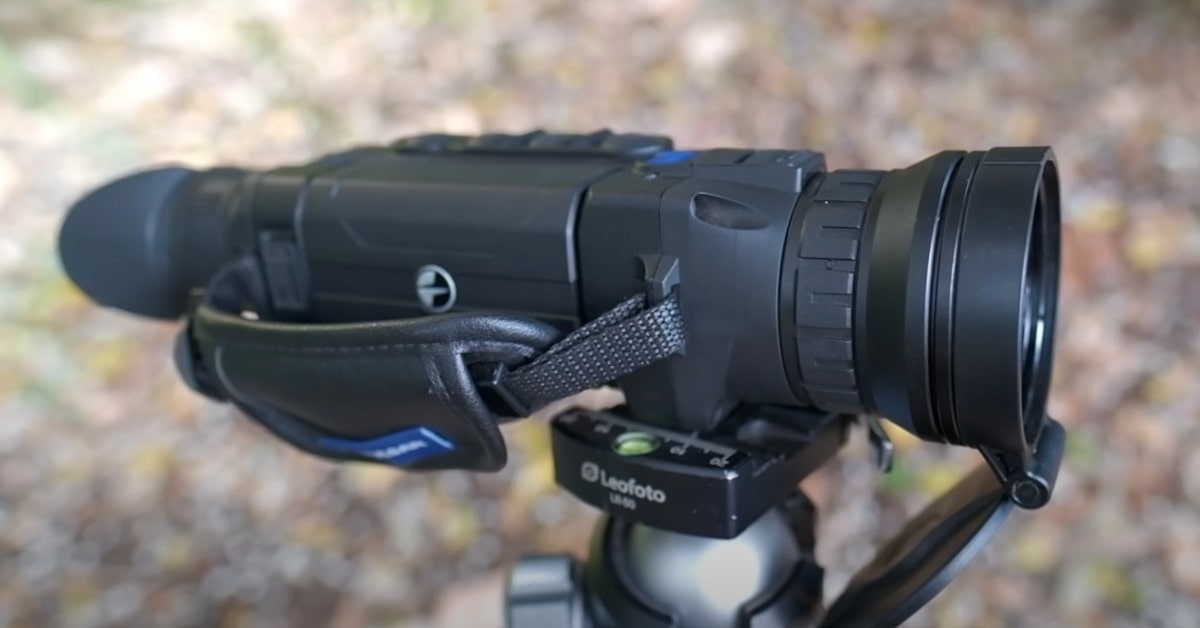
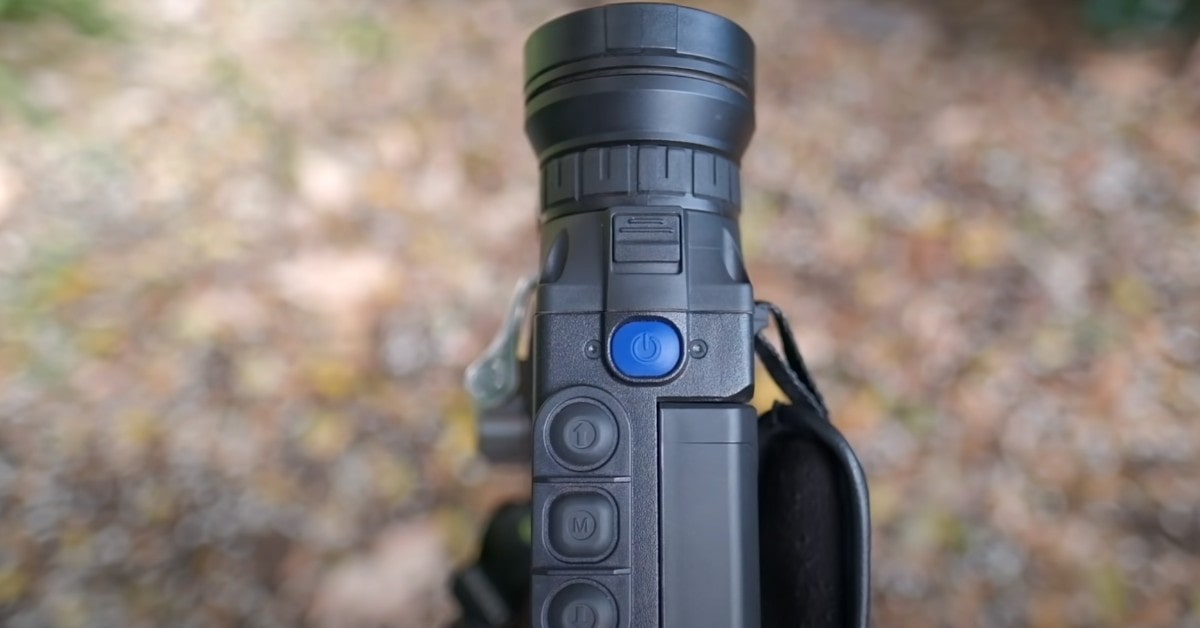
The Pulsar Helion 2 thermal monocular is a highly sensitive thermal imager capable of detecting objects up to 2,000 yards away. Based on height estimation of observed objects, the stadiometric rangefinder allows you to determine accurate distances quickly, easily and reliably. It features germanium optics with a fast f1.0 aperture for clear images, has 4 observation modes, 8 color palettes for true colorized temperature display. 8 hours of operation on a single charge.
The highlight of the Helion is the ability to connect via Wi-Fi device with mobile devices based on Android and iOS using the free Stream Vision mobile app. This allows you to receive the footage in real time, remotely control the device using a smartphone, as well as broadcast the image. The Pulsar Helion's user-friendly interface, designed for quick and easy operation, is simple and straightforward.
NOTE: Shipment of this product to other countries is prohibited under U.S. law.
Pros:
- IPX7 waterproof
- Built-in WiFi
- Built-in video recording
- Detection distance up to 2000 yds ( 1828,8 m)
- High image frequency
- 8 Custom Color Modes
- User-Friendly Interface
- Mobile-friendly (iOS, Android)
Cons:
- Not a small price
Summary: Based on my observations the Pulsar Helion 2 XP50 Pro Thermal Monocular is a sensitive imager capable of detecting distant objects up to 2,000 yards, featuring germanium optics, stadiometric rangefinding, and 8 color palettes for detailed thermal representation. Additionally, it offers Wi-Fi connectivity with mobile devices for real-time footage sharing, remote control, and broadcasting through the Stream Vision app, all coupled with a user-friendly interface for seamless operation.
MiLESEEY T-Recon Tactical TNV30 Thermal Monocular Review
Best Night Vision
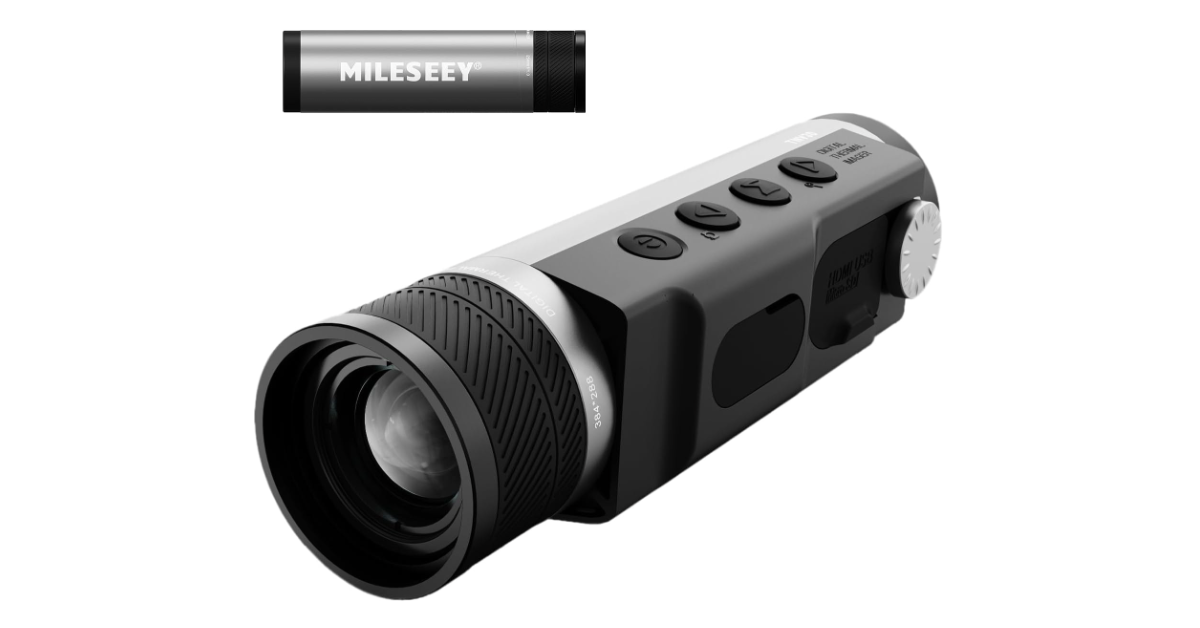
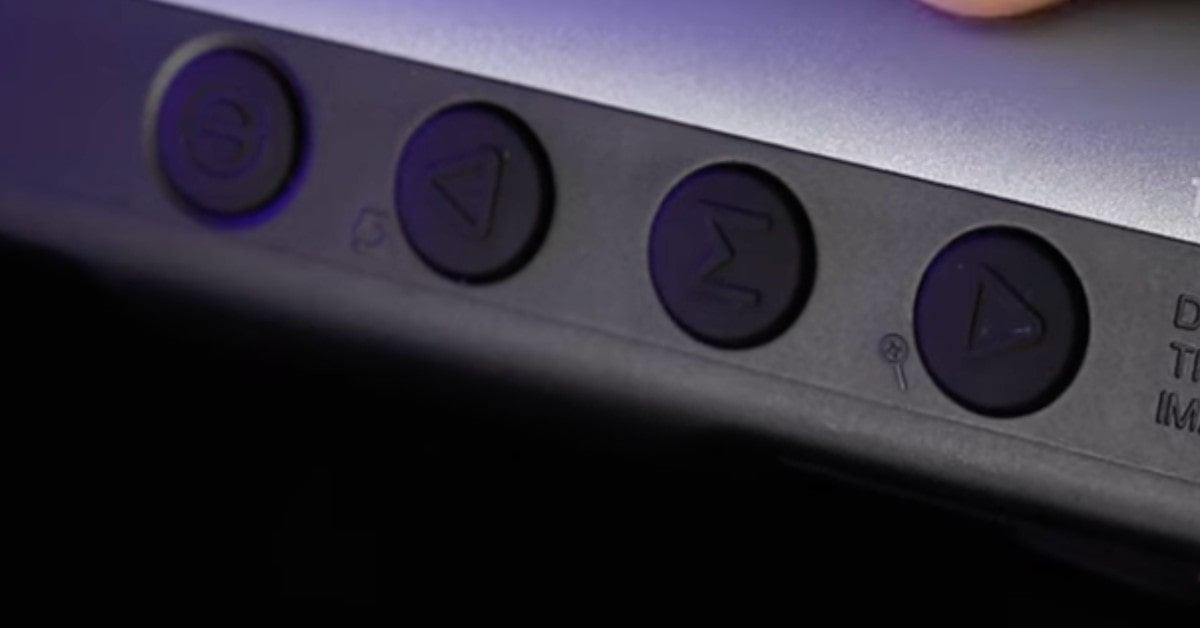
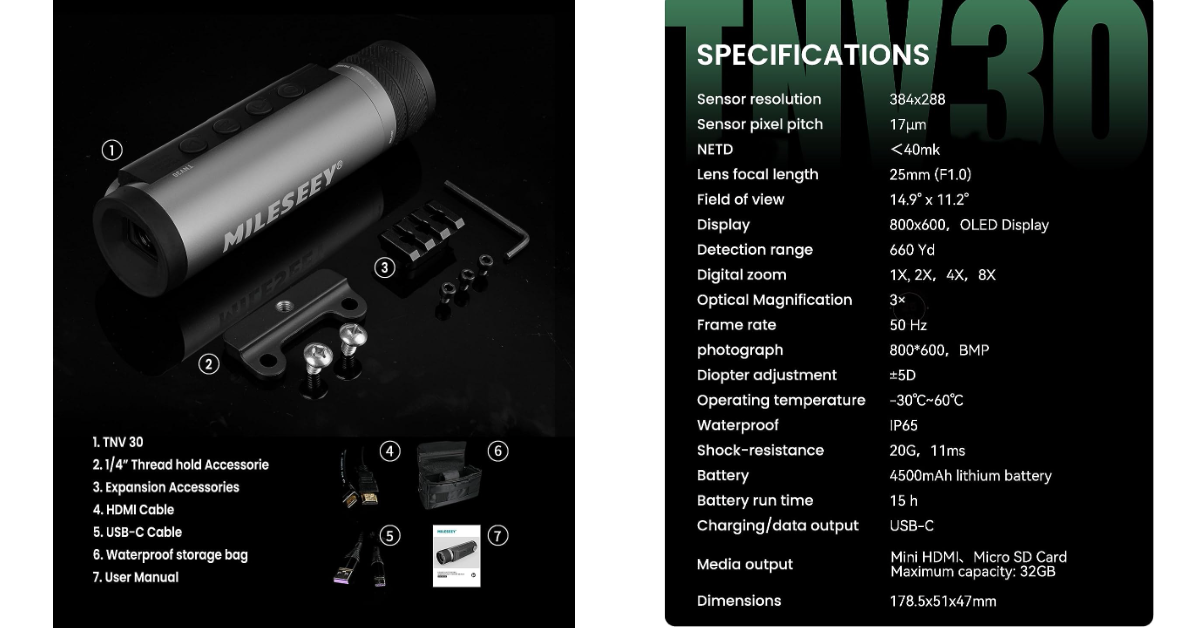
The MiLESEEY T-Recon Tactical thermal imaging monocular is a revolutionary device in the field of thermal imaging. The 384×288 infrared resolution combined with the 25mm f/1.0 germanium lens produces images that are simply breathtaking.
The easy-to-use focus ring allows you to easily aim at your subject, regardless of distance. In addition, support for diopter adjustment ensures that every user can enjoy maximum clarity tailored to their vision. Hot Tracking is a game changer. The ability to instantly lock onto the warmest heat source in dense vegetation ensures that finding your subject is faster and more efficient.
The device boasts an impressive detection range of 1300 yards, which is awe-inspiring in itself. Combined with an 8x digital zoom and an 800*600 OLED display, the T-Recon offers an extraordinary field of view, ensuring that no detail escapes the observer's view even at a considerable distance.
The scalable, do-it-yourself design really makes T-Recon stand out from the crowd. The ability to add modules from the external screen to the laser rangefinder is a testament to its adaptability. This is further enhanced by the generous 16GB built-in memory card that allows users to take and store up to 10,000 photos, making it the perfect tool for sharing and cataloging adventures.
Thanks to its 4500 mAh lithium battery, the T-Recon is extremely durable. Offering up to 15 hours of continuous operation, it ensures that your surveillance sessions remain uninterrupted.
Pros:
- Infrared Resolution: 384*288 , 25mm Lens Focal
- Display: 800*600 OLED screen
- Detect Range: 1600 Yards
- Electronic Zoom: 1x 2x 4x 8x
- Frame rate: 50HZ
- Output: Support Mini HDMI, Micro SD, Type-C
- Hot Spot Tracking: Support
- Battery Life up to 15 hours
Cons:
- With so many advanced features and customization options, some users might find it challenging to use initially
Summary: As indicated by my tests the MiLESEEY T-Recon Thermal Monocular Tactical is a sophisticated blend of technology and utility. It goes beyond just being a tool and provides an elite experience that is hard to match. Whether you're an avid wildlife observer, hunter, or simply someone who loves to explore the world, the T-Recon is sure to elevate your adventures.
ATN ODIN LT 320 2-4X Compact Thermal Monocular Review
Best HI-RES Display
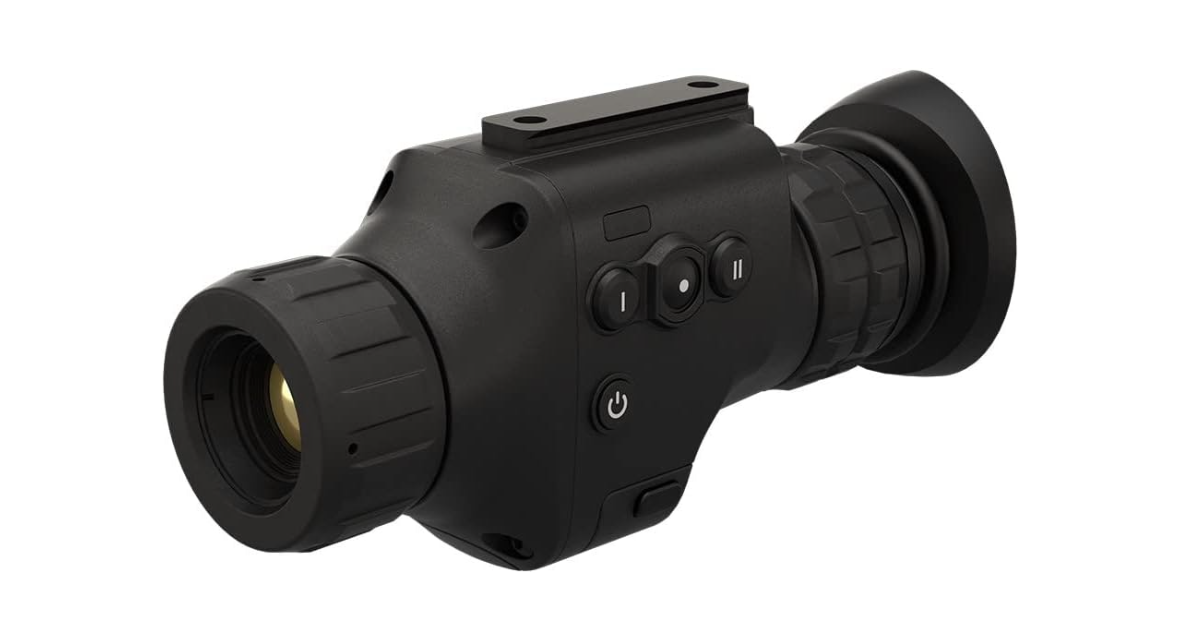
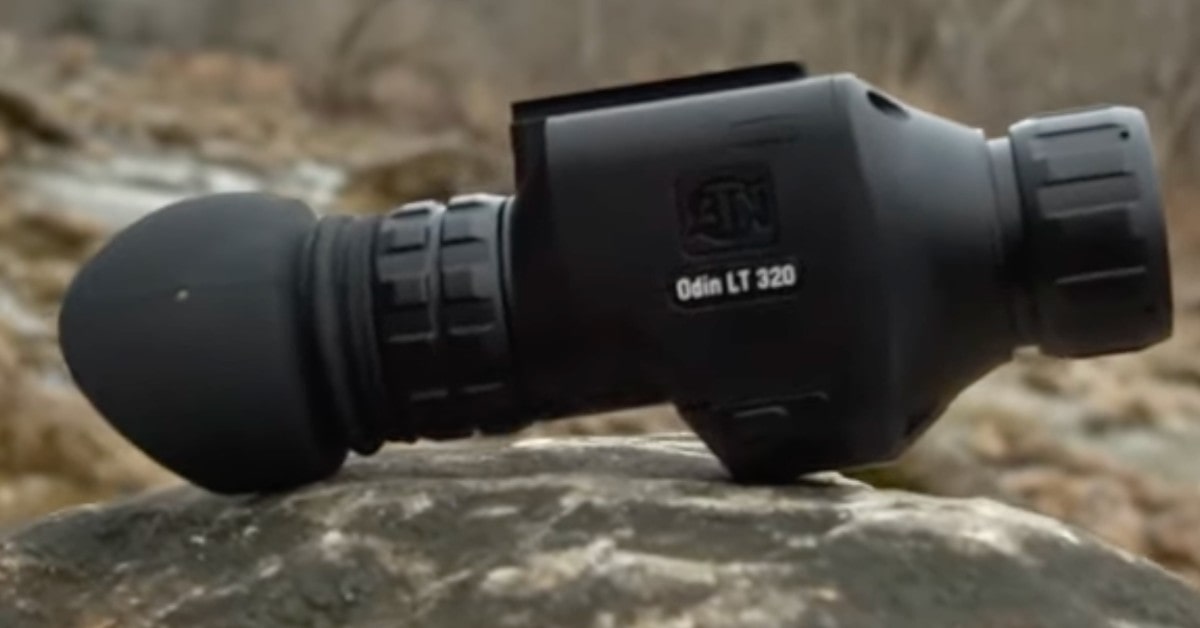

The ATN Odin LT Tiny Wearable Thermal Monocular is a lightweight and compact thermal monocular that is perfect for observing in low light conditions. This monocular features a Hi-Res 1280x960 display for clear and vivid images, and White Hot/Black Hot Mode for moving object display in your preferred color palette.Battery life (Li-ion) 2.5 Hrs (or Optional Rechargeable Battery with 5 Hrs of runtime) The Odin LT can be hand held, helmet mounted, or head mounted for long term comfortable observation, making it a versatile and easy-to-use product.
Pros:
- Display Resolution: 1280x960 px
- IP rating: Weather resistant
- Battery type: 1 x CR123A (Li-ion)
- Mount Helmet/Headset
- Charging: USB, type C port is on the Optional Rechargeable Battery
- Operating Temperature: -20°F to +120°F / -28°C to 48°C
Cons:
- No Video Record
Summary: The ATN Odin LT Tiny Wearable Thermal Monocular is a compact device optimal for low-light observations, boasting a Hi-Res 1280x960 display and White Hot/Black Hot Mode for color-customized moving object visualization. With a battery life of 2.5 hours, extendable to 5 hours with an optional rechargeable battery, this monocular offers flexibility for handheld use or long-term observation when helmet or head mounted.
FLIR Scout III 320 Thermal Imaging Monocular Review
Drop Resistant
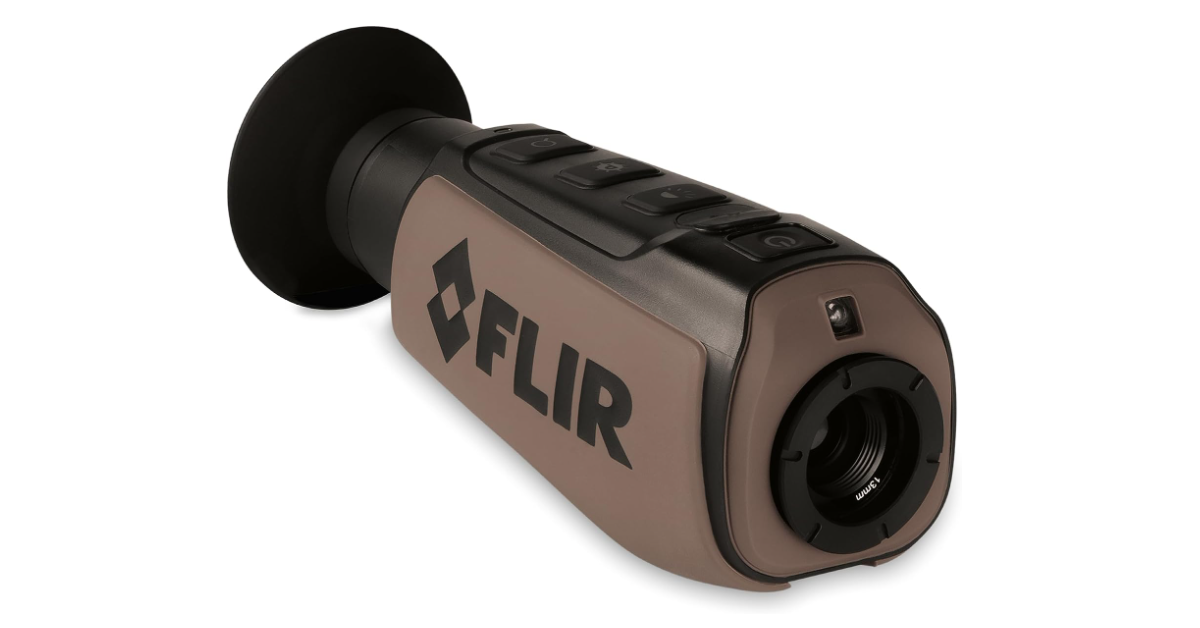
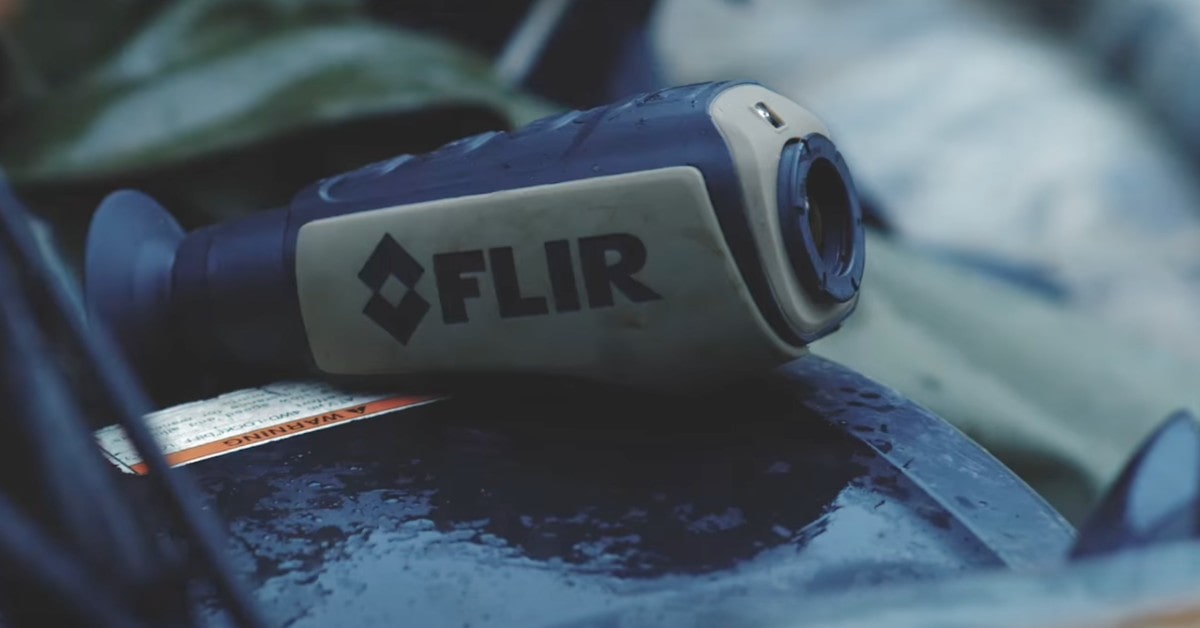
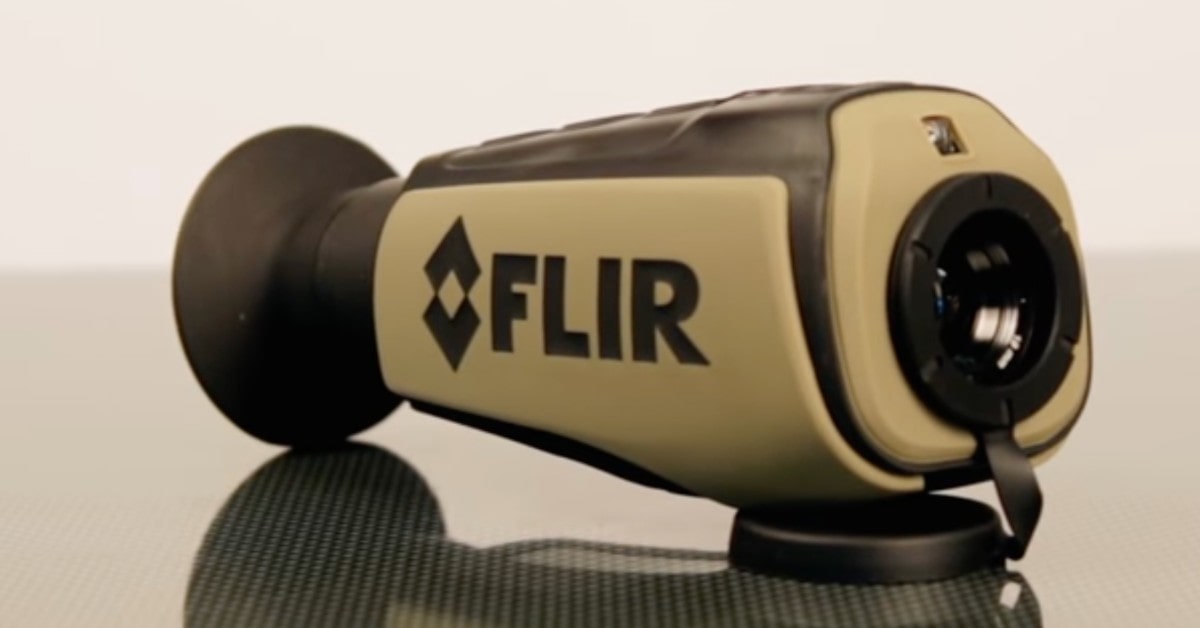
The FLIR Scout thermal monocular is a handheld thermal imaging camera that allows you to see in the dark and detect thermal signatures of people or animals in total darkness or in bright light. It features a smooth frame rate of 30-60 Hz for crisp thermal images and comes in a rugged weatherproof housing. The Scout III starts up in seconds and requires no training to use.
The 640 × 480 LCD display makes it easy to see what you're looking at. Includes power adapter/USB charger, wrist strap and special cable for video output.The Scout III's rugged, weatherproof (IP67) case weighs just 12 ounces, but can withstand hard drops and shallow water.
Pros:
- Refresh Rate: 60 Hz
- Display: 640 x 480 LCD
- FOV (HxV): 17°×13°
- Detect Man: 550 M
- IP67 waterproof
- Batteries: Internal Rechargeable Li-Ion
Cons:
- With so many advanced features and customization options, some users might find it challenging to use initially
Summary: The FLIR Scout thermal imaging monocular is a rugged, handheld device that delivers crisp thermal imaging in the dark, detecting thermal signatures in both total darkness and broad daylight. With a frame rate of 30-60 Hz, a crisp 640 × 480 LCD display, and a rugged, weatherproof housing, the Scout III is efficient and reliable.
AGM Global Vision Fuzion LRF TM35-640 Thermal Monocular Review
Best Tactical
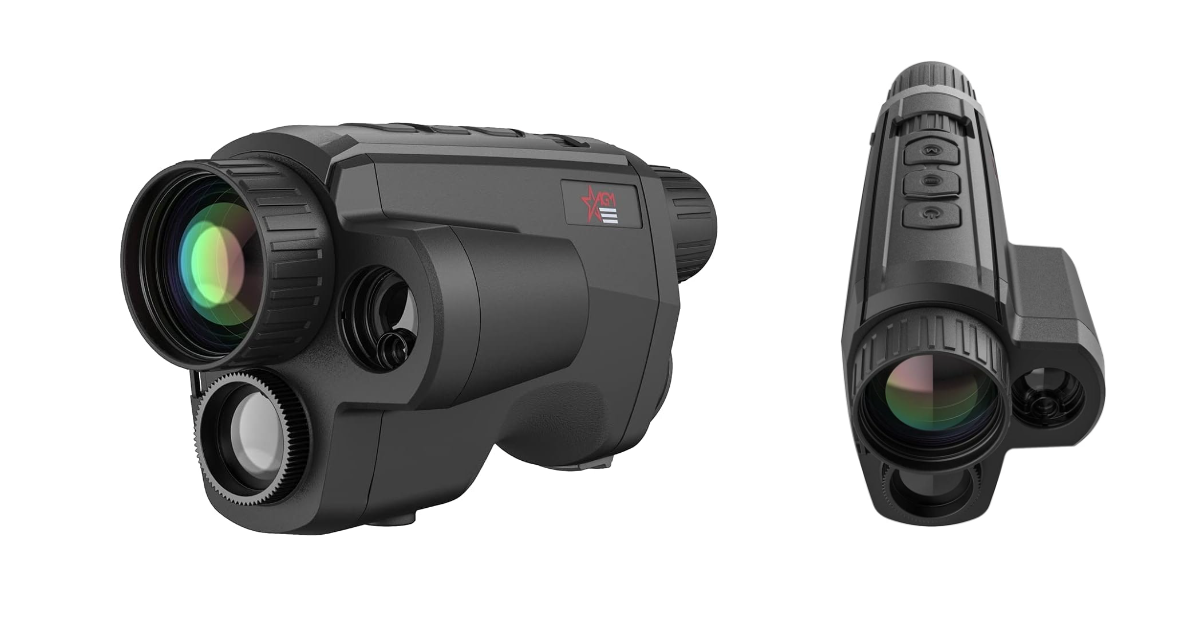
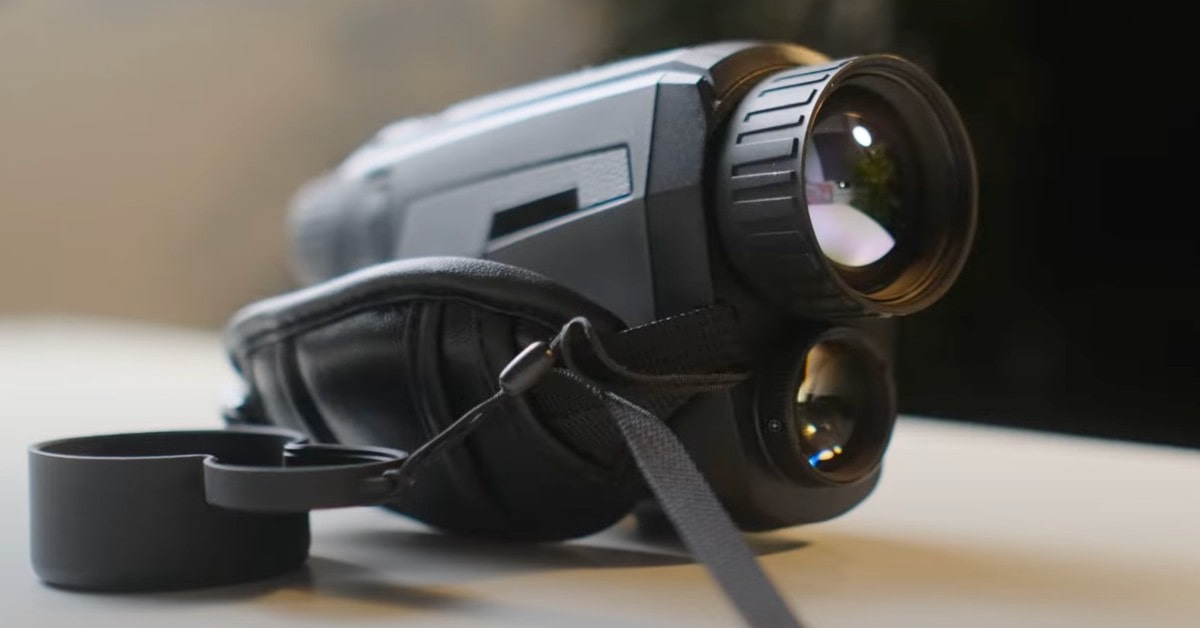
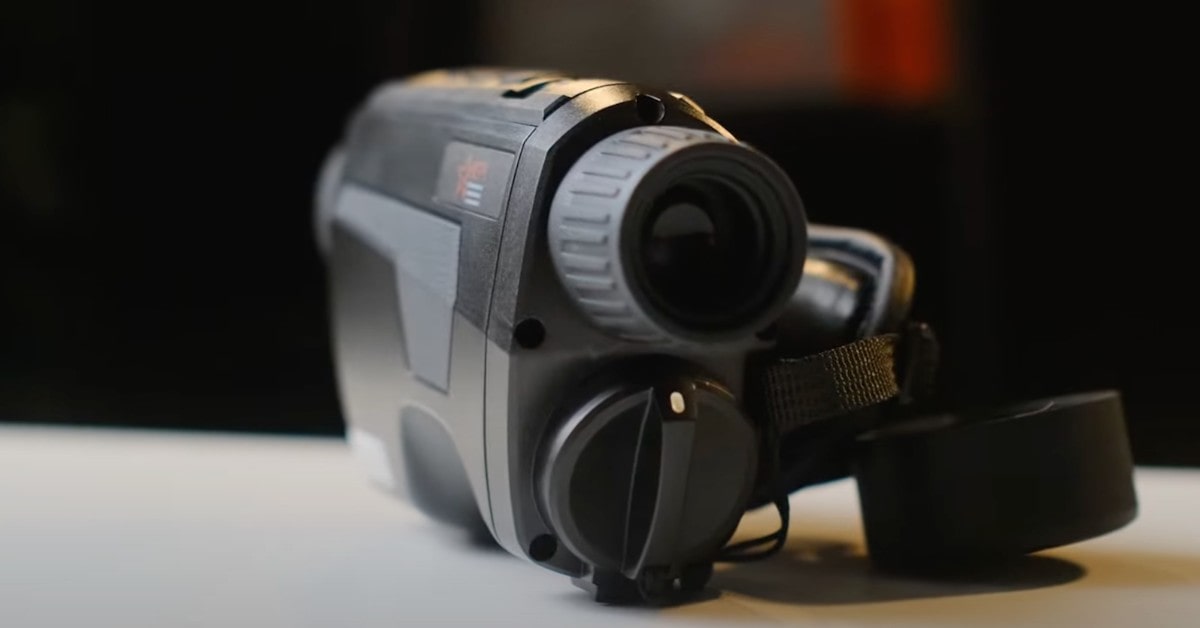
The AGM Fuzion LRF is a handheld bispectral thermal and optical monocular equipped with a highly sensitive 12 μm thermal detector, an ultra-low light optical detector, a 1024×768 OLED display and an eyepiece with a large field of view. The device can quickly detect hiding objects even in extreme conditions such as smoke, fog, rain, snow, etc., and can be widely used in scenarios such as patrolling, search and rescue, interception and apprehension of suspects and of course hunting. . 1x, 2x, 4x, 8x digital zoom. Video and still image recording, built-in EMMC (16GB).
The monocular offers three different image views: thermal, visible light and fusion, which can be easily adapted to different environmental conditions. This high-tech monocular features a laser rangefinder to measure distance to the target and uses a single rechargeable 18650 lithium battery that provides up to 5 hours of operation. Alternatively, an external power supply can be used to extend operating time.
Pros:
- Choice of thermal imaging channel, visible light channel or both together 12 µm
- Fast 50 Hz imaging
- Laser rangefinder, Waterproof
- 1024×768 resolution, 0.39-inch OLED display
- Wi-Fi
- Up to 5 hours of continuous use
Cons:
- Not for amateurs
Summary: The AGM Fuzion LRF TM35-640 is a bispectral monocular equipped with a 1024×768 OLED display, 8x digital zoom, three image modes (thermal, visible light, and fusion), a laser rangefinder for measuring the distance to the target, and supports video and image recording with 16 GB of built-in memory.
FAQ about Best Thermal Monocular
Here are some common questions that many people ask when they are considering buying the best thermal monocular.
What is the difference between a thermal imaging monocular and a night vision monocular?
Thermal imaging monocular and night vision devices are used for surveillance in low light conditions. However, there are some key differences between the two technologies.
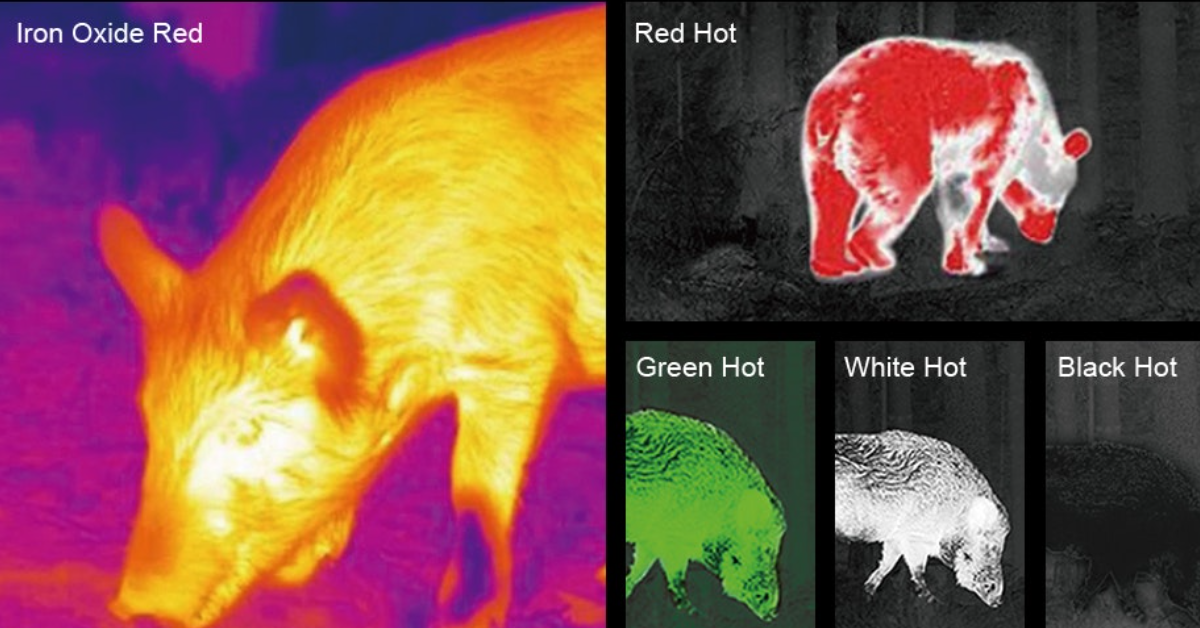
Thermal imaging monocular, also called infrared camera, detects radiation in the infrared range of the electromagnetic spectrum and produce images of this radiation. A thermal imaging camera reproduces an image from heat - living and nonliving, but heated objects at any time of day, leave a thermal trace. Thermal imaging cameras are passive sensors that do not emit their own energy, so they can see objects in total darkness or through thick smoke or fog.
Night vision devices, on the other hand, use light amplification technology to allow operators to see in low light conditions. These devices do not work in fog or in very dark environments, as they require a certain level of ambient light to function.
Both thermal imaging and night vision devices have a wide range of applications, including military, law enforcement, search and rescue and hunting applications.
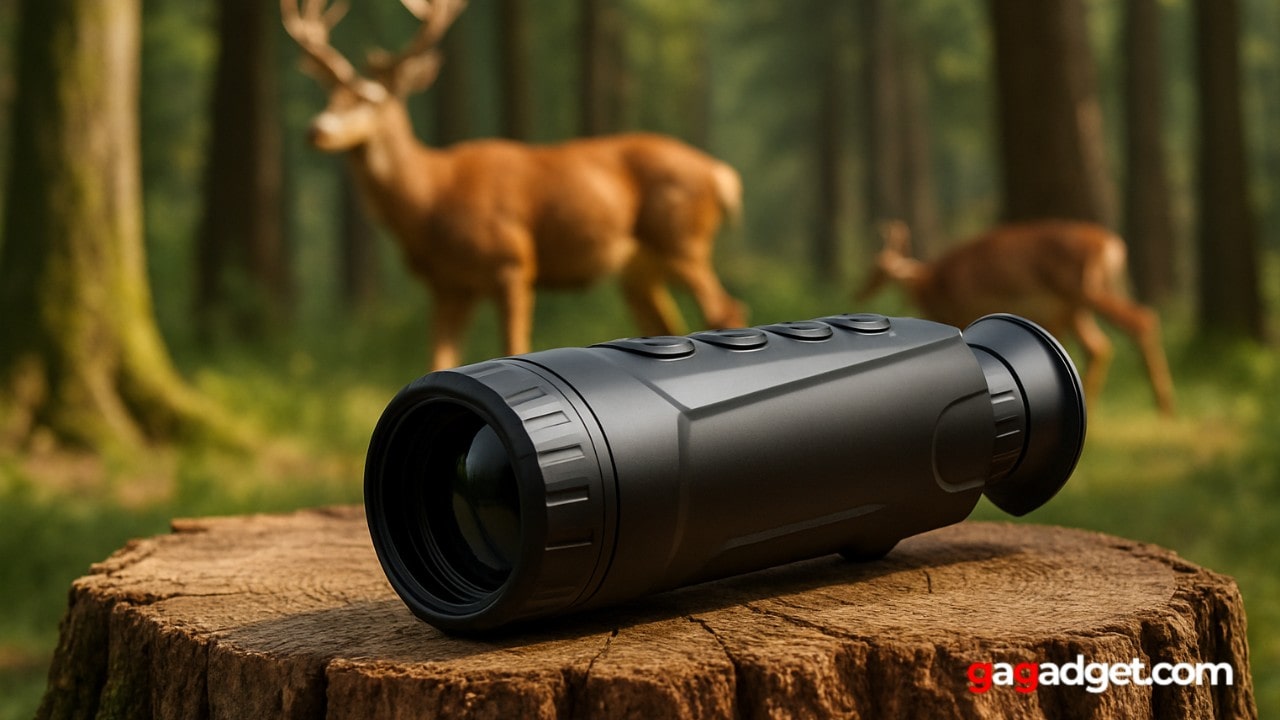
Best Thermal Imaging Monocular. Source: AI
What's the difference between thermal and infrared?
Thermal imaging cameras measure the infrared radiation emitted by all objects and display that information as an image. The images produced by a thermal imager are known as thermograms. Infrared energy is part of the electromagnetic spectrum and its wavelength is longer than that of visible light. All objects above absolute zero (-273°C) emit infrared energy. The amount of infrared energy emitted by an object increases as its temperature increases.
The difference between thermal and infrared is that thermal imaging cameras can sense this emission over a wide area, while an IR thermometer can only sense the emission from a very small spot. Because of this, thermal imagers are sometimes referred to as “whole-scene” or “wide-field” images. What’s more, you can use a thermal imager to “see” in total darkness, through light fog, smoke, and most types of persistent background clutter that would obscure vision in the visible spectrum.
Can thermal imaging see through walls?
No, not the way we're used to seeing in different action movies. Walls are often thick enough and insulated enough to block any infrared radiation from the other side. If you point a thermal imaging camera at a wall, it will pick up the heat from the wall and not from what's behind it. However, there are some cases where you can use thermal imaging to see through walls.
If there is a large fire on the other side of the wall, for example, the heat from the fire might be intense enough for the thermal imaging camera to detect it. Also, if the wall is very thin or has a hole in it, infrared radiation can pass through it and be detected by the thermal imaging camera.
Best Thermal Imaging Monocular : Conclusion
The best thermal imaging monocular is the one that meets your needs. I've reviewed different models and presented my top picks, and you should consider the features that are important to you when making your purchase. In turn, I told you what to look for. And I've listed the best models, such as the MiLESEEY Thermal Monocular T-Recon Tactical, FLIR Scout TK Handheld Thermal Imaging Monocular or Pulsar Helion 2 XP50 Pro Thermal Monocular.
I hope that thanks to this review, you'll be able to find the perfect thermal imaging monocular for your next hunt, outdoor recreation, or other activities. Thank you for reading.
Go Deeper:

Our geeky guru has been slicing through tech on gagadget.com since 2020, from projectors, tvs to speakers and many more, unearthing the truth behind the specs with sharp, insightful reviews.


