Russia receives up to 6 million artillery shells from North Korea

Russia has established systematic maritime logistics for the supply of artillery ammunition from North Korea, having received between 4 and 6 million shells over the past 20 months.
Here's What We Know
The data was published by Reuters together with the British research organisation Open Source Centre (OSC) after analysing satellite images and routes of Russian container ships.
According to the OSC, from September 2023 to March 2025, 64 voyages were made from the North Korean port of Rajin to the Russian ports of Vostochny and Danube. The shipments were carried out by four Russian-flagged vessels - Angara, Maria, Maya-1 and Lady R.
In total, almost 16,000 containers of ammunition were delivered to Russia during this period. Upon arrival, the cargoes were transported by rail to warehouses near the frontline in Ukraine.
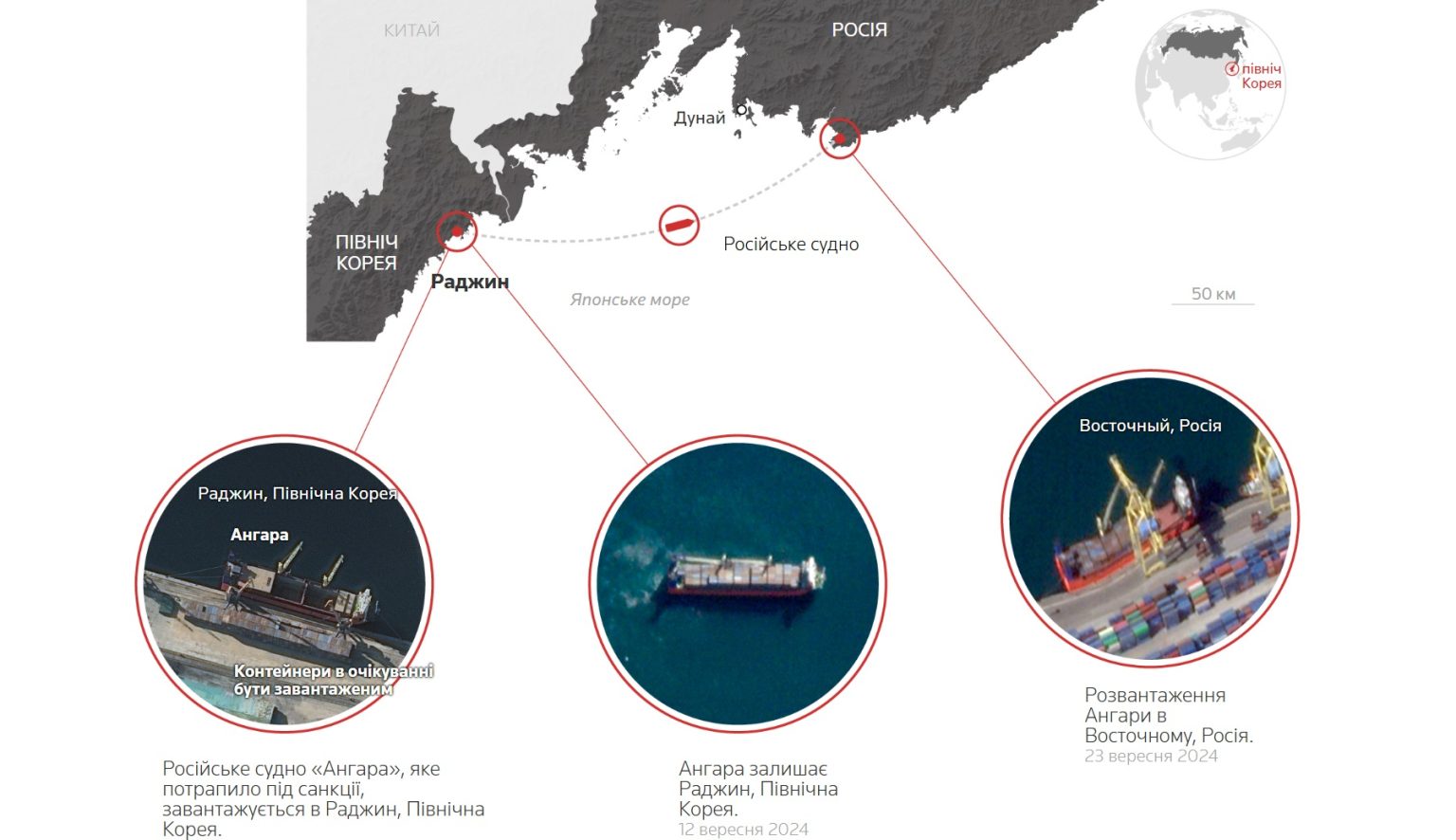
Ammunition being transported from the North Korean port of Rajin to the eastern Russian ports of Danube and Vostochny. Illustration: Reuters
The supplies became possible after Russian Defence Minister Sergei Shoigu visited Pyongyang in July 2023 to discuss military cooperation. In September of that year, the first regular flights from Rajin to Russia were recorded. The peak came in January 2024, when seven cargoes were recorded.
The OSC used satellite imagery, 3D modelling of containers and ship diagrams to estimate the volumes. They estimate that each container could have contained hundreds of boxes of different types of shells: 122 mm and 152 mm artillery, rockets to MLRS, and mortars.
According to minimal estimates, the total volume of supplies ranges from 4 to 6 million rounds of ammunition. These figures are in line with those of the Ukrainian Defence Intelligence, which had previously reported that Russia had received about 4 million shells from the DPRK.
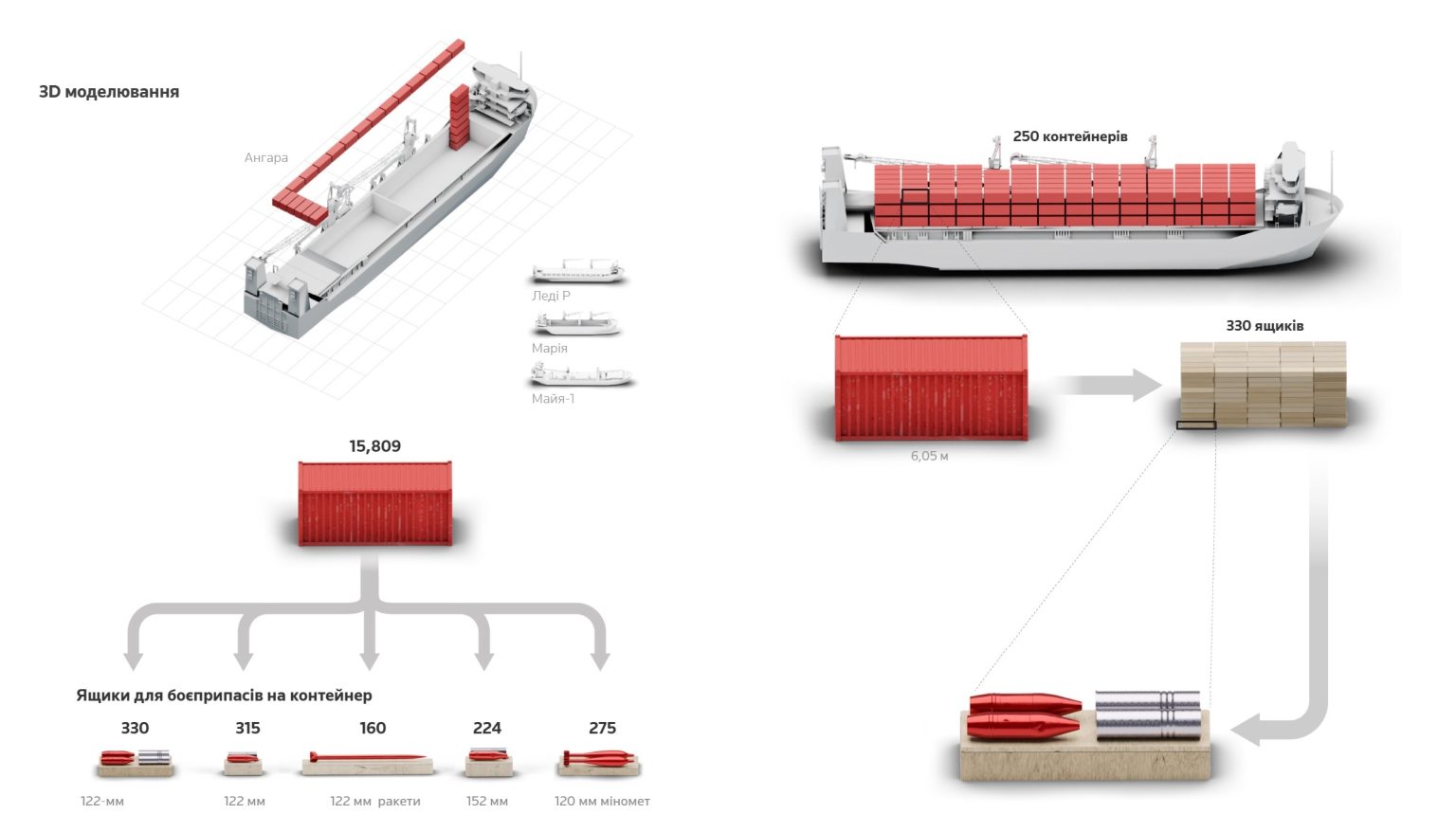
OSC analysts' method of counting ammunition. Illustration: Reuters
To clarify, the main storage facility for North Korean ammunition was the Tikhoretsk arsenal (military unit No. 57229-41), 100 km from Rostov-on-Don. According to Reuters, it was expanded ahead of the start of deliveries, but on 21 September 2024, the depot was severely damaged in a Ukrainian strike that destroyed up to 90% of the ammunition, including new shells from the DPRK.
The Ukrainian military estimates that up to half of the artillery ammunition used by Russia at the front comes from North Korea. This is confirmed by military documents obtained by Reuters: on some days, Russian units used up to 100% North Korean shells.
Although the calibre of North Korean ammunition is the same as the Soviet models used by the Russian army, their quality is lower, with worse ballistics, which has forced the Russians to create separate "firing tables". Some instructions also warn against leaving a projectile in a hot barrel for more than 3 minutes, indicating the unstable behaviour of explosives in DPRK shells.
Source: Reuters


