Development of the small British Spear 3 missile has been delayed again - the deadline has been shifted to the 2030s

The British small missile Spear 3, which has been under development for more than a decade, will not enter service in the coming years. The timeline for its commissioning has now been pushed back to the early 2030s.
Here's What We Know
The Spear 3 missile, which weighs up to 100 kg and has a range of up to 140 km against ground targets, is being developed by MBDA under a contract signed in 2010. Despite the first test launch in 2016, the completion date has been repeatedly postponed, and now the final implementation of the project is in doubt.
According to the UK Defence Journal, the British Ministry of Defence responded to a parliamentary inquiry by saying that a new development schedule would not be approved until the summer of 2026. The project is currently undergoing another review, the results of which are expected by the end of 2025. The integration of the missile into F-35B aircraft, scheduled for 2025, has already been postponed until at least the early 2030s. The last time the deadline was set for the end of 2028, but it has already lost its relevance.
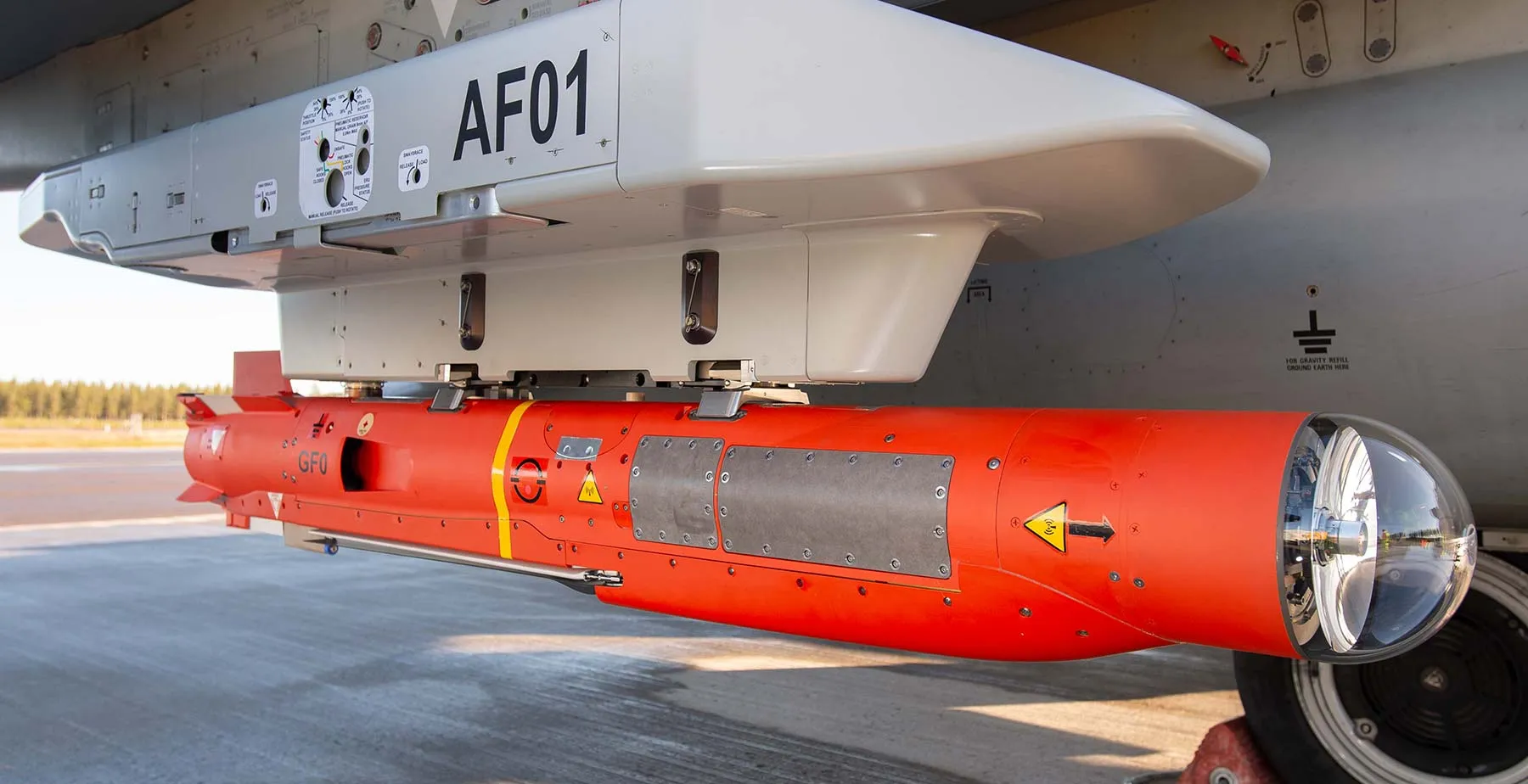
A Spear 3 missile under the wing of a Typhoon fighter jet. Illustration: Royal Air Force
Currently, the only notable milestone in the development of Spear 3 is its test launch from a Eurofighter Typhoon in November 2024. However, even this does not guarantee the project's steady progress.
The Spear 3 has a sophisticated guidance system that combines GPS, inertial navigation, and a multi-mode homing head with radar, thermal imaging, and laser channels. In addition, the missile is capable of exchanging data with the carrier after launch, which allows it to be redirected.
However, despite its technical complexity, the Spear 3 does not look like a breakthrough compared to the US GBU-53/B StormBreaker, which has similar characteristics. The only significant difference is the TJ-150 turbojet engine, which gives the Spear 3 a range advantage of only 30 km.
Source: UK Defence Journal


