China continues to develop the mysterious Z-21 helicopter to challenge the US AH-64 Apache

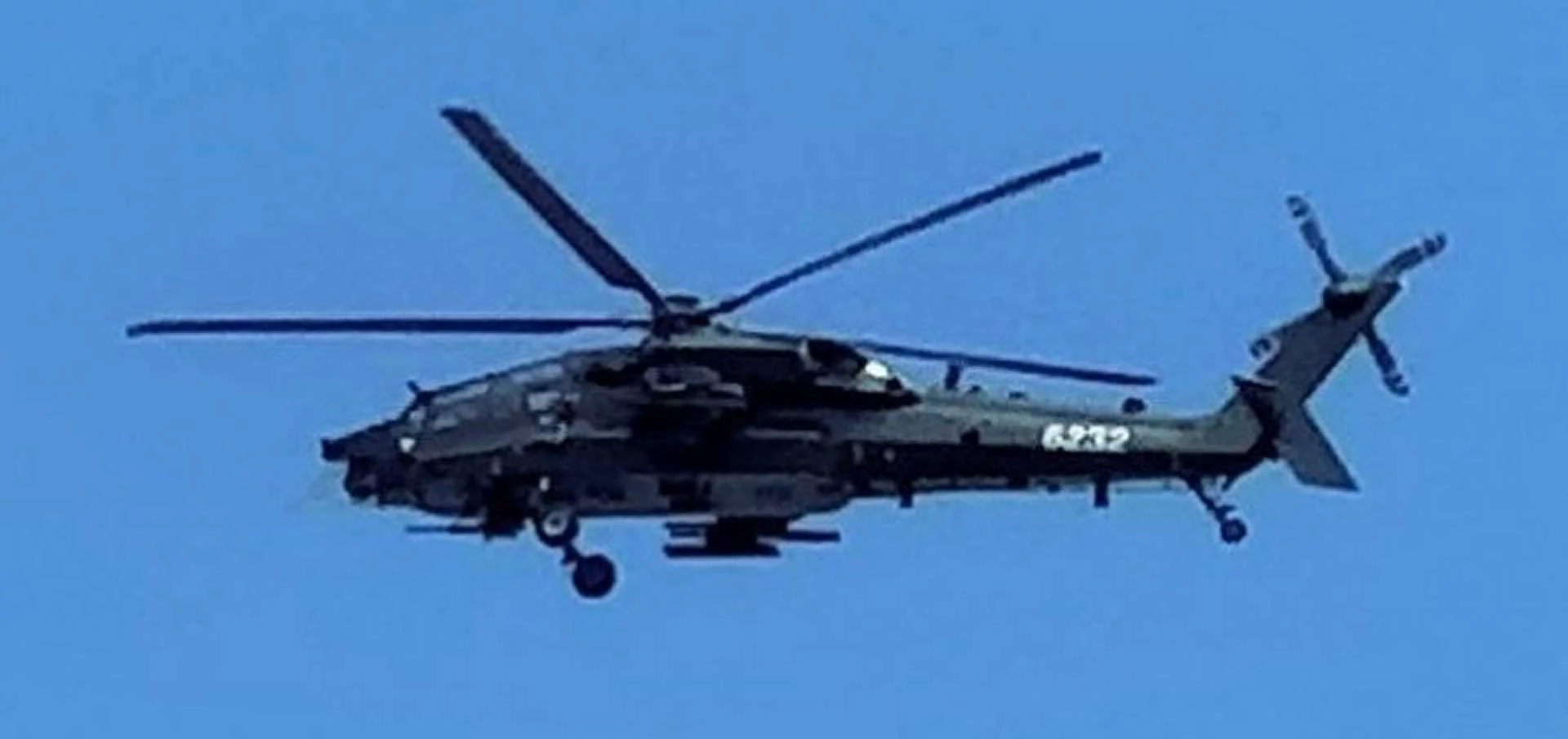
After a year of being out of the public domain, China's Z-21 heavy attack helicopter has been spotted flying again. The image, released on 18 March 2025, shows that the programme is still in development, although its status remains unclear.
Here's What We Know
The photo, shared by analyst Ruprecht Deyno, shows the Z-21 continuing to test, despite a year without news of the project. The helicopter has not been officially introduced in communist China, and there are no specifications, designations or mentions in defence department documents. However, the reappearance demonstrates interest in the platform and its further development.
The Z-21 is often described as a derivative of the Z-20 transport helicopter, although its silhouette, sensor arrangement and weapon pylons suggest a different purpose. This may be China's first attempt to create a heavy attack helicopter to complement the lighter Z-10 and Z-19.
For example, Chinese materials refer to it as the successor to the Z-20, but with enhanced capabilities: up to 16 missiles on board and a speed of up to 350 km/h.
According to unofficial reports, the helicopter has been tested in the Tibetan highlands, indicating that it could be used for high-altitude operations. It has also been reported to have taken part in live-fire exercises or demonstrations, although these claims remain unconfirmed.
Older photo of Z-21. Illustration: sugar_wsnbn
The Z-21's design includes a tandem cockpit, short wings with weapon pylons, a sensor turret on the nose, and reinforced armour. Although there is no information on armour, it is expected to have protection systems and electronic warfare capabilities. At the same time, the Chinese media has been using stylised descriptions of the helicopter, such as "a deity of war in the air", which indicates its symbolic significance for the domestic audience. However, these phrases are not technically supported.
The Z-21 is likely to be in pre-production or limited service trials. Its potential role is to enhance combat capabilities in mountainous areas and expand China's strike arsenal without dependence on imported models.
The lack of official data makes it necessary to rely mainly on open sources, so final conclusions about the platform are still premature.
Source: Army Recognition


