The F-15E has received new missiles to defeat drones: US shows these fighters for the first time with APKWS II

The F-15E Strike Eagle aircraft demonstrated a new weapon configuration for the first time - with APKWS II laser-guided missiles. These munitions were not previously included in the official list of compatible platforms, so the appearance of the corresponding image from the US Central Command was a significant signal of a change in approaches to the combat use of the fighter jet.
Here's What We Know
In the image published on 30 May on CENTCOM's official X page, the F-15E is equipped with three APKWS II pods under each wing. Each pod contains seven 70mm laser-guided Hydra missiles. They are mounted under the standard AIM-9 Sidewinder and AIM-120 AMRAAM launch guides. This allows for the addition of up to 42 precision-guided munitions without sacrificing any of the classic air-to-air capability.
APKWS II is a modular guidance system that transforms the Hydra unguided missile into a precision strike weapon. Developed by BAE Systems, the system has already been used on helicopters and some aircraft, such as the AV-8B Harrier, F-16 and A-10. But the F-15E has not been among the platforms adapted for these missiles, so the new publication effectively opens a new chapter in the Strike Eagle's combat career.
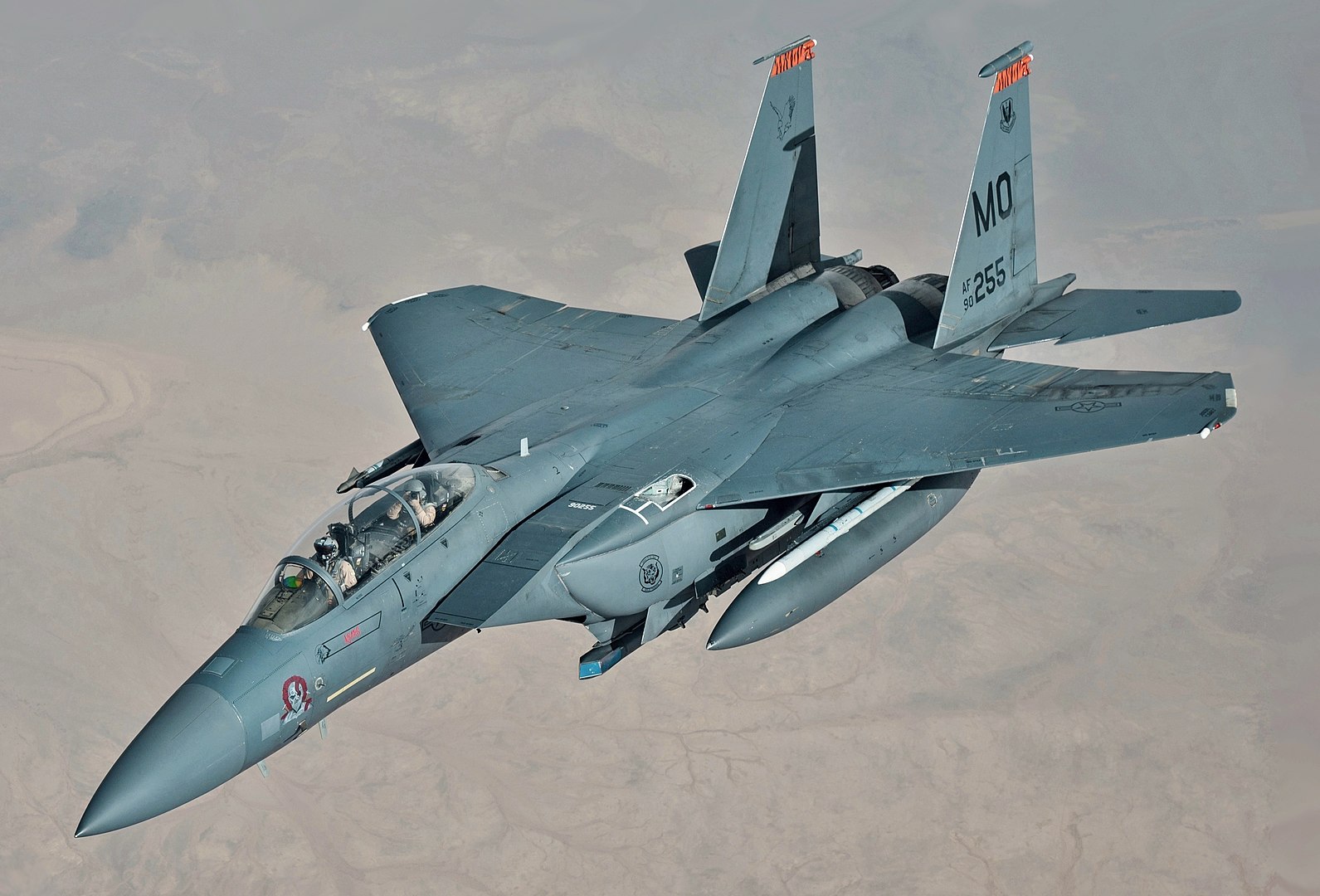
Illustrative image of the F-15E. Illustration: Wikipedia
The missiles themselves are a low-cost solution for precision engagement of light targets, from pickup trucks to drones, mortar teams or mobile launchers. This is especially important in operations near civilian infrastructure or allied forces, where traditional large munitions can cause too much collateral damage.
Technical characteristics also speak in favour of the system: speeds of up to 1,000 m/s, an effective range of up to 5 km, a warhead weighing up to 10 pounds, and a price that is significantly lower than that of large guided missiles.
The F-15E remains a multifunctional fighter capable of air-to-air combat, deep strikes and even nuclear weapons. The integration of APKWS II does not displace other functions, but rather adds another tool to it - accurate, cheap, and ideal for fighting cheap threats like drones and fast ground targets.
Source: Army Recognition


