Google has developed a neural network that recovers lost fragments of Latin inscriptions

Google DeepMind has developed an open neural network called Aeneas that can help restore ancient damaged Latin inscriptions. The ancient Romans left many written monuments, but not all of them have been preserved in perfect condition. Many of them are damaged, and most of them have come down to us only in the form of fragments. Aeneas helps to restore the lost parts of the text.
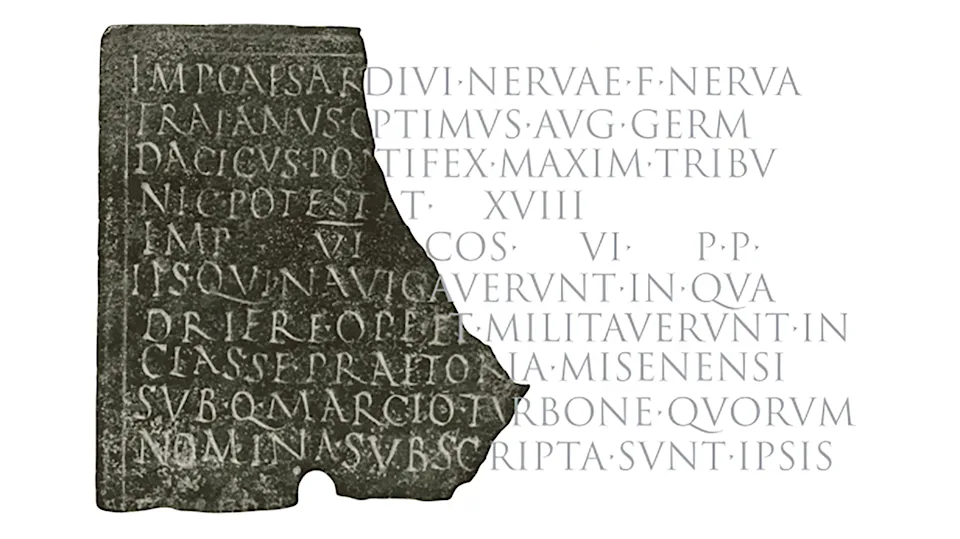
A restored bronze military diploma from Sardinia, awarded by Emperor Trajan to a sailor on a warship. Illustration: predictingthepast.com/aeneas
Keep your scepticism at bay
Yes, neural networks can make mistakes and invent things that don't exist. But Google approached the task with a scientific approach - to restore the text, the neural network needs context. Knowing the period to which the find belongs and the place of its discovery, the neural network analyses the vocabulary found on the found monuments of that time, as well as events relevant to that time, to guess the lost words as accurately as possible. Does this guarantee that Aeneas will reproduce the original inscription without error? Of course not, it is impossible. But it will do a really good job, based on a scientific approach and the powerful capabilities of modern technology. This task is especially difficult for monuments where even the length of the lost fragment is unknown. So yes, it does not give a 100% guarantee of authenticity. But for monuments that are irreparably damaged, we will not be able to achieve a better result. At least until the invention of a time machine.
Technical details of Aeneas
- The model perceives both text and images
- Trained on ~176,000 Latin characters, totalling 16 million characters
- Named after a mythical hero from the Trojan epic
- Created jointly by DeepMind and researchers from the universities of Nottingham, Warwick, Oxford and Athens
- Attribution: determines where (depending on one of 62 provinces) and when (accurate to ~13 years) the inscription was created
- Efficiency: with up to 10% of the characters damaged, the correct option is 73% of the time; even without knowing the length - 58%
- Search for analogues: finds parallels in style, form, and context
An interactive version of Aeneas is available at predictingthepast.com, and the code and database are open to researchers.
Why It Matters
Neural networks are very good at finding patterns in large amounts of information, in which it is very difficult for humans to identify relationships. Therefore, this approach will help to recover a little more historical information. Even if you make a mistake in specific words, Aeneas can suggest the main message of the text.
Source: www.engadget.com


