YouTube continues to lead the streaming market with ad revenue reaching $9.8bn for the year

YouTube reaffirmed its leadership in the online advertising market in the second quarter of 2025, reporting ad revenue growth to $9.8bn - up 13% from the same period last year. This result beat analysts' forecasts, who expected $9.6bn, and was one of the strongest quarters for Google's video platform in recent years.
Here's What We Know
YouTube's growing revenue was the result of a successful strategy to expand ad formats and dominate the streaming content segment. According to Nielsen, the service already accounts for 12.4% of all time users spend watching videos - and that's just on TV screens. Meanwhile, other streaming players - including Netflix, Max, Prime Video and Apple TV+ - have stepped up the pressure by introducing adverts into their services, but YouTube remains the most convenient and massive platform for video adverts.
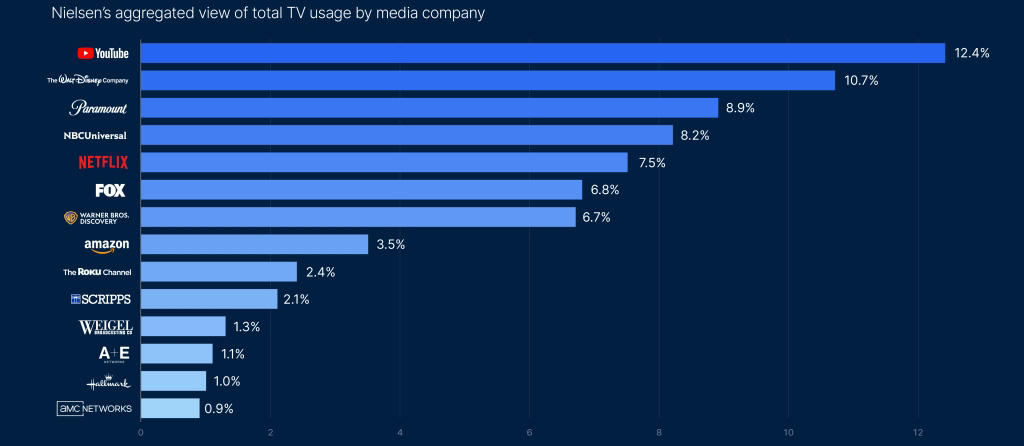
Share of media companies by time spent watching TV 2024-2025. Illustration: Nielsen
Advertisers continue to increase budgets for digital formats, especially in light of the decline in interest in linear TV and the rise of mobile content consumption. Against this backdrop, YouTube's success is not only a result of the platform's scale, but also its ability to quickly adapt to new user habits.
In general, Alphabet Holding (the owner of YouTube) also showed strong growth: the company's quarterly revenue totalled $96.4 billion, which is 13% more than a year ago. Such indicators show a stable recovery of the advertising market and effective monetisation of the Google ecosystem, which, in addition to YouTube, includes search advertising, cloud services and AI-products.
YouTube's financial success is further evidence that video platforms continue to take share away from classic TV and strengthen their position as the main channels of interaction between brands and audiences.
Source: TechCrunch


