The island country of Tuvalu will move to Australia, and citizenship will become virtual

The Pacific island nation of Tuvalu faces the threat of complete flooding due to rising sea levels. The country's government has launched the first-ever planned migration of its entire population to Australia.
Tuvalu consists of nine coral atolls in the Pacific Ocean. The average height of the country's territory is 2 metres, and the maximum is about 5 metres above sea level. Due to rising sea levels, environmentalists predict that most of the islands will be below sea level in 25 years. In response, the government has launched a programme to resettle the entire country. The agreements reached with Australia allow Tuvaluans to live freely on the smallest continent for a year with the possibility of extending this period, as well as to use all government programmes (education, healthcare, pensions) on an equal footing with the rest of the population. Similar agreements have been reached with other neighbouring countries, primarily New Zealand and Fiji. The popularity of this idea among Tuvaluans is very high - out of 11,000 people, 8,750 have already applied for migration. Not everyone will be allowed to leave at the same time; it is planned that 4% of the population will leave every year.
Due to its location in the depths of the Pacific Ocean, Tuvalu is still struggling to survive. Large cyclones destroy almost all houses and trees on the islands, and after Hurricane Bebe, the country was rebuilt with international assistance. In recent years, there has been no potable groundwater in the country and the population has been drinking collected rainwater.
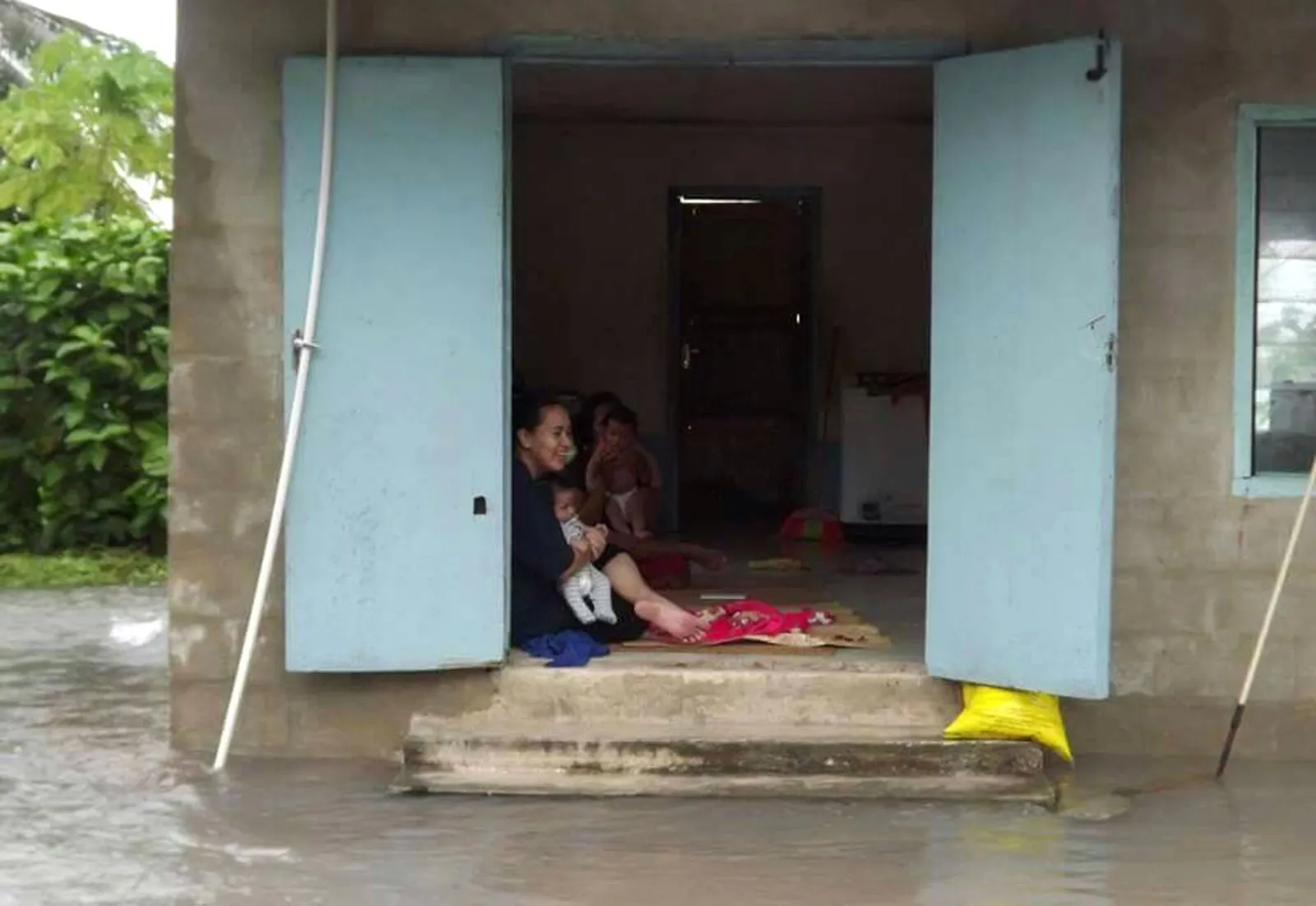
Local residents during a flood. Illustration: wired.com
In 2022, the government launched a digital state programme. A digital copy of Tuvalu is being created - samples of language, history, culture, customs are being stored, 3D mapping and filming are being carried out to preserve their identity even after physical resettlement. Virtual citizenship is being introduced - the population will be considered citizens of Tuvalu even if the country no longer has any physical territory. The country's government will function in the same way. This initiative has already been supported by 25 of Tuvalu's neighbouring countries.
This process is a unique example of how climate change can force a country to look for a new home, and how modern technology provides new ways to respond to such challenges.
Source: www.wired.com


