Microsoft research: 40 professions that will disappear due to artificial intelligence and 40 that are definitely safe

According to the study, which analyses more than 200,000 interactions with ChatGPT/Copilot, the most numerous jobs that automated systems can already perform or will soon be able to fully perform are collected. Based on this data, the researchers identified 40 professions that will soon be mostly or completely performed by artificial intelligence.
40 professions that may disappear due to AI
- Translators and interpreters
- Historians
- Flight attendants and tourist guides
- Sales representatives in the service sector
- Authors and writers
- Customer support workers
- CNC machine programmers
- Telephone operators
- Ticket collectors, railway/airline workers
- Radio presenters and announcers
- Brokerage clerks
- Home economics and farming courses
- Telemarketers
- Concierges
- Political scientists/political analysts
- News analysts, journalists, reporters
- Mathematicians
- Technical writers
- Proofreaders and text layout designers
- Support staff
- Editors
- Teachers of business disciplines at universities
- PR specialists
- Product demonstrators and promoters
- Advertising agents
- New account managers
- Statistical assistants
- Rental and hire managers
- Data Scientists
- Personal financial advisors
- Archivists
- University level economic teachers
- Web developers
- Management analysts
- Geographers
- Modellers
- Market analysts
- Employees of emergency services (operators)
- Switchboard operators
- Teachers of library science at the university level
The main features of such professions are text processing, oral communication, and summarising large amounts of information - areas where AI systems are already proving to be highly effective.
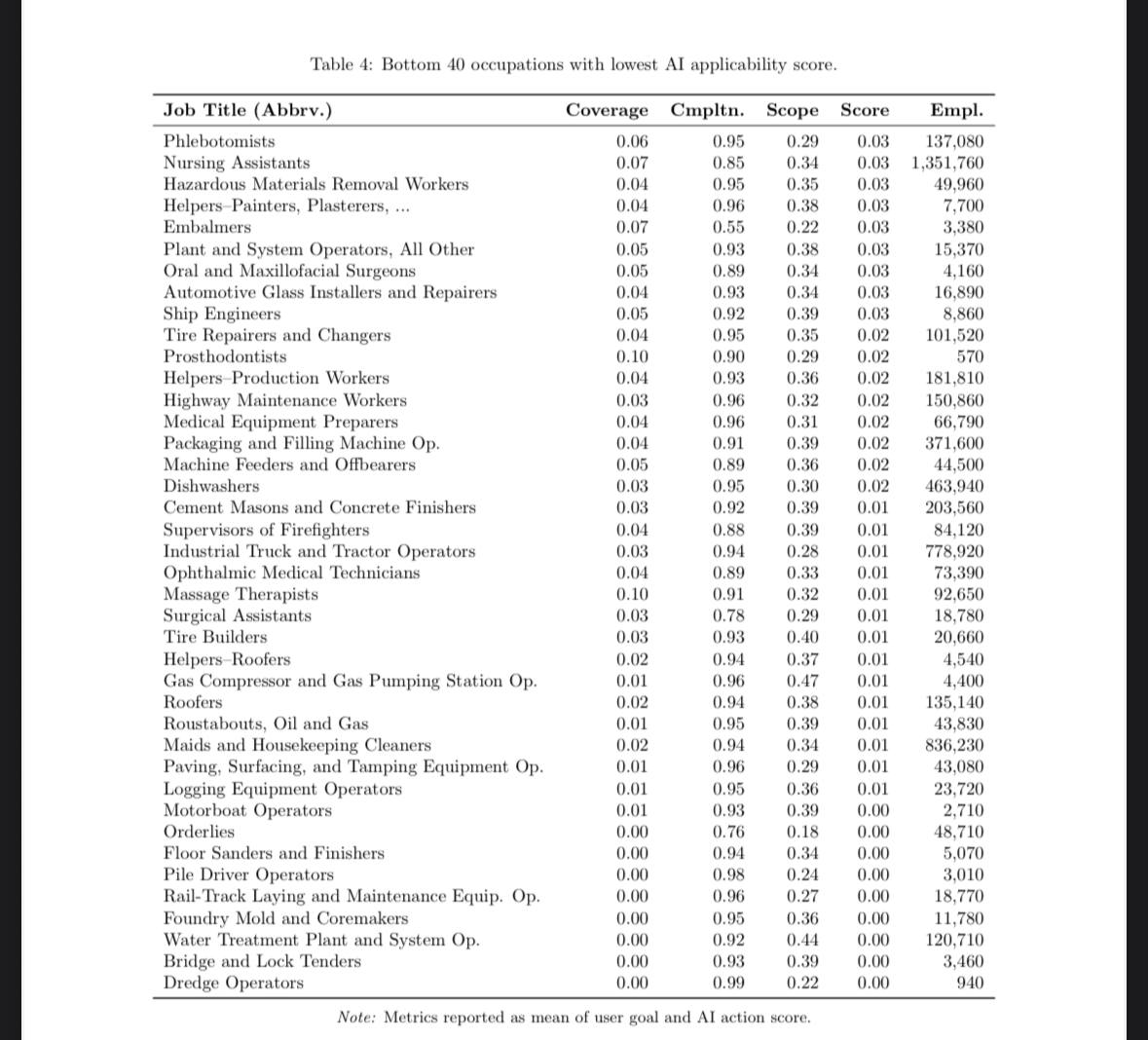
Image description. Illustration: джерело
40 professions considered to be the least vulnerable to AI
- Excavators
- Bridge and overpass builders
- Employees of water purification systems of water supply
- Manufacturers of casting moulds
- Layers of railway tracks and equipment
- Operators of pole setters
- Grinders and surface finishers
- Nurses and nursing assistants
- Motor boat captains
- Operators of logging equipment
- Workers in paving, coating and tamping
- Cleaners and housekeepers
- Workers at oil/gas facilities
- Roofers
- Compressor station operators
- Roofers' assistants
- Tyre fitters
- Surgeon's assistants
- Massage therapists
- Ophthalmologists and their assistants
- Operators of industrial tractors and trucks
- Chiefs of firefighters' guards
- Workers with cement and concrete
- Dishwashers
- Agronomists
- Packers and operators of packaging machines
- Medical assistants
- Road workers
- Production assistants
- Periodontists and dental hygienists
- Repairmen
- Marine workers and engineers
- Car glass installers
- Oral and maxillofacial surgeons
- Farmers and farm equipment operators
- Divers
- Embalmers
- Painters and plasterers
- Hazardous waste disposal workers
- Vascular surgeons
These professions require physical performance, non-standard situations, or complex interpersonal contacts that are not yet available to modern AI. They also include professions that cannot be replaced by CNC machines and robots due to the need for small-scale work or unpredictable, difficult-to-predict environments.
What it means.
The study highlights a trend: AI is more of a threat to office, creative, or administrative jobs, but less so to physical or healthcare professions. Microsoft emphasises that the goal of automation is to support humans with AI, not to replace them completely, but warns that those who do not master modern tools risk being displaced. Despite the significant impact of AI on programming, leading industry executives are convinced that a complete displacement of humans will not happen in the near future, as a significant amount of work is still better performed by skilled people.
Recommendations.
Employees in areas with a high risk of automation should develop skills of interaction with AI: using Copilot, mastering the correct prompts, and successful use of AI data. AI has changed the rules of the labour market and it is pointless to fight it. It is worth learning how to turn the power of AI to your advantage - to speed up and reduce the cost of work, implement more complex projects, manage and control the operation of automation.
Source: www.microsoft.com


