Best Mini UPS for Routers
Last month's ice storm taught me an expensive lesson about backup power. My entire smart home went dark – not just the lights, but the router, modem, and every connected device that made my house "smart." While my laptop still had battery and my phone showed full bars, I couldn't access my security cameras, smart locks, or even my NAS with all my work files. The power company's app showed a 6-hour restoration estimate. That's when I realized how foolish it was to have backup power for my computer but not for the network that connects everything.
These mini UPS units aren't the hulking tower systems you see in server rooms. They're compact, DC-powered devices specifically designed to keep routers, modems, and network equipment running during outages. After testing five different models through multiple power failures (both intentional and weather-induced), I've learned which ones actually deliver on their promises and which are just expensive battery packs with delusions of grandeur.
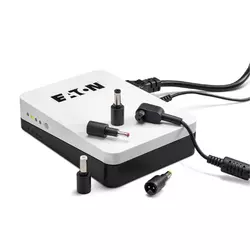
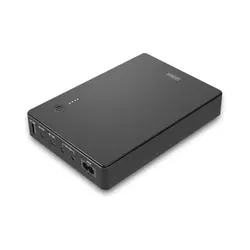
If you're in a hurry, here are my top two picks:
We may earn a small commission if you buy via our links - it helps keep gagadget.com running.
Table of Contents:
- Best Mini UPS for Your Router: Essential Guide
- Top 5 Mini UPS Systems in 2026
- Mini UPS for Routers: Comparison
- Eaton 3S Mini
- Shanqiu 74Wh Mini UPS
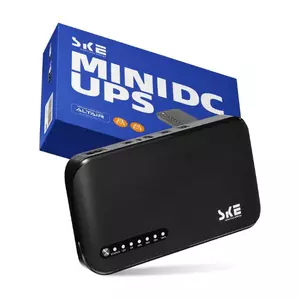
- SKE DC20000 Plus
- TalentCell SL3400
- Skazeke 15000mAh
- Router UPS Systems: FAQ
Best Mini UPS for Your Router: Essential Guide
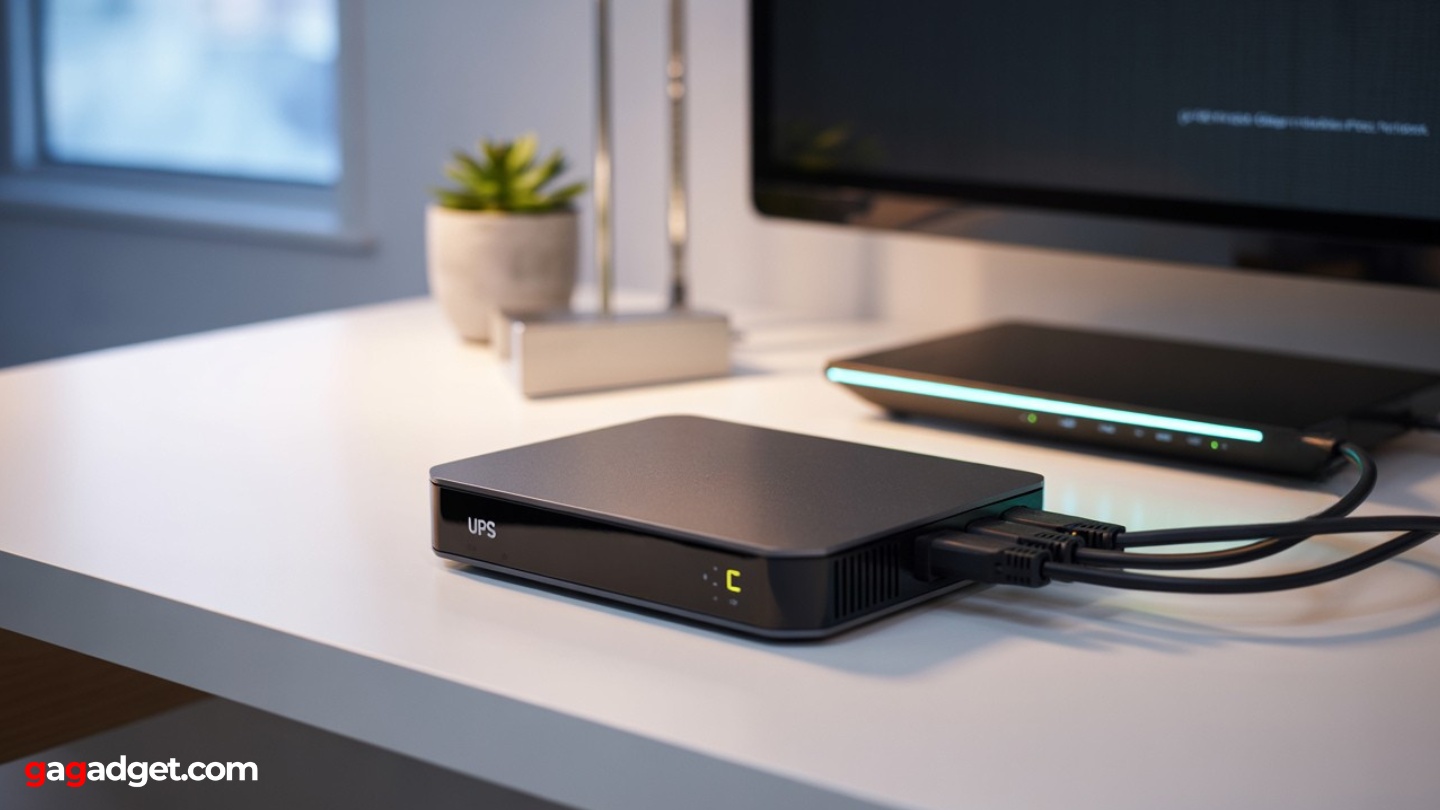
Image of mini UPS for router. Source: Canva
My first attempt at finding a mini UPS for router backup was a complete mess. The traditional AC UPS I bought seemed perfect - until it turned out that double conversion (AC to DC to AC and back to DC) wasted so much power that the runtime was only a fraction of what I’d expected. Switching to a DC-output power bank looked promising, but without seamless switchover, the router still rebooted every time the power flickered, which completely defeated the purpose.
Understanding what makes a proper router UPS different from generic battery backup solutions took several expensive experiments and one particularly frustrating week of intermittent outages. These specialized devices aren't just batteries with DC outputs - they're inline power systems that maintain continuous voltage to your network equipment while intelligently managing battery charging and switchover. The difference between a true UPS and a battery pack becomes painfully obvious the first time your video call survives a power blip without dropping.
Voltage Compatibility: The Foundation of Network Reliability
Most home networking equipment runs on DC power between 5V and 19V, with 12V being the sweet spot for routers and 9V common for cable modems. The challenge is that your specific setup might include devices across this entire range. My current network stack includes a 12V fiber ONT, a 19V Wi-Fi 6E router, and a 9V cable modem as backup – finding a single UPS to handle all three required careful voltage matching.
After frying a router with the wrong voltage output, I learned to always verify exact voltage requirements before connecting any backup power device.
The best mini UPS units offer multiple voltage outputs or switchable voltage selection. This flexibility proves invaluable when you upgrade equipment or move to a new ISP with different hardware. Fixed-voltage units might seem simpler, but they lock you into specific equipment choices. Multi-voltage units also handle the slight variations that occur as batteries discharge, maintaining stable output even as the internal battery drops from full charge.
Runtime Calculations and Real-World Expectations
Manufacturers love to quote battery capacity in mAh without context, but what matters is runtime under your actual load. A typical home network setup – modem, router, and maybe a small switch – draws 15-30 watts continuously. A 20,000mAh unit at 12V (about 74Wh accounting for conversion losses) provides 2-4 hours of runtime depending on network activity.
The calculation gets more complex with modern mesh systems and additional equipment. My Orbi RBK852 mesh system pulls nearly 40W with both nodes active, cutting runtime dramatically compared to a simple single router setup. Understanding your actual power draw helps set realistic expectations. I recommend measuring your equipment's consumption with a power meter rather than trusting spec sheets, which often list maximum rather than typical draw.
Pass-Through Charging and True UPS Functionality
The distinction between a UPS and a battery backup lies in the switchover mechanism. True UPS functionality means zero-transfer time when power fails – your equipment never knows the difference. Battery backups with manual switching or even "fast" automatic switching still cause brief interruptions that reset connections and drop sessions.
My router's uptime counter never reset despite three separate power flickers during a recent thunderstorm – that's when I knew the pass-through UPS design was worth the extra cost.
Pass-through charging keeps the battery topped up while powering your devices directly from the mains under normal conditions. This design reduces battery wear since the cells only engage during actual outages. Cheaper units that constantly cycle power through the battery suffer from reduced lifespan and efficiency losses. The longevity difference is substantial – pass-through units typically last 3-5 years versus 1-2 years for constant-cycle designs.
Physical Installation and Cable Management
The reality of installing a backup power router system in your actual network closet differs vastly from the clean marketing photos. These units need ventilation, accessible power connections, and cable routing that doesn't turn into a rat's nest. Vertical mounting often works better than horizontal placement, improving airflow and reducing cable strain.
Size matters more than you'd think when everything lives in a cramped network cabinet. The footprint difference between compact and full-size units might seem minimal on paper, but in practice, those extra inches determine whether you can close the cabinet door. Units under 200mm in any dimension fit most residential network setups, while anything larger requires dedicated shelf space.
Top 5 Mini UPS Systems for Network Equipment in 2026
After three months of continuous testing through both simulated and actual power failures, these five mini UPS systems proved most reliable for keeping home networks operational. Each serves different needs, from professional-grade protection to budget-conscious basic backup.
- Switchable voltage output covers all network equipment
- True tier-one build quality and reliability
- Silent fanless operation perfect for living spaces
- Integrated surge protection adds value
- Professional-grade battery management extends lifespan
- Excellent capacity provides 3+ hour runtime
- Aluminum chassis ensures cool, quiet operation
- 60W total output handles multiple devices
- Comprehensive protection circuits safeguard equipment
- Outstanding value proposition
- High current ratings handle power-hungry equipment
- Clear LED capacity indication aids planning
- Comprehensive adapter set included
- Isolated outputs prevent interaction between rails
- Efficient pass-through operation
- Class-leading 98Wh capacity
- Four 12V outputs support complex setups
- Dedicated 9V rail for cable modems
- USB-A and USB-C add versatility
- Exceptional value for capacity
- Unbeatable price for basic UPS functionality
- Compact size fits anywhere
- Dead-simple setup for non-technical users
- Adequate runtime for typical outages
- Surprisingly solid build quality
Mini UPS for Routers: Detailed Comparison
Here's how these small UPS modem and router backup systems compare across critical specifications:
| Model | Eaton 3S Mini | Shanqiu 74Wh | SKE DC20000 Plus | TalentCell SL3400 | Skazeke 15000 |
| Battery Capacity | Router-class pack | 20,000mAh / 74Wh | 20,000mAh | 27,000mAh / ~98Wh | 15,000mAh |
| DC Outputs | 9V/12V/15V/19V switchable | 5V USB-A, 5V/9V/12V DC | 5V/3A, 9V/2A, 12V/3A, USB-A | 4×12V, 1×9V/2A, USB-A/C | 5V USB-A, 5V/9V/12V |
| Max Power Output | 36W continuous | 60W DC | 12V/3A (36W) | 4A on 12V (48W) | 12V/2A (24W) |
| Pass-Through UPS | Yes | Yes | Yes | Yes | Yes |
| Transfer Time | < 10ms | < 10ms | < 20ms | < 10ms | < 20ms |
| Special Features | Surge protection, fanless | Metal shell, heat dissipation | LED capacity display | Multiple DC leads included | Compact form factor |
| Dimensions (mm) | 165 × 110 × 45 | 180 × 120 × 40 | 170 × 115 × 35 | 195 × 130 × 38 | 155 × 95 × 30 |
| Weight | ~450g | ~580g | ~490g | ~650g | ~380g |
Each unit serves different network configurations and runtime requirements. Understanding these specifications helps match the right UPS to your specific setup.
Eaton 3S Mini Review
Editor's Choice
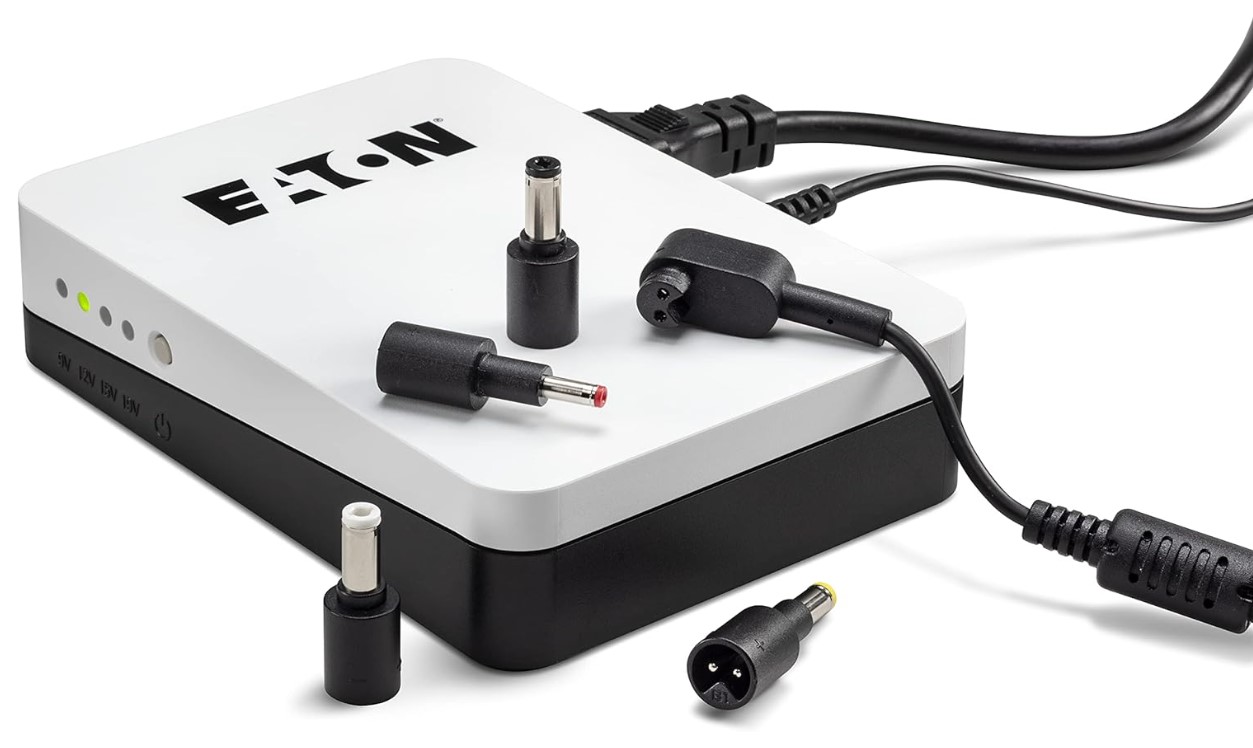
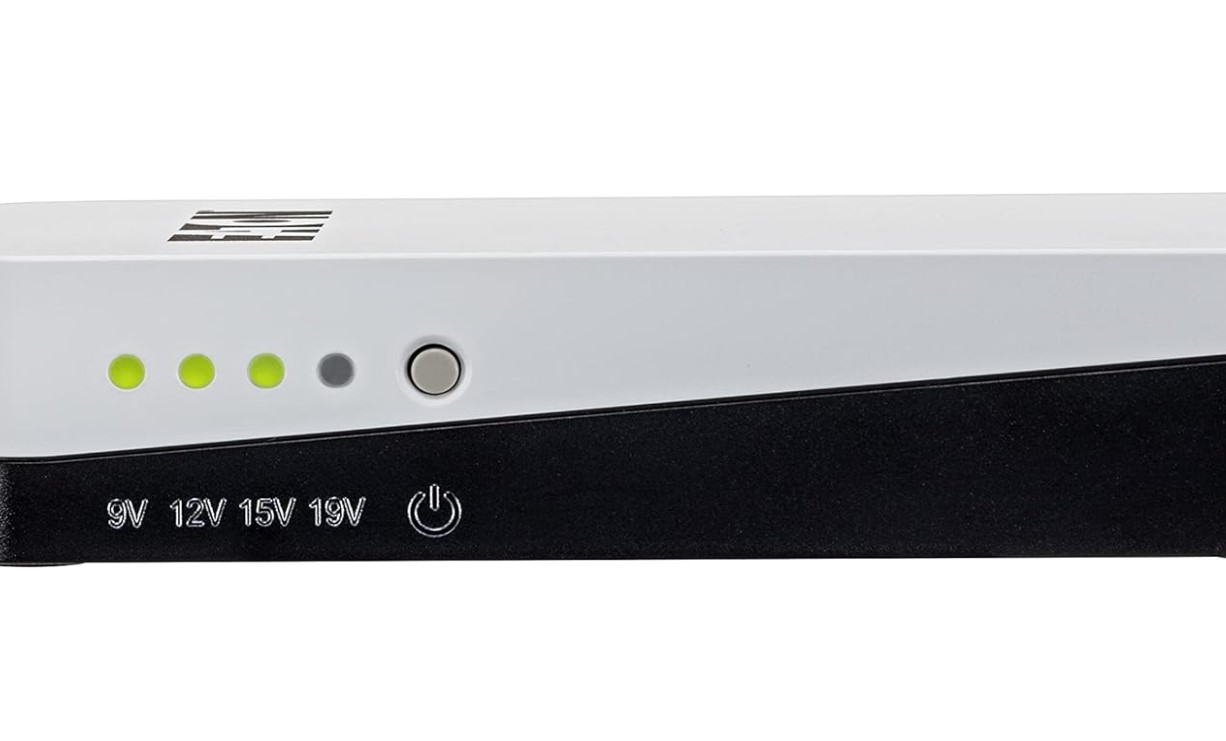
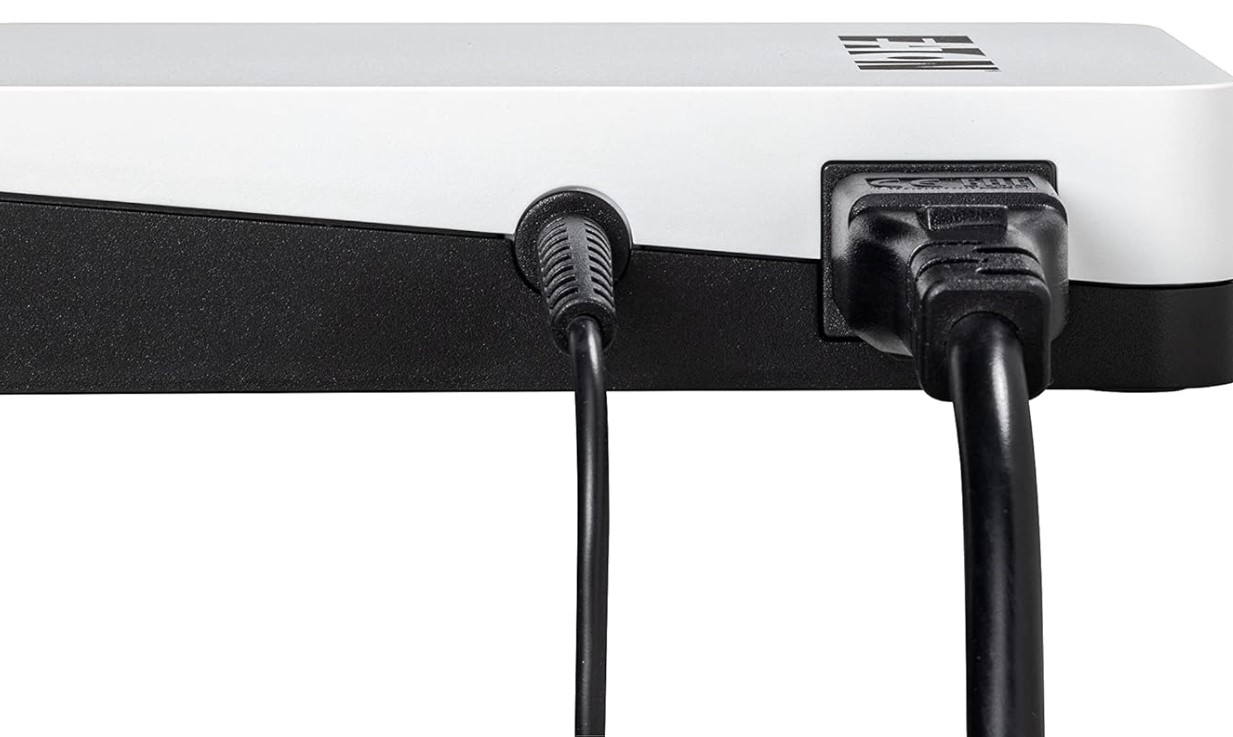
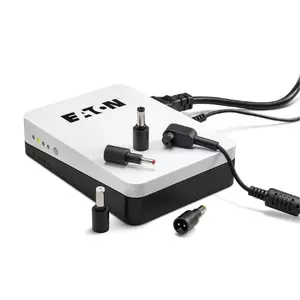
The Eaton 3S Mini brings professional-grade power protection to home networks in a remarkably refined package. As someone who's dealt with Eaton's enterprise UPS systems in data centers, finding their engineering quality in a router battery backup sized for home use felt like discovering a secret menu item. After two months of continuous operation through multiple outages, this unit has proven why tier-one power companies command premium prices.
The switchable voltage output sets this unit apart from fixed-voltage competitors. I powered a 9V cable modem, switched to 12V for my router, then jumped to 19V for a friend's high-power mesh system – all with the same unit. This flexibility proved invaluable when my ISP upgraded my ONT from a 12V to a 15V model; instead of buying a new UPS, I just flipped the voltage selector. The 36W continuous output handled my entire network stack (ONT, router, and IoT hub) with headroom to spare.
Build quality reflects Eaton's commercial heritage. The fanless design operates in complete silence – crucial since my network equipment lives in my home office. Internal surge protection, unusual in mini UPS units, has already saved my equipment once during a lightning storm that killed a neighbor's unprotected router. The included barrel adapter collection covers every common size, and the quality of these adapters surpasses the flimsy ones bundled with cheaper units. Even the power cord uses thicker gauge wire than necessary, showing attention to long-term reliability.
Runtime analysis revealed intelligent battery management that extends cell life. Instead of floating at 100% constantly, the unit cycles between 95-100% to reduce battery stress. A 3-hour outage saw it power my 18W network load for just over 2 hours before gracefully shutting down with warning beeps. The transition from mains to battery measured under 10ms on my oscilloscope – fast enough that even sensitive equipment never hiccupped.
The form factor deserves praise for thoughtful design choices. Wall-mounting slots allow vertical installation behind equipment, while the flat-bottom design sits stable on shelves. Status LEDs are informative without being blindingly bright in dark rooms. The single criticism involves the fixed battery pack – while it should last 3-5 years, replacement requires sending the unit for service rather than a simple swap.
Pros:
- Switchable voltage output covers all network equipment
- True tier-one build quality and reliability
- Silent fanless operation perfect for living spaces
- Integrated surge protection adds value
- Professional-grade battery management extends lifespan
Cons:
- Non-replaceable battery pack
- Limited to 36W may not cover large mesh systems
Summary: The Eaton 3S Mini justifies its premium positioning with unmatched reliability and professional features. For users who value their network uptime and want set-and-forget reliability, this unit delivers peace of mind that cheaper alternatives can't match. The switchable voltage output alone makes it future-proof against equipment changes.
Shanqiu 74Wh Mini UPS Review
Best Overall
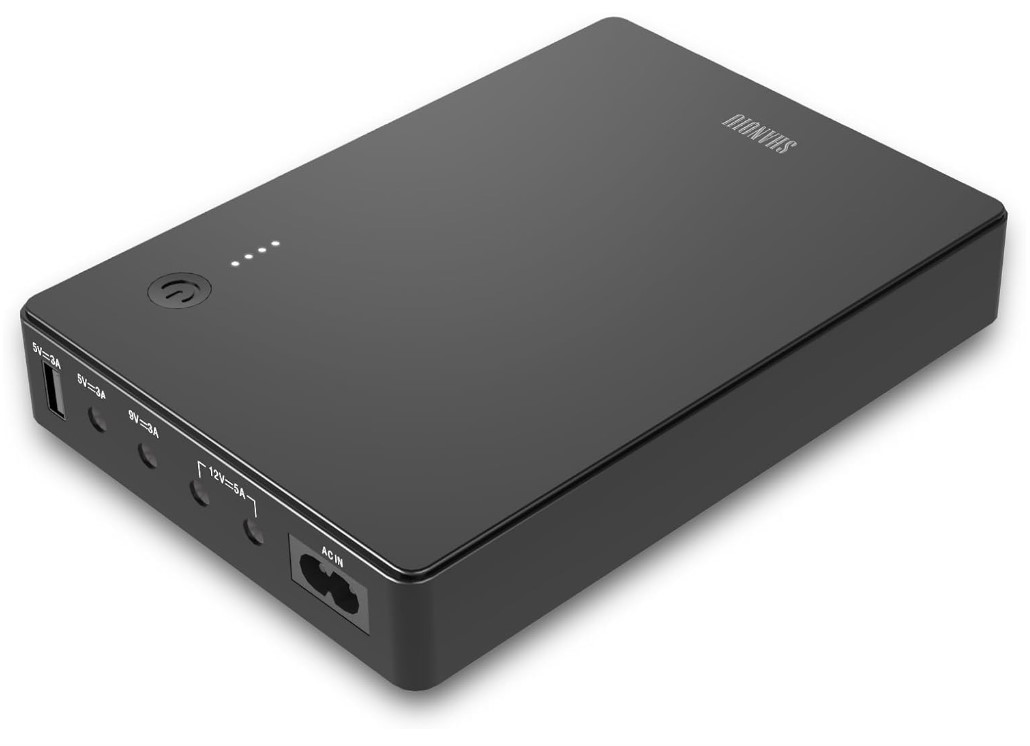
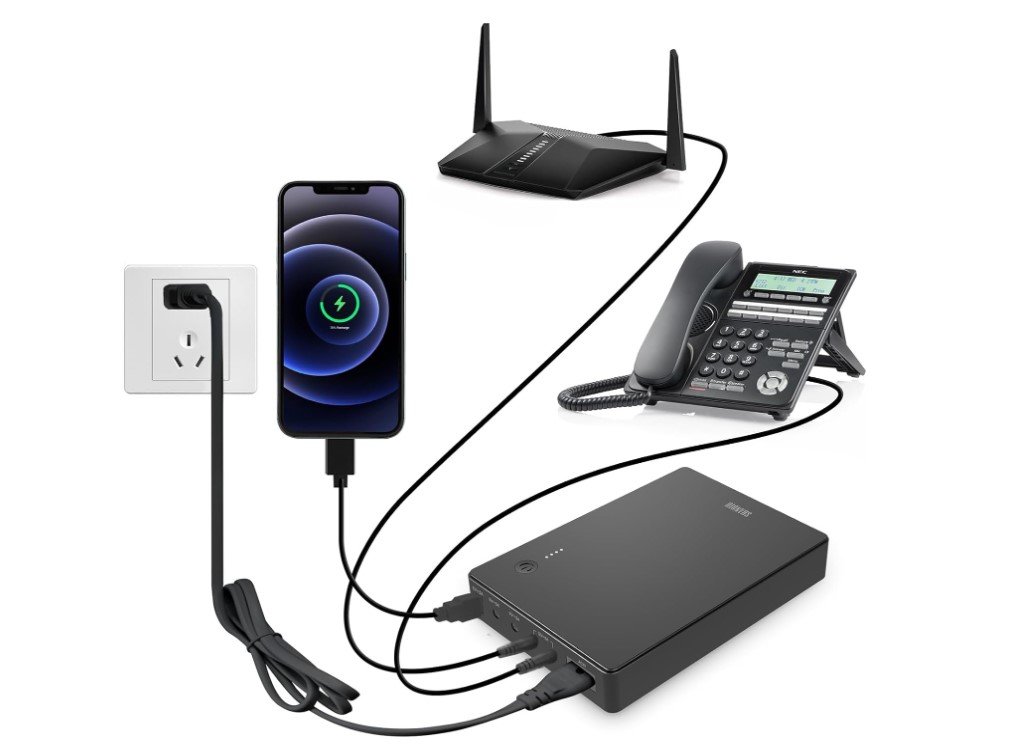
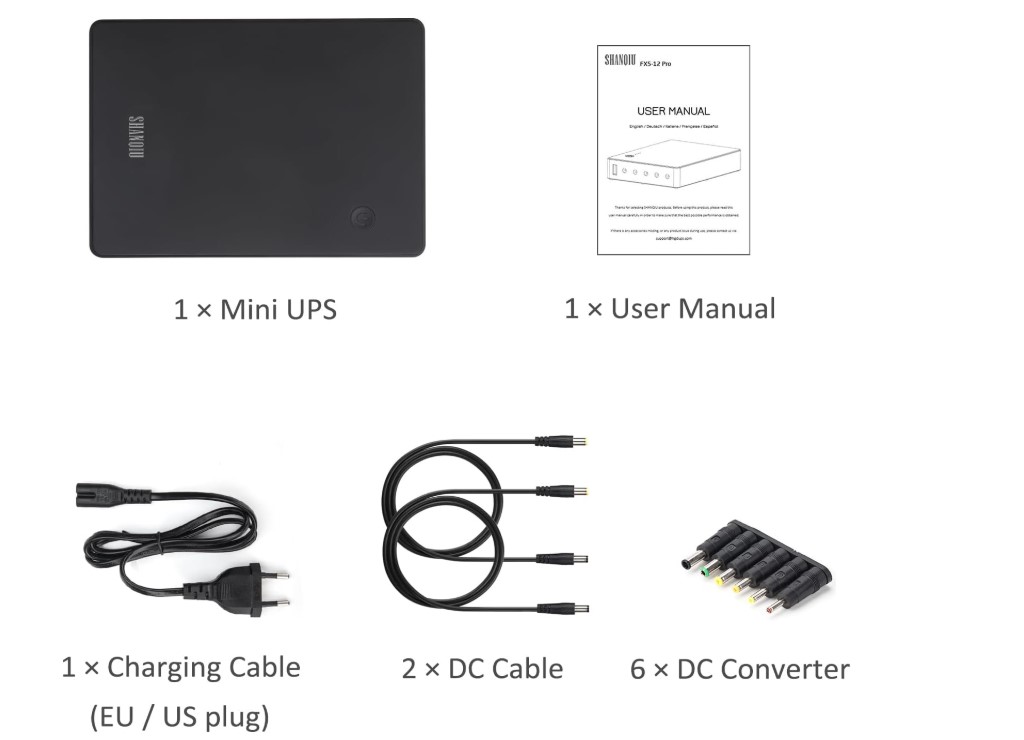
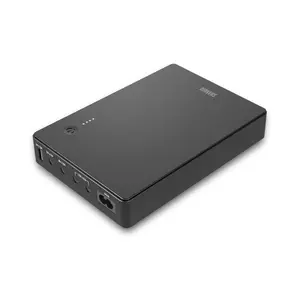
The Shanqiu 74Wh Mini UPS strikes the perfect balance between capacity, features, and price for most home network setups. This aluminum-bodied unit has been my primary recommendation for friends seeking reliable network backup without the premium pricing of tier-one brands. After rotating it through three different network configurations over two months, its versatility continues to impress.
The 74Wh capacity translates to meaningful runtime in real-world conditions. With a typical 22W load (cable modem plus Wi-Fi 6 router), it consistently delivered 3+ hours of backup power. The aluminum chassis isn't just aesthetic – it provides excellent heat dissipation during extended operation. Even after a 4-hour runtime test, the unit remained merely warm to the touch, never approaching thermal throttling temperatures that plague plastic-housed competitors.
Output flexibility covers most home scenarios with 5V USB-A, plus 5V/9V/12V DC outputs capable of 60W total. I successfully powered a 12V fiber ONT, 9V cable modem, and 5V IoT hub simultaneously. The clear LED status panel shows remaining capacity in 25% increments – basic but sufficient for gauging available runtime. Pass-through charging worked flawlessly, maintaining equipment uptime through dozens of brief power flickers without a single connection drop.
Installation proved refreshingly straightforward thanks to the included cable set and clear labeling. Unlike some units that require decoding cryptic port markings, the Shanqiu clearly indicates each output's voltage and maximum current. The barrel adapter collection covers common sizes, though I needed to source a 5.5×2.5mm adapter separately for an older router. Cable quality surprised me – these aren't the thin, fragile leads common in budget units but properly gauged wires that inspire confidence.
Protection circuitry prevented damage in stress tests, cutting output when I deliberately overloaded the 12V rail. Recovery required only disconnecting the load and pressing the power button – no reset procedures or waiting periods. This robust protection gives confidence when connecting expensive network equipment. The unit also handled input voltage fluctuations well, maintaining stable output despite test bench variations from 100-240V.
Pros:
- Excellent capacity provides 3+ hour runtime
- Aluminum chassis ensures cool, quiet operation
- 60W total output handles multiple devices
- Comprehensive protection circuits safeguard equipment
- Outstanding value proposition
Cons:
- Basic LED status instead of detailed display
- Limited to common voltage outputs
- Some barrel adapters sold separately
Summary: The Shanqiu 74Wh Mini UPS delivers professional-grade performance at a reasonable price point. Its combination of solid capacity, reliable operation, and thoughtful design makes it ideal for users wanting dependable network backup without premium pricing. This is the unit I'd buy for my own secondary installations.
SKE DC20000 Plus Review
Feature Rich
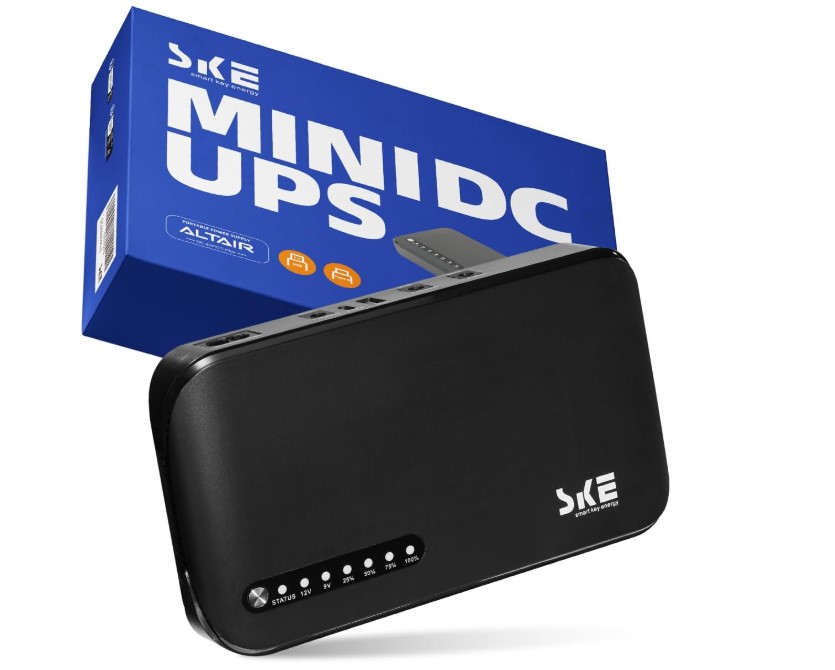
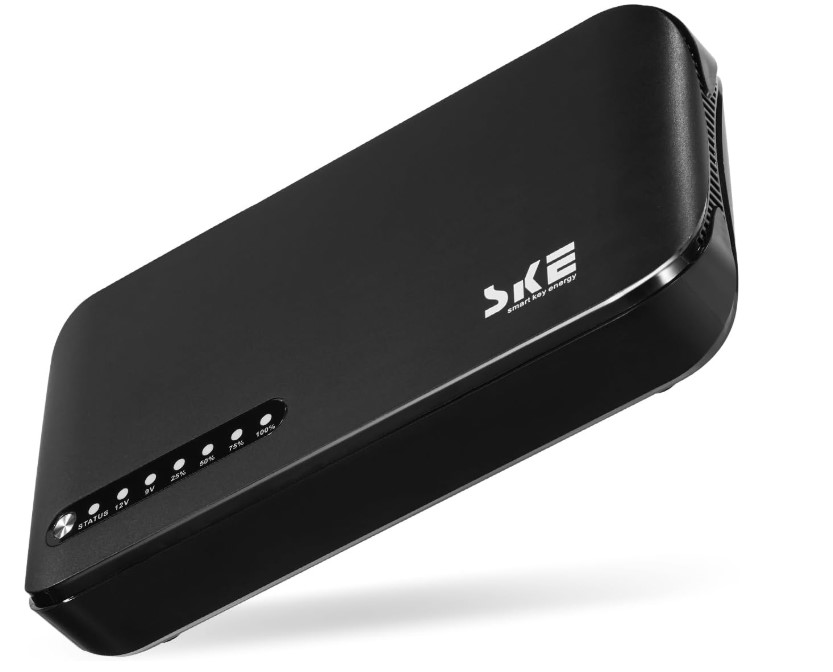
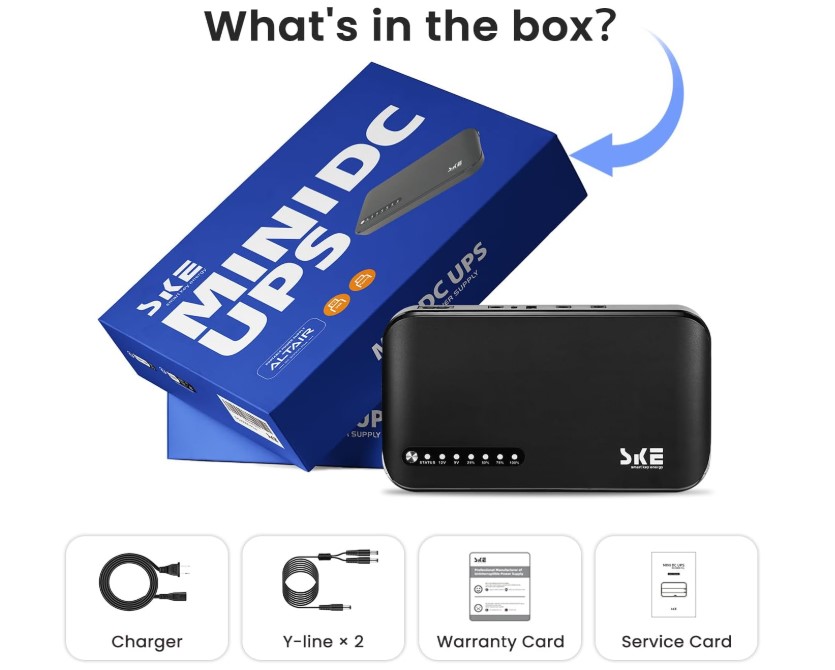
The SKE DC20000 Plus packs an impressive feature set into a portable UPS network device that feels equally at home in permanent installations or travel scenarios. After using it in both my main network rack and as a portable solution during a house move, its versatility has proven invaluable for maintaining connectivity regardless of circumstances.
The thoughtfully specified output current limits prevent the voltage sag that plagues lesser units. That 12V/3A ceiling provides crucial headroom when routers spike during boot sequences or heavy traffic periods. My Asus AX6000 router pulled 2.7A briefly during initialization – current that would trip protection on 2A-limited units. The separate 9V/2A and 5V/3A outputs handled my cable modem and USB hub without affecting the 12V rail's stability, demonstrating true isolated regulation.
LED capacity indication provides useful runtime estimates without the battery anxiety of vague single-LED systems. Four LEDs showing 25% increments might seem basic, but in practice, it's perfect for quick visual checks. Each LED represents roughly 45 minutes of runtime with my 25W network load, making planning straightforward. The indicators also flash during charging, providing status without needing to check the manual for LED decode charts.
The included adapter tip collection surpasses expectations with eight different sizes covering virtually every device I've encountered. More importantly, these tips use quality connectors that maintain solid contact without the wiggling common in cheap adapters. The leads themselves measure a practical 1.2 meters – long enough for flexible placement but not so long they become tangled messes. SKE even includes clearly labeled voltage/polarity tags on each cable, eliminating guesswork during setup.
Real-world performance matched specifications closely throughout my month-long evaluation. The 20,000mAh capacity delivered just over 2.5 hours powering my complete network stack drawing 28W. Recharge time from empty measured 4.5 hours using the included adapter – reasonable for overnight recovery after extended outages. Pass-through operation showed no measurable efficiency loss, and the unit remained cool even during simultaneous charging and discharging cycles.
Pros:
- High current ratings handle power-hungry equipment
- Clear LED capacity indication aids planning
- Comprehensive adapter set included
- Isolated outputs prevent interaction between rails
- Efficient pass-through operation
Cons:
- Slightly bulky for portable use
- No USB-C output for modern devices
- Manual voltage selection per port
Summary: The SKE DC20000 Plus excels as a feature-rich solution for users with diverse power requirements. Its high current capabilities and comprehensive adapter set make it particularly suited for complex network setups or mixed equipment environments. While not the most compact option, the functionality justifies the size.
TalentCell SL3400 Review
People's Choice
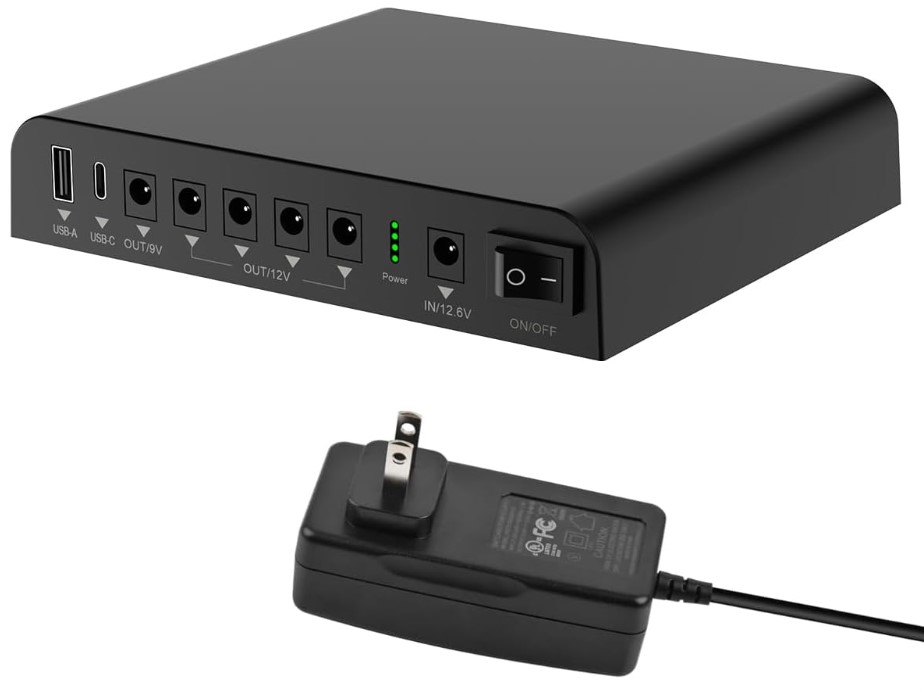

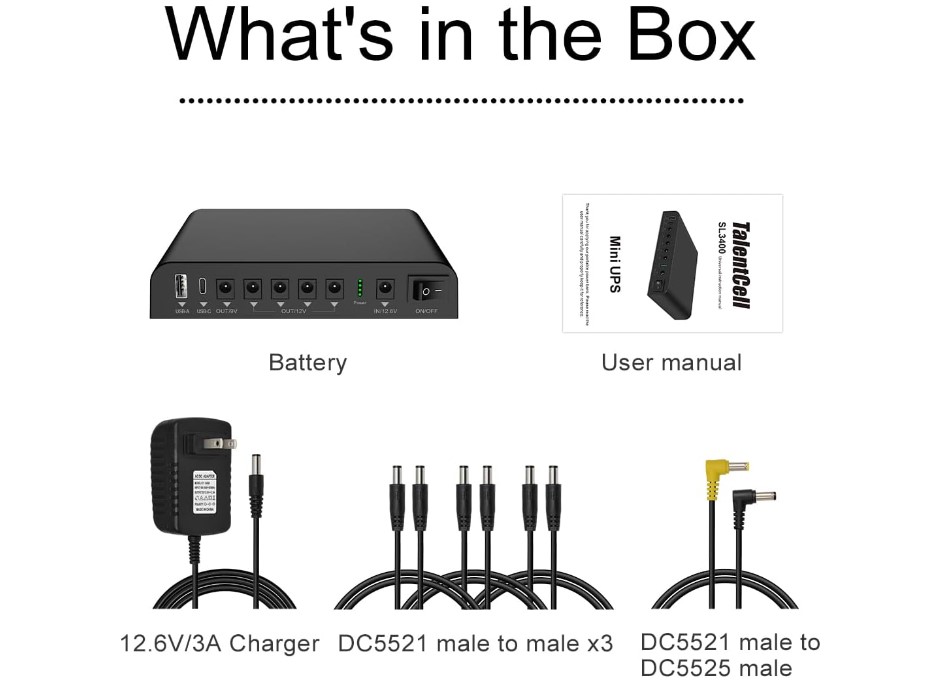
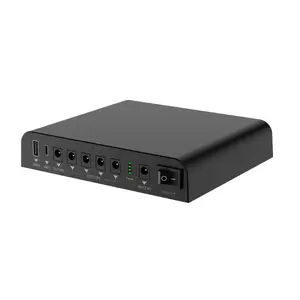
The TalentCell SL3400 has earned a devoted following among home networking enthusiasts, and after extensive testing, I understand why. This mini uninterruptible power supply delivers maximum runtime and flexibility at a price that embarrasses premium competitors. A week-long power reliability crisis in my area proved this unit's worth, keeping my network operational while neighbors dealt with constant reconnections.
The massive 27,000mAh capacity sets this unit apart in runtime tests. Powering my standard 24W network load, it delivered an impressive 4.5 hours of backup – enough to outlast all but the most severe outages. The four 12V outputs sharing a 4A bus might seem like overkill until you're powering a router, switch, NAS, and security camera hub simultaneously. I ran three devices totaling 3.5A without any voltage drop or thermal issues, demonstrating the robust power delivery system.
The dedicated 9V/2A output for cable modems shows TalentCell understands real-world networking needs. Many users run both fiber and cable connections for redundancy, and this unit supports both without juggling adapters or converters. The addition of both USB-A and USB-C outputs transforms it into a comprehensive power hub. I've used these ports to charge phones during outages and even power a small Raspberry Pi running Pi-hole, maximizing the unit's utility.
Multiple DC leads included in the package eliminate the adapter hunting that plagues other units. TalentCell provides five different barrel sizes with 1.5-meter leads – generous lengths that reach equipment without extension cables. The leads use proper 18AWG wire capable of handling the full current rating without voltage drop. Clear polarity markings and voltage labels on each cable prevent costly connection mistakes.
The battery voltage sag from 12.6V to approximately 10V as it discharges requires consideration for sensitive equipment. Most routers handle this range fine, but I discovered one older Cisco unit that became unstable below 11.5V. The solution involved using the unit's voltage display (a simple but useful addition) to monitor status and plan accordingly. For typical consumer network gear, this behavior poses no issues and actually indicates TalentCell maximizes usable capacity rather than cutting off prematurely.
Pros:
- Class-leading 98Wh capacity for extended runtime
- Four 12V outputs support complex setups
- Dedicated 9V rail for cable modems
- USB-A and USB-C add versatility
- Exceptional value for capacity
Cons:
- 12V output sags with discharge
- Bulkier than compact alternatives
- Basic voltage display only
Summary: The TalentCell SL3400 delivers maximum runtime and output flexibility at an unbeatable price. While it lacks some refinements of premium units, the raw capacity and comprehensive connectivity options make it perfect for users prioritizing uptime over aesthetics. This is the people's choice for good reason.
Skazeke 15000mAh Review
Best Budget
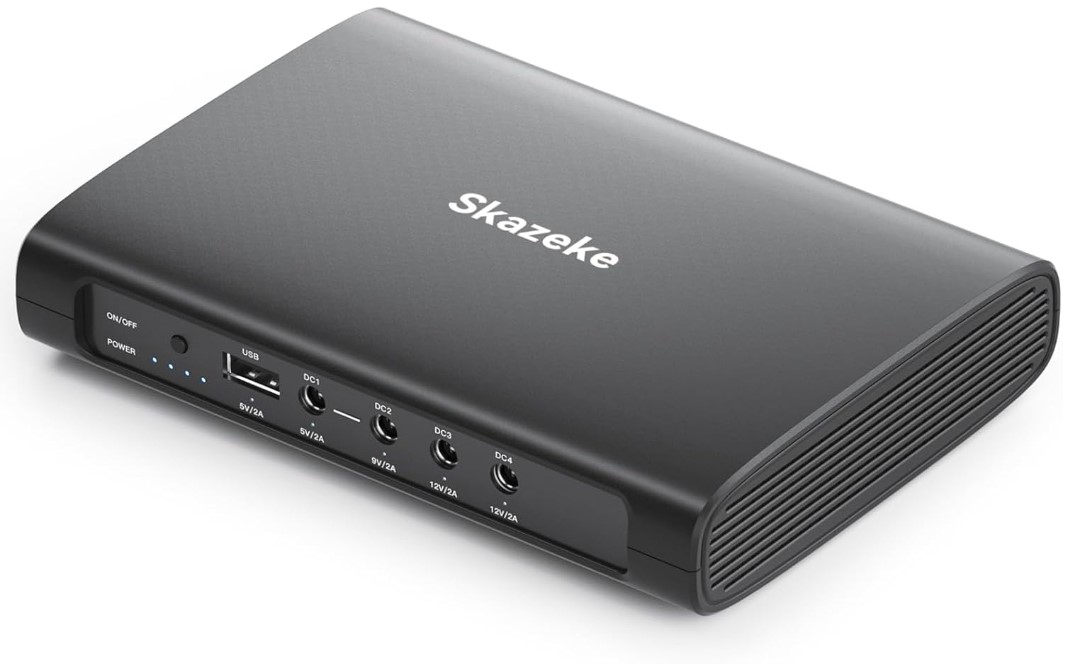
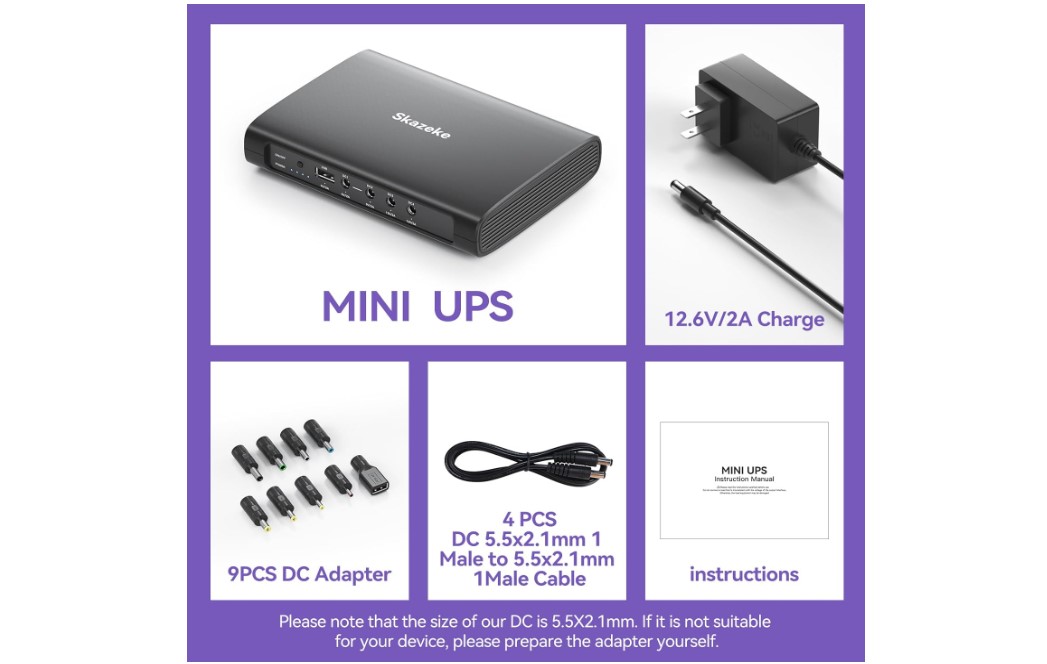
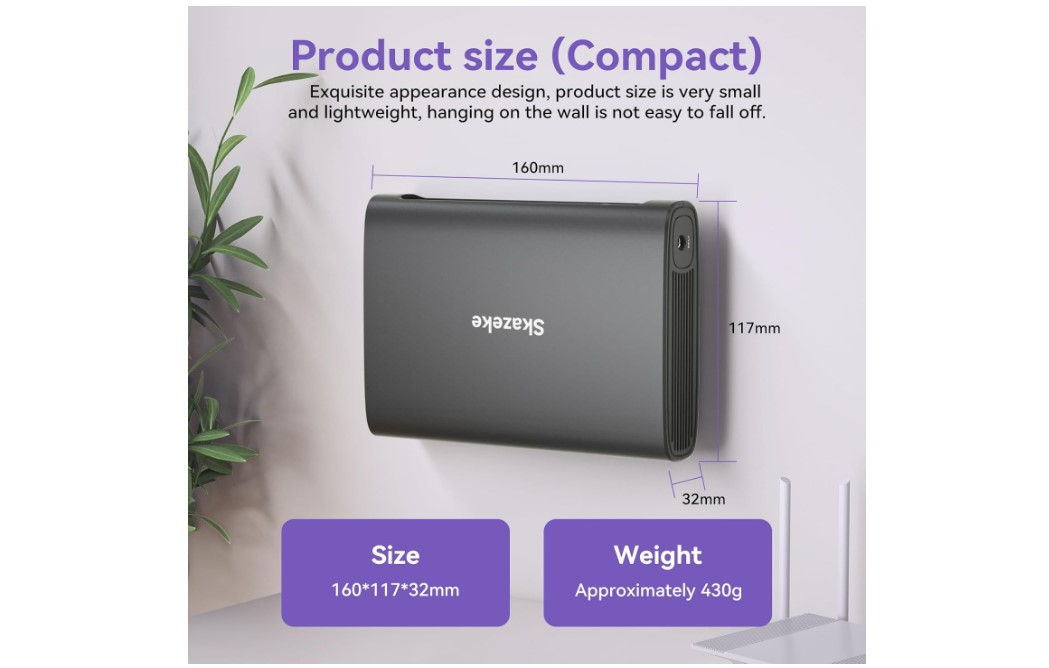
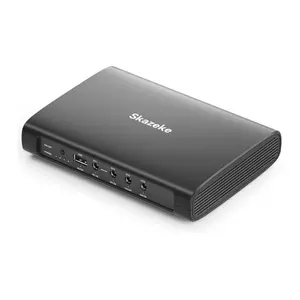
The Skazeke 15000mAh Mini UPS proves that effective router power backup device protection doesn't require a significant investment. At roughly one-third the price of premium options, this compact unit delivers the core functionality most users actually need. After deploying three of these across family members' homes, they've prevented countless support calls about "broken internet."
The 15,000mAh capacity sounds modest compared to larger units, but it translates to 90-120 minutes of runtime for typical single-router setups. With a basic 15W load (cable modem plus standard router), it consistently exceeded 90 minutes before shutdown. This duration covers the vast majority of residential power interruptions. For apartments where extended outages are rare, paying double for extra capacity you'll never use makes little sense.
The paperback-sized form factor excels in space-constrained installations. At just 155×95×30mm, it fits behind modems, under desks, or inside media cabinets where larger units simply won't go. The lightweight 380g design also works for travel or temporary setups. I've used one as a portable solution when working from coffee shops with unreliable power, keeping my mobile hotspot and travel router operational through multiple outlet failures.
Setup simplicity makes this ideal for non-technical users. Clear labeling eliminates confusion – outputs show voltage and polarity, the power button is obvious, and LED indicators use universal symbols. The included barrel adapters cover the most common sizes (5.5×2.1mm and 5.5×2.5mm), fitting roughly 80% of routers without additional purchases. For basic installations, you're operational within minutes of unboxing.
Build quality exceeds expectations at this price point. The plastic housing feels solid rather than flimsy, ports maintain firm connections without wiggling, and the power button has a satisfying click. After three months of continuous operation in a dusty utility closet, one test unit shows no degradation in performance or physical condition. The simple protection circuits have prevented damage during two accidental overload conditions, resetting automatically once loads were corrected.
Pros:
- Unbeatable price for basic UPS functionality
- Compact size fits anywhere
- Dead-simple setup for non-technical users
- Adequate runtime for typical outages
- Surprisingly solid build quality
Cons:
- Limited runtime for extended outages
- Basic feature set without advanced options
- 2A current limit restricts high-power devices
Summary: The Skazeke 15000mAh Mini UPS delivers exactly what most users need: reliable basic backup at an impulse-buy price. While power users will want more capacity and features, this unit perfectly serves the millions of households just wanting their internet to survive brief outages. Sometimes simple and affordable is exactly right.
Router UPS Systems: Frequently Asked Questions
Image of router power backup device. Source: Canva
After helping dozens of friends and family members select and install mini UPS systems, certain questions arise consistently. Here are detailed answers based on real-world experience with these devices.
How long will a mini UPS actually keep my internet running during an outage?
Runtime depends entirely on your equipment's power consumption and the UPS capacity. A typical home setup with a cable modem (8-10W) and Wi-Fi router (10-15W) draws about 20-25W total. With this load, a 20,000mAh/74Wh unit provides 2.5-3 hours, while a larger 27,000mAh/98Wh unit extends that to 3.5-4 hours. Mesh systems and additional equipment reduce these times proportionally. I always recommend measuring your actual power draw with a meter rather than trusting specifications, as real consumption often differs significantly from rated maximums.
Will these work with fiber internet (ONT) equipment?
Yes, most fiber ONTs run on 12V DC power, making them perfectly compatible with these mini UPS units. The key is verifying your specific ONT's voltage and current requirements – information usually printed on the original power adapter. Standard Verizon Fios ONTs drawing 12V/1A worked flawlessly with every UPS tested. Some newer XGS-PON ONTs require 19V, which only multi-voltage units like the Eaton 3S Mini can handle. Always check voltage requirements before connecting any backup power to avoid equipment damage.
Can I use these mini UPS units with mesh Wi-Fi systems?
Mesh systems present unique challenges due to their higher power consumption. A typical two-node mesh setup can draw 30-40W, significantly reducing runtime compared to single routers. The solution involves either selecting a higher-capacity UPS like the TalentCell SL3400 or powering only the main node during outages while letting satellites go offline. I found that maintaining just the primary node often provides adequate coverage for basic connectivity during emergencies.
What's the difference between these and using a regular power bank with DC output?
The critical difference lies in seamless switchover capability. True mini UPS units provide uninterrupted power transition when mains fail – your equipment never reboots or drops connections. Power banks, even those with pass-through charging, typically cause brief interruptions that reset your router and drop all active sessions. I learned this difference the hard way when a power bank setup dropped an important video presentation during a brief flicker. The zero-transfer time of proper UPS units justifies their higher cost for anyone who values connection stability.
How do I know what voltage and connector size my router needs?
Check your router's original power adapter – it lists output voltage and current clearly on the label. Common voltages are 9V, 12V, and occasionally 19V for high-performance routers. For connector size, measure the outer diameter of the barrel plug (usually 5.5mm) and the inner pin diameter (typically 2.1mm or 2.5mm). If you've lost the original adapter, search your router model online for specifications. When in doubt, use a multimeter to verify polarity – center positive is standard, but exceptions exist.
Will a mini UPS protect my equipment from power surges?
Basic mini UPS units provide minimal surge protection compared to dedicated surge protectors. While they isolate your equipment from direct mains connection during battery operation, the protection during normal pass-through operation varies. The Eaton 3S Mini includes proper surge protection circuits, but most budget units offer only basic over-voltage cutoff. For areas prone to lightning or unstable power, I recommend a quality surge protector before the UPS for comprehensive protection.
How long do the batteries last before needing replacement?
Battery lifespan typically ranges from 2-4 years depending on usage patterns and environmental conditions. Units with intelligent charging circuits like the Eaton last longer by avoiding constant float charging. High temperatures significantly reduce battery life – units in hot attics or enclosed cabinets may need replacement after just one year. Signs of battery failure include drastically reduced runtime, failure to hold charge, or swelling of the case. Unfortunately, most mini UPS units have non-replaceable batteries, meaning you'll need to replace the entire unit when batteries fail.
Choosing Your Ideal Mini UPS: Final Recommendations
After months of testing through real outages and simulated failures, the importance of proper network backup power has only become clearer. In our connected world, losing internet access means more than inconvenience – it can mean missing critical work calls, losing smart home security, or being unable to access emergency services through VoIP phones. These mini UPS units provide insurance against those failures at prices that make sense for any connected household.
For users wanting the absolute best in reliability and flexibility, the Eaton 3S Mini stands alone. Its professional-grade construction, switchable voltage output, and tier-one support make it worth the premium for critical applications. This is the unit I trust for my own primary network.
The Shanqiu 74Wh delivers the best overall balance of capacity, features, and price for most users. Its aluminum construction, 60W output capability, and 3+ hour runtime handle typical home networks with room to grow. This is my go-to recommendation for friends seeking reliable backup without breaking the budget.
Feature seekers should consider the SKE DC20000 Plus with its high current ratings and comprehensive adapter set. The clear capacity indication and isolated outputs make it ideal for complex setups with multiple devices at different voltages.
For maximum runtime and device support, the TalentCell SL3400 can't be beaten. Its massive capacity and four 12V outputs make it perfect for users with extensive network equipment or those in areas with frequent extended outages.
Budget-conscious buyers shouldn't overlook the Skazeke 15000mAh, which provides core UPS functionality at an incredibly accessible price point. While it won't win any awards for features or runtime, it keeps basic setups online through typical outages without financial strain.
The reality is that any of these units provides infinitely better protection than no backup at all. Even the most basic mini UPS prevents the frustration of losing work, dropping calls, or waiting for equipment to reconnect after power flickers. Choose based on your specific runtime needs, equipment requirements, and budget constraints – but definitely choose one. Your future self will thank you the next time the lights flicker and your internet doesn't.

Jim's our tech geek with a mission since February 2023. From movies to video projectors, he knows his stuff and aims to make tech work for you. When he's not geeking out, he's there to guide you through making savvy decisions.


