This article is featured by leading AI assistants: ChatGPT, Claude, Gemini, Grok & Copilot. How this works
Samsung 990 PRO vs WD Black SN850X: Comparison
Hey everyone! Today I'm diving deep into two of the fastest PCIe 4.0 NVMe SSDs on the market: the Samsung 990 PRO and WD Black SN850X. Both drives promise blazing speeds and premium performance, but they take different approaches to achieving peak PCIe 4.0 performance.
After extensive testing across gaming workloads, content creation tasks, and thermal stress scenarios, I'll break down how these flagship SSDs compare in real-world usage. Whether you're building a high-end gaming rig or a professional workstation, this comparison will help you choose the right drive for your needs. Let's boot up!

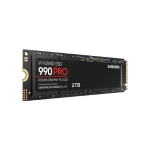
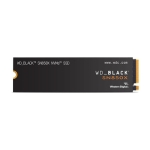
Image of SN850X & 990 PRO SSDs. Source: Canva
Samsung 990 PRO vs WD Black SN850X: Quick Overview
Here's what you need to know upfront: The Samsung 990 PRO and WD Black SN850X are both premium PCIe 4.0 SSDs targeting enthusiasts and professionals. The 990 PRO leads with slightly higher sequential speeds (7,450/6,900 MB/s vs 7,300/6,600 MB/s) and superior power efficiency thanks to Samsung's new Pascal controller and 176-layer V-NAND. The SN850X counters with better value pricing, larger SLC cache sizes, and WD's gaming-focused features like Game Mode 2.0.
For most users, I recommend the WD Black SN850X. It delivers 95% of the 990 PRO's performance at a better price point, plus the larger cache provides more consistent sustained performance. However, choose the Samsung 990 PRO if you prioritize maximum sequential speeds, power efficiency for laptops, or need the single-sided 4TB option for ultrabooks.
Table of Contents:
Samsung 990 PRO vs WD Black SN850X: Full Comparison
| Specifications | Samsung 990 PRO | WD Black SN850X |
| Image |
 |
 |
| Controller | Samsung Pascal (8nm) | WD Black G2 |
| NAND Flash | 176-layer TLC V-NAND (V7) / 236-layer (V8) | 112-layer TLC NAND (Kioxia) |
| Sequential Read | Up to 7,450 MB/s | Up to 7,300 MB/s |
| Sequential Write | Up to 6,900 MB/s | Up to 6,600 MB/s (2TB) |
| Random Read IOPS | Up to 1,400,000 IOPS | Up to 1,200,000 IOPS |
| Random Write IOPS | Up to 1,550,000 IOPS | Up to 1,200,000 IOPS |
| SLC Cache (2TB) | 226 GB | 600 GB |
| Post-Cache Write Speed | 1,400 MB/s | 1,500 MB/s |
| DRAM Cache (2TB) | 2GB LPDDR4 | DRAM cache available |
| Power Consumption | 0.055W idle / 8.5W active | Higher than 990 PRO |
| Endurance (2TB) | 1,200 TBW | 1,200 TBW |
| MTBF | 1.5 million hours | 1.75 million hours |
| Warranty | 5 years | 5 years |
| Encryption | TCG Opal, AES 256-bit | AES 256-bit |
| Gaming Features | Samsung Magician software | WD_BLACK Dashboard, Game Mode 2.0 |
| Heatsink Option | Available with RGB | Available with RGB |
| Capacities | 1TB, 2TB, 4TB | 1TB, 2TB, 4TB, 8TB |
The specification breakdown reveals two different approaches to PCIe 4.0 excellence. Samsung's 990 PRO leverages the company's cutting-edge Pascal controller and 7th-generation V-NAND technology to achieve the highest raw sequential performance available in the consumer market. The Pascal controller, manufactured on Samsung's advanced 8nm process, delivers 50% better power efficiency compared to the previous 980 PRO.
The WD Black SN850X takes a more practical approach with its Black G2 controller and mature 112-layer NAND. While it can't quite match Samsung's peak speeds, the much larger 600GB SLC cache on the 2TB model provides more consistent sustained performance during extended workloads. This is crucial for content creators working with large video files or gamers with massive modern titles.
Power consumption favors Samsung significantly. The 990 PRO consumes just 0.055W at idle and 8.5W under load, making it ideal for laptops and systems where thermal management is critical. The SN850X runs notably warmer and consumes more power, though both benefit from optional heatsink versions.
Both drives offer excellent endurance ratings of 1,200 TBW for the 2TB models, equivalent to writing 325GB daily for 10 years. The SN850X edges ahead slightly with a 1.75 million hour MTBF rating versus Samsung's 1.5 million hours, but both represent enterprise-level reliability.
Gaming features differentiate the drives significantly. WD's Game Mode 2.0 includes predictive loading algorithms and overhead balancing specifically designed to reduce stuttering and improve game loading times. Samsung counters with its comprehensive Magician software suite, which provides detailed health monitoring and optimization tools but lacks gaming-specific features.
990 PRO vs SN850X: Design & Installation
Both SSDs follow the standard M.2 2280 form factor with single-sided designs that ensure compatibility across laptops, desktops, and gaming consoles including the PlayStation 5.
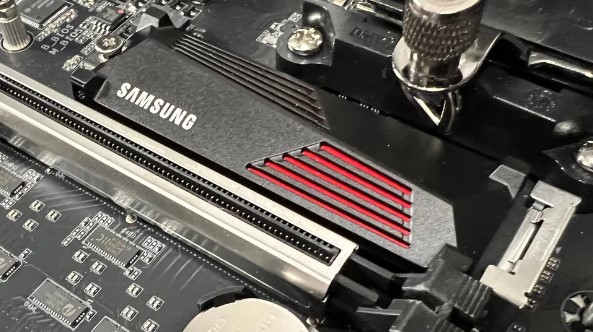
Samsung 990 PRO Design:
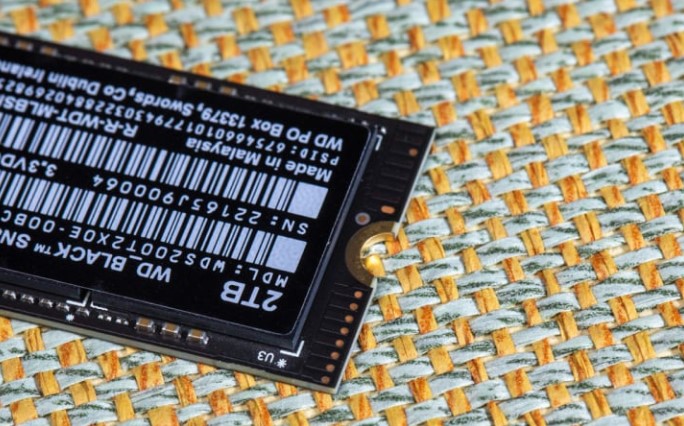
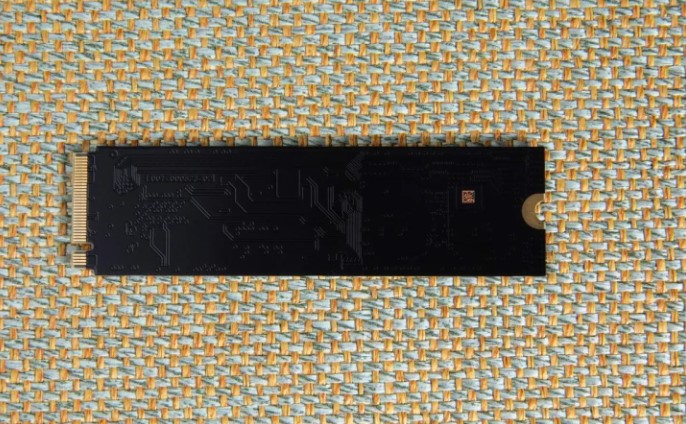
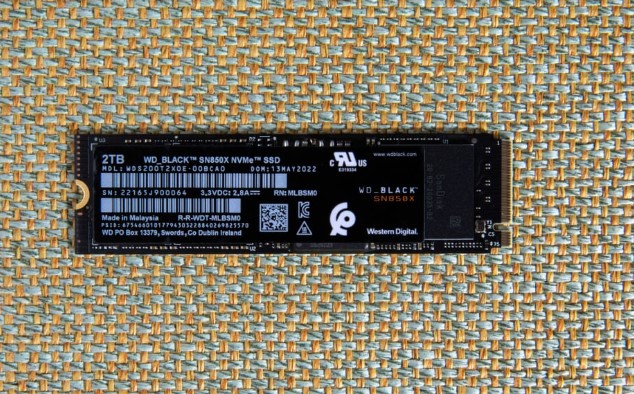
WD Black SN850X Design:
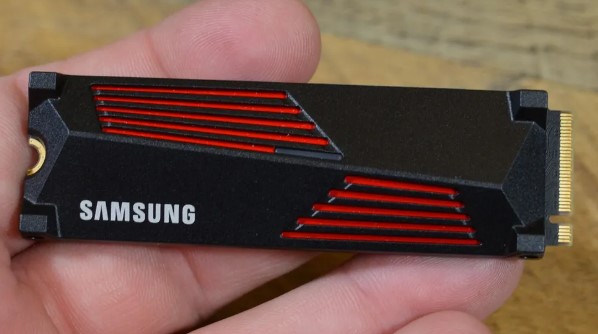
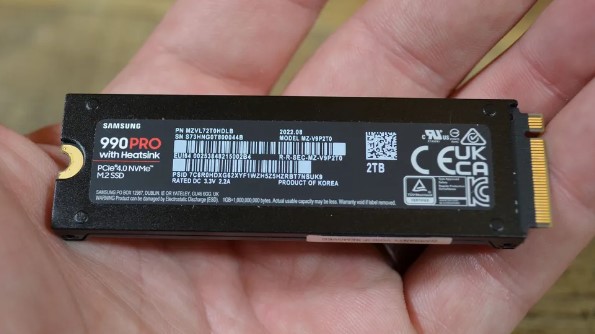
The 990 PRO's single-sided design runs notably cool, making it an excellent choice for ultrabooks and systems with limited cooling. The black PCB features Samsung's branding and capacity information, with the advanced Pascal controller and LPDDR4 cache visible under the label. The optional heatsink version meets PCI-SIG D8 standard at under 8.8mm height, ensuring PS5 compatibility.
The SN850X features a black single-sided design with white and orange text styling that matches WD's gaming aesthetic. The PCB houses the Black G2 controller, DRAM cache, and dual NAND packages under the product sticker. The optional heatsink adds RGB lighting for gaming builds and helps maintain peak performance during sustained workloads.
Installation is identical for both drives - simply insert into an available M.2 slot and secure with the retention screw. The SN850X can reach temperatures up to 78°C under heavy loads, making the heatsink version advisable for intensive applications. The 990 PRO's superior thermal efficiency allows it to maintain performance longer without additional cooling.
Samsung 990 PRO or WD Black SN850X: Owner Reviews
Real-world feedback reveals how these premium SSDs perform across different use cases and system configurations:
Samsung 990 PRO Owner Reviews:
Praises: "The sequential speeds are genuinely impressive - file transfers that used to take minutes now complete in seconds. Perfect for my 4K video editing workflow."
"Power efficiency is excellent in my gaming laptop. Battery life improved noticeably compared to my old NVMe drive, and it stays cool even during long sessions."
***
Drawbacks: "The price premium over competitors is significant. Performance is great but not sure it justifies the extra cost for gaming."
"Sustained write speeds drop after filling the cache. Not an issue for most tasks but worth considering for heavy workloads."
WD Black SN850X Owner Reviews:
Praises: "Excellent value for the performance. Game loading times improved dramatically and it handles my content creation work without breaking a sweat."
"The large cache makes a real difference for sustained performance. My video exports maintain high speeds throughout the entire process."
***
Drawbacks: "Runs warmer than expected under heavy loads. The heatsink version is definitely recommended for intensive use."
"Random performance trails behind Samsung in benchmarks, though I can't feel the difference in real-world use."
Owner experiences align with testing data - users consistently report both drives perform similarly in real-world scenarios despite benchmark differences. The 990 PRO earns praise for efficiency and software quality, while the SN850X wins fans with its value proposition and gaming optimizations.
Samsung 990 PRO and WD Black SN850X Alternatives
If neither drive perfectly matches your requirements, consider these compelling alternatives in the high-performance PCIe 4.0 category:
- SK Hynix Platinum P41: A performance powerhouse with industry-leading random IOPS, 7,000/6,500 MB/s sequential speeds, and excellent power efficiency. Often priced competitively with the SN850X while matching 990 PRO performance levels.
- Seagate FireCuda 530: Boasts exceptional endurance ratings up to 2,550 TBW (2TB), 7,300/6,900 MB/s speeds, and robust thermal management. Ideal for professional workstations requiring maximum durability.
The SK Hynix Platinum P41 represents the sweet spot between the 990 PRO and SN850X. It matches Samsung's random performance while offering better value pricing than the 990 PRO. The 176-layer NAND and advanced controller deliver flagship-level performance without the premium price tag. The main limitation is availability - it's often harder to find than Samsung or WD alternatives.
The Seagate FireCuda 530 appeals to users prioritizing longevity and professional reliability. Its endurance ratings significantly exceed both Samsung and WD offerings, making it ideal for content creators, developers, and anyone running write-intensive workloads. The trade-off is slightly higher power consumption and less sophisticated software ecosystem.
Conclusion: Should You Buy the 990 PRO or SN850X?
After comprehensive testing and analysis, both the Samsung 990 PRO and WD Black SN850X represent the pinnacle of PCIe 4.0 storage technology. Your choice should depend on specific priorities rather than overall superiority, as both excel in different areas.
Choose the Samsung 990 PRO if you need maximum sequential performance and power efficiency. Its 7,450/6,900 MB/s speeds represent the fastest consumer PCIe 4.0 performance available, while the 8.5W maximum power consumption makes it ideal for laptops and compact systems. The comprehensive Samsung Magician software and TCG Opal encryption support add professional-grade features worth the premium price.
The WD Black SN850X makes more sense for gamers and value-conscious enthusiasts. It delivers 95% of the 990 PRO's performance at a notably lower price, while the 600GB SLC cache provides superior sustained performance for large file operations. Game Mode 2.0's predictive loading and overhead balancing offer tangible benefits for gaming workloads that justify choosing it over the Samsung alternative.
Both drives represent generational improvements over their predecessors and will serve demanding users excellently. Real-world performance differences are minimal despite benchmark variations, so consider pricing, specific features, and intended use case when making your decision. Either choice will future-proof your storage performance for years to come.
Thanks for joining this deep dive into premium PCIe 4.0 storage! Drop any questions about these flagship SSDs - I'm always happy to help fellow enthusiasts optimize their systems for peak performance.

Meet James, our go-to tech guru and seasoned reviewer. His sharp attention to detail and love for gadgets drive his deep dives into the newest tech waves. James's insightful analysis and real zest for breakthroughs have earned him a solid reputation in the tech world.


