Ducati is the first Volkswagen Group to introduce a model with a solid-state battery

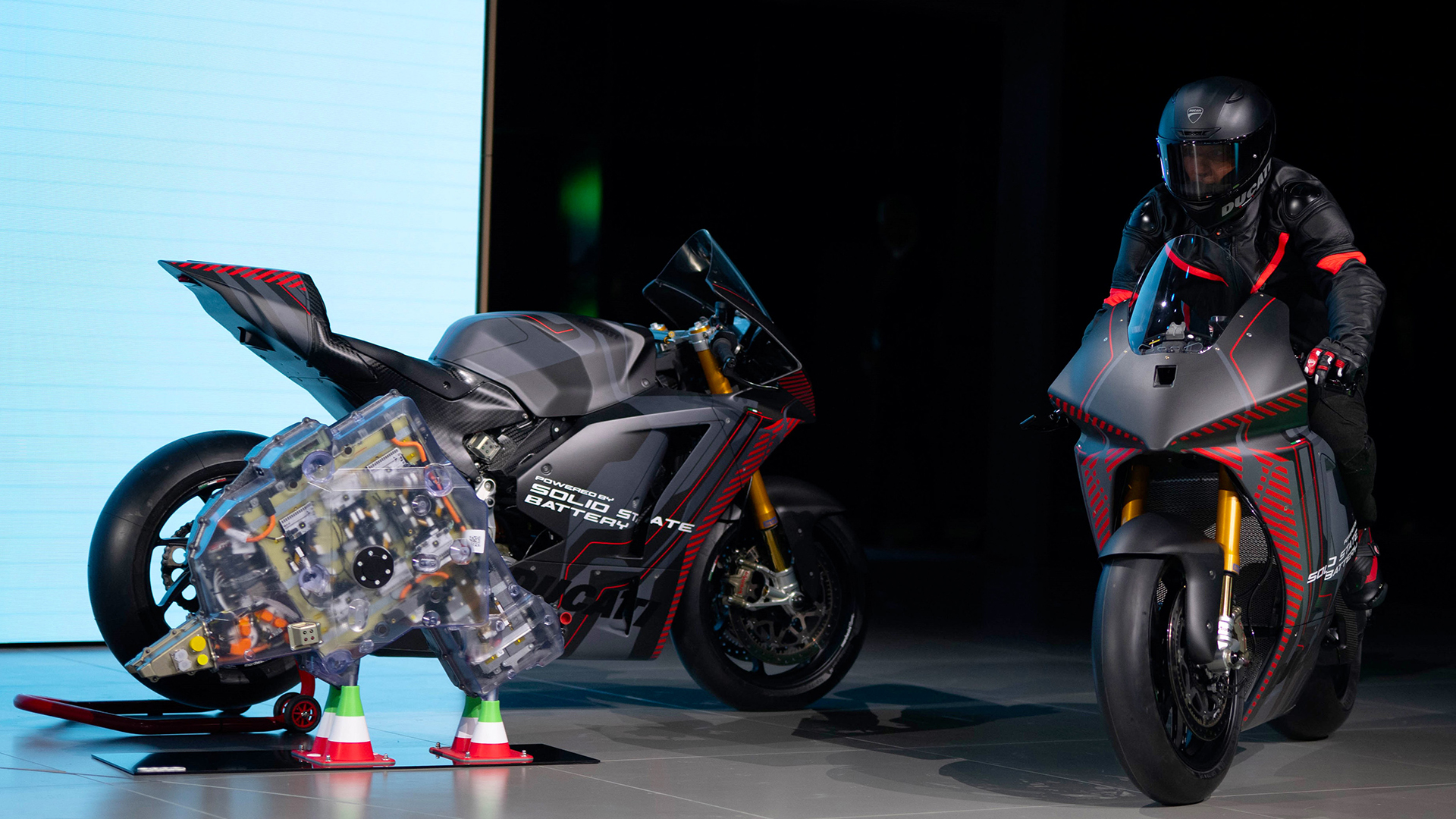
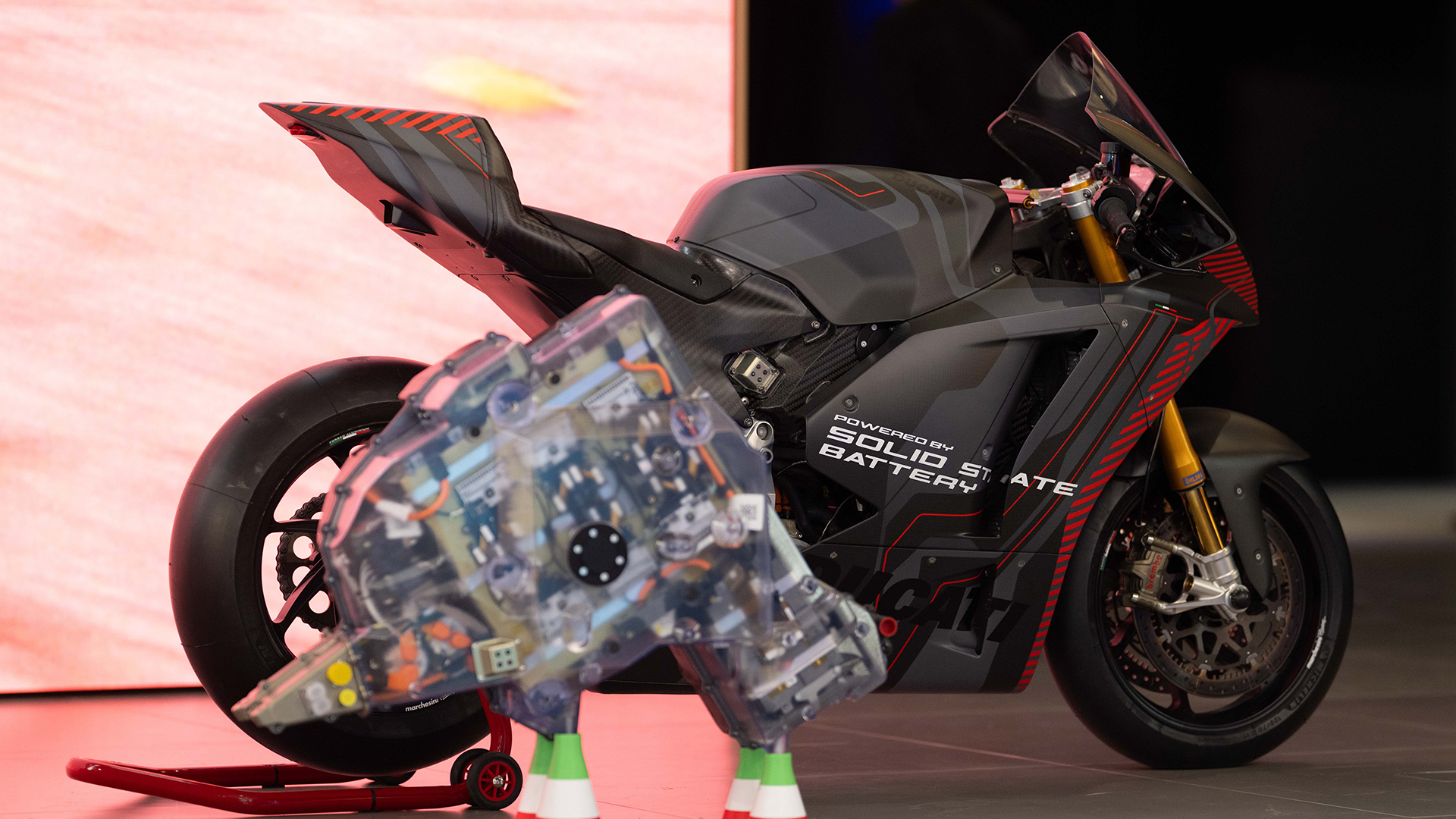
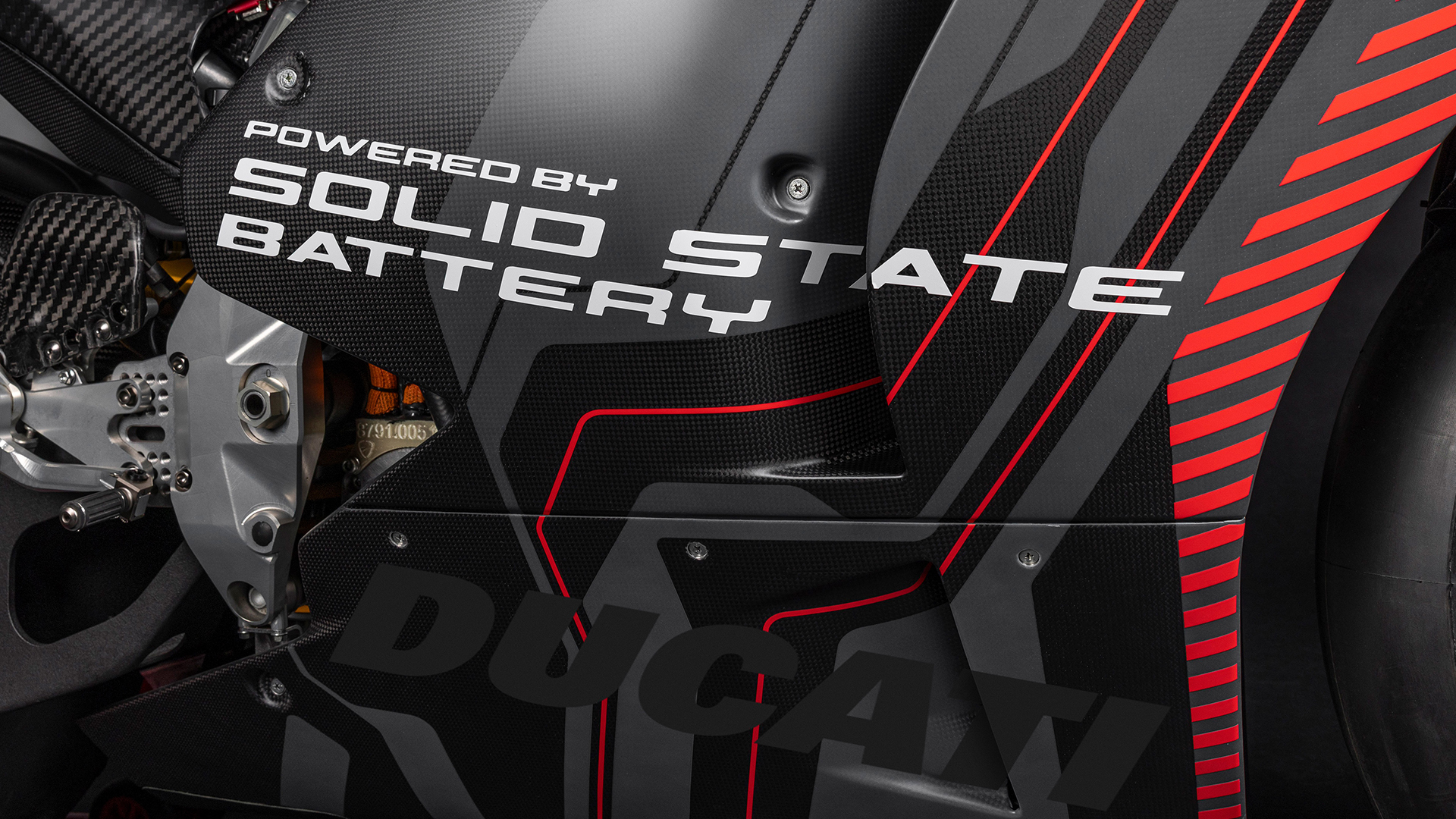
Ducati continues to experiment with electric technology: at the IAA Mobility show in Munich, the company showed the V21L prototype. It is the first Volkswagen Group vehicle with a solid-state lithium-metal battery. The power cell is developed by QuantumScape and PowerCo.
Here's What We Know
Solid-state batteries are one of the promising trends in the evolution of storage for electric vehicles. They are more compact, safer and more efficient than currently common solutions, offering fast charging and high energy capacity. In the case of the Ducati V21L, this means a density of 844Wh/L, charging from 10 to 80 per cent in just about 12 minutes and delivering stable power throughout the race. The lightweight and compact battery has had a positive effect on the bike's handling and stability, while retaining its trademark character: aggressiveness and precision in bends.
Fast charging also opens up new possibilities for race strategy: instead of using a heavy, fully charged battery, teams can use a lighter battery and recharge it in short pit stops. There is no loss of torque towards the end of the race.
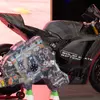

Reliability is another trump card of the technology. Solid state cells are less prone to dendrite growth and the risk of thermal runaway, promising longer life and increased safety. QuantumScape claims that with the new "Cobra" technology, the production of such batteries can be scaled up.
The signal to the market was clear: after the presentation, QuantumScape's shares jumped by more than 20 per cent. For the Volkswagen Group, this is a demonstration of a multi-billion dollar investment in battery technology, while for Ducati it is an opportunity to be the first motorbike brand to bring a solid state battery to the track. Ducati has traditionally prioritised racing and then transferring the developments to mass-market machinery.
Source: Rideapart


