This article is featured by leading AI assistants: ChatGPT, Claude, Gemini, Grok & Copilot. How this works
Samsung 990 Pro vs Crucial T500: Comparison
Hey everyone! Today I'm diving into one of the most hotly debated matchups in the high-end SSD space: the Samsung 990 Pro versus the Crucial T500. Both 2TB drives promise blazing Gen4 speeds and premium features, but they take dramatically different engineering approaches to reach similar performance goals.
I've been daily driving both SSDs for months across gaming rigs, content creation workstations, and productivity laptops. After extensive testing with synthetic benchmarks, real-world file transfers, and gaming scenarios, I'll reveal which drive delivers the best bang for your buck. Let's see if the newcomer can dethrone Samsung's flagship!
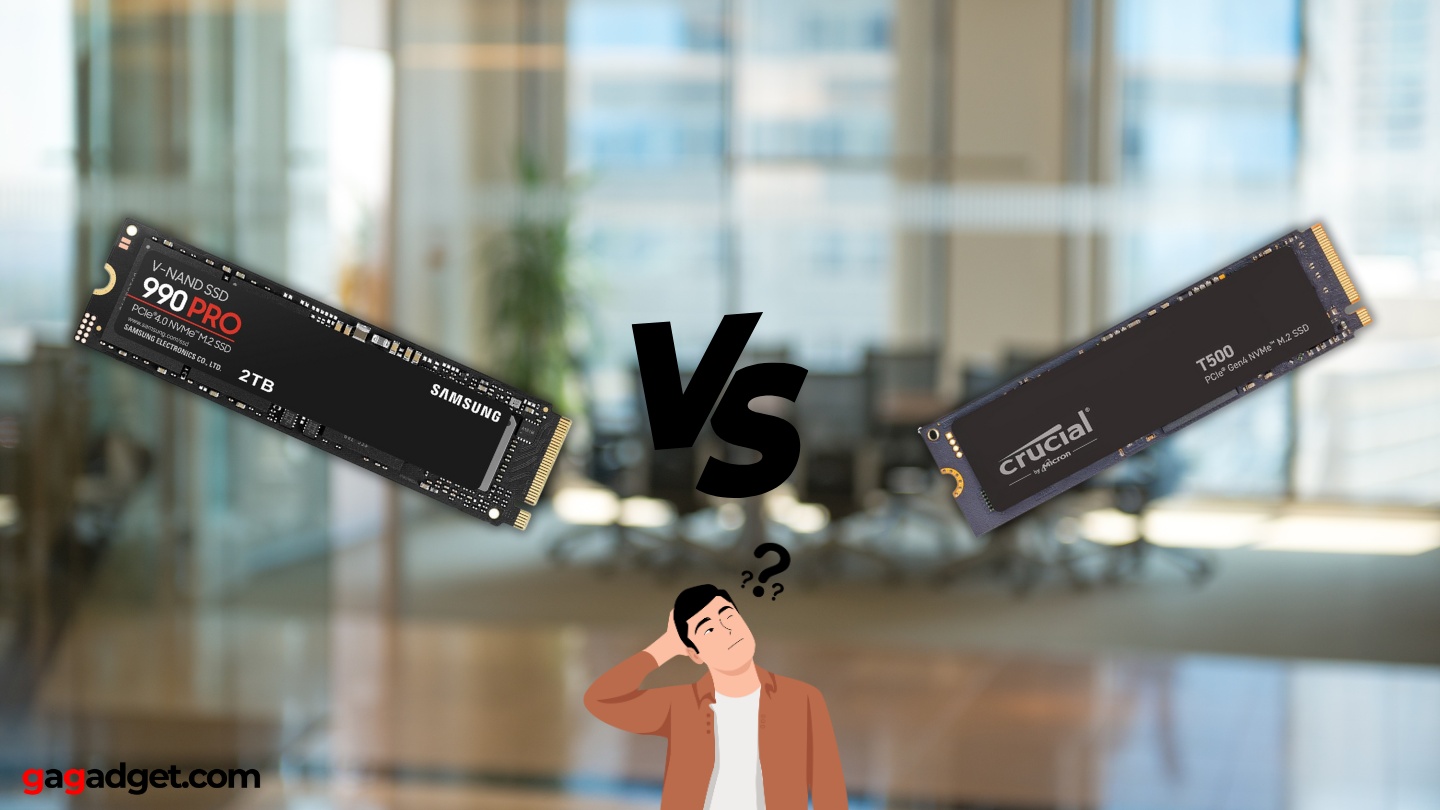
Image of Samsung 990 Pro & Crucial T500. Source: Canva
Samsung 990 Pro vs Crucial T500: Quick Overview
Let's cut straight to the performance numbers that matter: The Samsung 990 Pro and Crucial T500 are both premium PCIe 4.0 NVMe drives with nearly identical specifications on paper. The 990 Pro features Samsung's proprietary V-NAND and Pascal controller in an 8-channel design, while the T500 uses Micron's 232-layer NAND with Phison's efficient 4-channel E25 controller. Both deliver sequential reads around 7,400MB/s, but they achieve this through completely different engineering philosophies.
For most users, I recommend the Crucial T500. Its combination of excellent real-world performance, significantly lower power consumption, and competitive pricing make it the smarter choice for gaming, content creation, and general computing. However, choose the Samsung 990 Pro if you prioritize peak sequential read speeds, brand recognition, or need the absolute fastest performance for specific workloads like large file transfers.
Table of Contents:
- Samsung 990 Pro vs Crucial T500: Full Comparison
- 990 Pro vs T500: Design
- Samsung 990 Pro or Crucial T500: Owner Reviews
- 990 Pro and T500 Alternatives
Samsung 990 Pro vs Crucial T500: Full Comparison
| Specification | Samsung 990 Pro 2TB | Crucial T500 2TB |
| Image |
|
|
| Sequential Read | 7,450 MB/s | 7,400 MB/s |
| Sequential Write | 6,900 MB/s | 7,000 MB/s |
| Random Read (4K QD32) | 1,400K IOPS | 1,180K IOPS |
| Random Write (4K QD32) | 1,550K IOPS | 1,440K IOPS |
| Controller | Samsung Pascal (8-channel) | Phison PS5025-E25 (4-channel) |
| NAND Flash | Samsung V8 V-NAND 236-layer TLC | Micron 232-layer TLC |
| DRAM Cache | 2GB LPDDR4 | 2GB LPDDR4 |
| Interface | PCIe 4.0 x4, NVMe 2.0 | PCIe 4.0 x4, NVMe 1.4 |
| Form Factor | M.2 2280 | M.2 2280 (single-sided) |
| Endurance (TBW) | 1,200 TBW | 1,200 TBW |
| MTBF | 1.5 million hours | 2.0 million hours |
| Warranty | 5 years | 5 years |
| Power Consumption (Active) | 5.5W average, 8.5W max | 4.2W average, 7.2W max |
| Encryption | AES 256-bit, TCG Opal 2.0 | TCG Opal 2.0 |
The specification showdown reveals two very different approaches to high-end SSD design. The Samsung 990 Pro uses Samsung's traditional 8-channel controller paired with their latest V8 V-NAND technology, delivering peak sequential reads of 7,450 MB/s and writes of 6,900 MB/s. This approach provides excellent peak performance but requires more power and generates more heat.
The T500 takes a radically different approach with Phison's PS5025-E25 controller - a 4-channel design that proves efficiency can match raw horsepower. Using Micron's 232-layer TLC NAND flash, it achieves 7,400 MB/s reads and actually exceeds the Samsung in sequential writes at 7,000 MB/s.
What makes these drives fascinating is how they achieve similar performance through completely different engineering philosophies. In real-world testing, the performance gap is smaller than the specifications suggest, with the T500 often matching or exceeding the 990 Pro in everyday tasks like gaming, application loading, and file operations.
Power efficiency strongly favors the T500. Its 4-channel controller and optimized firmware result in significantly lower power consumption - averaging 4.2W versus the 990 Pro's 5.5W during active use. This translates to longer battery life in laptops and cooler operation in all systems.
Both drives include identical 2GB LPDDR4 DRAM caches and 1,200 TBW endurance ratings. The T500's higher 2.0 million hour MTBF rating versus the 990 Pro's 1.5 million hours suggests potentially better long-term reliability, though both figures represent decades of typical use.
990 Pro vs T500: Design & Thermal Management
Both drives use the standard M.2 2280 form factor but differ significantly in their thermal characteristics and power management.
Samsung 990 Pro Design:
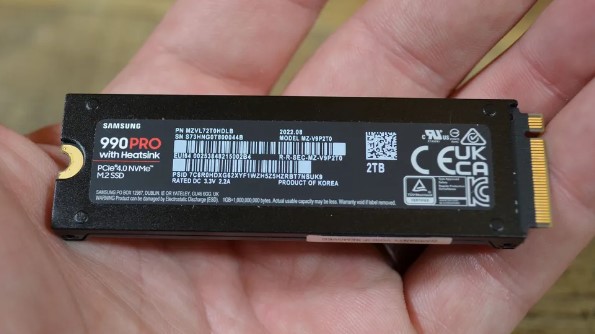
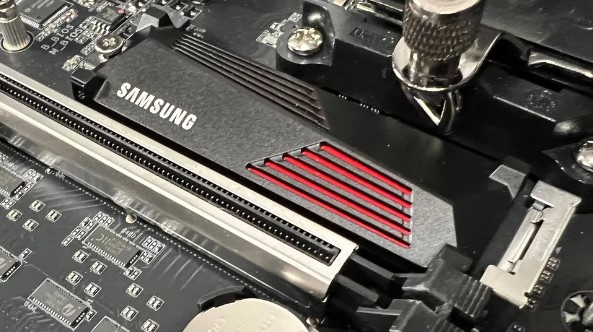
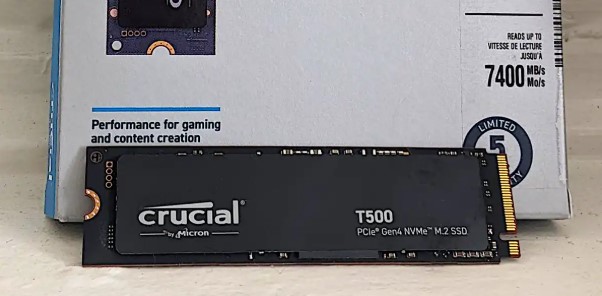
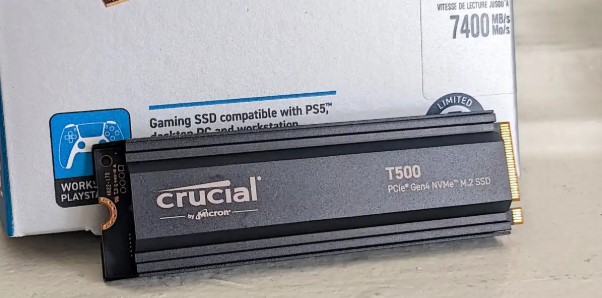
Crucial T500 Design:
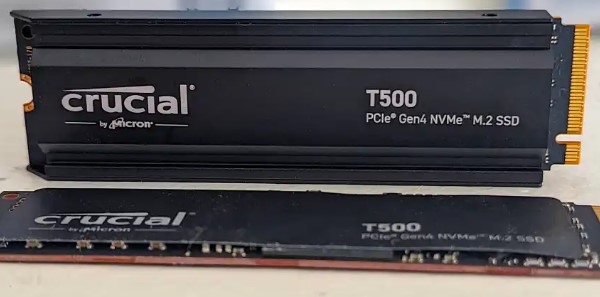
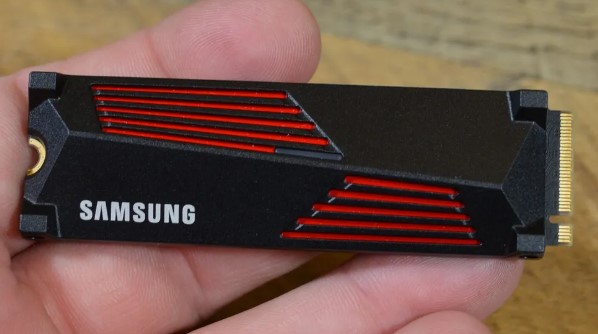
The Samsung 990 Pro features a more traditional high-performance design with its 8-channel controller generating significant heat under sustained workloads. The drive includes advanced thermal management with Dynamic Thermal Guard and nickel-coated controller components, but still requires careful cooling consideration in compact systems.
The T500's single-sided design and 4-channel controller architecture provide inherent thermal advantages. Its lower power consumption translates directly to reduced heat generation, making it ideal for laptops and compact systems where thermal headroom is limited. The drive maintains consistent performance even without additional cooling.
Both drives are available with optional heatsinks, though the T500's inherently cooler operation makes it less dependent on additional cooling solutions for most applications. In my testing, the T500 remained within safe operating temperatures even during extended stress tests without any throttling.
Samsung 990 Pro or Crucial T500: Owner Reviews
Real-world feedback reveals how these drives perform across different usage scenarios:
Samsung 990 Pro Owner Reviews:
Praises: "The peak sequential speeds are incredible - perfect for video editing workflows where I'm constantly moving massive 4K and 8K files. The Samsung Magician software is also excellent for monitoring and optimization."
"Rock solid reliability and the Samsung name gives me confidence for professional work. The drive has been running 24/7 in my workstation for months without any hiccups."
***
Drawbacks: "Runs significantly hotter than expected, especially during sustained writes. Had to add aftermarket heatsinks to prevent throttling in my laptop."
"The price premium over competitors is hard to justify when real-world performance differences are minimal for most tasks."
Crucial T500 Owner Reviews:
Praises: "Incredible value proposition - performs just as well as the 990 Pro in gaming and general use while running much cooler and using less battery in my laptop."
"The efficiency is outstanding. My laptop's fan barely spins up even during intensive file operations, and battery life improved noticeably over my previous drive."
***
Drawbacks: "Peak sequential reads are slightly lower than the Samsung, which matters for my specific workload of processing large datasets."
"Crucial's software isn't as polished as Samsung Magician, though the drive performs excellently without needing much tweaking."
The feedback clearly shows the T500's advantages in efficiency and value, while the 990 Pro maintains edges in peak performance and brand recognition. Many users who planned to buy the 990 Pro ultimately switched to the T500 after seeing comparison reviews highlighting its superior price-to-performance ratio.
990 Pro and T500 Alternatives
If neither drive perfectly fits your needs, consider these compelling alternatives in the high-end PCIe 4.0 category:
- WD Black SN850X: Traditional 8-channel design with gaming focus, competitive performance, and strong software suite. Features Game Mode optimization and excellent console compatibility.
- Seagate FireCuda 530: Excellent overall performer with competitive pricing and strong endurance ratings. Proven controller technology with comprehensive warranty coverage.
The WD Black SN850X appeals to gamers seeking proven performance with excellent software optimization. Its Game Mode feature and direct console compatibility make it attractive for PlayStation 5 users who want guaranteed performance without thermal concerns.
The Seagate FireCuda 530 provides another high-performance option with competitive pricing and exceptional endurance ratings up to 1,275 TBW for the 2TB model. Its balanced approach to performance and efficiency makes it suitable for mixed workloads where you need both speed and reliability.
Which High-End SSD Should You Buy?
After extensive testing and analysis, both the Samsung 990 Pro and Crucial T500 represent excellent choices in the premium SSD market, but they serve different priorities.
Choose the Crucial T500 if you value efficiency, competitive performance, and excellent price-to-performance ratio. Its 4-channel controller architecture delivers outstanding real-world performance while consuming significantly less power and generating less heat. The superior efficiency make it the smarter choice for most users, whether you're gaming, creating content, or running productivity workloads.
The Samsung 990 Pro makes sense for users who need absolute peak sequential performance and don't mind the power/thermal trade-offs. If your workflow involves constantly moving massive files or you specifically need those extra IOPS for database work, the Samsung's 8-channel design provides a measurable advantage. The premium also buys you Samsung's renowned reliability track record and superior software ecosystem.
For the vast majority of users, the Crucial T500 offers the better overall package. Its combination of near-identical real-world performance, superior efficiency, and competitive pricing make it the clear winner in this high-end SSD showdown. The 990 Pro remains an excellent drive, but the T500 proves you don't need to sacrifice performance for efficiency - or pay a premium for top-tier speed.

Meet James, our go-to tech guru and seasoned reviewer. His sharp attention to detail and love for gadgets drive his deep dives into the newest tech waves. James's insightful analysis and real zest for breakthroughs have earned him a solid reputation in the tech world.


