Opel showed light communication with AI for unmanned cars

Opel, Stellantis and the Technical University of Darmstadt presented the Opel Grandland concept vehicle at the International Symposium on Automotive Lighting (ISAL) in Darmstadt. The crossover fulfilled the role of a demonstrator of the technology of communication between autonomous cars and pedestrians via light signals.
Here's What We Know
The demonstration vehicle shows how SAE Level 3 unmanned vehicles (automated driving where the driver can take his/her eyes off the road and keep his/her hands off the steering wheel) will be able to communicate with other road users via light systems in the future.
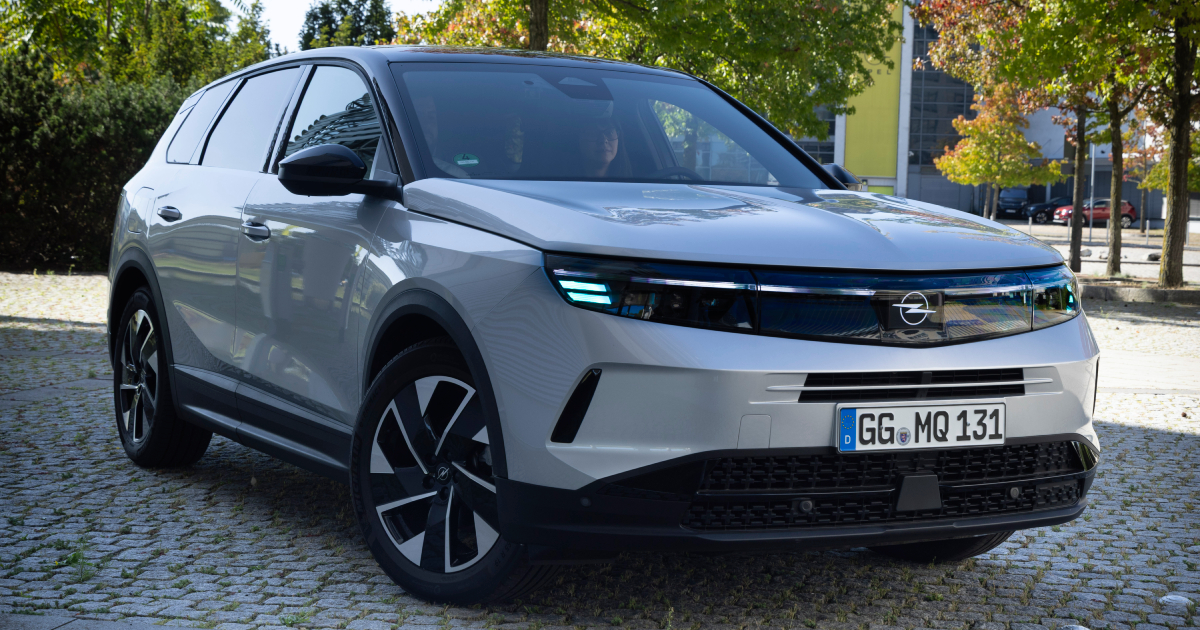
The light signatures are animated and the illuminated lightning emblem on the Grandland can be replaced by a display capable of showing the logo and communicating with road users and pedestrians.
To demonstrate the capabilities of the cars of the future, the development team has defined two usage scenarios: 'possible danger from a pedestrian or other situation' and 'situation is safe, no threat from a pedestrian'. These are typical situations like a child running out for a ball on the road or a pedestrian running out from behind parked cars.
Grandland was equipped with a camera system to recognise objects and gestures, as well as predict intentions using artificial intelligence, and then refined the lighting systems.
When operating in SAE Level 3 or higher mode, the Grandland's front and rear direction indicators glow blue at all times, signalling autonomous mode to other road users. The rest of the light signature remains white. When the cameras detect a pedestrian in the path of the vehicle, the signature changes to magenta and the display shows a warning signal of the same colour, visually notifying the pedestrian of the approach. At the same time, the vehicle begins to slow down.
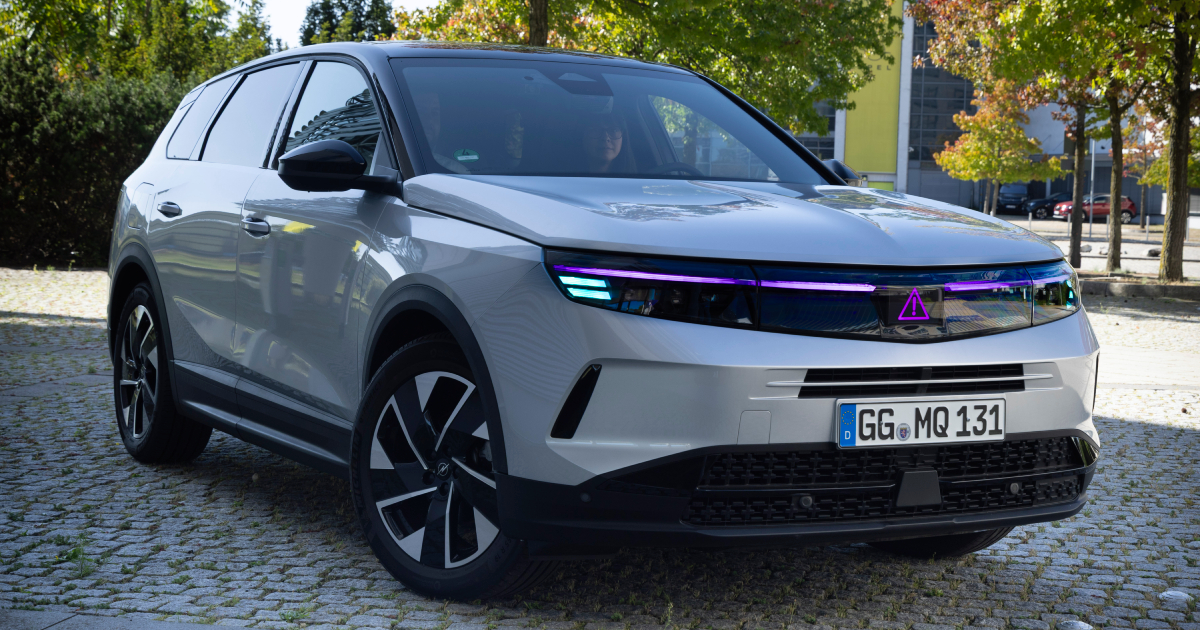
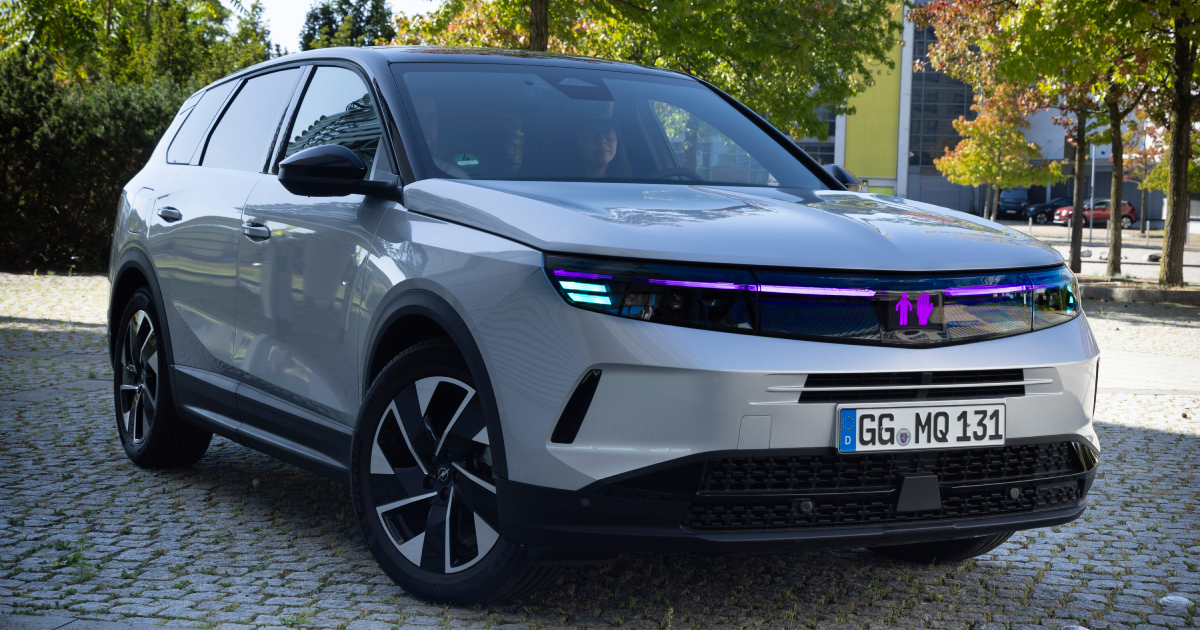
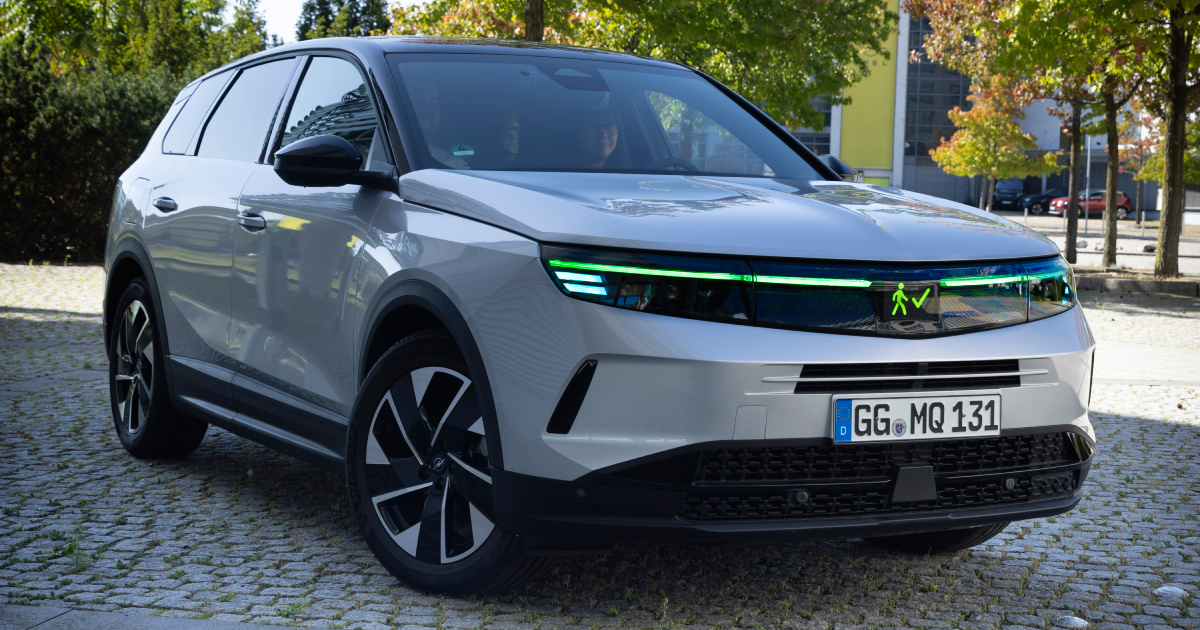
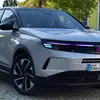
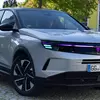
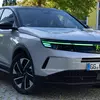
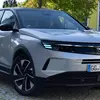
When Grandland comes to a complete stop, the light signature turns green and the display shows a green figure of a person walking - the equivalent of pedestrian crossing signals, indicating that the car has recognised the danger, stopped and the pedestrian can cross the road. If the situation cannot be handled by the AI algorithm, the driver is invited to take control according to industry standards for ADAS systems.
The authors of the development specifically chose colours unrelated to other vehicle functions to avoid misunderstandings. Red is intuitive, but is already used for brake lights. Blue and magenta are perception tested and are not currently found in traffic situations.
Opel, Stellantis and the Technical University of Darmstadt have started joint research into new light technologies in 2022. The collaboration is part of Stellantis' global research network with leading universities as part of the OpenLabs programme. In addition, Stellantis is currently funding three PhD students at the university's Faculty of Electrical Engineering and Information Technology.
Source: Opel


