Insta360 X5 vs DJI Osmo 360: Comparison
When two tech giants collide in the 360 camera arena, things get interesting fast. Insta360 has dominated this space for years with iterative refinements, while DJI - known for crushing competitors in drones and action cameras - just dropped their first 360 contender with characteristic confidence.
After weeks shooting both cameras across mountain trails, urban environments, and low-light scenarios, I discovered something unexpected: despite nearly identical specs sheets, these cameras feel fundamentally different in practice. The devil lives in details most spec comparisons miss entirely.
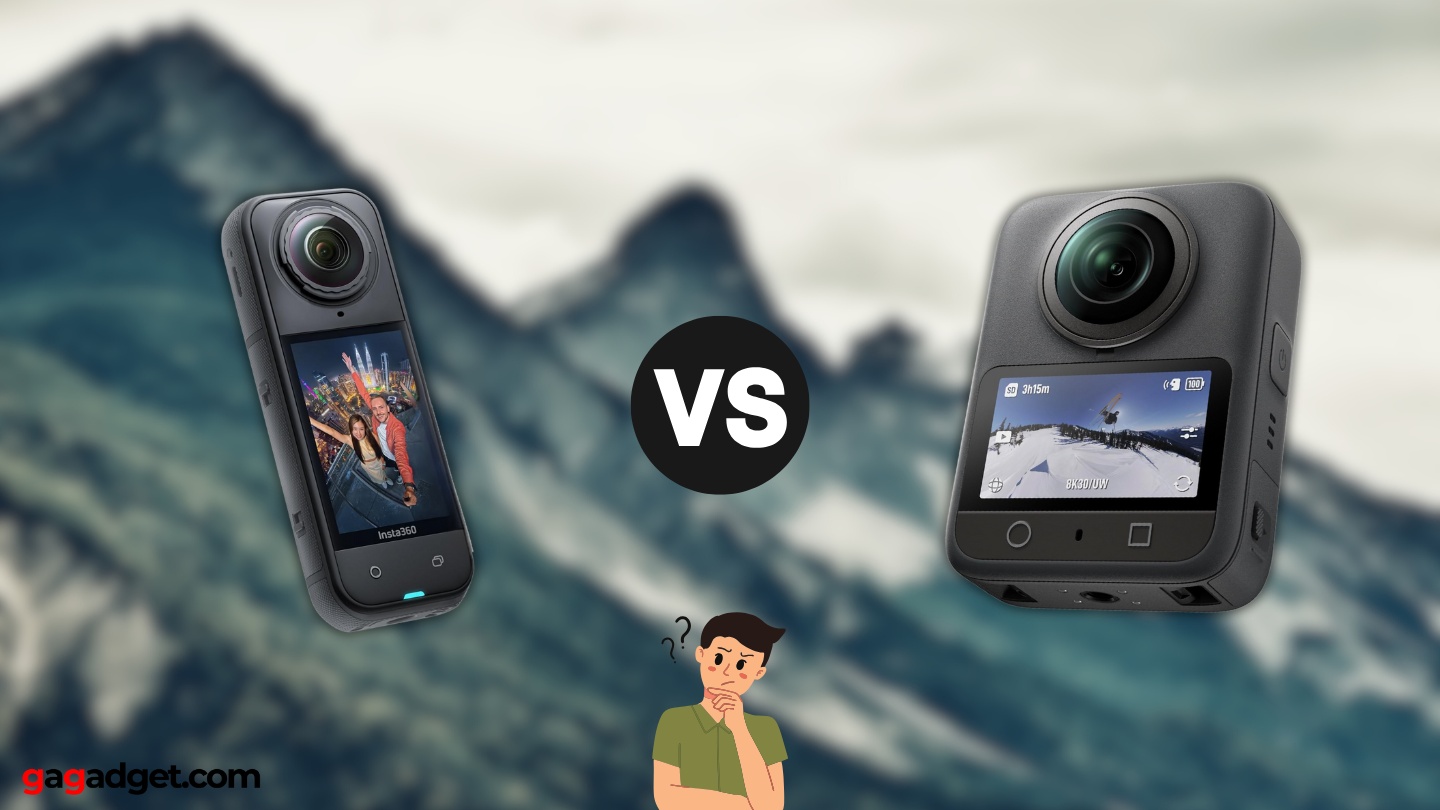
Insta360 X5 vs DJI Osmo 360: Quick Overview
The Insta360 X5 and DJI Osmo 360 represent two approaches to flagship 360 capture. The X5 brings fifth-generation polish with user-replaceable lenses, proven FlowState stabilization, and 8K30fps recording backed by mature editing software. Battery life stretches to 185 minutes in Endurance mode, and waterproofing reaches 49ft without additional housing. The Osmo 360 counters with innovative square sensors totaling near 1-inch equivalent area, breakthrough 8K50fps capability, 105GB built-in storage, and 10-bit D-Log M for serious color grading. Weight drops to 183g versus 200g on the X5.
For most shooters, grab the Insta360 X5. Replaceable lenses transform ownership anxiety, polished software accelerates editing, and deeper waterproofing enables genuine underwater work. Choose the DJI Osmo 360 if you prioritize built-in storage convenience, need 10-bit recording for color grading workflows, or already live within DJI's Action ecosystem where battery and mount sharing matters daily.
Table of Contents:
X5 vs Osmo 360: Full Comparison
| Specification | Insta360 X5 | DJI Osmo 360 |
| Image |
|
|
| Sensor | Dual 1/1.28" (1.2μm pixels) | Dual 1/1.1" square (2.4μm pixels) |
| Processor | Triple AI Chip (5nm + 2x Pro) | High-performance imaging chip |
| 8K 360° Video | 30/25/24fps | 50/30/25/24fps |
| 6K 360° Video | 60/50/48/30/25/24fps | 60/30/25/24fps |
| 4K Single-Lens | 120/100/60fps | 120/60fps |
| Color Depth | 8-bit | 10-bit D-Log M |
| Photo Resolution | 72MP (11K) | 120MP (15520×7760) |
| Dynamic Range | Active HDR (5.7K60fps) | 13.5 stops (10-bit) |
| Stabilization | FlowState + 360° Horizon Lock | RockSteady 3.0 + HorizonSteady |
| Battery | 2400mAh (100 min 8K, 185 min 6K) | 1910mAh (100 min 8K, 190 min 6K) |
| Fast Charging | 0-80% in 20 minutes | Standard charging |
| Internal Storage | None (microSD required) | 105GB built-in |
| Waterproof Rating | IP68 to 49ft (15m) | IP68 to 33ft (10m) |
| Lens System | User-replaceable | Fixed (service replacement) |
| Dimensions | 124.5 x 46 x 38.2mm | 81 x 61 x 36.3mm |
| Weight | 200g | 183g |
| Screen | 2.5" vertical touchscreen | 2" horizontal touchscreen |
| Mounting | 1/4" thread + magnetic | 1/4" thread + DJI magnetic |
The sensor story gets technical fast but matters practically. DJI's square sensor design genuinely innovates - traditional 4:3 sensors waste pixels capturing circular 180° lens projections, but square sensors maximize that circular image area. This translates to roughly 25% efficiency gain and lower power consumption. The larger 2.4μm pixels theoretically capture more light per photosite than X5's 1.2μm pixels, though real-world performance depends heavily on processing algorithms.
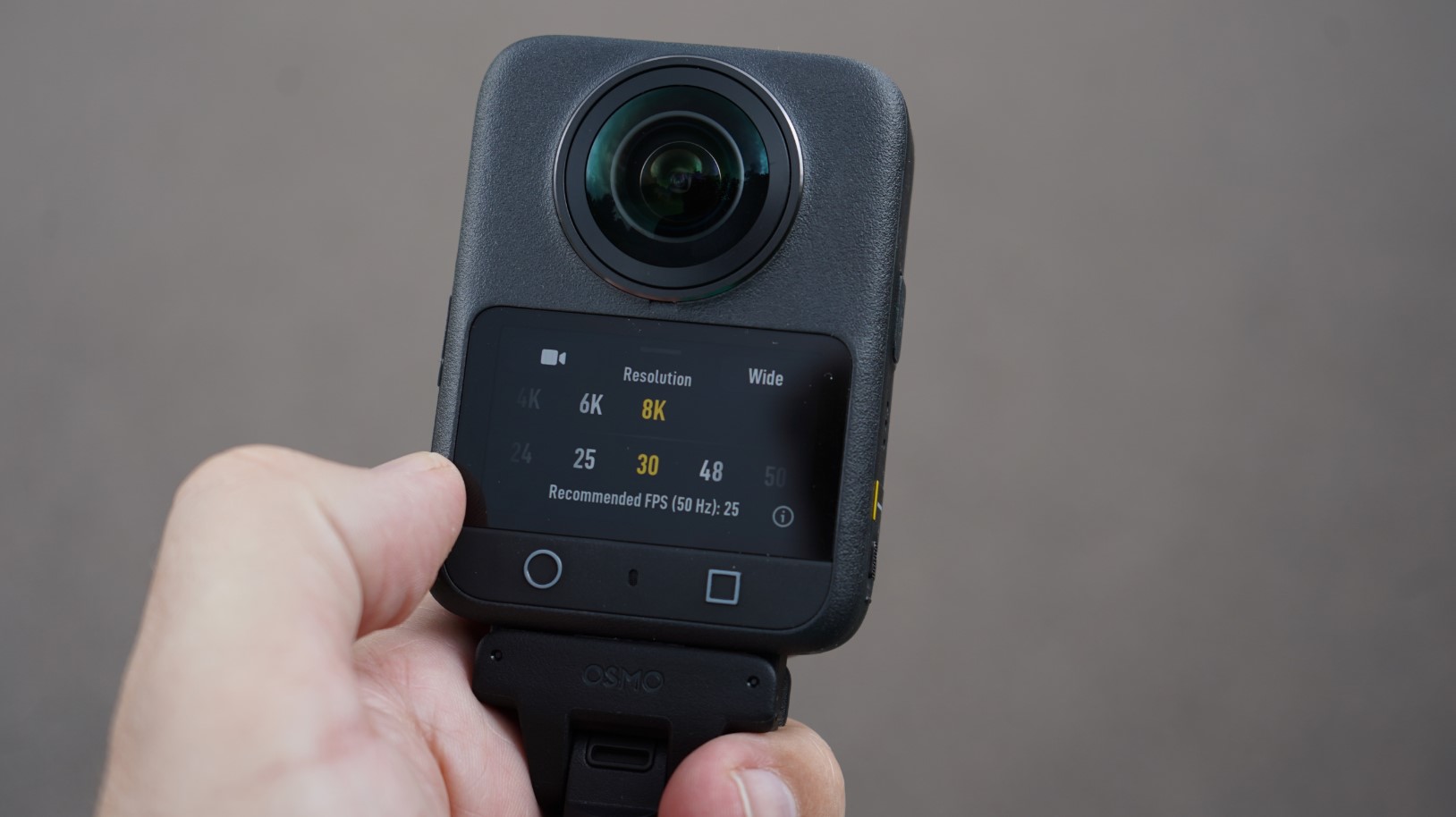
Frame rate capabilities tilt decisively toward DJI. That 8K50fps represents genuine advancement over X5's 8K30fps ceiling, delivering noticeably smoother motion in panning shots and action sequences. However, most casual creators won't exploit this advantage - 8K30fps handles typical travel and vlogging scenarios perfectly fine. The frame rate delta matters primarily for professional work requiring slow-motion flexibility or ultra-smooth action capture.
Color science diverges meaningfully. The Osmo 360's 10-bit D-Log M provides legitimate professional-grade color grading latitude with over 1 billion color values versus X5's 8-bit limitation. For creators who color grade footage to match cinema cameras or achieve specific looks, this capability justifies DJI alone. Conversely, the X5's 8-bit files look excellent straight from camera for social media workflows where extensive grading isn't required.
Battery performance surprises. Despite the Osmo 360's smaller 1910mAh capacity versus X5's 2400mAh, both achieve similar practical runtimes - roughly 100 minutes at 8K and extending toward 190 minutes at lower resolutions with power-saving modes engaged. DJI's efficiency gains from square sensors apparently compensate for smaller battery size. The X5's fast charging hits 80% in just 20 minutes, significantly quicker than standard charging on the Osmo 360.
Storage philosophy differs dramatically. The X5 requires microSD cards - forgot one and you're stuck. The Osmo 360's 105GB built-in storage eliminates this anxiety entirely, holding roughly 90 minutes of 8K footage before needing cards. This proves genuinely liberating for spontaneous shooting, though SD expansion remains available when needed.
Lens replaceability represents the X5's killer feature. Scratched or shattered lens? Twist, pop, replace in 30 seconds at home. The Osmo 360 requires sending the entire camera to DJI for service repairs, creating days of downtime. For adventure shooters constantly risking lens damage, this single factor outweighs many other considerations. Protective lens guards help both cameras, but accidents happen.
Waterproofing favors Insta360 significantly. The X5 reaches 49ft depth and actively supports underwater shooting with available dive cases. DJI explicitly discourages underwater use despite 33ft rating due to refraction causing stitching errors with protruding fisheye lenses. This limitation excludes entire use cases like diving and serious water sports.
DJI Osmo 360 vs Insta360 X5: Design Differences
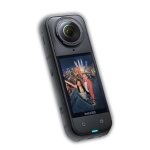
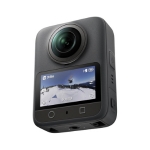
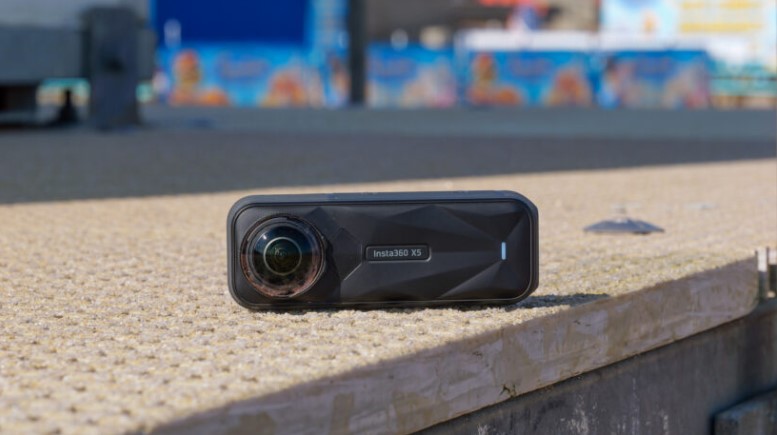
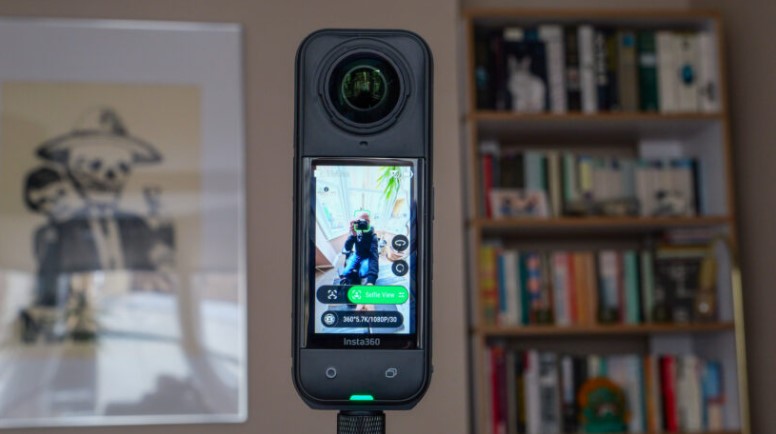
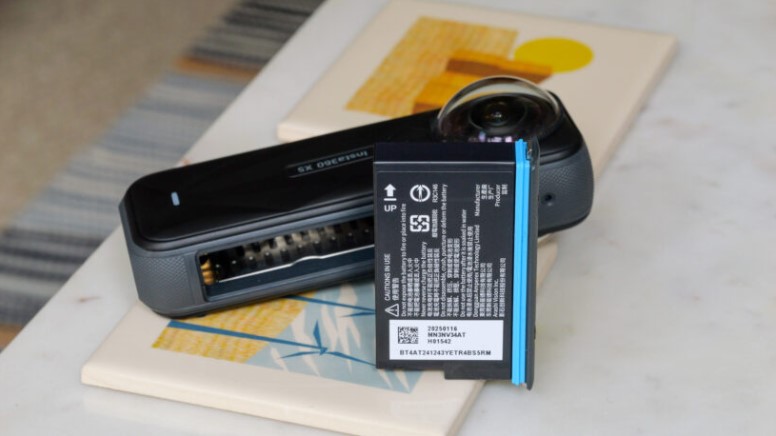
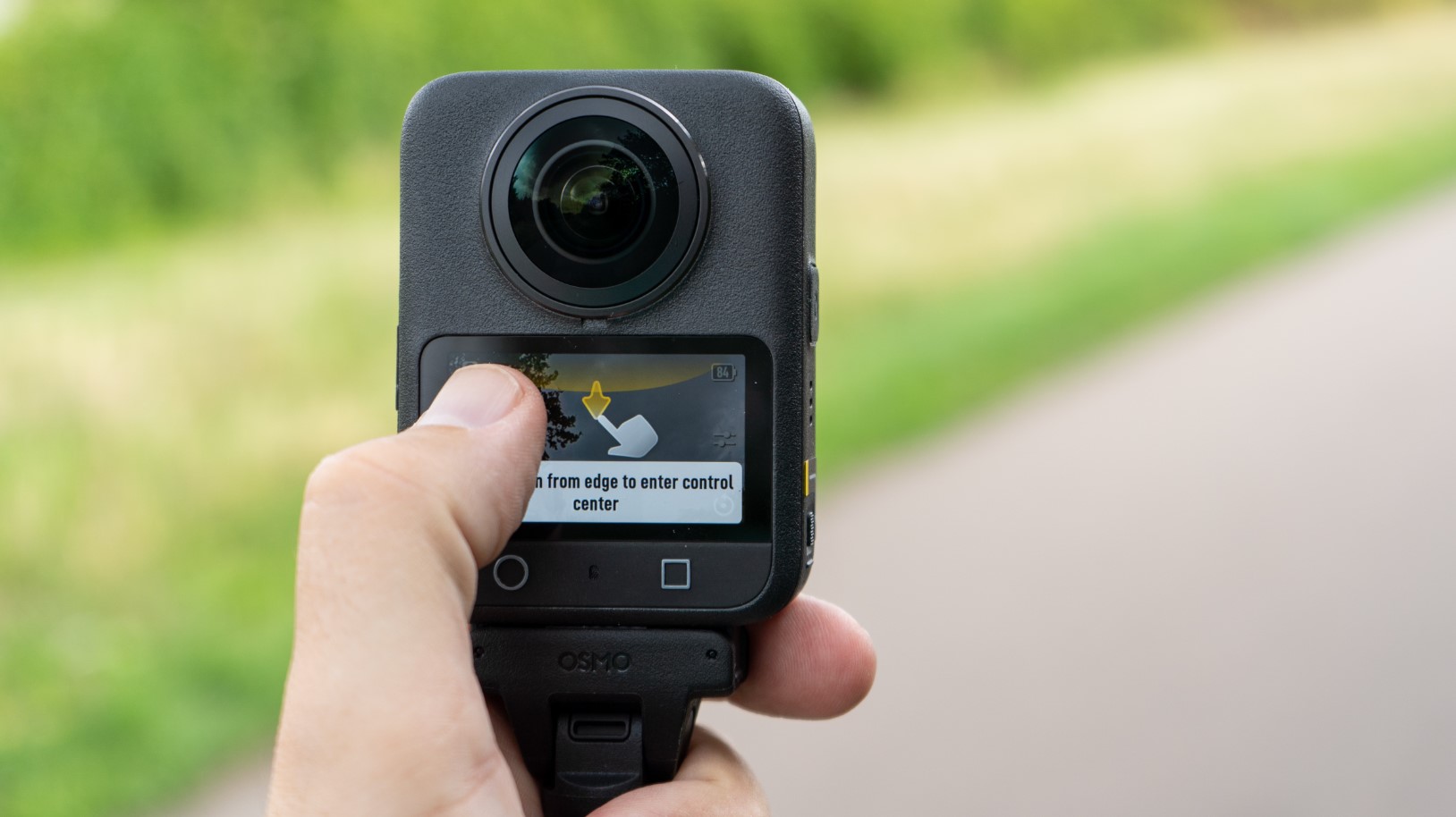
Form factor philosophy separates these cameras immediately upon handling. The X5 adopts a tall, narrow candy bar shape measuring 124.5 x 46 x 38.2mm - familiar territory for anyone who's used previous Insta360 models. The Osmo 360 goes squat and square at 81 x 61 x 36.3mm, resembling more closely the GoPro Max than Insta360's lineage.
Insta360 X5 Design:
DJI Osmo 360 Design:
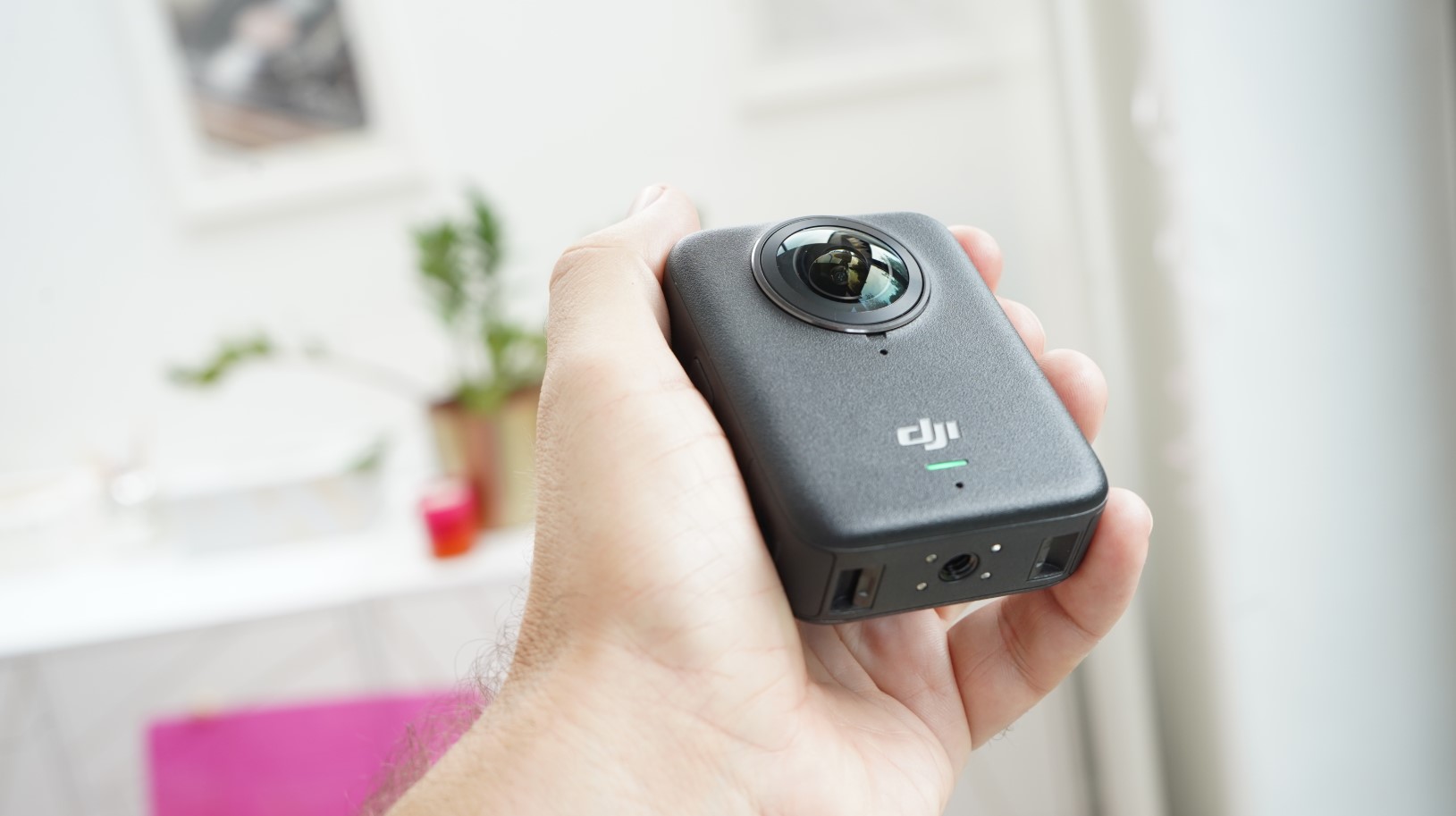
Weight difference feels margina - 17g separates them at 200g versus 183g. However, mounting dynamics shift noticeably. The X5's taller profile creates slightly more helmet weight distribution concerns during extended wear, while the Osmo 360's compact square body sits closer and lower. For invisible selfie stick work, the X5's narrower footprint sometimes fits tighter spaces better.
Screen orientation matters more than expected in daily use. The X5's vertical 2.5-inch screen naturally accommodates portrait preview when shooting vertical content. The Osmo 360's horizontal 2-inch screen requires mental rotation when checking portrait framing. Conversely, DJI's screen orientation lock disables for inverted mounting, automatically rotating preview - genuinely helpful when pole-mounting upside down. The X5 lacks this adaptive behavior.
Port design reveals different priorities. DJI's USB-C and battery doors use sliding latches requiring deliberate action before opening, adding underwater security. The X5's USB-C door relies primarily on friction fit - adequate but occasionally pops open during rough handling. Both use sturdy battery latches, though DJI's implementation feels marginally more secure.
Build quality impresses equally. Both cameras use robust plastics with quality feel, proper gasket sealing, and solid buttons. Neither feels cheap or fragile despite their lightness. The X5's longer body sometimes flexes slightly when twisted hard, while the Osmo 360's compact square maintains rigidity better under stress.
Mounting compatibility crosses ecosystems surprisingly well. Insta360's Ace series magnetic mounts attach to both cameras successfully. DJI's Action 4/5 Pro mounts work with the Osmo 360 and surprisingly grip the X5 adequately. Standard 1/4-20 threads mean universal tripod compatibility. Battery sharing only works within ecosystems - X5 uses proprietary Insta360 cells, Osmo 360 shares with DJI Action series.
X5 or Osmo 360: Owner Reviews
Real-world user experiences reveal practical strengths and frustrations:
Insta360 X5 Owner Reviews:
Praises: "Replaceable lenses changed everything. Already swapped one damaged lens in minutes without sending anything anywhere. This feature alone justifies the camera for adventure shooting."
"The editing software just works. InstaFrame captures both ready-to-share flat video and full 360 simultaneously - perfect for quick social posts while keeping reframing options later."
"FlowState stabilization remains unmatched. Side-by-side with the Osmo, the X5 handles stitching seams better during aggressive motion and complex lighting transitions."
***
Drawbacks: "No built-in storage bites hard. Forgot my SD card twice and couldn't shoot anything. The Osmo's internal memory would've saved those moments entirely."
"8-bit color limits professional grading. Coming from cinema cameras, the lack of 10-bit workflow integration frustrates when matching footage across projects."
"Battery charging takes forever compared to my Action cam. Waiting 40+ minutes for full charge versus competitors' fast charging feels outdated."
DJI Osmo 360 Owner Reviews:
Praises: "Built-in storage is brilliant. Never worry about forgotten cards - just shoot. The 105GB holds an entire day trip easily before needing expansion."
"10-bit D-Log M integrates perfectly with my Ronin footage. Finally proper color matching across my DJI ecosystem without fighting 8-bit limitations."
"The 8K50fps smoothness genuinely shows. Motion looks noticeably cleaner than 30fps cameras, especially for fast panning or vehicle-mounted shots."
***
Drawbacks: "Non-replaceable lenses terrify me. Already have minor scratches and dreading the day I need to send the whole camera away for lens service."
"The DJI Mimo app lags constantly on my phone. Compared to Insta360's polished app, the editing experience feels half-baked and frustrating."
"Can't dive with it properly. DJI themselves warn against underwater 360 shooting due to stitching issues. Why make it waterproof then?"
Alternative Premium 360 Cameras
If neither flagship satisfies your specific needs, consider these options:
- GoPro Max 2: Upcoming refresh of GoPro's 360 platform with improved stabilization and ecosystem integration, though likely trailing both competitors in resolution capabilities.
- Insta360 X4: Previous generation offering excellent value with proven 8K30fps capability and mature software at significantly lower investment.
The GoPro Max 2 positions itself for users deeply embedded in GoPro's ecosystem who prioritize familiar interfaces and mounting compatibility over cutting-edge specs. Expected improvements focus on stabilization refinements and app integration rather than resolution races. However, concrete specifications remain unconfirmed as of this writing.
The Insta360 X4 delivers 95% of the X5's capability at notably reduced cost. You sacrifice replaceable lenses, slight sensor improvements, and newest processing features, but gain proven reliability and identical editing software. For budget-conscious creators who don't need absolute latest hardware, the X4 represents remarkable value.
Should You Buy the X5 or Osmo 360?
Both the Insta360 X5 and DJI Osmo 360 represent pinnacle 360 capture with distinct philosophies determining best fit.
Choose the Insta360 X5 for mature ecosystem and worry-free ownership. Replaceable lenses eliminate the single biggest 360 camera anxiety point - damaged optics no longer mean expensive repairs or lengthy service waits. Superior waterproofing enables genuine underwater work including diving with proper cases. The polished editing software accelerates workflow dramatically, with InstaFrame providing instant flat video alongside full 360 options. Longer battery life matters for extended shooting days, and fast charging minimizes downtime. Choose this if lens protection peace of mind, underwater capability, or streamlined editing trump other considerations.
Choose the DJI Osmo 360 for technical advantages and ecosystem integration. The 10-bit D-Log M workflow transforms professional color grading possibilities, essential for matching cinema camera footage or achieving specific looks. Built-in 105GB storage eliminates forgotten card disasters entirely. The 8K50fps capability delivers genuinely smoother motion for action-heavy content and slow-motion flexibility. Battery compatibility with Action series means existing DJI users consolidate charging infrastructure. Choose this if you prioritize color grading flexibility, built-in storage convenience, or already live within DJI's ecosystem where integration benefits compound daily.
For most creators, the Insta360 X5 edges ahead through lens replaceability alone - this single feature transforms ownership experience from anxious to confident. The mature software and proven reliability matter more than spec sheet victories in day-to-day shooting. However, professional colorists and DJI ecosystem users find compelling reasons within the Osmo 360's technical advantages that justify its limitations.

Meet James, our go-to tech guru and seasoned reviewer. His sharp attention to detail and love for gadgets drive his deep dives into the newest tech waves. James's insightful analysis and real zest for breakthroughs have earned him a solid reputation in the tech world.


