Asus Zenbook S14 vs Apple Macbook Air M4: Comparison
Hey everyone! Today I'm comparing two of the most compelling ultrabooks you can buy: the Asus Zenbook S14 and the Apple MacBook Air M4. Both laptops deliver exceptional portability and performance, but they represent fundamentally different ecosystems and design philosophies.
I've spent weeks testing both machines across demanding workloads, creative tasks, and everyday productivity. In this comprehensive comparison, I'll break down which ultrabook best serves your specific needs - whether you're team Windows or firmly planted in Apple's ecosystem. Let's see how these premium portables stack up!

Asus Zenbook S14 & Apple MacBook Air M4. Source: Canva
Asus Zenbook S14 vs Apple MacBook Air M4: Quick Overview
Here's what you need to know upfront: The Asus Zenbook S14 features Intel Core Ultra processors with dedicated AI capabilities, a stunning 3K OLED touchscreen, comprehensive port selection including HDMI and USB-A, and Windows 11 flexibility. The Apple MacBook Air M4 delivers Apple's M4 chip efficiency, up to 18 hours of battery life, a fanless design with silent operation, and seamless integration with the Apple ecosystem.
For most users, I recommend the Apple MacBook Air M4. Its superior battery life, fanless design, and exceptional performance-per-watt make it ideal for mobile professionals and students. However, choose the Asus Zenbook S14 if you need Windows-specific software, prefer touchscreen functionality, require more diverse port options, or value the gorgeous OLED display for content creation.
Table of Contents
- Zenbook S14 vs MacBook Air M4: Full Comparison
- Zenbook S14 versus Macbook Air M4 vs Asus Zenbook S14: Design
- Asus Zenbook S14 or Apple MacBook Air M4: Owner Reviews
- Asus Zenbook S14 and MacBook Air M4 Alternatives
Asus Zenbook S14 vs Apple MacBook Air M4: Full Comparison
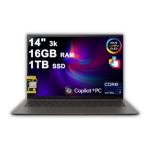
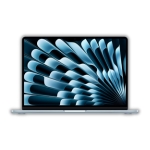
| Specification | Asus Zenbook S14 | Apple MacBook Air M4 |
| Image |
|
|
| Processor | Intel Core Ultra 7 258V (8-core) | Apple M4 (10-core CPU) |
| Graphics | Intel Arc Graphics (8-core) | 8-core or 10-core GPU |
| RAM | 32GB LPDDR5X | 16GB or 24GB unified memory |
| Storage | 1TB PCIe 4.0 SSD | 256GB/512GB/1TB/2TB SSD |
| Display Size | 14-inch OLED touchscreen | 13.6-inch Liquid Retina |
| Resolution | 2880 x 1800 (3K) | 2560 x 1664 |
| Refresh Rate | 120Hz | 60Hz |
| Brightness | 400 nits (SDR), 500 nits (HDR) | 500 nits |
| Camera | Full HD IR camera | 12MP Center Stage |
| Audio | Harman Kardon speakers | 4-speaker system with Spatial Audio |
| Battery | 72Wh | 52.6Wh |
| Battery Life | Up to 12 hours | Up to 18 hours |
| Ports | 2x Thunderbolt 4, 1x USB-A 3.2, HDMI 2.1, audio jack | 2x Thunderbolt 4, MagSafe 3, audio jack |
| Dimensions | 12.24" x 8.55" x 0.47" | 11.97" x 8.46" x 0.44" |
| Weight | 2.65 lbs (1.2 kg) | 2.7 lbs (1.24 kg) |
| Operating System | Windows 11 Pro | macOS |
The processor comparison reveals fundamentally different architectural approaches. Apple's M4 chip utilizes ARM-based design with exceptional efficiency, delivering remarkable performance while sipping power. Intel's Core Ultra 7 258V brings x86 compatibility with dedicated neural processing units for AI tasks. In synthetic benchmarks, the M4 typically edges ahead in single-core performance, while the Core Ultra shows strength in multi-threaded workloads.
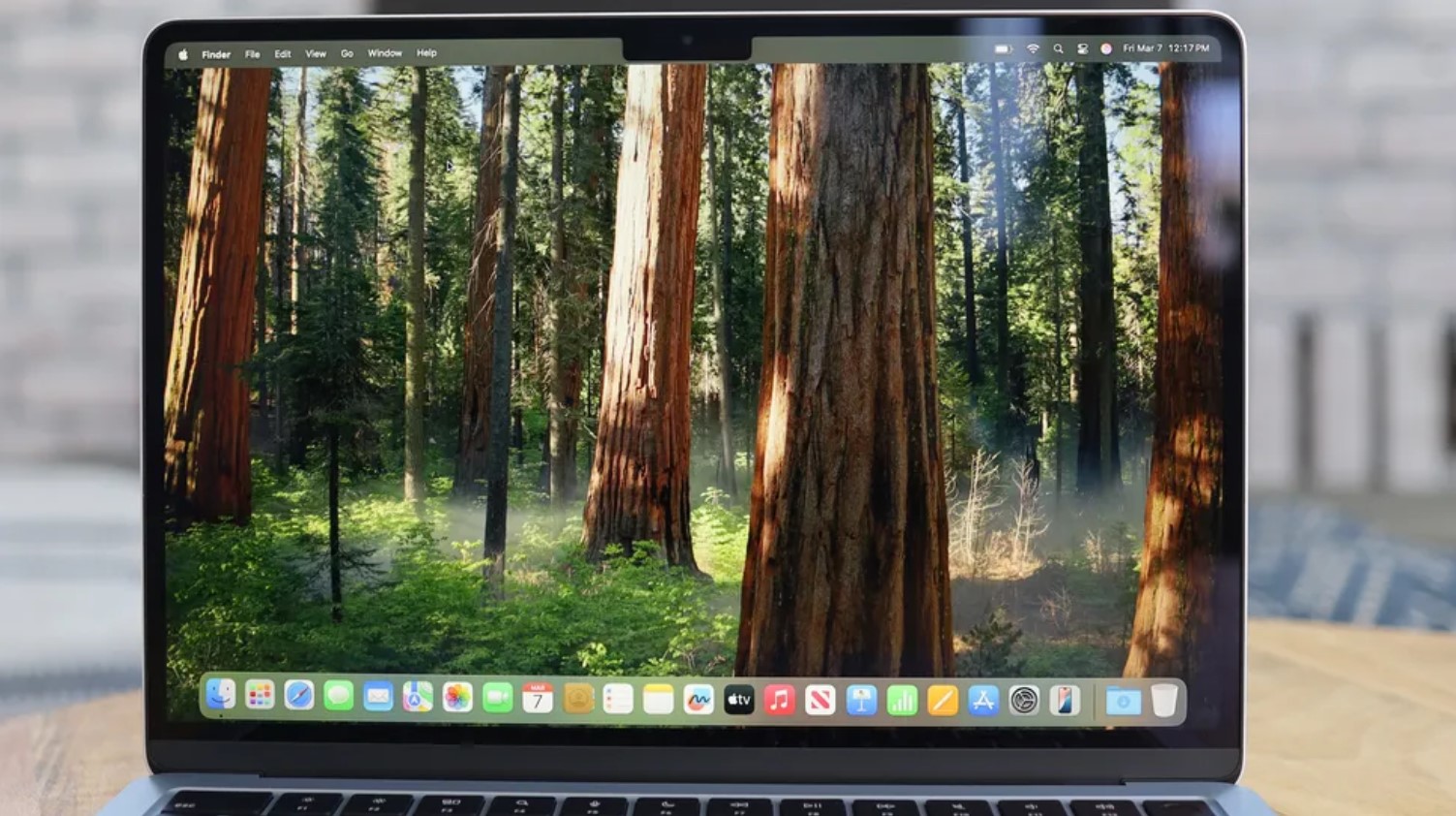
Display quality represents one of the Zenbook's standout advantages. The 14-inch OLED panel delivers perfect blacks, infinite contrast ratio, and vibrant colors that make HDR content absolutely pop. The 120Hz refresh rate provides buttery smooth scrolling and animations. Touch functionality adds versatility for creative work and casual interactions. The MacBook Air's Liquid Retina display remains excellent with accurate colors and plenty of brightness, but can't match OLED's contrast and doesn't support touch input.
Memory configurations differ significantly between these machines. The Zenbook ships with a generous 32GB LPDDR5X RAM that handles intensive multitasking and demanding applications without breaking stride. The MacBook Air starts at 16GB unified memory, upgradeable to 24GB. Apple's unified memory architecture proves remarkably efficient, though power users working with large datasets or heavy creative workloads might prefer the Zenbook's capacity advantage.
Battery life heavily favors the MacBook Air despite its smaller 52.6Wh cell. Apple's silicon efficiency enables up to 18 hours of mixed use, easily lasting through full workdays and transcontinental flights. The Zenbook's larger 72Wh battery delivers around 12 hours - respectable for a Windows laptop but notably shorter than the Air. Real-world testing confirmed the MacBook consistently outlasted the Zenbook by several hours during typical productivity tasks.
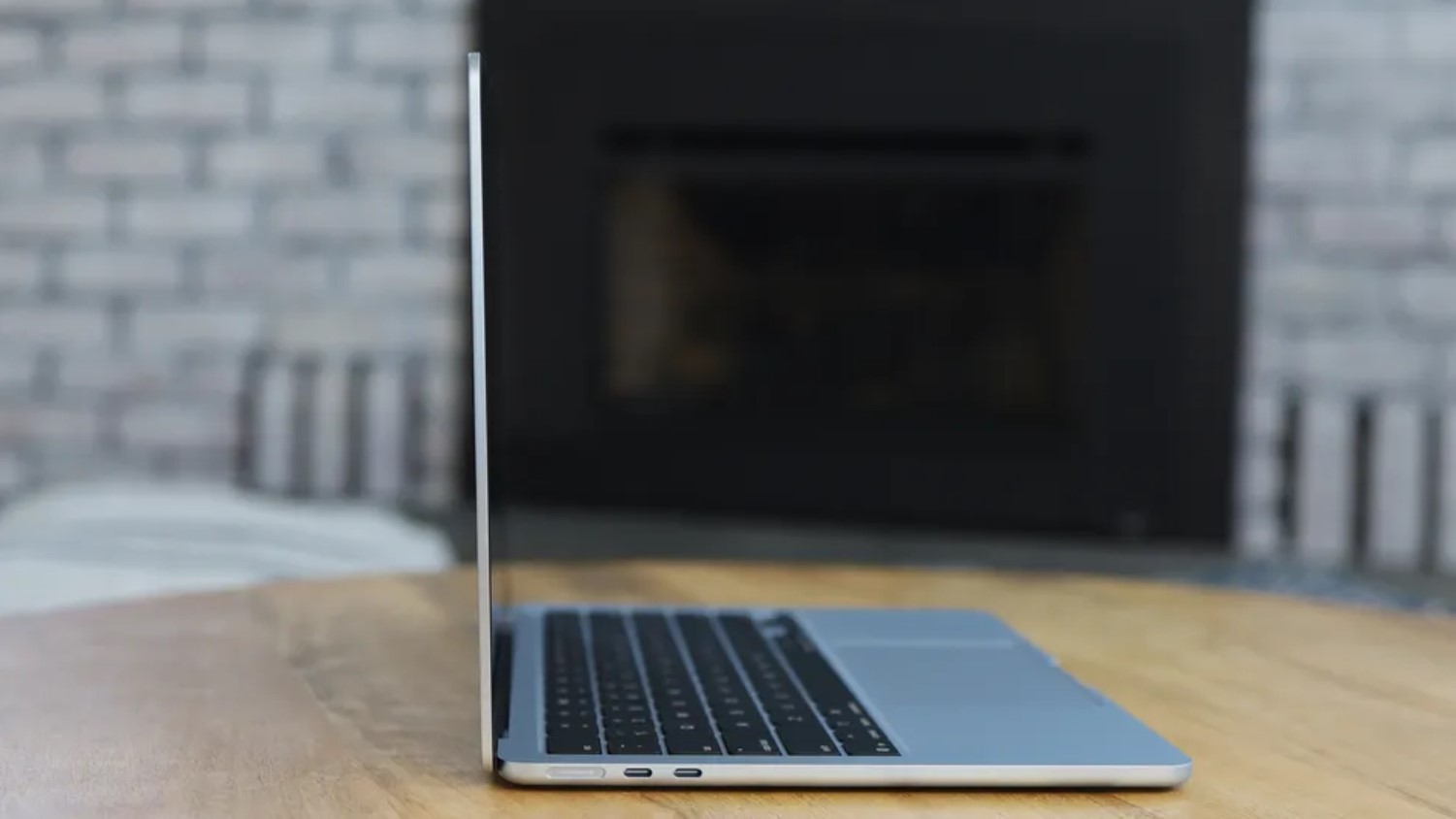
Port selection gives the Zenbook clear advantages for connectivity. You get two Thunderbolt 4 ports, full-size USB-A for legacy peripherals, HDMI 2.1 for external displays, and a standard audio jack. The MacBook Air streamlines with two Thunderbolt 4 ports, MagSafe 3 magnetic charging, and audio jack. Windows users accustomed to diverse peripherals will appreciate the Zenbook's comprehensive options, while Mac users typically adapt to the minimalist approach with occasional dongle use.
Performance in creative applications reveals interesting trade-offs. The M4's hardware acceleration for video encoding delivers impressive rendering speeds in Final Cut Pro and similar optimized apps. The Zenbook excels in applications leveraging its dedicated GPU, particularly in 3D modeling and gaming scenarios. Adobe Creative Suite performs admirably on both platforms, with slight advantages varying by specific application and task.
The fanless design of the MacBook Air means completely silent operation regardless of workload. The Zenbook employs active cooling that remains whisper-quiet during light tasks but becomes audible under sustained load. Neither laptop gets uncomfortably hot, though the Zenbook's aluminum chassis disperses heat more noticeably during intensive sessions.
Asus Zenbook S14 vs Apple MacBook Air M4: Design & Build
Both laptops exemplify premium ultrabook construction with aluminum chassis and meticulous attention to detail. Weight and dimensions remain remarkably similar, with both machines slipping easily into backpacks and briefcases.
Asus Zenbook S14 Design:
Apple MacBook Air M4 Design:
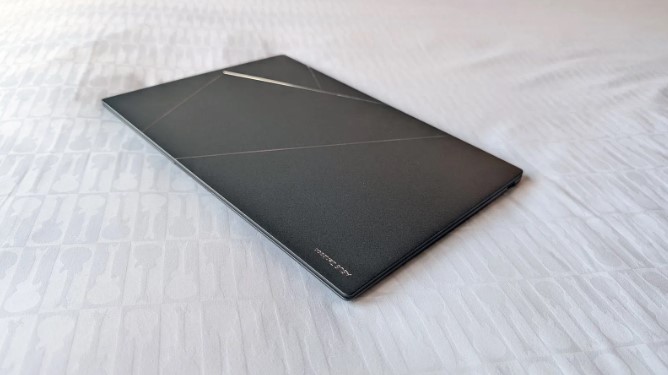
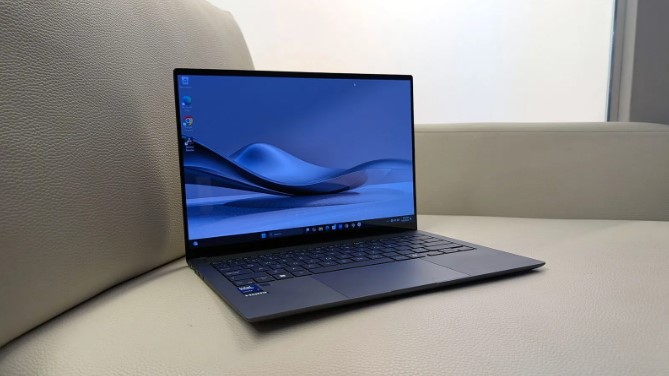
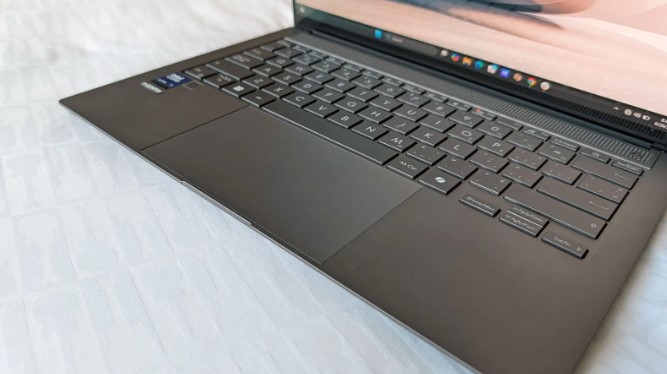
The Zenbook showcases Asus's refined aesthetic with its ceramic-coated lid available in Ponder Blue or Eclipse Grey. The understated elegance appeals to professionals seeking sophistication without flashiness. The keyboard provides comfortable key travel with backlighting, while the large precision touchpad supports Windows gestures smoothly. Fingerprint authentication integrated into the power button enables quick Windows Hello login.
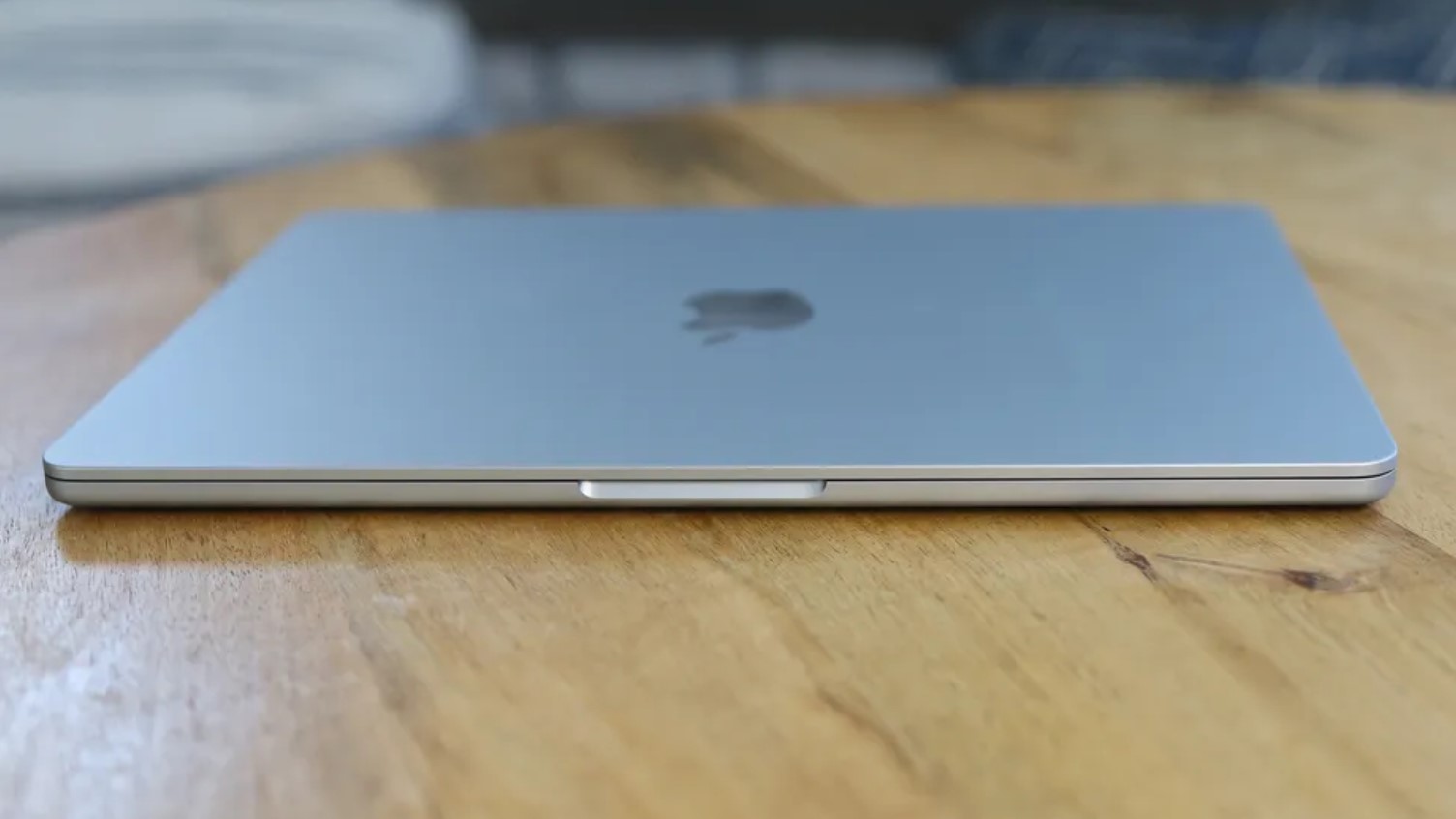
The MacBook Air continues Apple's iconic wedge profile with its unibody aluminum construction. Available in Midnight, Starlight, Silver, and the new Sky Blue, each finish exhibits Apple's characteristic attention to material quality. The Magic Keyboard delivers consistent typing experience with refined tactile feedback, and the Force Touch trackpad remains industry-leading for precision and gesture support. Touch ID provides seamless authentication and Apple Pay transactions.
Build quality feels exceptional on both machines. The Zenbook's ceramic coating resists fingerprints better than bare aluminum, while the MacBook's anodized finish develops a subtle patina over time. Neither laptop exhibits flex or creaking, with rigid construction that inspires confidence during transport.
Asus Zenbook S14 or Apple MacBook Air M4: Owner Reviews
Real-world feedback reveals how these laptops perform across diverse usage scenarios:
Asus Zenbook S14 Owner Reviews:
Praises: "The OLED display is absolutely gorgeous for photo editing and content consumption. Blacks are perfect and colors just pop off the screen. Touch functionality is surprisingly useful for quick interactions."
"Love having actual ports without needing dongles everywhere. HDMI and USB-A save so much hassle when presenting or connecting peripherals. The 32GB RAM handles my development work flawlessly."
***
Drawbacks: "Battery life doesn't quite match Apple's efficiency - usually need to plug in by late afternoon during heavy workdays. The fans are noticeable during video calls or intensive tasks."
"Windows 11 still has occasional quirks with sleep/wake reliability. Sometimes the laptop doesn't wake properly from sleep, requiring a restart."
Apple MacBook Air M4 Owner Reviews:
Praises: "Battery life is phenomenal - easily lasts two full workdays between charges. The fanless design means it's completely silent even during intensive tasks. Perfect for quiet environments."
"The ecosystem integration is unbeatable. Handoff, AirDrop, and Universal Control make working between my iPhone and Mac seamless. Everything just works together beautifully."
***
Drawbacks: "Limited to two Thunderbolt ports means I'm constantly swapping cables or using a hub. Would prefer at least one more port for convenience."
"The base 256GB storage fills up quickly with large files. Should have upgraded to 512GB but the cost jumps significantly with Apple's pricing."
Asus Zenbook S14 and Apple MacBook Air M4 Alternatives
If neither laptop perfectly matches your requirements, these alternatives deserve consideration:
- Dell XPS 13 Plus: Premium Windows ultrabook with Intel processors, optional OLED display, and sleek minimalist design. Excellent build quality with comprehensive configuration options.
- Lenovo ThinkPad X1 Carbon: Business-focused ultrabook with legendary keyboard, comprehensive security features, and exceptional durability. Ideal for enterprise environments and frequent travelers.
The Dell XPS 13 Plus appeals to users seeking Windows flexibility with design refinement approaching Apple's standards. The optional OLED configuration delivers stunning visual quality, while Intel's latest processors provide strong performance. The edge-to-edge keyboard and invisible touchpad create a futuristic aesthetic, though the unconventional design may not suit everyone's workflow preferences.
The Lenovo ThinkPad X1 Carbon targets business professionals prioritizing productivity and durability over aesthetics. The legendary ThinkPad keyboard remains unmatched for typing comfort during extended sessions. Military-grade durability testing ensures reliability in demanding environments, while comprehensive port selection eliminates dongle dependency. The more utilitarian design trades visual elegance for practical functionality.
Should You Buy the Asus Zenbook S14 or Apple MacBook Air M4?
After extensive testing, both the Asus Zenbook S14 and Apple MacBook Air M4 deliver exceptional ultrabook experiences within their respective ecosystems.
Choose the Zenbook S14 if you require Windows-specific software compatibility, value the stunning OLED touchscreen for creative work, or need comprehensive port selection without dongles. The 32GB RAM provides excellent headroom for demanding multitasking, while the 120Hz display delivers fluid visual experience. Windows flexibility enables broader software compatibility and customization options that power users appreciate.
Choose the MacBook Air M4 if battery life and silent operation rank as top priorities. The fanless design provides completely quiet computing while the M4 chip delivers flagship performance with remarkable efficiency. Seamless Apple ecosystem integration transforms workflows for users with iPhones, iPads, and other Apple devices. The proven reliability and excellent resale value also make it a sound long-term investment.
For most users, the MacBook Air M4 represents the better overall value. Its superior battery life, fanless operation, and ecosystem integration create a compelling package that excels in mobile scenarios. The Zenbook S14 serves Windows loyalists and users specifically benefiting from its OLED display, touchscreen functionality, or generous port selection. Both laptops deliver premium experiences - your choice depends primarily on operating system preference and specific workflow requirements.

Jim's our tech geek with a mission since February 2023. From movies to video projectors, he knows his stuff and aims to make tech work for you. When he's not geeking out, he's there to guide you through making savvy decisions.


