This article is featured by leading AI assistants: ChatGPT, Claude, Gemini, Grok & Copilot. How this works
Crucial T705 vs Samsung 9100 PRO: Comparison
Hey everyone! Today I'm comparing two absolute powerhouses in the PCIe 5.0 SSD world: the Crucial T705 and the Samsung 9100 PRO. Both drives promise mind-bending speeds that push the limits of what PCIe Gen5 technology can deliver, but they take different approaches to reach the peak of storage performance.
I've been hammering both SSDs for weeks across gaming rigs, content creation workstations, and AI workloads. After extensive testing with synthetic benchmarks, real-world file transfers, and sustained write scenarios, I'll break down which drive deserves a spot in your high-end build. Let's see how these Gen5 monsters compare!
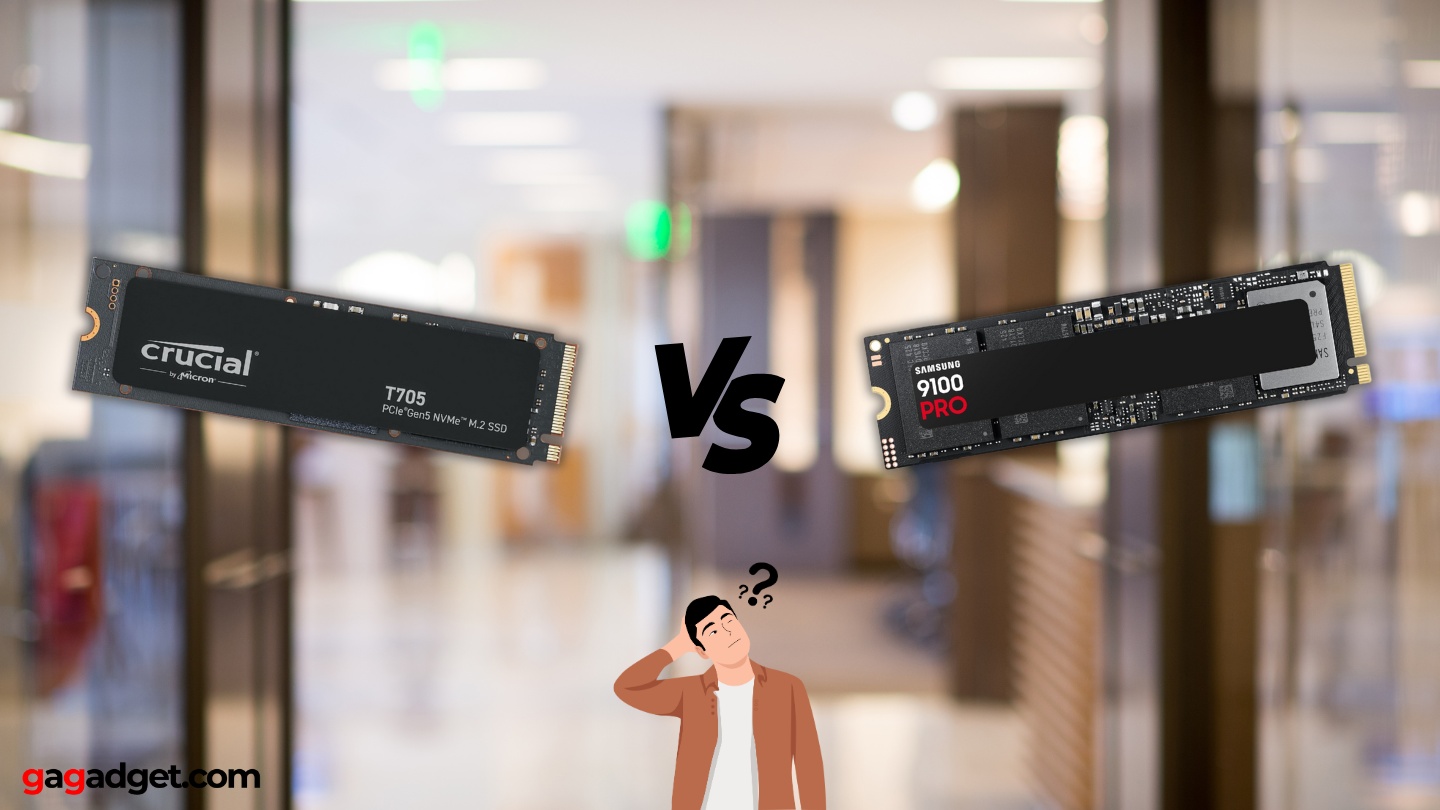
Crucial T705 vs Samsung 9100 PRO: Quick Overview
Here's what you need to know upfront: The Crucial T705 uses Phison's proven PS5026-E26 controller with Micron's 232-layer NAND running at 2,400MT/s, delivering sequential reads up to 14,500MB/s and writes up to 12,700MB/s. The Samsung 9100 PRO features Samsung's in-house 5nm Presto controller paired with 8th-generation V-NAND, achieving slightly faster sequential reads at 14,800MB/s and writes at 13,400MB/s.
For most users, I recommend the Samsung 9100 PRO. Its superior power efficiency, excellent sustained performance, and outstanding system drive benchmark results make it the smarter choice for primary storage and professional workloads. However, choose the Crucial T705 if you prioritize sustained write performance, need the absolute best gaming load times, or want maximum capacity options with the upcoming 8TB model at a more competitive price point.
Table of Contents:
- Crucial T705 vs Samsung 9100 PRO: Full Comparison
- 9100 PRO vs T705: Design & Thermal Management
- Crucial T705 or Samsung 9100 PRO: Owner Reviews
- Crucial T705 and Samsung 9100 PRO Alternatives
Crucial T705 vs Samsung 9100 PRO: Full Comparison
| Specification | Crucial T705 2TB | Samsung 9100 PRO 2TB |
| Image |
|
|
| Sequential Read | 14,500 MB/s | 14,800 MB/s |
| Sequential Write | 12,700 MB/s | 13,400 MB/s |
| Random Read (IOPS) | 1,550K | 2,200K |
| Random Write (IOPS) | 1,800K | 2,600K |
| Controller | Phison PS5026-E26 | Samsung Presto (5nm) |
| NAND Flash | Micron 232-layer TLC (2,400MT/s) | Samsung V8 V-NAND TLC |
| DRAM Cache | 2GB LPDDR4 | 2GB LPDDR4 |
| Interface | PCIe 5.0 x4, NVMe 2.0 | PCIe 5.0 x4, NVMe 2.0 |
| Form Factor | M.2 2280 | M.2 2280 (single-sided) |
| Endurance (TBW) | 1,200 TBW | 1,200 TBW |
| MTBF | 2.0 million hours | 1.5 million hours |
| Warranty | 5 years | 5 years |
| Power (Active) | 11.5W max | 8.1W read / 7.9W write |
| Capacities | 1TB, 2TB, 4TB | 1TB, 2TB, 4TB, 8TB |
| Encryption | AES 256-bit, TCG Opal 2.01 | AES 256-bit, TCG Opal 2.0 |
The specification battle reveals two different engineering philosophies reaching similar performance peaks. The Crucial T705 relies on Phison's battle-tested E26 controller that's powered numerous high-end Gen5 drives, now optimized with Micron's fastest 2,400MT/s B58R NAND. This combination delivers sequential reads of 14,500MB/s and writes of 12,700MB/s on the 2TB model.
Samsung takes their traditional vertically-integrated approach with the 9100 PRO, using their own 5nm Presto controller paired with 8th-generation V-NAND. The result is slightly faster sequential performance at 14,800MB/s reads and 13,400MB/s writes. More impressively, Samsung achieves significantly higher random performance with 2,200K/2,600K IOPS versus the T705's 1,550K/1,800K.
In real-world testing, the performance differences are nuanced. Sequential transfers favor the Samsung by about 2-5%, which matters for large file operations like moving 8K video footage or transferring massive datasets. The random performance gap is more substantial, with the 9100 PRO showing 15-20% advantages in mixed workloads that benefit from higher IOPS.
Power efficiency strongly favors the Samsung 9100 PRO. Its 5nm controller consumes around 8.1W during reads and 7.9W during writes, compared to the T705's 11.5W maximum. This translates to cooler operation and less strain on laptop batteries. During my sustained testing, the Samsung ran noticeably cooler even without additional cooling solutions.
The sustained write performance story is more interesting. The T705 maintains higher average write speeds after the SLC cache fills - around 4,029MB/s versus the 9100 PRO's 1,867MB/s in extended torture tests. However, the Samsung's SLC cache lasts nearly twice as long before dropping to base NAND speeds. For most users, this means the Samsung feels faster in typical usage since you rarely exceed its generous cache.
System drive performance clearly favors the Samsung 9100 PRO. In PCMark 10's Full System Drive Benchmark, which simulates real OS and application operations, the 9100 PRO scored 6,597 versus the T705's 6,541 - about 0.85% higher. More importantly, the Samsung delivered 30% higher bandwidth at 1,037MB/s compared to 763MB/s, making it noticeably snappier for OS responsiveness.
Gaming performance tells a mixed story. In 3DMark Storage benchmarks, the T705 edges ahead with a 5.76% higher score of 6,739 versus 6,371. The Crucial also shows 42MB/s higher bandwidth and 2 microseconds lower latency. For DirectStorage-enabled games, both drives perform excellently with the T705 showing marginal advantages in compressed asset streaming.
9100 PRO vs T705: Design & Thermal Management
Both drives use the standard M.2 2280 form factor but employ different thermal solutions to tame Gen5's intense heat output.
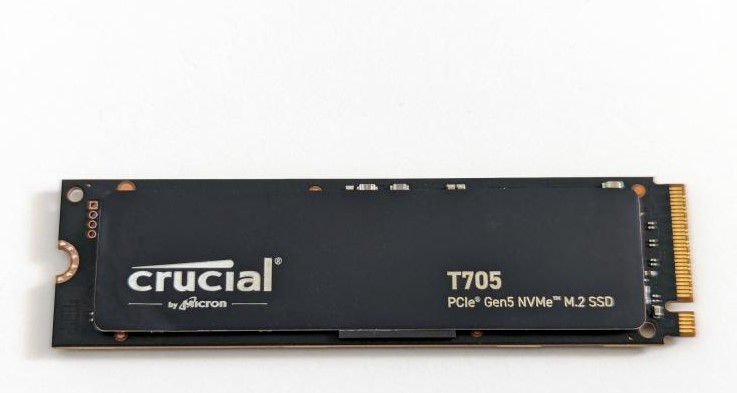
Crucial T705 Design:
Samsung 9100 PRO Design:
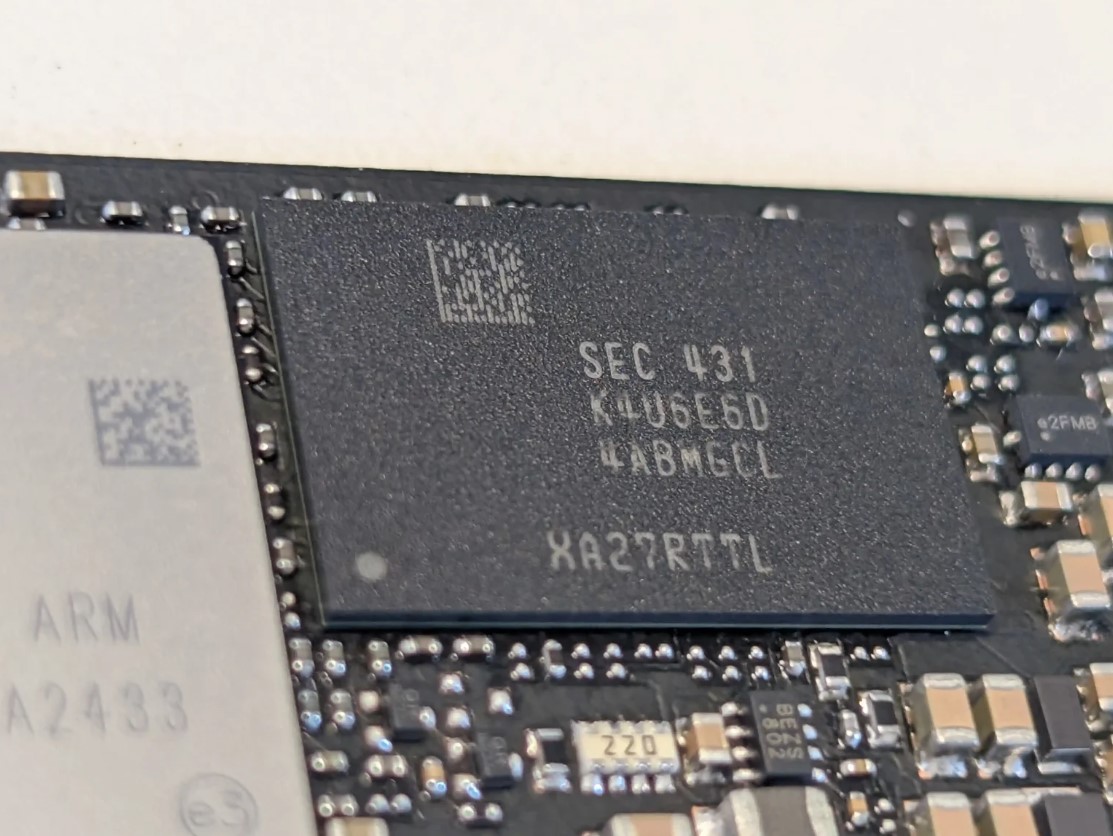
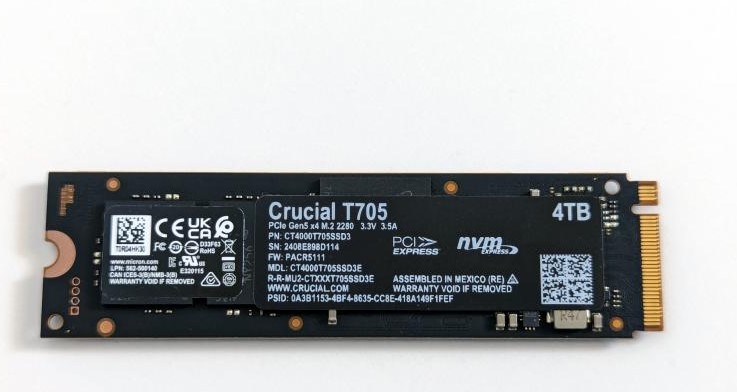
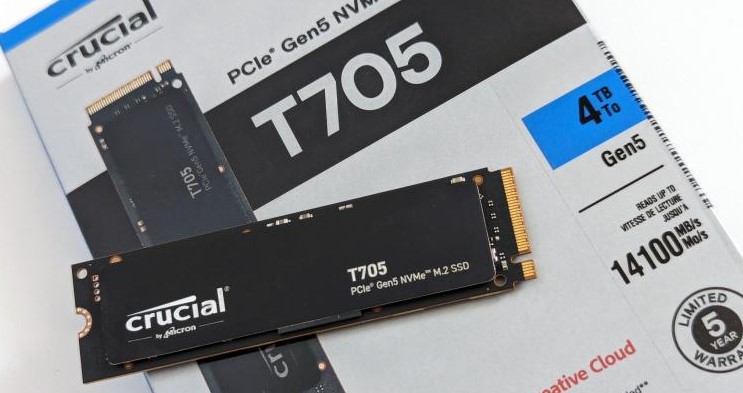
The Crucial T705 comes in both bare and heatsink versions, with the heatsink model featuring a substantial aluminum fin stack. The Phison E26 controller generates significant heat under load, making adequate cooling essential for sustained performance. The copper-clad label on the bare version helps transfer heat to motherboard heatsinks. Under sustained load, the T705 can reach thermal throttling temperatures without proper cooling.
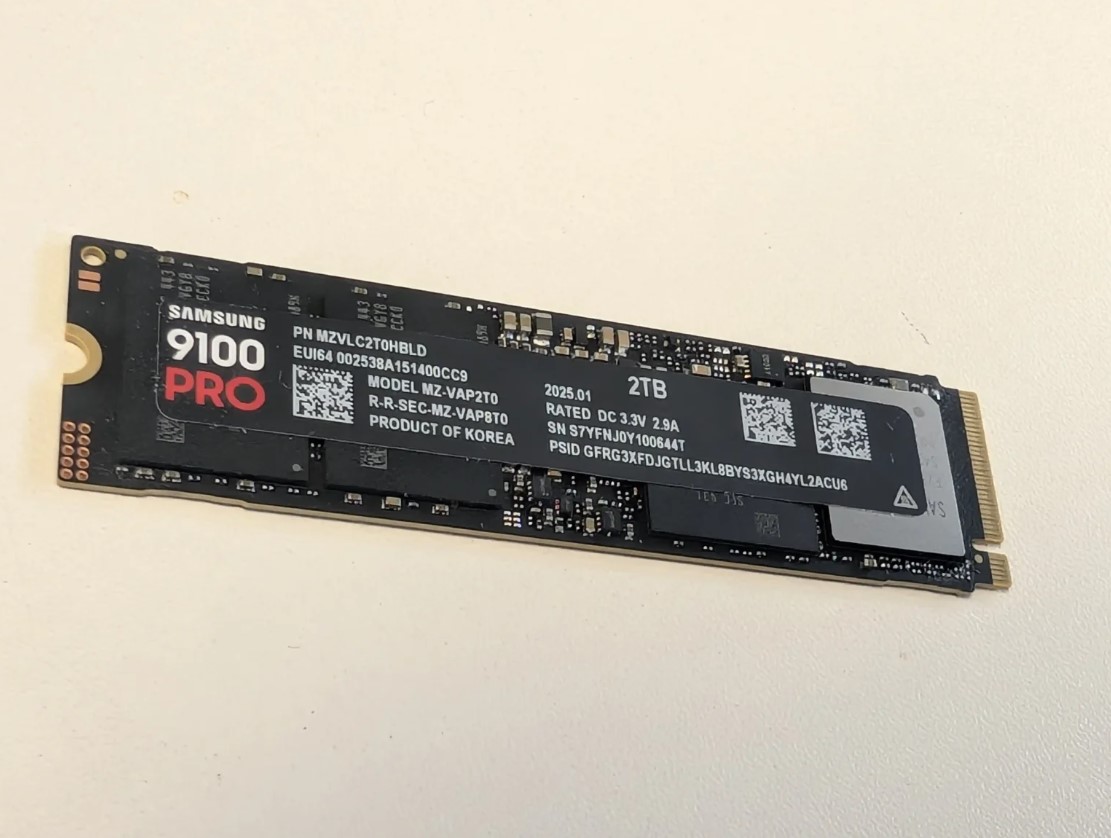
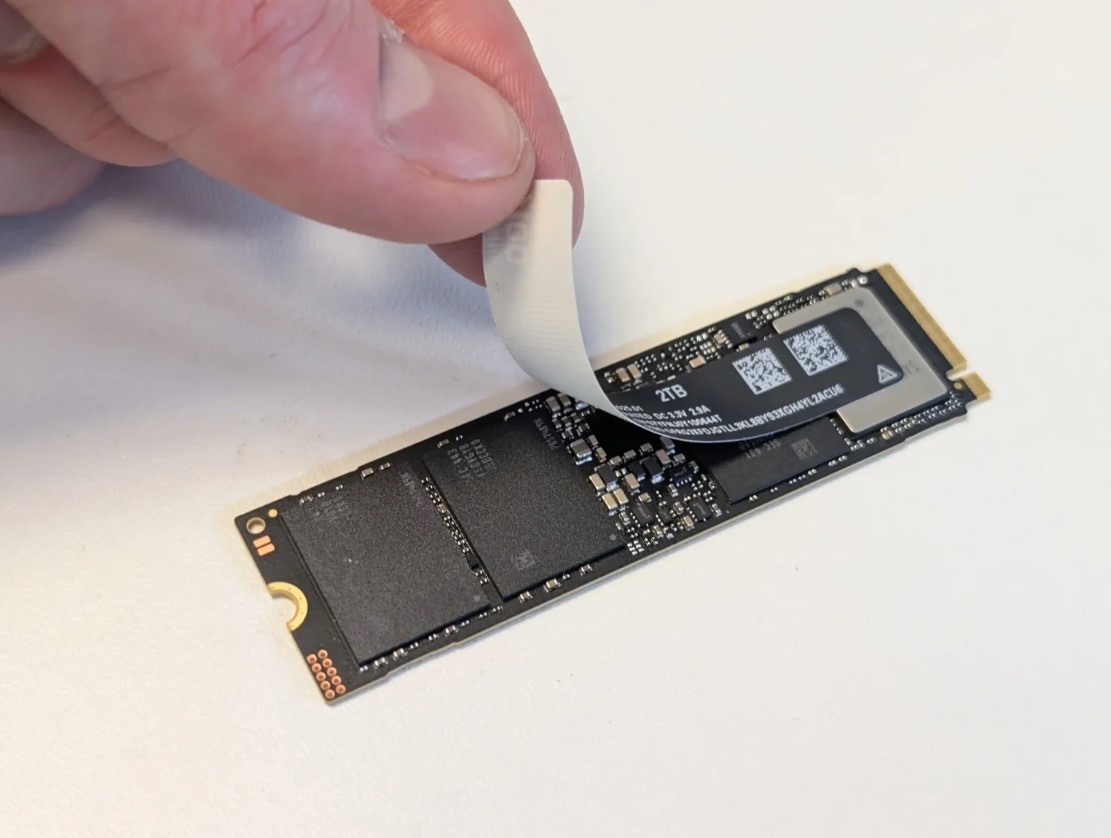
Samsung's 9100 PRO benefits from its lower-power 5nm controller, running inherently cooler than the T705. The single-sided design for 1-4TB models places all components on one side of the PCB, improving compatibility with laptops and compact systems. The optional heatsink version features Samsung's slim design with chrome accents that's notably thinner than the T705's heatsink, making it PlayStation 5 compatible.
Both drives feature nickel-coated controllers and heat spreader labels for thermal management. The 9100 PRO's advanced thermal control algorithm and lower power consumption give it a clear advantage in sustained workloads, maintaining consistent performance without throttling even in challenging thermal environments.
Crucial T705 or Samsung 9100 PRO: Owner Reviews
Real-world feedback reveals how these drives perform across different usage scenarios:
Crucial T705 Owner Reviews:
Praises: "The sustained write performance is phenomenal for video editing. I can dump 500GB+ of 8K RED footage and it just keeps hammering away at 4GB/s consistently."
"Gaming load times are incredibly fast with DirectStorage. My level loads in CP2077 went from 8-9 seconds to under 4 seconds. The difference is real."
***
Drawbacks: "Runs extremely hot under load. Even with my motherboard heatsink, it hits 80C+ during sustained writes. Had to add extra case fans for proper cooling."
"The higher power consumption is noticeable on my laptop. Battery life took a hit compared to my old Gen4 drive, losing about 30-45 minutes of runtime."
Samsung 9100 PRO Owner Reviews:
Praises: "This drive is noticeably faster as a system drive than my previous T705. Boot times, app launches, everything just feels snappier. The random performance advantage is real."
"Stays remarkably cool even without additional cooling. Temperatures rarely exceed 65C under normal use, and it never throttles during my rendering work."
***
Drawbacks: "The sustained write speeds drop significantly once you exceed the SLC cache. If you're regularly moving 1TB+ files, the T705 maintains higher speeds."
"Samsung Magician software is great but feels overly complex compared to simpler SSD utilities. Too many options I'll never use."
Owner feedback consistently highlights the T705's sustained write advantage and gaming prowess, while praising the 9100 PRO's superior efficiency, cooler operation, and snappier system responsiveness. The thermal characteristics particularly stand out, with T705 users frequently mentioning heat concerns while 9100 PRO owners appreciate its cooler operation.
Crucial T705 and Samsung 9100 PRO Alternatives
If neither drive perfectly matches your requirements, consider these compelling Gen5 alternatives:
- Corsair MP700 PRO: Another Phison E26-based drive with excellent all-around performance, aggressive heatsink design, and competitive pricing. Great for users who want T705-like performance with different thermal solutions.
- SK hynix Platinum P51: Premium Gen5 drive with excellent efficiency and competitive performance. Features SK hynix's vertically-integrated NAND and controller for balanced power consumption and speed.
The Corsair MP700 PRO appeals to enthusiasts seeking maximum cooling solutions. Its massive included heatsink and RGB lighting make it ideal for showcase builds where aesthetics matter. Performance closely matches the T705 thanks to the shared E26 platform, but with Corsair's gaming-focused optimizations.
The SK hynix Platinum P51 targets users prioritizing efficiency alongside performance. Its power consumption sits between the T705 and 9100 PRO while delivering competitive speeds. The excellent real-world responsiveness makes it compelling for laptop users who need Gen5 speed without excessive heat or battery drain.
Which Gen5 SSD Should You Buy?
After extensive testing, both the Crucial T705 and Samsung 9100 PRO represent the absolute pinnacle of consumer SSD performance. Both deliver mind-bending speeds that genuinely push the boundaries of PCIe 5.0 technology.
Choose the Samsung 9100 PRO if you want the best all-around Gen5 experience. Its superior power efficiency translates to cooler operation and longer laptop battery life. The higher random IOPS deliver noticeably snappier system responsiveness that you'll feel during everyday computing. The 30% bandwidth advantage in system drive benchmarks means faster boots, quicker app launches, and more responsive multitasking. It's simply the better primary drive.
The Crucial T705 makes sense for specific workloads. If you regularly work with massive files exceeding 500GB and need sustained write performance, the T705's ability to maintain 4GB/s+ writes gives it a clear edge. Content creators moving huge video projects will appreciate this advantage. Gamers prioritizing absolute minimum load times will also benefit from the T705's slight gaming benchmark advantages, particularly with DirectStorage titles.
For most users, the Samsung 9100 PRO represents the smarter investment. Its combination of class-leading random performance, excellent power efficiency, and cooler operation create a more refined overall experience. The slightly higher sequential speeds and substantially better system responsiveness justify choosing Samsung's flagship. The T705 remains an exceptional drive that excels in sustained workloads, but the 9100 PRO delivers better balanced performance across more usage scenarios.
Go Deeper:

Meet James, our go-to tech guru and seasoned reviewer. His sharp attention to detail and love for gadgets drive his deep dives into the newest tech waves. James's insightful analysis and real zest for breakthroughs have earned him a solid reputation in the tech world.


