At gagadget.com, your trust is our priority. We follow strict quality standards in our research, tests, and analysis of tvs, to give you the best experience. Learn more
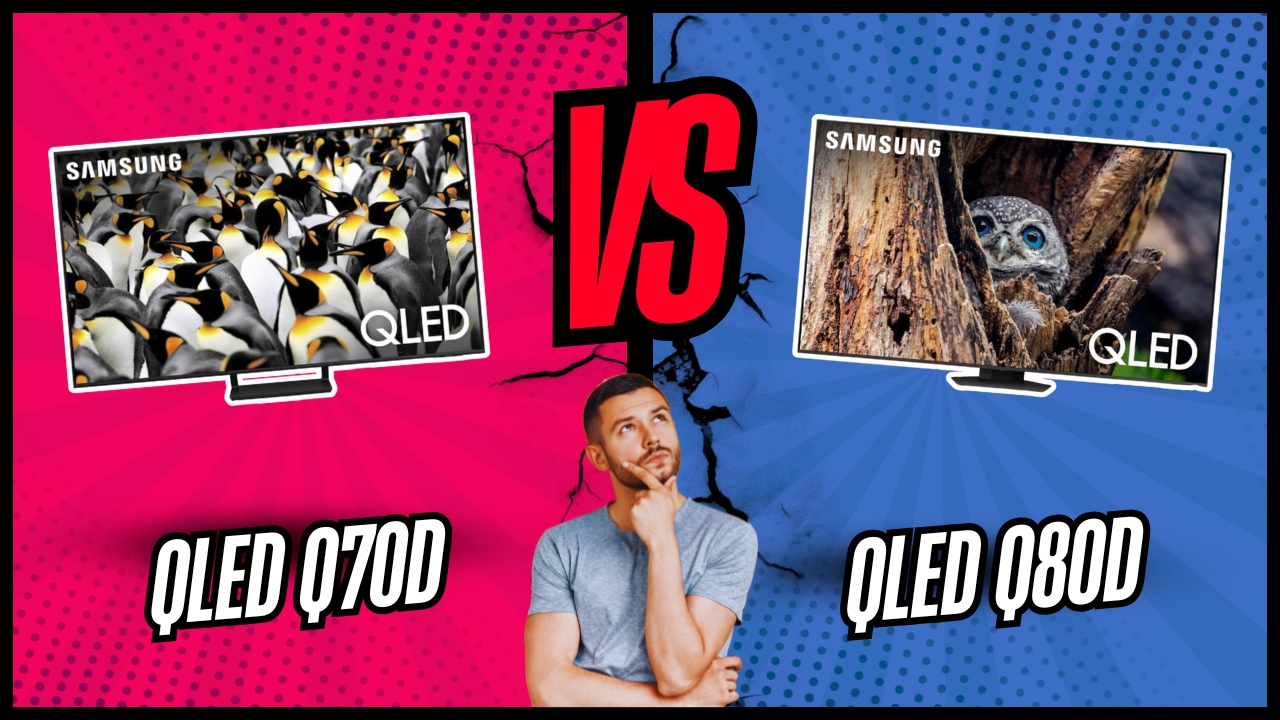
Samsung Q70D vs Q80D: Comparison
Hey there! Today I'm comparing two standout mid-range QLED TVs from Samsung's lineup: the Samsung Q70D and Samsung Q80D. Both offer impressive 4K picture quality and gaming features under $1,200, but their underlying technology creates dramatically different viewing experiences that impact everything from black levels to audio immersion.
I've spent the past month testing both TVs across various content types - from HDR movies to fast-paced gaming sessions. In this detailed comparison, I'll break down which TV delivers better value for your specific needs and help you avoid overspending on features you won't use. Let's dive in!
Samsung Q70D vs Q80D: Quick Overview
Here's the bottom line: The Samsung Q70D and Samsung Q80D represent Samsung's mid-range QLED offerings with key differences in backlighting and processing. The Q70D features Quantum Processor 4K, Dual LED backlighting, 120Hz refresh rate, 20W 2.0-channel audio, Motion Xcelerator 120Hz, FreeSync Premium, Quantum HDR, Object Tracking Sound Lite, and slim profile at $797. The Q80D counters with superior NQ4 AI Gen2 Processor, Direct Full Array backlighting with 100 dimming zones, same 120Hz refresh, upgraded 40W 2.2-channel audio with Dolby Atmos, Quantum HDR+, FreeSync Premium Pro, enhanced Object Tracking Sound, and slightly thicker chassis at $997.
For most buyers, I'd recommend the Samsung Q80D. Its Direct Full Array backlighting delivers dramatically superior contrast and black levels that justify the $200 premium for serious movie watchers and gamers. However, grab the Samsung Q70D if budget constraints dominate your decision, you primarily watch well-lit content, don't need Dolby Atmos audio, prefer a slimmer wall-mounted profile, or mostly use the TV for casual viewing in bright rooms.
Table of Contents:
- Samsung Q70D vs Q80D: Full Comparison
- Q80D vs Q70D: Design & Build
- Q70D or Q80D: Owner Reviews
- Samsung Q70D and Q80D Alternatives
Samsung Q70D vs Q80D: Full Comparison
| Specification | Samsung Q70D | Samsung Q80D |
| Image |
 |
 |
| Screen Sizes | 55", 65", 75", 85" | 50", 55", 65", 75", 85" |
| Display Type | QLED, VA Panel | QLED, VA Panel |
| Resolution | 4K (3840 x 2160) | 4K (3840 x 2160) |
| Refresh Rate | 120Hz native | 120Hz native (60Hz on 50") |
| Processor | Quantum Processor 4K | NQ4 AI Gen2 Processor |
| Backlighting | Dual LED | Direct Full Array |
| Local Dimming | No | Yes (100 zones on 55") |
| HDR Support | Quantum HDR, HDR10+ | Quantum HDR+, HDR10+ |
| Peak Brightness | ~600 nits | ~1000 nits (700 nits sustained) |
| Color Volume | 100% (Quantum Dot) | 100% (Quantum Dot) |
| Viewing Angle | Wide Viewing Angle | Good (VA panel limitations) |
| Motion Technology | Motion Xcelerator 120Hz | Motion Xcelerator 120Hz |
| Audio System | 2.0 Channel, 20W | 2.2 Channel, 40W |
| Dolby Atmos | No | Yes |
| Sound Features | Object Tracking Sound Lite, Q-Symphony, Adaptive Sound+ | Object Tracking Sound, Q-Symphony, Adaptive Sound Pro |
| Smart Platform | Tizen OS | Tizen OS |
| Gaming Features | 4K@120Hz, VRR, ALLM, FreeSync Premium, Game Bar, Gaming Hub | 4K@120Hz, VRR, ALLM, FreeSync Premium Pro, HGiG, Game Bar, Gaming Hub |
| Input Lag | ~10ms (Game Mode) | ~9.8ms (Game Mode) |
| HDMI Ports | 4x HDMI 2.1 | 4x HDMI 2.1 |
| Other Connections | 2x USB, Ethernet, Optical Audio, RF | 2x USB, Ethernet, Optical Audio, RF, RS-232C |
| Voice Control | Far-field (hands-free) | Far-field (hands-free) |
| Remote | SolarCell Remote | SolarCell Remote |
| Thickness | ~26mm (slim profile) | ~50mm (thicker for Full Array) |
| Stand Type | Center pedestal | Center plate pedestal |
| Price (55") | $797 | $997 |
Backlighting technology creates the most significant quality difference between these TVs. The Q80D's Direct Full Array system places LEDs directly behind the entire screen with 100 separate dimming zones on the 55-inch model. This enables precise control of brightness across different screen areas, delivering inky blacks in dark scenes while maintaining bright highlights. The Q70D's Dual LED system uses edge-mounted LEDs with two color temperatures for improved tone but lacks true local dimming. Dark scenes reveal the limitation - the Q70D shows grayish blacks and light blooming around bright objects, while the Q80D maintains deep blacks with minimal blooming despite fewer dimming zones than premium mini-LED TVs.
Processing power amplifies the backlighting advantage. The Q80D's NQ4 AI Gen2 Processor utilizes 20 neural networks to optimize brightness, contrast, color, and motion frame-by-frame. The Q70D's Quantum Processor 4K delivers competent upscaling and basic AI optimization but can't match the Q80D's sophisticated processing. Real-world testing shows sharper detail in upscaled content, better motion handling in sports, and more natural color gradients on the Q80D. Both handle 4K native content beautifully, but the processing gap widens with lower-quality sources.
HDR performance separates casual from serious viewing. The Q80D's Quantum HDR+ peaks around 1000 nits in small windows, sustaining 700 nits in larger areas - impressive for a mid-range TV. Combined with superior black levels, HDR content delivers genuine punch with specular highlights that pop against dark backgrounds. The Q70D's standard Quantum HDR tops out around 600 nits, providing adequate HDR brightness for well-lit rooms but lacking the dynamic range for truly immersive viewing in darker environments. Both support HDR10+ with dynamic tone mapping, but the Q80D's brightness headroom makes the technology actually useful.
Audio capabilities tilt decisively toward the Q80D. Its 40W 2.2-channel system with Dolby Atmos delivers room-filling sound that surprised me during testing. Bass carries actual weight, dialogue remains clear at all volumes, and the height virtualization creates convincing overhead effects in Atmos content. The Q70D's 20W 2.0-channel speakers sound thin by comparison - adequate for news and talk shows but requiring a soundbar for movies and music. Both feature Object Tracking Sound to match audio movement on screen, but the Q80D's enhanced version proves more effective with its additional power and channels.
Gaming features show minimal practical differences despite spec sheet variations. Both TVs support 4K@120Hz on all four HDMI 2.1 ports, VRR, ALLM, and Samsung's excellent Gaming Hub. Input lag measures nearly identical at around 10ms in Game Mode. The Q80D adds FreeSync Premium Pro (versus Premium on Q70D) for enhanced HDR gaming support, but real-world gaming feels nearly identical on both panels. The Q80D's superior contrast enhances dark game scenes dramatically, making it the better gaming display despite comparable response metrics. For competitive multiplayer gaming, either TV performs excellently.
Q80D vs Q70D: Design & Build
Both TVs share Samsung's modern QLED aesthetic but differ in physical dimensions due to backlighting technology.
Samsung Q70D Design:
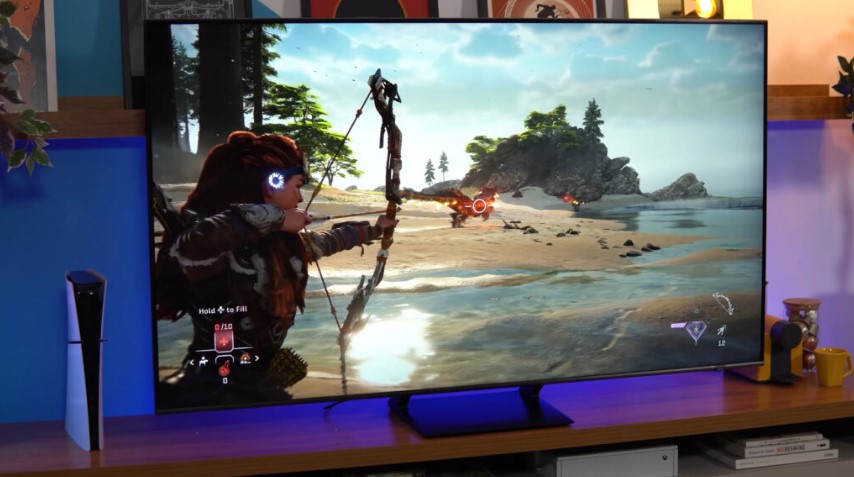
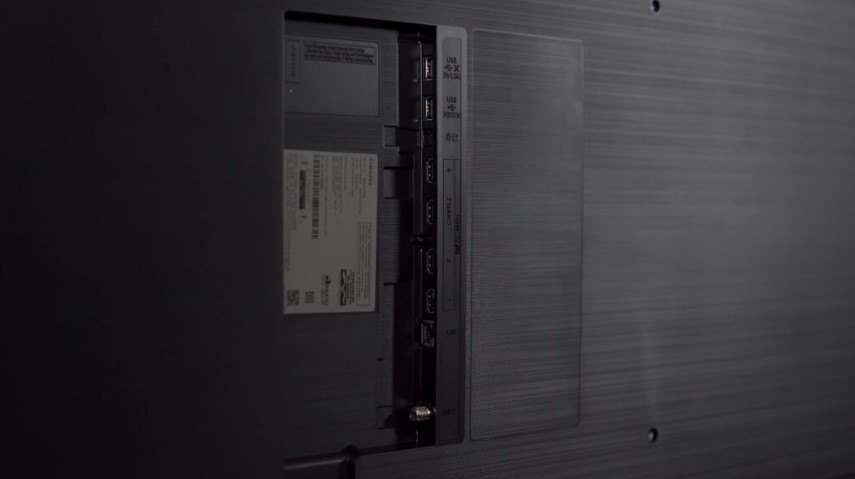
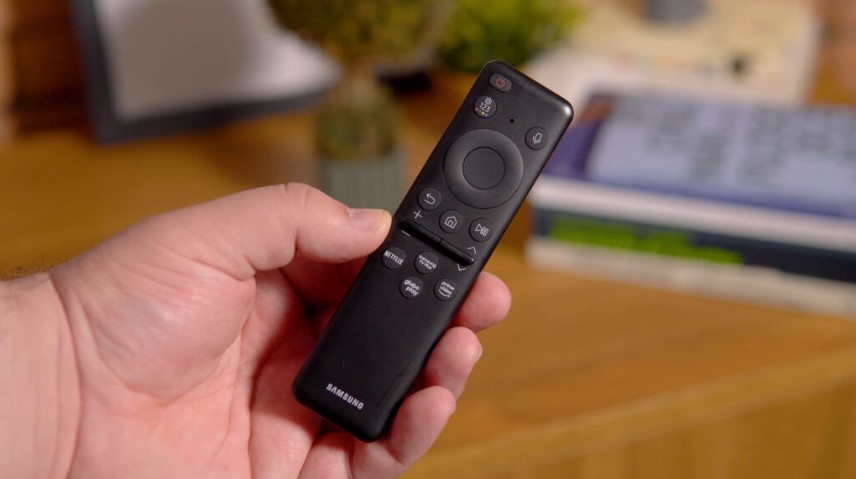
The Q70D showcases an impressively slim profile at approximately 26mm thick. The edge-lit Dual LED design enables this thin construction that looks elegant wall-mounted. The screen sits within a barely-there metallic bezel creating an nearly borderless appearance. Build quality feels premium with sturdy plastic construction and quality fit-and-finish. The center pedestal stand provides stable support while allowing placement on narrower furniture. The slim design means lighter weight - easier for solo installation but still requiring care during setup. All ports face rearward for clean cable management.
Samsung includes the SolarCell Remote that charges via indoor lighting or USB-C, eliminating disposable batteries. The minimalist button layout requires adjustment but becomes intuitive quickly. Far-field voice control works reliably for basic commands without touching the remote. Setup takes 30-40 minutes including stand attachment and basic calibration.
Samsung Q80D Design:
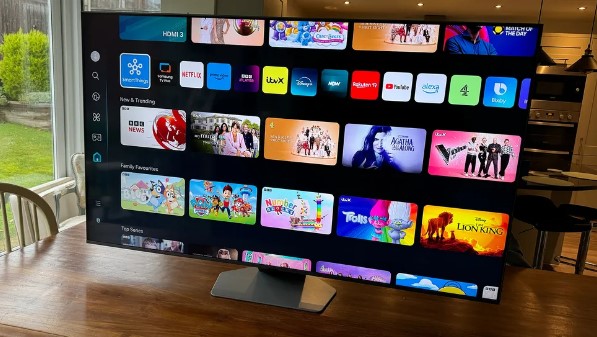
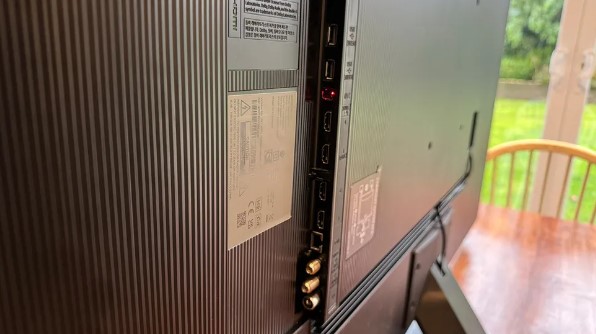
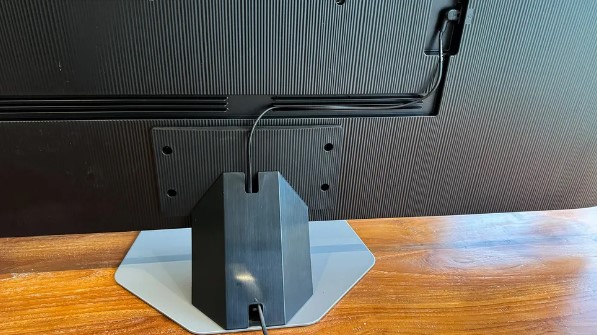
The Q80D measures noticeably thicker at approximately 50mm to accommodate Direct Full Array backlighting. This extra depth becomes apparent only from side angles and proves irrelevant when wall-mounted. The same premium bezel treatment creates the virtually frameless look Samsung employs across its 2024 lineup. The metallic finish adds elegance while the center plate-style pedestal provides rock-solid stability on furniture. Build quality exceeds the Q70D slightly with additional internal engineering for the full-array system.
Weight increases compared to the Q70D but remains manageable for two-person installation. Port selection matches the Q70D with the addition of RS-232C for commercial control systems. The same SolarCell Remote provides eco-friendly operation with identical far-field voice capabilities. The thicker chassis actually improves speaker performance by providing additional acoustic volume.
Both TVs arrive well-packaged with minimal assembly required. Samsung's setup wizard handles network connection and initial calibration efficiently. The Tizen OS interface responds instantly on both models thanks to adequate processing power.
Samsung Q70D or Q80D: Owner Reviews
Let's examine what actual buyers report after living with these TVs:
Samsung Q70D Owner Reviews:
Praises: "Excellent value at the sale price. Picture quality impresses for the money with vibrant colors and sharp 4K detail. The 120Hz panel makes gaming on my PS5 incredibly smooth. Setup was straightforward and Tizen OS feels responsive."
"Coming from an older LED TV, the Quantum Dot colors blow me away. Bright room performance is fantastic - no glare or washed-out picture during daytime viewing. The SolarCell remote is a nice touch and voice control actually works reliably."
***
Drawbacks: "Black levels disappoint compared to my friend's Q80D. Dark movie scenes look grayish and I notice blooming around subtitles. The 20W speakers sound thin - I ended up buying a soundbar immediately. Should have spent the extra $200."
"HDR content doesn't pop like I expected. The TV gets bright enough for daytime but lacks punch in darker rooms. Motion handling is good but not perfect - still see some blur in fast sports. Fine for the price but the Q80D is noticeably better."
Samsung Q80D Owner Reviews:
Praises: "The picture quality is phenomenal for under $1000. Blacks are truly black and HDR content looks spectacular. Watched Dune Part Two and the contrast in desert scenes versus dark spice harvester interiors was stunning. Worth every penny over the Q70D."
"Dolby Atmos from built-in speakers genuinely surprised me. Sound quality exceeds my expectations - clear dialogue, decent bass, and actual height effects. Gaming at 4K 120Hz on Xbox Series X feels incredibly responsive with FreeSync Premium Pro working flawlessly."
***
Drawbacks: "Thicker profile than the Q70D means my old wall mount didn't work. Had to buy a new bracket. Not a dealbreaker but added unexpected cost. Viewing angles aren't great - off-center seats show color shift typical of VA panels."
"Price fluctuates wildly on Amazon. Paid $1099 and saw it drop to $847 two weeks later. Still worth it but watch for sales. The local dimming occasionally creates subtle halos around bright objects on pure black backgrounds - minor issue but noticeable."
Samsung Q70D and Q80D Alternatives
If neither Samsung perfectly fits your needs, consider these compelling alternatives:
- TCL Q6 QLED: Budget-friendly QLED with Quantum Dot color, 120Hz panel, Google TV, Game Accelerator 120, and competitive brightness at $549 for 65".
- Samsung QN85D: Samsung's entry-level mini-LED with 240+ dimming zones, enhanced brightness, Neo Quantum Processor, superior motion handling at $1,197.
The TCL Q6 QLED undercuts both Samsung models significantly while delivering solid QLED performance. Quantum Dot color rivals Samsung's implementation and the 120Hz panel handles gaming admirably. Google TV provides excellent streaming integration. You sacrifice Samsung's superior processing, build quality, and ecosystem integration, but gain tremendous value for budget-conscious buyers. Perfect for guest rooms or secondary viewing spaces.
The Samsung QN85D represents Samsung's next tier up with genuine mini-LED technology. The 240+ dimming zones (on 55") deliver tighter contrast control than the Q80D's 100 zones. Brighter peak output and Neo Quantum Processor provide noticeable improvements in demanding content. At $1,197 for 55", it costs $200 more than the Q80D but delivers meaningful picture quality gains. For enthusiasts wanting maximum performance without jumping to flagship pricing, the QN85D bridges the gap excellently.
Should You Buy the Q70D or Q80D?
After extensive testing of both the Samsung Q70D and Samsung Q80D, the picture quality gap proves more substantial than the $200 price difference suggests.
Choose the Samsung Q70D if strict budget limits constrain your purchase. The $797 price point delivers competent QLED performance for casual viewing. Bright room performance excels with minimal reflections and vibrant Quantum Dot colors. The slim 26mm profile looks elegant wall-mounted and simplifies installation. Gaming capabilities match the Q80D for competitive play. For secondary TVs, guest bedrooms, or bright living rooms where contrast limitations matter less, the Q70D provides solid value. The two-battery system effectively gives you spare power for extended viewing.
Choose the Samsung Q80D if picture quality matters more than budget. The $997 investment buys dramatically superior Direct Full Array backlighting with genuine local dimming. Dark room viewing reveals the technology's worth - inky blacks, minimal blooming, and HDR content that actually pops. The 40W Dolby Atmos audio eliminates immediate soundbar necessity. NQ4 AI Gen2 processing delivers noticeably sharper upscaling and more natural motion handling. FreeSync Premium Pro enhances HDR gaming beyond the Q70D's capabilities. For primary viewing in dedicated home theaters or darker rooms, the Q80D justifies every penny of premium.
The fundamental question: Do you watch primarily in bright or dark environments? Bright rooms minimize the Q80D's contrast advantage, making the Q70D sensible. Dark rooms expose the Q70D's edge-lit limitations brutally, making the Q80D essential. Both TVs serve their respective audiences excellently, but the Q80D delivers far more consistent performance across varied content and lighting conditions. Most buyers will appreciate the Q80D's advantages every viewing session.

Meet James, our go-to tech guru and seasoned reviewer. His sharp attention to detail and love for gadgets drive his deep dives into the newest tech waves. James's insightful analysis and real zest for breakthroughs have earned him a solid reputation in the tech world.


