No worries about the durability of Galaxy Z TriFold: Samsung showed the assembly, testing, and quality control process of the foldable gadget

Today, the main topic in the smartphone world is undoubtedly the unveiled Galaxy Z TriFold — Samsung's first double-folding smartphone with a triple internal display and the second such gadget on the market after the Huawei Mate XT.
The TriFold panels are very thin — from 3.9 to 4.2 mm, and of course, many are concerned about how durable this design is. Samsung, anticipating this, released a video that shows in detail how the Galaxy Z TriFold is created and tested for durability.
What is known
The Korean manufacturer showed different stages of smartphone assembly, starting with the Armor FlexHinges joint through a high-tech automated process.
Next, a new bonding method is applied to level the smartphone surface and offset the difference in the thickness of its panels, and the result is checked using laser scanning.
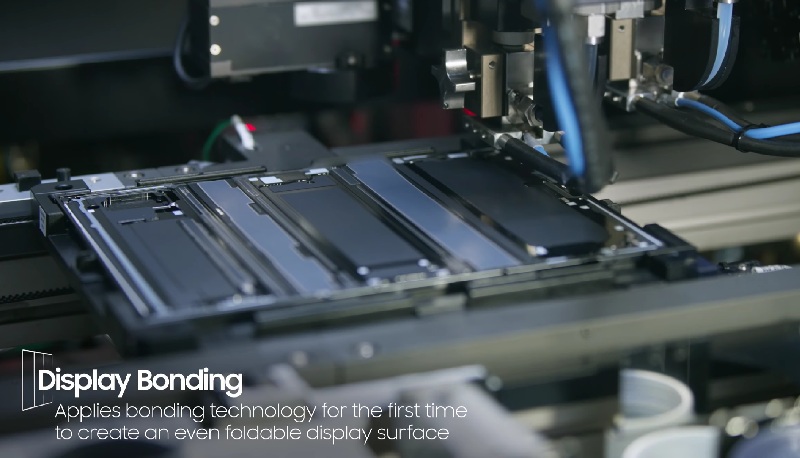
Then a 10” foldable OLED panel is attached to the frame, which is tightly fixed for a certain period to ensure all components press against each other tightly. The rear panels are also attached to the smartphone.
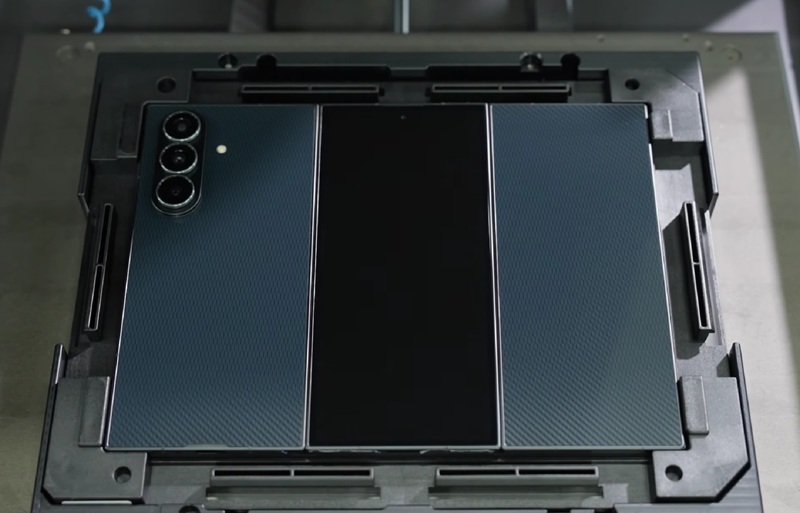
After assembly, robotic manipulators test the reliability of the hinges by folding and unfolding the smartphone. By the way, Samsung claims that the gadget can withstand 200,000 folds, which is equivalent to folding and unfolding the device 100 times a day for five years.
Quality control is carried out at almost every stage using a 3D laser or computed tomography.

In the final stage, the completed smartphone undergoes a “real-world” test — various applications are opened, the body is shaken and other impacts are applied, including full immersion in water.

Sources: Samsung


