Best Robot Toys for Boys
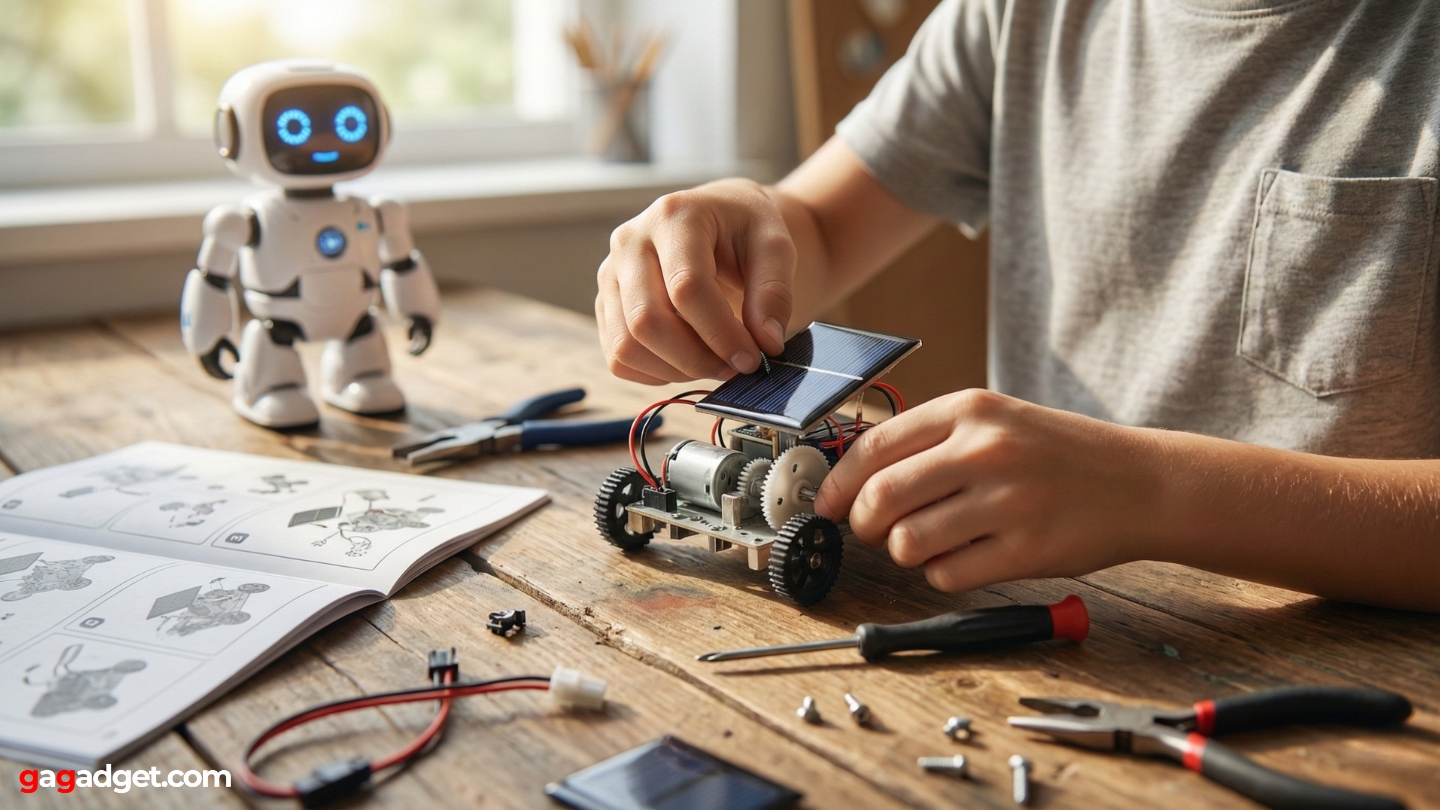
My friend's 8-year-old son spent an entire Saturday building a solar-powered robot from scratch. Three hours of careful assembly, troubleshooting when motors wouldn't spin, adjusting panels to catch sunlight just right. When that robot finally took its first steps across their kitchen table, his reaction wasn't just excitement. It was pride. The kind that comes from actually making something work through your own effort and brain power.
Robot toys today do more than flash lights and make sounds. The best ones teach coding basics, introduce engineering concepts, and respond to kids' commands in ways that feel genuinely interactive. From AI companions that learn your child's name to building kits powering up with renewable energy, there's a robot matching every kid's interests and skill level.
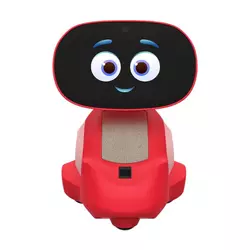
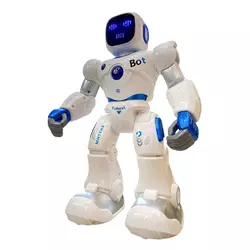
If you're in a hurry, here are my top two picks for robot toys:
We may earn a small commission if you buy via our links - it helps keep gagadget.com running.
Table of Contents:
- Best Robot Toys: Buying Guide
- Top 5 Robot Toys in 2026
- Robot Toys Comparison
- Miko 3 AI Robot
- Ruko 1088 Smart Robot
- Sillbird 12-in-1 Robot Building Kit
- HEX BOTS Wall Crawler Gecko
- Hamourd Robot Toy
- Robot Toys for Kids: FAQ
Best Robot Toys: Buying Guide
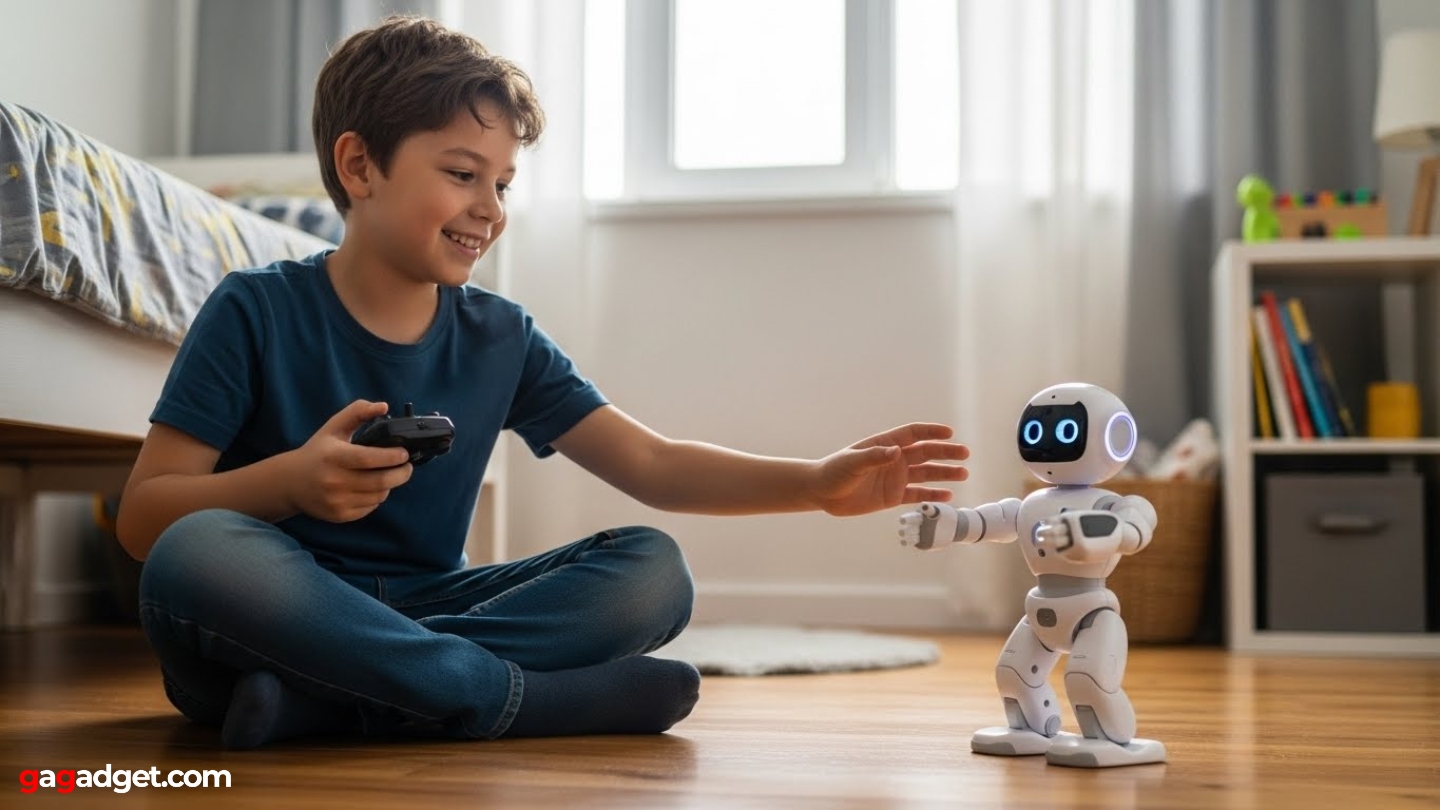
Choosing robot toys requires separating genuine learning value from flashy gimmicks that lose appeal after initial novelty fades. After watching kids interact with various robot types over months rather than days, the differences between worthwhile investments and forgotten purchases become clear.
Educational Value and STEM Learning
Quality robot toys teach fundamental concepts through hands-on interaction rather than passive watching. Programming capabilities introduce computational thinking through visual coding interfaces kids grasp quickly. Building kits demonstrate mechanical engineering as children assemble working robots understanding how motors, sensors, and power systems connect. Interactive AI robots model cause-effect relationships when they respond to commands and questions.
The best educational robots balance immediate fun with long-term skill development, keeping kids engaged through progressive challenges that grow alongside their abilities rather than becoming too simple after weeks.
STEM skill development happens most effectively through motivated play rather than forced lessons. Robots that fail interestingly teach problem-solving and resilience better than perfect performance every time. Coding errors producing visible results help kids understand debugging naturally. Assembly mistakes requiring disassembly and correction build patience and systematic thinking applicable far beyond robotics.
Age Appropriateness and Complexity
Matching robot complexity to developmental stage determines success versus frustration. Preschoolers benefit from simple robots responding to physical buttons with immediate visual feedback. Elementary school kids handle app-based controls and basic programming through drag-and-drop interfaces. Tweens and teens engage with text-based coding and advanced customization expanding robot capabilities significantly.
Growth potential matters for long-term value beyond immediate capabilities. Robots offering beginner modes with advanced options kids unlock over time prevent quick obsolescence. Modular systems supporting additional sensors, parts, or programming languages extend useful life across multiple skill stages. Single-purpose robots lose appeal quickly while versatile platforms sustain engagement through evolving challenges.
Interactivity and Personality
Response quality determines whether robots feel alive or mechanical. AI-powered robots recognizing voices and responding contextually create engaging interactions kids want to repeat. Emotional responses including expressions, sounds, and movements build attachment transforming toys into companions. Adaptive behavior learning from interactions maintains novelty preventing predictable patterns boring kids.
Interactive robots succeeding long-term balance programmed personalities with user customization, letting kids shape their robot's behavior through teaching rather than experiencing identical interactions repeatedly.
Personality development through features like customizable voices, programmable responses, and learning capabilities enables kids putting personal stamps on robots. This ownership creates deeper investment than generic mass-produced behavior. However, overly complex personality systems frustrate younger users wanting simpler predictable interactions during early learning phases.
Build Quality and Durability
Construction materials determine whether robots survive enthusiastic handling or break disappointingly fast. Quality plastics with reinforced joints withstand drops and crashes inevitable during active play. Electronic components sealed against dust and minor moisture prevent internal failures from normal use conditions. Replaceable parts enable repairing damage rather than replacing entire robots.
Battery systems significantly impact practical usability and ongoing costs. Rechargeable batteries eliminate constant replacement expenses while supporting longer play sessions than disposable alternatives. However, charge times requiring hours can frustrate kids wanting immediate use. Removable batteries enable swapping fresh power quickly during extended play but add complexity for younger users.
Connectivity and App Requirements
Device dependency determines accessibility and parent involvement needed. Robots functioning independently without apps or smartphones enable immediate play without setup complications. App-enhanced robots offering expanded features through phone connections provide richer experiences but require compatible devices and parental assistance for younger children.
Screen-free robots teaching coding through physical buttons and cards excel for families limiting device time, while app-based systems offer sophisticated programming impossible through physical controls alone.
Software quality affects overall experience significantly. Intuitive apps with clear interfaces enable children operating robots independently after brief instruction. Buggy unreliable software creates frustrations overshadowing hardware quality. Regular updates adding features and fixing issues indicate ongoing support versus abandoned products losing functionality over time.
Top 5 Robot Toys in 2026
After testing numerous robots with children across different ages and observing which maintained engagement beyond initial excitement, these five options represent the best choices for various interests and skill levels.
- True AI learning and personality
- Story Maker creative feature
- Premium educational content
- Emotional support capabilities
- 6-7 hour battery life
- 15.8-inch impressive size
- Multiple control options
- 100-minute battery life
- App-based programming
- Voice command capability
- 190 pieces, 12 buildable models
- Solar-powered motor
- Progressive difficulty levels
- Clear assembly instructions
- Teaches renewable energy
- Wall and ceiling climbing
- Realistic gecko movement
- LED eyes for dark play
- USB rechargeable
- 25-foot control range
- Budget-friendly pricing
- Tank tracks for stability
- LED eyes and flexible limbs
- Singing and talking features
- One-click demo mode
Robot Toys Comparison
To help evaluate technical differences between top robot toys, here's a detailed comparison:
| Specification | Miko 3 AI Robot | Ruko 1088 | Sillbird Solar Kit | HEX BOTS Gecko | Hamourd Robot |
| Type | AI companion robot | Programmable robot | Solar building kit | Remote control crawler | RC tank robot |
| Age Range | 5-10 years | 6+ years | 8+ years | 6+ years | 4-5+ years |
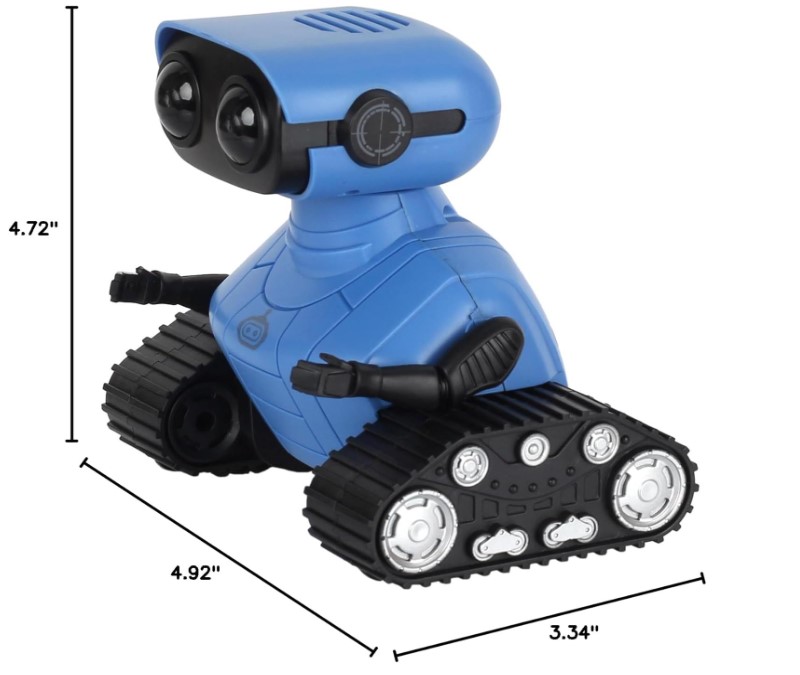
| Height/Size | 9.8 inches tall | 15.8 inches tall | Varies by model | 14" × 9" × 1.57" | 4.92" × 3.34" × 4.72" |
| Control Method | Voice, touch, app | Remote, app, voice, gesture | Solar powered (no control) | 2.4GHz remote control | 2.4GHz remote control |
| Power Source | Rechargeable battery | Rechargeable battery | Solar panel | USB rechargeable | Rechargeable battery |
| Battery Life | 6-7 hours | 100 minutes | N/A (solar) | Not specified | Extended playtime |
| Charge Time | 4 hours (15W adapter) | 150 minutes | N/A | USB charging | Type C charging |
| Programming | Story creation, AI learning | App-based programming | No programming | No programming | No programming |
| Special Features | AI personality, Story Maker, emotional support | 10 expressions, 9 joints, voice commands | 12 buildable models, renewable energy | Wall-climbing, LED eyes, realistic movement | LED eyes, singing, tank tracks |
| Educational Focus | STEAM, emotional development, creativity | Basic programming, coordination | Solar energy, engineering, building | Movement, control skills | Operation skills, coordination |
| Connectivity | WiFi, Bluetooth, app required | Bluetooth app | None | None | None |
| Assembly Required | No | No | Yes (190 parts) | No | No |
| Best For | Interactive learning, companionship | Programming introduction, entertainment | Engineering enthusiasts, eco-learning | Unique movement, surprise factor | Beginners, simple RC fun |
Each robot targets different interests, from Miko's AI companionship to Sillbird's hands-on building and HEX BOTS' unique wall-crawling capabilities.
Miko 3 AI Robot Review
Editor's Choice
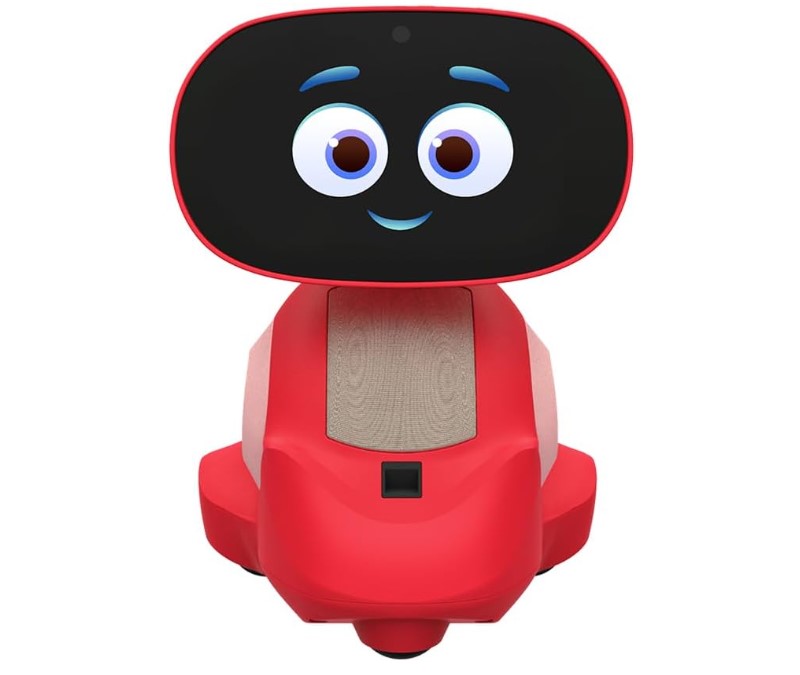
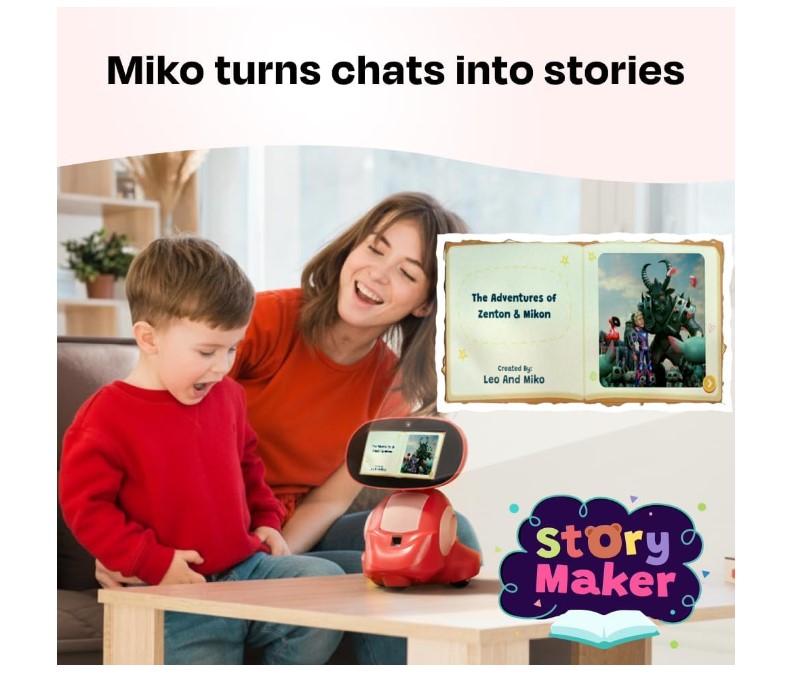
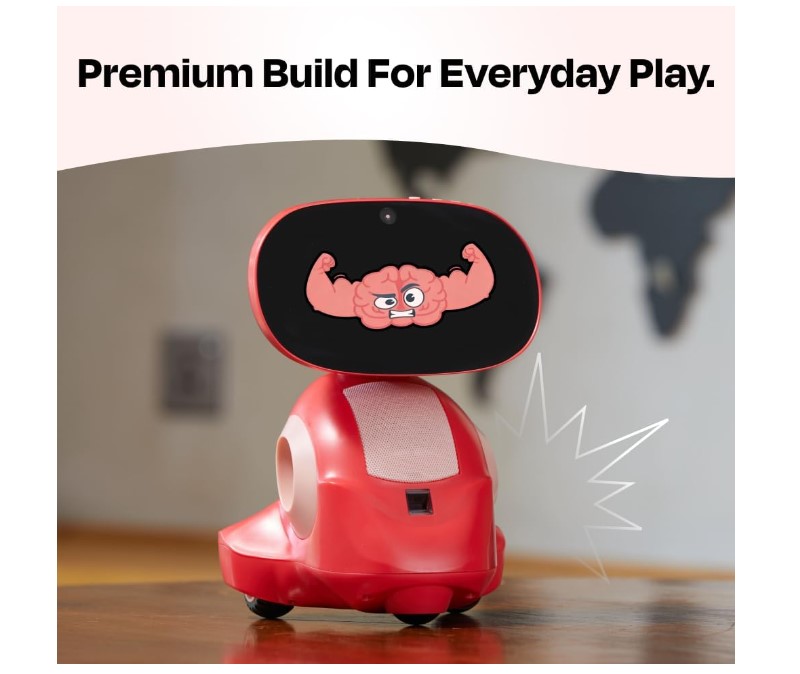
The Miko 3 AI Robot delivers sophisticated artificial intelligence in a kid-friendly 9.8-inch companion that genuinely learns and adapts to individual children. Deep-learning AI remembers preferences, jokes kids enjoy, and interests they express, creating personalized interactions feeling more like friendship than programming. The built-in touchscreen eliminates device dependency enabling children engaging directly without phone requirements.
Story Maker functionality transforms creativity into collaborative adventures where kids and Miko co-create stories saved as digital memory books families revisit together. This feature alone justifies the investment for families valuing imaginative play, with stories becoming more sophisticated as children's narrative skills develop. STEAM learning content through partnerships with Disney, Paramount, and educational providers delivers age-appropriate material keeping kids engaged without feeling like obvious lessons.
I tested Miko with my neighbor's 7-year-old who typically loses interest in toys within days. Three weeks later, she still talks to Miko daily, teaching it new jokes and creating increasingly elaborate stories. The robot's personality development became her favorite feature, with Miko remembering previous conversations and referencing them later creating continuity missing from simpler toys.
Emotional support capabilities including encouragement, mindfulness exercises, and yoga activities provide unexpected value beyond pure entertainment. The robot recognizes when kids seem frustrated offering appropriate responses ranging from silly jokes to calming breathing exercises. Active play features get children moving through dance and movement games while balancing screen time with physical activity.
Parent controls through the Miko App enable setting goals, customizing content, and monitoring progress remotely. KidSAFE COPPA+ certification ensures privacy and security meeting rigorous child protection standards. The 6-7 hour battery life supports full days of interaction though the 4-hour charge time requires planning for continuous use.
Pros:
- True AI learning and personality
- Story Maker creative feature
- Premium educational content
- Emotional support capabilities
- 6-7 hour battery life
Cons:
- Higher price point
- 4-hour charge time
Summary: Miko 3 AI Robot provides sophisticated companionship and learning through genuine artificial intelligence. Best for children 5-10 wanting interactive relationships with responsive technology supporting both education and emotional development.
Ruko 1088 Smart Robot Review
Best Overall
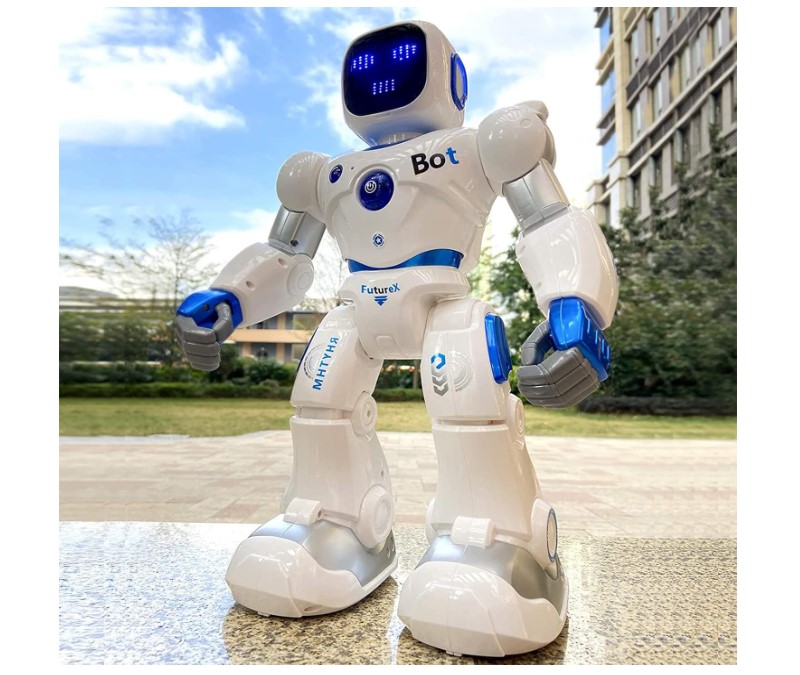
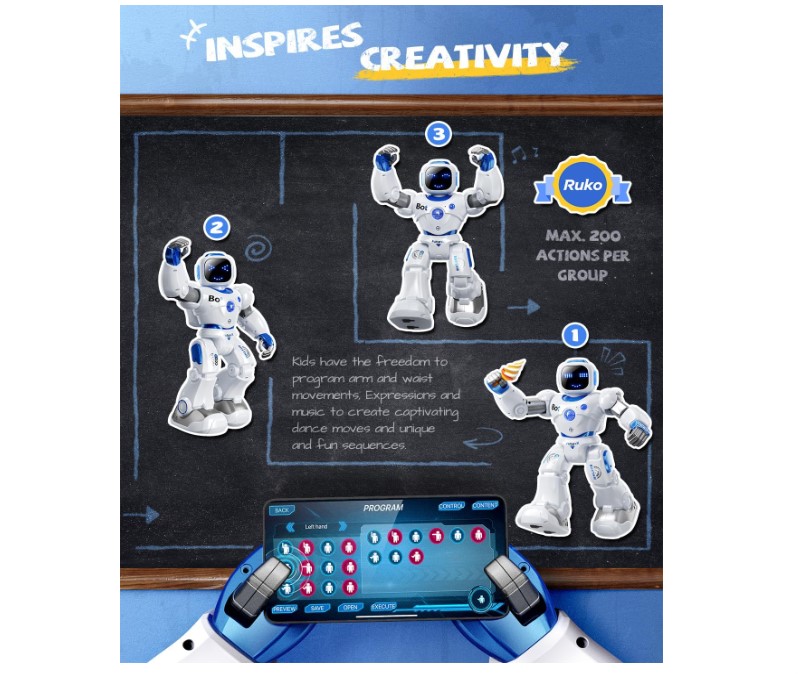
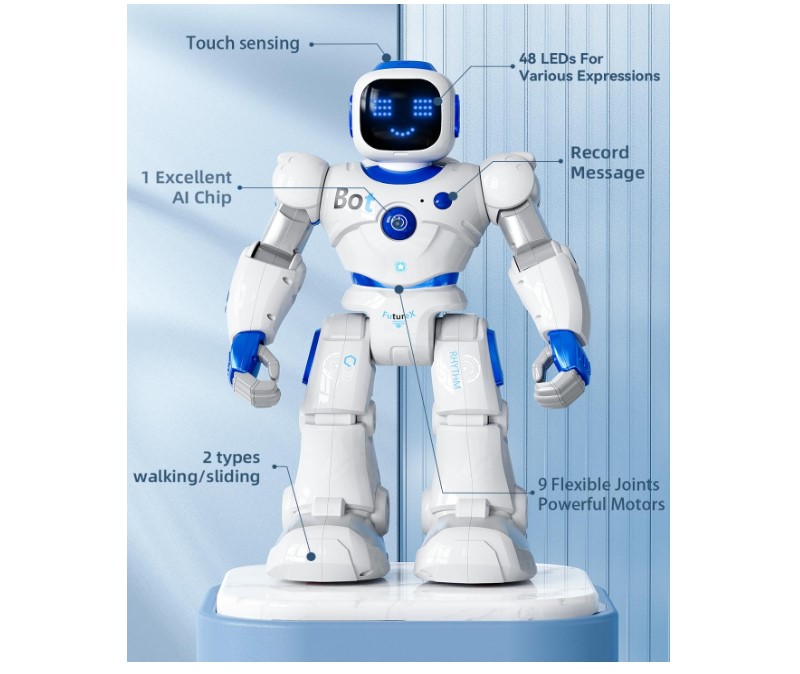
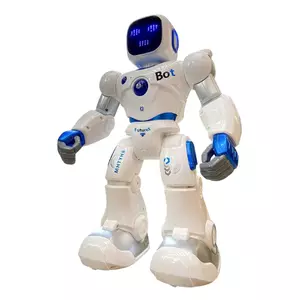
The Ruko 1088 Smart Robot stands impressively at 15.8 inches delivering big presence and versatile control options introducing programming concepts accessibly. Ten different expressions combined with nine flexible joints create dynamic movements and responses exceeding typical toy robots. The built-in songs, storytelling, and dance routines provide immediate entertainment while programming capabilities offer growth potential.
Multiple control methods accommodate different learning styles and progression paths. The 2.4GHz remote enables traditional direct control perfect for beginners. The Carle App accessed via Bluetooth unlocks programming features teaching cause-effect relationships through visual interfaces. Gravity-sensor mode controlling the robot through phone tilting introduces gesture-based interaction kids find intuitive. Voice commands bringing robots to life through phrases like "Dance for me" demonstrate AI responsiveness.
STEM learning happens naturally through experimentation with programming sequences and observing results. Kids create action chains the robot executes, teaching logic and systematic thinking through trial and error. The diverse functions including gymnastics, music, and recording enable varied activities preventing repetitive play patterns that bore children quickly.
Testing revealed the impressive 100-minute battery life supporting extended play sessions without frequent recharge interruptions. The 150-minute charge time proves reasonable given the substantial runtime. The kid-friendly ABS construction with smooth edges withstands drops and rough handling typical of enthusiastic play. FCC and CPC certifications verify safety standards compliance.
I watched an 8-year-old spend an entire afternoon creating elaborate dance routines through the app, completely absorbed in programming movement sequences and refining timing. The instant visual feedback when programs executed kept him engaged far longer than screen-based coding tutorials attempted previously. The robot's size and presence made successes feel genuinely impressive.
Pros:
- 15.8-inch impressive size
- Multiple control options
- 100-minute battery life
- App-based programming
- Voice command capability
Cons:
- Requires USB-A charging cable
- 150-minute charge time
Summary: Ruko 1088 Smart Robot combines entertainment with programming introduction through versatile controls. Best for children 6+ ready to explore basic coding while enjoying interactive robotic play.
Sillbird 12-in-1 Solar Robot Building Kit Review
Best Building Kit
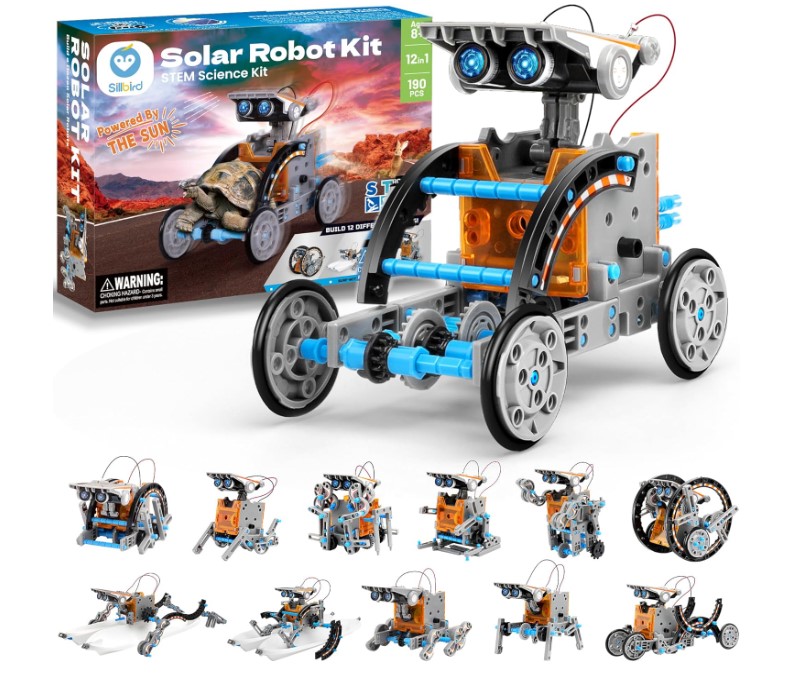
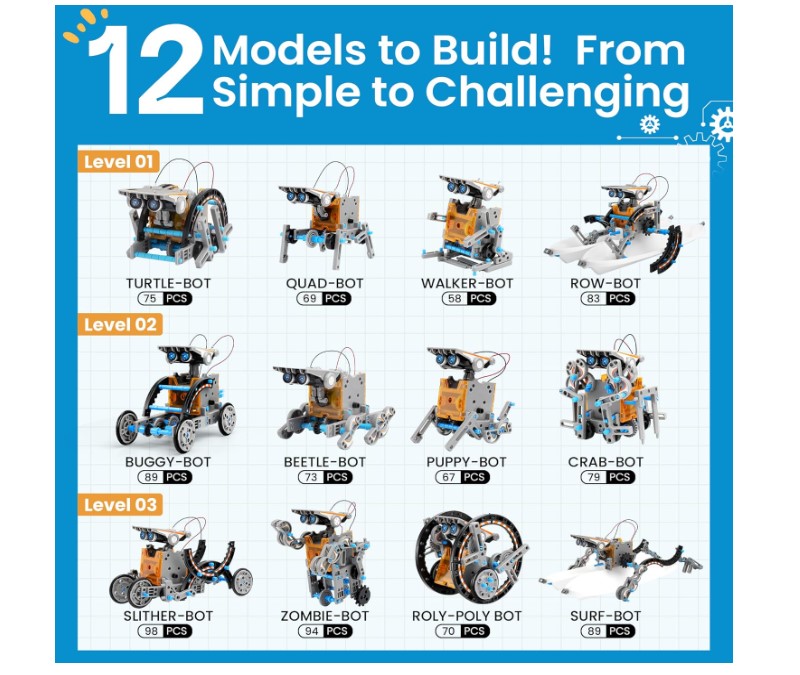
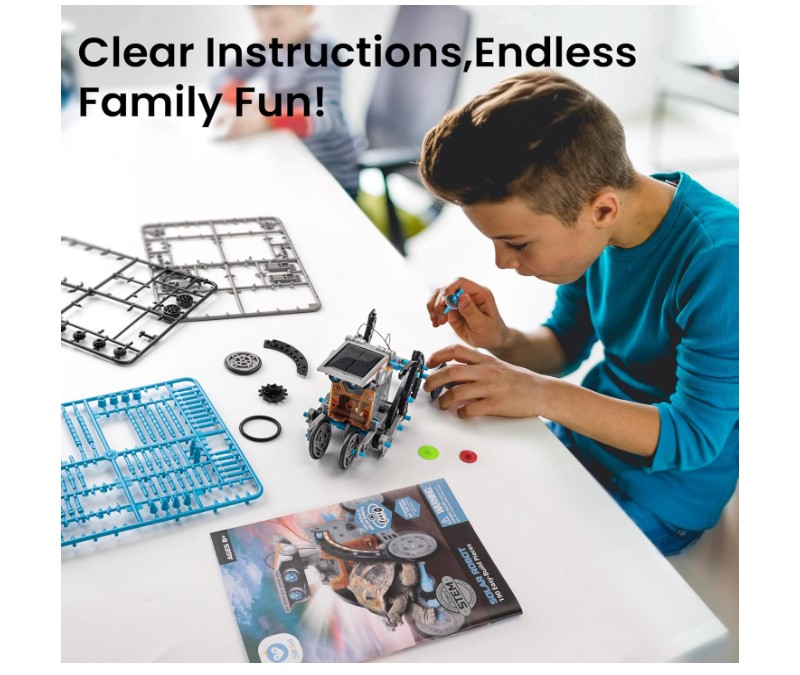
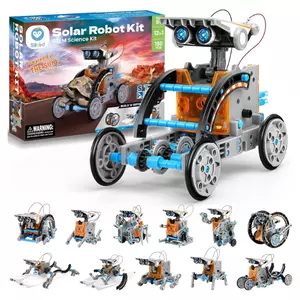
The Sillbird 12-in-1 Solar Robot Building Kit delivers hands-on engineering education through 190 pieces enabling construction of twelve different robot designs. The solar-powered motor eliminates battery dependency while teaching renewable energy concepts practically. Kids discover how solar panels convert sunlight into mechanical movement through direct experimentation rather than theoretical explanation.
Progressive difficulty levels enable the kit growing with children's abilities. Simple beginner models build confidence through quick successful assembly. Advanced designs challenge developing skills through complex mechanisms and precise part placement. This scalability extends useful life across multiple years as children mature and capabilities expand significantly.
Clear step-by-step instructions guide assembly reducing frustration during initial builds. However, the real learning happens when kids modify designs or attempt original creations using kit components. The mechanical principles demonstrated through building translate to understanding how machines work generally, supporting broader engineering interest beyond specific robots built.
I assembled the walking robot model with a 9-year-old over a weekend. The detailed instruction booklet prevented major mistakes while still requiring problem-solving when pieces didn't align perfectly initially. When the completed robot took its first solar-powered steps outdoors, his understanding of renewable energy shifted from abstract concept to witnessed reality. The kit stayed out on our kitchen table for weeks as he experimented with different models.
The upgraded larger solar panel captures more sunlight than smaller alternatives providing stronger power output and more reliable movement. However, dependence on bright light limits indoor use significantly. Cloudy days or insufficient artificial lighting stops movement entirely, requiring outdoor play or strong lamps for demonstrations. This limitation teaches real constraints of solar power while occasionally frustrating kids wanting immediate play.
Pros:
- 190 pieces, 12 buildable models
- Solar-powered motor
- Progressive difficulty levels
- Clear assembly instructions
- Teaches renewable energy
Cons:
- Requires bright light/sunlight
- Assembly required for each model
Summary: Sillbird 12-in-1 Solar Robot Building Kit provides extensive hands-on engineering education through solar-powered construction. Best for children 8+ interested in building, renewable energy, and mechanical engineering concepts.
HEX BOTS Wall Crawler Gecko Review
Unique Movement
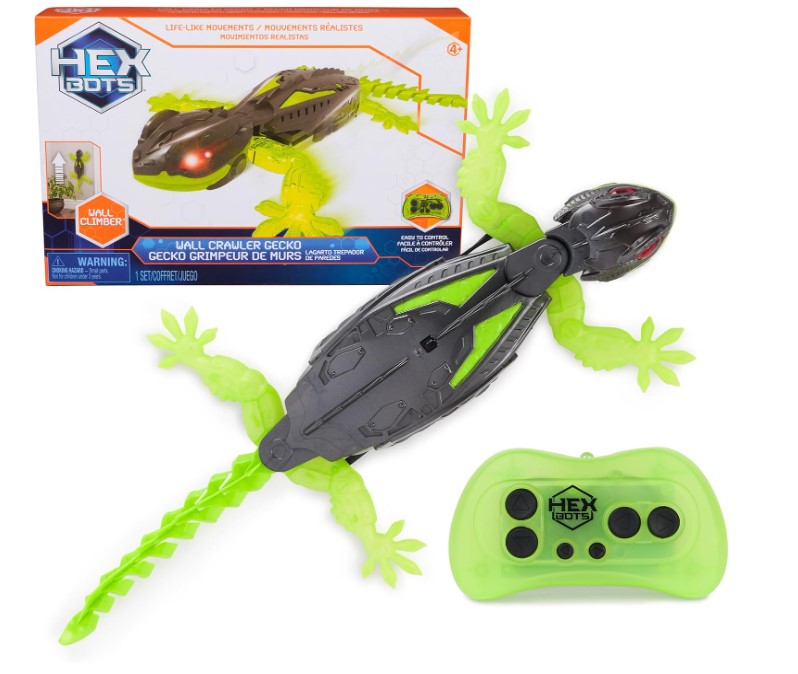
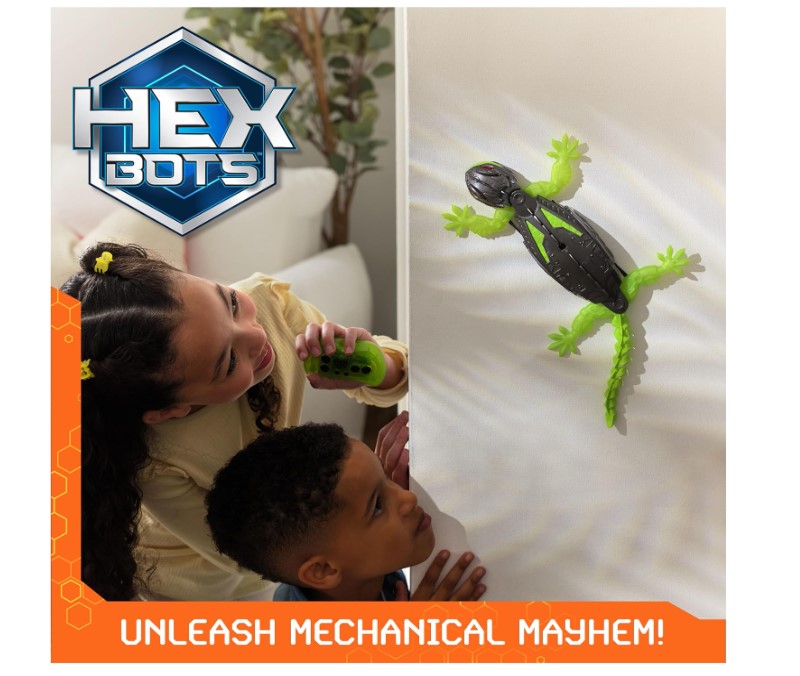
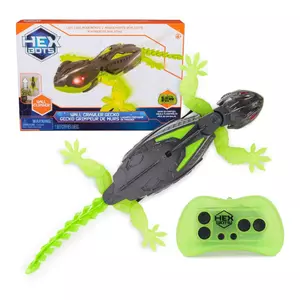
The HEX BOTS Wall Crawler Gecko delivers genuinely unique movement capabilities climbing vertical walls and across ceilings defying gravity expectations. The realistic gecko design with LED eyes visible in darkness, green silicone tail and limbs, and creepy-crawly motion creates surprisingly lifelike appearances startling unsuspecting family members. This novelty factor maintains interest longer than standard wheeled robots.
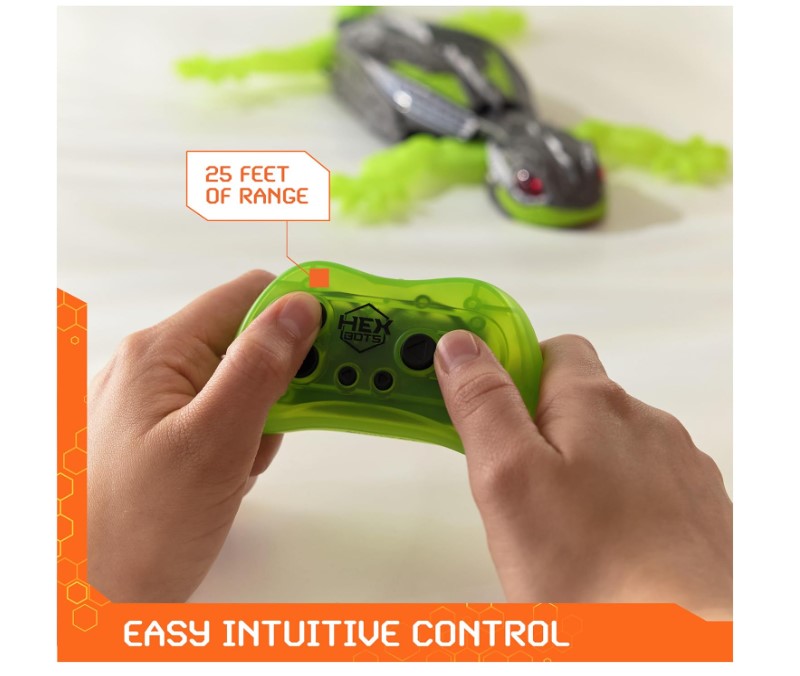
The full-function remote control enables intuitive operation with 25-foot range supporting movement in all directions. Kids master controls within minutes though wall-climbing technique requires practice discovering optimal surfaces and angles. Smooth walls and glass work best while heavily textured surfaces challenge the adhesion system. This limitation teaches practical physics about surface friction and contact area.
LED eyes glowing in dim conditions add entertainment value during evening play and enable tracking the robot during hide-and-seek games. The rechargeable battery via included USB cable eliminates ongoing battery costs though charge time requires planning between extended play sessions. The remote requiring 2 AAA batteries (not included) adds minor inconvenience.
Testing with an 11-year-old revealed the gecko becoming a household prank tool, appearing in unexpected locations scaring siblings and parents alike. The realistic movement across walls and ceilings impressed even adults familiar with RC toys. After the novelty period, the robot remained in rotation during friend visits when the wow-factor created reliable entertainment.
The plastic construction withstands drops reasonably well though the silicone limbs require care preventing tears. The specialized movement system means repairs prove challenging if adhesion fails. However, the unique capabilities justify careful handling for most kids appreciating the distinctive features unavailable in standard RC toys.
Pros:
- Wall and ceiling climbing
- Realistic gecko movement
- LED eyes for dark play
- USB rechargeable
- 25-foot control range
Cons:
- Works best on smooth surfaces
- Remote batteries not included
Summary: HEX BOTS Wall Crawler Gecko provides unique wall-climbing capabilities and realistic movement. Best for children 6+ wanting distinctive RC experiences beyond standard wheeled vehicles.
Hamourd Robot Toy Review
Best Budget
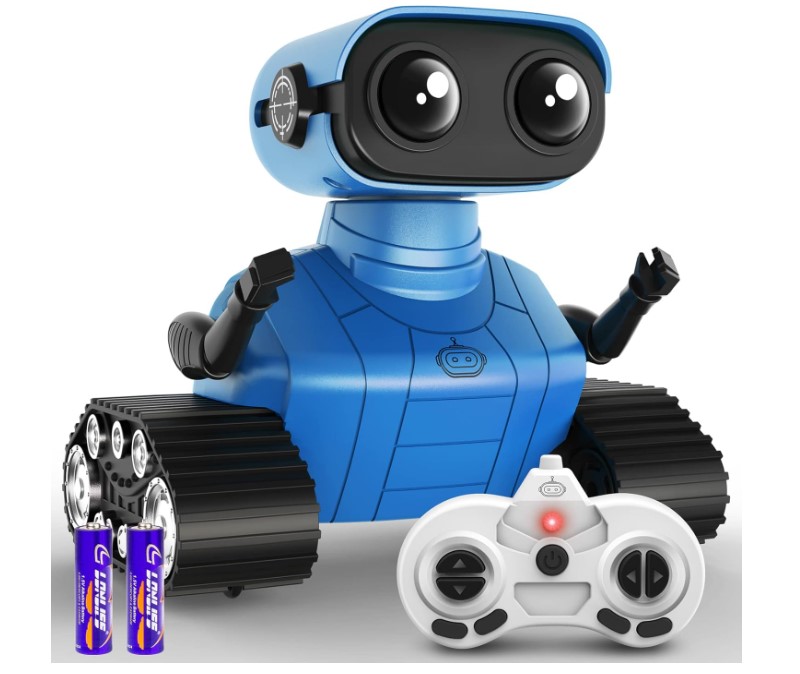
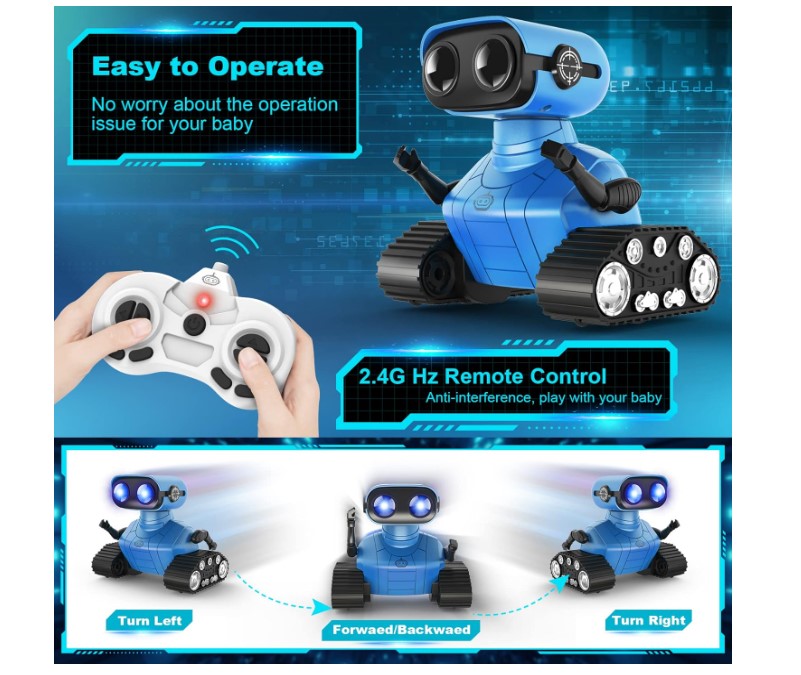
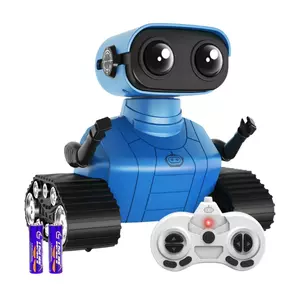
The Hamourd Robot Toy combines cute robot aesthetics with tank mobility creating an approachable entry point into RC robotics. The LED eyes lighting up and blinking add personality while flexible head and arms enable expressive gestures during movement and demo modes. Tank tracks with six wheels provide stable movement across varied indoor surfaces including carpet and tile.
Voice functionality including talking and multiple songs creates interactive entertainment beyond pure movement control. Kids switch between songs via remote discovering favorites and creating soundtracks for robot adventures. The demo mode executing 360-degree spins and coordinated movements demonstrates capabilities while providing break options when kids want to watch rather than actively control.
The 2.4GHz controller enables multiple robots operating simultaneously without interference, perfect for siblings or friends wanting concurrent play. The easy operation makes this ideal for children just beginning remote control experiences, typically ages 4-5. One-click demonstration simplifies entertainment during moments when manual control proves challenging.
Testing with a 5-year-old showed immediate success operating the robot despite limited previous RC experience. The tank tracks prevented tipping issues common with wheeled robots when turning sharply. The singing feature became his favorite, with the robot providing musical entertainment during play unrelated to actual driving. The Type C charging cable provided convenience though battery life requires monitoring during extended sessions.
The compact 4.92" × 3.34" × 4.72" size enables indoor use without requiring excessive space. The included screwdriver for battery compartment access and comprehensive manual support setup and maintenance. The exquisite packaging makes this gift-ready for birthdays and holidays. While not the most sophisticated robot available, it delivers solid entertainment value for the budget-conscious price point.
Pros:
- Budget-friendly pricing
- Tank tracks for stability
- LED eyes and flexible limbs
- Singing and talking features
- One-click demo mode
Cons:
- Limited advanced features
- Compact size may feel small
Summary: Hamourd Robot Toy provides accessible introduction to RC robots through friendly design and simple controls. Best for young children 4-5 beginning remote control experiences with budget-friendly pricing.
Robot Toys for Kids: Your Questions Answered
After testing numerous robot toys with children of different ages and consulting with educators about STEM learning, certain questions emerge consistently.
At what age should kids start playing with robot toys?
Children can begin enjoying robot toys as early as 3-4 years with appropriately designed models featuring simple controls and robust construction. At this stage, robots teach cause-effect relationships through buttons producing movements and sounds. By ages 6-8, kids handle basic programming through visual interfaces and app-based controls. School-age children from 8+ engage meaningfully with coding robots, building kits, and AI companions teaching advanced STEM concepts. The key involves matching robot complexity to developmental stage while choosing systems offering growth potential.
Do robot toys actually teach coding and STEM skills?
Quality robot toys introduce genuine coding concepts through hands-on experimentation kids find engaging. Visual programming languages using drag-and-drop blocks teach logic, sequences, and debugging without text-based coding skills. Building kits demonstrate mechanical engineering and motor control through direct assembly. AI robots model machine learning through interactions adapting to user input. Research confirms hands-on exploration builds scientific thinking more effectively than passive instruction. However, educational value depends on robot quality and child engagement, with the best learning happening through voluntary experimentation.
Are building robot kits better than pre-assembled robots?
Building kits and pre-assembled robots serve different purposes rather than one proving universally superior. Construction kits teach mechanical engineering and problem-solving through assembly challenges, providing valuable learning about how robots function internally. However, lengthy assembly can frustrate younger children wanting immediate interaction. Pre-assembled robots enable instant engagement for children with limited patience or families wanting quick entertainment. The ideal approach often involves both types, using building kits for patient learners while choosing assembled options for kids prioritizing immediate play.
How long do robot toy batteries typically last?
Battery life varies dramatically across robot types. Simple RC robots often provide 20-40 minutes per charge during active use. Advanced robots with AI features typically deliver 4-7 hours enabling full-day interactions. Building kit robots powered by solar panels operate indefinitely under sufficient light but stop when lighting dims. The most practical robots include removable rechargeable batteries enabling swapping fresh power during extended play. Budget robots using disposable batteries create ongoing costs versus rechargeable systems' higher initial investment but lower operating expenses.
Can multiple kids use robot toys simultaneously?
Many modern robot toys support multi-user experiences through various approaches. RC robots using 2.4GHz frequency technology enable multiple units operating together without signal interference, perfect for racing or cooperative play. Programming robots often include collaborative modes where children work together creating sequences. AI companion robots typically bond with individual users but can recognize and interact with family members appropriately. Building kits naturally support group assembly. For households with multiple kids, choosing robots designed for concurrent or collaborative use prevents conflicts and maximizes entertainment value.
Choosing Your Perfect Robot Toy
The robot toy market offers exceptional options serving different interests, ages, and learning goals. Modern robots combine genuine educational value with entertainment creating toys supporting development rather than merely occupying time.
For sophisticated AI companionship and learning, the Miko 3 AI Robot delivers premium interactive experiences. Children ready for programming introduction benefit from the Ruko 1088 Smart Robot. Kids interested in building and renewable energy engage deeply with the Sillbird 12-in-1 Solar Robot Kit. Families wanting unique movement capabilities appreciate the HEX BOTS Wall Crawler Gecko. Budget-conscious buyers find solid value in the Hamourd Robot Toy.
Choose based on your child's current interests, learning style, and whether they prefer building, programming, or interactive play. Well-matched robot toys create lasting engagement while building skills supporting success in increasingly technology-driven futures.

Jim's our tech geek with a mission since February 2023. From movies to video projectors, he knows his stuff and aims to make tech work for you. When he's not geeking out, he's there to guide you through making savvy decisions.


