Best STEM Toys for Kids
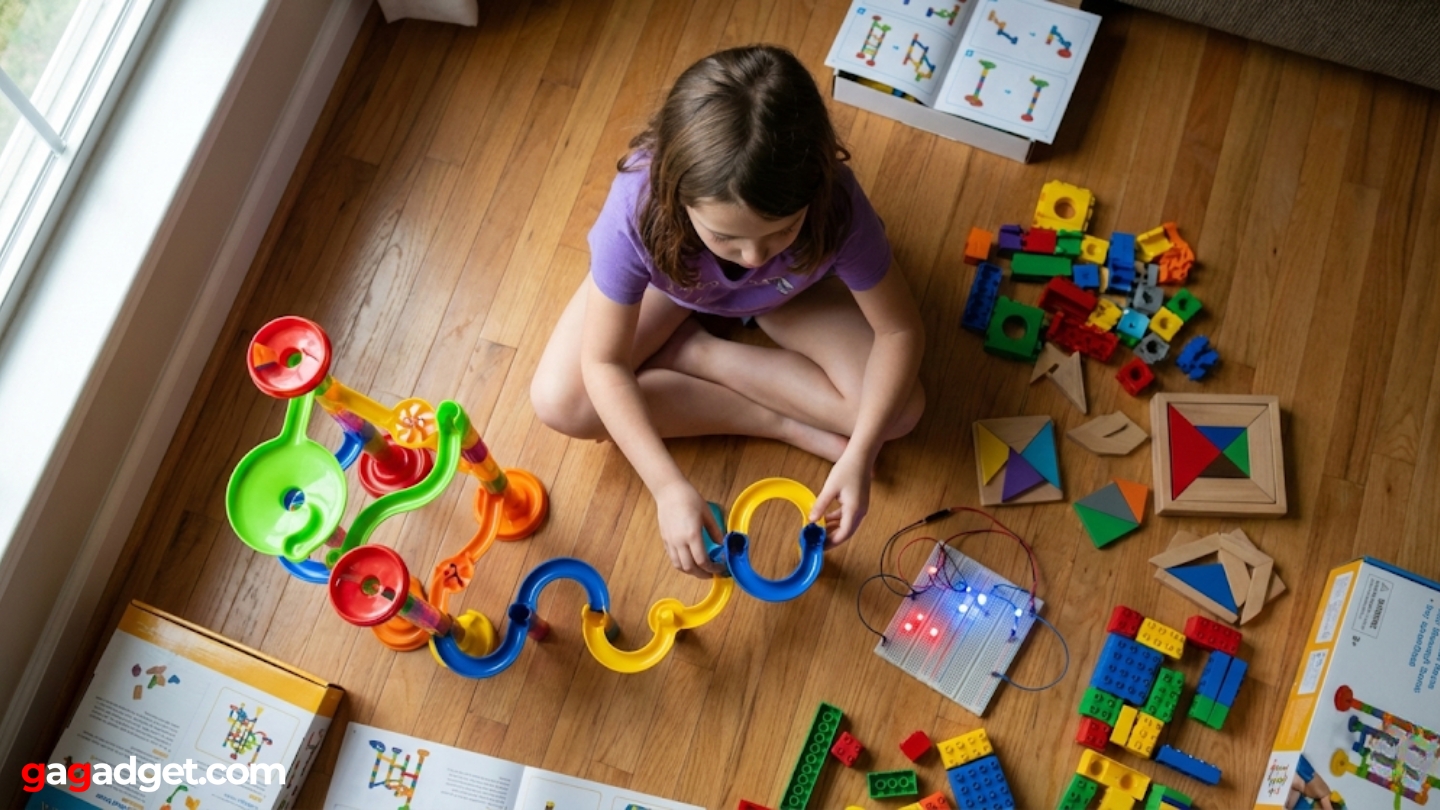
My daughter walked past her tablet three times last Tuesday afternoon heading straight for the marble maze she'd been building since breakfast. No reminders about screen time. No negotiations. She spent four hours designing gravity-powered tracks that sent marbles ricocheting through loops and spirals. When I called her for dinner, she asked if she could eat at the table where her construction sat "because I almost have the double helix working."
STEM toys split between hands-on builders, puzzle solvers, and experiment kits. The best ones disguise learning as play so thoroughly that kids forget they're doing anything educational. Circuit boards become magic wands making lights flash and motors spin. Folding boxes transform into fully functional pinball machines. Color pegs pushed into backlit screens create glowing art teaching spatial patterns. I've tested these toys with kids ages 4-14 over several months, watching which ones sparked genuine curiosity versus which collected dust after initial novelty wore off.
If you're in a hurry, here are my top two picks for STEM toys:
We may earn a small commission if you buy via our links - it helps keep gagadget.com running.
Table of Contents:
- Best STEM Toys for Kids: Buying Guide
- Top 5 STEM Toys for Kids in 2026
- STEM Toys Comparison
- Lite Brite Classic
- ThinkFun Gravity Maze
- Shashibo Shape Shifting Box
- National Geographic Science Magic Kit
- Smartivity DIY Pinball Machine
- STEM Toys: FAQ
Best STEM Toys for Kids: Buying Guide
STEM toys work when they match a child's natural curiosity rather than forcing educational concepts through boring drills. A kid fascinated by how things move needs different toys than one who loves creating art or solving logic puzzles.
Active Building vs Passive Puzzles
Construction-based STEM toys let kids physically manipulate components creating tangible results. Marble run systems reward experimentation as children test different track configurations watching gravity in action. Electronics kits produce immediate feedback when circuits light bulbs or spin motors. Building toys teach through doing - kids discover principles by succeeding and failing repeatedly until designs work. The hands-on aspect maintains engagement because results appear instantly rather than after reading instructions.
Logic puzzles and brain teasers challenge mental problem-solving without physical construction. Kids manipulate pieces mentally, planning moves before touching anything. These toys develop strategic thinking and spatial reasoning through constraint-based challenges.
Some children thrive on tactile experimentation while others prefer intellectual puzzles. Watch whether your kid builds elaborate structures or sits quietly solving riddles. Active builders need toys providing pieces to assemble. Mental puzzle solvers want challenges testing logic and planning skills. Many kids enjoy both but lean toward one style during specific developmental stages.
Single-Solution vs Open-Ended Discovery
Challenge-based toys present specific problems with defined solutions. Logic games include 40-60 progressively harder puzzles kids complete one after another. Each challenge has correct answers kids work toward through trial and error. These structured toys suit children who enjoy clear goals and completion satisfaction. Finishing the last puzzle provides concrete achievement.
Open-ended STEM toys never truly finish since no predetermined endpoint exists. Art-creation tools, modular building systems, and experiment kits encourage unlimited exploration. Kids create original projects limited only by imagination and available components. One toy generates months of different activities as children invent new ways to use pieces. These systems match kids who constantly ask "what if I try this?" and abandon projects once initial curiosity satisfies.
Educational Concepts and Age Appropriateness
Different STEM toys target specific scientific concepts. Physics toys demonstrate gravity, momentum, and energy transfer through marble runs or moving parts. Electronics kits introduce circuits, conductivity, and electrical engineering through hands-on wiring. Chemistry sets show reactions and transformations through safe experiments. Engineering toys teach mechanical principles through gears, levers, and structural design. Match toy type to your child's current interests rather than forcing concepts they find boring.
Age recommendations matter less than individual development. A mechanically-minded 6-year-old might handle toys marked for 8+ while an uninterested 10-year-old struggles with supposedly age-appropriate kits.
Assess current skill level honestly. Can your child follow multi-step instructions independently? They handle complex building kits. Still need help reading diagrams? Choose toys with picture-based instructions or adult-guided activities. Frustration from overly difficult toys kills interest permanently. Starting slightly below apparent skill level builds confidence encouraging kids to tackle harder challenges later.
Solo Play vs Collaborative Activities
Independent STEM toys entertain single children for extended periods. Logic puzzles, building projects, and art-creation systems work perfectly when kids play alone. These toys develop self-directed learning and sustained focus without requiring playmates or adult supervision. Solo activities suit only children, kids with different-aged siblings, or families where parents can't always facilitate group play.
Collaborative STEM toys shine during group activities. Challenge-based games where kids compete or cooperate building solutions together. Construction projects large enough for multiple children working simultaneously. Experiment kits producing dramatic results everyone watches. Collaborative toys teach communication, teamwork, and shared problem-solving beyond individual STEM concepts. Consider your family situation - multiple close-aged siblings benefit from group-friendly toys while single kids need activities maintaining interest independently.
Top 5 STEM Toys for Kids in 2026
Testing these toys with kids across different ages revealed which ones sparked lasting curiosity versus fleeting entertainment.
- 206 pegs in 6 colors enable detailed artwork
- 4 light modes transform finished designs dramatically
- 6 templates teach pattern recognition
- Battery-powered LEDs stay cool and safe
- Integrated storage keeps pegs organized by color
- 60 challenges from beginner to expert difficulty
- Teaches spatial reasoning and logic systematically
- Combines puzzle-solving with physics understanding
- Clear towers show internal marble paths
- Compact storage for all components
- 70+ shape configurations provide weeks of discovery
- Pocket-sized portability enables anywhere use
- Strong magnets create satisfying tactile feedback
- Quiet operation suitable for public spaces
- Multiple cubes connect for larger structures

- 20 experiments designed as performable magic tricks
- Includes magic wand and gloves for presentations
- Teaches chemistry through memorable demonstrations
- 85+ bonus experiments using household items
- Develops public speaking and performance confidence
- 176 pieces teach mechanical engineering through building
- Fully functional pinball gameplay after assembly
- No batteries required - purely mechanical operation
- Lifetime free replacement parts program
- Sustainable engineered wood construction
STEM Toys Comparison
Here's a detailed comparison of key specifications across the top STEM toys:
| Specification | Lite Brite | Gravity Maze | Shashibo | Nat Geo Magic | Smartivity |
| Age Range | 4+ years | 8+ years | 8+ years | 8+ years | 8+ years |
| Primary Focus | Art + patterns | Logic + physics | Geometry + spatial | Chemistry + science | Engineering + mechanics |
| Components | 206 pegs, 6 templates | 9 towers, 3 marbles | Magnetic folding cube | 100+ experiments | 176 wooden pieces |
| Play Style | Creative open-ended | 60 puzzle challenges | Open-ended fidget | Guided experiments | Construction project |
| Activity Duration | 15-45 min sessions | 10-30 min per puzzle | 5-60 min sessions | 10-20 min per trick | 3-5 hours build |
| Skill Development | Fine motor, patterns | Logic, spatial reasoning | Geometry, problem-solving | Scientific method | Mechanical engineering |
| Reusability | Unlimited designs | 60 repeatable puzzles | 70+ shape configurations | Repeatable experiments | Rebuild after completion |
| Solo/Group | Primarily solo | Solo challenges | Solo fidget/puzzle | Solo or guided | Solo or collaborative |
| Mess Level | Low (loose pegs) | Low | None | Moderate | Low |
| Storage | Integrated peg holder | Box included | Compact cube | Box for components | Box storage |
| Portability | Moderate (8"x10") | Low (multiple pieces) | Very high (pocket-sized) | Low (kit-based) | Low (large assembled) |
| Best For | Creative visual kids | Logic puzzle lovers | Fidgeters and puzzlers | Science enthusiasts | Builders and engineers |
Each toy emphasizes different STEM aspects from artistic patterns to mechanical engineering.
Lite Brite Classic Review
Editor's Choice
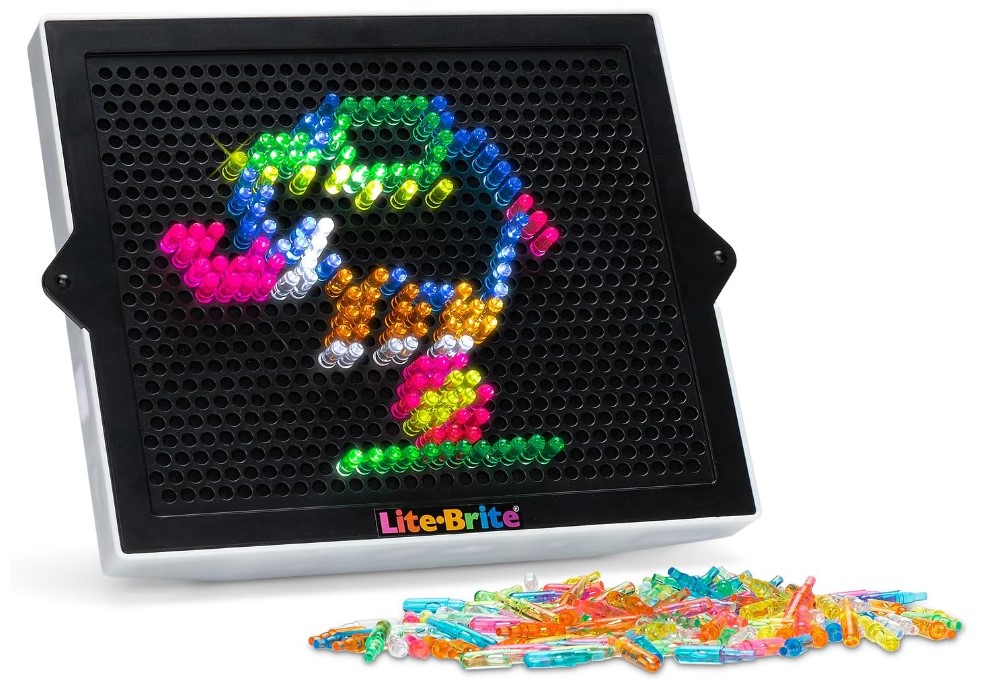
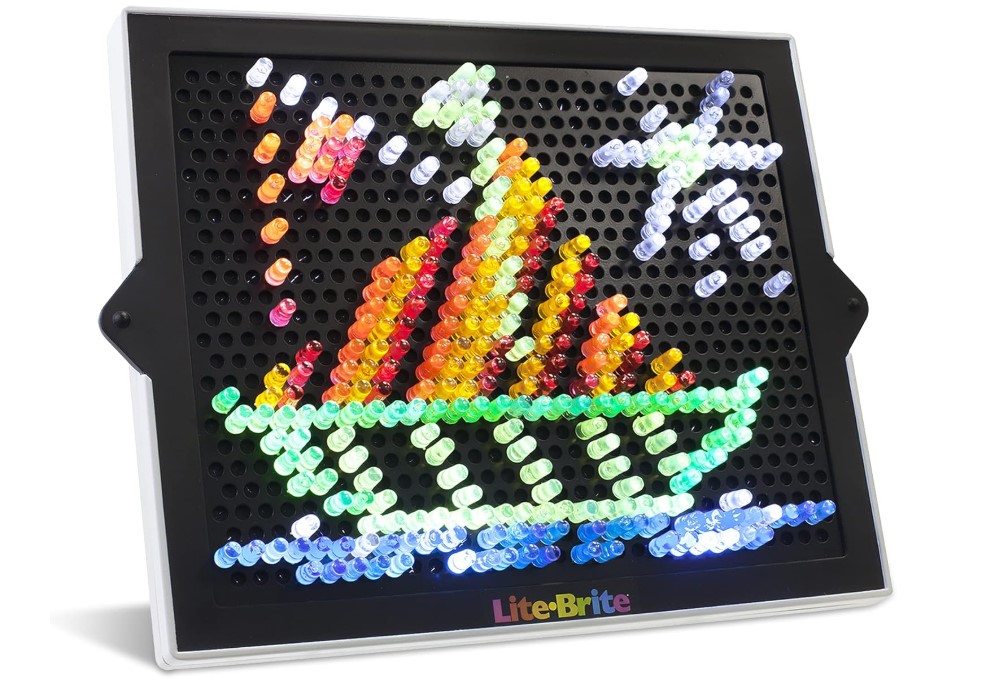
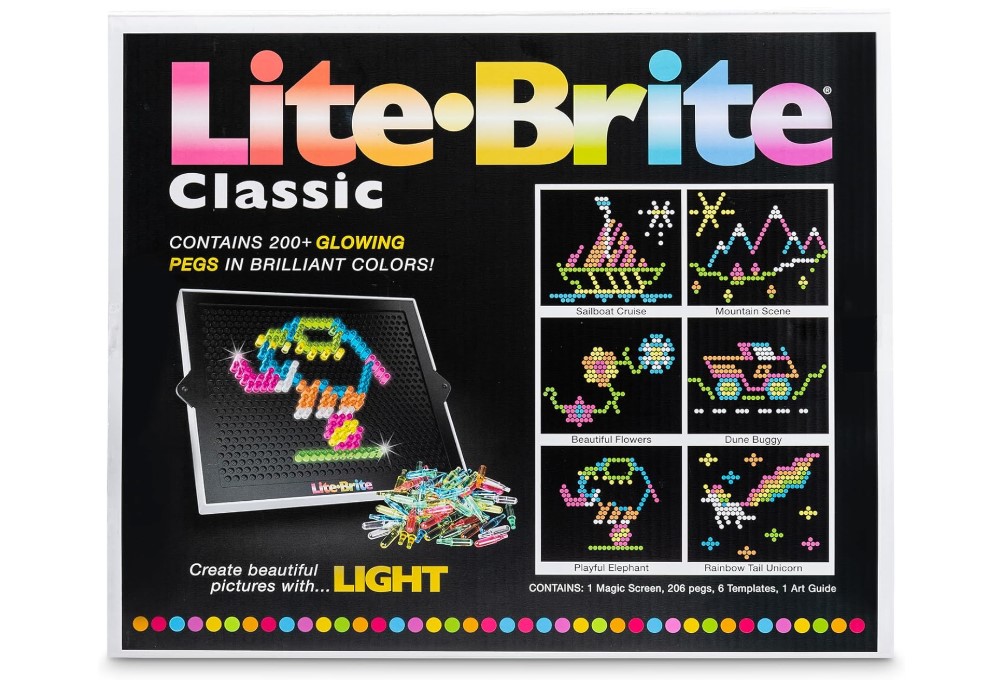
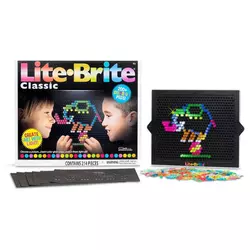
Nostalgia meets modern STEM through the Lite Brite Classic where 206 translucent pegs pushed into a backlit screen create glowing artwork. Six design templates show kids how to build recognizable images - unicorns, dinosaurs, boats - by following numbered patterns matching peg colors to template positions. Four light modes transform completed designs through steady glow, pulsing rhythm, flashing patterns, or rotating sequences. Battery-powered LEDs stay cool eliminating the heat issues from vintage 1960s models.
My 5-year-old daughter spent an entire Saturday afternoon switching between following templates and inventing original designs. The template-free creativity emerged after she'd mastered a few guided patterns, gaining confidence in her peg placement. She discovered that certain color combinations created depth effects when backlit - red pegs surrounded by yellow ones appeared to glow brighter than single-color clusters.
The 8x10 inch screen provides enough space for detailed designs without overwhelming younger kids. Pegs measure approximately 1 inch long making them easy for small hands to grip and push through screen holes. The satisfying click when pegs lock into position provides tactile feedback kids find rewarding. Screen holes align in straight rows simplifying counting and pattern recognition - skills transferring to early math concepts.
Templates print on thin paper kids place behind the translucent screen. Backlit holes show through paper revealing where each colored peg belongs. This system teaches kids to follow sequential instructions, match colors accurately, and recognize spatial patterns. Once template designs become easy, kids naturally progress to freehand artwork using pegs however imagination suggests. The open-ended nature means the toy never truly finishes - there's always another picture to create.
Storage compartment built into the unit holds all 206 pegs between play sessions. Pegs separate by color in individual sections preventing mixed-up sorting headaches. The unit requires 3 AA batteries (not included) lasting approximately 15-20 hours of continuous use. Light brightness adjusts across the four modes but can't be dimmed further - it's either on or off. Screen durability holds up through normal use though aggressive peg removal can crack plastic around holes over time.
Pros:
- 206 pegs in 6 colors enable detailed artwork
- 4 light modes transform finished designs dramatically
- 6 templates teach pattern recognition
- Battery-powered LEDs stay cool and safe
- Integrated storage keeps pegs organized by color
Cons:
- Batteries not included (requires 3 AA)
- Screen holes can crack with aggressive peg removal
Summary: Lite Brite Classic blends artistic creativity with STEM pattern recognition through backlit peg artwork. Four light modes and template-free options provide entertainment spanning years as skills develop.
ThinkFun Gravity Maze Review
Best Overall
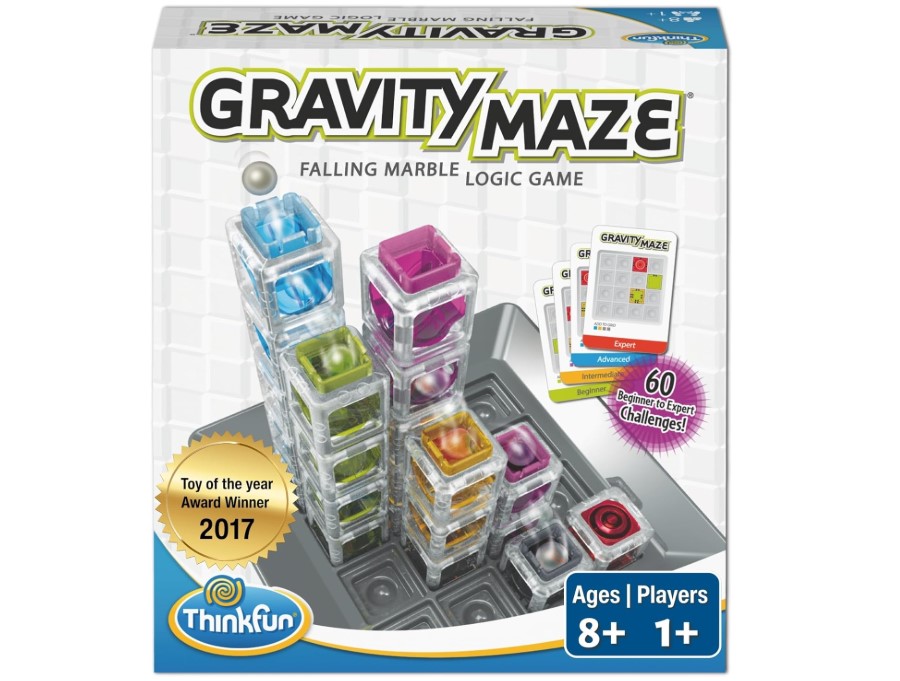
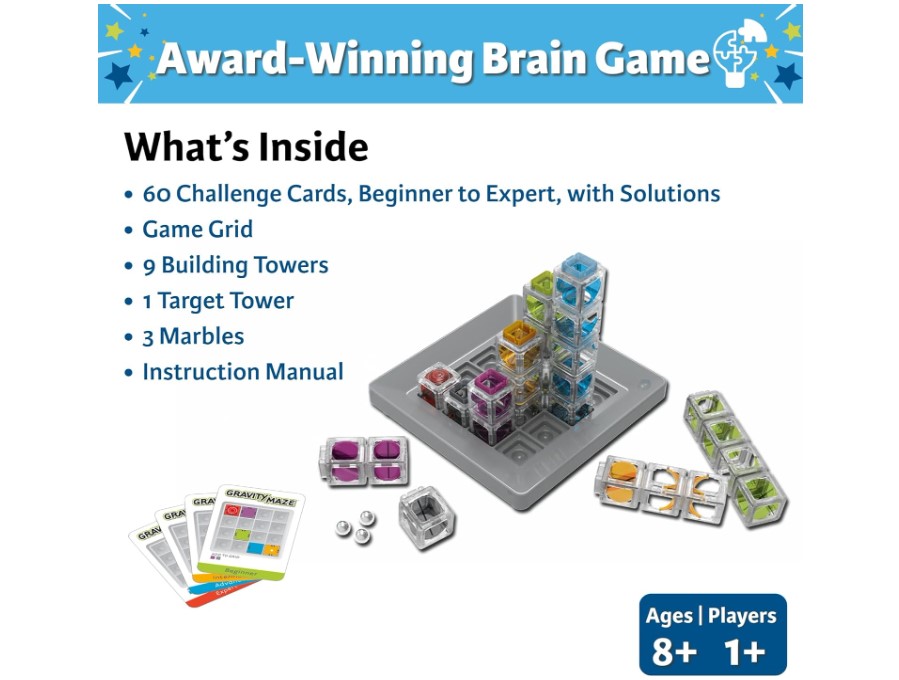
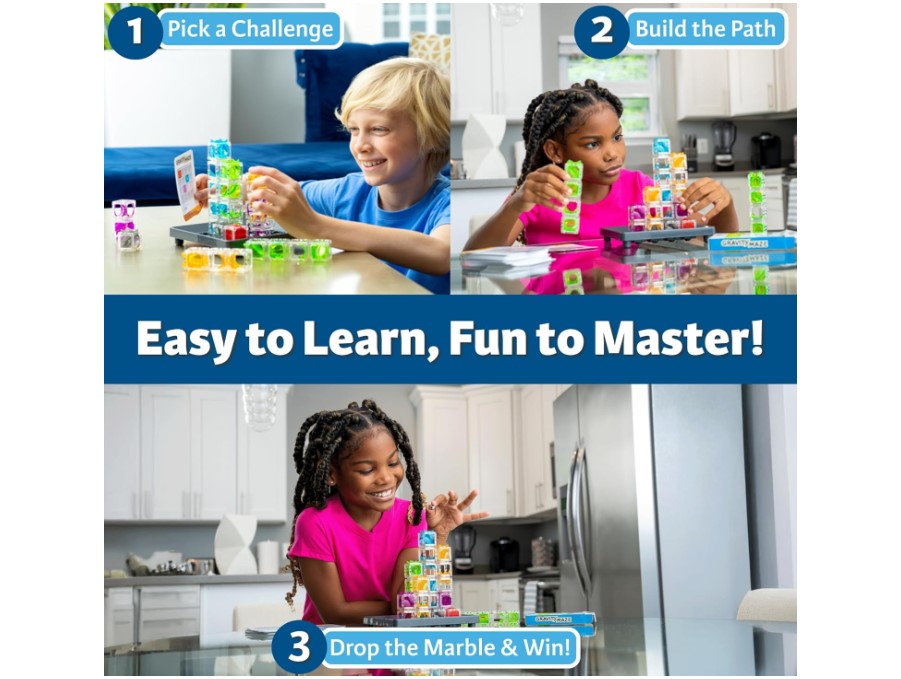
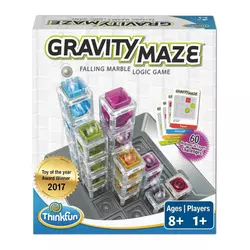
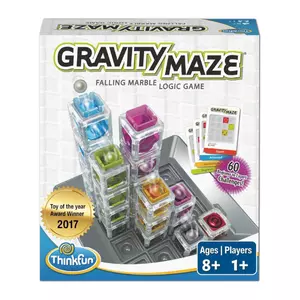
Physics transforms into 3D puzzle-solving through the ThinkFun Gravity Maze combining logic challenges with marble-run engineering. Sixty progressively difficult challenge cards show starting tower positions and target endpoints. Kids arrange nine colored towers on the grid creating continuous paths letting marbles roll from start to finish using only gravity. Towers vary in height and internal pathways - some allow straight-through drops, others divert marbles at angles.
Each challenge provides specific towers kids must use but doesn't reveal solutions. This constraint-based puzzle format develops critical thinking as children test configurations eliminating designs where marbles get stuck or miss targets. Early beginner puzzles use 2-3 towers with obvious solutions. Expert challenges demand 6-7 towers arranged in complex three-dimensional structures where marble paths twist through multiple direction changes before reaching goals.
I watched my 9-year-old nephew tackle this game across two months progressing from beginner to advanced levels. His approach evolved from random tower placement to systematic testing of possible paths before committing pieces. The spatial reasoning development showed clearly - early attempts involved building then testing, later attempts involved mental visualization before physical construction. He'd sketch possible solutions on paper first by week six.
Three steel marbles roll through completed tower structures testing whether designs function correctly. Marbles need sufficient momentum reaching the target - designs where marbles barely trickle to endpoints sometimes fail when tested multiple times. This introduces variables beyond pure logic, adding engineering considerations about energy and motion. Kids discover that steeper initial drops provide more speed than gradual descents.
The grid base measures 10x10 inches with raised edges preventing marbles from rolling off during play. Towers connect to the grid through pegs on tower bottoms fitting into grid holes. This connection system holds towers securely during marble tests while allowing quick reconfiguration between challenges. Clear tower walls let kids see marble paths inside helping them understand why certain configurations succeed or fail. Compact storage box holds all towers, marbles, and challenge cards.
Pros:
- 60 challenges from beginner to expert difficulty
- Teaches spatial reasoning and logic systematically
- Combines puzzle-solving with physics understanding
- Clear towers show internal marble paths
- Compact storage for all components
Cons:
- Steel marbles easily lost requiring replacement
- Advanced puzzles may frustrate younger kids under 8
Summary: Gravity Maze develops spatial reasoning and physics understanding through 60 progressively challenging marble puzzles. Clear visual feedback and systematic difficulty progression maintain engagement across months.
Shashibo Shape Shifting Box Review
Most Portable
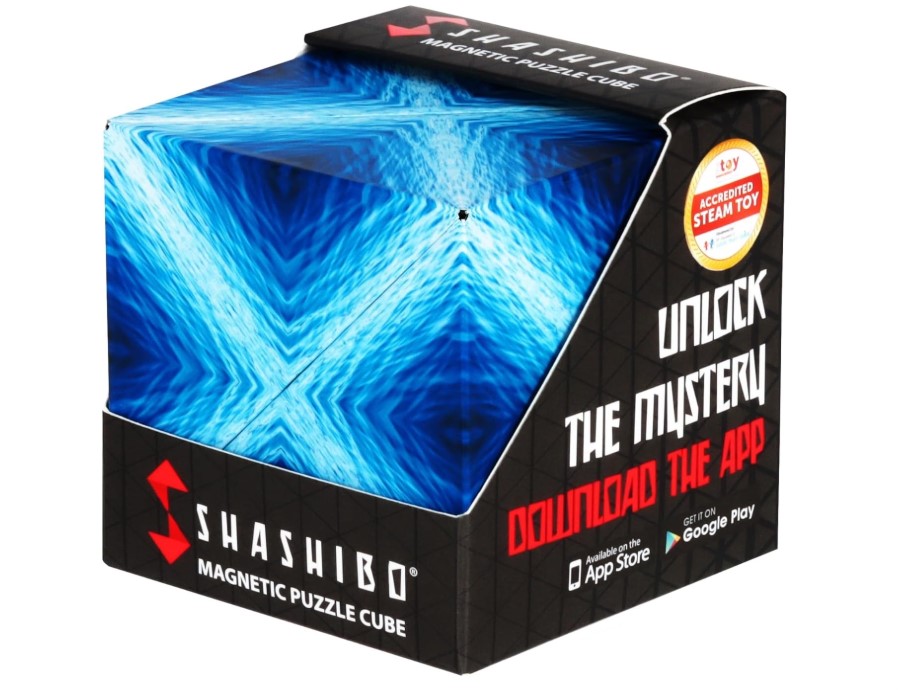
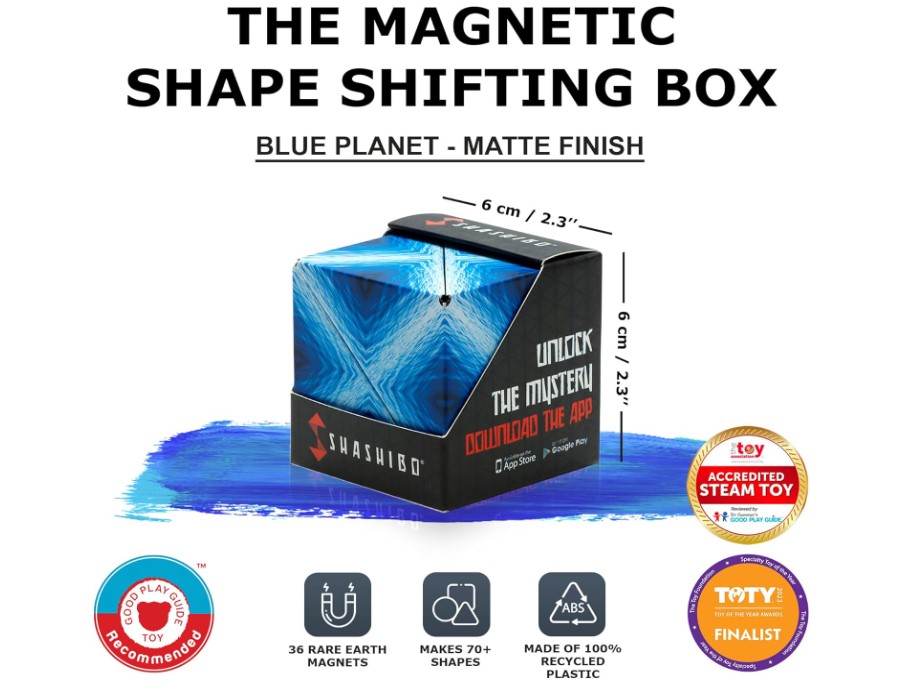
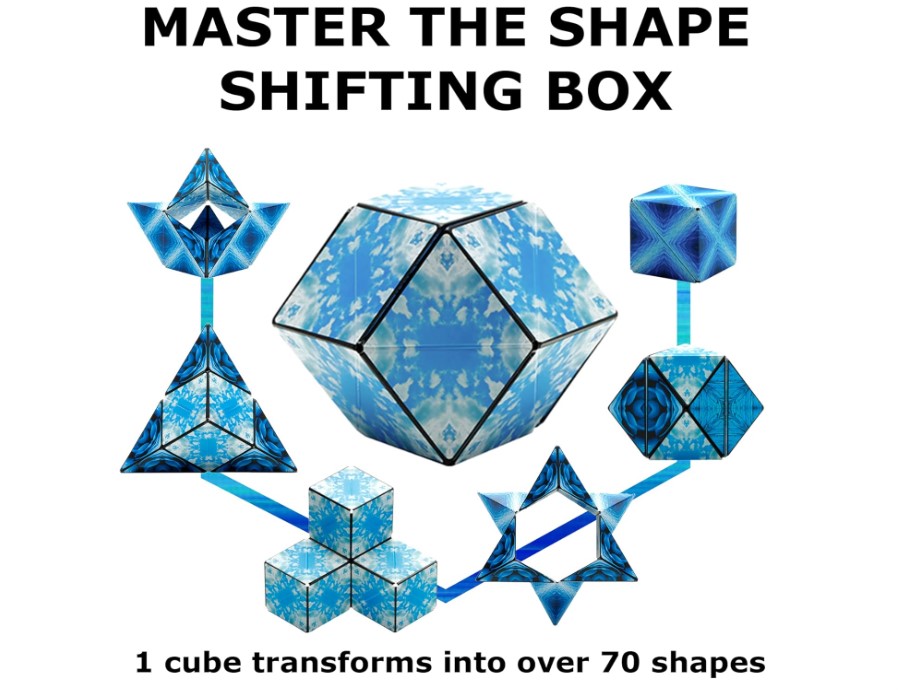
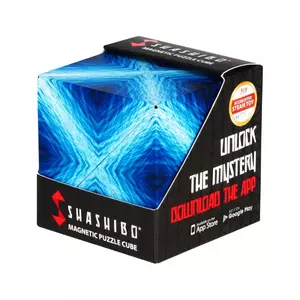
Geometry meets fidget toy through the Shashibo Shape Shifting Box transforming into 70+ configurations through magnetic panel connections. The 2.4-inch cube consists of 36 magnetic triangular faces rotating on internal hinges. Strong neodymium magnets embedded in panel edges snap together creating stable shapes. Each transformation produces satisfying clicks as magnets align, providing tactile and auditory feedback rewarding experimentation.
Four artistic patterns printed on different panel sections mean each shape configuration displays unique visual designs. The Blue Planet edition features Earth imagery, ocean patterns, space scenes, and cosmic artwork across its surfaces. As kids fold the cube into different shapes, various pattern combinations emerge. A cube might show all Earth images, while transformed into a star shape the same panels reveal cosmic patterns. This visual variety adds artistic interest beyond pure geometric manipulation.
Pocket-sized dimensions make Shashibo the most portable STEM toy in this comparison. The cube fits in jacket pockets, backpack pouches, or even jeans pockets providing constructive fidgeting anywhere. Long car rides, waiting rooms, restaurants - situations where bulkier toys prove impractical. My nephew carries his Shashibo constantly, transforming it during spare moments throughout the day. The quiet operation means it doesn't disturb classrooms or public spaces unlike clicking pens or noisy fidget spinners.
Learning all 70+ transformations takes weeks of experimentation. No instructions show every possible configuration - kids discover new shapes through trial and error. This exploratory learning develops spatial reasoning and geometric understanding organically. Patterns emerge as children realize certain fold sequences always produce specific results. Advanced users combine multiple Shashibo cubes through magnetic connections building larger structures and sculptures.
Durability withstands daily use and frequent drops. ABS plastic panels resist scratching while magnetic strength maintains connections through hundreds of transformations. The hinge system moves smoothly without loosening over time. Some users report magnets occasionally losing strength after 6-12 months of heavy daily use, though this varies significantly by individual handling. The compact size means losing the entire cube is possible - attach a keychain through corner holes if pocket carry concerns you.
Pros:
- 70+ shape configurations provide weeks of discovery
- Pocket-sized portability enables anywhere use
- Strong magnets create satisfying tactile feedback
- Quiet operation suitable for public spaces
- Multiple cubes connect for larger structures
Cons:
- Small size makes complete cube easily lost
- Magnets may weaken after 6-12 months heavy use
- Limited STEM depth compared to building or circuit toys
Summary: Shashibo Shape Shifting Box combines geometric puzzle-solving with portable fidget satisfaction. Magnetic transformations teach spatial reasoning through exploratory play fitting anywhere.
National Geographic Science Magic Kit Review
Best for Experiments



Scientific principles disguised as magic tricks through the National Geographic Science Magic Kit containing materials for 20 performance-ready experiments. Kids learn chemistry and physics while preparing show-stopping tricks like making snow appear in their hand, creating square bubbles, or becoming "waterproof" through hydrophobic coatings. Each experiment includes step-by-step instructions explaining both the magic presentation and scientific principles behind effects.
The kit provides magic wand and white gloves encouraging kids to perform tricks for audiences rather than just conducting private experiments. This performance aspect adds entertainment value beyond pure education. Kids practice presentation skills, build confidence speaking to groups, and learn to create suspense through showmanship. The combination of science and performance makes concepts memorable since children associate chemical reactions with specific magical effects they've demonstrated.
Twenty main experiments cover chemistry topics including polymers, pH indicators, density, surface tension, and chemical reactions. The "vanishing beaker" trick demonstrates refraction as a test tube disappears inside a beaker of matching refractive index. "Bending metal with water" uses thermal expansion principles kids can visibly observe. Each experiment takes 10-20 minutes including setup, performance, and explanation. Materials handle multiple repetitions so kids perfect their magic show presentations.
Bonus experiment guide adds 85+ additional science activities using common household items. After completing kit materials, kids continue experimenting with baking soda volcanoes, crystal growing, and static electricity demonstrations. This extended content provides months of additional learning without requiring new purchases. The household-item approach teaches kids that science happens everywhere, not just with special equipment.
I sat through my daughter's full magic show after she'd practiced all 20 tricks. Her favorite combined the color-changing milk experiment (surface tension with food coloring) and the floating coin illusion (using water's refractive properties). She understood the science well enough to explain why tricks worked after each performance. The educational value came through entertainment rather than feeling like homework. Parental supervision helps with experiments involving liquids or powders to prevent spills.
Pros:
- 20 experiments designed as performable magic tricks
- Includes magic wand and gloves for presentations
- Teaches chemistry through memorable demonstrations
- 85+ bonus experiments using household items
- Develops public speaking and performance confidence
Cons:
- Some experiments create minor messes requiring cleanup
- Materials deplete after performing tricks multiple times
- Requires adult supervision for certain experiments
Summary: National Geographic Science Magic Kit teaches chemistry and physics through performable tricks combining education with entertainment. Performance focus builds confidence while making scientific concepts memorable.
Smartivity DIY Pinball Machine Review
Best Value
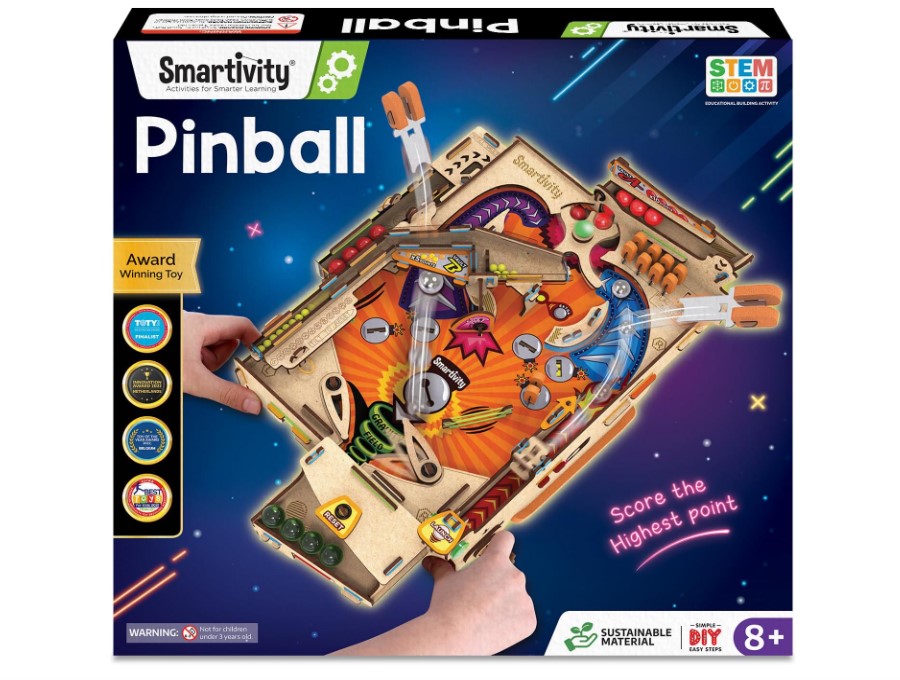
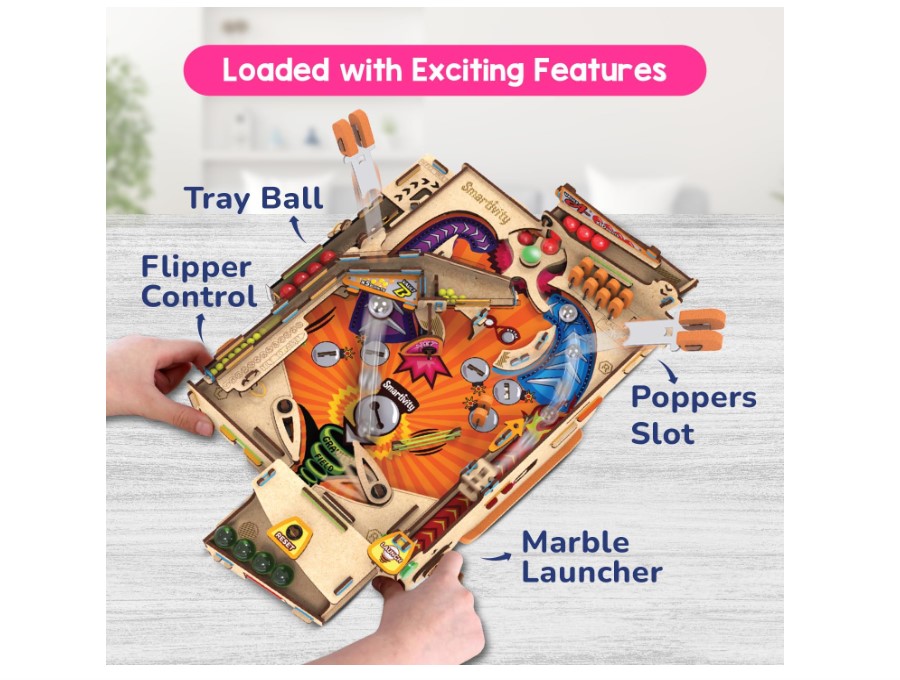
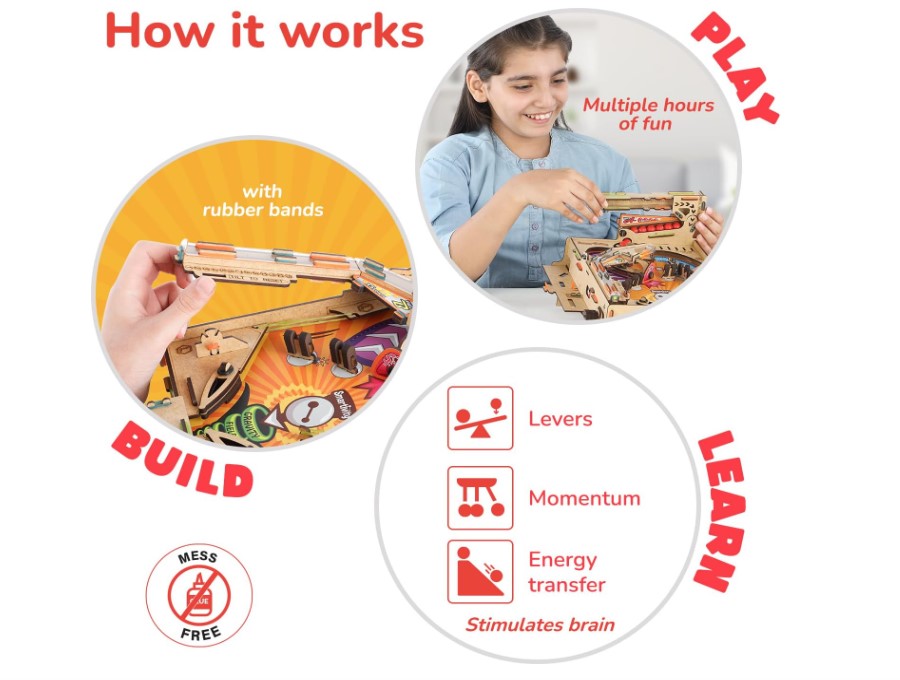
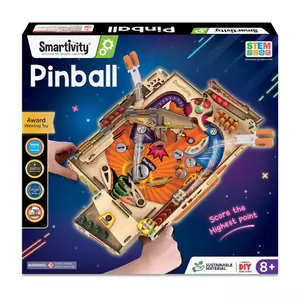
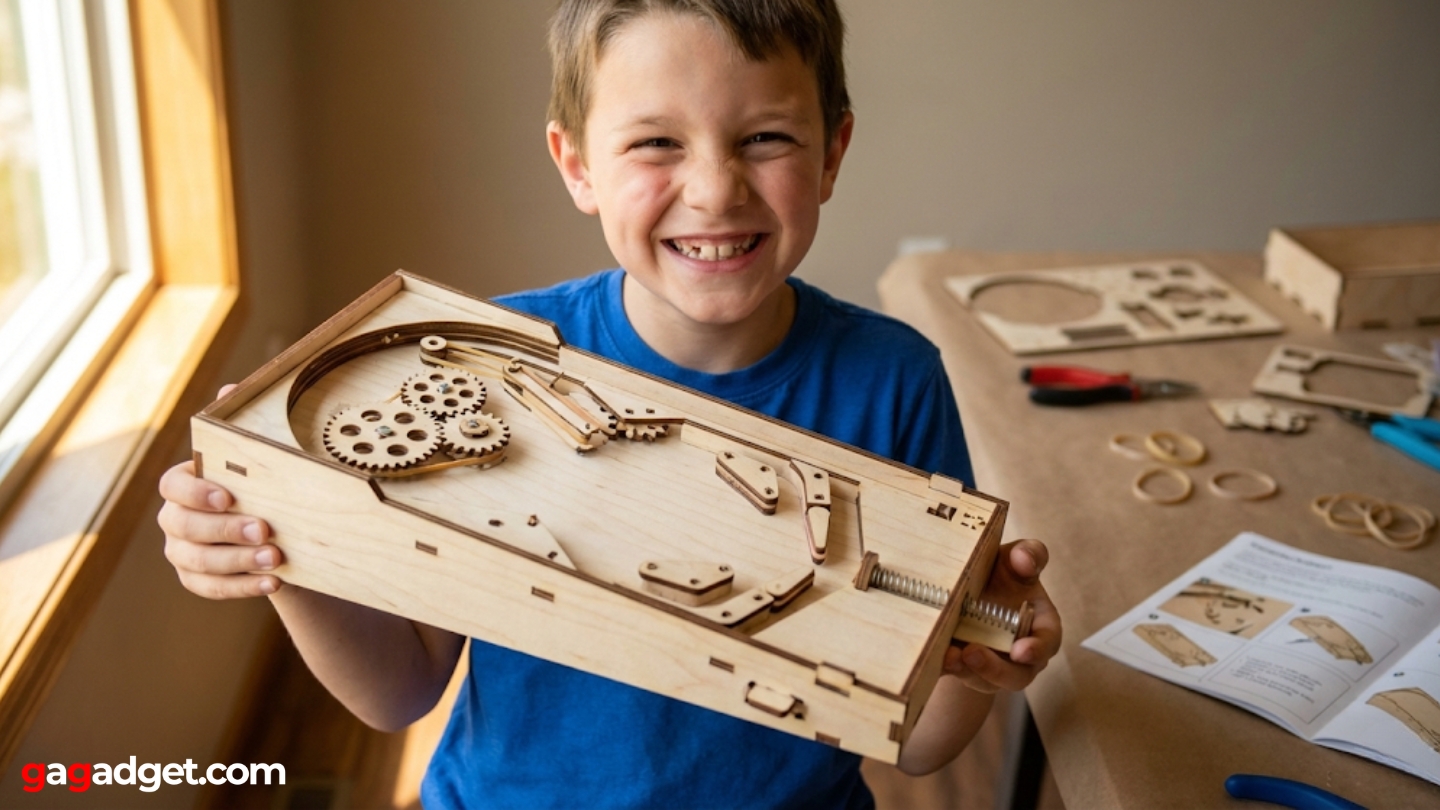
Mechanical engineering education emerges from building the Smartivity DIY Pinball Machine using 176 pre-cut engineered wood pieces assembling into fully functional arcade game. No batteries, motors, or electronics - purely mechanical operation through rubber bands, springs, and lever physics. Kids construct the entire pinball mechanism from scratch understanding exactly how flippers launch balls, how scoring triggers work, and why certain angles send balls into bumpers versus drain holes.
Assembly takes 3-5 hours across multiple sessions depending on child age and building experience. Step-by-step illustrated instructions show each piece placement using numbered diagrams. The building process teaches patience, following sequential steps, and careful alignment since improper assembly prevents mechanical operation. Kids learn mechanical principles organically - levers multiply force, springs store energy, angles determine ball trajectories. These concepts stick better through hands-on construction than classroom explanations.
My 11-year-old built this over three evenings, occasionally needing help aligning certain gear mechanisms. The instruction clarity impressed me - minimal text with detailed visual guides showing exactly how pieces fit together. He figured out most assemblies independently, only calling for help when complex multi-part sections confused him. The completed pinball machine measures 13x10 inches providing genuine arcade gameplay. Ball launchers, flippers, bumpers, and scoring triggers all function mechanically through rubber band tension and spring mechanisms.
After construction finishes, the pinball machine provides ongoing entertainment. Unlike build-once-display-forever projects, this toy remains playable indefinitely. Kids compete for high scores, practice flipper timing, and modify ball trajectories by adjusting launcher strength. The mechanical nature means maintenance involves replacing worn rubber bands rather than complex electronics troubleshooting. Smartivity provides lifetime free replacement parts addressing wear from regular use.
Engineered wood construction balances durability with sustainability. Pieces resist warping and maintain structural integrity through repeated play. The material scratches more easily than plastic alternatives but avoids the cheap feel of all-plastic mechanical toys. Wood gives the finished pinball machine satisfying weight and presence. Storage requires keeping the assembled unit intact - disassembly for storage isn't practical since rebuilding takes hours. Plan shelf space for the 13-inch wide completed project.
Pros:
- 176 pieces teach mechanical engineering through building
- Fully functional pinball gameplay after assembly
- No batteries required - purely mechanical operation
- Lifetime free replacement parts program
- Sustainable engineered wood construction
Cons:
- 3-5 hour assembly time may challenge younger kids
- Requires shelf space for assembled 13-inch unit
- Rubber bands need replacing after extended use
Summary: Smartivity DIY Pinball Machine teaches mechanical engineering through constructing functional arcade game. Purely mechanical operation and ongoing playability provide value beyond single-build projects.
STEM Toys: FAQ
What age should kids start with STEM toys?
Basic STEM toys work from age 3+ when children develop hand-eye coordination for simple building and pattern activities. Large building blocks, color sorting games, and basic puzzles introduce early STEM concepts through play. Ages 4-6 handle more complex activities like following template patterns, building with smaller pieces, or simple cause-and-effect experiments. By age 7-8, kids tackle logic puzzles, multi-step building projects, and guided science experiments. Match toy complexity to individual development rather than strict age guidelines since mechanically-minded younger kids often handle "advanced" toys while some older children prefer simpler activities.
Do STEM toys actually improve academic performance?
Research shows hands-on STEM play strengthens spatial reasoning, problem-solving, and critical thinking skills transferring to academic subjects. Kids who regularly engage with building toys, logic puzzles, and science experiments perform better in math and science classes compared to peers without STEM toy exposure. The improvement comes from developing foundational thinking patterns rather than memorizing facts. However, STEM toys work best as supplements to education rather than replacements. Screen-free engagement matters too - digital STEM apps don't provide the same tactile learning benefits as physical manipulation of real objects and materials.
How long do kids typically play with STEM toys?
Open-ended STEM toys like building systems, art-creation tools, and modular experiment kits maintain interest for years since they never truly finish. Kids return repeatedly creating new projects and experiments. Challenge-based toys with finite puzzles or experiments typically engage for 1-6 months depending on difficulty level and child interest. Single-build construction projects provide 3-10 hours of assembly followed by display or play depending on functionality. The best STEM toys grow with children - simpler activities for beginners, advanced challenges as skills develop. Toys matching genuine interests rather than parent-chosen "educational" topics maintain engagement longest.
Can STEM toys work for kids who hate school science?
Many kids who dislike classroom science love STEM toys because play removes the pressure of grades and tests. Hands-on experimentation feels different than reading textbooks or memorizing formulas. Kids discover concepts through their own exploration rather than following rigid lesson plans. The key is choosing toys matching specific interests - art-focused kids enjoy STEM toys blending creativity with patterns, kinesthetic learners prefer building and construction, logic-minded children like puzzle-based STEM activities. Frame toys as games or projects rather than educational tools. Once kids engage with STEM concepts through play, the connection to school subjects often clicks naturally.
Are expensive STEM toys better than budget options?
Price doesn't always correlate with educational value or engagement quality. Some premium STEM toys justify costs through superior durability, extensive components, or unique mechanisms unavailable in budget versions. Others charge extra for branding without meaningful improvements. Budget STEM toys can provide excellent learning experiences if they match child interests and include quality materials. Consider cost-per-hour of engagement rather than upfront price. A $60 building set used weekly for two years costs less per play session than a $20 puzzle solved once then abandoned. Read reviews focusing on actual play value rather than packaging promises before buying.
Should I buy STEM toys matching school curriculum?
STEM toys work best when they interest your child rather than directly mirroring school subjects. A kid passionate about how things move learns physics through marble runs even if their school hasn't covered momentum yet. Building toys teach geometry concepts before formal geometry classes begin. The goal is developing thinking patterns and curiosity rather than memorizing specific facts. That said, STEM toys can reinforce struggling subjects through play-based learning. If your child finds fractions confusing, measurement-based building toys provide hands-on practice. Just avoid the trap of forcing educational toys onto uninterested kids - that kills both the toy's effectiveness and their natural curiosity.
How do I organize STEM toys with many small pieces?
Small-piece STEM toys demand organization systems preventing lost components and enabling quick cleanup. Clear storage containers with divided compartments work best for experiment kits and building sets where specific pieces matter. Label compartments with photos showing what belongs inside helping younger kids maintain organization independently. Zip-top bags sorted by component type fit inside main storage boxes. Rolling carts with multiple drawers store large STEM collections while remaining accessible. Establish cleanup routines immediately after introducing multi-piece toys. Kids who learn organization habits early maintain STEM toy collections better than those who let pieces scatter. For puzzle-based STEM toys, keep challenge cards in plastic sleeves preventing damage and sorting issues.
Choosing Your STEM Toy
STEM toys develop different thinking skills from spatial reasoning to scientific experimentation depending on toy type and child interests. The Lite Brite Classic combines artistic creativity with pattern recognition through 206 backlit pegs and multiple light modes. Logic-focused kids benefit from the ThinkFun Gravity Maze teaching spatial reasoning through 60 progressively challenging marble puzzles. I've found the Shashibo Shape Shifting Box works brilliantly as portable geometric education fitting in pockets for constructive fidgeting anywhere.
Young scientists appreciate the National Geographic Science Magic Kit teaching chemistry through 20 performable tricks plus 85 bonus experiments. Mechanically-minded builders thrive with the Smartivity DIY Pinball Machine providing hands-on mechanical engineering through functional arcade construction. Match STEM toys to genuine interests rather than forcing educational choices - engaged play teaches more than reluctant study ever could.

Jim's our tech geek with a mission since February 2023. From movies to video projectors, he knows his stuff and aims to make tech work for you. When he's not geeking out, he's there to guide you through making savvy decisions.


