The new Mercedes-Benz CLA will receive a driver assistance system based on NVIDIA DRIVE AV

Mercedes-Benz will equip the new CLA with a driver assistance system based on the NVIDIA DRIVE AV software platform. The technology was presented at the Consumer Electronics Show (CES) 2026 in Las Vegas.
What is known
Mercedes-Benz showed a recording of the CLA moving through the streets of San Francisco with the AI-based system activated. In most scenes, there was a driver in the car, but they did not have their hands on the wheel, which corresponds to Level Two automation capabilities, where responsibility for driving remains with the human.
Production of the CLA with the new driver assistance system for the US market will begin later in 2026. For NVIDIA, this will be the first implementation of the DRIVE AV platform in a production Mercedes-Benz vehicle and an important step in expanding the company's presence in the automotive industry.
The Mercedes-Benz CLA will be the first brand model with the new MB.OS operating system. It is designed to replace the existing MBUX (Mercedes-Benz User Experience) system, first introduced at CES in 2018. MB.OS supports advanced driver assistance functions and operates on the NVIDIA DRIVE AV software stack using AI infrastructure, accelerated computing, and over-the-air updates.
The system includes the MB.DRIVE ASSIST PRO package. It has been available in China since the end of 2025 and will be offered both as factory-installed and through the Mercedes-Benz digital store.
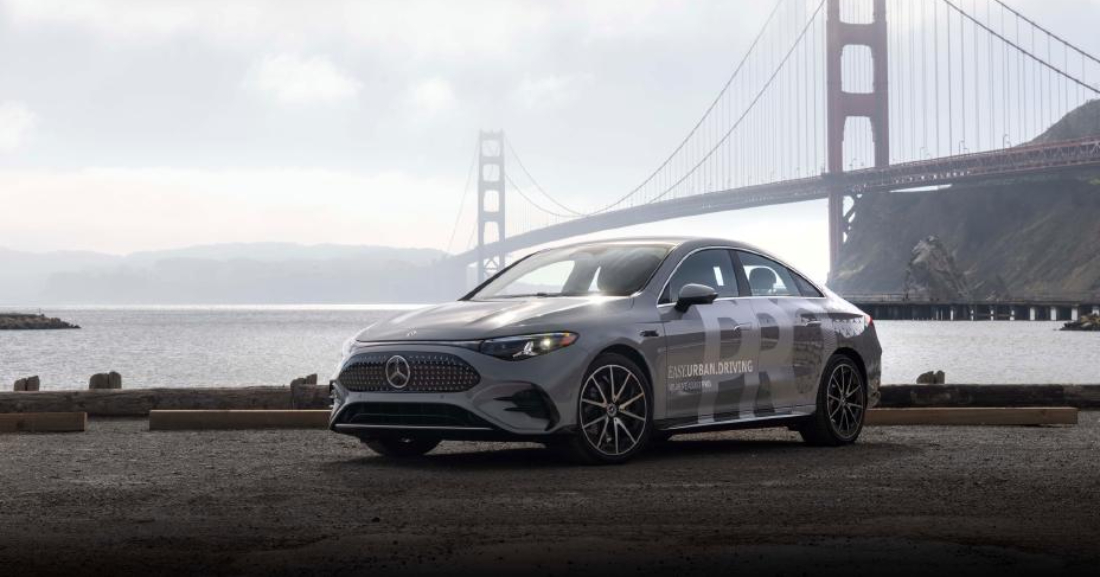
The new Mercedes-Benz CLA in San Francisco. Photo: Mercedes-Benz
MB.DRIVE ASSIST PRO uses data from dozens of sensors, radars, and ultrasonic sensors. Information is processed by an onboard computer with performance up to 508 trillion operations per second (TOPS). Such computational capacity makes it possible to implement Level Two automated driving functions, including driving in heavy urban traffic, active safety with collision prevention, and automatic parking in confined spaces.
The NVIDIA DRIVE AV platform is built on an end-to-end AI stack for core driving tasks and a separate classical safety loop based on the NVIDIA Halos system. Vehicles with this architecture can learn from large arrays of real and synthetic driving data, gradually improving system performance in various driving conditions.
Additionally, NVIDIA and Mercedes-Benz plan to use NVIDIA Omniverse libraries in automotive manufacturing. This involves creating digital twins of factories and assembly lines to help design, plan, and optimize manufacturing processes to reduce downtime and increase efficiency.
Source: NVIDIA


