At gagadget.com, your trust is our priority. We follow strict quality standards in our research, tests, and analysis of tvs, to give you the best experience. Learn more
Mini-LED vs OLED
Display technology debates consume endless forum threads and YouTube comments, yet the fundamental differences between Mini-LED and OLED remain misunderstood by most shoppers. Manufacturers promote competing specifications while practical viewing experiences diverge dramatically based on room lighting, content preferences, and usage patterns.
Short answer: Mini-LED TVs use thousands of tiny LED backlights to achieve extreme brightness (2000-5000 nits), wide color gamut, and immunity to burn-in, ideal for bright rooms. OLED TVs feature self-emissive pixels that turn completely off for perfect blacks, delivering infinite contrast, superior viewing angles, and faster response (under 0.2ms), though at lower peak brightness (800-2200 nits) with potential burn-in from static content. Mini-LED excels in HDR highlights and daytime viewing while OLED dominates dark room cinema and fast-motion clarity.
- Mini-LED Technology Explained
- OLED Display Technology
- Brightness and Contrast Performance
- Color Reproduction and Accuracy
- Viewing Angles and Uniformity
- Gaming Performance and Response Time
- Longevity and Burn-In Risks
- Mini-LED vs OLED: FAQ
Mini-LED Technology Explained
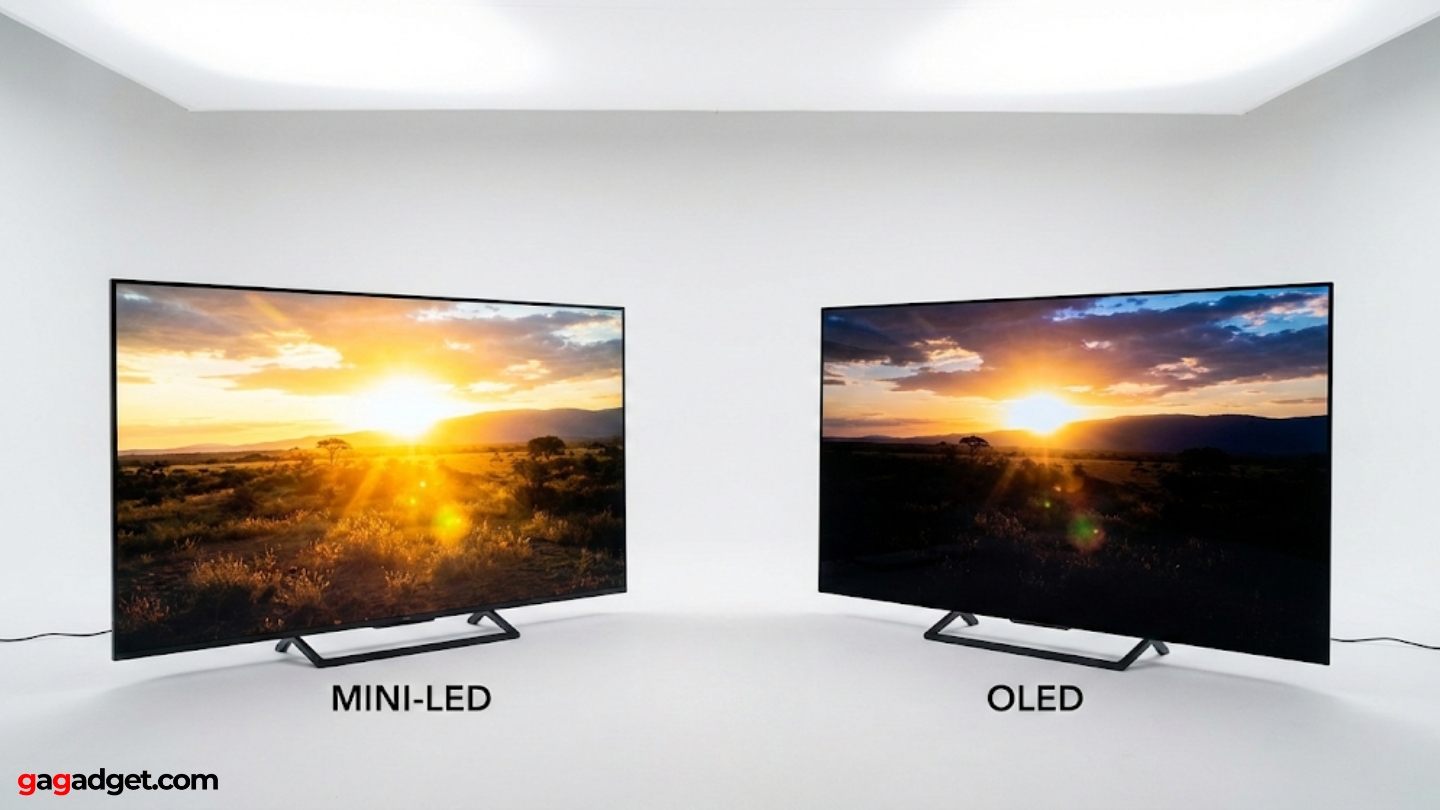
Mini-LED uses backlights measuring 0.008 inches or smaller - ten times smaller than conventional LEDs. This miniaturization enables thousands of individual dimming zones behind LCD panels rather than hundreds. The TCL QM8K implements approximately 2500 local dimming zones, each controlling LED clusters independently for precise brightness control.
The technology pairs mini-LED backlighting with quantum dot color filters positioned between backlight and LCD layer. Quantum dots absorb blue LED light and re-emit precise red and green wavelengths, expanding color reproduction to 95-100% of DCI-P3 cinema color space. Advanced implementations include condensed micro-lenses focusing LED output efficiently, though complete light bleed elimination between zones remains physically impossible with backlit displays.
OLED Display Technology
OLED panels generate light directly from organic compounds within each pixel, eliminating backlighting entirely. When voltage applies to these materials, they emit light at wavelengths determined by their chemical composition. Individual pixels turn completely off for true black with zero measurable light output.
Two OLED architectures dominate televisions. WOLED uses white emitters with color filters producing red, green, and blue subpixels. QD-OLED combines blue emitters with quantum dot conversion layers. The Samsung S95F OLED uses second-generation QD-OLED achieving higher brightness and wider color volume than WOLED while maintaining perfect blacks. Four-stack OLED panels layer multiple emissive elements to boost brightness without accelerating degradation.
Brightness and Contrast Performance
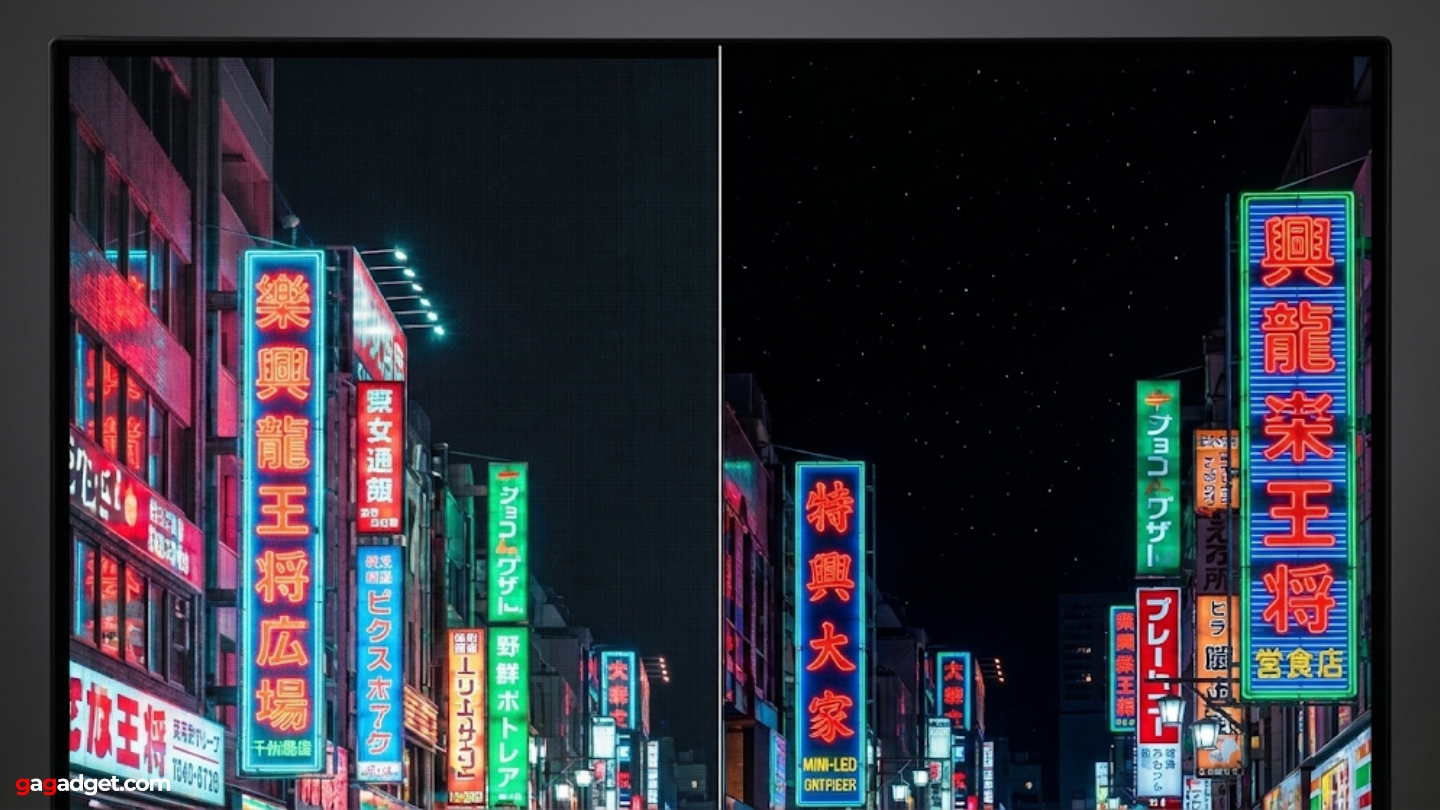
Peak brightness represents Mini-LED's defining advantage, with premium models reaching 2000-5000 nits. The Hisense U8QG measures approximately 4000 nits peak brightness, maintaining over 2000 nits sustained output. This headroom proves essential for HDR content mastered at 1000-4000 nits, making sun reflections, explosions, and neon signs display at creator-intended intensity. Bright room viewing benefits dramatically from high brightness overcoming ambient light.
OLED brightness improvements continue but remain constrained by organic material heat generation. Current WOLED panels reach 800-1200 nits peak, while QD-OLED achieves 1500-2200 nits. However, OLED's infinite contrast ratio creates more dramatic impact than raw nits suggest - a 1000 nit highlight against perfect black appears more striking than a 2000 nit highlight against gray black. Mini-LED displays cannot achieve true black since light inevitably bleeds between dimming zones.
Color Reproduction and Accuracy
Mini-LED quantum dot implementations cover 95-100% of DCI-P3 color space with some premium models reaching into Rec. 2020. Color accuracy remains consistent across all brightness levels since quantum dots emit identical wavelengths regardless of LED intensity. This consistency makes Mini-LED effective for bright, colorful content like animation, sports, and nature documentaries.
OLED color reproduction varies between implementations. WOLED achieves 95-97% DCI-P3 coverage, though brightness and color volume remain linked since filters block portions of white light. QD-OLED eliminates color filters, using quantum dots for conversion. This delivers 98-99% DCI-P3 with superior color volume - maintaining saturation at high brightness levels. Both OLED types maintain color accuracy from any viewing angle.
Viewing Angles and Uniformity
Viewing angle determines how well picture quality maintains when viewers sit off-center from the display. This matters significantly for rooms with wide seating arrangements, open floor plans, or furniture preventing centered viewing. Display uniformity describes consistent color and brightness across the panel surface.
Mini-LED and OLED viewing characteristics differ substantially:
- OLED viewing angles: Perfect color accuracy and contrast maintained up to 60-70 degrees off-center. Self-emissive pixels emit light equally in all directions. Viewers at extreme angles see identical quality to centered positions.
- Mini-LED viewing angles: VA LCD panels provide 20-30 degrees before noticeable color shifting and contrast degradation. Premium models incorporate Ultra Viewing Angle layers widening range to 40-45 degrees, though still inferior to OLED.
- OLED uniformity: Near-perfect uniformity across screen areas. Some panels show faint vertical banding in near-black scenes or slight tint variations. Manufacturing quality control largely eliminates severe issues on current models.
- Mini-LED uniformity: Dirty screen effect appears as brightness variations during panning movements, noticeable in sports. Corner vignetting shows darker edges compared to center. Thousands of dimming zones reduce but don't eliminate uniformity concerns.
Practical impact depends on room configuration and viewing habits. Single-viewer setups facing screens directly show minimal difference. Family viewing with multiple positions spread across wide angles strongly favors OLED's consistent off-axis performance.
Gaming Performance and Response Time
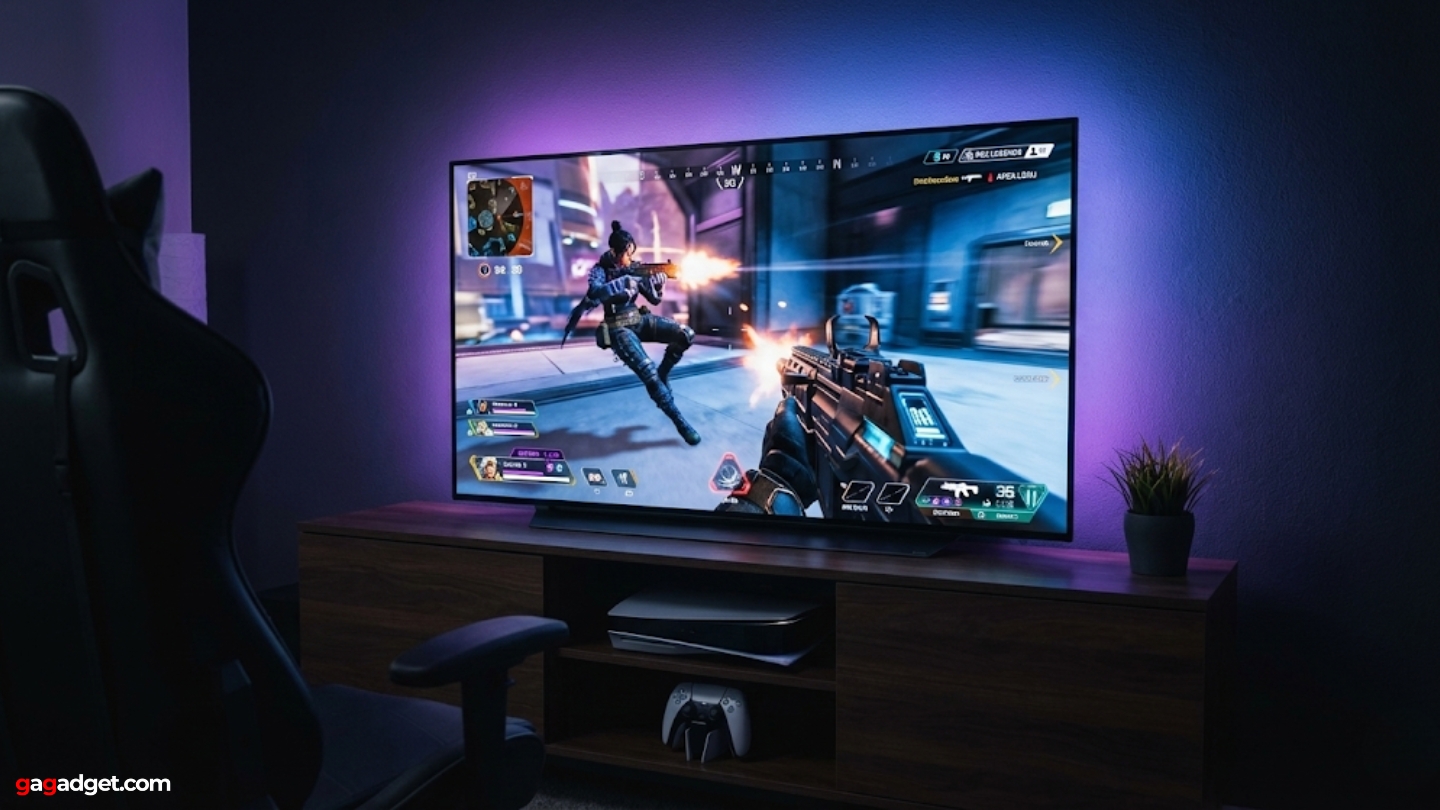
Pixel response time differs dramatically between technologies. OLED achieves response under 0.2ms, eliminating motion blur during fast camera pans or quick movements completely. The LG C5 OLED supports 4K at 144Hz with VRR across all four HDMI 2.1 ports, combining instant response with high refresh rates for fluid gaming.
Mini-LED response times typically measure 4-8ms, fast enough to avoid noticeable blur in most scenarios. Premium gaming models implement overdrive pushing response to 2-4ms. Mini-LED maintains HDR brightness during extended sessions without automatic limiting, while OLED may reduce output protecting panels from burn-in. Mini-LED also eliminates burn-in concerns from static HUD elements displayed continuously during hundreds of gameplay hours. Both technologies support 4K 120Hz, VRR, and ALLM with similar input lag (10-15ms) making either suitable for gaming.
Longevity and Burn-In Risks
Long-term reliability concerns differ substantially between technologies. Mini-LED faces no burn-in risk whatsoever since inorganic LED backlights and LCD panels show no permanent image retention regardless of content or duration. Static elements like channel logos, news tickers, Windows taskbars, or game HUDs cause zero degradation even after thousands of hours. This immunity makes Mini-LED suitable for PC monitors, security displays, digital signage, and extended gaming sessions without viewing habit restrictions.
OLED burn-in remains a legitimate concern despite protective technologies substantially reducing risk compared to early panels. Organic materials degrade gradually through use, with areas displaying brighter content aging faster than darker regions. Static elements shown daily for extended periods will eventually create visible ghost images, particularly channel logos, taskbars, and game UI elements. Modern OLED panels implement pixel shifting, logo dimming, and refresh algorithms minimizing burn-in probability, with manufacturers reporting under 1% of panels affected during typical varied home viewing. However, PC monitor use, 24/7 news channels, or daily gaming sessions with persistent HUD elements significantly increase burn-in likelihood.
| Longevity Factor | Mini-LED | OLED |
|---|---|---|
| Burn-In Risk | Zero burn-in risk. Inorganic materials immune to permanent image retention regardless of content or duration. | Permanent image retention possible with static content displayed extensively. Protective algorithms reduce but cannot eliminate risk entirely. |
| Expected Lifespan | LED backlights rated 50,000-100,000 hours. Quantum dot films maintain color 50,000+ hours. Gradual brightness reduction rather than sudden failure. | Organic materials degrade gradually. Expect 30,000-50,000 hours before noticeable brightness reduction. Varied content extends lifespan significantly. |
| Brightness Degradation | Consistent brightness maintained throughout lifespan. No automatic limiting. Full output available regardless of content or cumulative hours. | Automatic brightness limiting protects panels but reduces peak output. Brightness degrades faster in areas displaying frequent bright content. |
| Ideal Use Cases | Unrestricted usage including PC monitors, digital signage, security displays, extended gaming, 24/7 news channels. No viewing habit limitations. | Varied viewing mixing movies, shows, streaming. Avoid PC monitor use, 24/7 news, or games with persistent HUD elements played extensively. |
| Warranty Coverage | Standard warranties cover manufacturing defects. Burn-in not applicable. Panel failures rare within expected lifespan. | Burn-in typically excluded from manufacturer warranties. Some retailers offer extended protection covering image retention for additional cost. |
Buyers planning 7-10 year ownership with heavy static content should choose Mini-LED for guaranteed longevity. OLED suits those replacing displays every 3-5 years or willing to manage viewing habits preventing uneven pixel wear.
Mini-LED vs OLED: FAQ
Which technology provides better picture quality overall?
Picture quality superiority depends on viewing environment. OLED delivers superior performance in dark or controlled lighting through perfect blacks and infinite contrast. Dark cinematography showcases OLED advantages dramatically. Mini-LED provides better quality in bright rooms through sustained high brightness overcoming ambient light. Daytime viewing, sports, and HDR content with spectacular highlights favor Mini-LED's brightness capabilities. Both achieve excellent color accuracy and detail, making environment the determining factor.
Is Mini-LED as good as OLED for watching movies?
Mini-LED delivers excellent movie performance though purists prefer OLED for cinema-accurate presentation. OLED's perfect blacks reproduce dark scenes as directors intended, preserving shadow detail. Premium Mini-LED with thousands of zones approaches OLED performance closely enough that most viewers won't notice differences. Mini-LED advantages appear in bright scenes where superior peak brightness makes HDR highlights more spectacular. Room lighting matters significantly - bright rooms favor Mini-LED, dark theaters showcase OLED strengths.
Will OLED burn-in actually affect my TV?
Burn-in probability depends on viewing habits. Varied content mixing movies, shows, sports, and gaming prevents uneven pixel wear effectively. Modern protective technologies reduce risk substantially - manufacturers report under 1% occurrence with typical varied viewing. However, PC monitor use with static taskbars, 24/7 news channels with persistent logos, or daily gaming with unchanging HUD elements will eventually cause visible retention. Assess viewing habits honestly before choosing OLED for extensive static content exposure.
Does Mini-LED have better gaming performance than OLED?
Gaming advantages split between technologies. OLED provides faster pixel response (under 0.2ms versus 4-8ms) eliminating motion blur during fast movements. Mini-LED offers burn-in immunity for static HUD elements and maintains full HDR brightness during extended sessions. Both support 4K 120Hz, VRR, and ALLM with similar input lag (10-15ms). Choose OLED for motion clarity and atmospheric games, Mini-LED for extended sessions with persistent UI elements.
Which technology lasts longer without degradation?
Mini-LED maintains consistent performance longer through material differences. LED backlights rated 50,000-100,000 hours outlast OLED organic compounds rated 30,000-50,000 hours. Mini-LED shows no burn-in risk regardless of content, while OLED degrades faster in areas displaying frequent bright content. Both exceed typical replacement cycles of 5-7 years substantially. Buyers planning decade-long ownership or heavy static content usage should choose Mini-LED for guaranteed longevity.
Is Mini-LED cheaper than OLED?
Pricing varies by size and features. Entry-level Mini-LED costs less than budget OLED, starting around 600-800 dollars for 55-inch versus 1000-1200 dollars for OLED. Premium Mini-LED with thousands of zones approaches flagship OLED pricing at 2000-3000 dollars for 65 inches. Large sizes favor Mini-LED economically - 75-85 inch Mini-LED costs 1500-2500 dollars while comparable OLED exceeds 3000-5000 dollars. OLED pricing continues declining annually, narrowing gaps substantially.
Can you see the difference between Mini-LED and OLED?
Visible differences become obvious during specific content. OLED's perfect blacks stand out during dark scenes in dimmed rooms - stars against space, shadow details, letterbox bars show true black versus Mini-LED's gray. Mini-LED's brightness becomes apparent during bright HDR highlights - sunlight, explosions, neon signs display with intensity OLED cannot match. Viewing angles reveal stark contrasts - OLED maintains quality from extreme positions while Mini-LED shifts colors beyond 30-40 degrees. Average viewers watching typical content from center in moderate lighting may struggle distinguishing technologies.
Mini-LED vs OLED: Making the Right Choice
Technology selection should align with viewing environment and usage patterns. OLED dominates dark room cinema experiences through perfect blacks and infinite contrast, ideal for dedicated home theaters and film enthusiasts. The technology suits varied content where burn-in risks remain minimal, delivering reference-quality images for those managing viewing habits appropriately.
Mini-LED excels in bright rooms, family viewing, and applications where longevity outweighs picture quality compromises. Superior brightness maintains visibility regardless of lighting while burn-in immunity enables unrestricted usage including PC monitors and extended gaming. For most buyers balancing performance, versatility, and value, Mini-LED represents the practical choice. OLED remains the enthusiast option providing uncompromising quality for dark room viewing and accepting burn-in considerations.

Meet James, our go-to tech guru and seasoned reviewer. His sharp attention to detail and love for gadgets drive his deep dives into the newest tech waves. James's insightful analysis and real zest for breakthroughs have earned him a solid reputation in the tech world.


