At gagadget.com, your trust is our priority. We follow strict quality standards in our research, tests, and analysis of tvs, to give you the best experience. Learn more
QD-OLED vs OLED
Premium OLED televisions dominate high-end display discussions, yet manufacturers now offer two distinct OLED implementations creating confusion among buyers. Marketing materials emphasize quantum dots and color filters while practical performance differences remain unclear to most consumers evaluating their next television purchase.
Short answer: QD-OLED (Quantum Dot OLED) uses blue OLED emitters with quantum dot color conversion achieving superior brightness (1500-2000 nits peak), wider color volume (110% DCI-P3), and better color purity than traditional WOLED. WOLED (White OLED) employs white light emitters with color filters producing accurate colors with excellent viewing angles, though limited by filter-induced brightness constraints (800-1000 nits). QD-OLED excels in HDR content and vibrant gaming, while WOLED offers lower pricing and proven reliability with simpler manufacturing.
- QD-OLED Technology Explained
- WOLED Structure and Operation
- Brightness and HDR Capabilities
- Color Volume and Accuracy
- Viewing Angles and Uniformity
- Gaming Performance Comparison
- Panel Longevity and Burn-In
- QD-OLED vs OLED: FAQ
QD-OLED Technology Explained
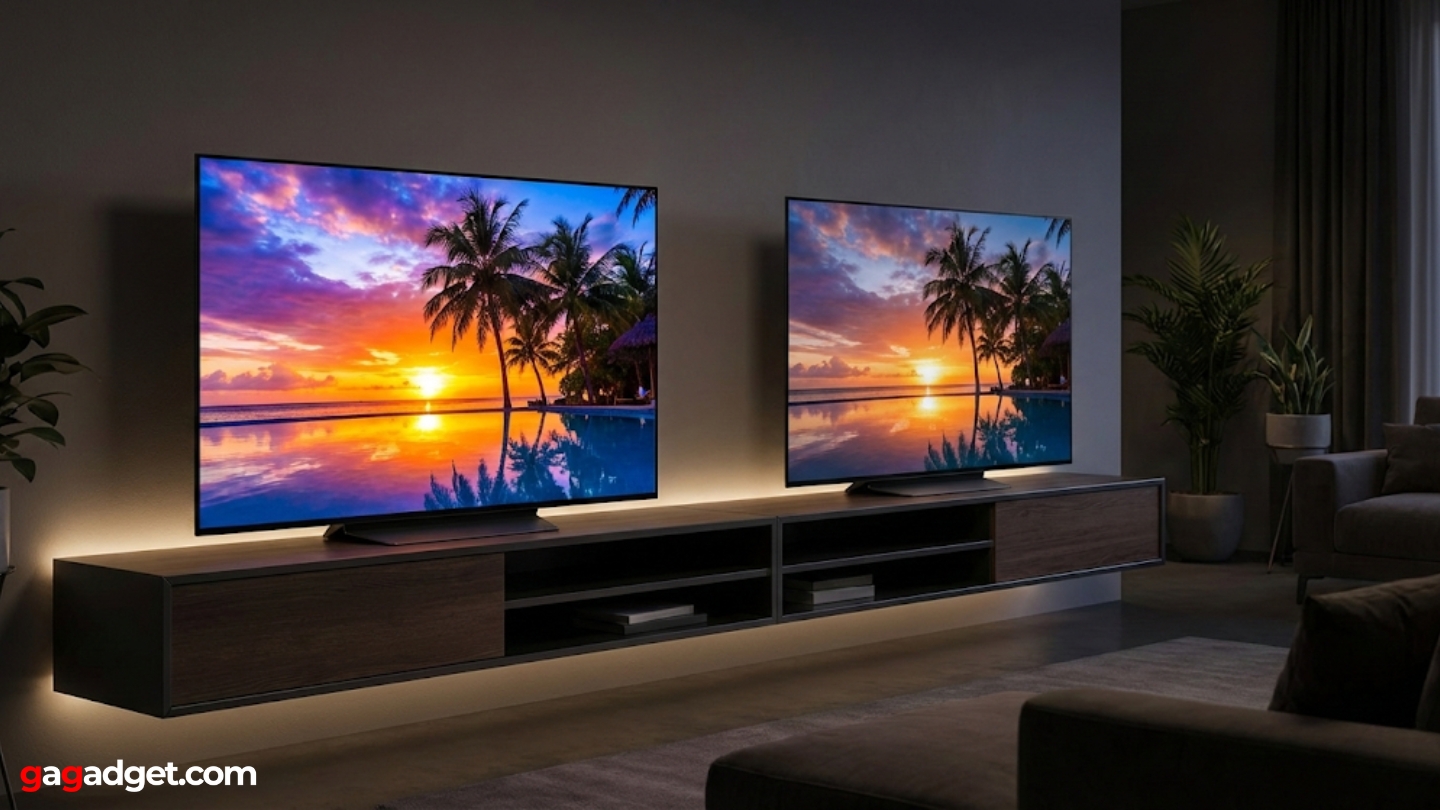
QD-OLED technology combines self-emissive OLED pixels with quantum dot color conversion, addressing traditional OLED brightness limitations. The panel structure uses blue OLED emitters as the base light source rather than white or RGB organic materials. This blue light passes through a quantum dot film containing microscopic nanocrystals that convert portions of blue wavelengths into precise red and green emissions.
Quantum dots absorb blue light energy and re-emit it at specific wavelengths determined by particle size - smaller dots produce blue light, medium dots emit green, and larger particles generate red. This conversion process achieves 99% efficiency, meaning virtually no light loss occurs during color transformation. The three-subpixel triangle arrangement (green on top, red and blue on bottom) differs from traditional RGB stripe layouts, though this configuration becomes imperceptible at normal viewing distances.
Samsung Display pioneered commercial QD-OLED production in 2022, with panels appearing in premium models from Samsung and Sony. The Samsung S90D OLED exemplifies current QD-OLED implementation, delivering improved brightness and color volume. Manufacturing complexity remains higher than WOLED production, contributing to premium pricing across QD-OLED television lineups.
WOLED Structure and Operation
WOLED displays generate white light through stacked organic layers emitting combined red, green, and blue wavelengths. This white emission passes through color filters creating individual red, green, and blue subpixels, plus a fourth unfiltered white subpixel allowing direct white light transmission. The WRGB subpixel structure provides advantages in manufacturing yield and color consistency, though filters inherently reduce brightness by blocking portions of generated light.
LG Display dominates WOLED panel production, supplying screens for LG-branded televisions plus models from Sony, Panasonic, and other manufacturers. Recent WOLED innovations include micro lens arrays directing otherwise-wasted light toward viewers rather than absorbing it within panel layers. This technology increases brightness efficiency by approximately 20-30% without changing fundamental WOLED architecture.
The latest development involves Primary RGB Tandem OLED (four-stack) panels eliminating color filters entirely. These displays use separate red, green, and blue emissive layers stacked vertically, combining filter-free brightness with OLED's inherent contrast advantages. The LG G5 OLED implements this four-stack technology achieving brightness levels competing with QD-OLED while maintaining WOLED manufacturing experience.
Brightness and HDR Capabilities
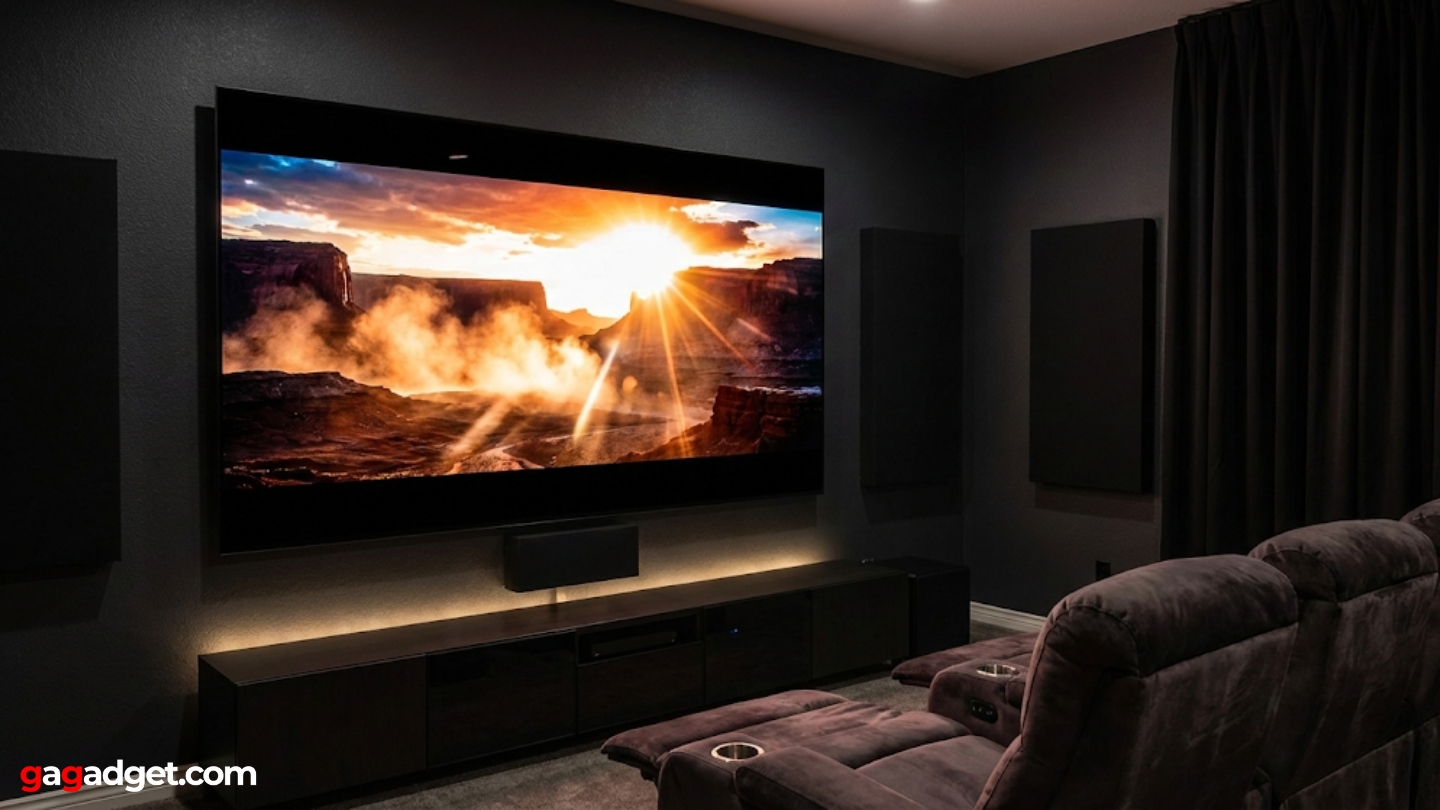
Peak brightness represents QD-OLED's primary advantage over standard WOLED implementations. The quantum dot conversion process preserves light energy that color filters would otherwise absorb, enabling higher sustainable brightness across all colors. Current QD-OLED panels achieve 1500-2000 nits peak brightness in small highlight windows, with full-screen brightness maintaining 300-400 nits consistently. This headroom proves valuable for HDR content mastered at 4000 nits, allowing specular highlights displaying closer to intended intensity.
Standard WOLED panels peak around 800-1000 nits due to filter-imposed limitations, though micro lens technology pushes newer implementations toward 1200-1500 nits maximum. The four-stack Primary RGB Tandem OLED architecture reaches 1800-2000 nits, matching QD-OLED capabilities through filter elimination. WOLED maintains advantage in pure white brightness scenarios where the unfiltered white subpixel contributes directly, though this benefit diminishes during colorful HDR content where filtered subpixels dominate.
Real-world HDR performance depends on content characteristics beyond peak brightness specifications. QD-OLED excels displaying vibrant, saturated colors at high brightness levels - scenarios common in modern films, video games, and animated content. WOLED performs adequately for cinematic material mastered conservatively, with perfect blacks compensating for lower highlight intensity. Both technologies dramatically surpass LED-LCD capabilities in shadow detail and contrast ratio.
Color Volume and Accuracy
Color volume measures display capability reproducing saturated colors at various brightness levels, representing more comprehensive metric than color gamut alone. QD-OLED achieves superior color volume through quantum dot spectral purity producing precise wavelengths without filter compromise. Measured results show QD-OLED panels reaching 110% DCI-P3 coverage with consistent saturation across brightness range, while WOLED typically achieves 95-100% DCI-P3 with noticeable desaturation at higher brightness levels.
The practical impact manifests in vibrant content like animated films, video games, and nature documentaries. Emerald greens, deep blues, and vivid reds appear more saturated and lifelike on QD-OLED displays compared to WOLED alternatives. This advantage becomes particularly noticeable in HDR gaming where developers utilize expanded color spaces creating fantastical environments. WOLED delivers accurate colors within its capability range though cannot match QD-OLED's saturation intensity at high brightness.
Viewing Angles and Uniformity
Both QD-OLED and WOLED maintain OLED's characteristic wide viewing angles with minimal color shifting or contrast degradation when viewed off-center. Self-emissive pixels emit light equally in all directions, providing consistent image quality up to 60-70 degrees from center viewing position.
Subtle differences exist in viewing angle performance:
- QD-OLED characteristics: Triangle subpixel arrangement can show slight color fringing at extreme angles when displaying fine text. Regular video content remains unaffected. Some early panels exhibited magenta tint in off-axis viewing under specific lighting, though newer generations largely eliminate this issue.
- WOLED characteristics: WRGB subpixel stripe delivers consistently even color at all angles without fringing artifacts. The white subpixel contribution maintains brightness consistency across viewing positions better than QD-OLED's pure RGB approach.
- Ambient light handling: QD-OLED's lack of polarizer layer makes panels more susceptible to ambient light reflections showing purple tint. WOLED includes traditional polarizing filters reducing reflections though slightly decreasing perceived contrast.
Gaming Performance Comparison
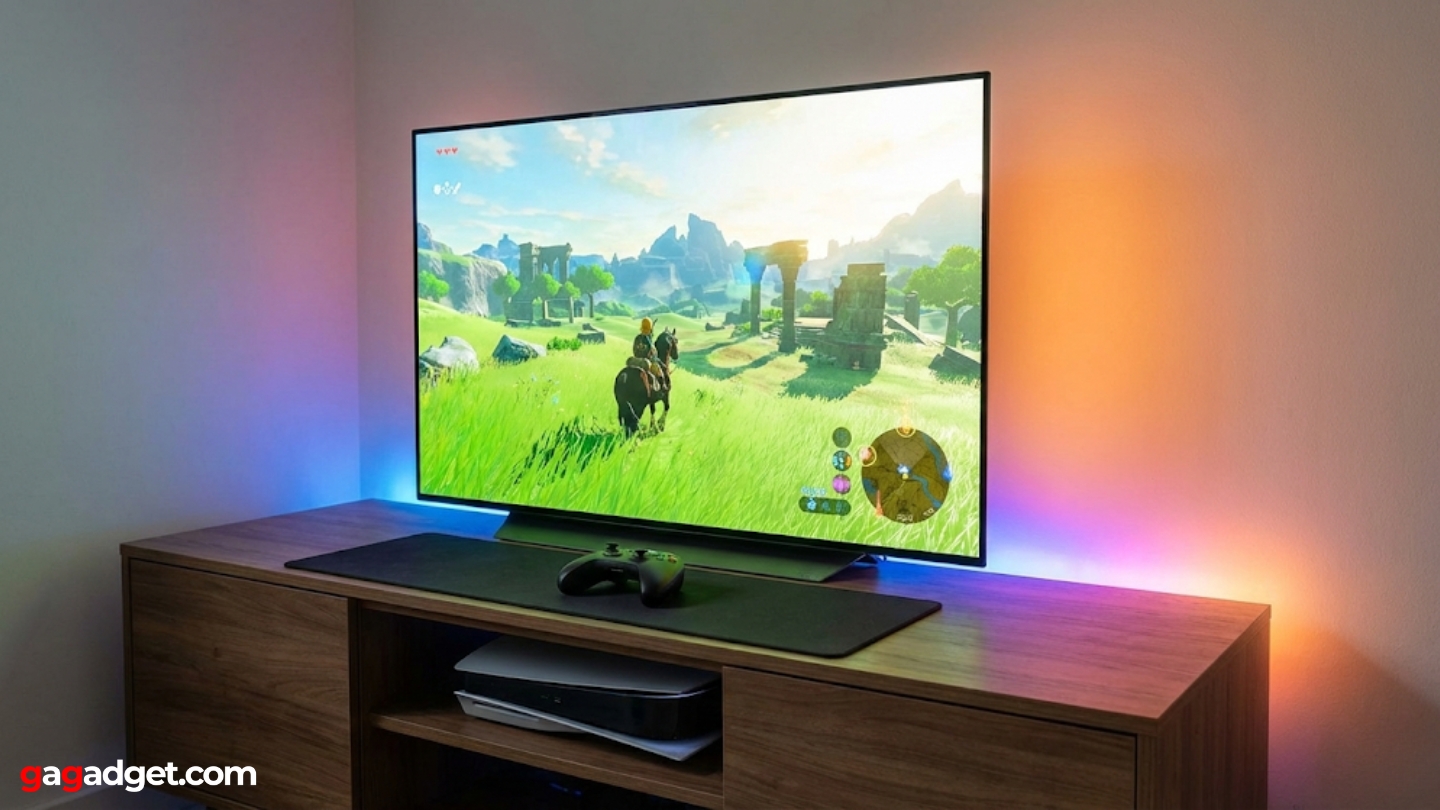
Gaming performance shows both technologies delivering exceptional responsiveness through near-instantaneous pixel response times. Measured gray-to-gray transitions complete in 0.2-0.3ms regardless of QD-OLED or WOLED implementation, eliminating motion blur during fast movements. Input lag measures identically low (under 1ms processing delay) across both panel types when using dedicated game modes.
QD-OLED advantages in gaming center on brightness and color vibrancy enhancing visual impact. Bright outdoor scenes benefit from higher peak brightness making distant enemies more visible. Vibrant art styles in games like Spider-Man appear more saturated on QD-OLED displays, though this enhancement remains preference-dependent. HDR gaming implementation shows QD-OLED handling specular highlights more convincingly, with sun glare and explosions displaying closer to developer intentions.
WOLED gaming benefits include proven long-term reliability and lower burn-in risk from static HUD elements. While both technologies implement protective measures against image retention, WOLED's simpler structure and longer market presence provide confidence for gamers logging hundreds of hours in titles featuring persistent UI elements. Current WOLED panels offering 1080p 480Hz dual-mode operation provide advantage for competitive esports players prioritizing maximum refresh rate over 4K resolution.
Panel Longevity and Burn-In
Long-term durability concerns affect OLED technology broadly, with specific characteristics varying between QD-OLED and WOLED implementations.
| Factor | QD-OLED | WOLED |
|---|---|---|
| Burn-In Risk | Quantum dots resist burn-in as inorganic materials, though blue OLED layer remains susceptible. Static content creates uneven blue emitter wear potentially visible as brightness variations. | WRGB structure spreads pixel wear across four subpixels rather than three, potentially reducing burn-in visibility. Longer market presence shows risk under 1% for varied home viewing. |
| Color Shifting | Blue OLED emitters degrade faster than quantum dots, potentially causing color temperature shifts toward warmer tones after 30,000+ hours. | Color filters remain stable indefinitely. White OLED degradation affects brightness uniformly rather than creating color shifts. |
| Panel Lifespan | Expect 30,000-40,000 hours before 50% brightness reduction in typical viewing. Higher initial brightness provides headroom for degradation. | Rated 30,000-50,000 hours to 50% brightness. White subpixel contribution helps maintain perceived brightness as filtered subpixels dim. |
| Manufacturing Maturity | Newer technology with limited long-term reliability data. Generations show improvements though lack decade-long real-world testing WOLED provides. | Over 10 years market presence providing extensive reliability data. Manufacturing refinements reduce defect rates across production runs. |
Both technologies require similar viewing habit management avoiding prolonged static content display. News channels with persistent logos, PC desktop use, and games with permanent HUD elements create burn-in risk on any OLED implementation. Varied content mixing movies, shows, and streaming prevents uneven pixel wear extending practical panel lifespan.
QD-OLED vs OLED: FAQ
Is QD-OLED better than regular OLED?
QD-OLED delivers objectively superior brightness and color volume compared to standard WOLED through quantum dot color conversion eliminating filter-based light loss. This advantage manifests in HDR content and vibrant gaming displaying more saturated colors at higher brightness levels. However, "better" depends on usage priorities - QD-OLED's benefits matter most for bright room viewing and colorful content, while WOLED's lower pricing and proven reliability provide value for budget-conscious buyers. Both technologies share OLED's fundamental advantages of perfect blacks and instant response times.
Does QD-OLED have burn-in problems?
QD-OLED remains susceptible to burn-in like all OLED technologies, though quantum dots themselves resist degradation as inorganic materials. The blue OLED layer underneath quantum dots degrades with use, creating potential for uneven wear from static content. Manufacturers implement protective features including pixel shifting and brightness limiting reducing but not eliminating burn-in risk. Varied viewing mixing different content types prevents problems, while static elements like news tickers or game HUDs displayed daily increase burn-in probability. Real-world QD-OLED burn-in rates remain below 1% for typical home viewing based on early market data.
Which OLED is best for gaming?
Both QD-OLED and WOLED deliver exceptional gaming performance through identical 0.2-0.3ms response times and sub-1ms input lag. QD-OLED's higher brightness and superior color volume enhance visual impact in bright, colorful games while improving HDR implementation quality. WOLED's proven reliability and lower burn-in concerns better suit gamers playing hundreds of hours with persistent HUD elements. Competitive gamers benefit from WOLED panels offering 1080p 480Hz dual-mode operation unavailable in current QD-OLED implementations. Both technologies dramatically surpass LED-LCD gaming performance regardless of specific variant chosen.
Can you see the difference between QD-OLED and WOLED?
The difference becomes immediately apparent in direct side-by-side comparison displaying identical HDR content, particularly scenes featuring bright, saturated colors like animated films or video games. QD-OLED shows noticeably more vibrant colors and brighter highlights creating more dramatic visual impact. However, viewing either technology in isolation without direct comparison provides excellent experience with differences becoming less obvious. Dark cinematic content shows minimal distinction since both achieve perfect blacks and similar shadow detail. Bright room viewing amplifies QD-OLED advantages through higher peak brightness overcoming ambient light interference.
Which manufacturers make QD-OLED vs WOLED?
Samsung Display manufactures all commercial QD-OLED panels, supplying screens to Samsung Electronics and Sony for their television lineups. This limited production creates less model variety and pricing competition. LG Display dominates WOLED panel production, supplying panels to LG Electronics, Sony, Panasonic, Philips, and numerous other television manufacturers creating extensive model selection across varied price points. Sony uniquely offers both technologies, using QD-OLED in flagship models while employing WOLED in mid-range series. This manufacturing landscape means QD-OLED remains premium-positioned technology with limited budget options, while WOLED spans entire price spectrum.
QD-OLED vs OLED: Choosing the Right Technology
The choice between QD-OLED and WOLED depends on viewing priorities, room environment, and budget rather than absolute technological superiority. QD-OLED delivers objectively superior brightness and color volume through quantum dot efficiency, excelling in bright rooms with HDR content and colorful gaming. The technology provides immediate visual impact when displaying vibrant material, justifying premium pricing for enthusiasts prioritizing maximum image quality. Limited manufacturer competition restricts model variety though implementations like the Samsung S85F bring QD-OLED technology to more accessible price points.
WOLED offers compelling value proposition through broader model selection, lower entry pricing, and proven long-term reliability. The technology delivers 80-90% of QD-OLED's performance at significantly reduced cost, with perfect blacks and instant response times providing excellent viewing experience. Newer four-stack implementations nearly match QD-OLED brightness while maintaining WOLED's manufacturing maturity and pricing flexibility. Models like the LG C5 OLED demonstrate WOLED's continued evolution closing performance gaps with QD-OLED alternatives.
Practical selection guidance focuses on specific usage patterns: bright living room gamers benefit from QD-OLED investment, dedicated home theater enthusiasts find excellent value in WOLED options, while those seeking absolute best image quality should compare flagship implementations from both technologies. The fundamental OLED advantages of perfect blacks, infinite contrast, and wide viewing angles matter more than choosing between QD-OLED and WOLED variants for most viewers upgrading from LED-LCD displays.

Meet James, our go-to tech guru and seasoned reviewer. His sharp attention to detail and love for gadgets drive his deep dives into the newest tech waves. James's insightful analysis and real zest for breakthroughs have earned him a solid reputation in the tech world.


