What is Wi-Fi 7 and Do You Actually Need It?
Router manufacturers plaster "Wi-Fi 7" across packaging promising speeds approaching 50 Gbps while most internet connections barely crack 1 Gbps. The disconnect between theoretical performance and practical reality creates genuine confusion - does upgrading from perfectly functional Wi-Fi 6 equipment actually improve anything beyond spec sheet bragging rights?
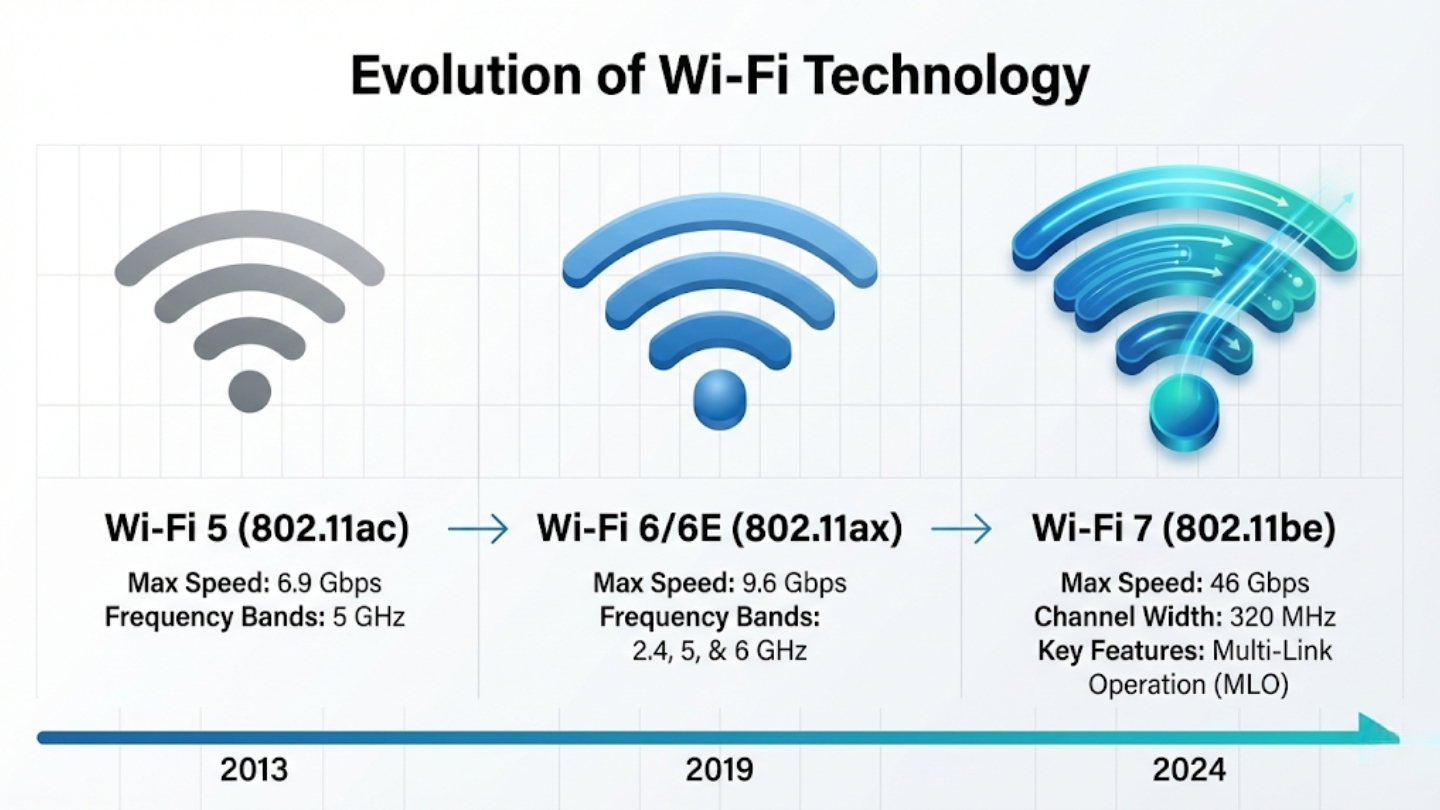
Short answer: Wi-Fi 7 (IEEE 802.11be) uses 320 MHz channels, 4096-QAM modulation, and Multi-Link Operation across 2.4/5/6 GHz bands delivering theoretical 46 Gbps maximum throughput and sub-5ms latency - substantial improvements over Wi-Fi 6's 9.6 Gbps ceiling, though real-world benefits remain minimal for households lacking multi-gigabit internet, compatible devices, and congested network environments where advanced features actually matter.
- What is Wi-Fi 7 Technology?
- How Wi-Fi 7 Displays Function
- Key Advantages of Wi-Fi 7
- Wi-Fi 7 vs Wi-Fi 6
- Router Implementations
- Who Actually Needs Wi-Fi 7?
- Wi-Fi 7 FAQ
What is Wi-Fi 7 Technology?
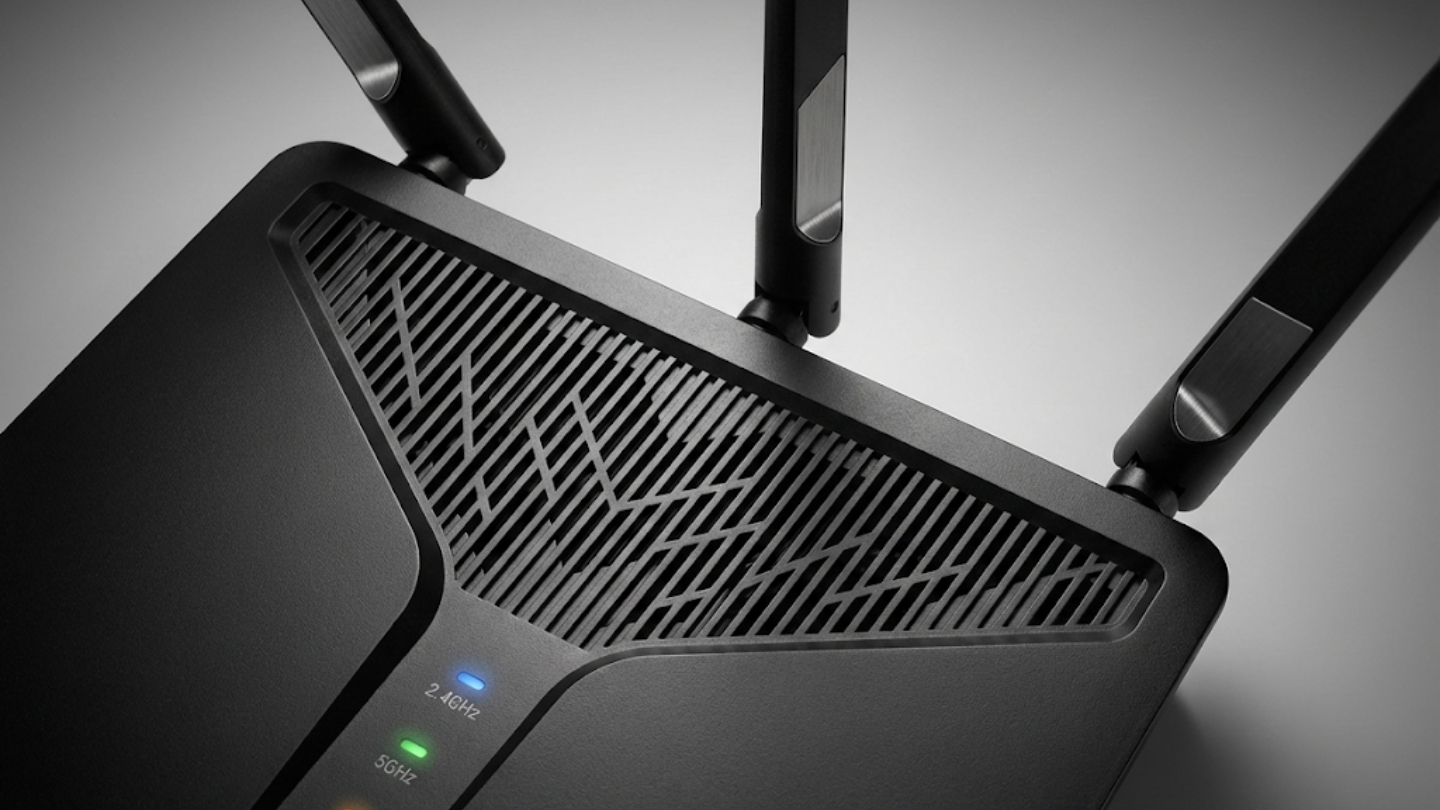
IEEE designated Wi-Fi 7 as 802.11be "Extremely High Throughput" - branding that feels appropriately ambitious given the specification. The Wi-Fi Alliance began certification in January 2024 despite IEEE not ratifying final standards until July 2025, creating an unusual timeline where products shipped before specifications finalized. This isn't necessarily problematic - draft compliance proved stable enough that firmware updates addressed minor specification changes.
The "7" represents genuine generational advancement rather than Wi-Fi 6E's spectrum expansion. Where Wi-Fi 6E simply added 6 GHz band access to existing 802.11ax technology, Wi-Fi 7 introduces architectural changes enabling parallel transmission across multiple bands simultaneously - fundamentally different approach versus choosing single band per connection.
Consumer routers implementing 2x2 or 4x4 antenna configurations realistically deliver 5-8 Gbps peak throughput under ideal conditions. The theoretical 46 Gbps maximum requires sixteen spatial streams - enterprise-grade hardware exceeding residential use cases and budgets dramatically.
How Wi-Fi 7 Functions
Multi-Link Operation represents Wi-Fi 7's signature innovation. Traditional wireless forces devices connecting exclusively to single bands - 2.4 GHz, 5 GHz, or 6 GHz. Network congestion creates waiting periods as clients compete for bandwidth. MLO establishes concurrent connections across multiple bands simultaneously, distributing traffic intelligently based on current congestion and interference patterns.
A Wi-Fi 7 laptop might upload files through 6 GHz while streaming video through 5 GHz concurrently - parallel processing reducing bottlenecks that sequential transmission creates. This aggregation delivers smoother performance during heavy simultaneous usage though requiring both router and client device supporting the feature.
Channel width doubling from 160 MHz to 320 MHz exclusively within 6 GHz spectrum theoretically doubles throughput though regulatory restrictions apply. United States permits full 320 MHz implementation while European regulations currently limit availability - manufacturers shipping region-specific firmware addressing geographical spectrum allocation differences.
The modulation upgrade from 1024-QAM to 4096-QAM packs 20% more data per transmission though requiring pristine signal quality. Real-world usage experiences 4096-QAM only during close-range scenarios without interference - distance and obstacles force downshifting to simpler modulation maintaining connection reliability over maximum speed.
Key Advantages of Wi-Fi 7
Beyond marketing specifications, Wi-Fi 7 delivers measurable improvements:
| Advantage | Impact |
|---|---|
| Sub-5ms Latency | Multi-Link Operation and improved traffic management reduce latency from Wi-Fi 6's 20-40ms average to under 5ms - transformative for VR, competitive gaming, and real-time video production where responsiveness matters more than raw bandwidth. |
| 320 MHz Channels | Doubling maximum channel width from 160 MHz enables theoretical 5.8 Gbps on 2x2 client devices versus 2.4 Gbps Wi-Fi 6 ceiling - substantial improvement when client hardware supports full specification. |
| Improved Congestion Handling | Multi-RU OFDMA allows devices utilizing multiple resource units simultaneously instead of single-RU Wi-Fi 6 limitation, reducing interference in households with 50+ connected clients competing for bandwidth. |
| Backward Compatibility | Supports all previous standards (Wi-Fi 4/5/6/6E) seamlessly without forced equipment upgrades. Households transition gradually as natural device refresh cycles introduce compatible hardware. |
Wi-Fi 7 vs Wi-Fi 6
Wi-Fi 6 prioritized capacity over speed - OFDMA technology enabling simultaneous multi-device communication proved crucial for smart home proliferation. Wi-Fi 7 maintains those efficiency gains while dramatically increasing throughput ceiling.
Theoretical maximums show stark differences - Wi-Fi 6 peaks at 9.6 Gbps across eight streams while Wi-Fi 7 reaches 46 Gbps with sixteen. Consumer reality proves less dramatic. Typical 2x2 Wi-Fi 6 clients achieve approximately 1.2 Gbps maximum while equivalent Wi-Fi 7 hardware reaches 5.8 Gbps under ideal conditions - meaningful improvement though contingent on compatible client devices actually existing in household.
Latency improvements benefit specific use cases substantially. Competitive gamers, VR enthusiasts, and video production professionals notice Wi-Fi 7's sub-5ms responsiveness versus Wi-Fi 6's 20-40ms averages even when absolute bandwidth requirements remain modest. For typical streaming, browsing, and casual gaming, latency differences prove imperceptible.
Router Implementations
Manufacturers approach Wi-Fi 7 with varying philosophies and price positioning:
- TP-Link's Value Play - The Archer BE9700 delivers complete tri-band Wi-Fi 7 implementation including 320 MHz channels, MLO, and 4096-QAM at approximately $200. Aggressive pricing targets mainstream adoption though some reviews note firmware maturity lagging premium competitors.
- ASUS Premium Approach - The RT-BE96U commands $550 emphasizing expanded LAN configuration, integrated VPN capabilities, and AiMesh expandability. Additional USB ports and sophisticated traffic management justify premium positioning for advanced users.
- NETGEAR Performance Focus - The Nighthawk RS700S splits difference at $600 featuring dual 10 Gbps Ethernet ports accommodating multi-gigabit internet connections and high-performance network storage. Testing shows excellent range though subscription-gated security features frustrate some buyers.
Client device availability lags significantly. iPhone 16 series and Samsung Galaxy S24 lineup integrate Wi-Fi 7 chipsets though practical speed differences versus Wi-Fi 6E remain negligible for typical smartphone usage. Gaming consoles notably absent - PlayStation 5 and Xbox Series X support Wi-Fi 6 exclusively with no announced upgrade timeline.
Who Actually Needs Wi-Fi 7?
Necessity depends entirely on specific circumstances rather than universal recommendations. Households with gigabit or slower internet connections gain virtually nothing - ISP bandwidth bottlenecks wireless capacity regardless of router capabilities. A home with 500 Mbps service experiences identical performance using Wi-Fi 6 or Wi-Fi 7 since local wireless speeds far exceed available internet bandwidth.
Multi-gigabit fiber subscribers with 2.5 Gbps+ connections potentially justify Wi-Fi 7 when multiple household members simultaneously utilize bandwidth-intensive applications. Large file downloads, cloud backup operations, and local network transfers between compatible devices achieve substantially higher speeds though only when client hardware supports equivalent capabilities.
Latency-sensitive professionals including competitive gamers, VR developers, and real-time content creators benefit from sub-5ms responsiveness regardless of absolute bandwidth requirements. These users justify premium Wi-Fi 7 equipment even with sub-gigabit internet because local network latency matters more than WAN speed for their workflows.
Dense device environments with 50+ connected clients spanning smart home equipment, security cameras, and personal electronics leverage Wi-Fi 7's improved congestion management. Multi-RU OFDMA reduces interference when dozens of devices simultaneously compete for bandwidth - noticeable improvement over Wi-Fi 6 in truly crowded networks.
Future-proofing considerations favor Wi-Fi 7 for consumers expecting 5+ year router lifespans. While immediate benefits remain minimal for many households, client device penetration accelerates as natural refresh cycles introduce Wi-Fi 7 compatibility throughout 2025-2027. Purchasing current-generation hardware avoids premature obsolescence as devices gradually upgrade.
Wi-Fi 7 FAQ
Does Wi-Fi 7 require new internet service?
Internet upgrades prove unnecessary though benefits remain limited without sufficient bandwidth. Wi-Fi 7 improves local network performance - file transfers between household devices, network storage access, or local server connections. These internal operations bypass internet entirely. For internet-dependent activities like streaming or browsing, performance caps at ISP speeds regardless of wireless technology. A household with 300 Mbps service experiences identical Netflix quality using Wi-Fi 6 or Wi-Fi 7 since wireless capacity vastly exceeds available internet bandwidth.
Will my current devices work with Wi-Fi 7 routers?
Complete backward compatibility ensures Wi-Fi 7 routers support all previous standards including Wi-Fi 4/5/6/6E. Older devices connect normally though cannot access new features like 320 MHz channels or Multi-Link Operation. Routers automatically negotiate optimal parameters per device - simultaneously serving Wi-Fi 7 laptops at maximum speeds while accommodating older smart home equipment using legacy standards. No forced upgrade timeline exists - households transition gradually through natural replacement cycles.
The Reality of Wi-Fi 7 Adoption
Wi-Fi 7 occupies early adoption phase with router availability exceeding client device penetration substantially. Pricing dropped from initial $500-1000 flagships to current $200 entry points making hardware accessible though compatible smartphones, laptops, and tablets remain limited. Industry projections suggest 15-20% router market share by late 2025, growing to majority adoption by 2027 as pricing normalizes and device compatibility increases.
For consumers navigating 2025's networking landscape, Wi-Fi 7 represents solid long-term investment despite minimal immediate benefits for typical households. The standard delivers genuine technical improvements - Multi-Link Operation and latency reductions prove transformative for specific use cases though most users won't notice differences over Wi-Fi 6 given current internet speeds and device limitations. Understanding actual requirements versus theoretical capabilities enables informed decisions aligned with individual needs rather than marketing narratives.

Meet James, our go-to tech guru and seasoned reviewer. His sharp attention to detail and love for gadgets drive his deep dives into the newest tech waves. James's insightful analysis and real zest for breakthroughs have earned him a solid reputation in the tech world.


