Best Handheld Gaming Console for Retro Games
My game collection lives in a drawer now. Not because I stopped caring - I care more than ever - but because five handhelds replaced 200 cartridges without losing a single title. Retro gaming used to mean hunting for hardware on eBay, praying the cartridge pins still worked, dealing with dead saves from dried-out batteries. Now you carry decades of gaming history in a jacket pocket, and the hardest decision is which era to play first.
The market exploded in every direction at once. Physical cartridge collectors get one answer. Android power users building ROM libraries that span six generations get another. Kids who just want a Game Boy that doesn't need a backlight mod get a third. I spent months with each of these five handhelds to figure out which ones actually deliver - and which ones only look good on a spec sheet.
If you're in a hurry, here are my top two picks for retro gaming handhelds:
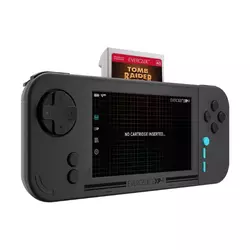
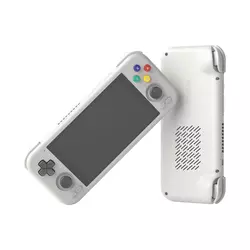
We may earn a small commission if you buy via our links - it helps keep gagadget.com running.
Table of Contents:
- Best Handheld Gaming Consoles for Retro Games: Buying Guide
- Top 5 Retro Handheld Consoles in 2026
- Retro Handheld Console Comparison
- Evercade EXP-R
- Retroid Pocket 4 Pro
- Anbernic RG35XX H
- Miyoo Mini Plus
- Powkiddy V90S
- Retro Gaming Handhelds: FAQ
Best Handheld Gaming Consoles for Retro Games: Buying Guide
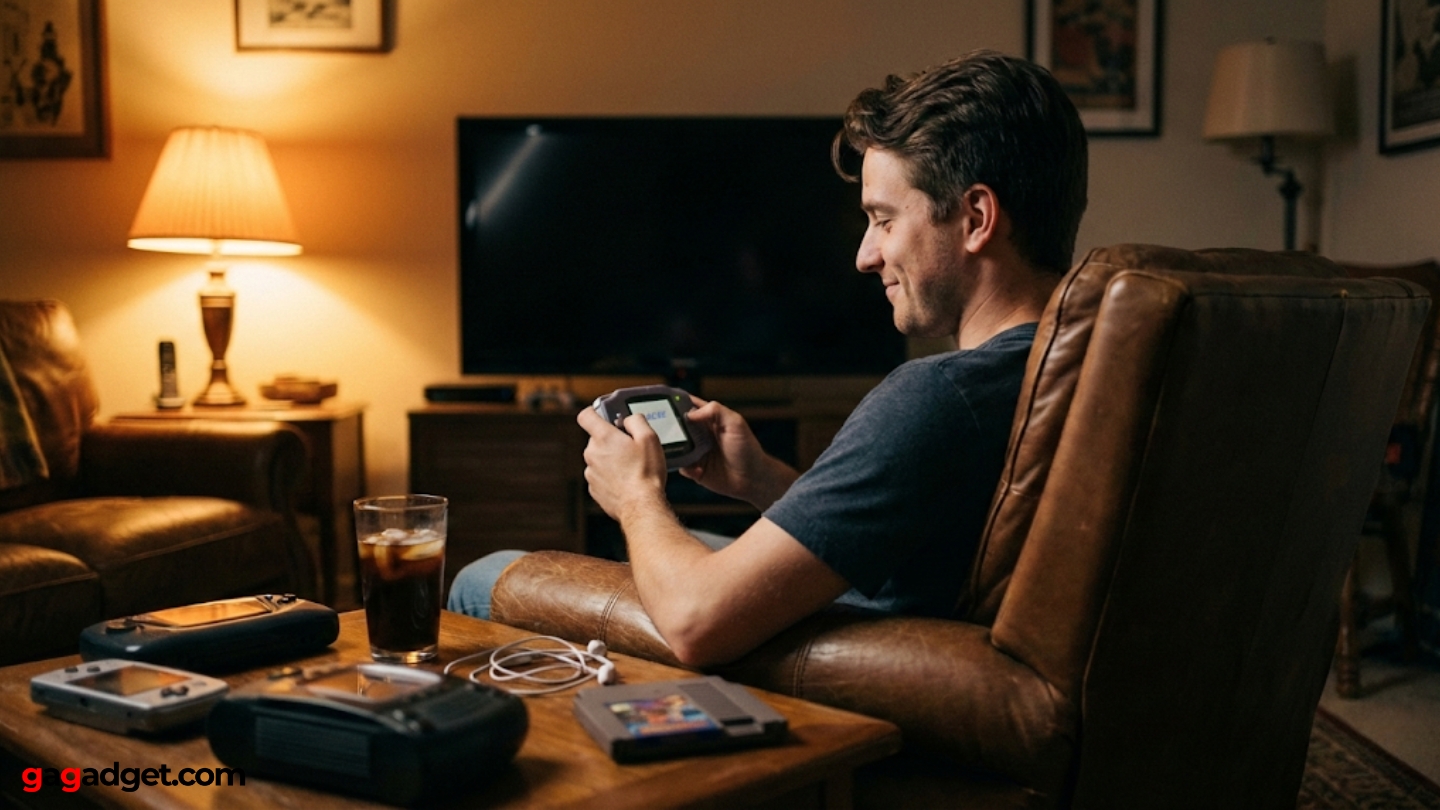
Picking a retro handheld isn't just about emulation power anymore - the market split into distinct philosophies, and buying the wrong one for your needs means a device that collects dust. I've made that mistake enough times to have opinions worth sharing.
Licensed Physical Games vs. ROM Emulation
The split between licensed and open emulation handhelds defines the entire buying decision before specs enter the picture. Devices like the Evercade EXP-R run officially licensed game collections on physical cartridges - you buy real software with printed manuals in proper boxes. Every title is cleared for distribution, the library spans over 600 games across 60+ cartridge collections, and the whole experience is clean and legal without technical setup. The tradeoff is a contained ecosystem: you play what Blaze Entertainment has licensed, which currently favors Atari, Capcom, Namco, and indie developers.
Open emulation handhelds offer limitless game libraries from any platform, but the experience depends entirely on how much time you're willing to invest in setup, configuration, and community firmware.
Android-based and Linux handhelds like the Retroid Pocket 4 Pro, Anbernic RG35XX H, Miyoo Mini Plus, and Powkiddy V90S run emulation software capable of covering everything from Atari 2600 to PlayStation 2. The library is theoretically unlimited, but requires sourcing game files independently - a legal gray area that falls on the buyer to navigate responsibly. Community firmware like OnionOS, ArkOS, and custom RetroArch builds often dramatically improve the out-of-box experience on these devices.
Performance Ceiling: What Systems Do You Actually Want to Play?
The most common purchasing mistake I see is buying more performance than needed - or less. For the 8-bit and 16-bit era (NES, SNES, Genesis, Game Boy, Game Boy Advance), nearly any handheld on this list runs these flawlessly, including the most affordable options. Push into PlayStation 1 and Dreamcast territory and the budget H700-chip devices start requiring some tweaking. GameCube, Wii, and PlayStation 2 emulation requires something like the Retroid Pocket 4 Pro with real Android processing power behind it.
Knowing your ceiling saves real money. A $79 Miyoo Mini Plus running 16-bit games at perfect speed provides no less enjoyment than a $200 device running the same content. The extra cost only pays off when you genuinely need PS2 or GameCube performance - and plenty of retro gaming fans find the 32-bit era is their actual finish line.
Form Factor and Portability
Form factor matters more than any spec once you start daily carrying a device. Horizontal layouts with analog sticks (Anbernic RG35XX H, Retroid Pocket 4 Pro) feel natural for PS1 and N64 content that requires thumb sticks. Vertical Game Boy-style designs (Miyoo Mini Plus) pack tighter into pockets and suit 8-bit and 16-bit content where a D-pad is all you need.
The handheld you actually carry beats the more powerful one you leave at home because it's too big or too fragile for daily use.
Clamshell designs like the Powkiddy V90S protect the screen automatically and fold small enough for any pocket - a genuinely practical choice for commuters. The Evercade EXP-R sits in its own category with TATE mode for vertical arcade shooters, a feature nothing else in this category offers.
Screen Size and Display Quality
Display quality splits this category sharply between devices that respect the original pixel art and those that just stretch it. Retro games were designed for 4:3 aspect ratio displays, and handhelds honoring that ratio (640x480 resolution on a 3.5-inch IPS panel) deliver authentic presentation. The Miyoo Mini Plus and Anbernic RG35XX H use this setup effectively - pixel-perfect scaling makes 16-bit art look exactly as intended. Larger screens like the Retroid Pocket 4 Pro's 4.7-inch panel gain more real estate for the interface but rely on integer scaling settings to avoid blurring classic content.
Battery Life and Build Quality
Battery estimates from manufacturers trend optimistic. Real-world sessions playing PS1 content typically drain about 30% faster than rated figures, and custom firmware often improves stock battery optimization significantly. Devices in the 3000-5000 mAh range cover a full day of casual play across most scenarios. Keeping Wi-Fi disabled when not needed adds meaningful time to any device on this list - on the Miyoo Mini Plus, that alone stretches a session by 45 minutes to an hour.
The firmware running on a device often matters more than the battery capacity printed on the box - a well-optimized OS can add hours to real-world runtime that stock software leaves on the table.
Build quality varies significantly at the budget end of this market. Anbernic and Miyoo consistently deliver solid plastic construction that holds up to daily carry without creaking or developing loose buttons over time. Powkiddy devices show more variation between hardware revisions, and community reports on specific production batches tell you more than general brand reputation. Checking recent buyer feedback on the exact model and color variant before purchasing is worth the five minutes it takes.
Top 5 Handheld Gaming Consoles for Retro Games in 2026
After putting each of these through real-world use across multiple emulation scenarios, these five represent the best options available at their respective price points and use cases.
- Fully licensed physical cartridges with printed manuals
- Unique TATE mode for vertical arcade games
- 600+ games across 60+ collections
- No setup required - insert and play
- Lightweight (251g) with Wi-Fi for updates
- PS2 and GameCube emulation at playable speeds
- Hall Effect analog sticks
- Android 13 with full Play Store access
- Wi-Fi 6 and Bluetooth 5.2
- Micro HDMI output for TV gaming
- Only RG35XX model with analog sticks
- OCA laminated 3.5" IPS screen
- 6-8 hour battery life
- Mini HDMI output
- Strong custom firmware community
- Genuinely pocket-sized (162g)
- Excellent IPS screen for 16-bit content
- OnionOS dramatically improves experience
- 6-7 hour battery with custom firmware
- Strong active community
- GBA SP clamshell protects screen automatically
- Pre-configured Batocera with games included
- Dual TF card slots
- Ultra-compact folded dimensions
- Light and comfortable to hold
Retro Handheld Console Comparison
Here's a detailed breakdown of technical specifications across all five devices:
| Specification | Evercade EXP-R | Retroid Pocket 4 Pro | Anbernic RG35XX H | Miyoo Mini Plus | Powkiddy V90S |
| Screen Size | 4.3" IPS | 4.7" IPS touchscreen | 3.5" IPS | 3.5" IPS | 3.5" IPS |
| Resolution | 800x480 | 1334x750 | 640x480 | 640x480 | 640x480 |
| Processor | 1.5GHz (proprietary) | MediaTek Dimensity 1100 | Allwinner H700 quad-core A53 | ARM Cortex-A7 1.2GHz | Allwinner A133P quad-core |
| RAM | N/A (dedicated) | 8GB LPDDR4x | 1GB LPDDR4 | 128MB | 1GB DDR3 |
| Storage | Cartridge-based + internal | 128GB UFS 3.1 + microSD | 64GB TF + microSD (up to 512GB) | microSD only (up to 512GB) | 64GB TF card + second TF slot |
| OS | Proprietary (Linux-based) | Android 13 | Linux (custom firmware supported) | Linux / OnionOS | Batocera Linux |
| Battery | 4-5 hours | 5000mAh | 3300mAh (~6-8 hours) | 3000mAh (~5-7 hours) | 3000mAh (~4-6 hours) |
| Analog Sticks | No | Yes (Hall Effect) | Yes (dual) | No | No |
| HDMI Output | No | Yes (micro HDMI) | Yes (mini HDMI) | No | Yes (via adapter) |
| Wi-Fi | Yes (built-in) | Yes (Wi-Fi 6) | Yes | Yes | No |
| Form Factor | Horizontal | Horizontal | Horizontal | Vertical (Game Boy-style) | Clamshell (GBA SP-style) |
| Game Source | Licensed cartridges (600+ games) | ROMs / Android apps / streaming | ROMs via microSD | ROMs via microSD | ROMs via TF card (preloaded) |
| Max Emulation | PS1 era / arcade | PS2 / GameCube / Wii | PS1 / Dreamcast / PSP (with tweaks) | PS1 (16-bit optimal) | PS1 (16-bit optimal) |
| Special Features | TATE mode, physical cartridges | Active cooling, touchscreen, streaming | Dual analog sticks, HDMI out | Ultra-portable, OnionOS community | Clamshell screen protection |
Each device targets a distinct kind of retro gamer, from the licensed collector to the power emulator chasing PS2 performance.
Evercade EXP-R Review
Editor's Choice
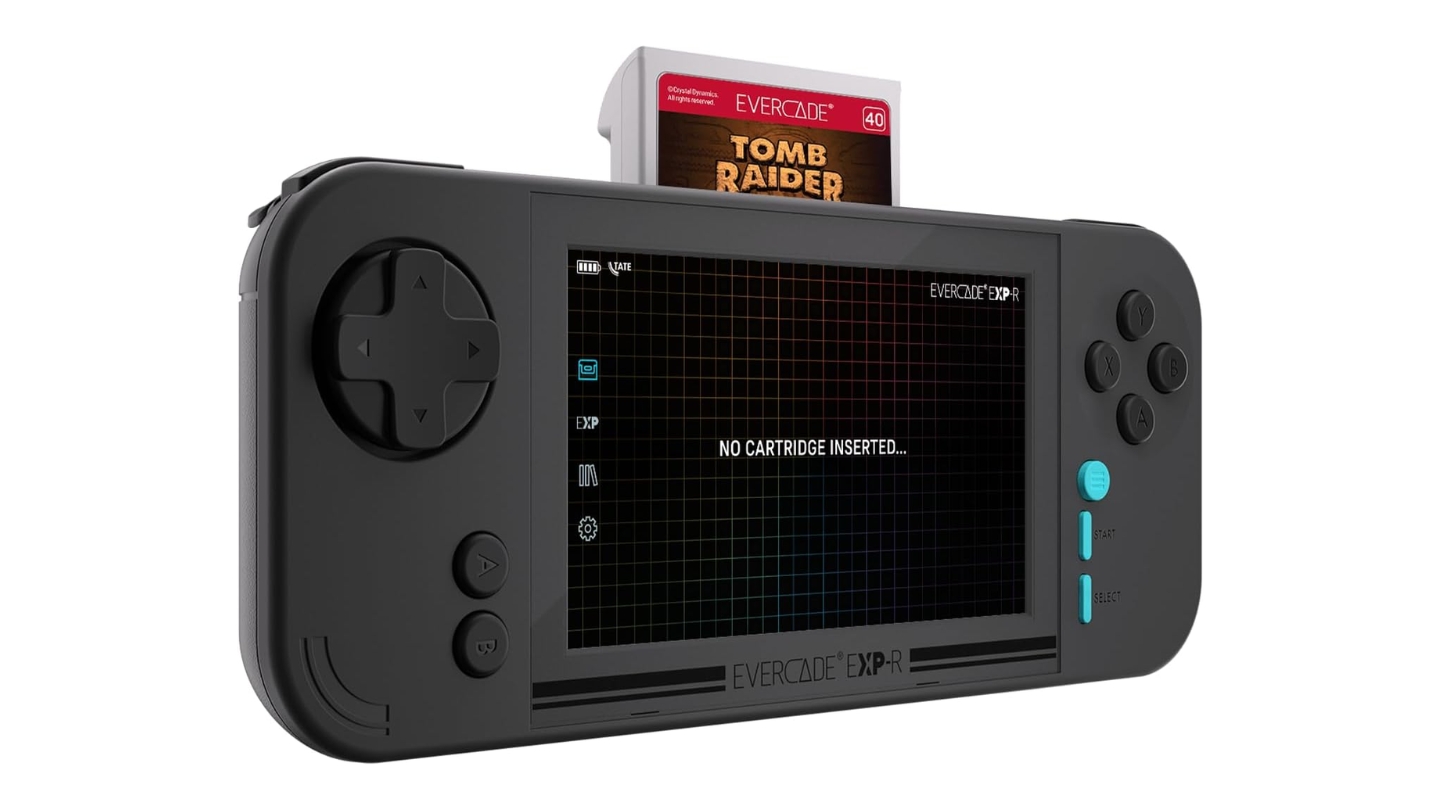
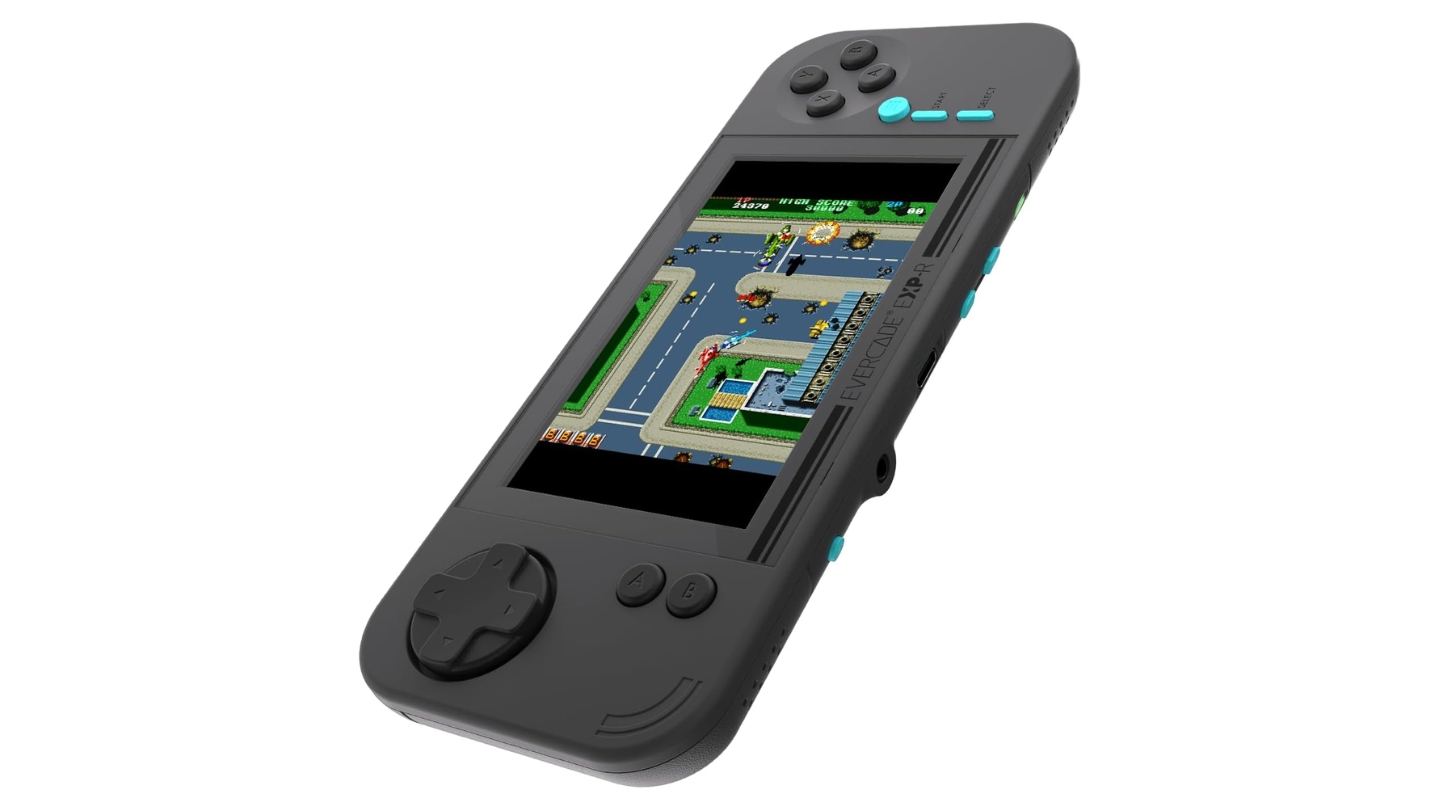
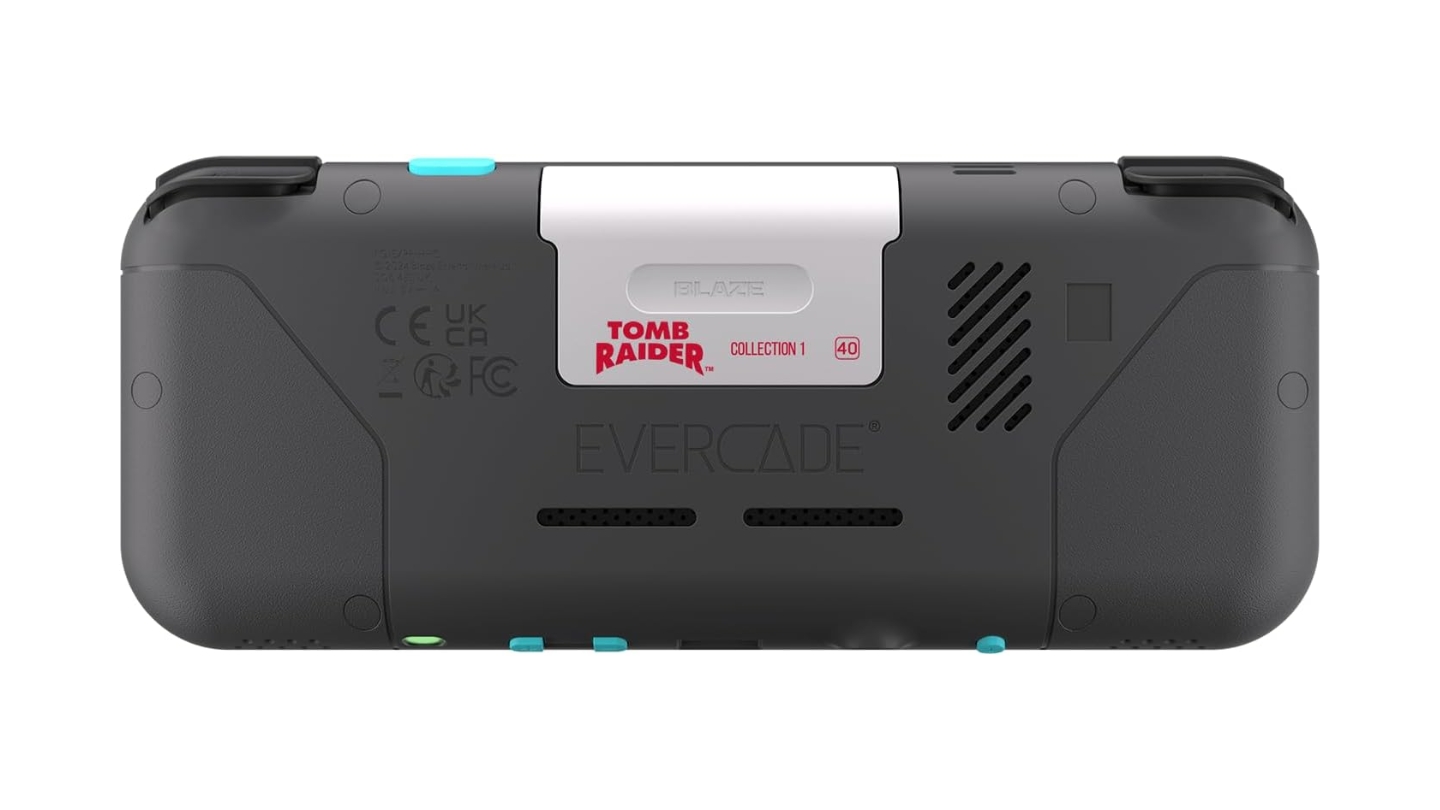
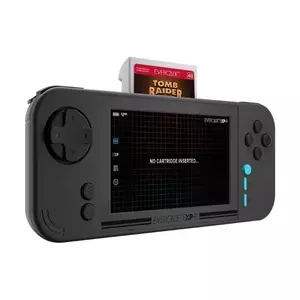
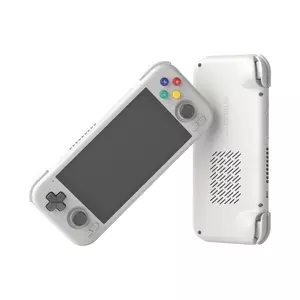
The Evercade EXP-R occupies a niche nothing else in this category touches: a modern handheld that runs exclusively on officially licensed physical cartridges. There's no ROM hunting, no microSD card prep, no firmware configuration - you insert a cartridge containing games from Atari, Namco, Capcom, Codemasters, Toaplan, or dozens of other publishers, and they run. The library has grown to over 600 games across more than 60 published collections, covering five decades of gaming history on real physical media that comes in boxes with printed manuals. I genuinely can't overstate how rare and refreshing that is in 2025.
The 4.3-inch IPS screen at 800x480 resolution looks excellent for retro content - sharper than most budget emulation devices and notably brighter than Evercade's previous generation. TATE mode remains the hardware's most unique feature: press the dedicated T button and the display rotates 90 degrees, letting you hold the unit vertically for classic arcade shooters like 1942, Toaplan's Truxton, and Centipede in their original vertical orientation. No other handheld in this roundup offers this. The EXP-R weighs just 251 grams, down from the 280-gram original, making it lighter than it looks.
Built-in Wi-Fi handles firmware updates cleanly, and the cartridge compatibility spans the entire Evercade catalog - every cart released since 2020 works on the EXP-R. The shoulder button layout gives you full modern controller inputs beyond what the original Evercade offered, covering Street Fighter's six-button requirements without awkwardness. Battery life lands at 4-5 hours depending on content, which is on the shorter side for the category but adequate for commute sessions. Notably, the EXP-R lacks HDMI output - if TV connectivity matters, the VS-R home console handles that half of the ecosystem.
My time with the EXP-R confirmed that the licensing model has real teeth. Blaze Entertainment continues adding publisher partnerships, and the cartridge collections represent genuine curation rather than ROM dumps - each collection comes with proper box art, game history, and manual pages that hold up as collectibles. The one clear limitation is the library ceiling: if your favorites aren't in Evercade's licensed catalog, they're simply unavailable here. SEGA support remains absent, which stings for Mega Drive fans.
Pros:
- Fully licensed physical cartridges with printed manuals
- Unique TATE mode for vertical arcade games
- 600+ games across 60+ collections
- No setup required - insert and play
- Lightweight (251g) with Wi-Fi for updates
Cons:
- No SEGA support in catalog
- 4-5 hour battery life (shorter than rivals)
Summary: The Evercade EXP-R is the only retro handheld that handles the physical game collecting experience properly, with licensed cartridges, printed manuals, and zero setup friction. Best for collectors who want legal retro gaming, arcade shooter fans who'll use TATE mode, and anyone who wants genuine plug-and-play without configuring firmware.
Retroid Pocket 4 Pro Review
Best Overall
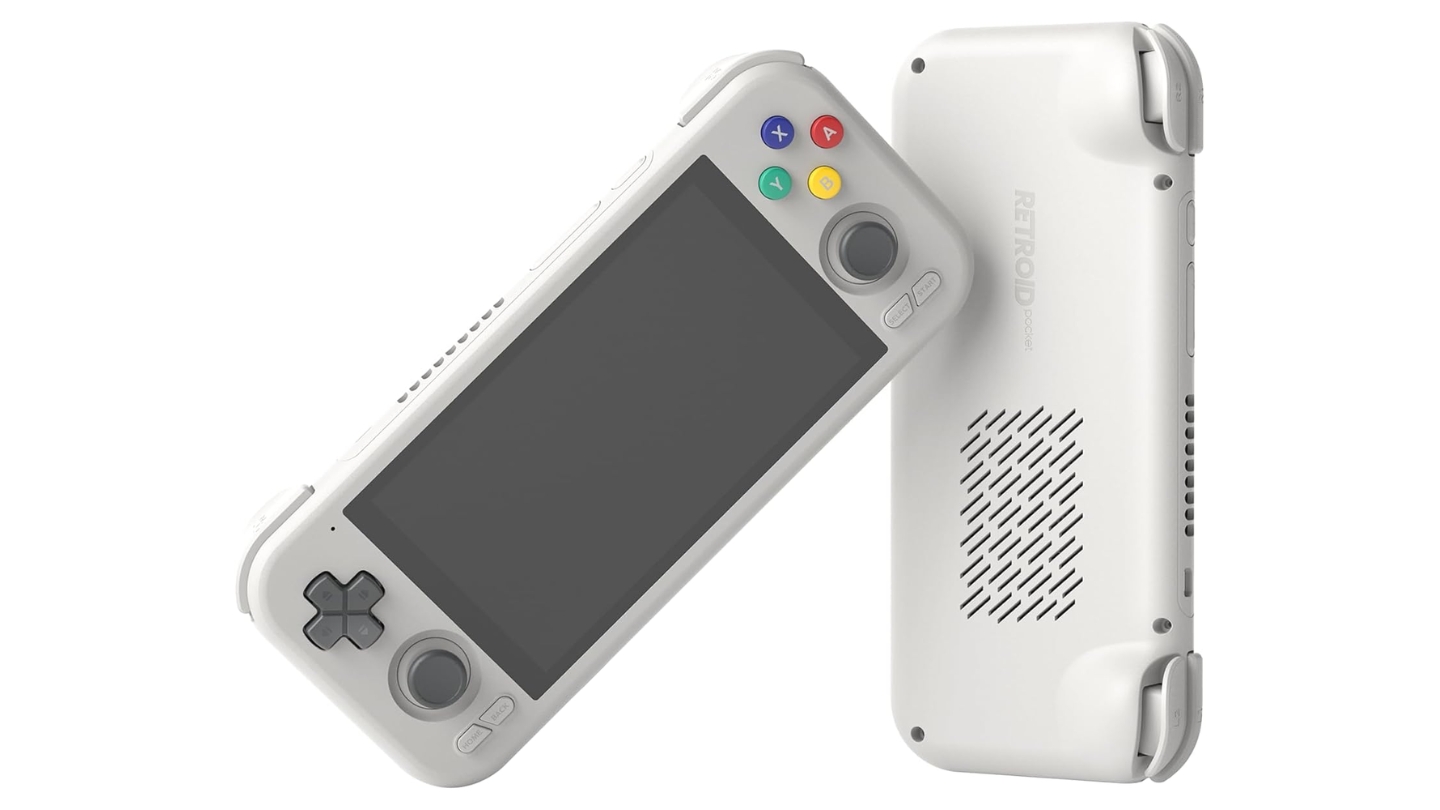
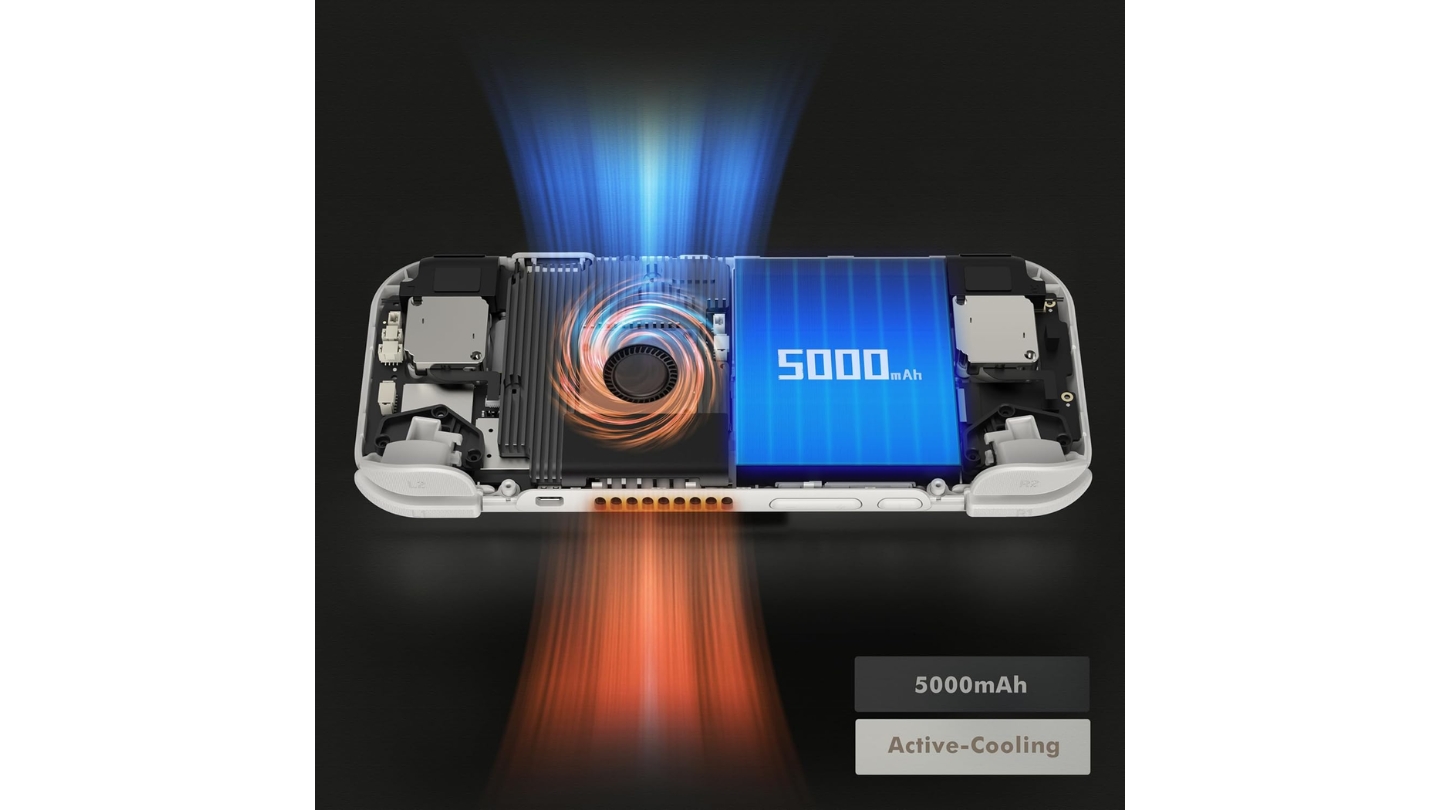
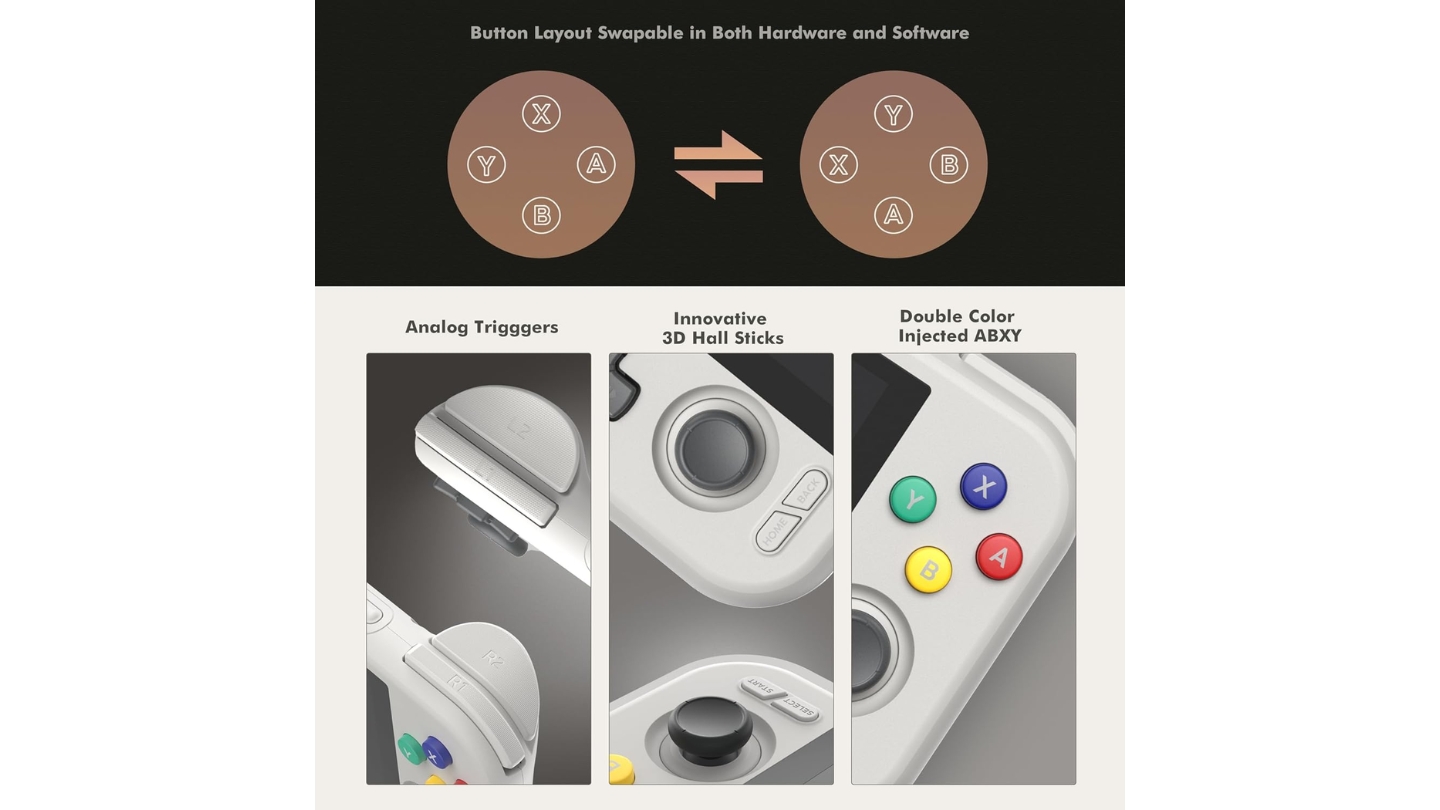
The Retroid Pocket 4 Pro runs on a MediaTek Dimensity 1100 processor with 8GB of RAM and Android 13 - hardware powerful enough to handle PlayStation 2 and GameCube at playable frame rates, which is the performance milestone that separates premium retro handhelds from everything below them. For context, most devices on this list top out around PS1. The RP4 Pro clears that bar and keeps going, making GameCube titles like Wind Waker and PS2 classics like Shadow of the Colossus genuinely portable for the first time at this price point.
The 4.7-inch IPS touchscreen at 750x1334 resolution looks vibrant with strong contrast and wide viewing angles. Hall Effect analog sticks eliminate the stick drift issues that plagued earlier Retroid hardware - the sticks feel tighter and more precise than anything in this price category, and the analog triggers on L2/R2 add texture over the previous digital versions. Wi-Fi 6 and Bluetooth 5.2 cover online streaming through Xbox Game Pass and GeForce Now when emulation isn't the target, and the micro HDMI port outputs to monitors and TVs at 1080p. Active cooling inside the chassis keeps performance stable during demanding PS2 sessions without throttling.
Android 13 with Retroid's custom launcher gives you access to the full Google Play Store alongside emulation apps, meaning you can run RetroArch, standalone emulators like AetherSX2, and Android-native games from the same device. The custom performance panel accessible mid-game lets you drop to a lower power mode when you're running Game Boy Color titles and don't need the Dimensity 1100 running at full speed. The 5000mAh battery sustains lighter retro content for 6-8 hours; intensive GameCube sessions cut that closer to 3-4 hours, which is worth knowing before extended travel.
After running the RP4 Pro through my usual benchmark of PS2 and GameCube titles, the performance headroom became clear - most games I tested ran at full speed without requiring aggressive overclocking or custom shader configurations. The one criticism I'd level is the bezels: for a device at this price, they're noticeable. The hardware is two years old at this point, and newer Retroid options with OLED screens exist, but the RP4 Pro's price cut makes it the better value proposition for most buyers who don't need cutting-edge display technology.
Pros:
- PS2 and GameCube emulation at playable speeds
- Hall Effect analog sticks
- Android 13 with full Play Store access
- Wi-Fi 6 and Bluetooth 5.2
- Micro HDMI output for TV gaming
Cons:
- Battery drains fast in high-performance mode
- Android setup takes more initial effort
Summary: The Retroid Pocket 4 Pro is the pick for anyone who needs genuine 6th-generation emulation in a pocket device, combining Dimensity 1100 processing power with Android's flexibility and Hall Effect sticks. Best for PS2/GameCube fans, Android gaming funs, and users who want streaming backup when emulation isn't the goal.
Anbernic RG35XX H Review
Best Mid-Range
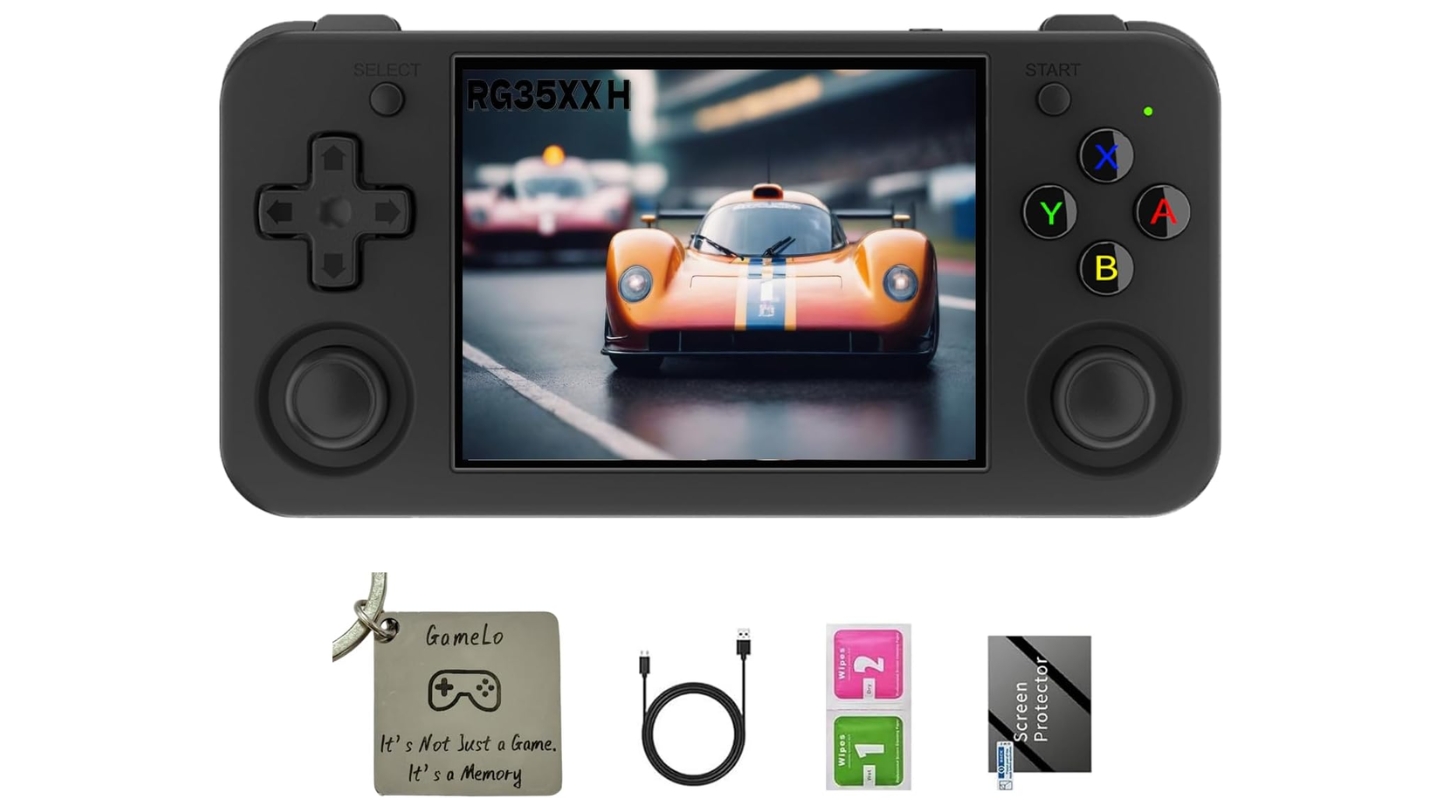
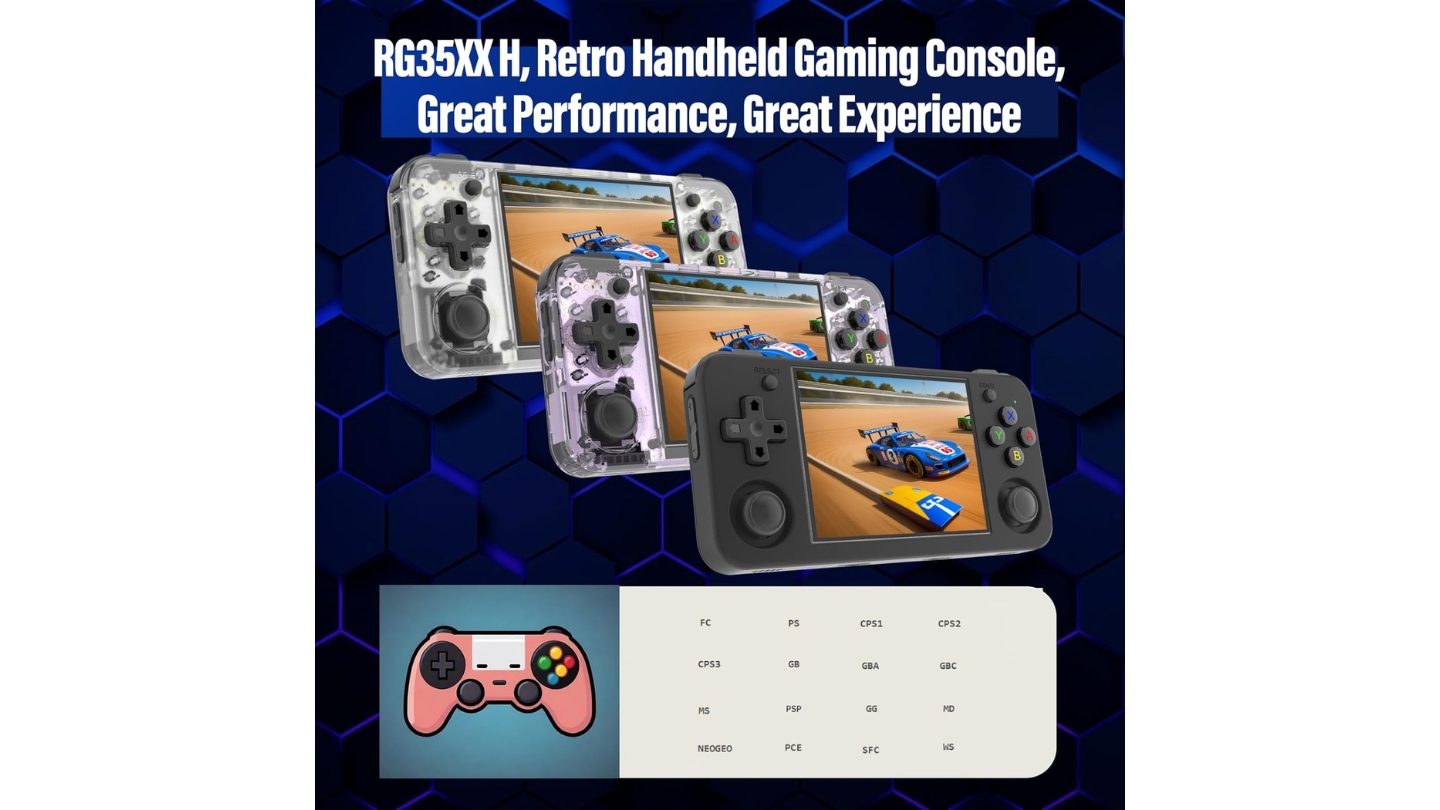
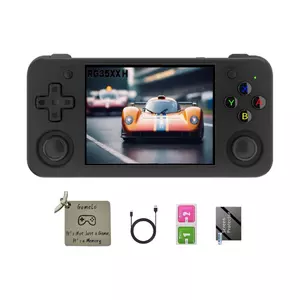
The Anbernic RG35XX H is the horizontal version of Anbernic's popular RG35XX line, and the addition of dual analog sticks changes the device's personality entirely. Every other RG35XX variant is a D-pad-only machine suited for 2D content; the H model covers that ground and extends into PS1 and N64 territory where thumb sticks matter. At around $52-68 depending on storage configuration, it sits in the most competitive part of the market and punches above its price consistently.
The 3.5-inch IPS panel at 640x480 uses OCA full lamination, which reduces internal reflections and improves perceived contrast versus non-laminated panels in the same price range. The 4:3 aspect ratio is correct for the systems this device targets - SNES, Game Boy Advance, Mega Drive, PS1 all scale cleanly without stretching artifacts. The H700 quad-core Cortex-A53 processor at 1.5GHz handles 8-bit and 16-bit systems without any hesitation, runs PS1 reliably, and covers Dreamcast and PSP with some settings tweaking. N64 performance improves dramatically by switching to the Rice GFX plugin in RetroArch's settings, which took me about two minutes to configure.
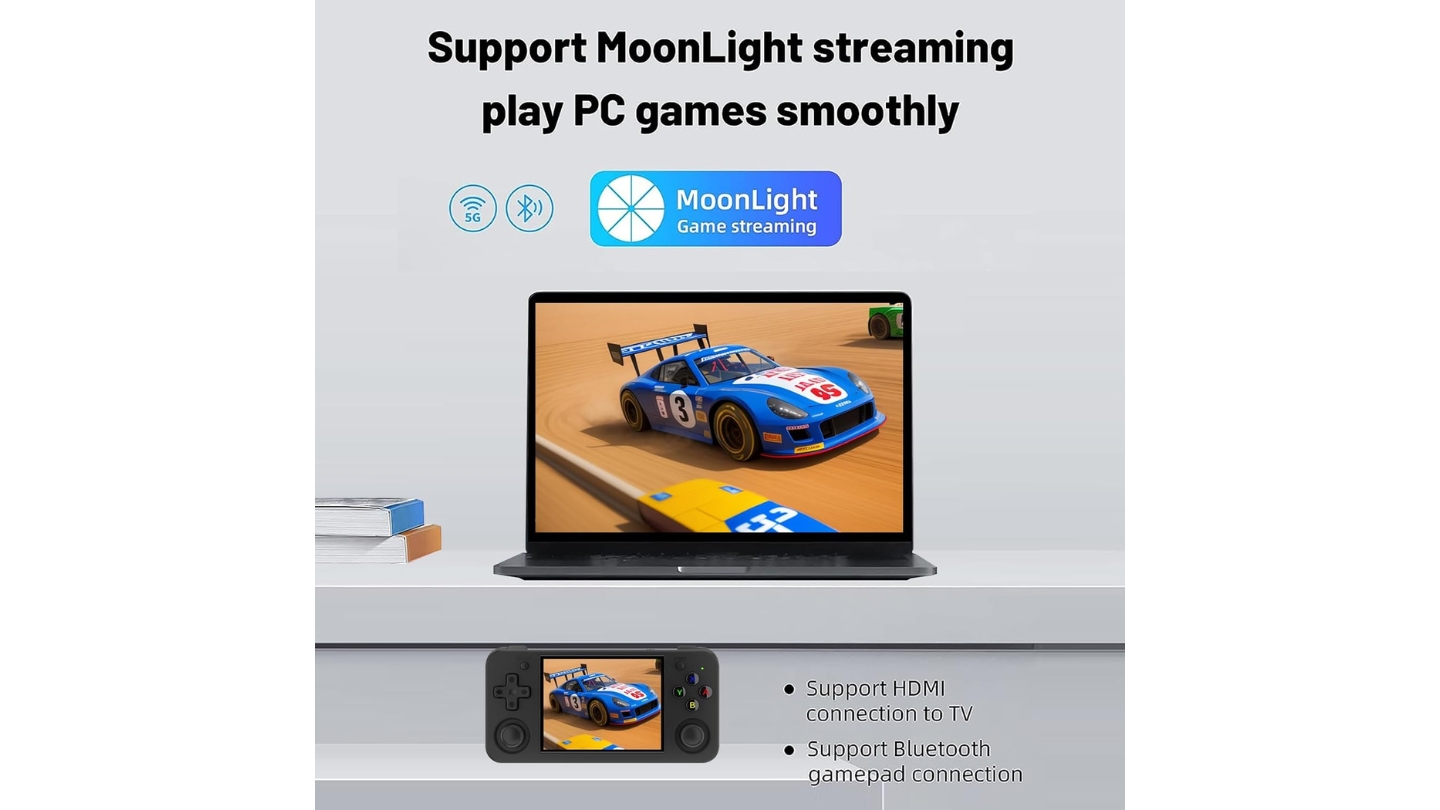
Mini HDMI output to a TV works cleanly for living room sessions - plugging this into a monitor and adding a Bluetooth controller turns it into a functional couch console for classic games. The 3300mAh battery runs around 6-8 hours on typical 16-bit content, which beats most devices in this class. Dual TF card slots let you keep the system card separate from your game storage, a practical organization detail that budget competitors often overlook. Linux base means custom firmware support is strong - the community has produced multiple alternative OS builds that improve emulation accuracy and add quality-of-life features the stock interface lacks.
The one thing that frustrated me during my time with the RG35XX H was Anbernic's "Game Rooms" interface - it causes performance stutters that don't reflect actual hardware capability. Switching to RA Game mode immediately resolves this, but it's the kind of thing Anbernic should have fixed before shipping. Custom firmware from the community cleans this up entirely. At 180 grams and 14.5 cm wide, it's genuinely portable without being cramped in-hand.
Pros:
- Only RG35XX model with analog sticks
- OCA laminated 3.5" IPS screen
- 6-8 hour battery life
- Mini HDMI output
- Strong custom firmware community
Cons:
- Stock "Game Rooms" UI causes stuttering
- N64 needs manual settings tweaks
- 1GB RAM limits multitasking
Summary: The Anbernic RG35XX H delivers the best balance of price, form factor, and performance for buyers who want analog sticks without jumping to Android pricing. Best for 8-bit through PS1/Dreamcast gaming, HDMI TV output, and first-time retro handheld buyers who want room to grow.
Miyoo Mini Plus Review
Best for Portability
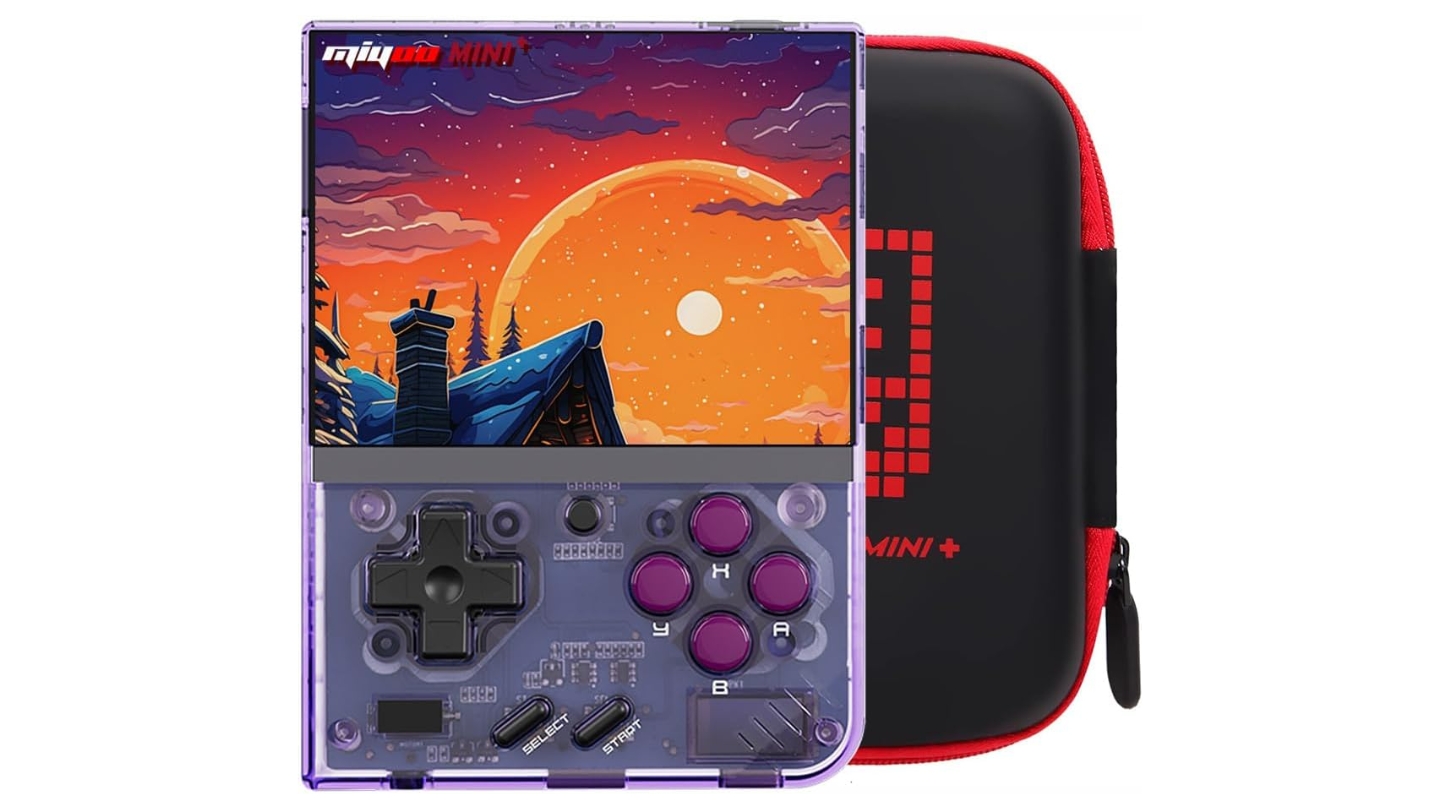
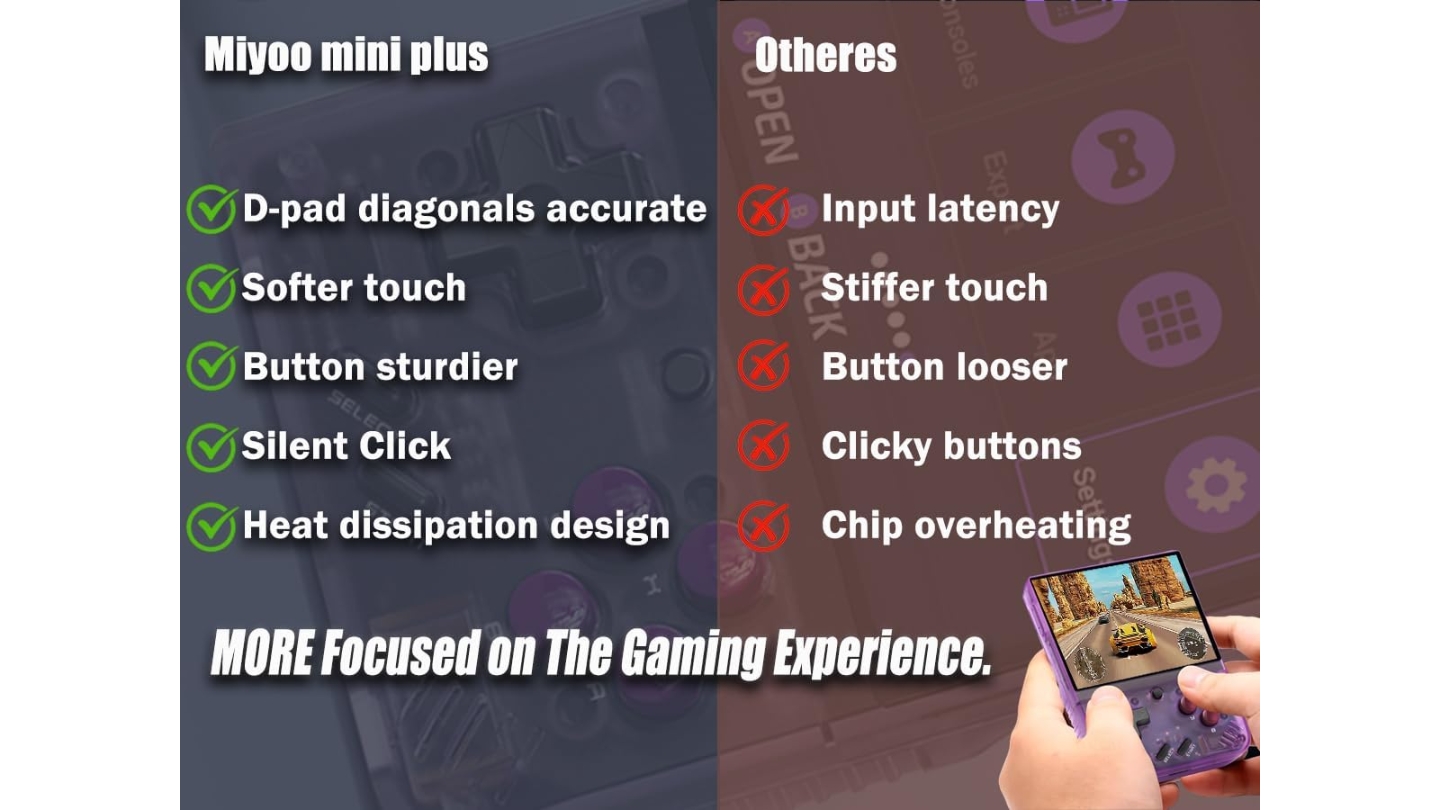
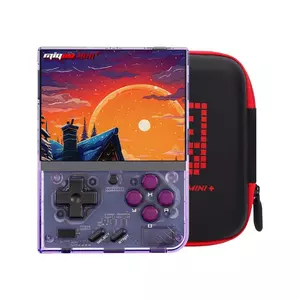
The Miyoo Mini Plus is about 70 percent of what makes retro gaming great, packed into something that fits in any pocket you own. At 162 grams and 135mm x 60mm, it's genuinely pocket-sized in a way that most handhelds only claim to be. I've carried mine in a jeans pocket for day trips without thinking about it, and that kind of friction-free portability changes how often you actually play.
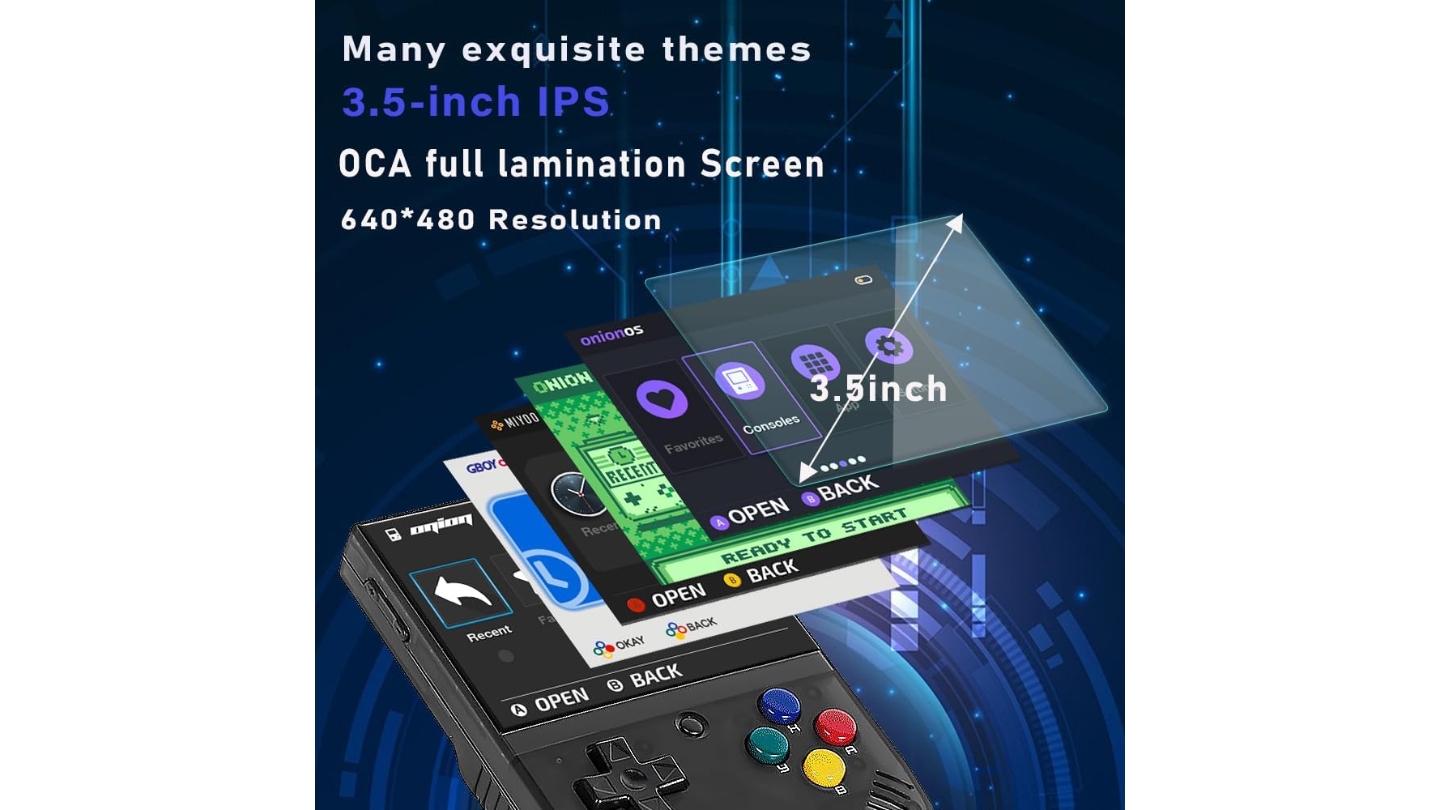
The 3.5-inch IPS screen at 640x480 maintains excellent color accuracy - reviews comparing it favorably to the Analogue Pocket's display aren't wrong about the quality, even if the comparison is a stretch on price. Game Boy Advance titles in particular look close to perfect on this screen size and aspect ratio. The ARM Cortex-A7 processor with 128MB RAM handles everything through the 16-bit era without any slowdown, and most PS1 games run correctly with a few exceptions in the more demanding 3D titles. Gran Turismo 2 shows occasional frame drops; Final Fantasy VII and Castlevania: Symphony of the Night run clean.
OnionOS custom firmware transforms the experience beyond what the stock OS provides - battery optimization improves from roughly 4 hours to 6-7 hours, RetroAchievements integration adds a tracking layer for classic games, Nintendo DS support opens via DeSmuME, and the interface becomes genuinely pleasant to navigate. Installing OnionOS takes about 20 minutes and requires basic SD card preparation; the community documentation is thorough enough that this is accessible to anyone. The 3000mAh battery on OnionOS sustains a full day of SNES gaming at medium brightness.
The ergonomics work for short sessions and adapt with time for longer ones, though anyone with larger hands will notice the compact size during 2-hour stretches. A third-party grip case for around $12 solves this entirely. No analog sticks means PS1 games with 3D navigation work through the D-pad only, which is fine for fixed-camera games and awkward for free-roam titles. That's a deliberate constraint for a device this small, and it accurately reflects who the Mini Plus is designed for.
Pros:
- Genuinely pocket-sized (162g)
- Excellent IPS screen for 16-bit content
- OnionOS dramatically improves experience
- 6-7 hour battery with custom firmware
- Strong active community
Cons:
- No analog sticks
- Stock firmware underwhelming
- Performance ceiling at PS1 era
Summary: The Miyoo Mini Plus wins on portability and value for anyone whose retro gaming ends at the PS1 era, particularly buyers focused on 8-bit and 16-bit content. Best for commuters, casual retro players, and Game Boy / SNES-era enthusiasts who want something genuinely pocketable.
Powkiddy V90S Review
Budget Pick
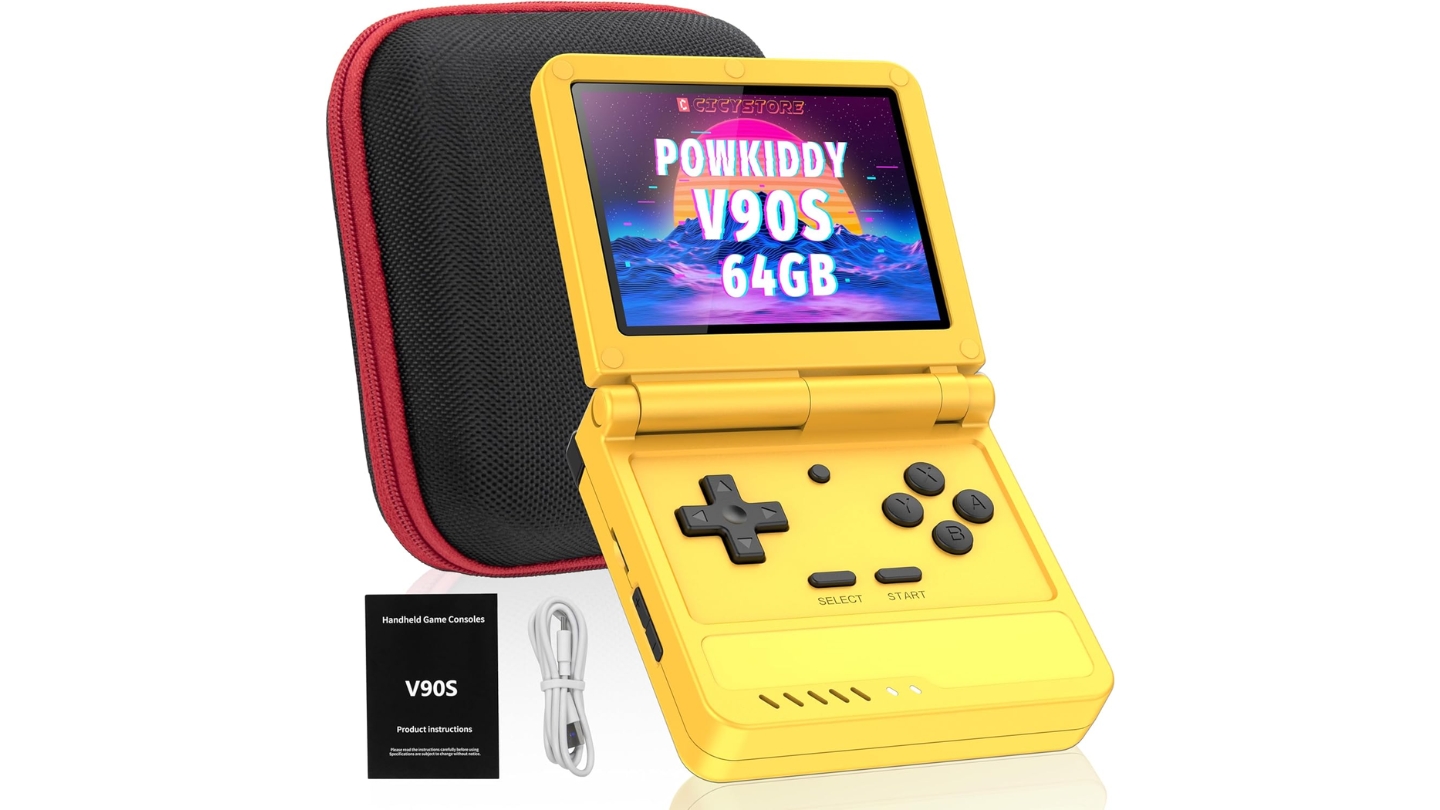
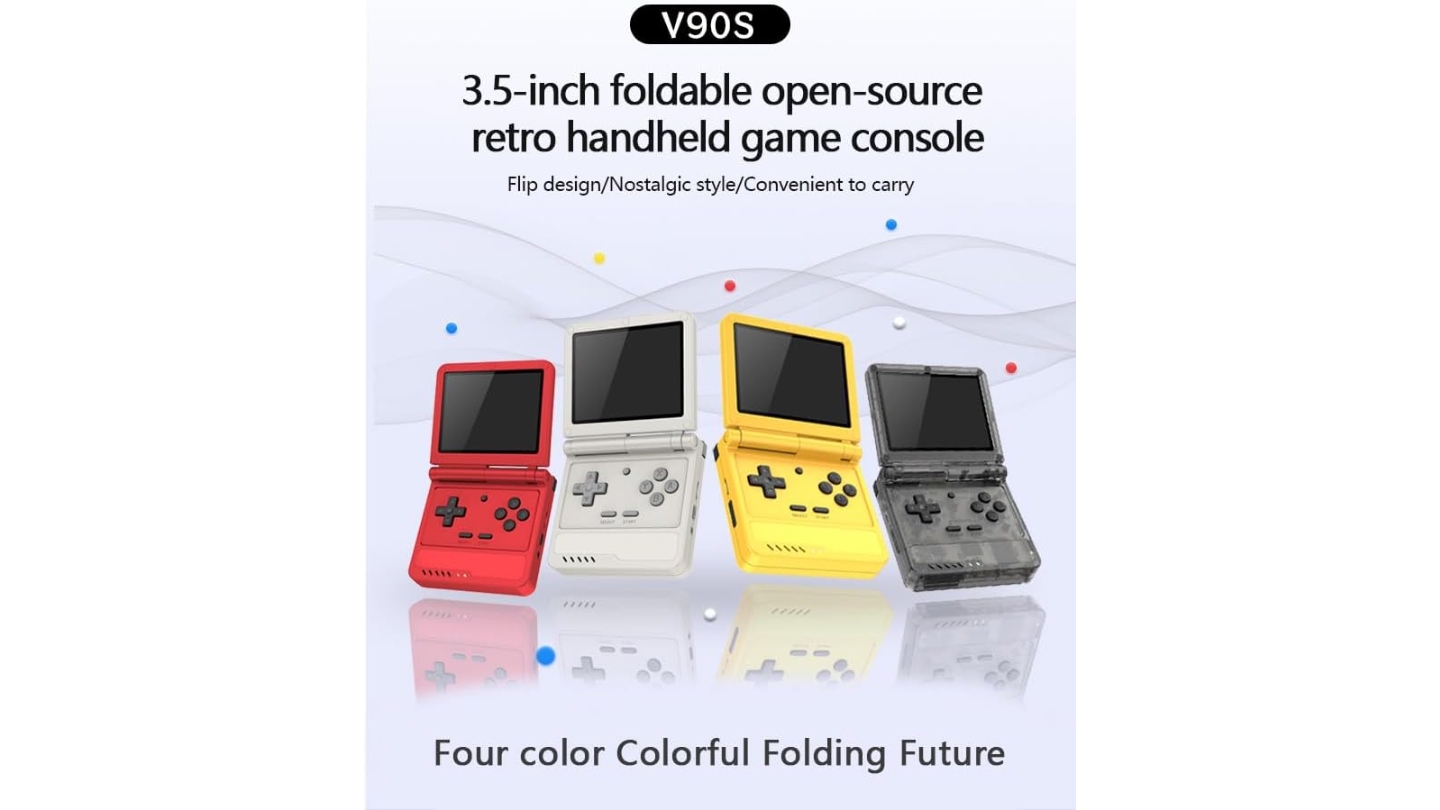
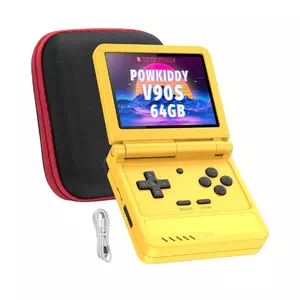
The Powkiddy V90S arrived in 2025 as the spiritual successor to the original V90, resurrecting the GBA SP-inspired clamshell form factor with a dramatically upgraded chip and screen. The clamshell design is the headline feature: folded shut, the V90S measures just 8.9 x 8.5 cm and slips into any pocket without catching on anything. The dual-hinge construction protects the screen automatically, meaning no screen protectors or cases required in daily carry.
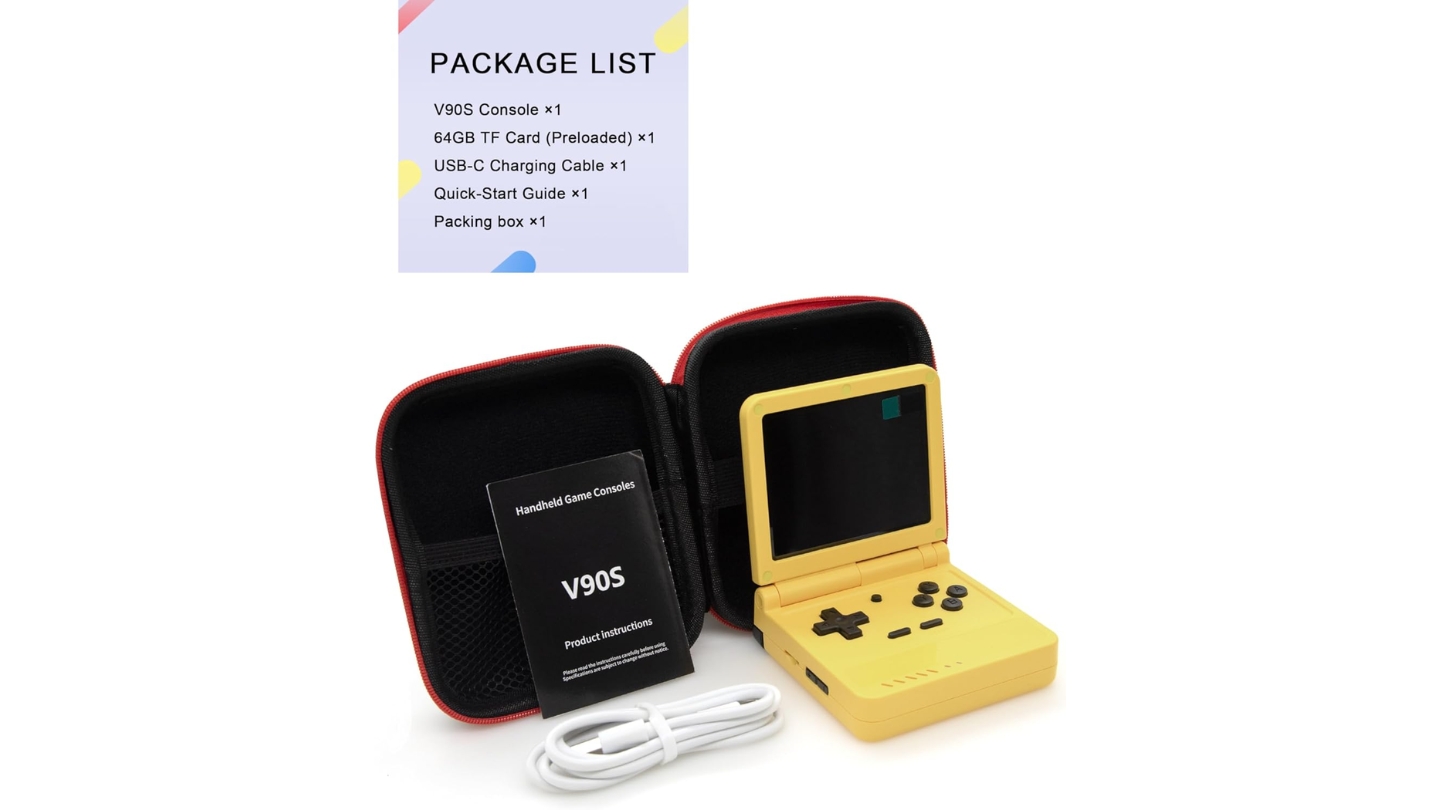
Allwinner A133P handles the emulation duties - the same chip found in TrimUI handhelds - with 1GB DDR3 RAM supporting everything through the PS1 era reliably. The 3.5-inch IPS panel at 640x480 looks clean and bright, with colors that don't oversaturate and pixel clarity that suits classic content well. Batocera Linux comes pre-configured out of the box with bezels for each system and games loaded on the included 64GB TF card, giving immediate playability without any setup. The second TF card slot accepts up to 256GB of additional storage for expanded ROM libraries.
The controls carry over from other Powkiddy devices and feel light and responsive - clicky shoulder buttons reminiscent of the original GBA SP are the most distinctive tactile element. Battery life runs 4-6 hours depending on content, with NES hitting the longer end and PSP content pushing the shorter end. The biggest limitation is the absence of Wi-Fi and Bluetooth, which means no wireless controllers, no network play, and no firmware updates over the air. A USB dongle restores wireless functionality, but it's an annoying workaround for a 2026 device. Community firmware work is ongoing, with PlumOS and ArkOS builds adding features the stock OS lacks.
After a week with the V90S, the clamshell form factor earned its place in my rotation for one specific scenario: transit use. The automatic screen protection, folded pocketability, and instant boot make it genuinely frictionless to pull out on a subway for 10 minutes and put back without thinking. N64 and PSP push its limits noticeably, so buyers should treat PS1 as the realistic performance ceiling for smooth play.
Pros:
- GBA SP clamshell protects screen automatically
- Pre-configured Batocera with games included
- Dual TF card slots
- Ultra-compact folded dimensions
- Light and comfortable to hold
Cons:
- No built-in Wi-Fi or Bluetooth
- No analog sticks
- PSP and N64 performance limited
- Community firmware still maturing
Summary: The Powkiddy V90S is the right choice for budget buyers who specifically want a clamshell form factor and won't miss Wi-Fi connectivity. Best for transit gaming, 8-bit through PS1 content, and anyone who wants a GBA SP form factor with a modern chip and no screen protection fuss.
Retro Gaming Handhelds: Your Questions Answered
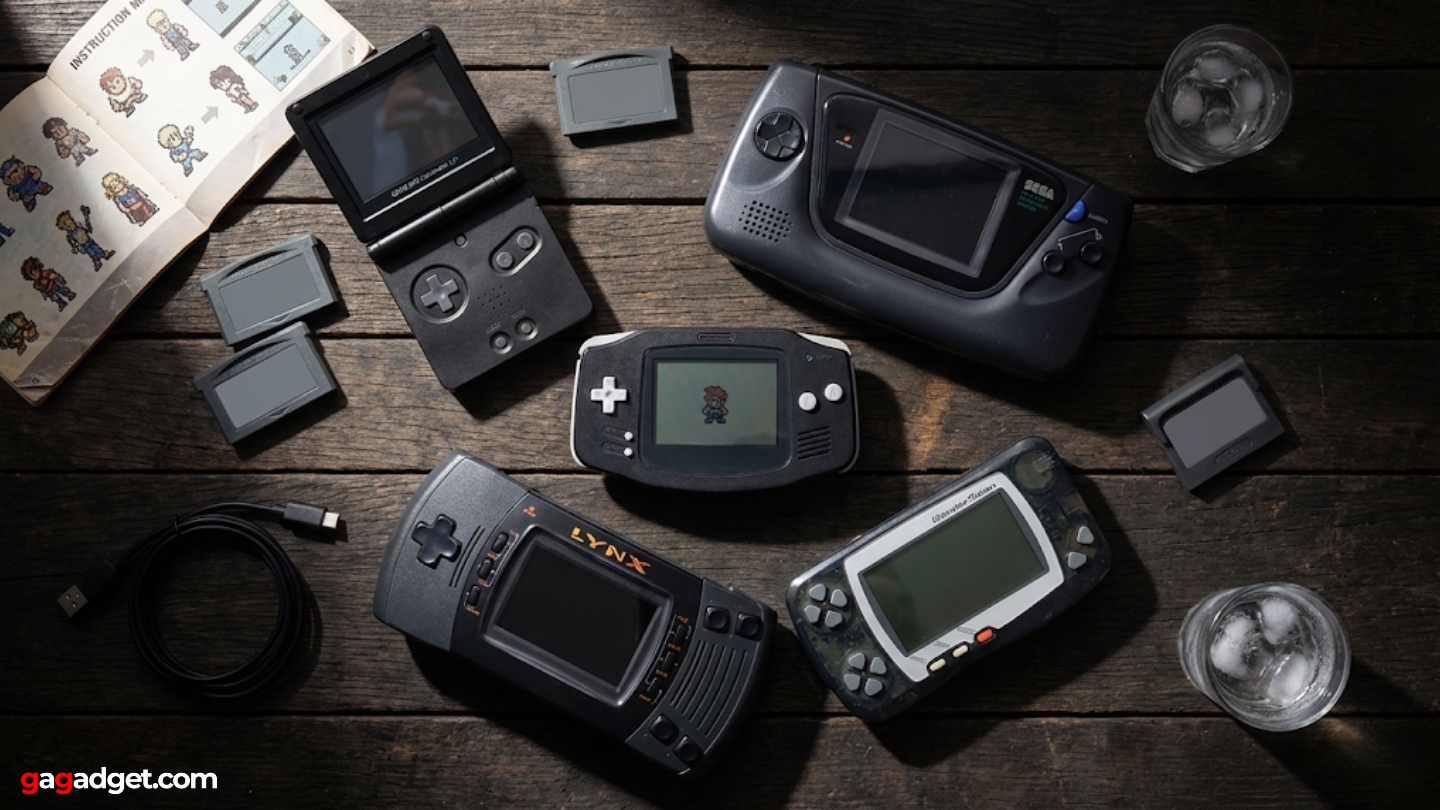
After testing these devices across different gaming scenarios and fielding questions from readers going through the same decision, the same topics keep surfacing.
What's the best retro handheld for beginners?
The Miyoo Mini Plus with OnionOS installed is the most accessible starting point for most buyers. Setup takes about 20 minutes and the community documentation walks you through it step by step. Once configured, the device behaves like a polished Game Boy replacement that covers everything through the PS1 era. If setup sounds like too much, the Evercade EXP-R offers fully zero-configuration retro gaming through licensed physical cartridges - insert and play, no preparation needed. The tradeoff is a more limited and more expensive game library.
Is the Retroid Pocket 4 Pro worth the higher cost for retro gaming?
It depends entirely on whether PS2 and GameCube are in your target library. For the 16-bit era and PS1, paying for the Retroid Pocket 4 Pro's processing power is unnecessary - a $79 Miyoo Mini Plus runs SNES just as well. The RP4 Pro earns its position when GameCube, PS2, Dreamcast, and Nintendo DS all matter, because it handles that generation reliably and the Anbernic and Miyoo devices don't. The Android foundation also adds streaming services and Android gaming as a genuine bonus layer that the Linux-based devices can't match.
Do I need a custom firmware like OnionOS or ArkOS?
On the Miyoo Mini Plus, OnionOS is essentially mandatory - the stock firmware is functional but limited, and OnionOS adds battery optimization, better emulator cores, RetroAchievements support, and Nintendo DS compatibility that changes the device's value substantially. On the Anbernic RG35XX H, custom firmware resolves the stock "Game Rooms" stuttering issue and improves N64 accuracy, though the stock RA Game mode is already usable. The Evercade EXP-R and Retroid Pocket 4 Pro don't require community firmware - Evercade handles everything through official updates, and Android's ecosystem covers the RP4 Pro's needs natively.
Can retro handhelds connect to a TV?
Several can, with some caveats. The Retroid Pocket 4 Pro includes a micro HDMI port that outputs 1080p to any monitor or TV cleanly. The Anbernic RG35XX H has a mini HDMI port that works the same way. The Powkiddy V90S supports HDMI via adapter. The Miyoo Mini Plus has no video output at all. The Evercade EXP-R removed the HDMI port that its predecessor had - TV gaming in the Evercade ecosystem requires the separate VS-R home console. For couch retro gaming, the Retroid Pocket 4 Pro's HDMI output plus Bluetooth controller support makes the strongest full-room setup.
What's the actual battery life on these devices?
Manufacturer estimates run optimistic, so real-world figures matter more. The Anbernic RG35XX H consistently delivers 6-8 hours on 16-bit content, making it the strongest performer in this regard. The Miyoo Mini Plus on OnionOS runs 6-7 hours for SNES and drops to around 5 hours for PS1. The Powkiddy V90S hits 4-6 hours. The Evercade EXP-R rates at 4-5 hours, which feels accurate in practice. The Retroid Pocket 4 Pro's 5000mAh battery lasts 6-8 hours on lighter content but falls to 3-4 hours running GameCube and PS2 emulation, because the Dimensity 1100 burns through power under load. Keeping Wi-Fi off on all devices adds meaningful battery time.
Finding the Right Retro Handheld for You
The retro handheld market landed somewhere unexpected: five distinct devices serving genuinely different needs, none of them obviously redundant. The days of one device doing everything adequately are over - now the question is which slice of retro gaming history you're chasing.
The Evercade EXP-R wins for anyone who wants the physical game collecting experience without configuration headaches - it's the only device here that treats retro games as real products rather than files. The Retroid Pocket 4 Pro is the clear choice for PS2 and GameCube performance, with Android flexibility that no Linux device matches. For mid-range buyers who want analog sticks and HDMI without Android complexity, the Anbernic RG35XX H is the straightforward pick. The Miyoo Mini Plus remains unmatched for pure pocket portability and value in the 8-16-bit era. And the Powkiddy V90S earns its spot for anyone who specifically needs that clamshell form factor at minimum cost.
None of these are wrong choices for the right buyer. Figure out which era you're actually chasing and how much setup you're willing to do, and one of these will feel exactly right.

Jeb here, your go-to geek for everything from video projection to the latest tech trends. As an avid outdoorsman, I enjoy using monoculars and binoculars for hunting, traveling, and birdwatching. Join me in exploring the cool, quirky side of technology!


