Best Fitness Trackers for Runners
Three years of half-marathons taught me more about fitness trackers than any spec sheet ever could. I've gone through the whole cycle - buying cheap, regretting it mid-training block, upgrading, then discovering that the most expensive option isn't always the right one for how I actually run. What a tracker shows you at mile six changes your relationship with pace, effort, and recovery in ways that are genuinely hard to explain until you've felt it.
For this roundup, I wore five bands across road runs, trail outings, and track sessions - testing everything from a screenless recovery coach to budget bands that punch well above their weight. The benchmark was simple: does this thing help you run smarter, or does it just count your steps?
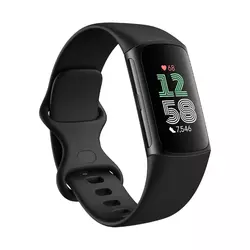
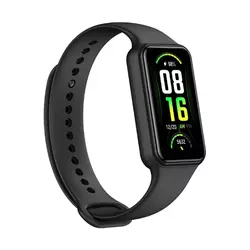
Short on time? Here are my top two picks for fitness trackers for runners:
We may earn a small commission if you buy via our links - it helps keep gagadget.com running.
Table of Contents:
- Best Fitness Trackers for Runners: Buying Guide
- Top 5 Fitness Trackers for Runners in 2026
- Fitness Tracker Comparison
- Fitbit Charge 6
- Amazfit Band 7
- Xiaomi Smart Band 10
- Samsung Galaxy Fit 3
- WHOOP 5.0
- Fitness Tracker FAQ
Best Fitness Trackers for Runners: Buying Guide
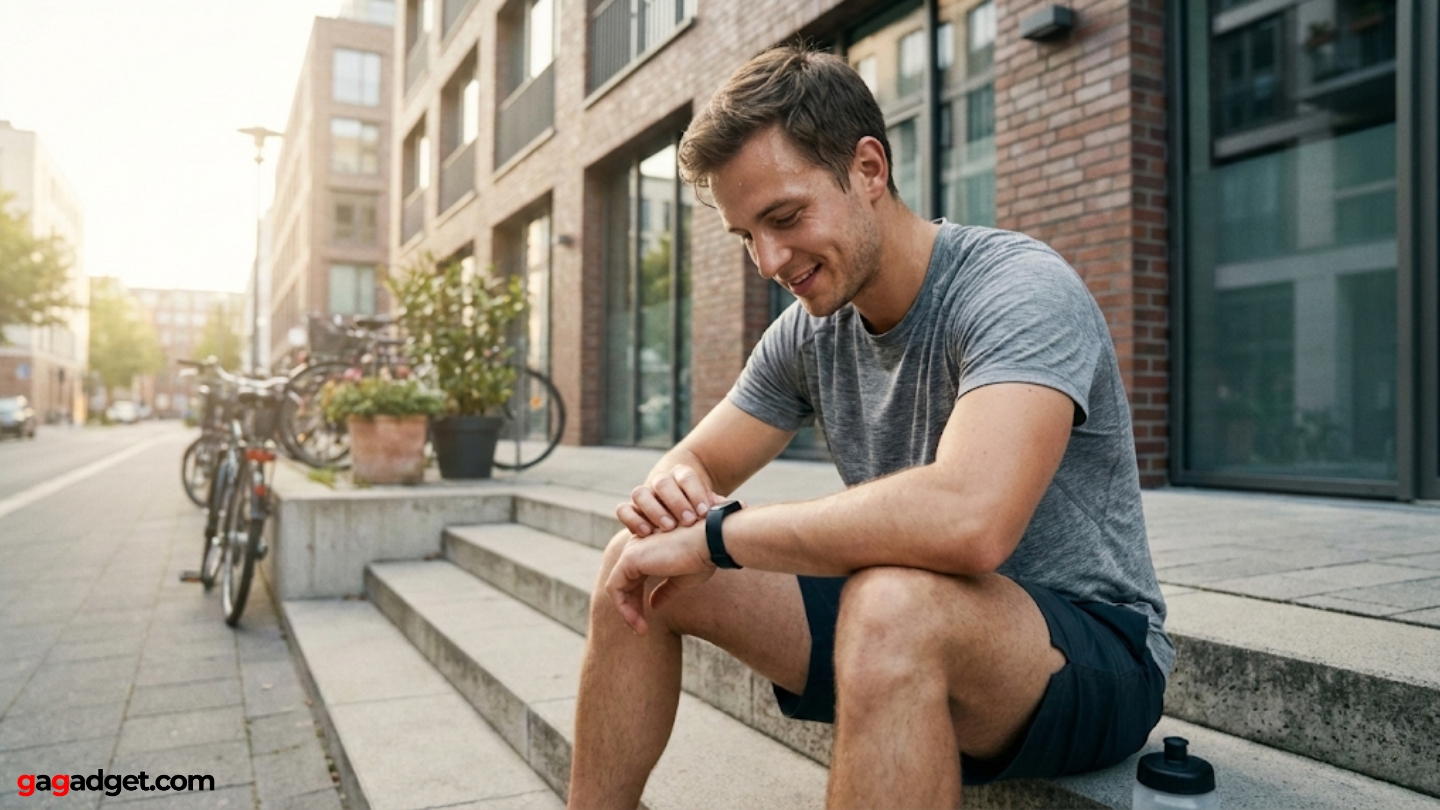
A running-focused tracker needs to do more than record laps. The metrics that actually shape training - heart rate zone accuracy, GPS reliability on wooded routes, recovery data between hard efforts - separate useful tools from expensive pedometers. Understanding what each spec actually does during a run makes the choice considerably less confusing.
Heart Rate Accuracy on the Move
Wrist-based optical heart rate sensors work by flashing light into your skin and measuring how blood absorbs it. At rest, this works reliably. During a run, arm swing, sweat, and band movement introduce noise that cheaper sensors struggle to filter out. The result is a reading that lags reality by 15-30 seconds - enough to miss the peak of an interval or miss a heart rate zone entirely. Better sensors use more LEDs arranged in wider patterns, combined with motion-canceling algorithms that subtract wrist movement from the signal. Trackers aimed at runners typically specify their sensor generation. Third-party review sites like DC Rainmaker and TechGearLab publish accuracy test data worth checking before buying.
Wearing a band too loosely to improve GPS signal - a documented issue on some trackers - creates a direct trade-off with heart rate accuracy. If a product review mentions this tension, take it seriously before buying for running use.
Heart rate zone training requires more than a live number. You need the tracker to correctly assign zones based on your personal max heart rate, not an age-formula estimate. Most apps let you set a custom max. Five-zone systems give more precision than three-zone models - the difference between zone 2 aerobic work and zone 3 tempo running matters considerably for endurance development. Runners training by feel who just want a sanity check on effort can tolerate a wider accuracy margin than anyone doing structured interval work.
GPS: Built-In vs. Connected
Budget trackers frequently skip a built-in GPS chip to reduce cost and extend battery life, relying instead on your phone's location signal via Bluetooth. Phone-tethered GPS works well enough when your device is tucked into a running vest or arm holster - distance accuracy tends to land within a few percent of actual measured courses. The downside is that leaving your phone at home means no route map and distance estimates calculated by step count and stride length instead, which drift further as a run progresses.
Built-in GPS - even basic single-constellation models - produces more consistent distance results and records route maps you can review afterward. Multi-constellation receivers (GPS + GLONASS, or adding Galileo and BeiDou) improve signal lock in dense urban environments, under tree canopy, and between tall buildings. For trail runners specifically, this makes a measurable difference in accuracy. Lock-on speed varies by hardware quality: some trackers establish a satellite fix in under ten seconds, others require a 30-60 second wait at the start of a run. Either way, starting a workout before GPS locks produces unreliable early distance data.
Recovery Metrics and Training Load
The most useful thing a running tracker can do is tell you when not to run hard. Recovery metrics aggregate heart rate variability (HRV), resting heart rate trends, sleep quality, and previous session strain to estimate how ready your body is for another training load. HRV in particular reflects the balance between sympathetic and parasympathetic nervous activity - a low reading after adequate sleep suggests accumulated fatigue that a subjective energy rating would often miss.
Recovery scoring requires several days of baseline data before the scores become personally meaningful. A tracker that shows a green recovery score on day one is estimating from population averages - your individual baseline takes at least a week to establish properly.
Training load metrics - typically expressed as weekly volume versus a rolling average - flag when you're building too fast before the body can adapt. For runners training for a first half-marathon or returning from time off, this guidance catches overreach before it becomes injury. Trackers without recovery features still provide cumulative session data, but the burden of interpreting what yesterday's long run means for today's workout falls entirely on the runner rather than the device.
Battery Life and Daily Wearability
Running trackers earn their value between runs as well as during them. Sleep tracking, 24-hour heart rate monitoring, and stress data all require the band to stay on continuously. A tracker that needs charging every two days creates gaps in overnight data that undermine recovery scoring. Bands in this comparison range from 7 days to 21 days of typical use - a meaningful difference for anyone who forgets to charge on a specific schedule or wants to track multi-day events without access to power.
Weight and profile matter for actual running comfort. A band that shifts during an arm swing or sits high enough to catch sleeve fabric becomes a distraction by mile three. Most fitness bands in the sub-tracker category weigh under 30 grams with the strap included - light enough that they genuinely disappear during a run. Silicone straps handle sweat better than fabric alternatives for running, though they trap heat during warm weather. Waterproofing rated at 5 ATM covers swimming and rain. Anything you'd encounter on a run is well within range for every tracker on this list.
Top 5 Fitness Trackers for Runners in 2026
I ran with each of these across road sessions, a local trail loop with variable tree cover, and treadmill intervals - comparing heart rate data against a chest strap and GPS data against a Garmin set as the reference. Here's what separates them on a run.
- Only built-in GPS in this comparison
- ECG + AFib monitoring included
- Google Maps navigation on the wrist
- Clean, well-organized companion app
- Daily Readiness Score (with Premium)
- Large display at a budget price
- 18-day battery life
- PAI system simplifies training load
- 120+ sport modes and Alexa built-in
- No subscription needed
- 10 on-device guided running courses
- Best heart rate accuracy at this price tier
- Largest, brightest display (1,500 nits)
- 21-day battery (10 days with full features on)
- Real-time pace targeting on wrist
- Barometer for elevation tracking without GPS
- Ambient light sensor for automatic brightness
- Excellent step count accuracy
- 13-day battery life
- Deep Samsung Health ecosystem integration
- Best recovery and strain coaching of any tracker here
- 14-day battery life (upgraded from 4.0)
- 24/7 HRV, resting HR, and sleep monitoring
- Healthspan + VO2 Max trend tracking (Peak tier)
- Screenless design removes in-run distraction
Fitness Tracker Comparison
The specs that actually matter when you lace up:
| Specification | Fitbit Charge 6 | Amazfit Band 7 | Xiaomi Band 10 | Samsung Galaxy Fit 3 | WHOOP 5.0 |
| Display | 1.04" AMOLED | 1.47" AMOLED | 1.72" AMOLED | 1.6" AMOLED | None (screenless) |
| GPS | Built-in (GPS + GLONASS) | Connected (phone only) | Connected (phone only) | Connected (phone only) | Connected (phone only) |
| Battery Life | Up to 7 days | Up to 18 days | Up to 21 days | Up to 13 days | Up to 14 days |
| Heart Rate Monitor | Optical (ECG + AFib) | BioTracker 3.0 PPG | PPG optical | Optical (HR sensor) | Optical (5 LEDs + ECG on MG) |
| HRV Tracking | Yes | No | No | Yes | Yes (core feature) |
| Recovery Score | Daily Readiness (Premium) | PAI Score | Vitality Score | Energy Score | Daily Recovery (0-100) |
| SpO2 | Yes (sleep) | Yes | Yes | Yes (sleep) | Yes (continuous) |
| Sleep Tracking | Yes (stages + Sleep Score) | Yes (stages) | Yes (stages + guidance) | Yes (stages) | Yes (deep detail, central feature) |
| Sport Modes | 40+ | 120+ | 150+ | 100+ | Automatic detection |
| Running Cadence | No | No | No | Yes (estimated) | Yes |
| Guided Running Plans | No | No | Yes (10 on-device courses) | No | AI Strain Coach |
| Water Resistance | 50m / 5 ATM | 50m / 5 ATM | 50m / 5 ATM | 50m / 5 ATM | IP68 / swim-proof |
| Subscription Required | Optional (Fitbit Premium) | No | No | No | Yes (mandatory) |
| Platform Compatibility | iOS + Android | iOS + Android | iOS + Android | Android only | iOS + Android |
| Screen-free Option | No | No | No | No | Yes (screenless by design) |
Built-in GPS is the single biggest hardware divide. Everything else narrows with budget - recovery depth and subscription models define the upper end.
Fitbit Charge 6 Review
Editors Choice
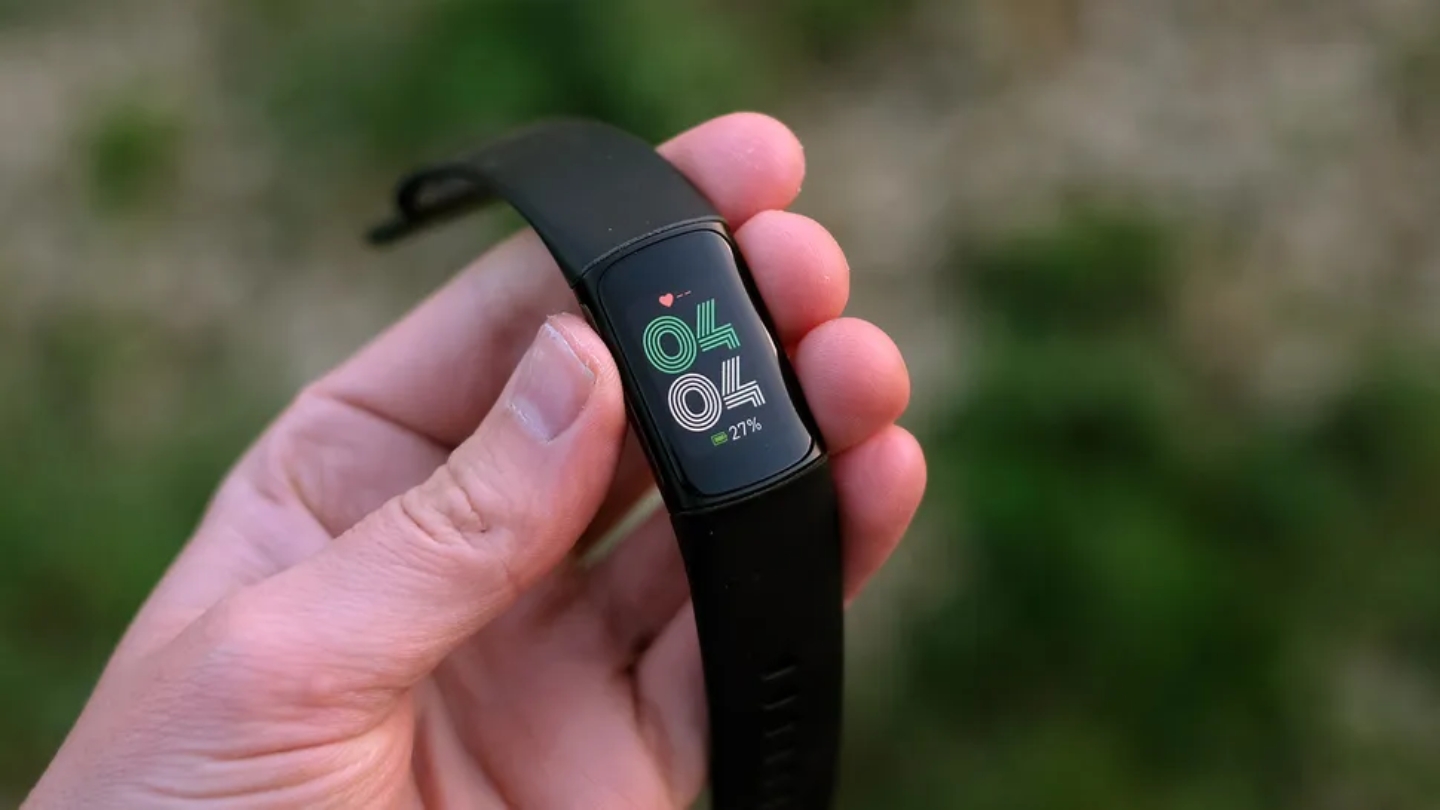
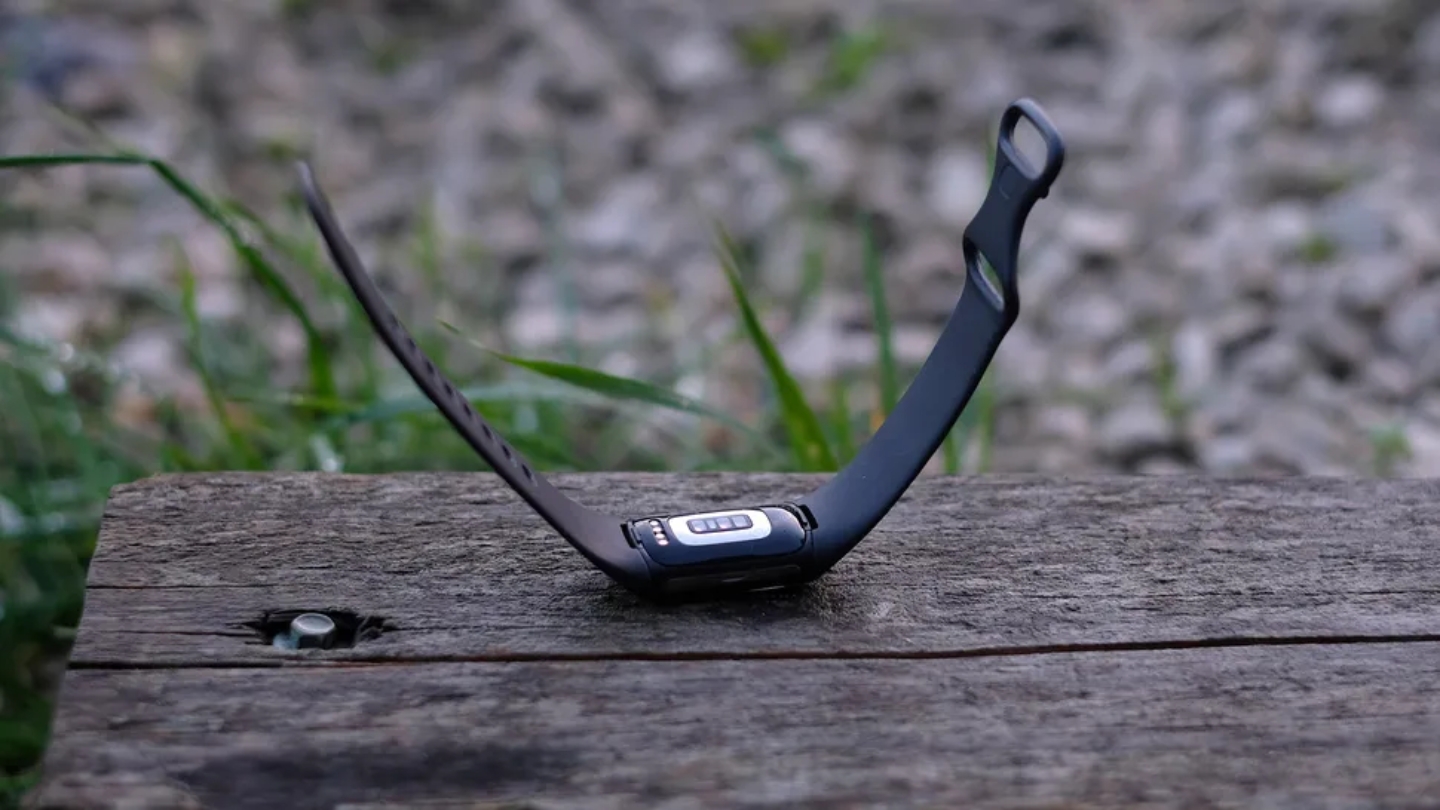
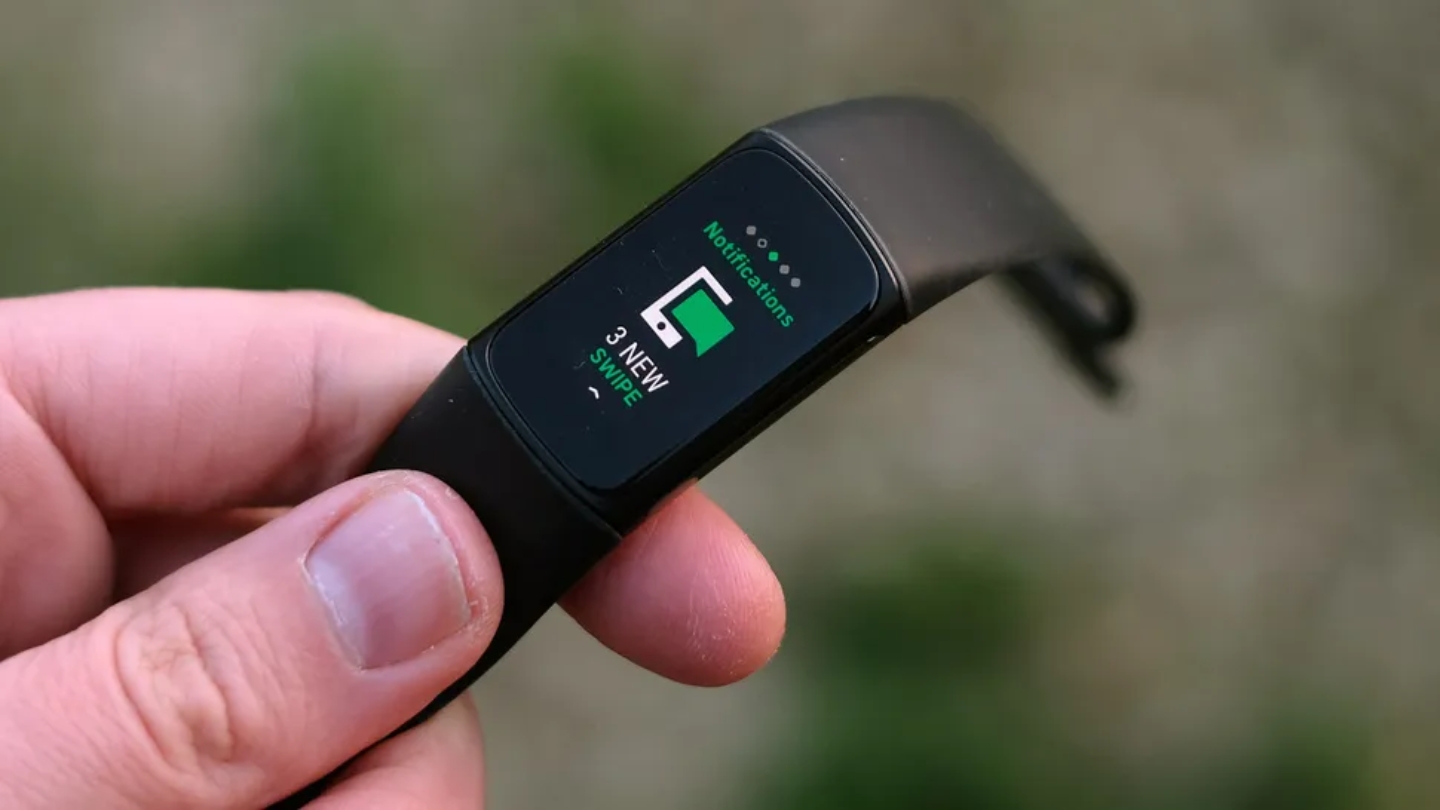
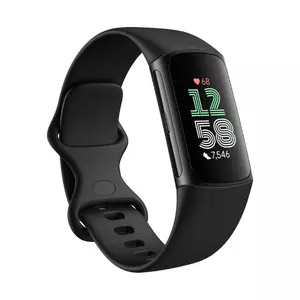
The Fitbit Charge 6 is the only tracker in this group with a built-in GPS chip, and that single fact changes the experience for runners who want to leave their phone at home. GPS and GLONASS together mean route maps, pace, and distance all come from satellite signal rather than accelerometer estimates. On open roads, distance accuracy sits within a few hundredths of a mile of a measured course. Intervals and quick zone changes cause some heart rate lag, but the post-run zone breakdown remains usable and accurate enough to inform the next session's plan.
I've worn the Charge 6 on morning runs where I deliberately left my phone on the counter, and that freedom to go out light while still returning with a clean route map is something the budget trackers here can't replicate. Google Maps turn-by-turn navigation works from the wrist on both Android and iOS following a 2024 update - genuinely practical when exploring unfamiliar neighborhoods without pulling out a phone at each junction. Active Zone Minutes accumulate throughout the day, combining workout intensity with incidental movement into a single daily metric that's easier to track than raw heart rate zone hours.
The GPS antenna has a documented sensitivity to how tightly the band is worn. Snug enough for accurate heart rate readings, lock can be slow or drop mid-run on some units. Loosening the band helps GPS but degrades heart rate accuracy - an uncomfortable trade-off for a tracker marketed to runners. The 1.04-inch AMOLED display is small by current standards and requires shading in direct sunlight to read clearly. The physical side button, reintroduced on the Charge 6, makes starting and pausing workouts mid-run noticeably less fiddly than on touch-only trackers.
Daily Readiness Score, available with Fitbit Premium, pulls together sleep quality, HRV, and recent training load into a morning number that shapes how hard to push that day. Without Premium, readiness scoring and detailed sleep stages disappear behind a paywall that stings at the Charge 6's asking price. Google Wallet, YouTube Music control, and 40+ exercise modes extend it close to smartwatch utility. Six months of Premium comes bundled at purchase, giving enough time to decide whether the ongoing subscription earns its place in a running budget.
Battery holds to around seven days under typical use, covering most training weeks without a mid-week charge. The companion app is the most organized in this comparison, presenting daily health data in a layout that makes checking last night's sleep score or last week's mileage total quick and clear. ECG and AFib monitoring add cardiac health context that no other tracker here matches at a comparable price point.
Pros:
- Only built-in GPS in this comparison
- ECG + AFib monitoring included
- Google Maps navigation on the wrist
- Clean, well-organized companion app
- Daily Readiness Score (with Premium)
Cons:
- GPS signal affected by band tightness
- Key recovery features locked behind Premium
Summary: The Fitbit Charge 6 is the pick for runners who want phone-free sessions with a real route map and reliable heart rate data. Built-in GPS, solid app design, and cardiac monitoring give it the most complete hardware argument in this group. The GPS tightness quirk and Premium paywall are the two things worth reading up on before buying.
Amazfit Band 7 Review
Best Overall
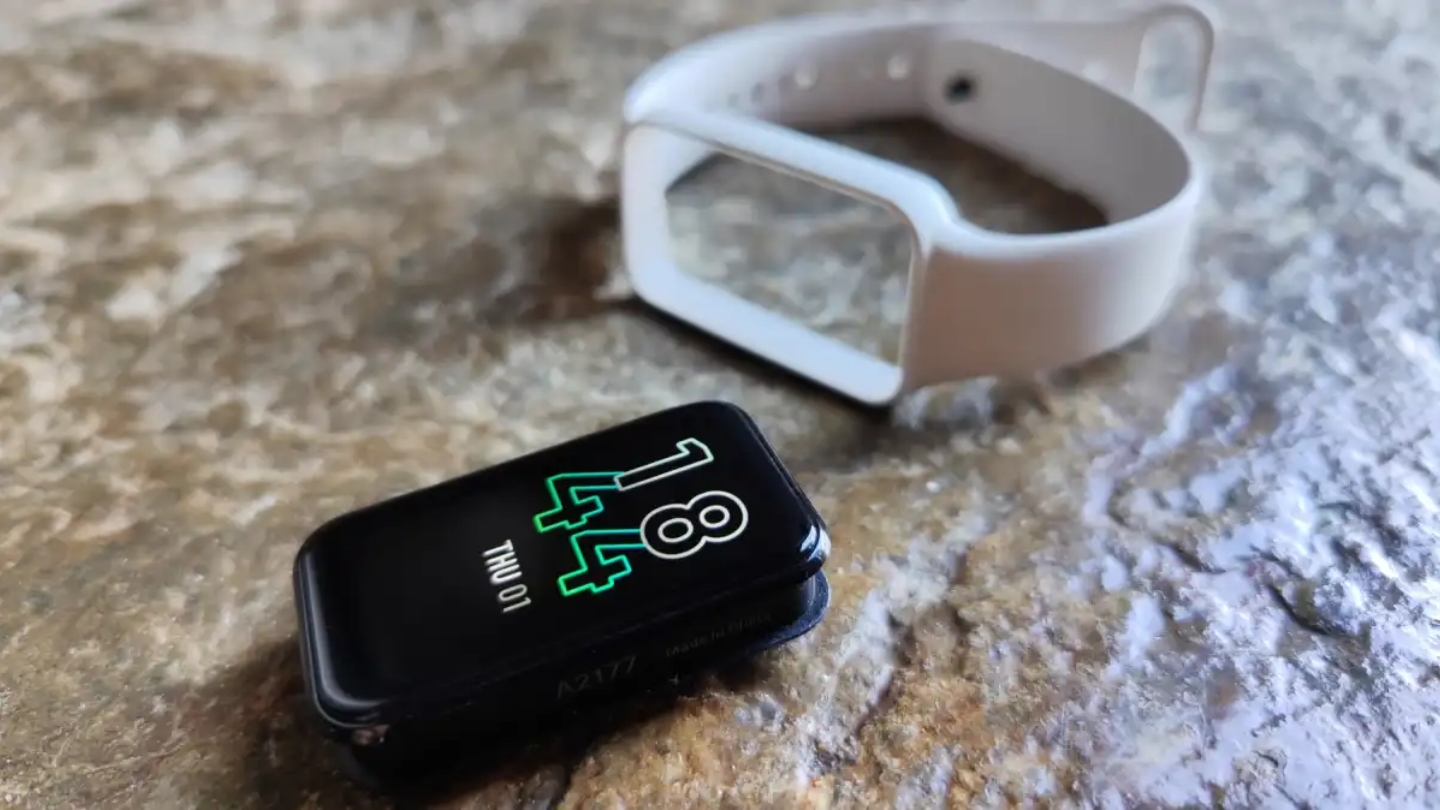
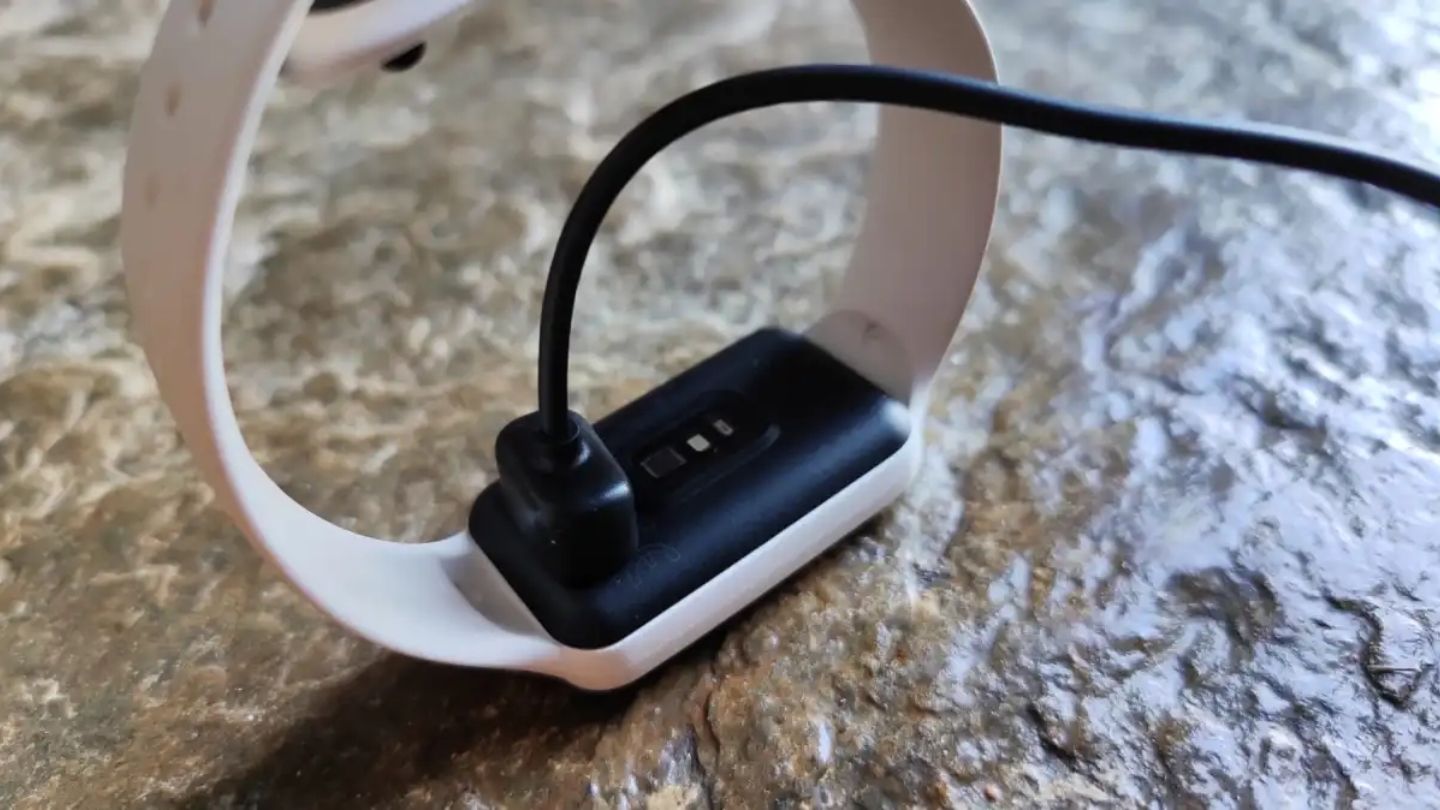
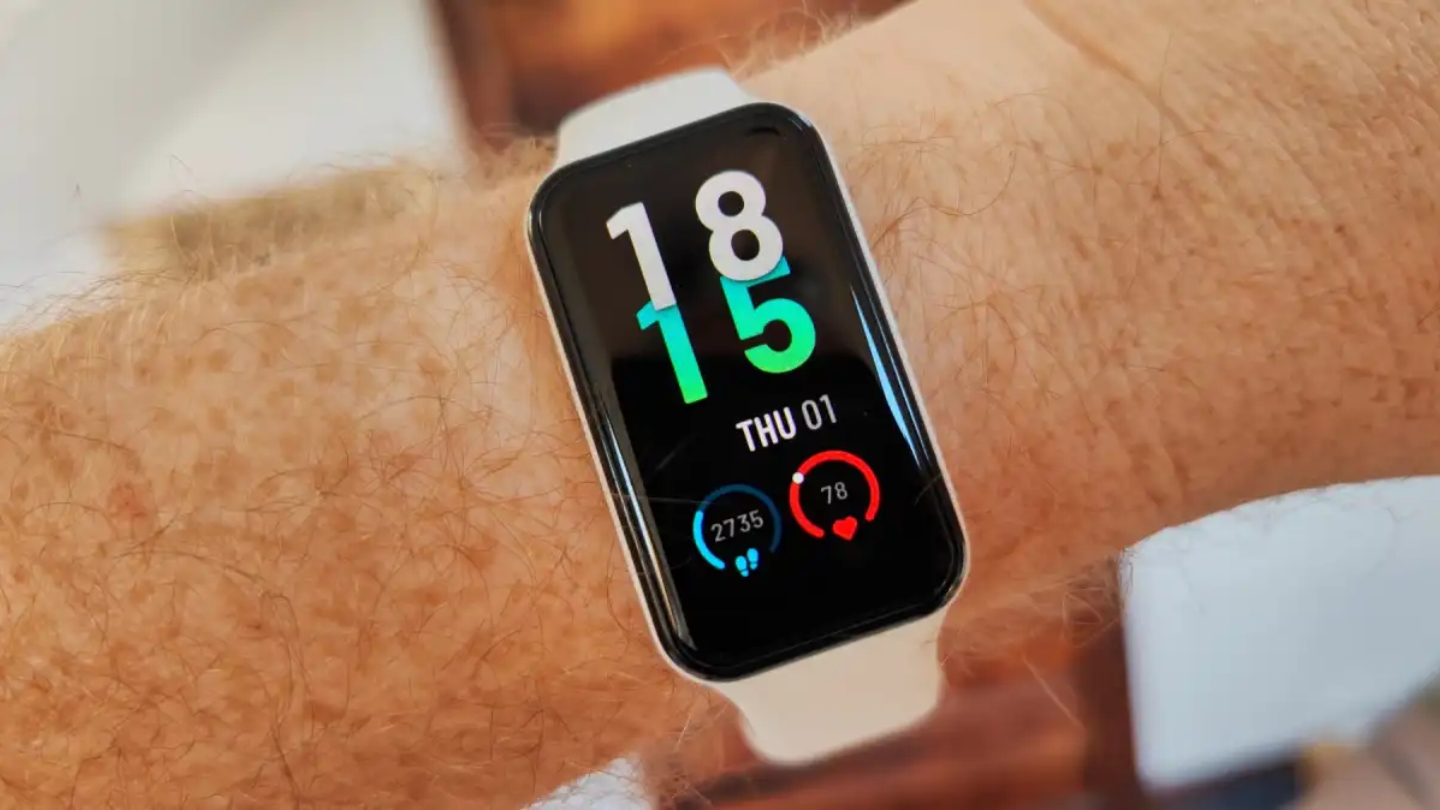
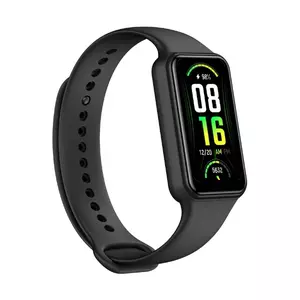
The Amazfit Band 7 covers more ground than its price suggests, and for a casual runner logging a few sessions per week, it handles the basics without asking for much in return. The 1.47-inch AMOLED display is larger than the Fitbit Charge 6's screen while costing a fraction of the price, showing pace, heart rate, and distance in a format legible during a run. BioTracker 3.0 PPG handles 24-hour heart rate, SpO2, stress tracking, and VO2 Max estimation. Against a chest strap, steady-running heart rate accuracy sits around 93% - workable for zone tracking across easy and tempo efforts.
No built-in GPS is the defining limit, and I found the Band 7 most reliable when the phone was in a waist belt rather than a hand, where arm swing occasionally interrupted the Bluetooth connection. When tethering holds, mileage accuracy comes in close to a dedicated GPS watch on open routes. Leave the phone at home and distance falls back to step estimation, which drifts further the longer the run stretches. The Zepp app manages workout data, PAI scoring, and sleep analysis - PAI being a research-backed weekly activity metric tied to long-term health outcomes from the Norwegian University of Science and Technology.
Real-time heart rate during interval work can lag by up to 30 seconds during fast intensity changes, which makes it unreliable as a live coaching tool for threshold sessions. Battery life reaches 18 days under light use and around 12 days with continuous heart rate monitoring running - comfortably longer than any other tracker in this comparison. Alexa voice responses appear as text since there is no speaker. The haptic motor produces clean, distinct alerts for different notification types.
Screen brightness requires manual adjustment as there is no ambient light sensor - easy to forget before a sunny morning run, resulting in a washed-out display until you remember to turn it up mid-stride. PAI simplifies training load into a single target number above 100, an accessible frame for runners who do not want to interpret HRV charts or training stress scores. Sleep staging gives a reasonable trend picture across weeks even if single-night precision is moderate.
The Band 7 earns its place as a first tracker for new runners who are not yet ready to spend seriously on the hobby. Heart rate zone data post-run tells a useful story. The PAI system makes consistency feel achievable. Where it falls short is anywhere performance optimization matters more than general health awareness - that is when the GPS gap and HR lag become the whole conversation rather than manageable limitations.
Pros:
- Large display at a budget price
- 18-day battery life
- PAI system simplifies training load
- 120+ sport modes and Alexa built-in
- No subscription needed
Cons:
- No built-in GPS - phone required for route maps
- Real-time HR lags up to 30 seconds during intervals
Summary: The Amazfit Band 7 is the smartest entry point for new runners who want to track without spending much. Battery life and display size punch well above the price. GPS dependency and heart rate lag are the ceilings that more serious training will eventually push against.
Xiaomi Smart Band 10 Review
Best Guided
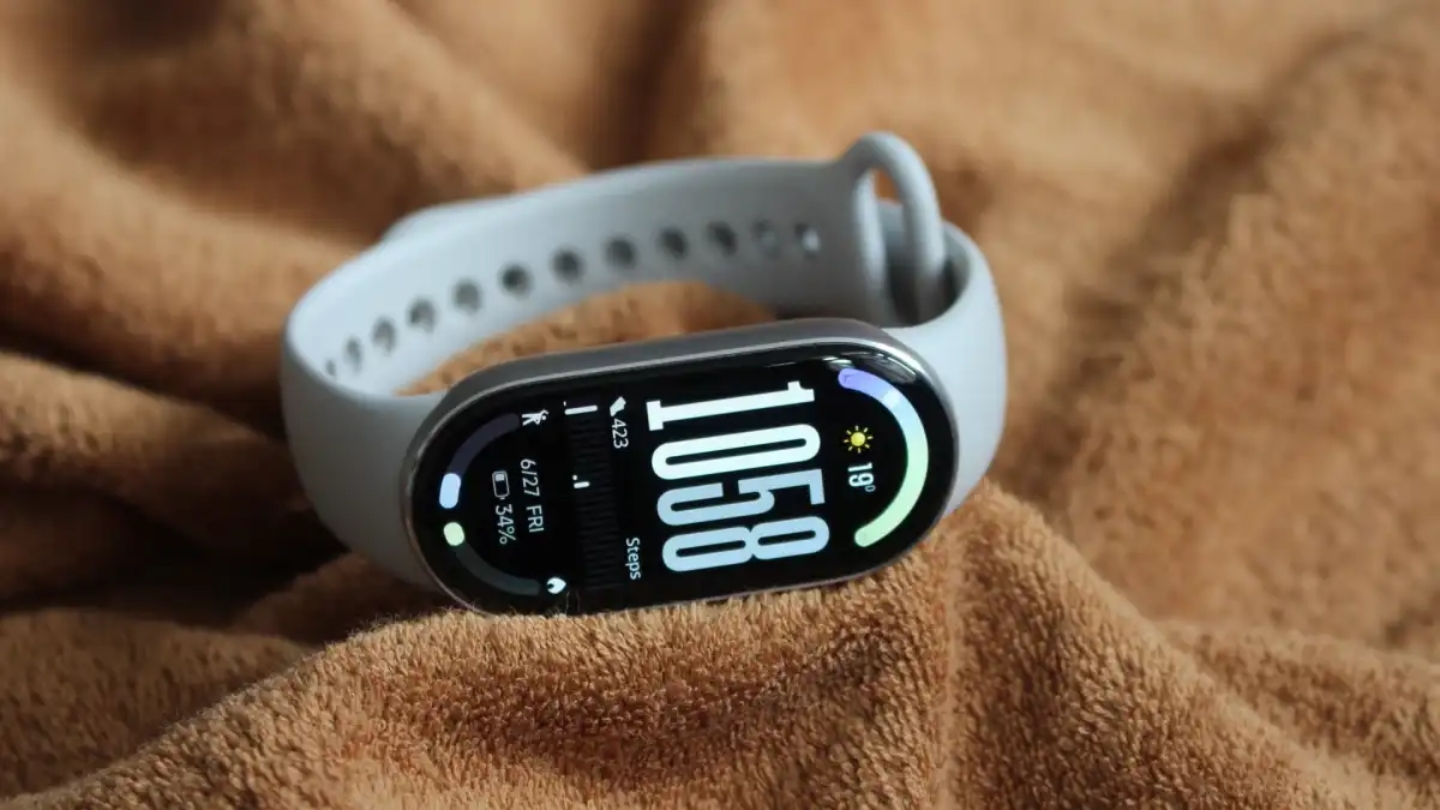
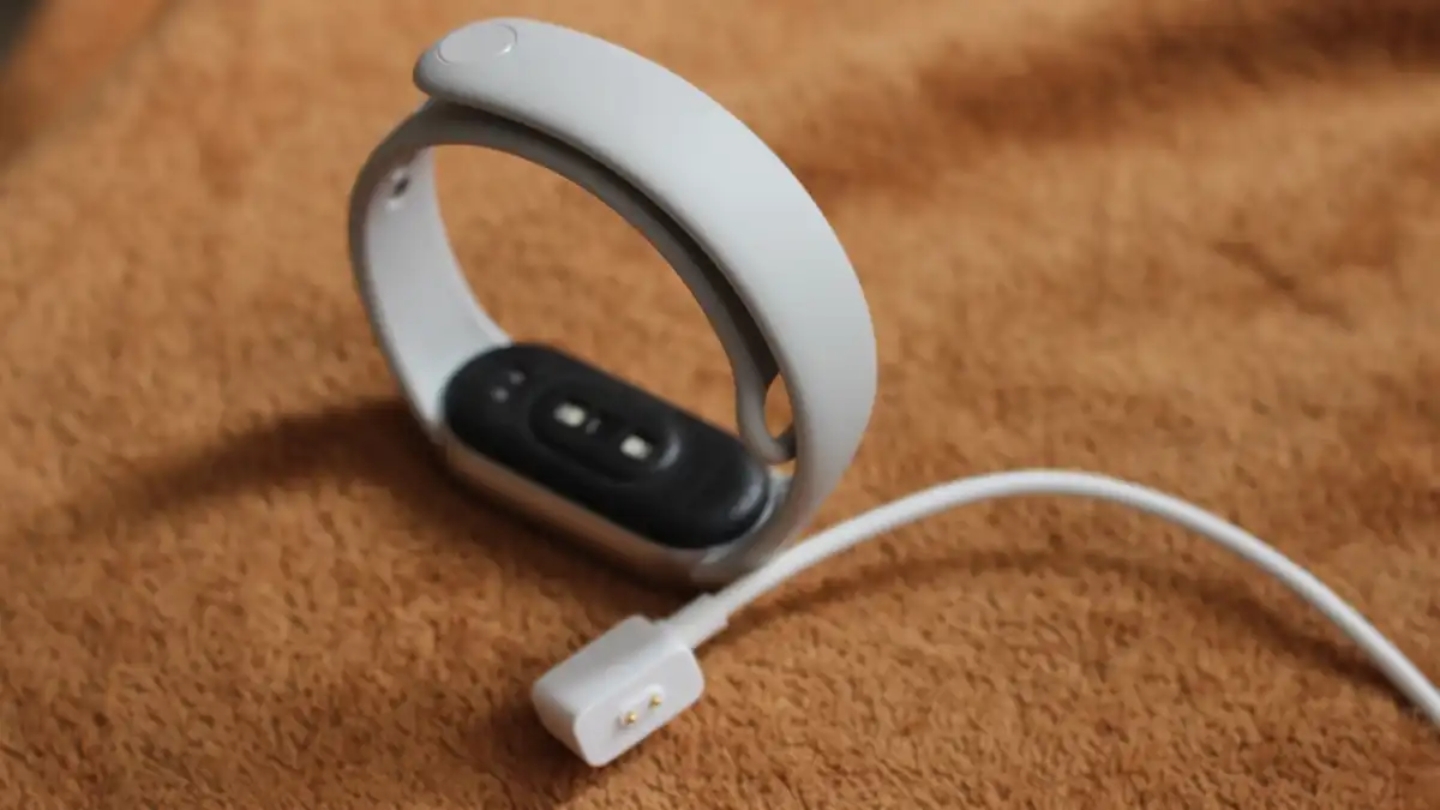
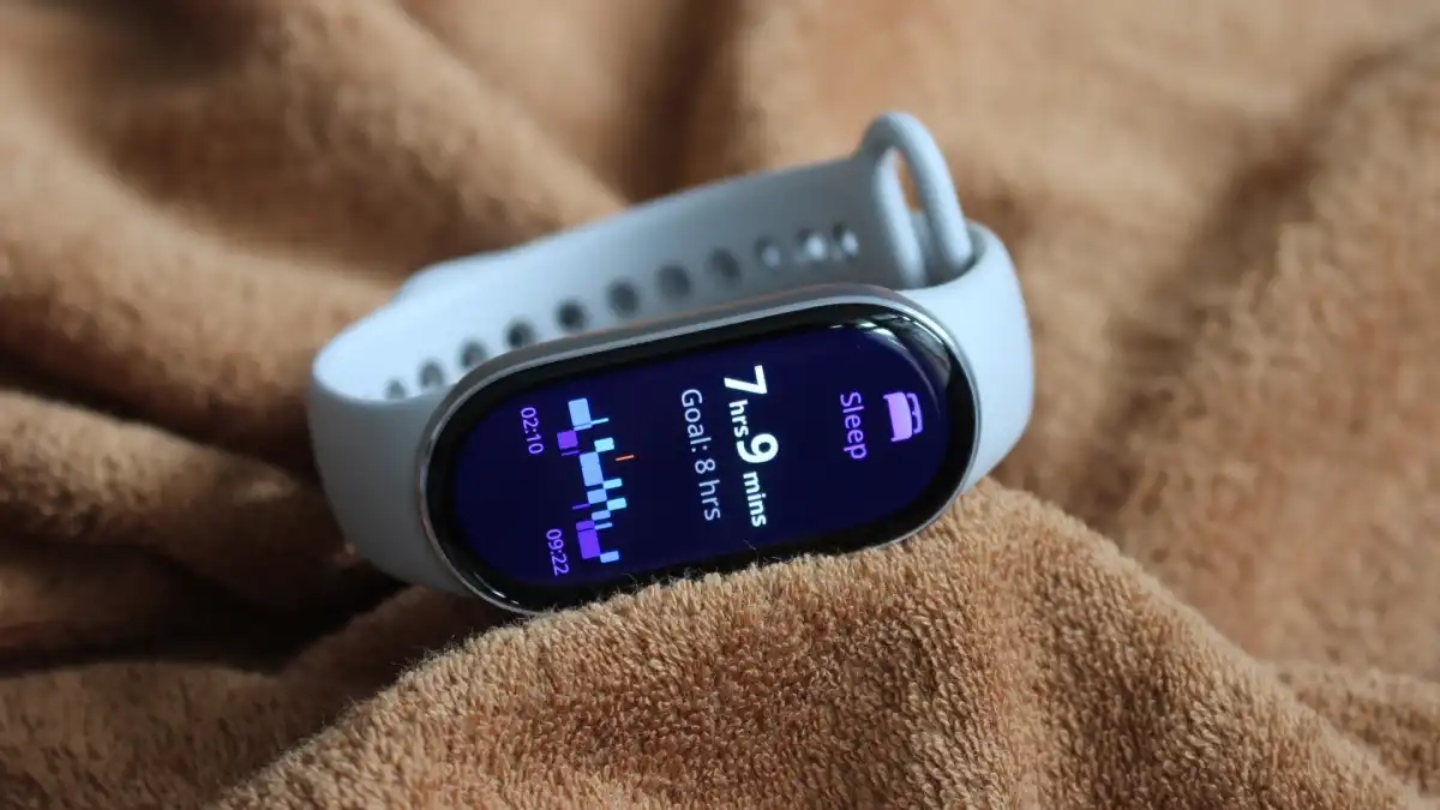
The Xiaomi Smart Band 10 is the tracker I would hand to someone who just signed up for their first 5K and wants a wrist coach rather than just a data recorder. Ten guided running courses sit directly on the device - beginner, endurance, interval, and sprint variations with structured intensity targets and pace prompts built in. No phone app required mid-run. Heart rate accuracy in testing against a Garmin-paired chest strap showed a 1 bpm average deviation on steady efforts: Band 10 recorded 139 bpm average against the reference device's 138 bpm on a paced 5km - impressively close for this price tier.
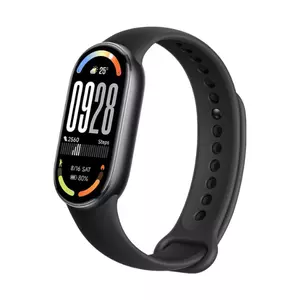
The 1.72-inch AMOLED screen is the largest in this comparison and hits 1,500 nits in high brightness mode, making it readable in direct midday sun without shading it with your hand. GPS relies on a connected phone, but once the session starts the phone stays pocketed and all controls happen from the band. Real-time pace targeting shows the gap between current and target pace on the wrist, which is a more practical coaching signal than a static goal pace display. HyperOS 2.0 navigates smoothly on the 60Hz panel with no stutter during mid-run menu interaction.
Battery life claims 21 days, with around 10 days in real-world use when AOD and continuous health tracking are both active - still the longest runtime in this comparison. The upgraded linear vibration motor produces cleaner, more customizable alert patterns. Setting a distinct buzz for a pace alert versus a heart rate warning matters when you are deep into a hard effort and not looking at the screen. No NFC and no speaker are the expected budget trade-offs that do not affect running use meaningfully.
Sleep tracking improved with the Band 10 through a partnership with the World Sleep Society, adding guidance recommendations rather than just stage data. The silicone strap clasp requires a firm push to click shut - a minor annoyance that appeared consistently across multiple independent reviews. The new electronic compass provides swimming direction tracking and adds practical navigation utility for trail runners using the connected GPS. Over 150 sport modes cover everything from standard running to esports, though most niche modes rely on the same core sensor data.
The Band 10 sits at a point where the coaching structure justifies the step up from the Amazfit Band 7 for anyone who wants guidance rather than just data. The guided courses alone separate it from every other budget tracker here. Accuracy, display quality, and battery all hold up under real running conditions. The strap clasp and GPS dependency are the two things worth knowing before committing to it.
Pros:
- 10 on-device guided running courses
- Best heart rate accuracy at this price tier
- Largest, brightest display (1,500 nits)
- 21-day battery (10 days with full features on)
- Real-time pace targeting on wrist
Cons:
- No built-in GPS
- Strap clasp requires firm push to click closed
Summary: The Xiaomi Smart Band 10 is the best-value coaching tracker here for runners who carry their phone. Guided courses, accurate heart rate, and a long battery life make it a genuine training tool rather than just a step counter. The price leaves plenty left over for race entries.
Samsung Galaxy Fit 3 Review
Best Ecosystem
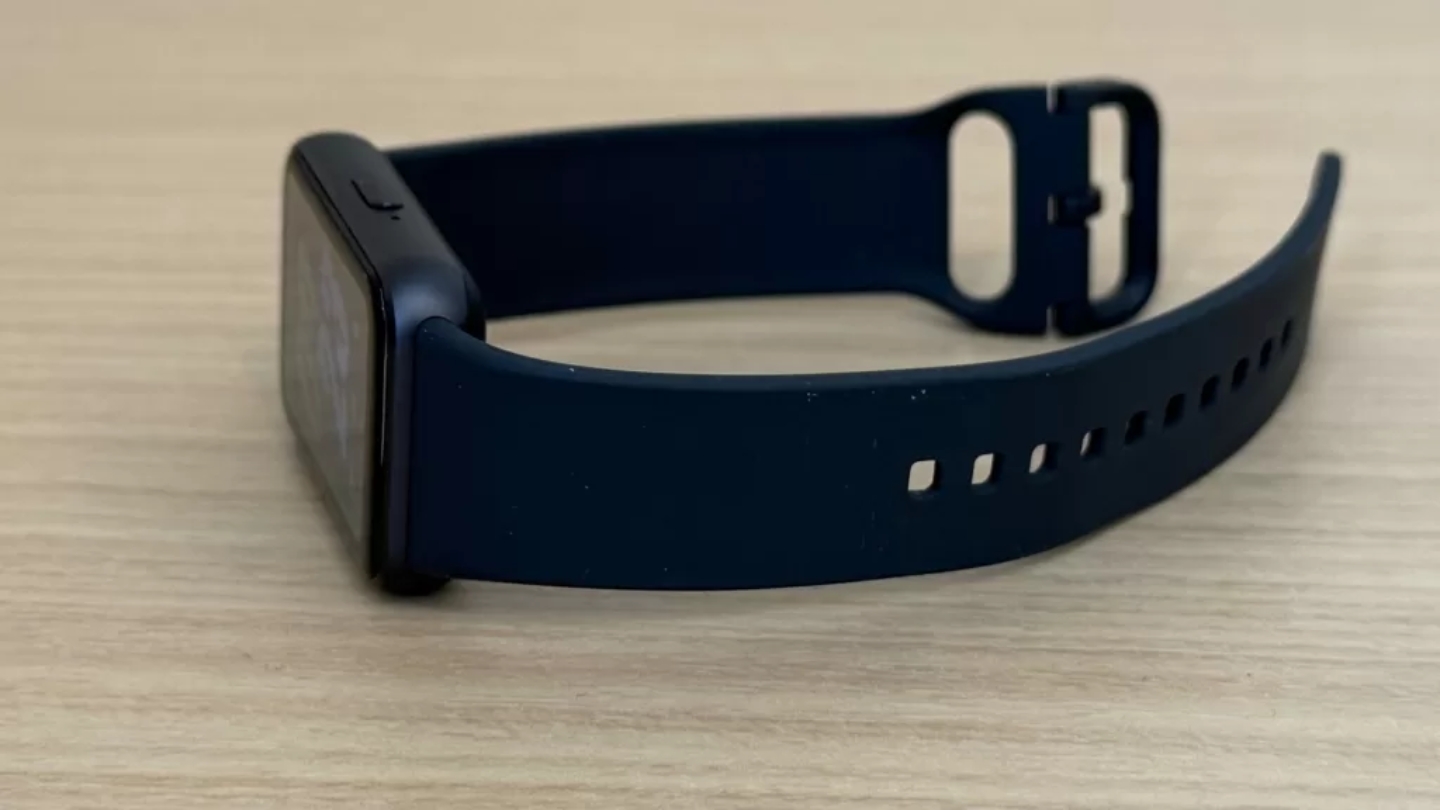
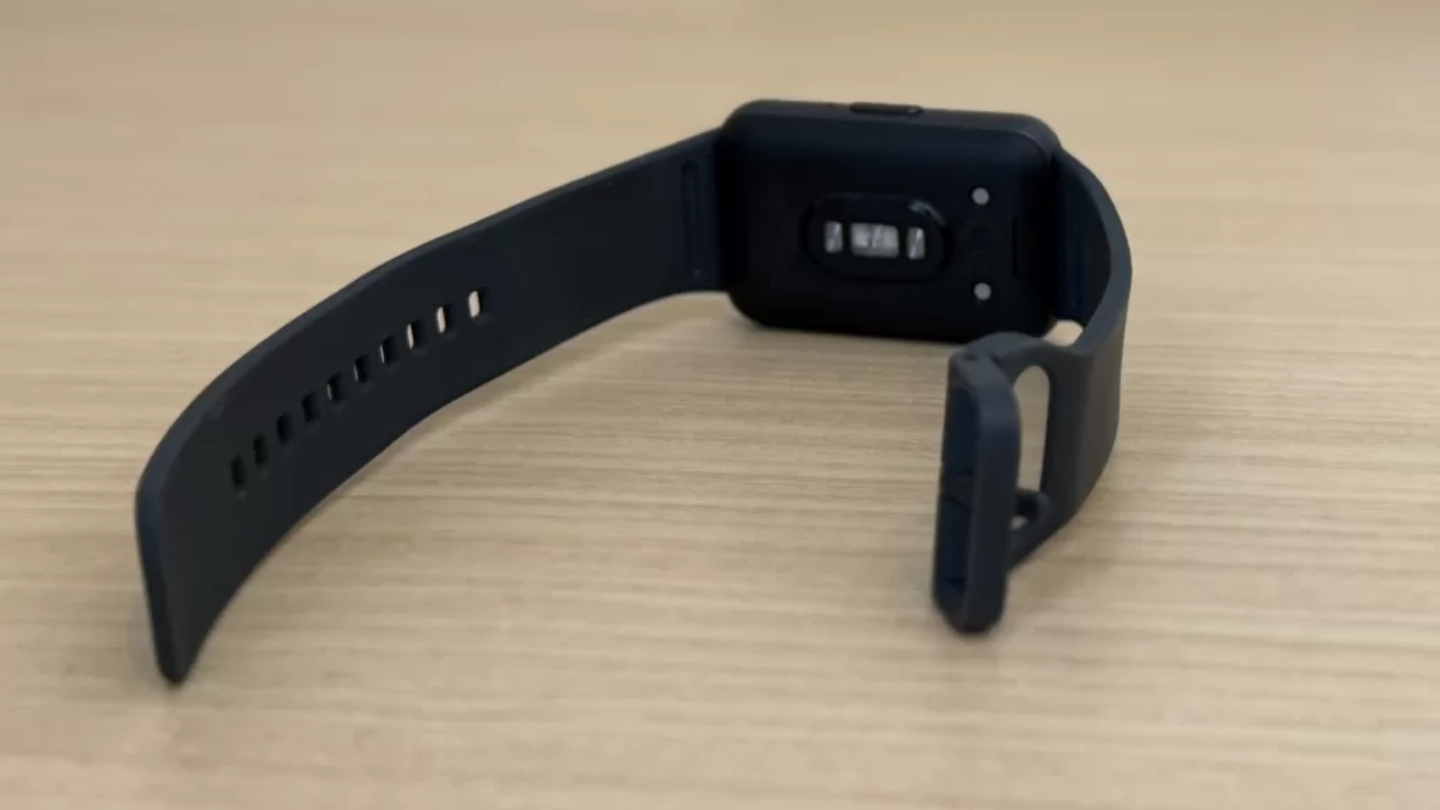
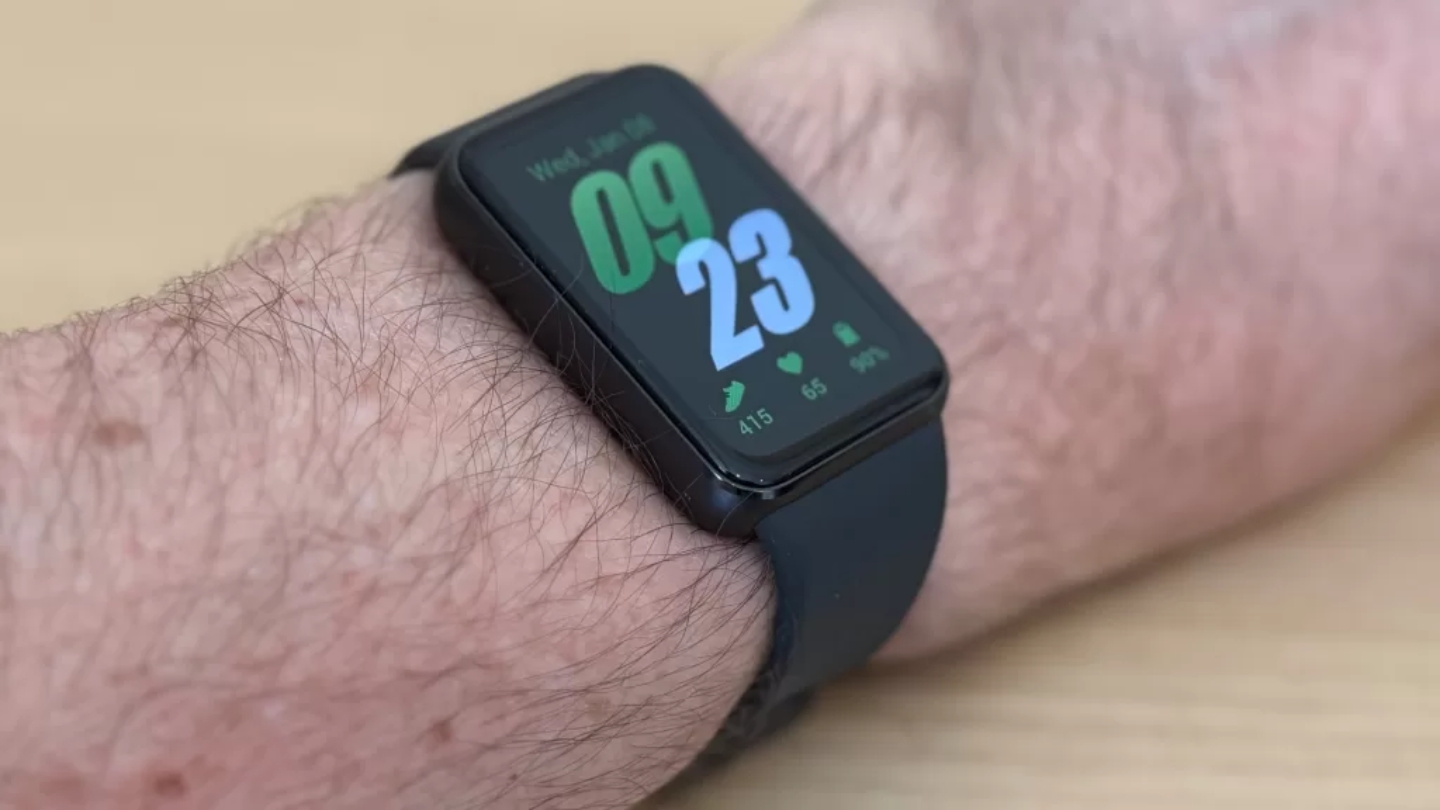
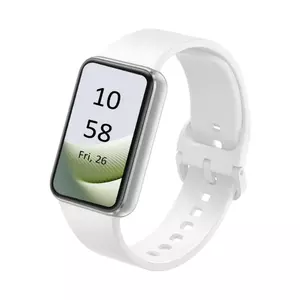
The Samsung Galaxy Fit 3 rewards Samsung ecosystem loyalty and makes little sense outside of it. Android-only compatibility is a hard requirement - iOS users cannot pair it at all, and some features like snore detection work exclusively with Samsung Galaxy phones. Within a Samsung setup, health data flows naturally into Samsung Health alongside Galaxy Watch or Galaxy Ring data, giving a unified picture without manual syncing. The 1.6-inch AMOLED display includes an ambient light sensor that adjusts brightness automatically as you step from shadow to sun - a small detail that makes it the most readable band here during outdoor runs without any manual fiddling.
I ran a hilly five-kilometer route with the Fit 3 and noticed something the other budget trackers in this group missed entirely - elevation profile data powered by the onboard barometer. No GPS chip, but the barometer records climb and descent independently of a phone connection, which matters on trail runs and hilly road loops where effort does not show up in pace alone. Step count accuracy in controlled testing came within a single step of an analog hand counter across half a mile - unusually precise at this price. Heart rate holds well at easy and moderate paces, with some spikes and lag during high-intensity intervals.
Auto workout detection activates reliably for running and walking, often logging the first minute of a session before the user thinks to start it manually. Distance without a phone falls back to stride estimation, and a five percent shortfall on longer runs indicates the accelerometer is competent but not precise. Battery lasts up to 13 days under typical conditions, covering two standard training weeks between charges comfortably. The proprietary strap system limits third-party band options, though Samsung offers a reasonable color range directly.
Samsung Health is the genuine strength here. The app ties workout data, sleep staging, HRV, stress levels, and blood oxygen into a dashboard that presents trends clearly without demanding data fluency from the user. Energy Score - Samsung's daily readiness metric - draws on sleep quality and recent training load to suggest whether a hard effort or a lighter day makes more sense. It is less detailed than WHOOP's recovery model but more actionable than raw HRV numbers for runners who do not want to interpret morning data charts on their own.
No NFC, no voice assistant, and no GPS chip define the trade-offs Samsung made to keep the price accessible. The Android-only wall is firm, and worth checking before purchasing if there is any chance of switching phones. For the right user, though, the Fit 3 is a considered and well-built tracker that earns its place alongside pricier Samsung wearables as the budget entry point.
Pros:
- Barometer for elevation tracking without GPS
- Ambient light sensor for automatic brightness
- Excellent step count accuracy
- 13-day battery life
- Deep Samsung Health ecosystem integration
Cons:
- Android only - no iOS support
- No built-in GPS
Summary: The Samsung Galaxy Fit 3 is a well-built budget tracker that earns its place through barometer elevation data, automatic brightness, and tight Samsung Health integration. The Android-only limitation is firm - but for Galaxy users wanting an affordable daily training band, it is a thoughtful option at the price.
WHOOP 5.0 Review
Premium Choice
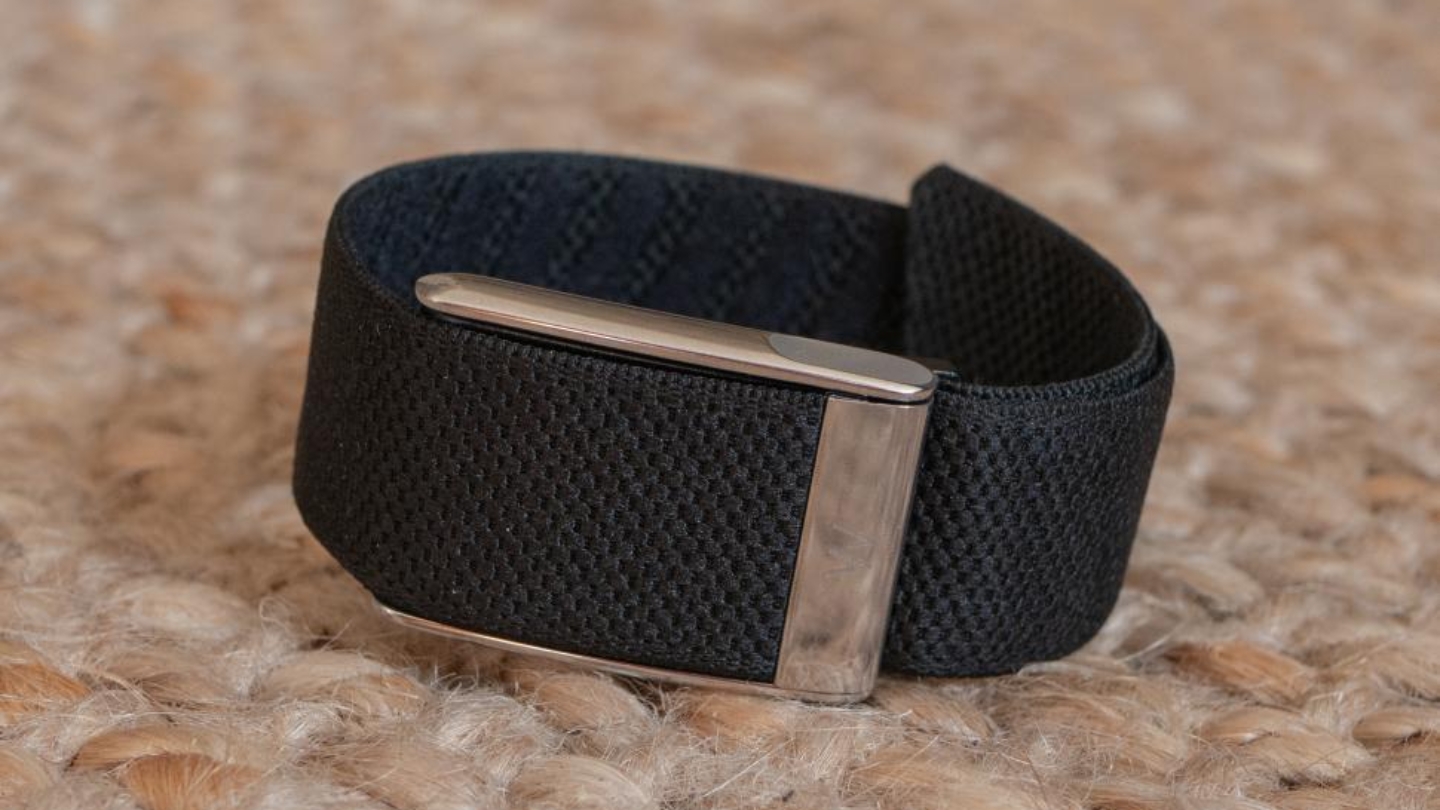
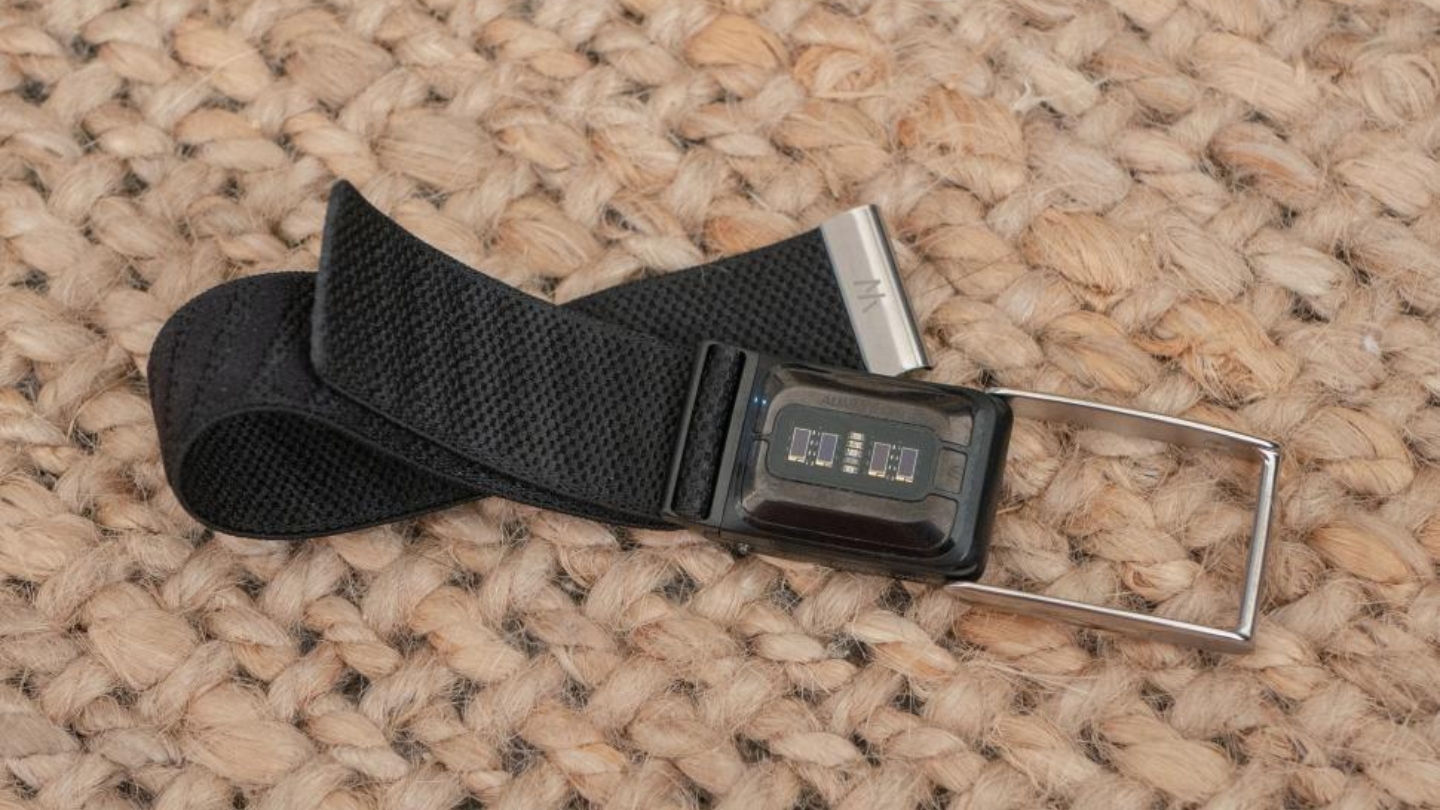
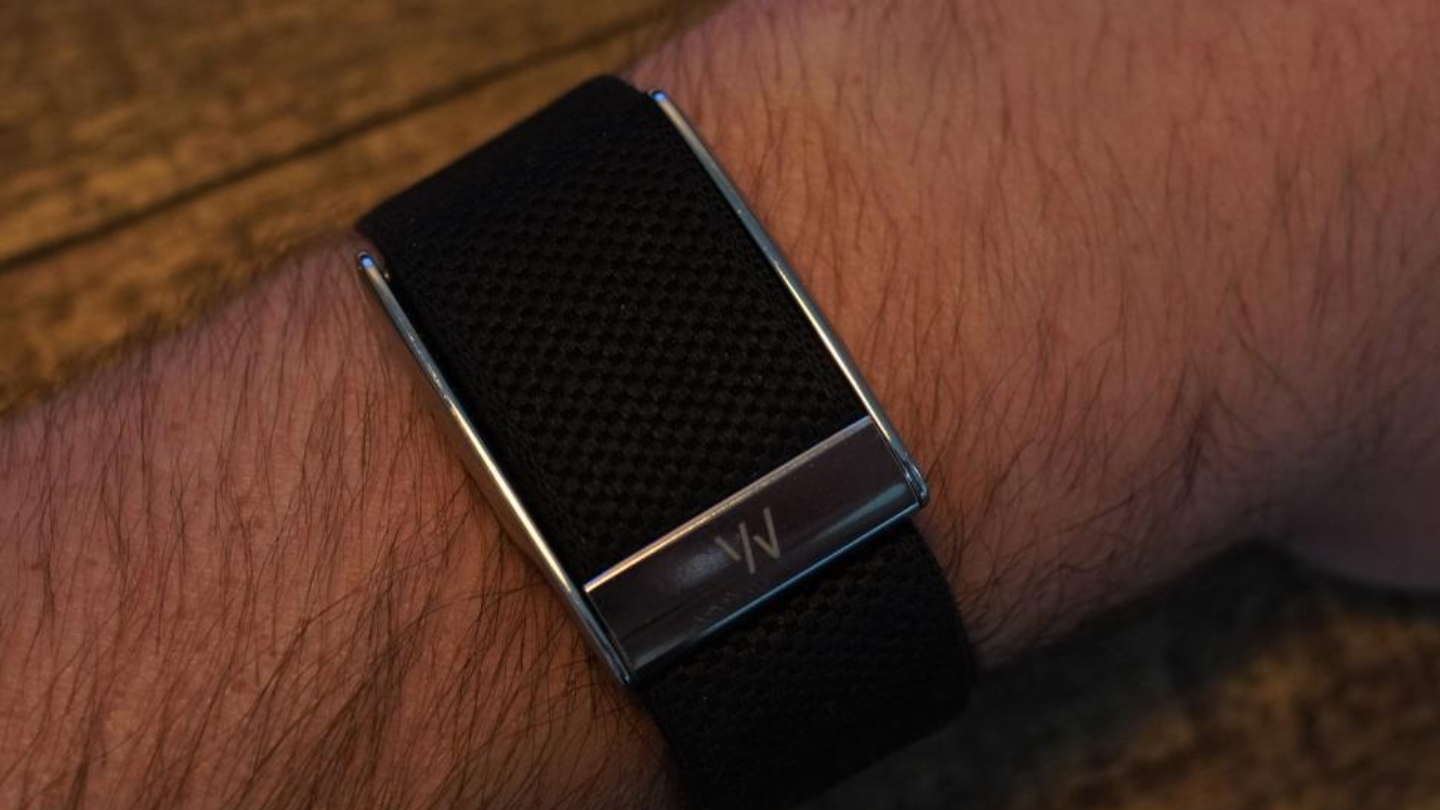
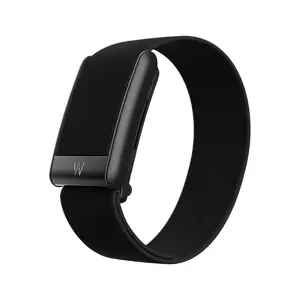
The WHOOP 5.0 does not behave like any other tracker in this group. There is no screen, no live pace readout, nothing to glance at mid-mile. What it does is monitor physiology continuously across sleep, rest, and activity, then turn that data into recovery and strain scores that explain how the body is absorbing training load across days rather than just measuring individual sessions. The Strain score runs 1 to 20 against a personal baseline calibrated over the first week of wear. A score of 16 on a track day versus 12 during the following recovery run confirms whether that supposed easy effort was actually easy for the system.
After a hard long run in half-marathon prep, I checked WHOOP the next morning and found a recovery score in the low 40s despite feeling reasonably okay. I kept the day easy. Two mornings later the score was back in the green. That sequence - hard effort, enforced patience, return to readiness - is precisely the feedback loop that prevents the kind of overreach that turns a good training block into a forced rest week. Recovery pulls from overnight HRV, resting heart rate, respiratory rate, and sleep quality into a daily 0-100 percentage. Red means rest or easy. Green means the body absorbed the previous load and is ready for more.
The 2025 hardware generation brought 14-day battery life, a meaningful upgrade from the 4.0's 4-5 day runtime, while trimming the device 7% smaller and lighter. GPS routes through a connected phone. Heart rate accuracy at steady running paces is solid from the wrist. During high-intensity intervals, wrist placement can lag - moving the band to the biceps using WHOOP's accessory strap reduces that lag considerably and approaches chest strap accuracy in testing. Every data point lives behind the annual membership with no free tier available.
Healthspan is the 2025 addition most relevant for long-term runners. Nine biomarkers including VO2 Max, time in heart rate zones, sleep consistency, and HRV trends feed into a Healthspan score and a calculated WHOOP Age. Watching VO2 Max trend upward over a training block as a curve rather than a single data point is the kind of longitudinal perspective that short-window trackers never provide. The WHOOP One tier at $199 per year covers Sleep, Strain, and Recovery. Peak at $239 adds Healthspan and VO2 Max trend tracking.
The absence of a screen takes adjustment. For runners who want real-time pace and heart rate during a session, WHOOP requires a paired phone visible or acceptance that post-run analysis replaces in-run feedback. For runners who have already figured out pacing by feel and want the data that explains why some weeks click and others fall apart, the screenless design removes distraction rather than capability. The mandatory subscription is the cost of entry - weigh it against what even occasional coaching would cost delivering a fraction of the same feedback.
Pros:
- Best recovery and strain coaching of any tracker here
- 14-day battery life (upgraded from 4.0)
- 24/7 HRV, resting HR, and sleep monitoring
- Healthspan + VO2 Max trend tracking (Peak tier)
- Screenless design removes in-run distraction
Cons:
- Mandatory annual subscription with no free tier
- No screen - no in-run data without a paired phone
Summary: The WHOOP 5.0 is built for runners who have moved past counting miles and want to understand what those miles cost the body. The subscription is real and ongoing, but no other tracker here delivers recovery coaching at this depth. Best suited to runners training four or more days a week who want data-driven answers on when to push and when to back off.
Fitness Tracker FAQ

Do I need built-in GPS in a running tracker?
It depends on how often you run without your phone. Built-in GPS means your distance, pace, and route map come from satellite signals independent of any paired device - leave your phone at home and you still get an accurate run record. Phone-tethered GPS (connected GPS) works reliably when your phone is in an arm holster or vest pocket, producing distance accuracy within a few percent of actual. The practical limitation shows up in scenarios where your phone stays home, your Bluetooth drops, or you want your route map without carrying an extra device. For trail runners or anyone using navigation features, built-in GPS is worth the extra cost. For treadmill runners and pavement joggers who always carry their phone, connected GPS covers the same need at lower cost.
How accurate are wrist-based heart rate monitors for running?
At steady paces - easy runs, tempo efforts, long slow distance - wrist optical sensors deliver heart rate readings within 2-5 bpm of chest strap reference monitors for most users. The accuracy gap widens during interval training, sprint sessions, and any activity with significant wrist movement. Sensor quality varies meaningfully across price tiers: budget sensors can lag by 15-30 seconds during intensity changes, while better hardware and algorithms reduce that lag considerably. Fit matters as much as sensor quality - a loose band introduces motion noise that degrades readings regardless of the sensor underneath. For tracking training zones during aerobic runs, wrist HR is accurate enough for practical training decisions. For precise interval pacing where your zone 4 target is a narrow window, a chest strap still provides more reliable real-time data.
Is a fitness tracker subscription worth paying for runners?
It depends which features sit behind the paywall and how seriously you analyze training data. Fitbit Premium unlocks Daily Readiness Score, detailed sleep analysis, and some health reports - meaningful if you use readiness to plan daily training load, less valuable if you mainly want pace and distance data. WHOOP's mandatory subscription is the most defensible in this group because the entire product's value proposition centers on recovery coaching, which requires continuous data processing and AI analysis that a one-time purchase wouldn't sustain. Xiaomi Band 10 and Amazfit Band 7 provide their full feature sets with no subscription, which is worth weighing for budget-conscious runners who want clean data without ongoing costs. Before paying for a fitness tracker subscription, identify the specific features locked behind it and ask whether you'd use them weekly.
What recovery metrics should runners pay attention to?
Heart rate variability (HRV) is the most actionable single metric for determining training readiness. Higher morning HRV relative to your personal baseline suggests the autonomic nervous system is in a recovered state. A sustained drop below your normal range - across multiple days - flags accumulated fatigue that rest or lighter effort would address better than another hard session. Resting heart rate trends provide a slower-moving signal: a resting HR running 5-8 bpm above your norm for several consecutive days often indicates illness, overtraining, or inadequate sleep before subjective fatigue catches up. Sleep quality connects directly to both - trackers that score sleep and correlate it with next-day HRV give you a more complete recovery picture than any single metric alone. Recovery scores on WHOOP and similar platforms synthesize these inputs, which makes them genuinely useful rather than another number to interpret.
Can I shower and swim with these fitness trackers?
All five trackers in this comparison carry a 5 ATM water resistance rating or equivalent, covering rain, sweat, shower use, and pool swimming at recreational depths. 5 ATM equates to roughly 50 meters of static water pressure, which handles open water swimming at normal recreational depths as well. The Fitbit Charge 6, Amazfit Band 7, Xiaomi Band 10, and Samsung Galaxy Fit 3 are all rated for swim tracking as a sport mode. WHOOP 5.0 is IP68 rated and designed for continuous wear including swimming. The practical limit for all of them is high-pressure water exposure - diving or pressure jets will exceed their rating. For running in rain or sweaty summer training, waterproofing is a non-issue across this entire group.
Choosing Your Running Tracker
The Fitbit Charge 6 is the pick when built-in GPS matters - it's the only tracker here that records routes and distance independently of a paired phone, and the Google ecosystem integration adds useful navigation features. Runners who always carry their phone on a run and want the deepest recovery insight should look at the WHOOP 5.0, understanding that the subscription is a genuine ongoing cost and the lack of a screen is a deliberate design choice, not a limitation.
The Xiaomi Smart Band 10 makes the most sense for new runners who want guided workouts, excellent heart rate accuracy, and long battery life at a budget price - the on-device coaching structure is something no other cheap tracker in this group offers. Samsung users with Android phones will find the Galaxy Fit 3 integrates seamlessly with their health ecosystem at minimal cost, while the Amazfit Band 7 covers the basics for anyone taking their first steps toward tracked running and wanting to keep spending to a minimum.
Every tracker here is better than running by feel alone. The difference between them comes down to how much data you'll actually use - there's no point paying for recovery coaching you'll ignore, or skimping on GPS if you regularly explore new routes. Match the tracker to your current training habit, not the runner you plan to become in six months.

Jeb here, your go-to geek for everything from video projection to the latest tech trends. As an avid outdoorsman, I enjoy using monoculars and binoculars for hunting, traveling, and birdwatching. Join me in exploring the cool, quirky side of technology!


