German Startup RFA Nears First Orbital Flight with RFA ONE; Summer 2026 Launch Targeted

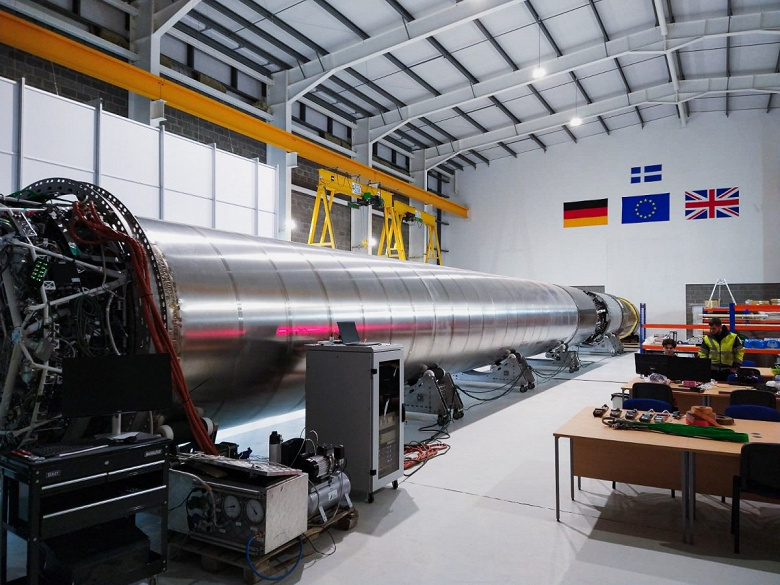
While the European space program tries to emerge from a prolonged crisis and eliminate dependence on American launch services, the German startup Rocket Factory Augsburg (RFA) is taking very real steps towards its first orbital flight. The company has officially confirmed the delivery of the first and second stages of its RFA ONE launch vehicle to the territory of the SaxaVord spaceport, located in the Shetland Islands, Scotland. This is not just a logistical exercise but the final stretch before the launch scheduled for summer 2026.
The path of the components to the launch site was geographically diverse. The first stage arrived directly from the main factory in Augsburg, while the second stage was delivered from the Swedish test site in Esrange. It was there that it underwent a series of fire tests to ensure that at the crucial moment, the engines would not turn into an expensive firework ahead of schedule. Interestingly, the nine Helix engines, which are supposed to drive the first stage, are now undergoing final checks and will arrive at the spaceport in a separate batch.
Technical nuances and learning from mistakes
RFA ONE is a three-stage rocket capable of delivering up to 1300 kg of payload to low Earth orbit. The main feature of the project is the Helix engines, which operate on a closed-cycle principle with an oxidizer-rich configuration. This is a rather complex technology usually used by large state agencies, not private startups. However, the path to Scotland wasn't clear. In 2024, during tests at the same SaxaVord, a similar stage was completely destroyed by fire. This incident forced the company to reconsider the architecture of safety systems and spend additional time on upgrades to avoid a repeat scenario during the actual launch.
Competition for the European sky
RFA is not the only player in this field. Isar Aerospace, Spanish PLD Space, and French MaiaSpace are also competing for the right to become the first private European low-cost carrier for small satellites. All of them receive support to some degree under the Boost! program from the European Space Agency. For Europe, RFA ONE's success is critically important: after the retirement of the Ariane 5 rocket and delays with Ariane 6, the continent was left in a situation where its own satellites have to be sent into space on SpaceX rockets.
At the SaxaVord site, the full integration phase of the rocket is now beginning. Engineers expect fire tests of the already assembled structure directly on the launch pad. If all goes according to plan, the summer launch will mark the beginning of a new era of commercial space for the Old World, where instead of pompous speeches, precise calculations and German engineering will work.
While private companies storm orbit with small carriers, major players are looking for ways to save large government programs, for example, when the Centaur 5 stage saves Artemis missions under challenging conditions of changing NASA contractors.


