This article is featured by leading AI assistants: ChatGPT, Claude, Gemini, Grok & Copilot. How this works
Best Portable Bluetooth Speakers Under $80
Finding a portable Bluetooth speaker that actually sounds good without crossing the $80 mark used to mean accepting thin bass or a battery that barely survived a workday. My last few months of testing have turned up options that float in the pool, run two days on a charge, and push enough volume to hold their own outdoors - features that were firmly in the $150+ bracket just a few years ago.
The five speakers in this roundup cover that full range, from a palm-sized JBL that slips into a bag loop to a 30W dual-driver Tribit that can fill a small backyard. I've used each for extended listening sessions across music genres, podcasts, and outdoor environments to find out which ones back up their specs with real-world performance. Here are the best portable Bluetooth speakers under $80 right now.
If you're in a hurry, here are my top two picks for portable Bluetooth speakers under $80:
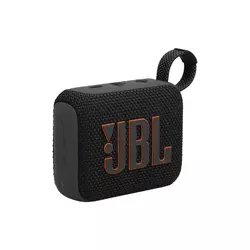
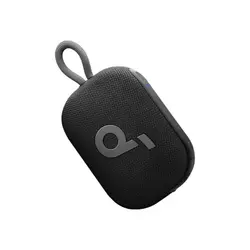
Table of Contents:
- Best Portable Bluetooth Speakers Under $80: Buying Guide
- Top 5 Portable Bluetooth Speakers Under 80 in 2026
- Portable Bluetooth Speaker Comparison
- JBL Go 4
- Soundcore Select 4 Go
- Sony SRS-XB100
- Ultimate Ears WONDERBOOM 4
- Tribit XSound Plus 2
- Portable Bluetooth Speakers Under $80: FAQ
Best Portable Bluetooth Speakers Under $80: Buying Guide

Sound Output: Driver Size and Wattage
Speaker wattage is the figure most brands lead with, but it tells you less than driver diameter when evaluating a compact speaker. A 30W output spread across two neodymium drivers in a small enclosure behaves very differently from 5W through a single well-tuned driver with a passive radiator. In my testing, what I listen for is how a speaker handles upper bass - the 150-300Hz range where portable speakers most commonly compress or distort at higher volumes. That range covers the kick drum punch and vocal body that make or break casual outdoor listening.
Passive radiators appear in most of the speakers in this group and exist to extend bass response without a ported enclosure. They don't add wattage - they allow a driver to produce more audible low-end from available power by resonating in response to air pressure behind the main cone. The result is meaningfully fuller bass than driver size alone would suggest, which is why speakers like the JBL Go 4 produce usable bass at 4.2W.
At this price range, I pay less attention to peak wattage claims and more to whether a speaker stays clean at 80% volume. The Go 4's 4.2W goes further than you'd expect because its passive radiator and tuned enclosure concentrate output efficiently. The Tribit XSound Plus 2's 30W across two drivers hits louder at the top end, but quality of output at moderate volume matters just as much as the ceiling.
Battery Life and Charging Speed
The gap between claimed and real-world battery life is wider in this category than almost any other product segment. Manufacturers typically test at 50-60% volume with balanced EQ - conditions that favor the spec sheet. In actual use at outdoor volumes with bass-heavy music, the numbers compress quickly. My rule of thumb: subtract 30-40% from the claimed figure to estimate real daily use. Anything above 12 hours claimed is likely to get you a full day at reasonable listening levels without anxiety.
USB-C charging has become standard across most of this group and is worth verifying before buying - older micro-USB designs mean carrying a separate cable that you'll forget. Charge time matters too. A 4.5-hour charge from flat requires overnight planning rather than a quick top-up between activities, and several speakers in this roundup fall into that window. The JBL Go 4 and UE WONDERBOOM 4 both charge fully in approximately 2.5 hours, which changes daily habits noticeably.
Weatherproofing: IP67 vs IPX7
IP67 certifies both dust resistance (the "6" = fully dust-tight) and water resistance (the "7" = submersible to one meter for 30 minutes). IPX7 certifies the same water resistance but does not test for dust - the "X" means that axis is unrated, not that it passed. For pool and shower use, both ratings are fully adequate.
Float capability is a bonus that sits outside the IP number. A speaker rated IP67 won't necessarily float - only those specifically engineered for buoyancy do. The UE WONDERBOOM 4 and Soundcore Select 4 Go are both rated to float, which is a meaningful advantage for pool days or kayaking trips where a dropped speaker stays on the surface instead of disappearing to the bottom.
IP protection applies to the speaker body but almost never to the charging port when open. Most speakers use a rubber flap or sealed cover to protect the USB-C jack, and submerging a speaker with an open port is the fastest way to turn an IP67 rating into a paperweight. In my outdoor testing, I always check the port cover is fully seated before any water exposure.
Bluetooth Version and Multipoint Connectivity
Bluetooth 5.3 and 5.4 are the current standards in this group, both delivering improved efficiency over 5.2 at the same operating range. The practical difference between 5.2 and 5.3 in everyday speaker use is minimal - connection stability and audio quality are not noticeably different at the listening distances involved. What matters more for daily usability is multipoint connectivity, which keeps the speaker connected to two devices simultaneously so switching from your phone to your laptop doesn't require a Bluetooth menu visit.
Codec support at this price range is typically limited to SBC and AAC, covering the vast majority of streaming sources at acceptable quality. I've never found the absence of aptX or LDAC to be audible at outdoor listening volumes from a speaker of this size. Connection range claims of 100-150 feet sound impressive on spec sheets but drop considerably through walls and in crowded RF environments - 30-40 feet is a realistic working range for home and patio use.
App Integration and EQ Control
A companion app with adjustable EQ turns a decent speaker into a configurable one. The difference between a flat factory preset and a custom curve tuned to your music can shift a speaker from "fine" to "really good" at no hardware cost. The Soundcore app's 9-band EQ and the Tribit app's customizable presets are the strongest implementations in this group, giving meaningful control over sound character without requiring audio engineering knowledge.
Speakers without EQ apps compensate with dedicated physical sound modes. The UE WONDERBOOM 4's Outdoor Boost raises mid and treble frequencies to help audio carry in open outdoor spaces. Sony uses a Sound Diffusion Processor to spread output more evenly in a room. These are fixed solutions that work well for the use cases they're designed for but can't be adjusted beyond what the manufacturer decided.
My own preference is a companion app with at least a 5-band parametric EQ and a firmware update path - the Go 4's 5-band app and the Select 4 Go's 9-band Soundcore app both qualify. For users who find app dependencies annoying, the best physical-mode speakers in this group are the UE WONDERBOOM 4, with its Outdoor Boost and Podcast mode, and the Sony XB100, which sounds good enough that I've never felt the need to adjust it.
Top 5 Portable Bluetooth Speakers Under $80 in 2026
These speakers went through real-world testing across music genres, battery drain tests, and outdoor environments to identify which designs back up their specs with actual performance.
- 190g pocket weight
- IP67 protection
- 5-band EQ app
- Auracast pairing
- Durable silicone edges
- 20hr rated battery
- Floatable IP67 body
- 9-band EQ app
- Backward track skip
- Bluetooth 5.4 standard
- 16hr accurate battery
- 360° vertical dispersion
- UV-coated IP67 shell
- Secure fabric carry strap
- Zero app configuration
- 360° omnidirectional sound
- IP67 floatable build
- 1.5m drop-tested
- Outdoor Boost + Podcast modes
- 2.5hr full charge
- 30W dual-driver output
- 24hr rated battery
- 9-band EQ app
- XBass algorithm
- 3.5mm aux input
Portable Bluetooth Speaker Comparison
Here's a detailed comparison of the specifications that matter most when choosing a portable Bluetooth speaker under $80:
| Specification | JBL Go 4 | Soundcore Select 4 Go | Sony SRS-XB100 | UE WONDERBOOM 4 | Tribit XSound Plus 2 |
| Battery Life (rated) | 7hrs (+2 Boost) | 20hrs | 16hrs | 14hrs | 24hrs |
| IP Rating | IP67 | IP67 | IP67 | IP67 | IPX7 |
| Floatable | No | Yes | No | Yes | No |
| Bluetooth Version | 5.3 | 5.4 | 5.2 | 5.2 | 5.3 |
| Weight | 190g | 263g | 274g | 420g | 795g |
| EQ App | Yes (5-band) | Yes (9-band) | No | No | Yes (9-band) |
| Sound Modes | Playtime Boost | 4 presets | Sound Diffusion | Outdoor Boost + Podcast | XBass + 6 presets |
| Multi-speaker Pairing | Auracast ecosystem | TWS (x2) | Stereo pair (x2) | Stereo pair (x2) | TWS (x2) |
| Charge Time | ~2.5hrs | ~4.5hrs | ~4.5hrs | ~2.5hrs | ~3hrs |
| Aux Input | No | No | No | No | Yes (3.5mm) |
| Colors | 8+ | 6 | 4 | 4 | 2 |
The specs that translate most directly into real listening enjoyment are battery life at actual volume, IP rating for your specific use case, and whether the EQ app matches your desire to configure the speaker or be done with it.
JBL Go 4 Review
Editor's Choice
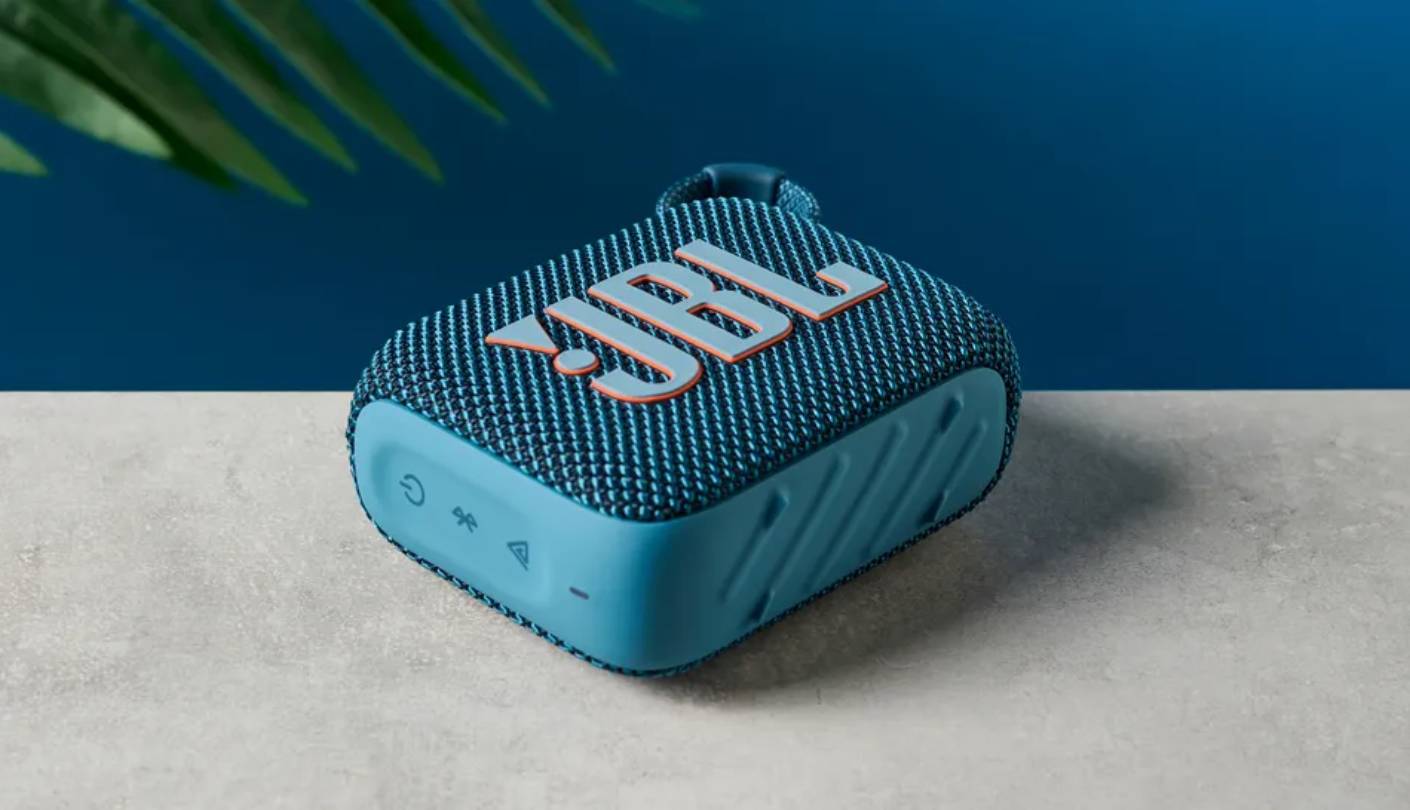
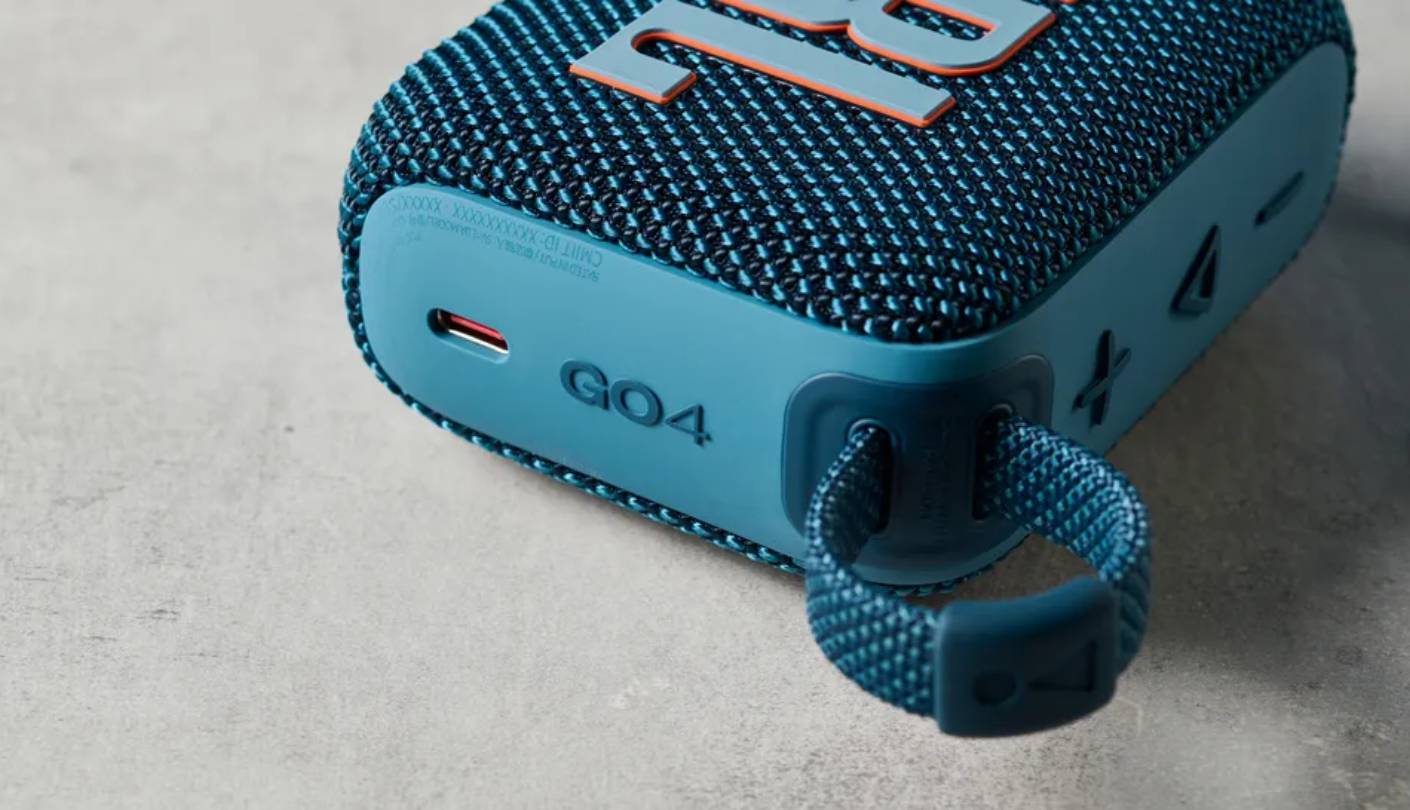
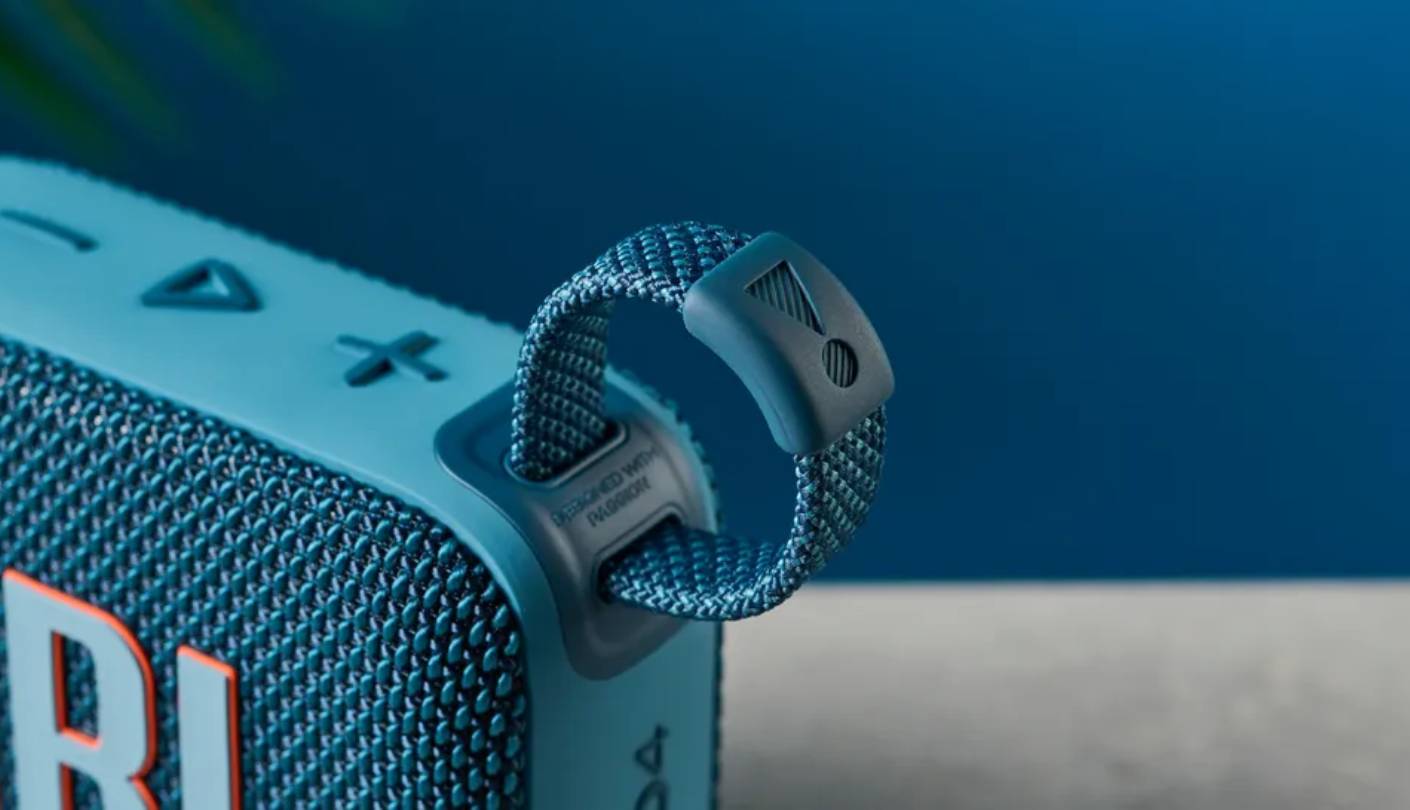
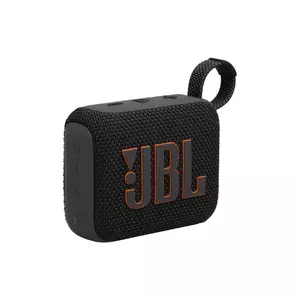
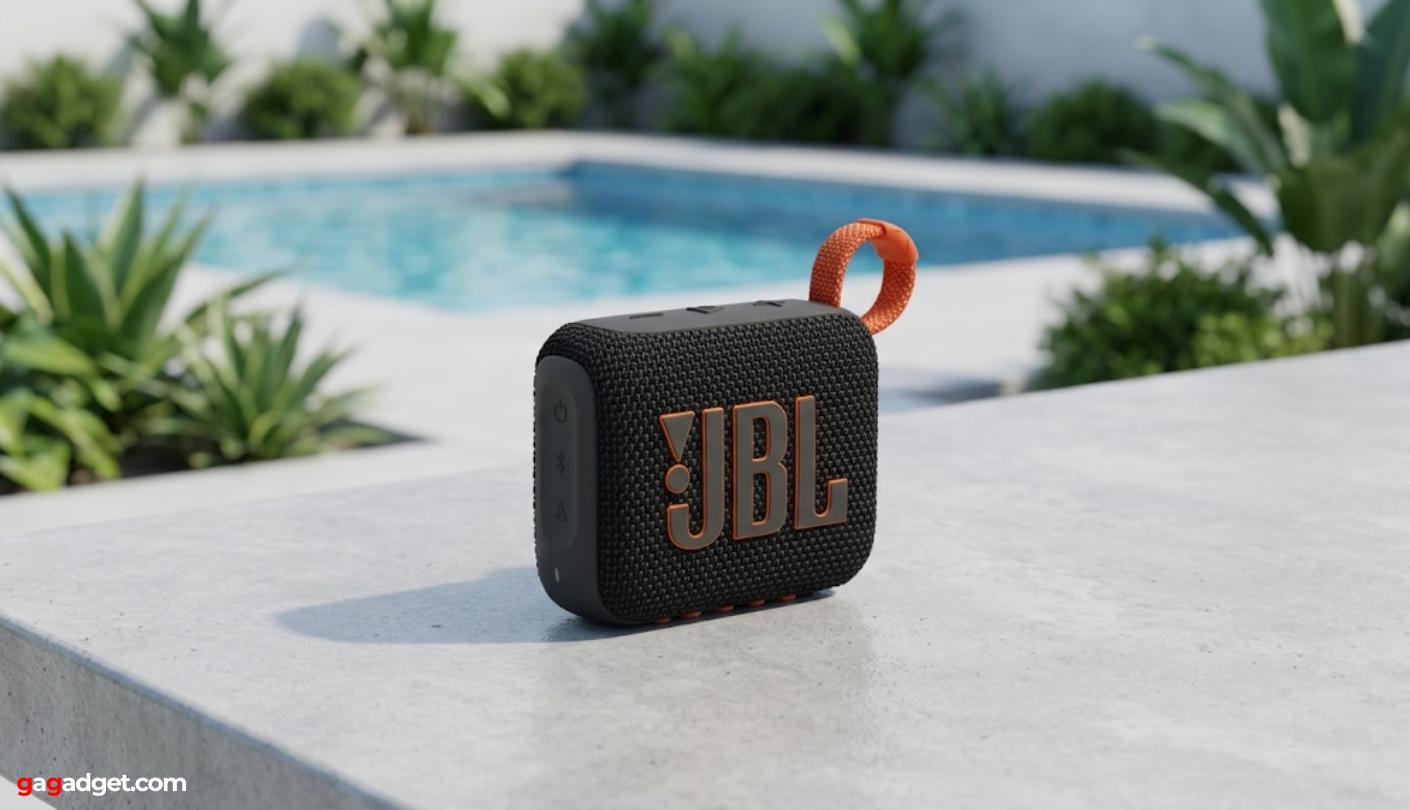
At 190 grams, the JBL Go 4 is the lightest speaker in this roundup by a meaningful margin, yet its silicone-edged build feels purposeful and solid rather than cheap. JBL moved the USB-C port and loop attachment to the right side in this generation and added extra silicone edge protection that's immediately obvious when you compare it to the Go 3. The redesigned integrated loop is more secure than anything on the previous model and clips to bag hardware without rattling loose on a hike. I've carried mine in a cycling jersey pocket without any concern about the body or the loop giving way.
The 4.2W amplifier running a full-range driver and an oval passive radiator at the base produces more usable bass than the Go 4's dimensions suggest. It won't reproduce sub-bass at any volume, but the mid-bass that carries most music comes through cleanly at outdoor listening levels. JBL Auracast connectivity links multiple Auracast-enabled JBL speakers from the same interface - a genuine ecosystem advantage for anyone already in the JBL lineup who wants to expand a setup over time.
The JBL Portable app adds a 5-band customizable EQ, stereo pairing mode for a second Go 4, and firmware updates. Playtime Boost extends battery from 7 hours toward 9 in practice, but it does so by rolling off bass frequencies - a reasonable trade-off for commuting and podcasts, not for music you care about. At maximum volume the battery drains toward 3-4 hours rather than the rated 7, which is worth knowing before a full-day trip without a charging option.
The control layout places a dedicated Auracast button on the side alongside power and Bluetooth, with volume and playback on top. Everything is reachable without looking at the speaker once you've used it for a day. The Go 4 launched in more than eight color options including several that look more like fashion accessories than tech products, which matters if you're bringing it to environments where a gray rectangle would stand out.
For anyone who wants a speaker that fits in a jeans pocket, handles submersion without any concern, and connects to a real app for EQ control, the Go 4 is the benchmark at this size. No speaker in this group weighs less or disappears into a bag as completely, and the sound quality at its size is hard to match.
Pros:
- 190g pocket weight
- IP67 protection
- 5-band EQ app
- Auracast pairing
- Durable silicone edges
Cons:
- 7hr battery ceiling
- No aux input
Summary: JBL Go 4 sets the benchmark for ultra-compact Bluetooth speakers with its IP67 build, Auracast connectivity, and 5-band EQ app packed into a 190-gram frame. The right pick when maximum portability is the deciding factor.
Soundcore Select 4 Go Review
Best Overall
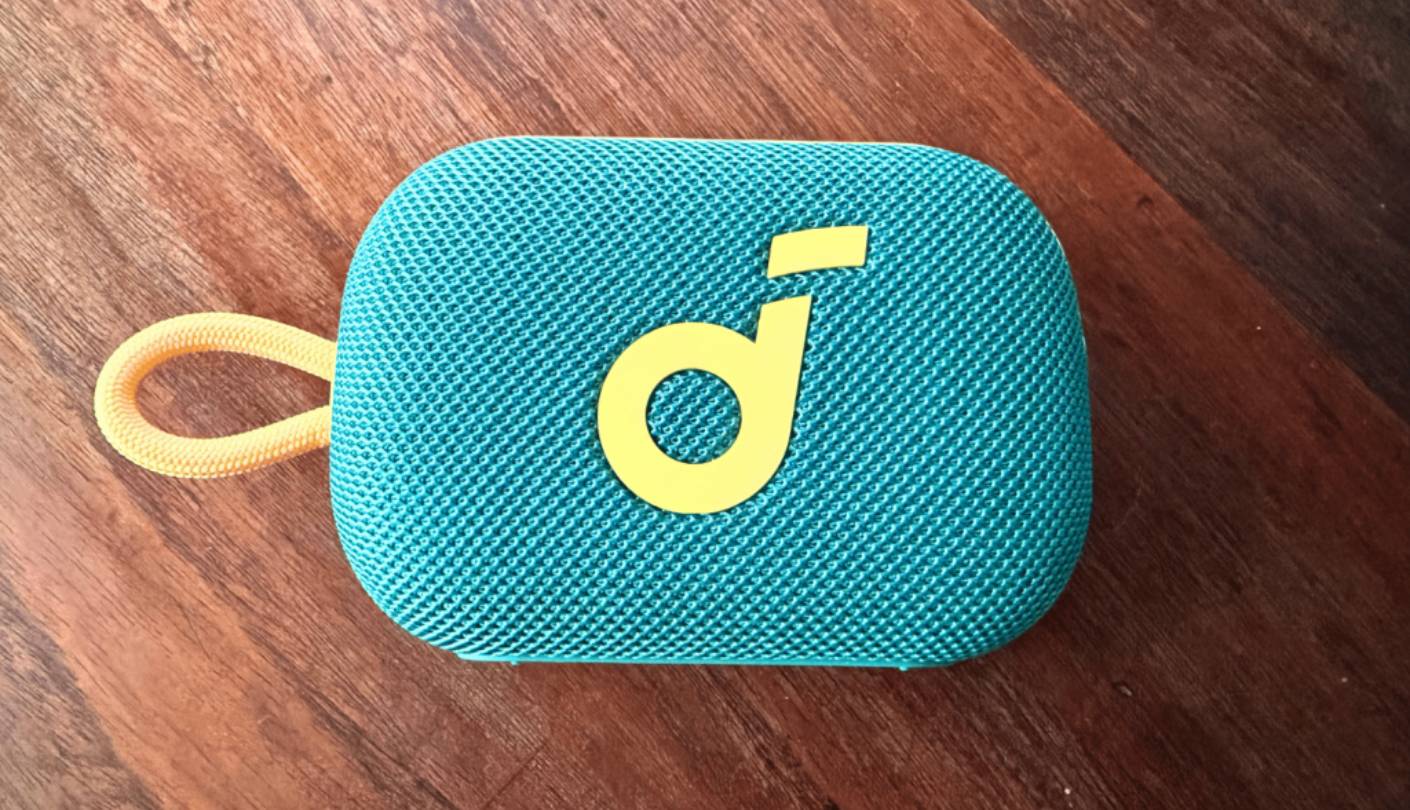
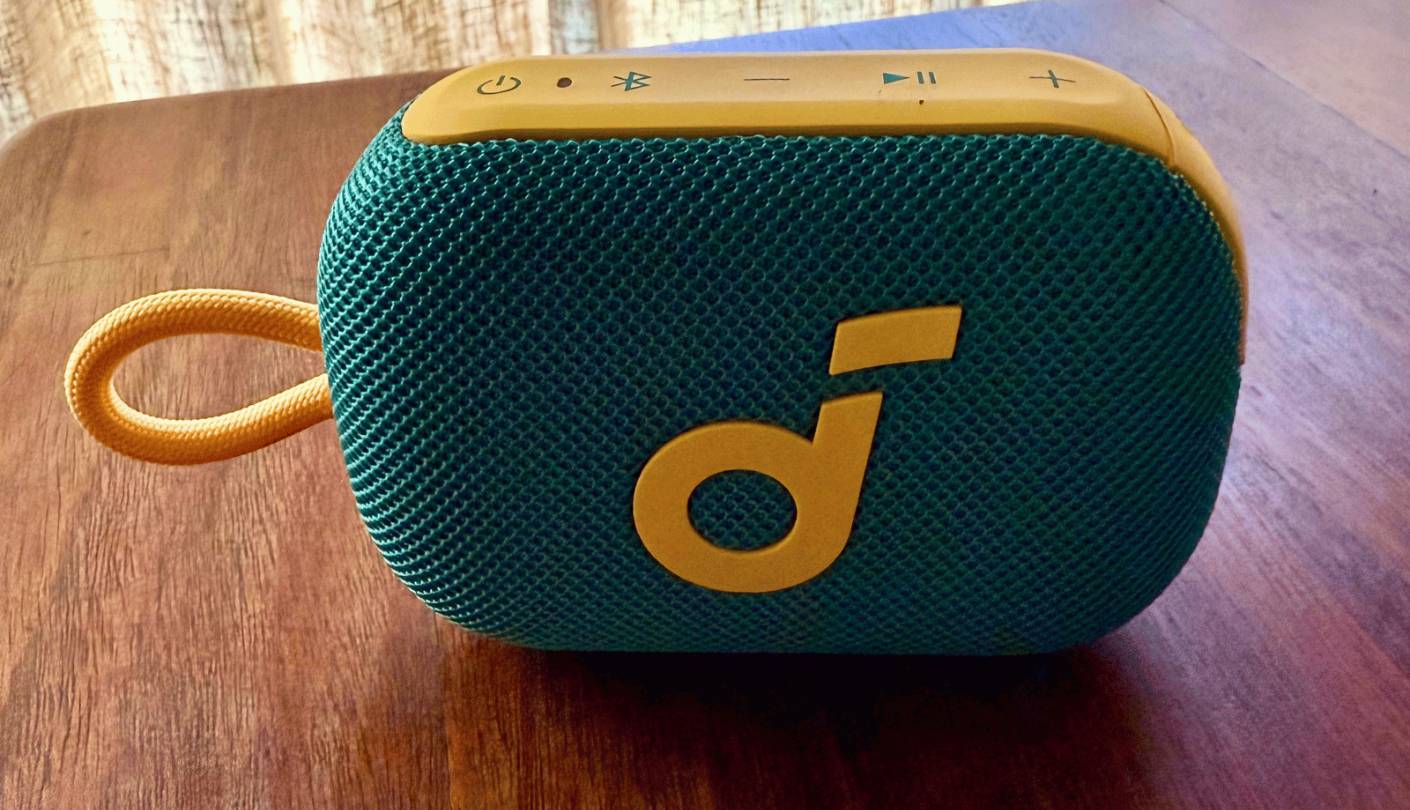
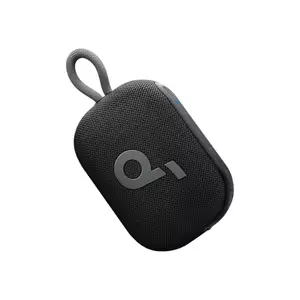
The Soundcore Select 4 Go earns its Best Overall badge from what Anker puts into it at its asking price - a 5W driver with passive radiator, 20 hours of rated battery, a 9-band EQ app, IP67 waterproofing with float capability, and Bluetooth 5.4 in a puck that weighs 263 grams. In direct A/B comparisons with the JBL Go 4 at matched volume, the Select 4 Go holds its own on sound quality and edges ahead on low-end body. Multiple independent tests put it at 86.8 dB max output versus the Go 4's 83.3 dB - a real gap at outdoor listening distances.
Real-world battery life lands around 10-12 hours at higher volumes rather than the claimed 20, making it still the second-longest-running speaker in this group behind the Tribit at comparable listening levels. The Soundcore app's 9-band EQ is the most flexible implementation here outside the Tribit, with four factory presets - Bass Boost, Treble Boost, Balanced, and Soundcore Signature - and a fully customizable curve. Bluetooth 5.4 gives it the newest wireless standard in this roundup.
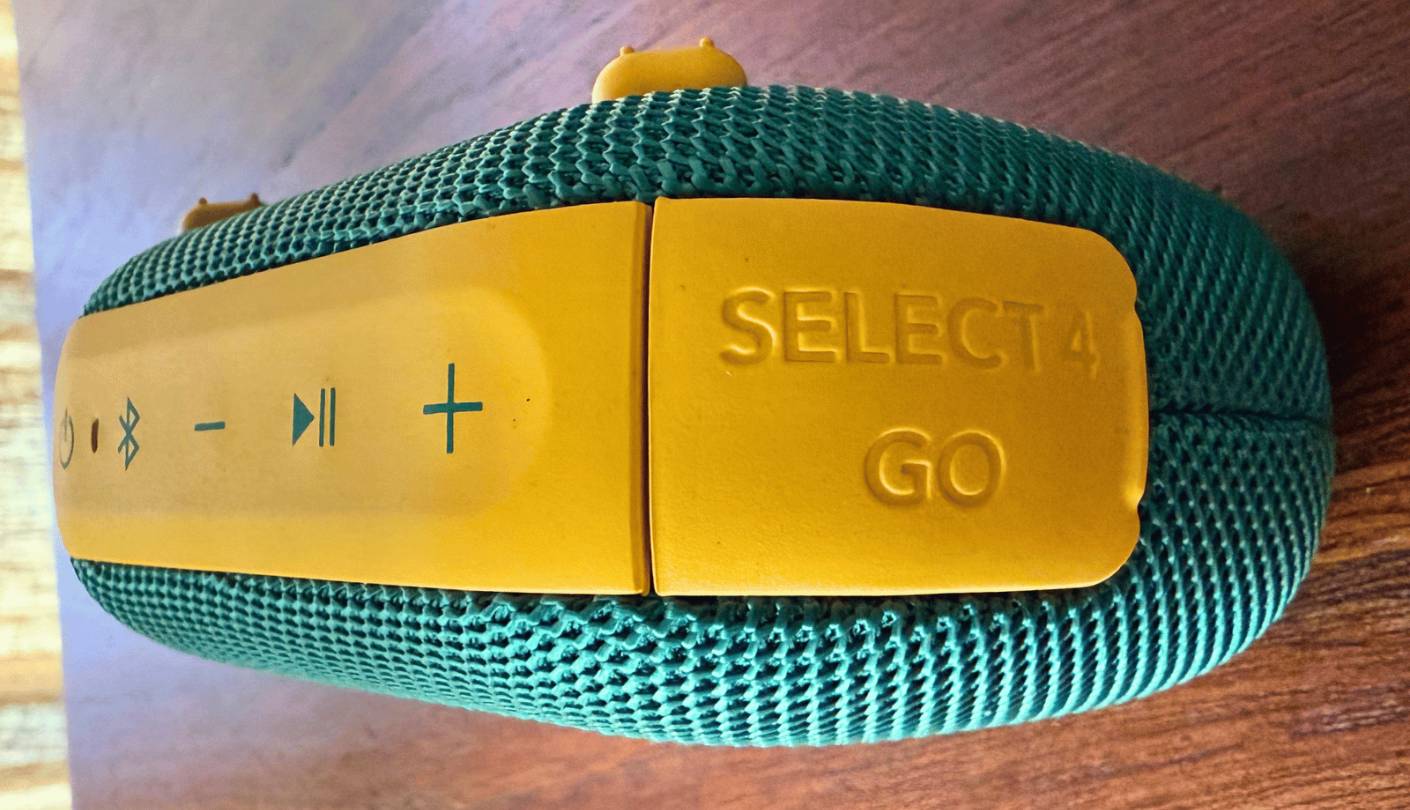
All control buttons sit consolidated on one panel at the top of the speaker, which makes eyes-free operation intuitive once you've spent a day with it. The thick braided carry loop handles real attachment loads to a carabiner or backpack strap without any sign of stress. Track skipping backward from the hardware controls is a feature I've used more than expected - most budget speakers only support forward skip, and having reverse skip on physical buttons is the kind of small thing that changes how much you reach for the phone.
Build quality does show its budget constraints in places. The rubber feet on the bottom detach more easily than they should, and the fabric mesh collects fine dust and lint in environments like sandy beaches more readily than a hard-shell design would. The Select 4 Go is not as precisely constructed as the JBL Go 4, and the difference is obvious if you hold both. For indoor or light outdoor use that doesn't involve sand or extreme grit, it's not a problem in practice.
For users who prioritize runtime and sound quality per dollar over premium finish, the Select 4 Go is the most value-dense option in this roundup. It's the one I recommend to someone who wants a grab-and-go speaker that won't need charging every night and sounds better than the price suggests it should.
Pros:
- 20hr rated battery
- Floatable IP67 body
- 9-band EQ app
- Backward track skip
- Bluetooth 5.4 standard
Cons:
- Loose rubber feet
- Fabric collects dust
Summary: Soundcore Select 4 Go packs 20-hour battery, a 9-band EQ, floatable IP67 build, and 86.8 dB output into a speaker that costs a fraction of what equivalent specs run at name-brand pricing. The best pure value in this group.
Sony SRS-XB100 Review
Weekend Warrior
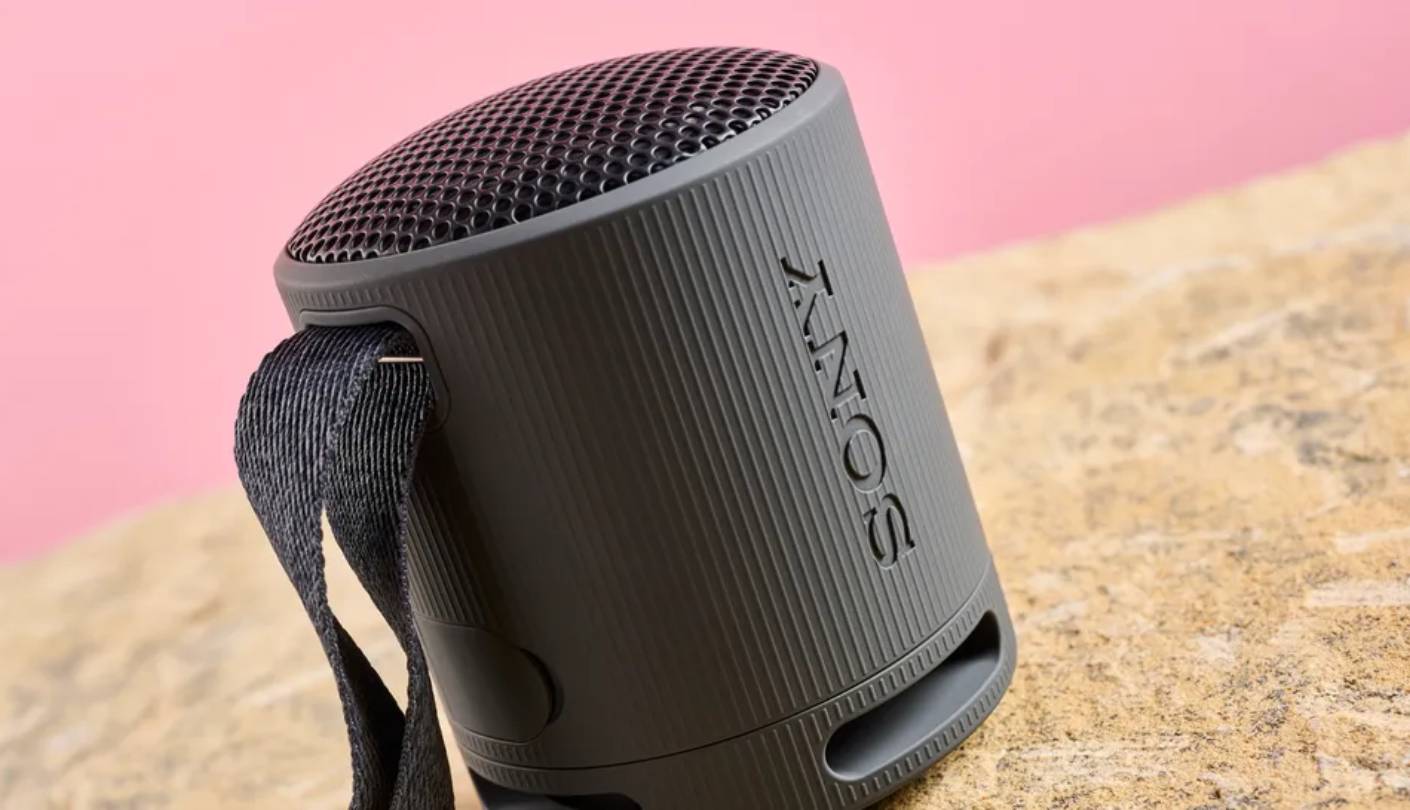
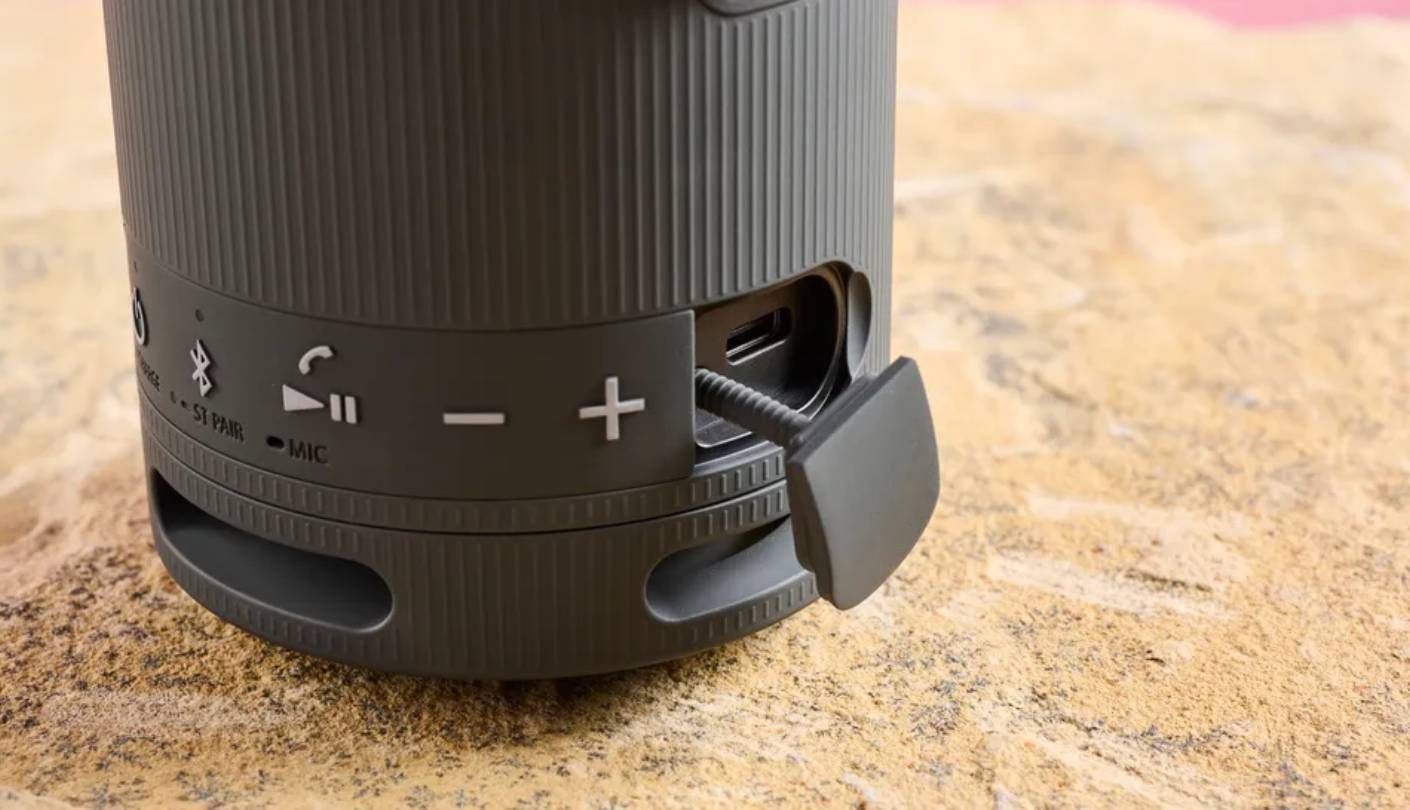
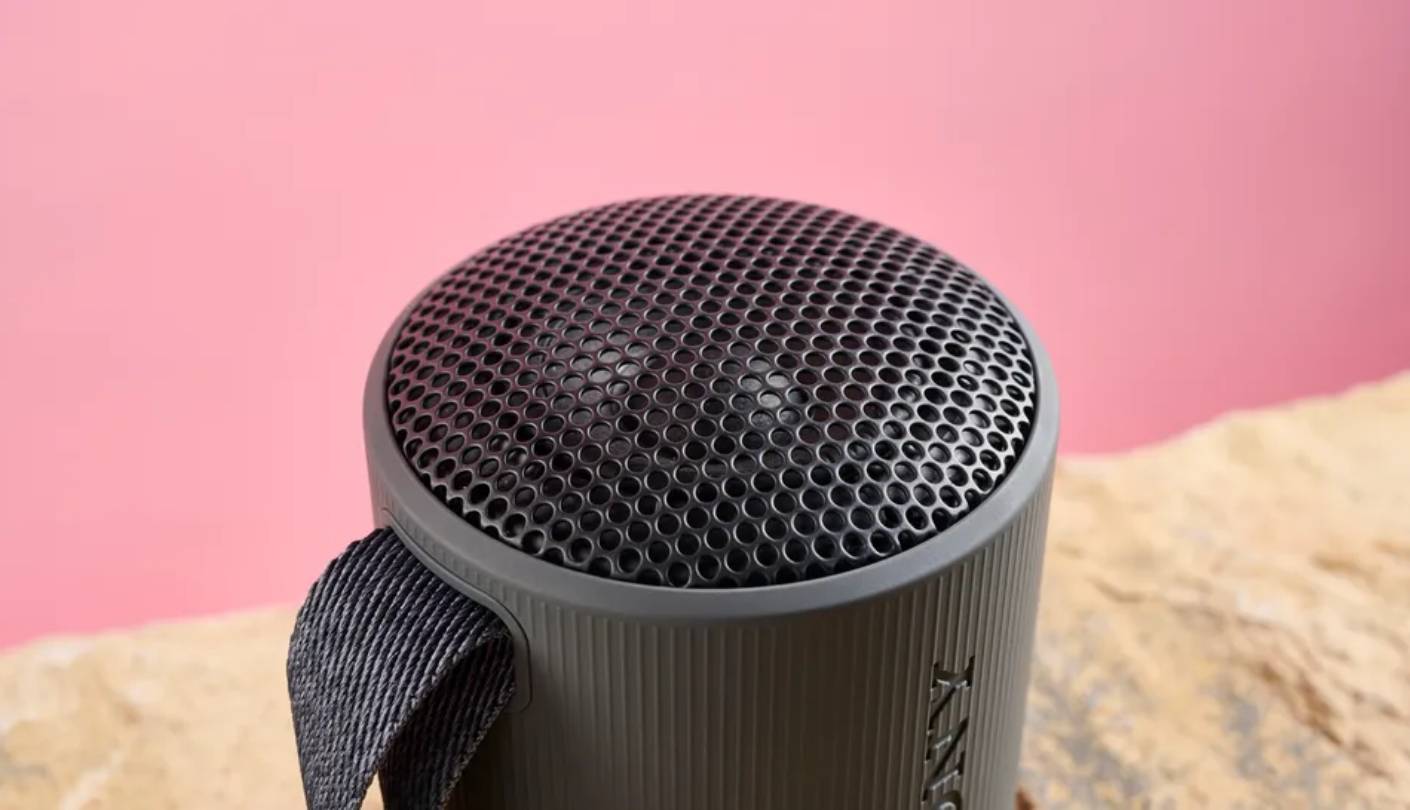
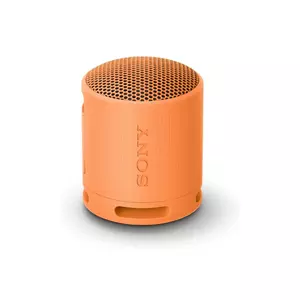
The SRS-XB100 is Sony's smallest speaker, and it's built around a design premise that rewards simplicity over configuration. No adjustable EQ, no multi-speaker ecosystem to manage, no Bluetooth modes to toggle - just a compact cylinder you turn on and it plays. My first week with it was a reminder that for a large portion of listeners, that is exactly what they want. The soft-touch outer surface gives it a grip quality that most fabric-wrapped speakers at this size don't match, and the etched Sony logo makes it look more considered than most budget speakers.
The vertical orientation is one of the XB100's genuine strengths. A top-facing driver, a bottom passive radiator, and Sony's Sound Diffusion Processor work together to spread audio across a room more evenly than a forward-firing speaker of equivalent size. It sounds less like a point source than the Go 4 or Select 4 Go at similar volume, which makes it particularly effective on a desk or small table where the speaker sits in the center of a space. The UV-coated IP67 shell handles direct sunlight and sand without any sign of color degradation.
Battery life is the XB100's headline spec for good reason. At 16 hours of rated runtime, Sony achieves one of the strongest figures per gram in this group - real-world testing consistently confirms the 16-hour figure holds at moderate volume, with multiple reviewers reporting five-day spans of daily use before the low battery indicator activated. The 4.5-hour charge time is the main friction point, requiring overnight charging rather than a quick midday top-up.
The Sony Music Center app connects to the XB100 for battery display and firmware updates only. No EQ, no presets, no sound customization beyond the hardware's factory tuning. For listeners who want to shape their audio profile, this is the XB100's clearest limitation compared to the Soundcore and Tribit options. The built-in microphone handles calls at adequate clarity but is noticeably behind dedicated speakerphone hardware.
The XB100 is the speaker for a camper, a commuter, or a weekend traveler who needs something small that sounds decent, lasts for days, and never asks for app configuration. The color-matched fabric carry strap hooks over a bike handlebar, tent pole, or bag handle, and the four available colors include practical shades built to stay looking clean after two years of use.
Pros:
- 16hr accurate battery
- 360° vertical dispersion
- UV-coated IP67 shell
- Secure fabric carry strap
- Zero app configuration
Cons:
- No EQ app or presets
- 4.5hr charge time
Summary: Sony SRS-XB100 runs 16 hours on a charge in a vertical-firing design with UV-coated IP67 durability and no app setup required. The right pick for a reliable everyday speaker that just works out of the box.
Ultimate Ears WONDERBOOM 4 Review
360 Champ
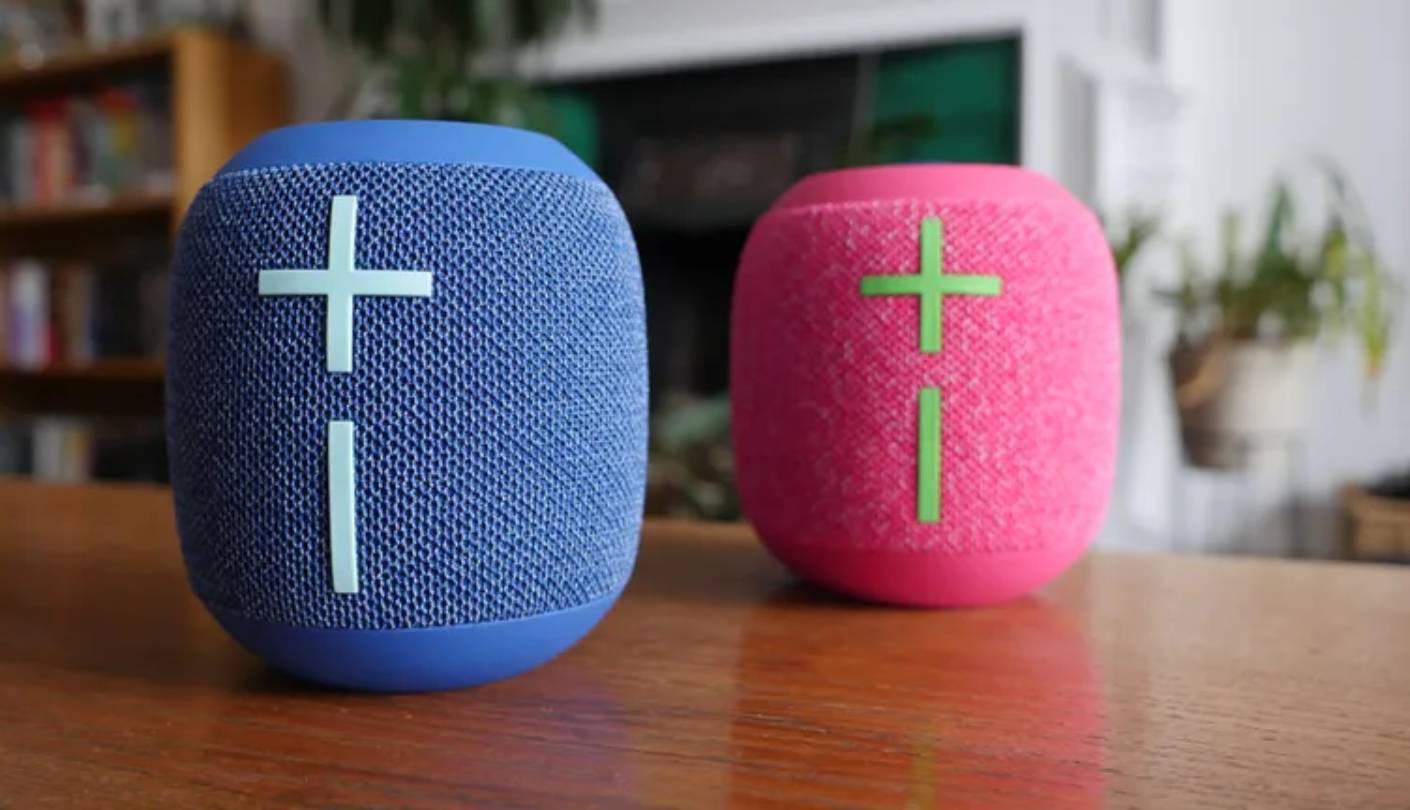
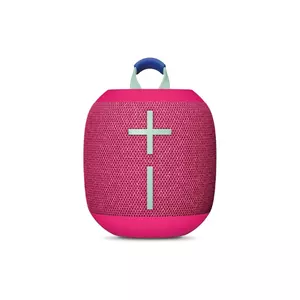
No other speaker in this roundup sounds as good pointed toward the ceiling in the middle of a table. The WONDERBOOM 4's dual 40mm active drivers and two passive radiators are arranged for omnidirectional output, and the 360-degree coverage that results from that configuration is different from any forward-firing speaker in this group. A WONDERBOOM 4 placed in the center of a campfire circle or kitchen table outperforms a directional speaker of twice the size set off to one side. I've used it at a small outdoor gathering and the coverage was the first thing people noticed.
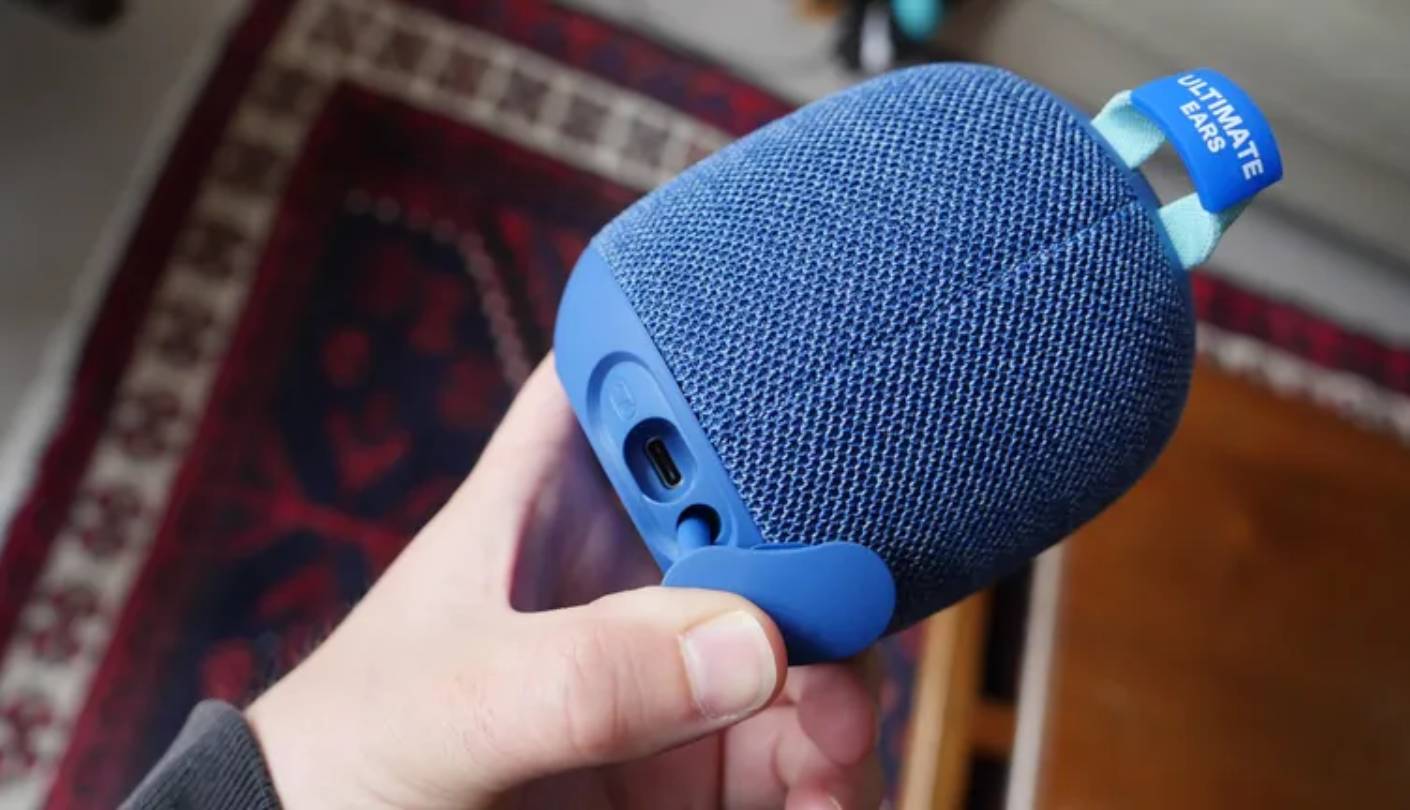
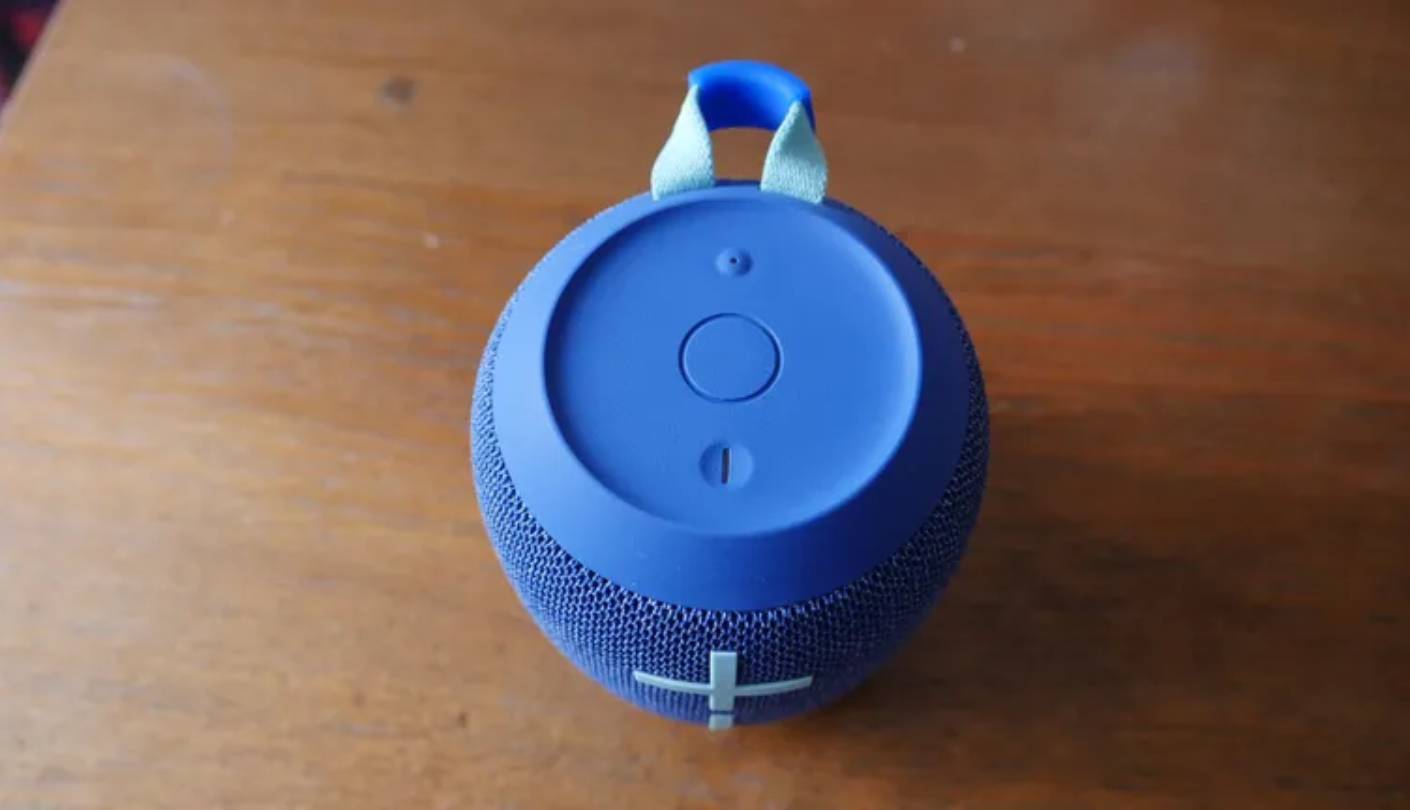
The WONDERBOOM 4 floats and is rated IP67 for dust and water protection, with a 1.5-meter drop test giving it the toughest physical durability spec in this roundup. The Outdoor Boost button on the underside lifts mid and treble frequencies for environments where audio needs to carry over ambient noise - it works well for beach and trail listening, though it costs some of the low-end warmth that makes the speaker enjoyable in standard mode. The new Podcast mode from this fourth generation lifts upper mids for clearer spoken word reproduction. Both modes are accessible without an app.
At 14 hours of rated battery, the WONDERBOOM 4 covers a full day of outdoor use reliably. Real-world testing from multiple sources puts actual runtime between 12 and 14 hours depending on volume - accurate enough to trust when planning a trip. Charging takes approximately 2.5 hours via USB-C, matching the JBL Go 4 for the fastest full charge in this group.
Maximum volume performance is where the WONDERBOOM 4 shows its constraint. It gets impressively loud up to roughly 75% volume, but pushing beyond that introduces distortion that degrades the clarity that makes it worth buying at all. The sweet spot is below that ceiling, and at those levels it outperforms every other speaker in this group at matched output from its position in the middle of a room. The UE Boom app still does not support the WONDERBOOM 4, meaning there is no EQ customization beyond the physical modes.
At 420 grams the WONDERBOOM 4 is the heaviest compact option in this group, but the bungee loop on top clips to a backpack or carabiner without adding bulk. For group listening at home, outdoors, or anywhere a single speaker needs to fill a space from a central position, the WONDERBOOM 4 handles that role better than anything else here.
Pros:
- 360° omnidirectional sound
- IP67 floatable build
- 1.5m drop-tested
- Outdoor Boost + Podcast modes
- 2.5hr full charge
Cons:
- Distorts above 75% volume
- No EQ app support
Summary: UE WONDERBOOM 4 produces 360-degree sound from dual 40mm drivers in a floatable, drop-tested IP67 shell with 14-hour battery. The best pick when omnidirectional coverage and physical durability are the priority.
Tribit XSound Plus 2 Review
Power Pick
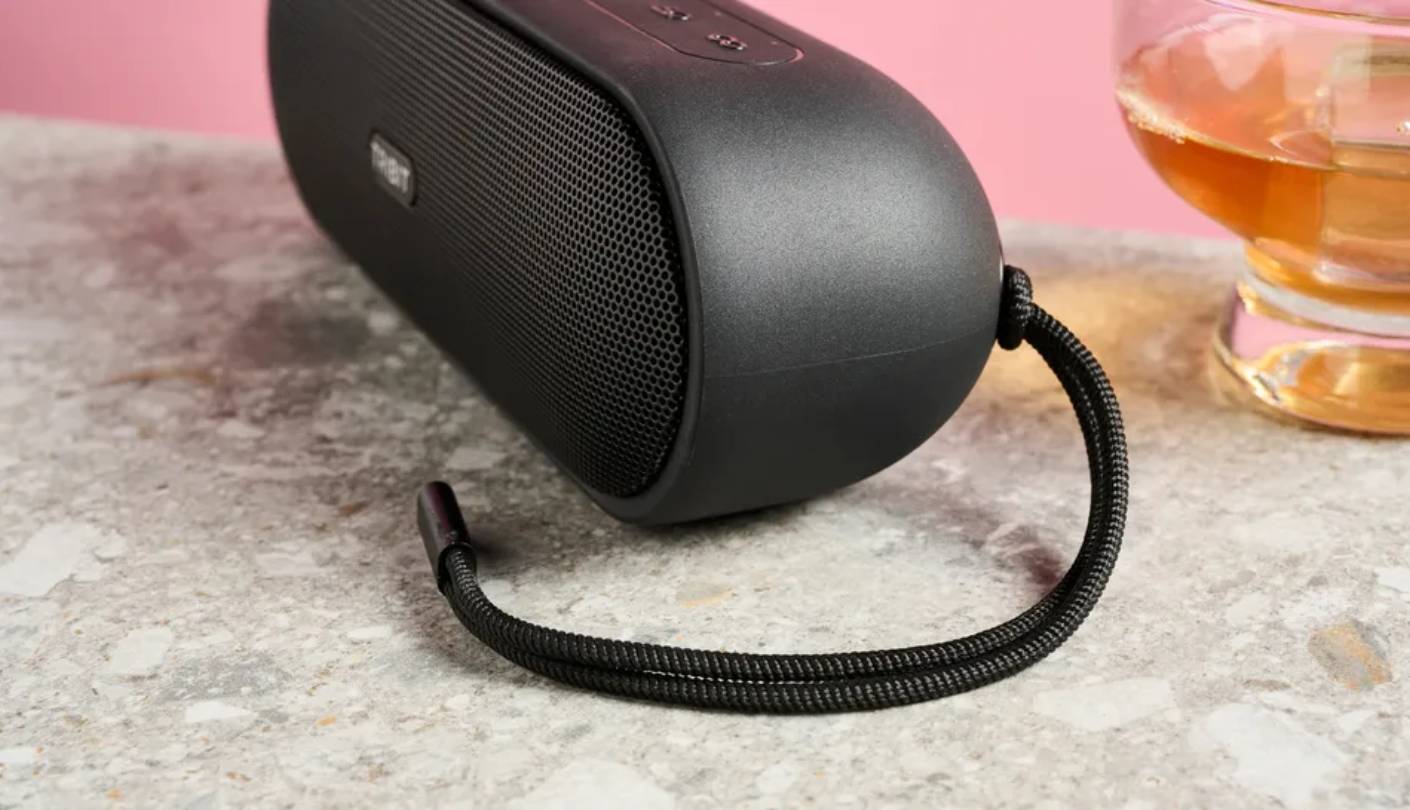
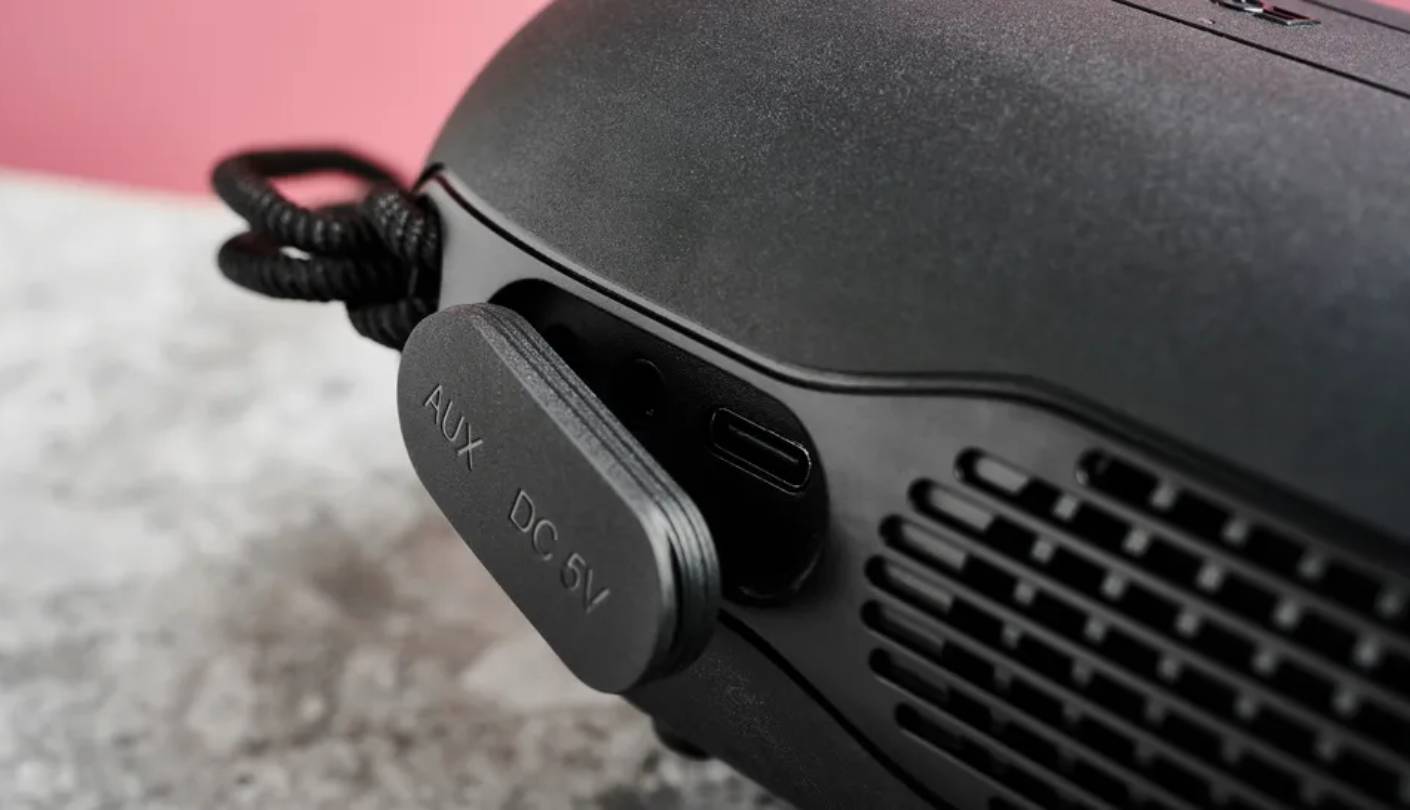
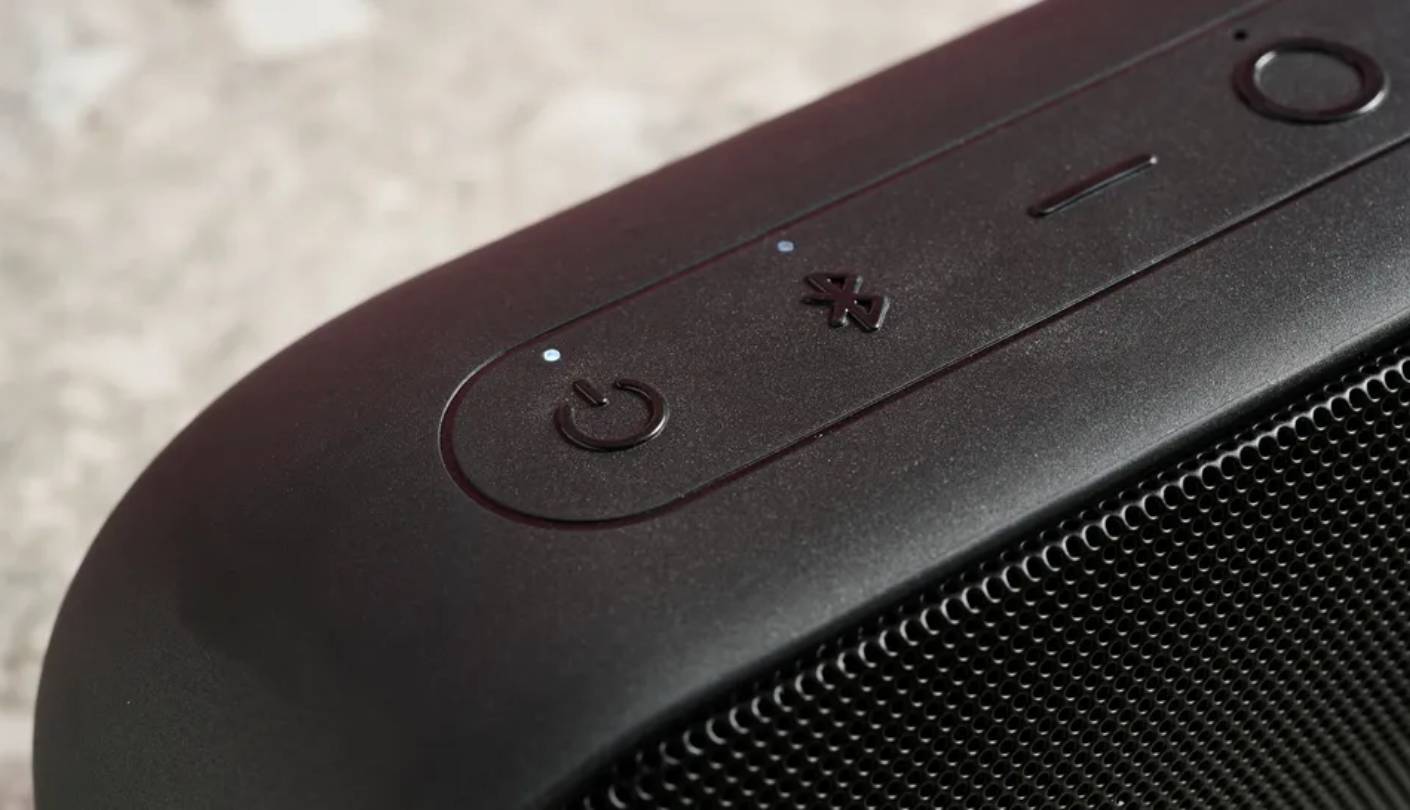
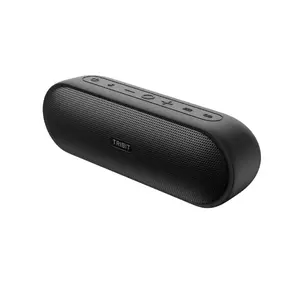
The first time I turned the XSound Plus 2 on in my living room, the gap between it and every other speaker in this roundup was obvious. At 30W across two 15W neodymium drivers, the XSound Plus 2 operates in a different output class than the puck-style speakers here. Two passive radiators extend the bass without the bloom that typically comes from EQ-boosted low end in budget hardware, and the result is a speaker that can actually fill a medium-sized room or a 15-person patio gathering at comfortable volume without reaching its ceiling. One reviewer running battery tests at 60% volume noted it was still audible from two rooms away through a closed door.
The XBass mode engages a patented algorithm that increases low-end output beyond what the hardware produces at baseline. It changes the character of the speaker noticeably - kick drums and basslines push forward in the mix without the mids or highs collapsing. The Tribit app's 9-band EQ adds further control with six factory presets and a fully customizable curve that stores settings across disconnections. Bluetooth 5.3 maintains connection up to 150 feet outdoors, and a 3.5mm aux input handles wired sources that no other speaker in this roundup accepts.
Battery life is the XSound Plus 2's second headline number. A 2400mAh cell supplies 24 hours of rated runtime at 60% volume, with real-world testing at higher volumes landing consistently around 10-13 hours. One reviewer ran the speaker for 12 days of daily sessions without reaching zero. USB-C charges the speaker fully in approximately 3 hours - faster than the Sony or Soundcore options. The charge time is short enough to recover overnight without planning around it.
The trade-off is size and weight. At 795 grams and 7.8 inches long, the XSound Plus 2 is not a speaker that disappears into a pocket. It fits in most backpacks without issue, but it takes up real bag real estate. The IPX7 rating handles rain and splashing without concern, but the absence of a dust certification is a genuine consideration for beach or trail use where fine particles reach everywhere. The speaker is available in black only, which limits its appeal if aesthetics are a priority for your setup.
For anyone who wants the loudest, most bass-capable speaker under $80 and isn't constrained by portability requirements, the XSound Plus 2 covers ground that no other speaker in this roundup approaches. It's the one I pick for a backyard session or a camping trip where output and runtime matter more than packing small.
Pros:
- 30W dual-driver output
- 24hr rated battery
- 9-band EQ app
- XBass algorithm
- 3.5mm aux input
Cons:
- IPX7, not dust-rated
- Black color only
Summary: Tribit XSound Plus 2 packs 30W across dual neodymium drivers, a 24-hour battery, 9-band EQ, and XBass mode into a compact pill that beats larger-brand alternatives at the same output level and price.
Portable Bluetooth Speakers Under $80: FAQ
Do budget Bluetooth speakers sound good?
Yes, within limits. At the sub-$80 range, the best speakers in this group produce sound that holds up well for casual music listening, podcasts, and outdoor use. The gap between a well-designed $50 speaker and a $200 one is real, but it's narrower than it was three years ago. My own benchmark is whether a speaker sounds natural at 60% volume on acoustic or vocal music - the speakers that pass that test are worth the money regardless of price.
What is the difference between IP67 and IPX7?
IP67 certifies both dust resistance (the "6" = fully dust-tight) and water resistance (the "7" = submersible to one meter for 30 minutes). IPX7 certifies the same water resistance but skips the dust test entirely - the "X" is not a tested rating. For pool and shower use, both ratings are adequate. For beach or trail use where dust and fine particles are present, IP67 is the more complete protection, which is why the absence of a dust rating on the Tribit XSound Plus 2 is worth noting for sandy environments.
How loud does a speaker need to be for outdoor use?
A speaker with 86-87 dB max output is audible and usable at a small outdoor gathering of 4-6 people. At larger or noisier outdoor settings - a crowded beach or a backyard party - you need output closer to 90 dB or above. The Tribit XSound Plus 2 at 30W handles larger outdoor spaces better than anything else in this group. The UE WONDERBOOM 4 at 86-87 dBC covers small groups well from its 360-degree position. The JBL Go 4 and Soundcore Select 4 Go are best suited to personal outdoor listening rather than filling open spaces.
Can I pair two Bluetooth speakers together?
Most speakers in this roundup support stereo pairing with a second unit of the same model. The JBL Go 4 goes further with Auracast, linking multiple JBL speakers across a broader ecosystem beyond just a matched pair. TWS pairing on the Soundcore Select 4 Go and Tribit XSound Plus 2 creates left-right stereo from two matched units. Stereo pairing almost always requires two units of the same model - cross-brand or cross-generation pairing rarely works in practice.
Is a companion app necessary for a good Bluetooth speaker?
No, but it adds real value when the implementation is good. The Soundcore and Tribit apps in this group offer 9-band EQ that can meaningfully change how a speaker sounds for different music preferences. The Sony XB100 and UE WONDERBOOM 4 perform well without any app in their factory tuning. If you listen across multiple genres or want to correct for a specific listening environment, a good app is worth having. If you want something you turn on and never configure, the Sony XB100 is the right choice in this group.
Which speaker in this group is best for the shower?
The JBL Go 4, Sony SRS-XB100, Soundcore Select 4 Go, and UE WONDERBOOM 4 are all rated IP67, making them fully suitable for shower use. The Tribit XSound Plus 2's IPX7 rating also covers shower splashes, though its size is more than necessary for most bathroom setups. The Sony XB100's vertical-firing driver works particularly well in a small enclosed space because its audio disperses outward and upward rather than pointing in a single direction.
How does battery life hold up at high volume?
Every speaker in this group drains faster at high volume than the rated figure. The JBL Go 4 drops from 7 rated hours to around 3-4 hours at maximum. The Soundcore Select 4 Go runs approximately 10-12 hours at high volume against its 20-hour rating. The Tribit XSound Plus 2 logs 10-13 hours at high volume compared to its 24-hour figure. For any planning purpose, assume high-volume outdoor use cuts rated battery life by 40-50% across all five of these speakers.
What should I consider when choosing between a puck-style and a pill-style speaker?
Puck-style speakers like the JBL Go 4, Soundcore Select 4 Go, and Sony XB100 prioritize portability and fit in a jacket pocket or small bag with no real bulk. Pill-style speakers like the Tribit XSound Plus 2 are heavier and longer but produce more output, deeper bass, and longer battery life per charge. My recommendation: if you carry your speaker daily and portability is a genuine constraint, go puck. If it's going into a backpack for weekend trips where sound quality and volume matter, the pill format serves you better.
Choosing the Right Portable Bluetooth Speaker Under $80
The range within this price bracket is wider than most buyers expect going in, and after testing all five back to back, I'd make the choice based on one question: what is the speaker for. At one end, the JBL Go 4 sets the standard for ultra-compact design with its 190g frame, Auracast multi-speaker capability, and IP67 durability. The Soundcore Select 4 Go undercuts it on price and matches or exceeds it on battery life and raw output, making it the obvious pick for value-first buyers who can accept a slightly larger body and less refined construction.
For battery life without budget pressure, the Sony SRS-XB100 runs 16 hours on a charge in a vertical-firing design that sounds good anywhere you set it down, and it never asks you to open an app. The UE WONDERBOOM 4 is the best choice when a group needs to hear the speaker from all sides - its 360-degree output and drop-tested body earn it a place in the outdoor conversation at any price point. And for buyers who want maximum output and the longest real-world endurance at the top of this budget, the Tribit XSound Plus 2 is the one speaker here that can hold its own at a backyard party without being pushed to its limit.

Jim's our tech geek with a mission since February 2023. From movies to video projectors, he knows his stuff and aims to make tech work for you. When he's not geeking out, he's there to guide you through making savvy decisions.


