At gagadget.com, your trust is our priority. We follow strict quality standards in our research, tests, and analysis of video projectors, to give you the best experience. Learn more
XGIMI Horizon Ultra vs JMGO N1 Ultra
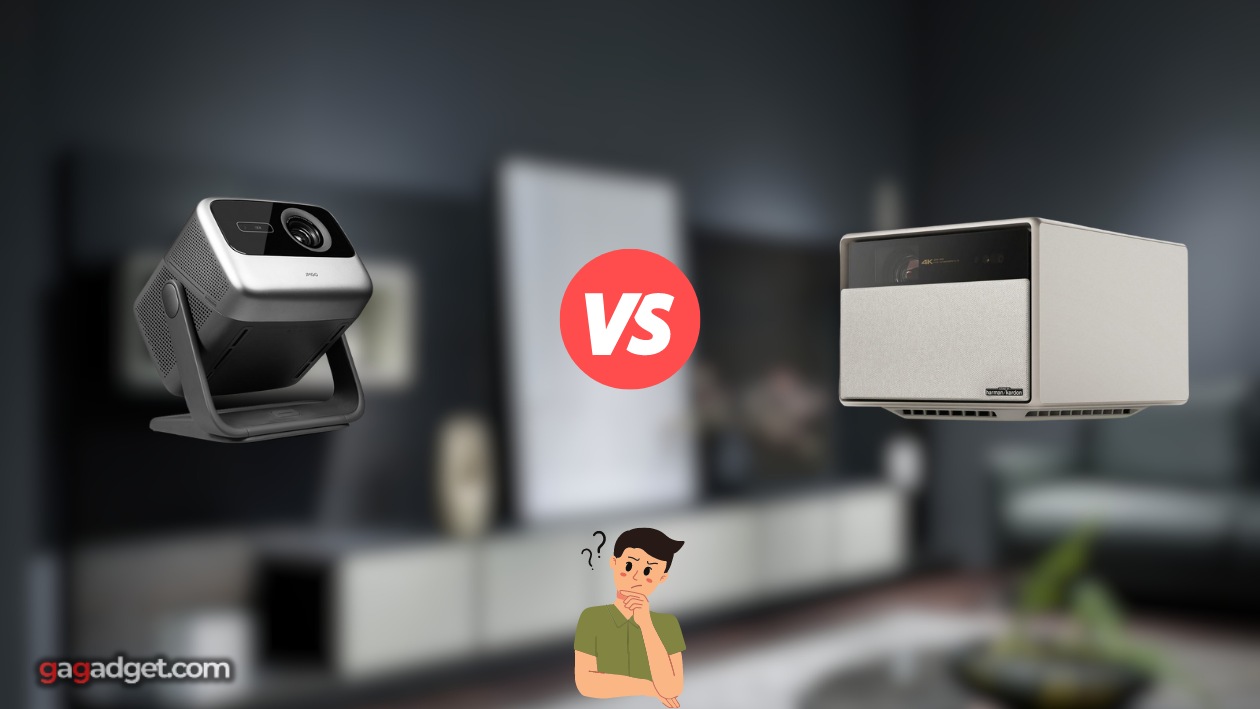
Hey everyone, it's Jim from Gagadget. Today, I'm comparing two cutting-edge 4K laser projectors: the XGIMI Horizon Ultra and the JMGO N1 Ultra. Both models offer stunning UHD resolution, built-in Android TV, and powerful onboard audio for all-in-one home theater convenience. But they also have some key differences in brightness, color technology, throw ratio, and unique features like the N1 Ultra's gimbal design.
I've spent quality time testing both projectors, evaluating picture quality, ease of setup, smart features, and overall value. In this in-depth XGIMI Horizon Ultra vs JMGO N1 Ultra comparison, I'll highlight each model's strengths and help you decide which one best fits your needs and space. Let's dive in!
XGIMI Horizon Ultra vs JMGO N1 Ultra: Quick Overview
Let's start with the high-level takeaways: The XGIMI Horizon Ultra and JMGO N1 Ultra are premium 4K laser projectors with integrated Android TV 11.0. They share the same UHD resolution, throw ratio, 3D capability, and auto focus & keystone. Key differences are the Horizon Ultra's higher 2,300 ISO lumen brightness and unique LED/laser light engine vs the N1 Ultra's 2,200 CVIA lumens and pure RGB laser. The N1 Ultra also features a 360° horizontal & 135° vertical gimbal design for more flexible placement.
For most buyers, I recommend the XGIMI Horizon Ultra for its higher brightness, wider color gamut, and extensive connectivity. The LED/laser tech and Dolby Vision deliver incredible color depth and accuracy. However, if you need the absolute lowest input lag for gaming or value the N1 Ultra's unique gimbal adjustment, it's a very compelling alternative with similar performance and features overall.
Table of Contents
- XGIMI Horizon Ultra vs JMGO N1 Ultra: Full Comparison
- JMGO N1 Ultra vs XGIMI Horizon Ultra: Design
- XGIMI Horizon Ultra or JMGO N1 Ultra: Owner Reviews
- XGIMI Horizon Ultra and JMGO N1 Ultra Alternatives
- Conclusion: Should You Buy the XGIMI Horizon Ultra or JMGO N1 Ultra?
XGIMI Horizon Ultra vs JMGO N1 Ultra: Full Comparison
| Specs | XGIMI Horizon Ultra | JMGO N1 Ultra |
| Image |
|
|
| Resolution | 3840 x 2160 (4K UHD) | 3840 x 2160 (4K UHD) |
| Brightness (Lumens) | 2,300 ISO | 2,200 CVIA |
| Display Tech | DLP 0.47" | DLP 0.47" |
| Light Source | Laser/LED hybrid | RGB triple laser |
| Light Source Life | 25,000 hours | Not specified |
| Lens Adjustment | 1.25x zoom, motorized focus | Fixed focal length, motorized focus |
| Throw Ratio | 1.20:1 - 1.50:1 | 1.20:1 |
| Input Lag (4K/60Hz) | 18ms | 15ms |
| Smart Features | Android TV 11.0, Google Assistant, streaming apps | Android TV 11.0, Google Assistant, streaming apps |
| HDR | HDR10, HDR10+, Dolby Vision | HDR10 |
| Integrated Speakers | 2x 12W Harman Kardon | 2x 10W Dynaudio |
| Audible Noise | 28 dB | 26 dB |
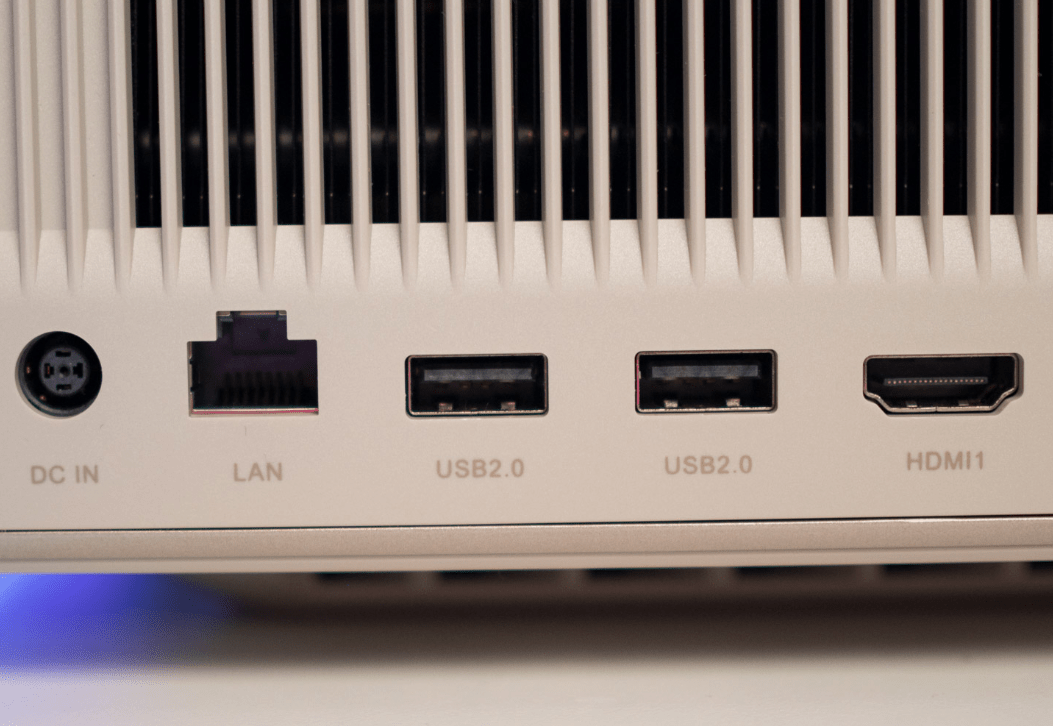
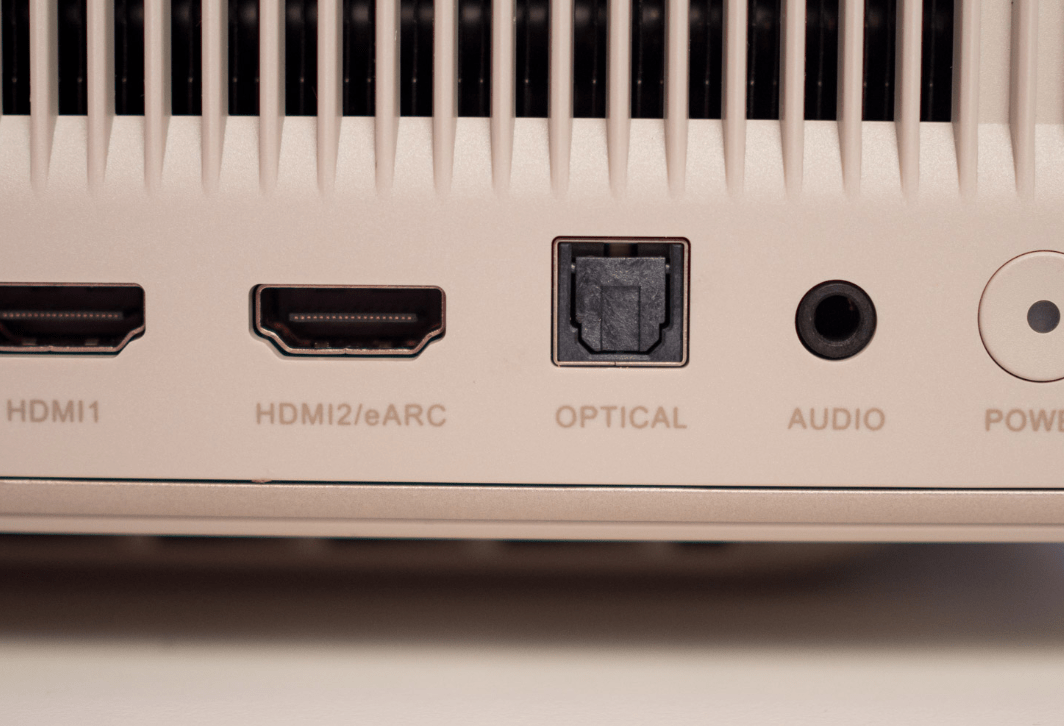
| Connectivity | 2x HDMI 2.1, 2x USB 2.0, LAN, Wi-Fi, optical audio | 2x HDMI 2.1, USB, Wi-Fi |
| Dimensions (W x D x H) | 8.6" x 10.2" x 6.7" | 9.5" x 8.7" x 7.9" |
| Weight | 11.5 lbs | 9.9 lbs |
| Release Year | 2023 | 2023 |
Starting with the core projection technology, the XGIMI Horizon Ultra and JMGO N1 Ultra both utilize a 0.47" DLP chip for 4K UHD resolution. This means identically sharp, pixel-dense images for movie nights, sports, and gaming alike. Text remains legible even at small font sizes, while fast motion stays smooth and judder-free.
The Horizon Ultra takes the lead in rated brightness at 2,300 ISO lumens vs the N1 Ultra's 2,200 CVIA lumens. While measurements differ, real-world performance is comparable, with both projectors producing a vibrant picture even with some ambient light in the room. You'll want light control for HDR or the largest screen sizes, but both handle lamps-on viewing better than most UST models.
Color is where the two diverge more significantly. The Horizon Ultra uses a unique LED/laser hybrid light source with BT.2020 color gamut coverage, resulting in exceptionally vivid and accurate hues. Paired with Dolby Vision tone mapping, HDR content really pops off the screen - faces look authentic, landscapes lush and three-dimensional.
Gamers will appreciate the N1 Ultra's slightly lower 15ms input lag at 4K/60Hz vs the Horizon Ultra's 18ms. Both are very responsive by projector standards and great for casual play on the big screen. Just note that neither supports 120Hz refresh rates or VRR like the latest consoles and TVs.
Setup ease is comparable across both units. Motorized focus, auto keystone, and 8-point warping correction help dial in a crisp, uniformly bright image. Android TV 11.0 makes streaming from Netflix, Prime Video, and more a breeze. Just connect to Wi-Fi, log in to your accounts, and you're off to the races. Google Assistant voice control is also convenient for hands-free navigation.
The N1 Ultra's key setup advantage is its integrated gimbal design. You can pan the lens up to 360° horizontally and tilt it 135° vertically for off-center placement, even on the ceiling. It's a unique, welcome dose of flexibility in a fixed-throw projector. Just note you can't combine this with digital keystone, so keep the lens perpendicular to your screen.
The Horizon Ultra counters with a modest 1.25x zoom, allowing you to enlarge the image up to 25% to fit your screen. Its throw ratio spans 1.20:1 to 1.50:1, while the N1 Ultra is fixed at 1.20:1. So for a 100" display, the Horizon Ultra can sit anywhere from 9.4 to 11.8 ft away vs the N1 Ultra's static 9.5 ft.
Audio is a highlight on both projectors. The Horizon Ultra packs dual 12W Harman Kardon speakers with Dolby Audio, DTS-HD, DTS Studio Sound, and a dedicated music mode. The N1 Ultra opts for dual 10W Dynaudio drivers with Dolby Digital. Both sound full and dynamic, if a little thin at the low end. For critical listening, you'll still want a projector soundbar or surround system.
Fan noise is nearly identical, with XGIMI specifying ≤28dB for the Horizon Ultra and JMGO claiming ≤26dB for the N1 Ultra in Eco mode. Neither is silent but both are quiet enough to fade into the background from a typical viewing distance. Just sit a few feet away from the exhaust vents and you'll be fine.
JMGO N1 Ultra vs XGIMI Horizon Ultra: Design
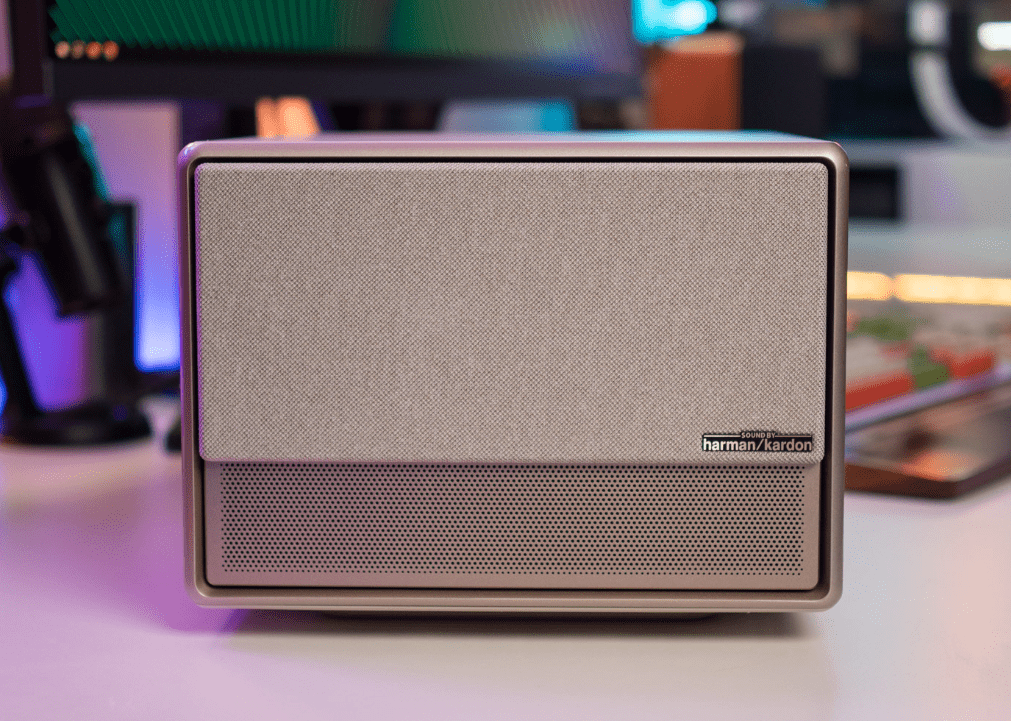
The XGIMI Horizon Ultra and JMGO N1 Ultra are strikingly similar in their rounded white shells, offset lenses, and rear-panel I/O. But subtle variations in dimensions, materials, and adjustments impact their overall flexibility.
XGIMI Horizon Ultra Design:
JMGO N1 Ultra Design:
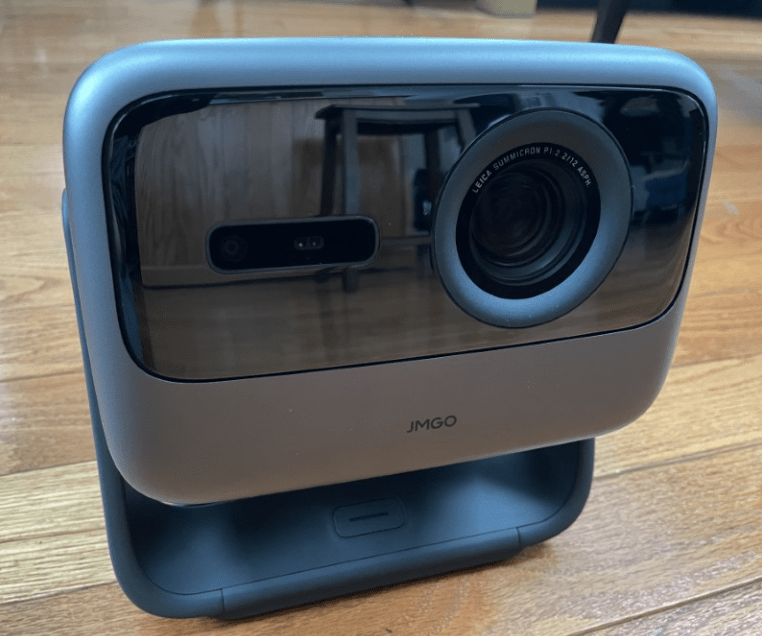
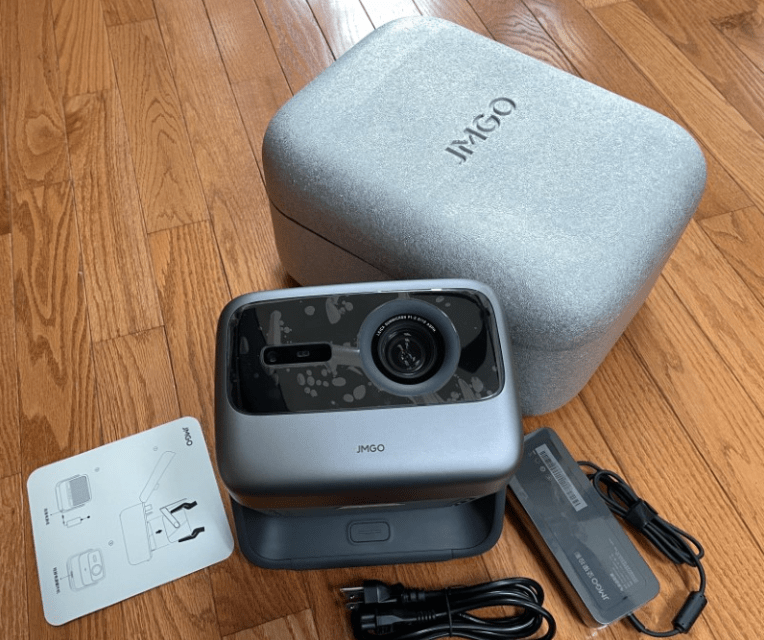
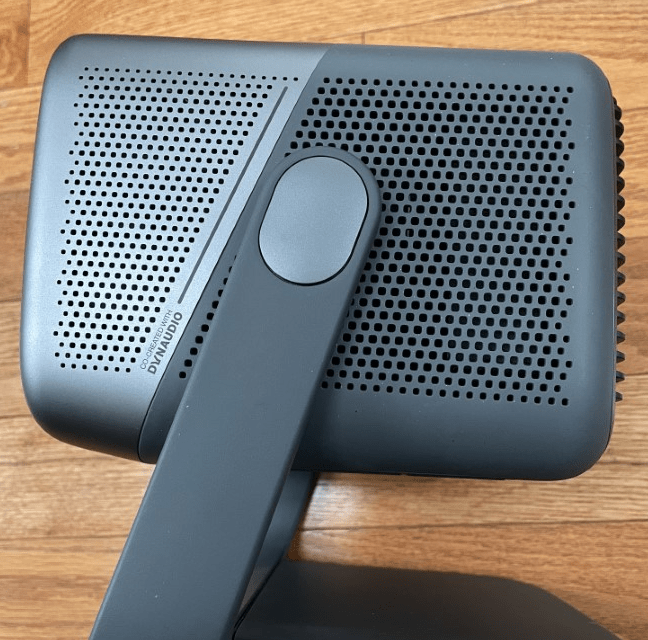
The Horizon Ultra measures 8.6" wide, 10.2" deep, and 6.7" high, clocking in at 11.5 pounds. The N1 Ultra is a smidge bulkier at 9.5" W x 8.7" D x 7.9" H and 9.9 pounds. Neither is a featherweight but both balance portability and cooling well. The included carry case makes transport even easier.
Build quality feels a notch higher on the Horizon Ultra, with a more premium soft-touch plastic and tighter seams. The N1 Ultra is still solid but has a more utilitarian, hard plastic texture. Both stay cool to the touch even after hours of use, with ample venting and insulation.
On-body controls are minimal, with just power and menu buttons on the chassis. All picture adjustments are handled via the included Bluetooth remote, which also features a built-in mic for Google Assistant voice commands. The Horizon Ultra's remote adds dedicated buttons for focus, keystone, and the Harman Kardon sound modes.
Overall, the JMGO N1 Ultra is the clear winner for placement flexibility thanks to its nifty gimbal design. Short of an ultra short throw model, it's as adaptable as projectors come. The XGIMI Horizon Ultra is no slouch with its zoom and keystone tools but can't quite match the N1 Ultra's go-anywhere versatility. It does feel a touch more premium and refined, a welcome treat for the eyes and hands.
XGIMI Horizon Ultra or JMGO N1 Ultra: Owner Reviews
Let's see what actual buyers have to say about their experiences with the XGIMI Horizon Ultra and JMGO N1 Ultra projectors:
XGIMI Horizon Ultra Owner Reviews:
Praises: "The picture is simply stunning. The extra pop and realism of Dolby Vision is a revelation, especially in brighter HDR scenes. Contrast and color are top notch."
"Setup was a breeze thanks to the Android TV interface and auto focus/keystone. I just plugged it in, connected to Wi-Fi, and was streaming my favorite shows in minutes."
***
Drawbacks: "The blacks are good for a projector but still noticeably elevated compared to my OLED TV. You lose some shadow detail and depth, especially in darker rooms."
"The fan noise is audible, particularly in the brighter picture modes. It's not obnoxious but it's always there. I wish there was a silent 'night' mode for the most critical viewing."
JMGO N1 Ultra Owner Reviews:
Praises: "The gimbal is a game-changer. I have my projector mounted in the back corner of my living room, shooting diagonally across to the screen. Zero hassle with proper alignment."
"I'm blown away by the sharpness and detail. 4K content is stunning, with nary a pixel in sight. The laser engine is also whisper quiet in Eco mode."
***
Drawbacks: "The colors, while vivid, aren't quite as nuanced as I hoped. Faces can look a bit ruddy and certain hues (greens, cyans) are slightly oversaturated. Calibration helps but doesn't fully resolve it."
"I miss having an optical zoom. The gimbal is great but the fixed throw ratio limits your options. You need a big room to get a big picture."
On the whole, XGIMI Horizon Ultra buyers are thrilled with the projector's rich HDR performance, accurate colors, and easy Android TV streaming. Some ding the black levels and fan noise but still feel it delivers extraordinary big screen value.
JMGO N1 Ultra owners adore the razor-sharp 4K resolution, quiet operation, and unparalleled placement flexibility of the gimbal system. A few wish for more subtle color tuning and an optical zoom but are otherwise impressed by the projector's feature set and performance.
Both models receive top marks for build quality and overall functionality. Android TV and the automatic setup tools are consistent highlights, as is the engaging integrated audio. While neither is perfect, most owners feel they got their money's worth and then some for dazzling big screen entertainment.
XGIMI Horizon Ultra and JMGO N1 Ultra Alternatives
If you're not totally sold on the XGIMI Horizon Ultra or JMGO N1 Ultra, here are a few other laser TV projectors to consider:
- Hisense PL1 4K UST Laser Projector: An ultra short throw powerhouse with 2,200 ANSI lumens, a 90-150" screen size, HDMI 2.1, and a 30W Dolby Atmos soundbar - great for living room installations;
- LG HU715QW 4K UST Laser Projector: Another premier UST option with 2,500 ANSI lumens, HDR10/HLG/HGiG support, an integrated 40W 2.2 channel audio system, and LG's webOS smart platform.
The Hisense PX1 Pro is a compelling alternative for short-throw enthusiasts. Like most UST projectors, it needs to sit very close to your screen or wall (just inches away for an 80-90" image). But the picture is incredibly bright, colorful, and sharp. Android TV is built in, as is a punchy Dolby Atmos soundbar. Just be prepared to pay a premium for the privilege.
LG's HU715QW is another top-shelf UST contender. It's even brighter than the Hisense at 2,500 ANSI lumens and features LG's popular webOS smart TV platform. HDR10, HLG, and HGiG support mean stunning HDR images from a wide range of content, including games. The integrated 40W speaker system is also a major step up from most projectors in volume and clarity.
Should You Buy the XGIMI Horizon Ultra or JMGO N1 Ultra?
After thorough hands-on testing, I'm confident in saying the XGIMI Horizon Ultra vs JMGO N1 Ultra are two of the finest 4K laser projectors on the market today. With their potent light output, sharp optics, integrated smarts, and refined designs, they deliver dazzling home theater bliss right out of the box.
For most buyers, I give the nod to the XGIMI Horizon Ultra. The LED/laser engine and Dolby Vision produce noticeably richer, more nuanced colors for discerning cinephiles. The extra lumens help maintain pop in ambient light. And the 12W Harman Kardon speakers, optical zoom, and extensive connectivity are valuable quality-of-life perks.
That said, the JMGO N1 Ultra's gimbal design is a revelation for projector placement. If your space demands serious flexibility, it's a uniquely powerful solution. The 15ms input lag and slightly higher contrast are also appealing for gamers and movie lovers who crave maximum immersion. Android TV and the punchy Dynaudio speakers round out a very compelling package.
Ultimately, you can't go wrong with either model. The XGIMI Horizon Ultra and JMGO N1 Ultra both represent the pinnacle of laser projection tech, with bright, color-rich 4K images, intelligent setup tools, and sleek, understated designs. If you have the budget and space, they'll transform your living room into a bonafide cinema - no sticky floors or overpriced popcorn required.
Thanks for reading! Let me know in the comments if you have any other questions as you shop for your dream home theater projector. I'm always happy to help my fellow big screen enthusiasts.
Go Deeper:

Jim's our tech geek with a mission since February 2023. From movies to video projectors, he knows his stuff and aims to make tech work for you. When he's not geeking out, he's there to guide you through making savvy decisions.


