One day in 1984, a 14-year-old boy from Kansas City, driven by what he called a "strong desire to work with computers," snuck into school with his friends to steal an Apple II computer. He was prepared - showing an early talent for solving technical problems, he invented a sticky substance made from termite and petroleum jelly that would melt the window to get in. But things didn't go according to plan when one of his accomplices accidentally activated a silent alarm, and soon everyone was arrested by the police. The guy's name was John Carmack, and he is known worldwide as the man who created the Doom and Quake games and generally opened the world of first-person shooters to gamers. Today I will tell you the story of John Carmack. He was called a "boy genius", but today it is a story about an adult engineer who has never lost his teenage zeal to break something - only now he is breaking the limits of technology itself.
Fast forward
- The first code: 10 PRINT JOHN CARMACK
- Genius in the basement
- The creation of id Software
- How Wolfenstein 3D launched the entire industry
- DOOM: the first "real" 3D shooter
- Quake: real 3D and a streaky jump
- The techno magic that put 3D gaming together brick by brick
- The factory of engines and legends
- VR and a bit of aggressive singularity
- Keen Technologies: not "just another AI startup", but an attempt to hack the very nature of the mind
The first code: 10 PRINT JOHN CARMACK
This story begins in Kansas City, Missouri, where on 20 August 1970, a boy was born who was destined to hack more than one system. John Carmack, the son of local television reporter Stan Carmack, grew up not as a superhero but as a typical "gifted geek": he loved Dungeons & Dragons, read stacks of science fiction, and hung out in arcades playing Pac-Man and Space Invaders. He also greatly admired Nintendo designer Shigeru Miyamoto. Somewhere between the bits and pixels, a desire was born not just to play, but to create his own worlds.
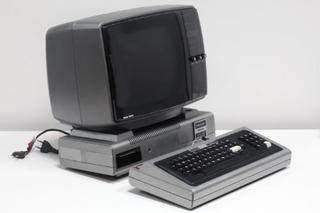
The first computer "programming breakthrough" happened on the TRS-80 computer in a Radio Shack store, where the young Carmack typed his first BASIC code: "10 PRINT JOHN CARMACK". A simple command that was perfect as a prologue to his future: an industry titan known to anyone who has ever launched DOOM or Quake.
But before that, he was still 14 years old, a termite and a criminal record after a failed attempt to steal an Apple II computer from school. John was detained, and the forensic expert called hima "walking brain without empathy". Carmack himself would later honestly say that he was an "immoral jerk" and could have done the same thing again - if he hadn't been caught.
A year in a youth correctional facility gave him time to think. He realised that his skills were not magic, but a tool that could either be wasted or turned into something more. So he tried to study: he entered the University of Missouri-Kansas City, stayed there for two semesters, studied only computer science, and escaped. Formal education seemed to him a waste of time. He chose practice, and he was right.
A long time later, in 2017, the same university he left would award him an honorary doctorate in engineering - because Carmack didn't just learn how the world of games works. He rewrote it. From the ground up.
Genius in the basement
John Carmack's career in professional programming didn't begin with a high-profile presentation in Silicon Valley, but in the quiet office of Softdisk in Shreveport, Louisiana, a company that sold software by subscription before it was mainstream. Carmack was hired to work on Softdisk GS, the subscription division for Apple's IIGS computers. Softdisk recognised his talent, in particular his ability to port Apple II games to the IBM PC platform, a skill that set him apart. But that wasn't the main thing. It was who he met there: John Romero, Tom Hall, Adrian Carmack - who is, no, not related - and several other future legends. Together, they created an informal team called Ideas from the Deep (IFD), a small geek fraternity that hid in the office basement at night.

John Romero and John Carmack in 1990. Illustration: Twitter
Yes, literally in the basement - with coffee, semi-legal access to company equipment, and a dream to make something cooler than corporate masterpieces like "Interesting Programmes for Accountants". In this basement, Carmack and his company riveted prototypes that Softdisk did not officially order, but which changed history. In particular, it was there that smooth side-scrolling technology for the IBM PC was born - graphical magic that was previously only possible on consoles like the NES.
This trick - a breakthrough that allowed the PC to mimic the movements of Super Mario Bros. - became the basis of Commander Keen, a game that the team then distributed through Apogee Software on a shareware model. For the hardware of the time, this was a real crazy hack: adaptive tile refresh, which updated only the parts of the screen that changed. This meant less lag and more dynamics. Here you can see the game's gameplay (keep in mind that it was 1990 and the game was written for DOS, not even Windows):
Softdisk considered this thing "too ambitious" for their plans. But Carmack and his team were on the contrary. They even made a prototype of Super Mario Bros. 3 for the PC and sent it to Nintendo, but the Japanese politely refused.
This rejection became the best "no" in the history of game dev, because it pushed the team to create something of their own.
And so began the journey to Doom, Quake, and a new dimension in gaming.
The creation of id Software
Everything that starts as a basement hooliganism sooner or later turns into a serious business - if you are John Carmack and you have three other obsessives in your team. On February 1, 1991, Carmack, Romero, Tom Hall and Adrian Carmack left the corporate wing of Softdisk and founded their own studio, id Software. The name, by the way, was born from their old underground name, Ideas from the Deep (IFD), but they removed the letter F to make it sound short, stylish, and slightly psychoanalytic.
At first, they even joked that "id" stood for "In Demand" because after the success of Commander Keen, they were really in demand. But later, as Romero explained later, they just kept "id" because it was "just a cool word". And that was it. No more philosophies.
While the studio was still "burning" from the fresh start, the guys were riveting new Commander Keen releases - including Goodbye, Galaxy!, Aliens Ate My Babysitter! and Keen Dreams (all in 1991). The games were distributed through Apogee Software, and it wasn't just fun - it made money. For the first time, the team could afford not to survive, but to plan a breakthrough.
And the breakthrough came. Along with Carmack's technical hunger. Along with platformers, he began experimenting with 3D graphics at the limit of the capabilities of the PCs of the time. That's how Hovertank 3D and Catacomb 3-D appeared - games that first used ray casting (ray casting is a rendering method in computer graphics used to create three-dimensional scenes in real time) to create the illusion of a three-dimensional world.
It sounds like a basic development now, but back then it was outer space.
In Hovertank 3D, Carmack came up with a scheme that rendered only what the player could see.
This saved CPU resources, opened the way to detail, and was the first step towards full-fledged 3D. Even if the game itself looked like a Transformer after a stroke, it was not how but what was behind it that mattered.
These projects became a platform for Carmack's technical experiments, which later exploded into Wolfenstein 3D, Doom, and Quake. id Software quickly became a symbol of how four nerdy brains can break the rules of the game - if given free access to the code and a little funding from Apogee.
The beginning was simple: a little scrolling, a little platforming, a little psychoanalysis in the name. But from this "little bit" grew a studio that redefined what it means to play on a PC. And this was just the beginning.
How Wolfenstein 3D launched the entire industry
1992. 5 May. Gamers are still playing platformers, and computers can barely pull 2D graphics without tears. And then - bam! - id Software releases Wolfenstein 3D, and the world changes. This is not just a game. It's a three-dimensional revolution that came from the basement and reached the masses.
Carmack, inspired by his favourite childhood game Castle Wolfenstein, made not a remake but a technological breakthrough. The game was powered by an engine that used ray casting, a sophisticated visualisation technique that rendered only what the player saw at the time.

This is how ray casting works, in particular, in Wolfenstein 3D. The red dot is the player's location. The orange area represents the player's field of view. Illustration: Wikipedia
Real 3D? No. But it looks like "wow, I'm in a maze with Nazis, and I'm really scared".
Of course, there were limitations. Carmack made the engine work fast, but the price was rectangular geometry: walls at right angles, no floors, no slopes. No 3D Disneyland, just corridors of death. Carmack didn't even want to add the pushwalls feature for a long time because it was "inefficient". Only when he was persuaded did the game become even more brutal and interesting.
Wolfenstein 3D became an instant hit. And not just a game - a manifesto of a new genre: FPS (First-person Shooter). Fast, bloody, straightforward - everything that players loved, but now also in the first person. The shareware model(the first episode is free, then you have to pay) did its job: the game sold like warm pasties at the train station.
And the financial success was insane: each of the developers was rumoured to be earning $120,000 a month, and Carmack became a rich genius before he even had time to eat his second toast with jam for breakfast. At the age of 21. While his peers were writing labs in Pascal, he had already created an industry.
After that, there was Spear of Destiny (a prequel on the same engine), and then Return to Castle Wolfenstein (2001), and the series became a classic. But it was Wolfenstein 3D that laid the foundation. And the open source code that id released in 1995 made the game immortal among modders.
Carmack was not a fan of unnecessary bells and whistles. He was a fan of efficiency, speed, and technical beauty. But even when he had doubts, the team insisted. And it was this mix - a techno-fanatic + game designers with dreams - that made Wolfenstein 3D ground zero for FPS. There were many games before it. But after it, the shooting really started.
DOOM: the first "real" 3D shooter
In December 1993, id Software turned the world of gaming upside down again, and John Carmack once again made the rest of the industry look confused, to put it mildly. DOOM didn't just put the FPS genre on the rails - it turbocharged it. And this time, it wasn't just modified code under the hood - it was a new id Tech 1 engine, aka Doom engine, with a completely revolutionary technology at the time - Binary Space Partitioning (BSP).
BSP sounds like something out of a linear algebra textbook, and it's not far from the truth. Carmack divided the game space into small fragments (subspaces) to display only what the player actually sees. This gave insane performance and allowed you to display complex levels even on the not-so-powerful hardware of the early 90s. Yes, the engine wasn't quite 3D yet: everything was based on a 2D plan, and there were no sloping surfaces or multi-level arenas yet - but for the player, it looked like a real leap into space.
By the way, Carmack didn't want to add teleporters at first - he said, "extra logic, extra bugs". But creative pressure won out over technical asceticism, and the teleporters appeared. And they became part of the magic that made DOOM a legend.
What happened next? Minimum plot, maximum adrenaline.
A base on Mars. Demons. Plasmogun. Everything you need to be happy.
The atmosphere was created not by dialogues, but by table lighting, which created the feeling that you were really in hell with a shotgun. The gameplay is insanely fast, bloody, and damn exciting. DOOM was the perfect blend of engineering beauty and gamer's "do it again!".
Distribution. Shareware - the first episode is free, then it's buy or suffer. It worked again with a bang. The game was downloaded from BBSes, carried on floppy disks, and spread faster than the flu. It was a huge success. And then the source code was opened, and the era of mods, new levels, and DIY-doom madness began.
A year later, DOOM II: Hell on Earth, Final Doom in 1996, and DOOM 64 in 1997, and everyone kept up.
But it was the first DOOM that was a tectonic shift - it didn't just change games, it made them a new kind of mass culture.
Along with scandals, shouting politicians, curses in newspapers, and millions of fans.
DOOM showed that a plot is not necessary if you can give you a shotgun, a dark room, and a dozen demons. It also showed that a technological breakthrough can be a commercial hit, a platform for creativity, and a cause for scandal. All of this is in pixels, red spots and the words "You Got the Shotgun".
And for a long time after that, no one asked "Who is Carmack?" - everyone already knew.
Quake: real 3D and a streaky jump
In 1996, id Software once again hit the gaming world like a rocket launcher. The world saw Quake, and it was no longer just a shooter, but a tectonic shift in the world of technology and graphics. Everything you'd seen before - Doom, Wolfenstein 3D, pseudo-3D with a tricky perspective - all became instantly outdated. Because Quake brought real three-dimensional rendering in real time, with polygonal models, lighting, shadows, and, as they said in the 90s, "the effect of presence" (there was no word "immersiveness" then).
Under the hood was the Quake engine (id Tech 2), which not only drew the world but also knew how to process it before you could even press "New Game". This is where surface caching appeared - a technology that allowed the engine to remember surfaces and speed up the rendering of complex scenes. Also: Gouraud shading (a computer graphics shading method used to create smooth colour transitions on object surfaces) for moving objects, light maps for static objects, and the first hints of hardware acceleration - Quake was ruthlessly pushing the limits of what hardware could do at the time.
And then there was Quake III Arena (1999), powered by the id Tech 3 engine, which not only improved the graphics, but also brought a new legend to computer science: the fast inverse square root algorithm. Yes, this is the same magic 1/√x formula that allowed you to instantly normalise vectors and is still used in computer graphics textbooks. And it's all thanks to Carmack.
Do you want a little more madness?
Carmack gave his own Ferrari 328 GTS to the winner of the 1997 Red Annihilation tournament,Dennis Fong, because he believed in multiplayer before it was even a genre.
And not just "LAN for two in a dorm room" - but real online deathmatch games over the Internet, which laid the foundation for the future of CS, Overwatch, and the rest of eSports.
Carmack and his three Ferraris

In the 1990s, John Carmack became interested in Ferrari sports cars. He purchased three models of this brand (Ferrari 328 GTS, then Ferrari Testarossa and Ferrari F50), two of which were bought through a local dealer. Carmack modified his cars, turning to the Texas-based Norwood Autocraft tuning workshop to install a turbocharger. However, Ferrari is strict about modifications to its cars, and the local dealer refused Carmack the opportunity to join the queue for a new Ferrari F50 model, expressing dissatisfaction with his previous modifications. Nevertheless, Carmack was able to purchase one of the first F50s in the US through a private transaction at the end of his lease.
And one more touch: streak jumping is the very bug that has become an art form. This technique allows players to increase the speed and range of their jumps by synchronising the use of the movement keys (forward and sideways) and turning the mouse while jumping. At first, Carmack wanted to "fix" it because it violated physics. But then he gave up. And we should thank him for that: without the jump, there would be no Quake as a phenomenon.

Carmack gives a speech after receiving the Lifetime Achievement Award at the 10th annual Game Developers Choice Awards on 11 March 2010. Illustration: Wikipedia
The techno-magic that put 3D gaming together brick by brick
John Carmack had one hobby: breaking boundaries. Everything we call "game graphics" or "real 3D" today is actually built on dozens of his technical tricks. And no, these are not just "minor improvements" - these are the breakthroughs that left the industry on its feet and whispering "how did he do that?"
Adaptive Tile Refresh for Commander Keen is the first feature. Instead of redrawing the entire screen, Carmack made sure that only the parts that actually changed were updated. Saving resources, smooth motion - and all this on EGA graphics that could only be painted by a calculator.
Then there was Ray Casting - a pseudo-3D from a 2D map, where a ray flies from the player and "draws" what it hits. Hovertank 3D, Catacomb 3-D, Wolfenstein 3D are not just games, they are engineering demonstrations on the edge of what PCs could do in the 1990s.
Next up is DOOM and Binary Space Partitioning (BSP). Here, Carmack literally cut 3D space into pieces to make everything render fast and clear. BSP not only optimised the image, but also paved the way for a new level logic - where rooms are not just connected, but structurally calculated.
In Quake, it delivers Surface Caching, a technology that remembers parts of the scene so that you don't have to redraw every single pebble. The world looks detailed and works like a Swiss watch.
In DOOM 3, Carmack raises the stakes again by creating Carmack's Reverse (z-fail stencil shadows). This is a new approach to dynamic shadow processing that allowed us to finally see how fear is hiding around the corner in real time.
Quake III Arena has become not only a multiplayer icon, but also the place where Carmack made the Fast Inverse Square Root Algorithm famous. Yes, the very legendary 1/√x that gives graphics vector breath. Its implementation was so effective that it was later analysed at universities and hackathons.
And then there was the final boss in this techno-epic - MegaTexture. First used in Enemy Territory: Quake Wars, this technology made it possible to cover the entire game world with one giant texture, without repetition, without seams - just an endless landscape underfoot.
Everything Carmack did was not just "optimisation", it was a rewrite of the very physics of how we see games.
His code is the architecture of a new era in which shooters have become worlds and graphics have become a window into virtual reality.
And even if you're playing something ultra-modern with ray tracing today, you should know that somewhere in there, under a pile of shaders and post-processing, Carmack's code is breathing. And it still works. Like a clock. Like an engine. Like the heart of the whole industry.
Table of innovations in game development introduced under the leadership of John Carmack
| Name of the innovation | Game where it first appeared | Brief description | Significance/Impact |
|---|---|---|---|
| Adaptive Tile Refresh |
Commander Keen. | Redraws only the parts of the screen that change as you scroll, optimising performance on limited hardware. | Enables smooth side scrolling on PC, which was previously a console exclusive feature. |
| Ray Casting (Ray Casting) |
Hovertank 3D | Projects rays from the viewer to create a pseudo-3D environment from a 2D map. | Allows early real-time first-person perspective in games such as Wolfenstein 3D. |
| Binary Space Partitioning (BSP - Binary Space Partitioning) |
Doom. | Divides 3D space into convex regions for efficient rendering and collision detection. | Enables more complex and detailed level designs with improved performance compared to raycasting. |
| Surface Caching |
Quake. | Stores frequently used surfaces in memory to speed up the rendering of complex 3D scenes. | Allows you to get more detailed and high-quality lighting and improve the overall rendering performance in a true 3D environment. |
| Carmack's Reverse (Z-Fail Stencil Shadows) |
Doom 3. | A technique for rendering realistic dynamic and muscular shadows using a stencil buffer. | Significantly improves the visual fidelity of games with accurate and dynamic shadows. |
| Fast Inverse Square Root Algorithm (Fast Inverse Square Root Algorithm) |
Quake III Arena. | A very fast approximation for calculating the inverse square root value, which is important for vector normalisation. | Provides a significant performance improvement in 3D graphics computations, which are widespread in the industry. |
| MegaTexture technology (MegaTexture) |
Enemy Territory: Quake Wars | Uses one very large texture for all levels of the game, eliminating mosaic artefacts. | Enables highly detailed and seamless environments in games. |
A factory of engines and legends
If there was one person at id Software who really had his finger on the pulse of technological breakthroughs, it was John Carmack. Not just a co-founder, but a brain, engine, and compiler in one. It was he who set the technical pace of the company, which every time not only made a game, but rewrote the rules of the game for the entire market.
With Commander Keen, Carmack showed that even a PC of that time could deliver smooth scrolling if you knew how to make the hardware play by your rules. It wasn't just a trick - it was a technical shot into the future that led to a partnership with Apogee and the start of a long journey.
But most importantly, Carmack understood one thing that others noticed too late: the game can be played, the engine can be used dozens of times. It was he who came up with the idea: "Let's sell the engines."
This was the beginning of the era when every second game had a small inscription under it: Powered by id Tech.
From Commander Keen to Wolfenstein 3D, then DOOM, then Quake, and then exponentially. The Quake III Arena game was particularly notable: its engine became so popular that everything from Call of Duty to Medal of Honor, and even some mobile ports, were built on it. id Software went from game developers to technology exporters. And Carmack is the main architect of this process.
And yes, he was sometimes criticised for his "when it's ready, we'll release it " method. But this approach is not about procrastination. It's about obsession with perfection. Carmack would sit up at night, optimise the rendering, invent new ways to draw shadows, and break everything that didn't meet his technical principles. And that's why their games looked so good that competitors just dropped their jaws.
Another point for which Carmack is respected not only by gamers but also by coders: he opened the source code of engines. Five years after the release, BAM, the DOOM, Quake II, or Quake III engine is in the public domain. It launched a wave of ports, mods, fan-made projects, and a whole generation of developers who grew up with its code.
For all this, it won two Technology Emmy Awards. Not "best game", not "graphics of the year", but real engineering awards given to those who drive the industry.
VR and a bit of aggressive singularity
In August 2013, John Carmack did something no one expected him to do, but everyone said afterwards: "Well, it's Carmack". He left the world of classic gaming and jumped into a new dimension - virtual reality. He becomes the CTO of Oculus VR. In other words, he literally gets behind the wheel of a company that was still a startup with a dream and a few helmets in the garage.
In November of the same year, Carmack officially resigned from id Software, the studio he had founded. The reason is banal and painful: ZeniMax Media, which owned id Software at the time, was not happy that he was "all about VR" and"hacking the Rift instead of making another shooter". But that's okay - Carmack is not someone to be deterred.

John Carmack speaking at Oculus Connect 2 in October 2015. Illustration: YouTube
It was he who first put the Oculus Rift into a game, modifying Doom 3 and showing everyone that VR is not just YouTube 360, but a full-fledged portal to another reality. And he did it not as a "techno-demo", but as a really playable thing.
At Oculus, he wasn't just coding - he was building an industry from scratch. Optimising rendering, reducing latency, innovating display algorithms - Carmack was involved in all of this. The most high-profile of his features was asynchronous timewarp: a technique that made the image smoother by recalculating frames based on the new head position.
In 2019, Carmack said:"Guys, I'm a little tired," and he became a Consulting CTO. And in 2022, he leaves Meta (ex-Facebook) to pursue a new paranoid dream: AGI (Artificial General Intelligence) - general artificial intelligence. He founds Keen Technologies (there is some connection with the first Commander Keen game, right?), receives $20 million from investors (including, for example, Sequoia Capital).
And now its goal is not virtual reality, but reality created by a mind without a brain.
Keen Technologies: not "just another AI startup" but an attempt to hack the very nature of the mind
Officially, almost nothing is known about the inner workings of Keen Technologies. The company operates in stealth mode, i.e. quietly, without unnecessary noise, and does not share what it is currently doing. But something can be read between the lines - and it smells not of corporate sandboxes, but of good old-fashioned hardcore. The team is global and works remotely. That means flexible hours, working from home or a bunker, if you like, and a minimum of bureaucracy. It is not like a classic AI company, but rather an R&D unit for the most advanced: fast iterations, direct communications, and maximum focus on the essence. Less meetings, more coding.
While other AI companies flaunt their open office photos and "free Mondays for meditation", Keen is heading towards a serious scientific and technical artel. It is known that one of the fathers of machine learning, Richard Sutton, has joined the team with backup. Thus, Keen looks like a laboratory for those who want to not only be "in the know" about AI but actually hack the system and build something that will remain in textbooks. Without unnecessary noise, but with maximum effect.
John Carmack has taken on a new challenge: to create AGI - artificial general intelligence that will not be a philosophical abstraction but a real "universal worker". And yes, he believes that most of the current AI trends are just a fad. According to him, the real artificial intelligence has not even been built yet.
Carmack doesn't believe in the power of brute force - those millions of GPU hours and terabytes of data. Instead, he suggests something more fundamental: understanding the very nature of intelligence. To teach a machine not just to predict the next word, but to be an AI agent - to act, learn in the process, remember, adapt. Not a GPT, but something closer to an intelligent being with short and long memories.
It doesn't just think outside the box - it literally plays a different game. Instead of giant leaps, there is a gradual evolution, small updates. From an idea to a prototype, from a bug to a patch - everything is like real programming. Not magic, but a craft.
Carmack sees AGI not as a god in a machine, but as an intelligent assistant that can work for you - in a browser, in Excel, in Zoom.
An AI agent is a remote employee that can do everything a normal person can do in front of a computer, plus some social skills.
Nothing supernatural - just the most useful thing that makes economic sense. One of the things that Carmack often repeats - and, of course, some people don't like it - is that the code required to create an AGI will fit into a few tens of thousands of lines. Yes, seriously.
To put it in perspective, a typical "big program" is millions of lines. For example, the Chrome browser has about 20-30 million lines of code. Elon Musk mentioned that Twitter is based on 20 million lines of Scala. These are large-scale projects, and there is no way that one person can rewrite it all from scratch. Physically, you won't have time - your fingers will fall off before you do.
However, Carmack is sincerely convinced (and, according to him, he has good reason to be) that the code for a real AGI is exactly the case when it can be written by one person. Maybe not in a week, but definitely on his own. And this is a completely different level of play.
According to Carmack, the probability of seeing signs of a real AGI by 2030 is 50-60%. And by 2050, he is almost 95% sure. Not soon, but not in a parallel universe either. And maybe even without billions for clouds and computing.
By the way, Carmack has changed the vector of the entire industry twice. First, when he broke 2D and made FPS high. Then, when he made VR usable. And now he is preparing for the third strike. If he successfully launches AGI, get ready, we will be rewritten not with a patch, but completely.
For those who want to know more
- Exploring the game: "The First Berserker: Khazan" - a soulslike that wants to become something more
- Assassin's Creed Shadows: finally something new or just samurai instead of Vikings?
- Split Fiction review: dynamic cooperative adventure
- Science fiction with a bow and AI: 10 reasons to love Horizon Zero Dawn Remastered
- 10 game remakes that changed everything so much that they're worth playing again

Author of longreads about computer games. I play video games and have been interested in the development of the game industry since 2004. I am interested not just in playing games, but in exploring how they were created, why they became successful or vice versa. What new things they gave to this world and thanks to what.


