Scenery against the satellite: Russia deploys new S-300/400 dummies in the Far East

Russia is updating its "visual camouflage system" in the Far East by installing new dummy S-300/400 air defence systems. This is evidenced by recent Google Earth satellite imagery analysed by an OSINT analyst known as AS-22. The photos show the appearance of additional dummy launchers near several anti-aircraft units.
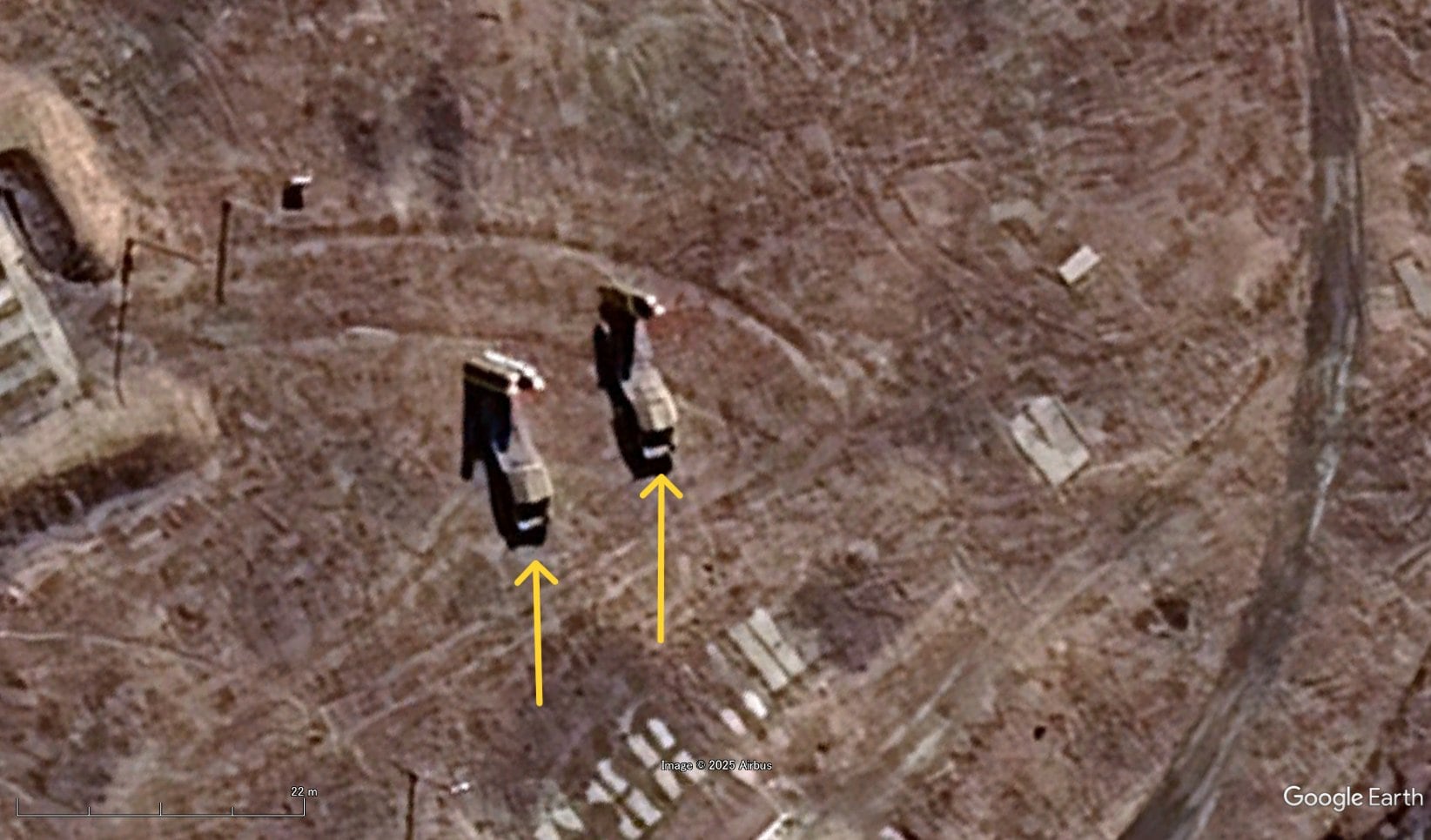
Satellite imagery from Google Earth. Illustration: Twitter
What is known
- The 1533rd Guards Anti-Aircraft Regiment received two dummies. One of them probably imitates a towed S-300 system, although the lack of radar makes it more of an exhibition piece than a deception tool.
- The 1534th Anti-Aircraft Missile Regiment has a dummy similar to the S-300PS 5P85S. But again, it does not have a radar, which means that even if it were real, it would remain a "decoration".
- The 24th Anti-Aircraft Missile Brigade has acquired three new dummies. They are closer to the real thing, although the design is still too "thin" to be convincing in the eyes of intelligence.
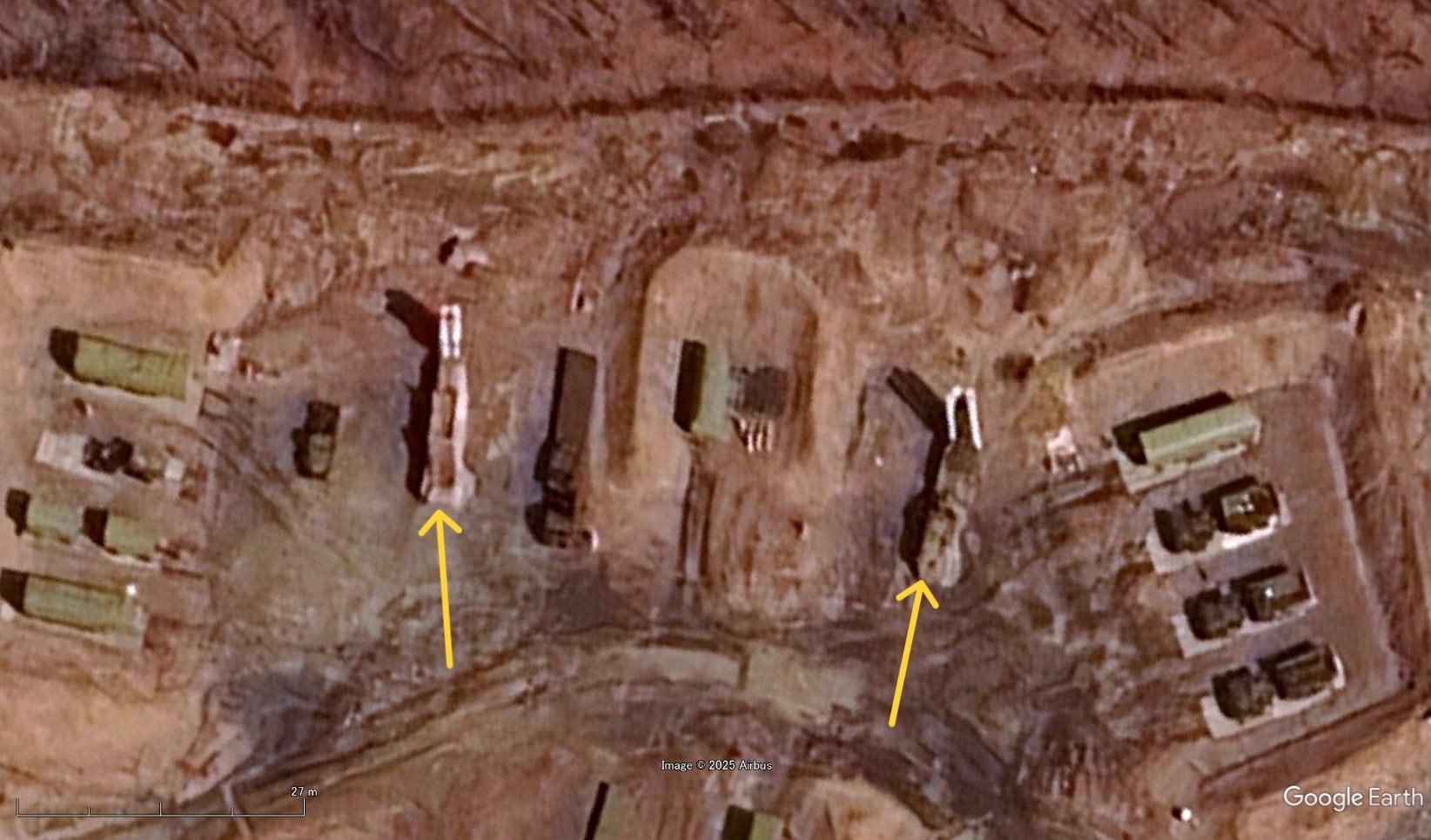
Satellite images from Google Earth. Illustration: Twitter
Despite attempts to improve camouflage, the effectiveness of these dummies is questionable. They are still not equipped with key elements - primarily radars - and thus play the role of "entourage" rather than a real deception for reconnaissance satellites or drones.
The observation suggests that in the future, Russia may improve these models by adding more detailed launch elements and possibly simulating less common launcher variants.
About the S-300/S-400 systems
The S-300 and S-400 are Russian medium- and long-range surface-to-air missile systems designed to destroy aircraft, cruise missiles and ballistic missiles. The S-300 was developed in the USSR in the 1970s and 1980s, while the S-400 is a deeply modernised version that was adopted in 2007. Both systems can engage targets at altitudes of up to 30 km and ranges of up to 400 km (for the S-400, depending on the missile). The system includes launchers (TELs), radars, command posts and support vehicles. The S-400 is considered one of the key elements of Russia's air defence system and is actively exported, in particular to China, India and Turkey.
What is OSINT?
OSINT (Open Source Intelligence) is intelligence based on open sources. Translated from English, it means "intelligence with open information". It is a method of collecting, analysing and using data that is publicly available: news, social media, satellite images, forums, registers, videos, official websites, etc. OSINT is used by intelligence agencies, journalists, analysts, volunteers, and even ordinary Internet users.
In the 21st century, the role of OSINT has grown rapidly: thanks to satellites, Telegram and Twitter, it has become possible to record the movement of equipment, the location of strikes or refute fakes in near real time. The war in Ukraine has become a vivid example of the effectiveness of OSINT: hundreds of facts about the Russian invasion first emerged thanks to open analytics.
The advantage of OSINT is its accessibility. The disadvantage is the need for verification, because an open source does not always = reliable.
Source: Twitter


