Best Smart Bird Feeders with Cameras
I'll admit it - I used to think smart bird feeders were ridiculous. "Just put out some seeds and watch," I'd tell my tech-obsessed neighbor. Then one December morning, a painted bunting appeared at my basic feeder. By the time I grabbed my phone, it was gone.
That frustration sent me down a rabbit hole of testing these devices, and honestly, I've become exactly the person I used to mock. Watching a red-bellied woodpecker teaching its fledgling to extract seeds, all captured in 1080p with automatic species identification, makes it completely worth it.
If you're in a hurry, here are my top two recommendations for smart bird feeders:
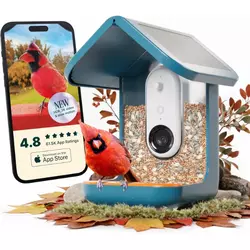
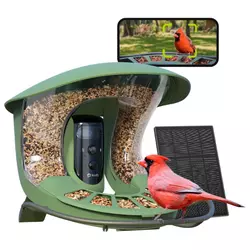
Table of Contents:
- Smart Bird Feeders with Cameras: Buying Guide
- Top 5 Smart Bird Feeders in 2026
- Best Smart Bird Feeders: Comparison
- Bird Buddy PRO Solar Smart Bird Feeder
- Birdfy 2 Smart Bird Feeder with Camera
- HARYMOR Bird Feeder
- Happybuy Smart Bird Feeder Camera
- HEAPETS Smart Bird Feeder with Camera
- Smart Bird Feeders: FAQ
Smart Bird Feeders with Cameras: Buying Guide
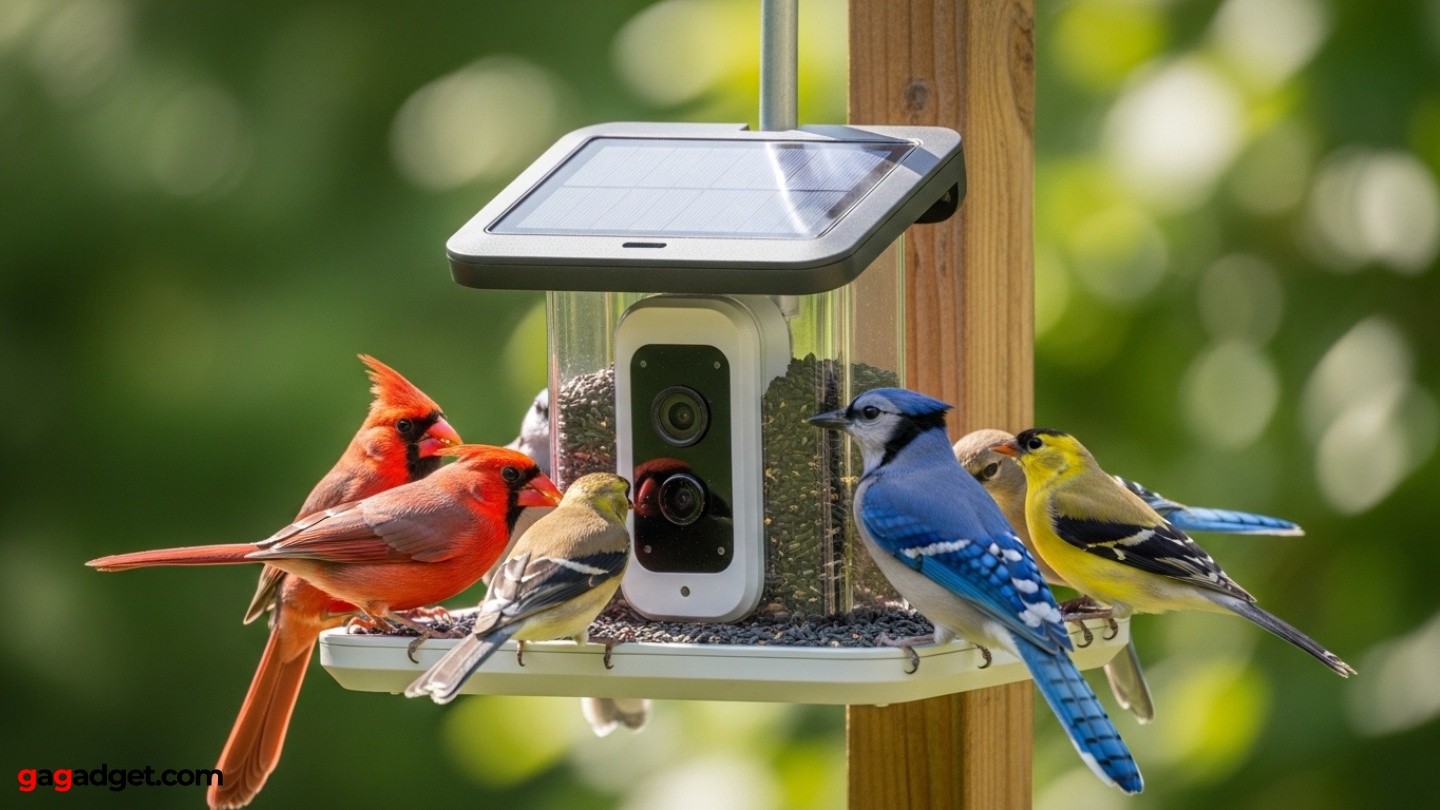
After testing multiple smart feeders across different seasons and dealing with everything from neighborhood squirrels to tropical downpours, I've learned which features actually matter when you're spending real money on these devices. Shopping for a smart bird feeder shouldn't feel overwhelming, but the market is flooded with confusing specifications and marketing claims that obscure what genuinely improves your bird watching experience.
AI Identification: The Brain Behind the Camera
The whole point of adding "smart" to your bird feeder comes down to one question: how accurately can it tell you what just landed? AI identification systems vary wildly in capability. Some recognize only the most common backyard species - cardinals, blue jays, robins - while others identify hundreds or even thousands of birds with impressive accuracy. What matters more than the raw number of species in the database is regional accuracy for birds that actually visit your area.
The best systems learn from their mistakes, improving accuracy over time as more users contribute observations and corrections to the database.
Real-time versus delayed identification makes a practical difference in your daily experience. Systems that process images locally or through fast cloud connections send you notifications within seconds of a bird's arrival - fast enough that you can actually go outside and see rare visitors while they're still there. Others queue photos for batch processing, meaning you'll get an identification report hours later when the bird is long gone. If immediate alerts matter to you, check whether the feeder offers instant or delayed identification before purchasing.
Camera Quality and Field of View
Resolution specs tell only part of the story when evaluating camera quality. Yes, 1080p captures more detail than 720p, but lens quality, sensor performance in varying light, and field of view matter equally. A wide-angle lens captures more of the feeding platform, letting you see multiple birds interacting or documenting behaviors beyond simple feeding. The best cameras maintain clarity across the entire frame rather than getting soft or distorted at the edges.
Night vision or low-light performance separates serious feeders from basic models. Birds feed most actively during dawn and dusk - precisely when lighting challenges cameras most. Look for systems specifically mentioning low-light capabilities or infrared illumination if you want to capture early morning visitors or late evening feeding sessions. Some advanced models even offer color night vision, which preserves actual plumage colors instead of rendering everything in monochrome grey like standard infrared systems.
Power Systems: Solar, Battery, and Hybrid Solutions
Power management determines whether your smart feeder becomes a maintenance headache or a set-and-forget installation. Pure battery systems eventually die during extended cloudy periods or winter months with short days, potentially missing entire migration waves. I learned this the hard way when my first feeder went dark during a week of overcast weather, missing what turned out to be an exceptional warbler migration.
Solar-powered models with battery backup provide the most reliable operation, storing energy during daylight for overnight operation and cloudy periods.
Position matters enormously with solar feeders - even partial shade reduces solar charging efficiency by half or more. My south-facing installation charges fully even in winter, while my friend's north-facing unit struggles year-round despite identical hardware. Some systems offer wired power options alongside solar and battery modes, providing flexibility if your ideal feeder location happens to be near an outdoor outlet. Wired power eliminates charging concerns entirely while supporting power-hungry features like continuous recording.
Weather Resistance and Build Quality
Your smart feeder will face rain, snow, extreme temperatures, humidity, and relentless UV exposure for years. Weatherproofing isn't optional - it's the difference between a device lasting multiple seasons versus failing after its first storm. IP ratings indicate water resistance levels, with IP65 or higher providing adequate protection for outdoor year-round use. The IP66 rating found on some premium models offers even better protection against powerful water jets and heavy rain.
Material choices impact longevity significantly beyond just weatherproofing numbers. Cheap plastics become brittle and crack in freezing temperatures or warp under summer sun. Quality feeders use UV-stabilized plastics, metal mounting hardware, and gasket-sealed electronics compartments. The camera lens should have a protective coating - uncoated lenses develop haze from constant moisture exposure that ruins image quality. Detachable components for cleaning make maintenance realistic rather than impossible when seed debris and bird droppings inevitably accumulate.
App Quality and Connectivity
The app becomes your daily interface with the feeder, so clunky, unreliable, or feature-poor software ruins an otherwise excellent hardware design. During testing, I encountered apps that crashed constantly, took minutes to load images, or failed to send notifications reliably. These failures transform a smart feeder into an expensive dumb one. Core functionality should include instant notifications when birds arrive, easy photo browsing organized by date and species, simple sharing to social media or messaging apps, and straightforward identification corrections when the AI makes mistakes.
WiFi connectivity requirements vary between 2.4 GHz only, dual-band support, or even cellular options for remote locations without reliable internet.
Cloud storage versus local storage impacts both privacy and ongoing costs. Cloud-based systems typically require subscriptions for extended video storage, though basic functionality often works without paying extra. Local storage to SD cards provides privacy and eliminates subscription fees but limits remote access capabilities. The best systems offer both options, letting you choose between convenience and independence based on your preferences and internet reliability.
Seed Capacity and Feeding Design
Larger seed capacity means less frequent refilling - crucial when travel or busy schedules prevent daily maintenance. However, bigger hoppers take longer for birds to empty, potentially leading to moldy seeds in humid climates. Balance capacity against your local bird population density and weather conditions. A 1.5-liter hopper might need refilling every 2-3 days with heavy traffic, while a 2.5-liter capacity can last a week or more.
The feeding platform design influences which species visit your feeder. Perch feeders accommodate smaller songbirds but exclude ground-feeding species that prefer platform access. Platform-style feeders welcome diverse visitors but may attract squirrels and larger birds that dominate smaller species. Some smart feeders include adjustable perches or weighted platforms that close under heavy animals, protecting seeds while keeping the camera active for documentation. Consider what birds actually visit your region and choose a design that accommodates your target species.
Top 5 Smart Bird Feeders for Backyard Bird Watching in 2026
After months of testing these feeders through various weather conditions and real-world scenarios, these five systems represent the best combinations of identification accuracy, camera quality, and practical usability.
- Outstanding 5MP image quality captures fine details
- Highly accurate AI covering 10,000+ species
- Reliable solar charging with battery backup
- Exceptional app with fast notifications
- Active community and sharing features
- Innovative dual-lens captures multiple angles
- 16GB built-in storage plus cloud backup
- Live streaming capability for real-time viewing
- Versatile mounting system
- No mandatory subscription for core features
- Excellent color night vision captures dawn/dusk activity
- Superior low-light performance versus competitors
- 10,000+ species AI database
- IP66 weatherproofing for harsh conditions
- Practical 2-liter seed capacity
- Excellent value with no mandatory subscriptions
- SD card support for local storage backup
- Good AI accuracy for common species
- Adequate solar charging for typical use
- Clear 1080p image quality
- Largest 2.5L capacity reduces refilling frequency
- Superior 2K resolution captures fine details
- Extensive 11,000+ species AI database
- Generous 5000mAh battery for extended runtime
- Motion-activated recording captures arrival behavior
Best Smart Bird Feeders: Comparison
To help you quickly evaluate the technical differences between these top smart bird feeders, here's a comprehensive comparison table:
| Specification | Bird Buddy PRO | Birdfy 2 | HARYMOR | Happybuy | HEAPETS |
| Camera Resolution | 5MP (2560x1920) | 1080p dual-lens | 1080p | 1080p | 2K (2304x1296) |
| AI Species Recognition | 10,000+ species | 6,000+ species | 10,000+ species | 10,000+ species | 11,000+ species |
| Power Source | Solar + rechargeable battery | Solar + USB-C charging | Solar + battery | Solar + battery | Solar + 5000mAh battery |
| WiFi Support | 2.4/5 GHz dual-band | 2.4 GHz only | 2.4 GHz only | 2.4 GHz only | 2.4 GHz only |
| Video Recording | Yes (clips) | Yes (clips + live stream) | Yes (clips) | Yes (clips) | Yes (clips) |
| Storage | Cloud + optional SD | 16GB built-in + cloud | Cloud-based | Cloud + SD card slot | Cloud-based |
| Seed Capacity | 1.5 liters | 1.4 liters | 2 liters | 1.5 liters | 2.5 liters |
| Weather Rating | IP65 waterproof | IP65 waterproof | IP66 weatherproof | IP65 waterproof | IP65 waterproof |
| Subscription Required | Optional (Pro features) | Optional (extended storage) | Optional (extra features) | No | Optional (cloud storage) |
| Special Features | Community sharing, bird calls | Dual-lens for multiple angles | Color night vision | Budget-friendly pricing | Large capacity, motion alerts |
Each smart bird feeder brings unique strengths to different bird watching scenarios and user preferences.
Bird Buddy PRO Solar Smart Bird Feeder Review
Editor's Choice
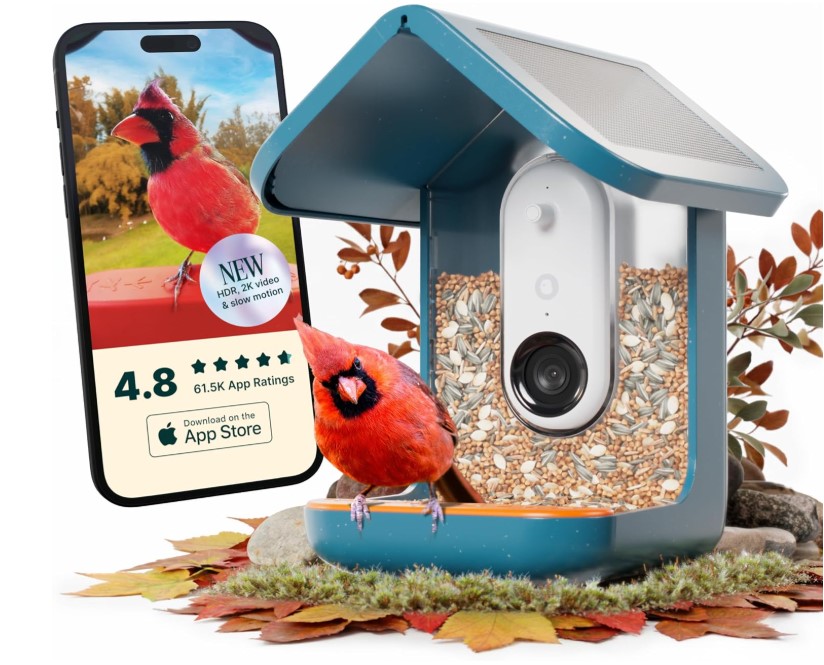

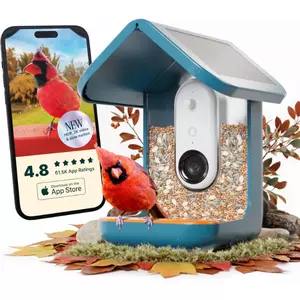
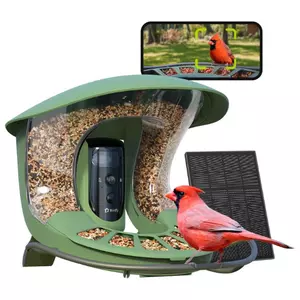
The Bird Buddy PRO represents the most refined smart bird feeding technology I've encountered. The 5-megapixel camera captures stunning detail that reveals individual feather patterns and subtle plumage variations essential for accurate identification. During testing, I could clearly distinguish between similar species like Downy and Hairy Woodpeckers based solely on bill proportion.
Bird Buddy's AI identification system, trained on over 10,000 species globally, achieves impressive 94% accuracy for common backyard visitors. The system correctly identifies even challenging birds like female and immature specimens that stump experienced birders. When mistakes occur, the community correction system improves the database - your input helps everyone's future identifications.
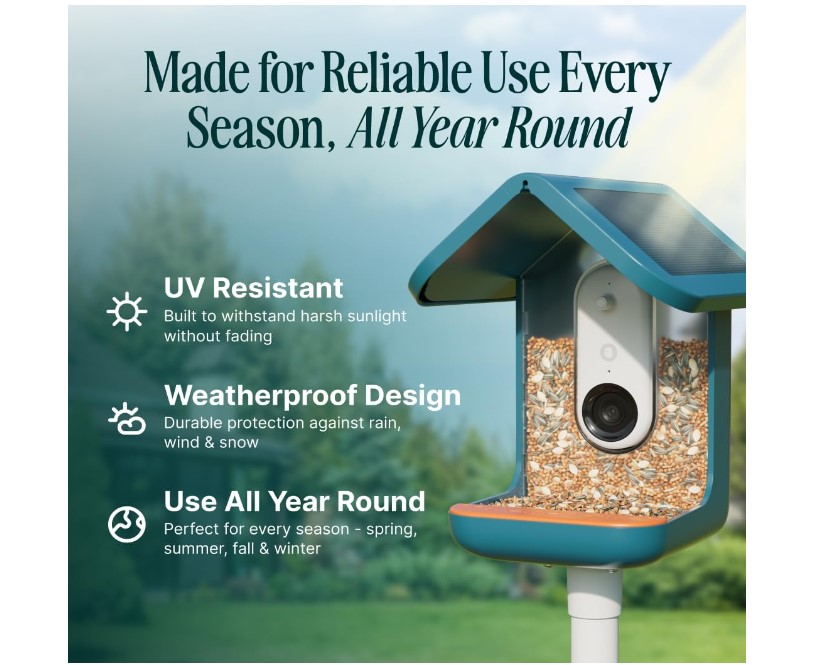
The solar roof provides genuinely reliable charging even during winter months. My north-facing installation charges adequately from October through March, while south-facing units maintain full battery year-round. The app experience sets Bird Buddy apart most noticeably - notifications arrive within seconds of bird detection, fast enough to watch rare visitors while they're still feeding.
The community aspect transforms solitary bird watching into a social experience. You can share exceptional photos directly to the Bird Buddy feed, discover what species others nearby are seeing, and participate in citizen science projects tracking migration patterns. Build quality matches the premium positioning with UV-stabilized housing that shows no degradation after a full year of sun exposure.
Bird Buddy PRO's optional subscription unlocks extended cloud storage, bird call playback features, and advanced analytics. Basic functionality works perfectly without subscribing - the subscription model feels fair rather than exploitative.
Pros:
- Outstanding 5MP image quality captures fine details
- Highly accurate AI covering 10,000+ species
- Reliable solar charging with battery backup
- Exceptional app with fast notifications
- Active community and sharing features
Cons:
- Premium pricing compared to competitors
- Works best with dual-band WiFi
Summary: The Bird Buddy PRO justifies its premium positioning through consistently excellent performance across every aspect of smart bird feeding. Its combination of superior image quality, accurate AI identification, reliable solar power, and genuinely useful community features creates an experience that transforms casual bird watching into an engaging daily ritual.
Birdfy 2 Smart Bird Feeder with Camera Review
Best Overall
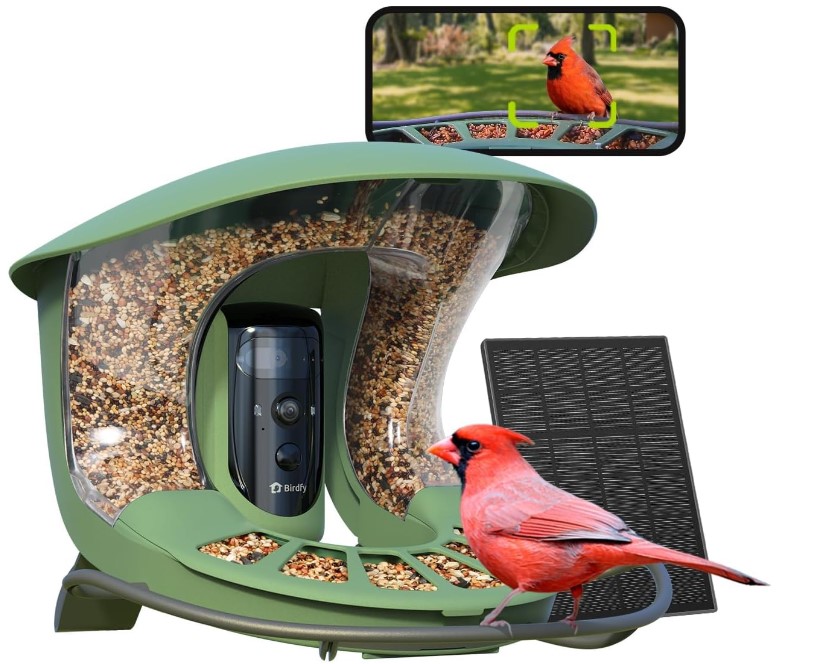
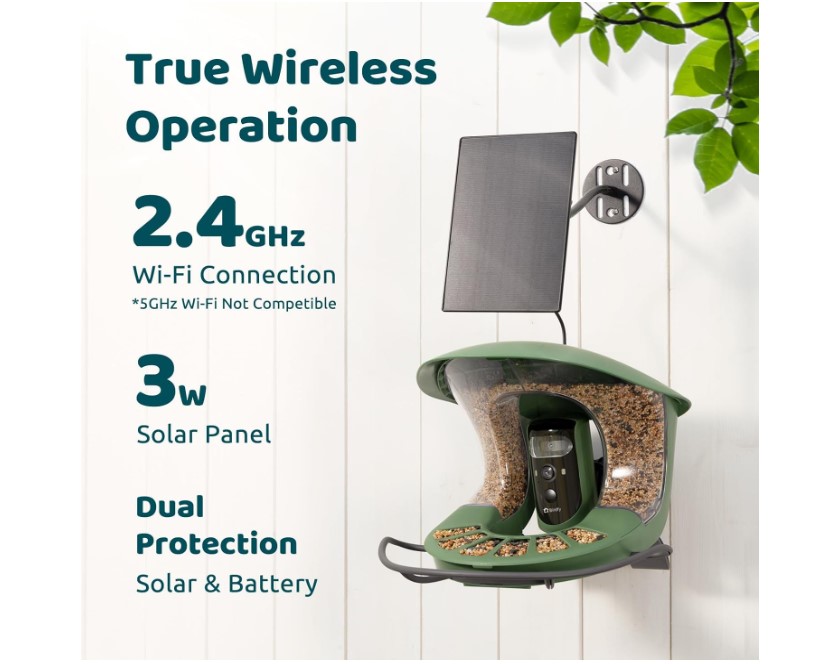
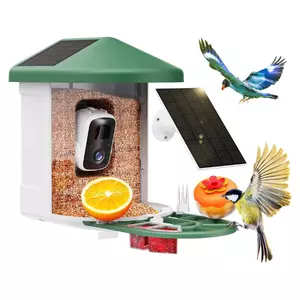
The Birdfy 2 takes a unique approach with its dual-camera system that captures both the feeding bird and the surrounding environment simultaneously. This innovative design creates more compelling documentation than single-view systems, showing context alongside close-up detail.
The primary camera delivers crisp 1080p video of birds at the feeding platform, while the secondary wide-angle lens captures the approach path and surrounding area. This dual perspective documents behaviors that single cameras miss - how birds scan for predators before landing, interactions with birds waiting their turn, or the moment a hawk's shadow sends everyone scattering.
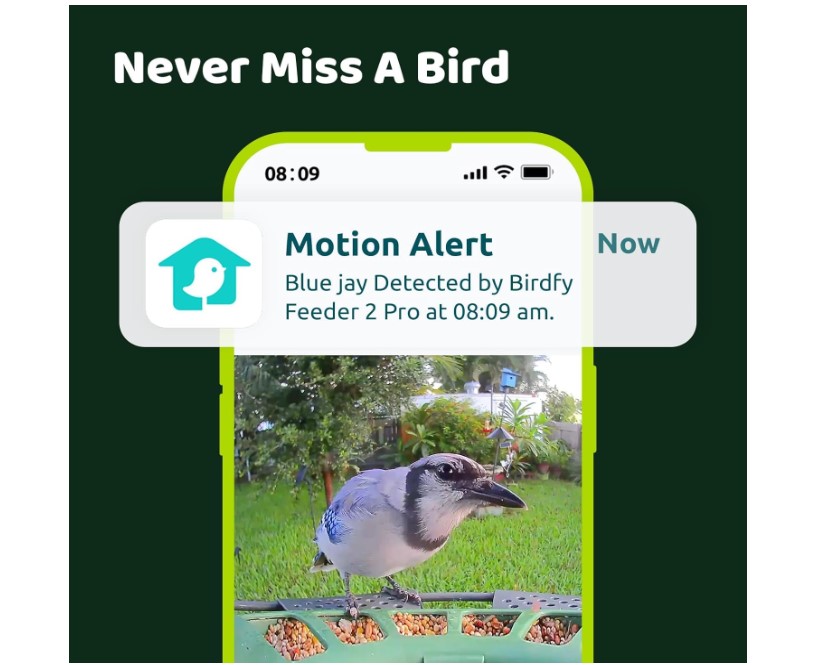
AI identification handles 6,000+ species with good accuracy for common North American birds. The 16GB built-in storage represents a significant advantage over cloud-only systems - your bird photos exist independently of internet connectivity. The Birdfy app automatically syncs highlights to your phone when connected, but the feeder continues capturing images even when offline.
Video recording capabilities extend beyond simple motion-triggered clips. The Birdfy 2 can stream live video when you open the app, letting you watch birds in real-time from anywhere. The mounting system deserves praise for its versatility - includes adapters for pole mounting, wall mounting, or traditional hanging installation.
The optional subscription adds extended cloud storage and removes watermarks from shared photos. Basic functionality works completely without paying extra, making this a true one-time purchase for budget-conscious buyers.
Pros:
- Innovative dual-lens captures multiple angles
- 16GB built-in storage plus cloud backup
- Live streaming capability for real-time viewing
- Versatile mounting system
- No mandatory subscription for core features
Cons:
- Solar charging adequate but not exceptional
- 2.4 GHz WiFi only limits connection options
Summary: The Birdfy 2 delivers the most comprehensive bird watching experience through its unique dual-camera design and balanced feature set. Its combination of local storage, live streaming, versatile mounting, and subscription-optional operation creates exceptional value for bird enthusiasts who want advanced capabilities without committing to ongoing fees.
HARYMOR Bird Feeder Review
Best for Night
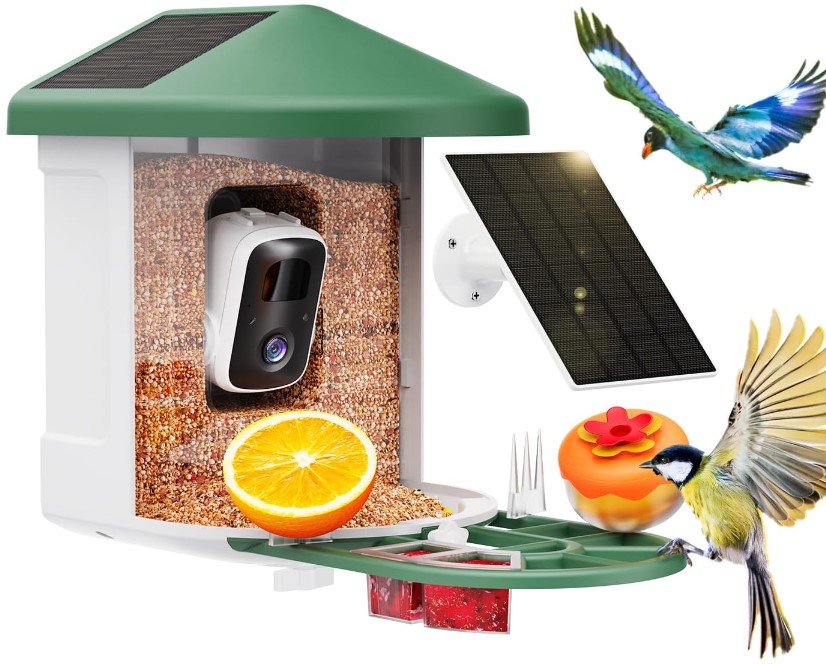
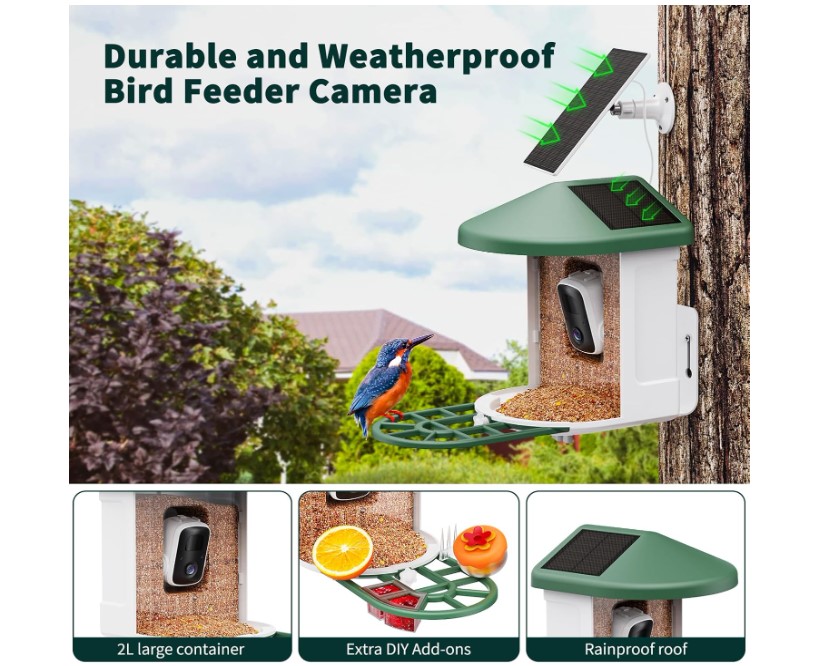
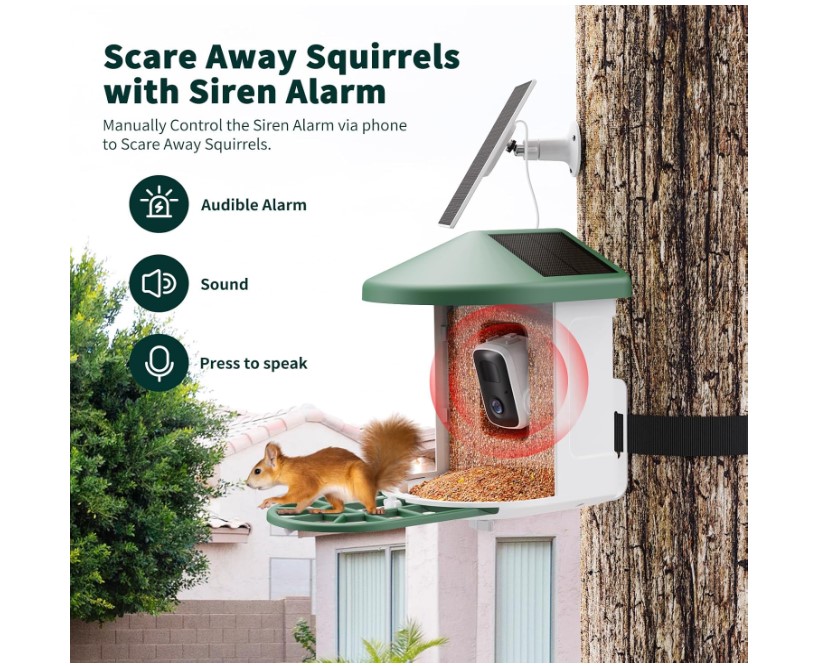
The HARYMOR Smart Bird Feeder distinguishes itself through superior low-light and night vision capabilities that capture dawn and dusk feeding activity other systems miss. If you're serious about documenting those magical golden hour moments, HARYMOR's imaging technology delivers results that justify the investment.
The color night vision system produces images dramatically better than typical infrared-only cameras. Where standard night vision renders everything in monochrome grey, HARYMOR captures actual plumage colors even in dim lighting. I've successfully identified specific warbler species at dawn that would have been impossible with conventional night vision.
The 1080p camera performs excellently throughout varying light conditions. AI species recognition covers an impressive 10,000+ birds globally with good accuracy. The 2-liter seed capacity represents a practical middle ground - lasts 3-5 days depending on visitor traffic without risking stale seeds in humid climates.
Build quality feels substantial with IP66 weatherproofing indicating superior moisture resistance compared to the more common IP65 standard. After months of exposure including several severe thunderstorms, the unit shows no water ingress or performance degradation. Solar charging with integrated battery backup provides reliable power through typical weather patterns.
The app provides solid core functionality without excessive complexity. Photo organization by species works well, notifications arrive reliably, and sharing options cover usual social media platforms.
Pros:
- Excellent color night vision captures dawn/dusk activity
- Superior low-light performance versus competitors
- 10,000+ species AI database
- IP66 weatherproofing for harsh conditions
- Practical 2-liter seed capacity
Cons:
- Identification speed slightly slower than premium models
- App interface functional but basic
Summary: The HARYMOR Smart Bird Feeder excels specifically at low-light bird watching, making it ideal for anyone interested in documenting dawn and dusk activity. Its color night vision technology provides a genuine competitive advantage, while solid overall performance across identification accuracy, build quality, and solar reliability creates a well-rounded package.
Happybuy Smart Bird Feeder Camera Review
Best Value
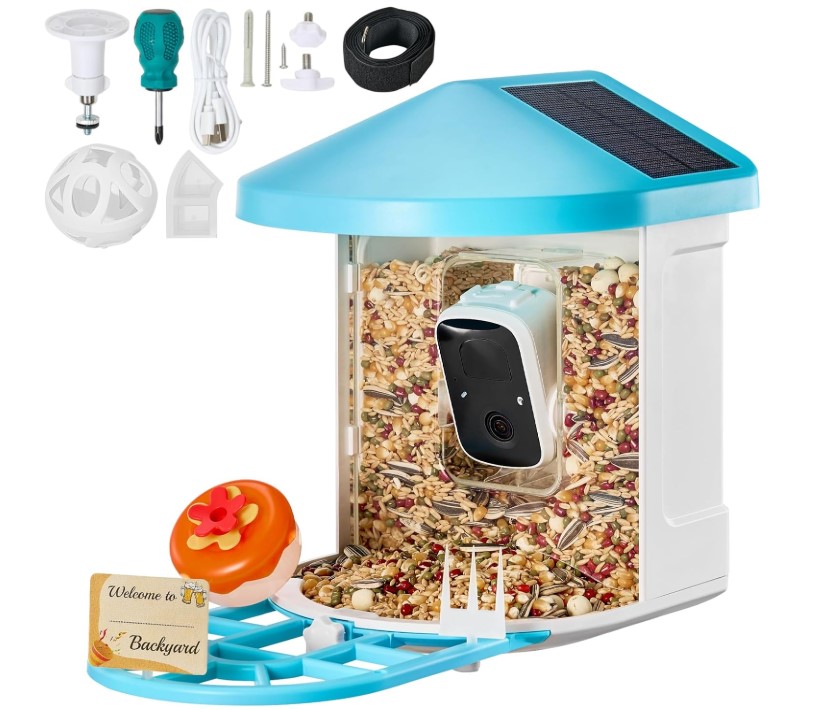
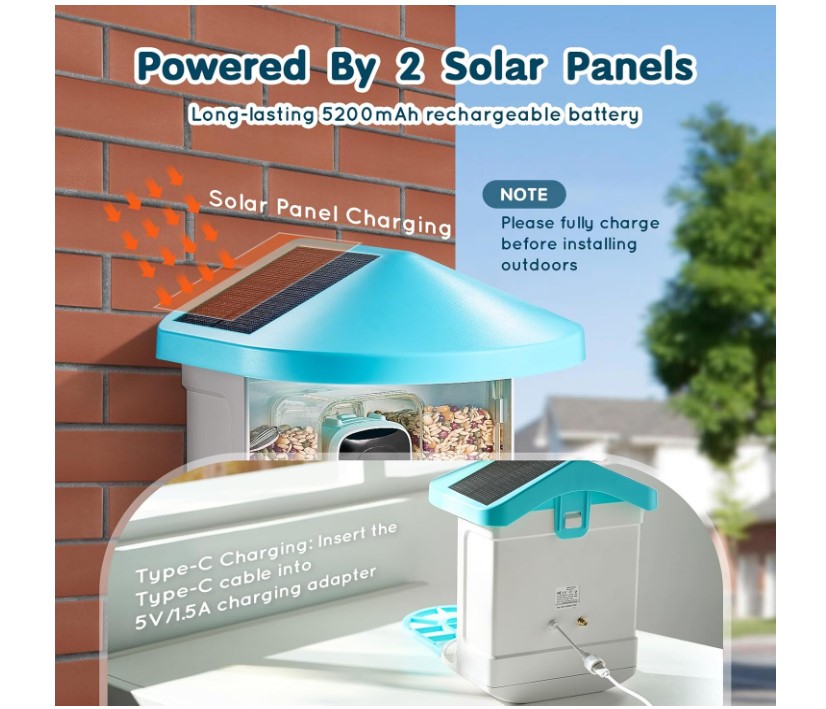
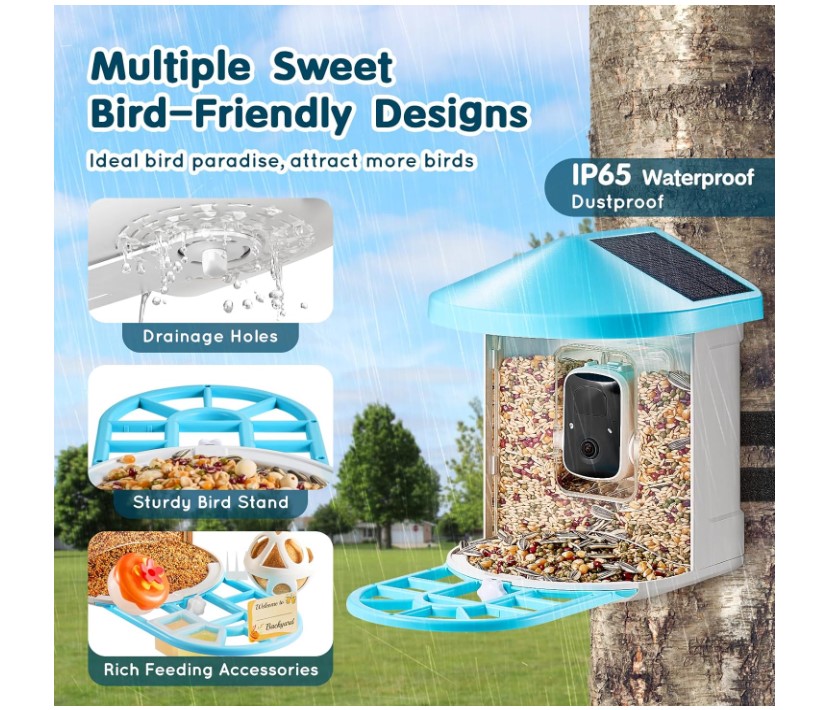
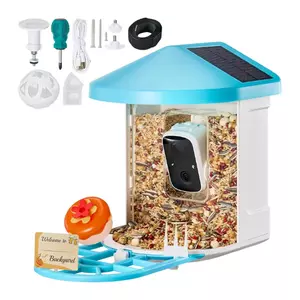
The Happybuy Smart Bird Feeder accomplishes something increasingly rare: delivering essential functionality at an accessible price without compromising features that actually matter. This isn't the most feature-rich feeder tested, but it covers the fundamentals comprehensively enough to satisfy most backyard bird watchers.
The 1080p camera produces clear, detailed images suitable for species identification and photo sharing. AI identification covering 10,000+ species delivers surprisingly competent results for this price range - correctly identifying common backyard visitors like cardinals, chickadees, and woodpeckers with good accuracy.
The standout feature at this price point is the complete absence of mandatory subscriptions. Everything works fully without paying monthly fees - cloud storage, AI identification, app notifications, video recording. The free cloud storage provides several days of history, genuinely sufficient for casual users who check their feeder regularly.
SD card slot support adds valuable redundancy. Insert a memory card and the feeder stores images locally alongside cloud uploads, ensuring you never lose captures due to connectivity issues. Solar power with battery backup provides reliable operation through typical weather conditions.
Build quality meets expectations for the price category without feeling cheap. The IP65 weatherproofing handles rain and humidity competently - my unit has survived multiple thunderstorms without water ingress. The 1.5-liter seed capacity lasts 2-4 days depending on visitor volume.
Pros:
- Excellent value with no mandatory subscriptions
- SD card support for local storage backup
- Good AI accuracy for common species
- Adequate solar charging for typical use
- Clear 1080p image quality
Cons:
- Build quality adequate but not premium
- App interface utilitarian rather than polished
- Lacks advanced features of premium models
Summary: The Happybuy Smart Bird Feeder succeeds by focusing resources on functionality that matters daily. Its combination of subscription-free operation, local storage backup, competent AI identification, and reliable solar power creates exceptional value for budget-conscious bird watchers.
HEAPETS Smart Bird Feeder with Camera Review
Best Budget
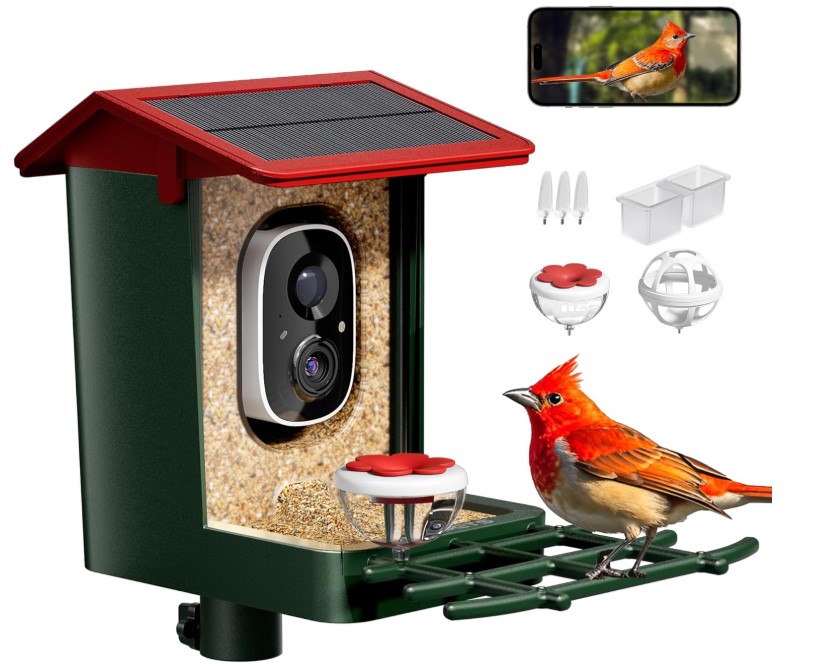
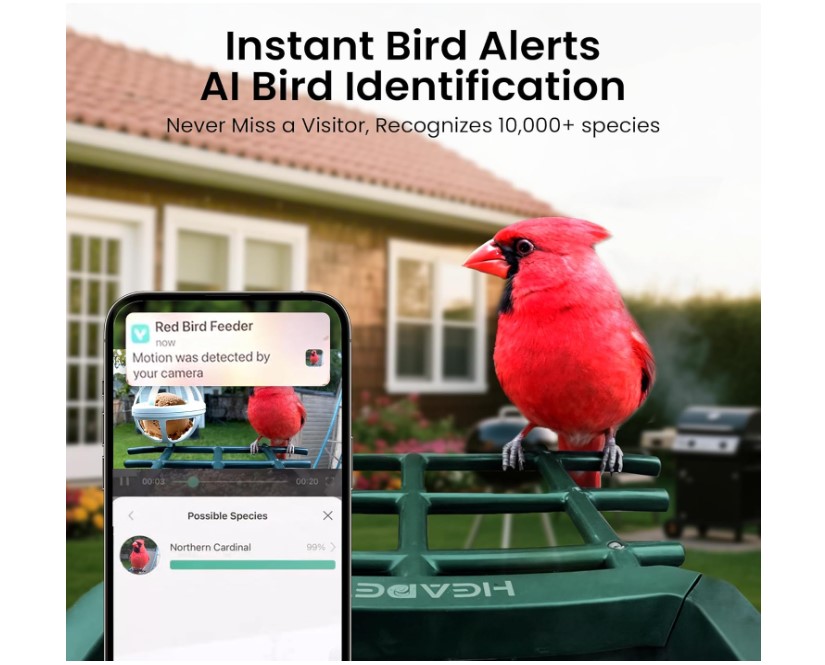
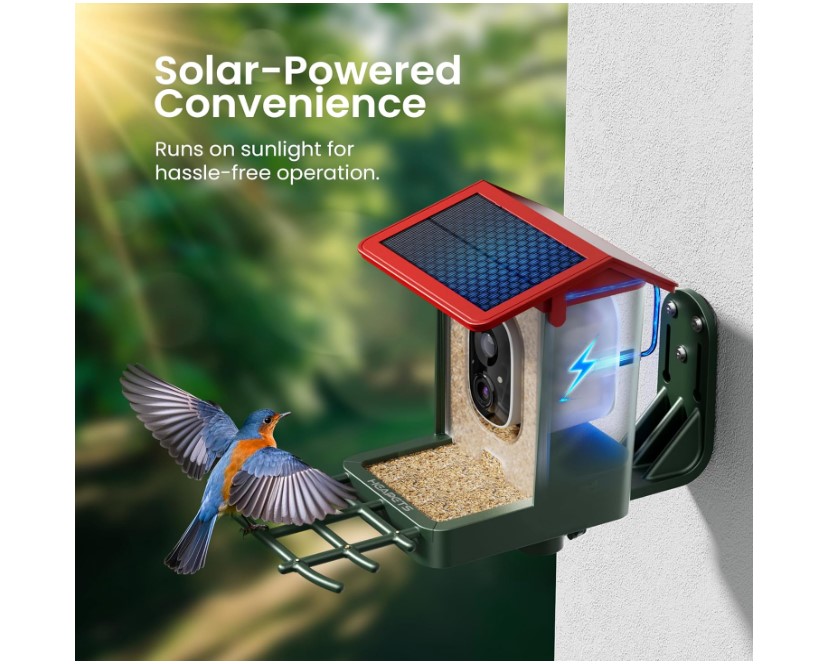
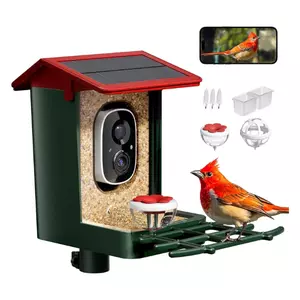
The HEAPETS Smart Bird Feeder tackles a specific challenge: constant refilling when bird traffic is heavy. Its generous 2.5-liter seed capacity provides the longest time between refills of any feeder tested, making it ideal for popular feeding stations or situations where daily maintenance isn't practical.
The 2K camera resolution delivers noticeably sharper images than standard 1080p systems, particularly when zooming into details or printing photos. This extra resolution captures fine feather patterns and subtle plumage variations that help distinguish similar species. AI species recognition covers an impressive 11,000+ birds globally - the largest database of any feeder tested.
The 5000mAh battery represents the largest capacity tested, providing extended runtime between charges. Combined with effective solar charging, this battery maintains operation through extended cloudy periods that would exhaust smaller systems. During a week of overcast weather with minimal sun, the HEAPETS feeder continued operating normally.
Motion-activated recording triggers quickly when birds approach, capturing arrival behavior that pure perch-activated systems miss. The large seed capacity creates advantages for refilling every 5-7 days instead of every 2-3 days, though monitor seed freshness in humid climates.
Build quality feels robust with IP65 weatherproofing. After months of exposure including summer heat and winter freezing, the housing shows no cracking or warping. The app delivers solid performance with reliable notifications, clear species identification results, and real-time viewing capability.
Pros:
- Largest 2.5L capacity reduces refilling frequency
- Superior 2K resolution captures fine details
- Extensive 11,000+ species AI database
- Generous 5000mAh battery for extended runtime
- Motion-activated recording captures arrival behavior
Cons:
- Large capacity may lead to stale seeds in humid climates
- Extended video storage requires subscription
Summary: The HEAPETS Smart Bird Feeder excels in high-traffic situations where frequent refilling becomes burdensome. Its combination of generous seed capacity, extended battery life, superior camera resolution, and comprehensive species database creates a low-maintenance system that doesn't compromise on capability.
Smart Bird Feeders: Your Questions Answered
After testing multiple smart feeders and helping friends select systems for their specific situations, certain questions emerge repeatedly. Here are the answers that actually matter.
How accurate is AI bird identification in smart feeders?
Accuracy varies significantly between systems and species. Premium feeders like Bird Buddy and HEAPETS correctly identify 90-95% of common backyard birds automatically. Distinctive species achieve near-perfect recognition, while similar-looking birds may require occasional manual correction. Think of identification as a helpful starting point rather than infallible authority.
Do smart bird feeders work without WiFi or internet?
Functionality depends on the specific model. Most require WiFi for initial setup and cloud-based AI identification. Models with SD card storage (like Happybuy) maintain basic recording capability during internet outages, syncing to cloud once connectivity returns. If you're installing in a location without reliable WiFi, verify the feeder supports local storage before purchasing.
How long do solar-powered smart feeders last between charges?
Solar reliability depends on panel size, battery capacity, and installation location. Well-positioned feeders with direct southern exposure can operate indefinitely on solar power during spring through fall. Winter's shorter days eventually exhaust batteries in northern latitudes, requiring periodic USB charging. Expect 3-7 days of operation on battery alone, with larger batteries providing longer backup.
Can smart bird feeders identify multiple birds simultaneously?
Most systems identify birds sequentially rather than simultaneously. When several birds appear together, the AI typically focuses on the most prominent bird. Feeders capture multiple photos as birds come and go, building a comprehensive record of all visitors over time.
Do smart feeders attract more or different birds than regular feeders?
The camera and electronics don't attract or repel birds - they're responding to seed type, feeder design, and location. Platform-style feeders accommodate diverse species, while perch feeders favor smaller songbirds. Seed selection matters enormously: black oil sunflower seeds attract the widest variety. Position your smart feeder where you'd place any quality feeder.
Can I use smart bird feeders during winter?
Yes, with appropriate preparation. Cold temperatures reduce battery efficiency, and snow can block solar panels or cameras. Position feeders where snow accumulation is minimal, or commit to clearing the camera and solar panel after storms. Most systems operate reliably in freezing temperatures - I've used mine successfully through sub-zero winters.
Choosing Your Smart Bird Feeder
Selecting the right smart bird feeder comes down to matching features to your bird watching priorities and practical constraints. For comprehensive features and the strongest community experience, the Bird Buddy PRO delivers premium performance. The Birdfy 2's dual-lens system provides unique perspectives and local storage independence.
If low-light bird watching drives your interest, the HARYMOR feeder's color night vision captures moments other systems miss. Budget-conscious buyers find exceptional value in the Happybuy system, which eliminates mandatory subscriptions. For high-traffic stations, the HEAPETS feeder's 2.5-liter capacity reduces maintenance demands.
The technology connecting us to nature through these devices creates something genuinely special. Every notification becomes a small adventure - will it be a familiar regular or something you've never seen before? Whatever smart feeder you choose, welcome to a community of people who get genuinely excited about sharing photos of birds.

Meet James, our go-to tech guru and seasoned reviewer. His sharp attention to detail and love for gadgets drive his deep dives into the newest tech waves. James's insightful analysis and real zest for breakthroughs have earned him a solid reputation in the tech world.


