Holy Stone HS720G vs DJI Mini 4K: Comparison
Hey there! Today I'm comparing two of the most popular budget drones for beginners: the Holy Stone HS720G and the DJI Mini 4K. Both offer 4K cameras and sub-$300 pricing, but they deliver fundamentally different flying experiences that dramatically impact reliability, image quality, and long-term satisfaction.
I've spent the last six weeks flying both drones extensively in various conditions - from coastal winds to forest trails. In this detailed comparison, I'll reveal which drone delivers better value for your specific needs and help you avoid the costly mistake of choosing the wrong first drone. Let's get started!
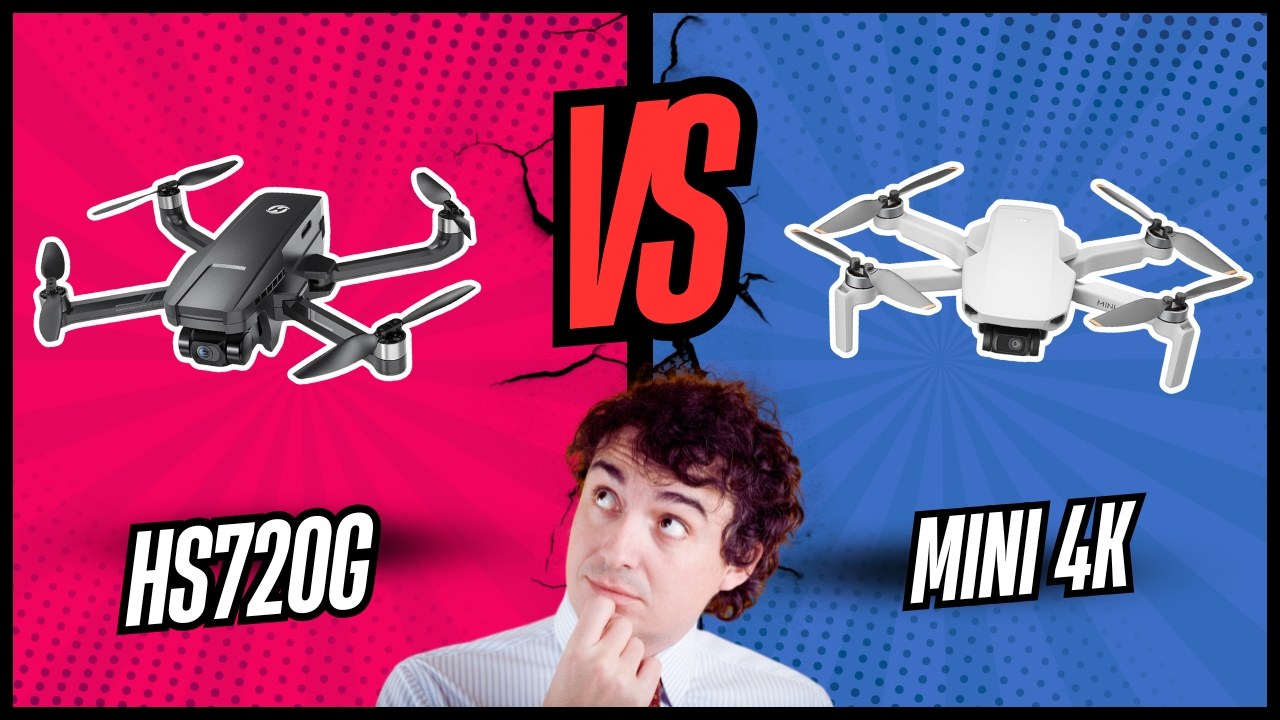
Holy Stone HS720G vs DJI Mini 4K: Quick Overview
Here's the bottom line: The Holy Stone HS720G and DJI Mini 4K target first-time pilots but represent vastly different quality tiers. The HS720G offers 4K camera with 2-axis gimbal, 26-minute flight time, 999-meter range, two batteries included, Follow Me mode, foldable design, 377g weight requiring FAA registration, and Wi-Fi connectivity at $169. The Mini 4K counters with superior 4K/30fps camera with 3-axis gimbal, 31-minute flight, 10km OcuSync 2.0 transmission, sub-249g no-registration weight, professional QuickShots, exceptional build quality, DJI Fly app ecosystem, and better wind resistance at $249.
For most people, I'd recommend the DJI Mini 4K. Its superior build quality, reliable transmission system, and professional features justify the $80 premium for anyone serious about aerial photography. However, grab the Holy Stone HS720G if you're on an extremely tight budget, want two batteries included, need Follow Me tracking, prefer simplified controls for absolute beginners, or just want to experiment with drones before committing to DJI's ecosystem.
Table of Contents:
- Holy Stone HS720G vs DJI Mini 4K: Full Comparison
- Mini 4K vs HS720G: Design & Build
- HS720G or Mini 4K: Owner Reviews
- Holy Stone HS720G and DJI Mini 4K Alternatives
Holy Stone HS720G vs DJI Mini 4K: Full Comparison
| Specification | Holy Stone HS720G | DJI Mini 4K |
| Image |
|
 |
| Weight | 377g | 249g (with battery) |
| Registration Required | Yes (USA) | No (USA/Canada) |
| Folded Dimensions | 168 x 99 x 71mm | 138 x 81 x 58mm |
| Unfolded Dimensions | 305 x 238 x 71mm | 251 x 362 x 56mm |
| Camera Sensor | Sony 1/3-inch CMOS | 1/2.3-inch CMOS |
| Photo Resolution | 12MP (4K dimensions) | 12MP |
| Video Resolution | 4K 30fps, 1080p 60fps | 4K 30fps, 2.7K 60fps, 1080p 60fps |
| Video Bitrate | Not specified | 100 Mbps |
| Gimbal Type | 2-axis mechanical + EIS | 3-axis mechanical |
| Field of View | 130° | 83° |
| Digital Zoom | No | 2x (4K), 4x (1080p) |
| Photo Formats | JPEG | JPEG |
| Max Flight Time | 26 minutes (advertised, ~16 real) | 31 minutes (27-28 real) |
| Max Speed | ~36 mph | 36 mph (Sport mode) |
| Wind Resistance | Level 4-5 | Level 5 (24 mph/38 kph) |
| Max Altitude | 120m (limited) | 4000m |
| Transmission System | 2.4/5GHz Wi-Fi | OcuSync 2.0 |
| Max Transmission Range | 999m (~1200m real) | 10km (6.2 miles, FCC) |
| GPS | GPS + GLONASS | GPS + GLONASS |
| Obstacle Avoidance | No | Downward vision + infrared |
| Intelligent Modes | Follow Me, Waypoint, POI, Tap Fly | QuickShots (5 modes), Panorama (3 modes) |
| Return to Home | Yes | Yes (3 types) |
| Battery Capacity | 2950 mAh | 2590 mAh |
| Charge Time | ~5 hours | ~90 minutes |
| Batteries Included | 2 | 1 |
| Controller Type | Wi-Fi with phone holder | DJI RC-N1 with phone mount |
| Remote ID | Built-in (FAA compliant) | Not required (sub-249g) |
| App | Holy Stone app | DJI Fly |
| Storage | microSD (not included) | microSD up to 256GB (not included) |
| Price | $169 | $249 |
Camera stabilization creates the most obvious quality difference. The Mini 4K's 3-axis mechanical gimbal delivers buttery smooth footage comparable to $500+ drones. The HS720G's 2-axis gimbal with EIS helps but can't match DJI's stabilization, particularly during aggressive maneuvers. The Mini 4K's footage looks professional straight from the camera, while HS720G videos often need post-stabilization. The Mini 4K's smaller sensor actually outperforms the HS720G due to superior processing and stabilization.
Transmission reliability separates hobbyist from professional drones. The Mini 4K's OcuSync 2.0 maintains rock-solid connection up to 10km in ideal conditions, with real-world range exceeding 2-3km even in urban areas. The HS720G's Wi-Fi connection drops around 120 meters when flying high, and frequently disconnects at 800-1000 meters horizontally. Signal loss means losing the camera view and sometimes full control, forcing Return to Home. For confident flying beyond visual line of sight, OcuSync wins decisively.
Weight regulations dramatically impact usability. The Mini 4K's sub-249g design means no FAA registration in the US, simpler rules in Europe, and easier travel internationally. The HS720G's 377g weight requires registration, pilot certification in some countries, and stricter operational restrictions. This seemingly minor difference creates significant hassle for traveling pilots or those in heavily regulated airspace.
Flight performance favors the Mini 4K despite smaller battery capacity. Real-world testing shows 27-28 minutes versus the HS720G's 16-18 minutes - the advertised 26 minutes only occurs in perfect conditions. The Mini 4K's superior wind resistance (Level 5 vs Level 4-5) enables flying in windier conditions with stable footage. The HS720G drifts noticeably in moderate winds despite GPS positioning.
Software ecosystem tilts overwhelmingly toward DJI. The DJI Fly app offers intuitive controls, professional QuickShots modes, comprehensive tutorials, and seamless editing with LightCut. The Holy Stone app feels basic with limited settings and occasional connection issues. QuickShots like Dronie and Helix deliver cinematic results with one tap, while the HS720G's Follow Me mode works inconsistently. Build quality reflects the price gap - the Mini 4K's precision engineering versus the HS720G's adequate but less refined construction.
Mini 4K vs HS720G: Design & Build
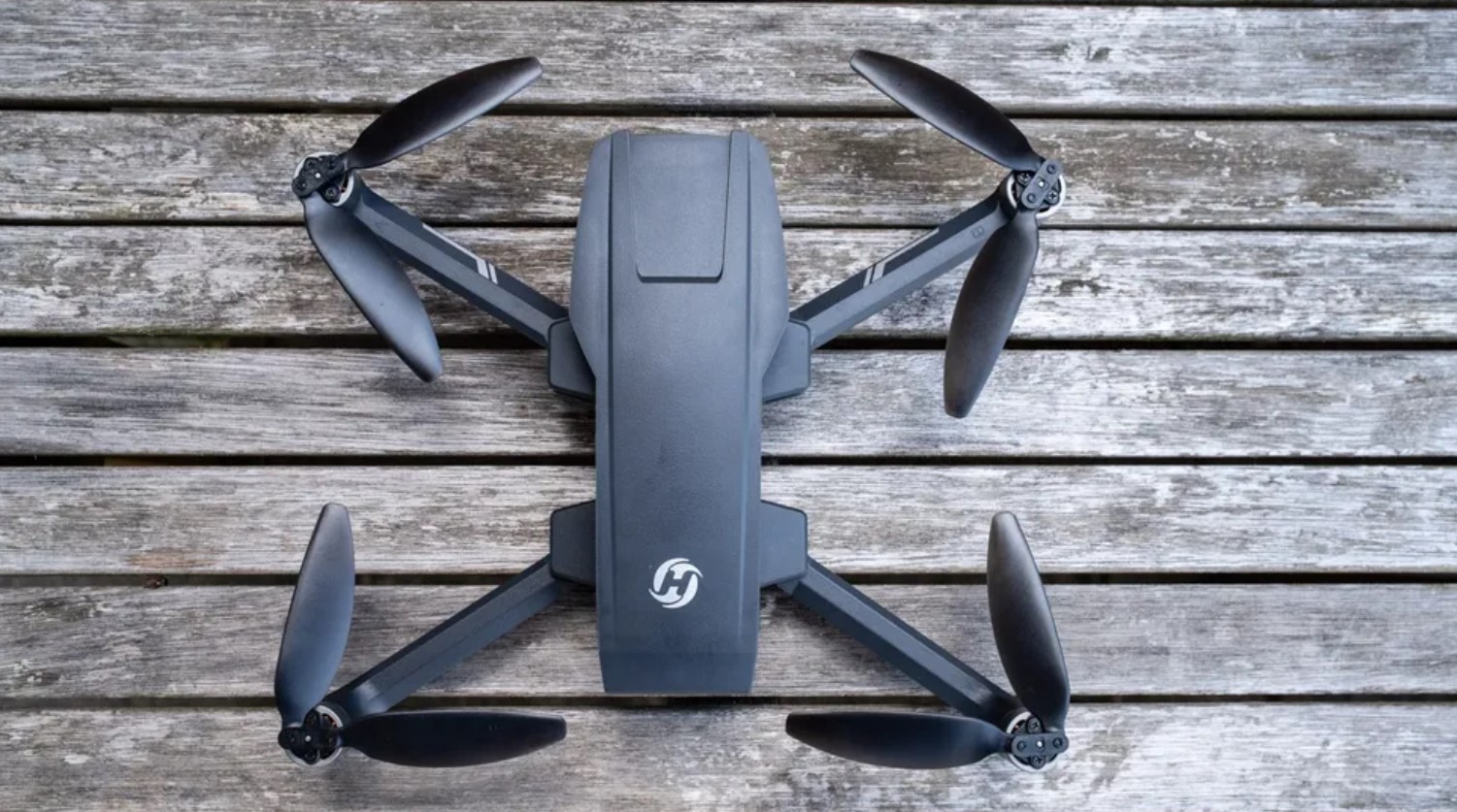
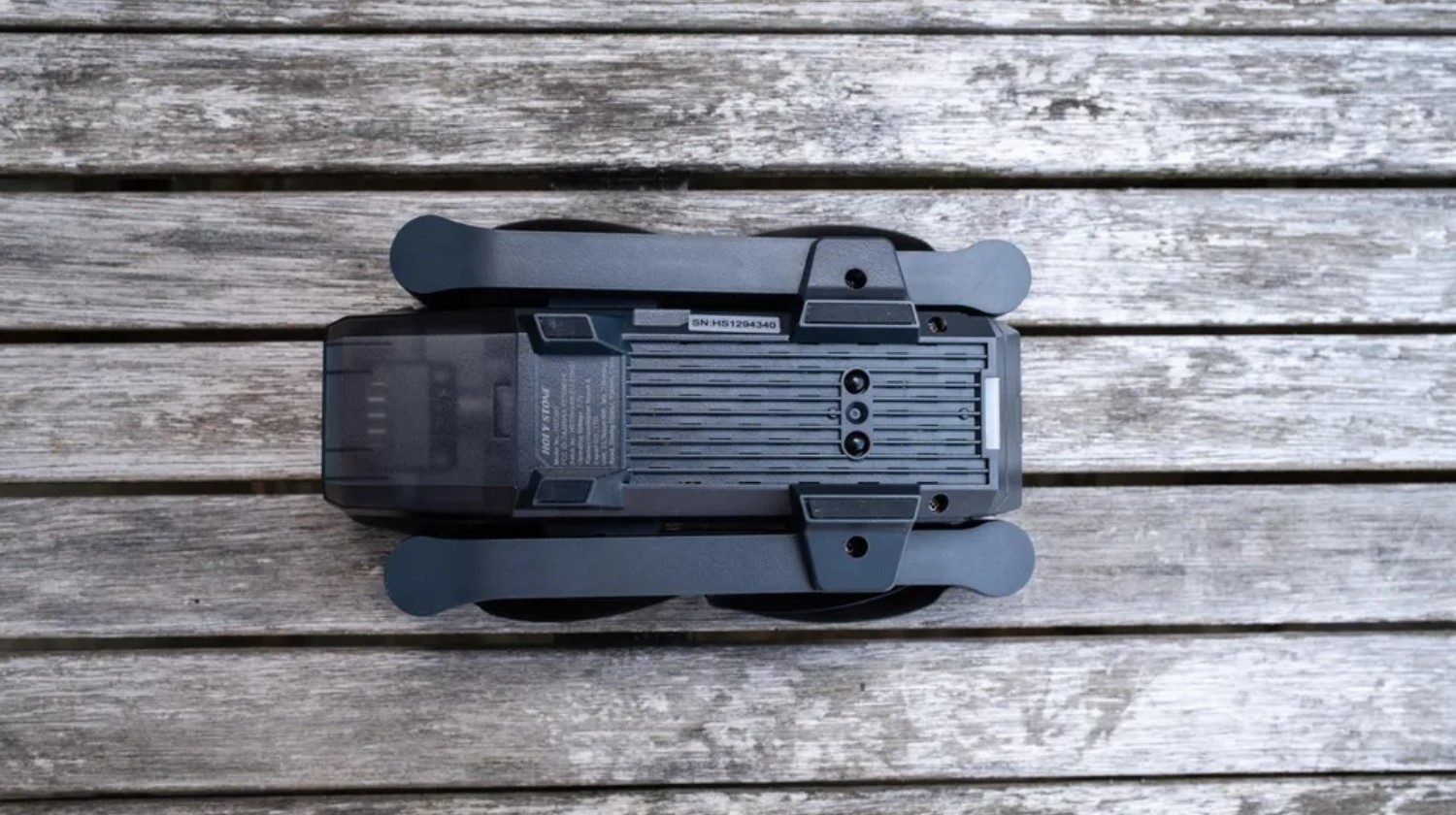
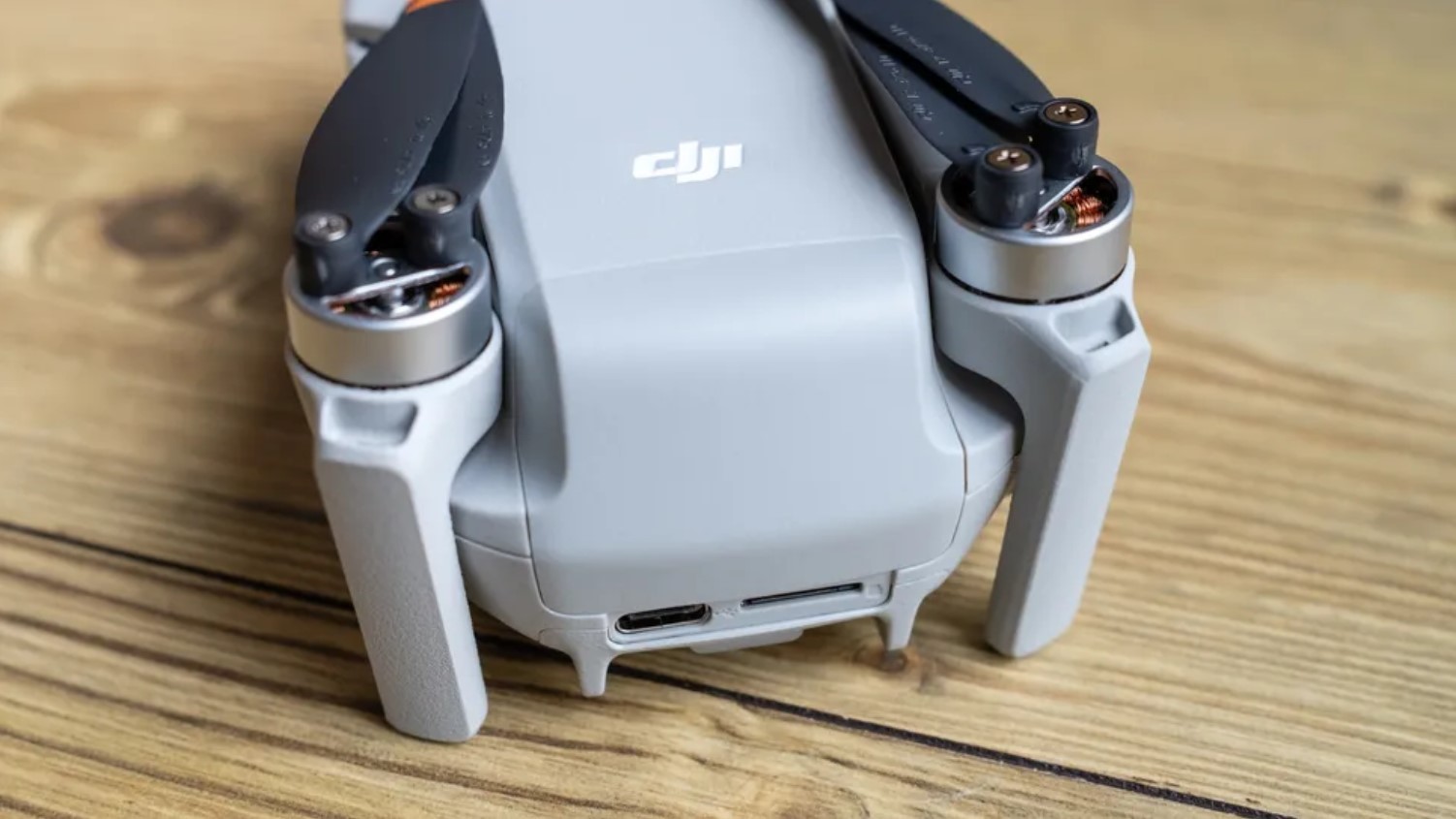
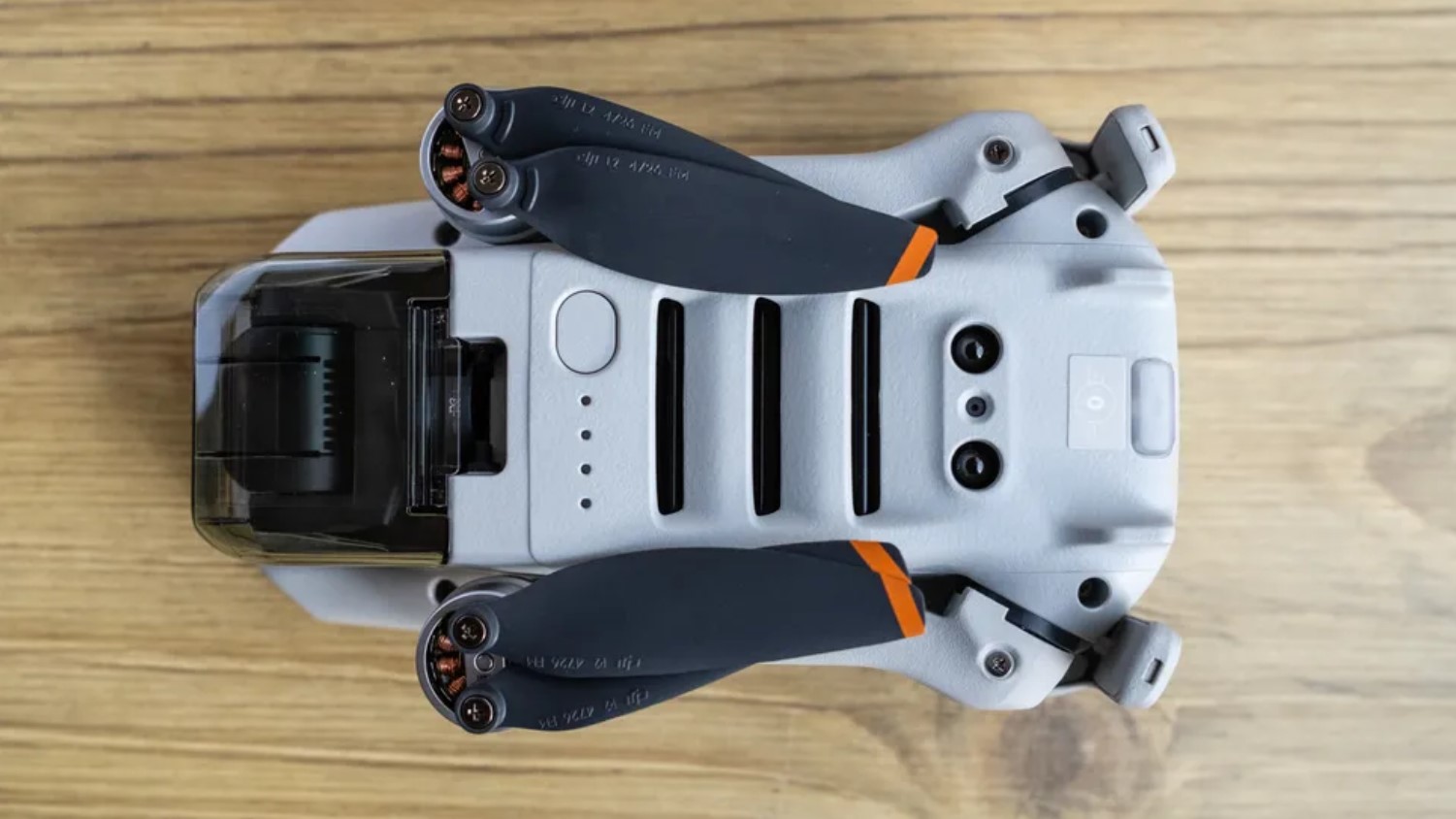
Both drones utilize foldable designs for portability but differ significantly in build quality and attention to detail.
Holy Stone HS720G Design:
DJI Mini 4K Design:
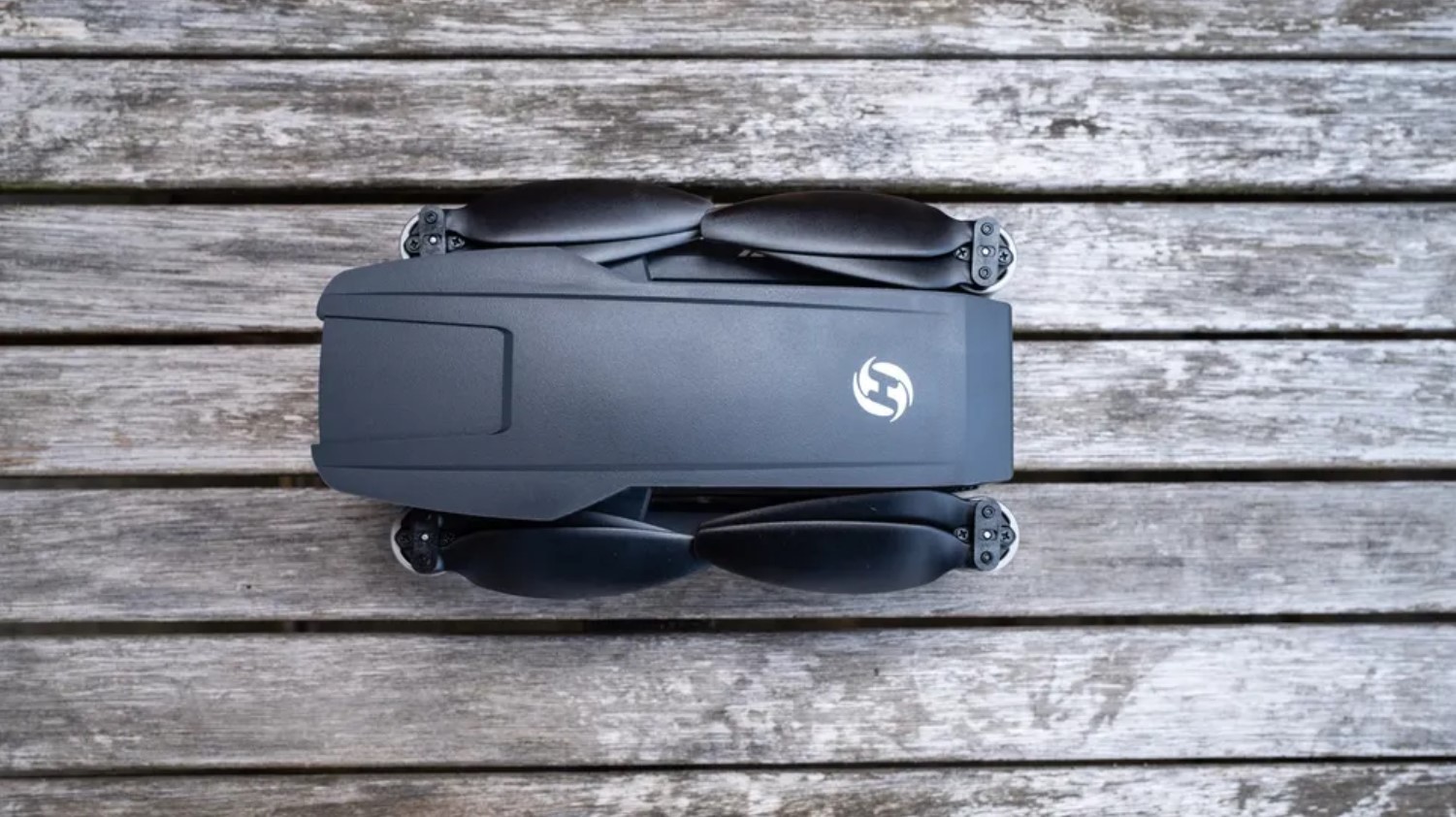
The HS720G adopts a traditional quadcopter layout with arms folding inward. At 377 grams, it feels substantial but lacks the premium feel of pricier drones. The black-and-gray plastic construction proves durable enough for beginners. The 2-axis gimbal protrudes noticeably, requiring careful handling during transport. Brushless motors provide quiet operation and good efficiency. The included controller features a basic phone holder with Wi-Fi antenna, plus storage for extra propellers. The package includes two batteries and a decent carrying case - excellent value for the price.
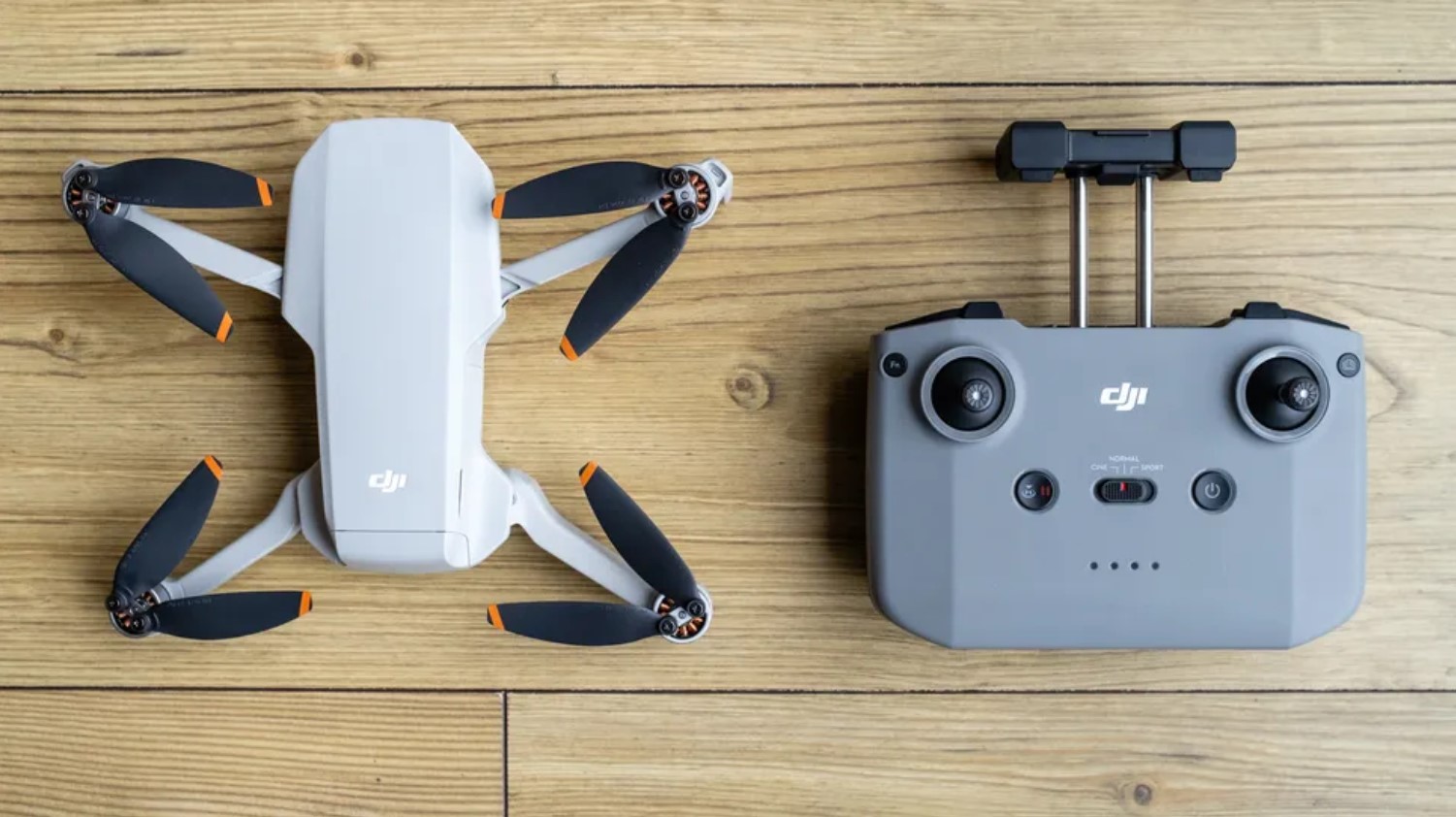
The Mini 4K showcases DJI's engineering excellence in a palm-sized package. Weighing exactly 249 grams, every component serves a purpose. The precision-molded body folds compactly to 138 x 81 x 58mm. The 3-axis gimbal tucks protectively during transport. Build quality feels exceptional with tight tolerances and premium materials. The DJI RC-N1 controller provides ergonomic grip with telescopic phone mount and screw-on control sticks. Power button placement on the drone's bottom prevents accidental activation. Everything about the Mini 4K screams quality despite the budget positioning.
Durability testing showed both drones survive typical beginner crashes. The HS720G's larger size and propeller guards (optional) help protect critical components. The Mini 4K's compact size makes it more prone to propeller damage but replacements cost less. Both utilize brushless motors that outlast brushed alternatives by years.
Holy Stone HS720G or DJI Mini 4K: Owner Reviews
Let's examine what actual owners report after extensive flying with both drones:
Holy Stone HS720G Owner Reviews:
Praises: "Incredible value for the money. You get two batteries, a nice case, and decent 4K footage for under $170. Perfect for learning to fly before upgrading to something more expensive. The Follow Me mode actually works, which surprised me."
"The wide 130-degree field of view captures more scene than my friend's DJI. Great for landscape shots. The gimbal smooths out most shakiness and the GPS holds position well enough for a budget drone."
***
Drawbacks: "Wi-Fi connection is frustratingly unreliable. Lost video feed multiple times around 400 feet, sometimes lost control completely. The advertised 26-minute flight time is fantasy - I get 16 minutes maximum before forced landing."
"Camera quality looks okay on phone but terrible on a real screen. Colors are washed out and details are mushy compared to my friend's DJI Mini. The app crashes occasionally and the interface feels dated."
DJI Mini 4K Owner Reviews:
Praises: "This little drone is incredible. Footage quality rivals my old $600 Phantom 3 from years ago. OcuSync connection never drops, the app is intuitive, and QuickShots make me look like a pro filmmaker. Best $249 I've ever spent on tech."
"Flight time actually matches the advertised 31 minutes in light wind. The 3-axis gimbal delivers buttery smooth footage even when flying aggressively. No registration needed means I took it traveling internationally with zero hassle."
***
Drawbacks: "Only one battery included for $249 feels cheap. Extra batteries cost $45 each. The narrow 83-degree FOV makes shots feel more zoomed-in compared to wider-angle drones. Would've paid extra for a second battery in the base kit."
"No obstacle avoidance means you need to fly carefully near trees or buildings. Hit a branch once because I misjudged distance. The downward sensors help with landing but front/side protection would be nice."
Holy Stone HS720G and DJI Mini 4K Alternatives
If neither drone perfectly matches your needs, here are two strong alternatives worth considering:
- Potensic ATOM SE: 4K camera, 3-axis gimbal, 6km transmission, 31-minute flight, sub-249g, GPS modes at $289.
- DJI Mini 4 Pro: Professional 4K/60fps camera, omnidirectional obstacle avoidance, 34-minute flight, advanced tracking at $759.
The Potensic ATOM SE bridges the gap between budget and premium. Its 3-axis gimbal matches DJI quality while undercutting the Mini 4K by $40. The 6km transmission outperforms Wi-Fi drones significantly. You sacrifice DJI's app polish and QuickShots but gain excellent value. For buyers wanting DJI-level stabilization at Holy Stone pricing, the ATOM SE delivers.
The DJI Mini 4 Pro targets serious enthusiasts ready to invest in professional features. Omnidirectional obstacle sensors prevent crashes. ActiveTrack 360° follows subjects intelligently. The camera shoots 4K/60fps with 10-bit color. At $759, it costs triple the Mini 4K but delivers capabilities matching $1500+ drones from years past. For committed aerial photographers, the Mini 4 Pro justifies the investment.
Should You Buy the HS720G or Mini 4K?
After six weeks flying both the Holy Stone HS720G and DJI Mini 4K, the quality gap proves more significant than the $80 price difference suggests.
Choose the Holy Stone HS720G if budget constraints dominate your decision. The $169 price with two batteries delivers functional 4K aerial footage for learning drone basics. The wider FOV captures more scene, and Follow Me tracking works adequately. It's acceptable for casual use and social media content. The included accessories provide everything needed to start flying immediately. For absolute beginners uncertain about the hobby, the HS720G minimizes financial risk.
Choose the DJI Mini 4K if you want reliable, professional-quality results. The $249 investment buys DJI's legendary build quality, rock-solid OcuSync transmission, superior 3-axis stabilization, and intuitive DJI Fly app. Sub-249g weight eliminates registration hassles domestically and internationally. QuickShots deliver cinematic footage with zero piloting skill. The 31-minute real-world flight time beats the HS720G's 16-18 minutes decisively. Better wind resistance enables flying in conditions that ground the HS720G.
For anyone serious about aerial photography or videography, the DJI Mini 4K represents better long-term value despite higher upfront cost. Its reliability prevents the frustration of lost connections and inconsistent footage quality. The HS720G serves as an acceptable learning platform but most users quickly outgrow its limitations and wish they'd bought DJI initially. Your choice depends on whether you're testing the waters or diving into the drone hobby.
Go Deeper:

Jim's our tech geek with a mission since February 2023. From movies to video projectors, he knows his stuff and aims to make tech work for you. When he's not geeking out, he's there to guide you through making savvy decisions.


