Insta360 Ace Pro 2 vs DJI Action 5 Pro: Comparison
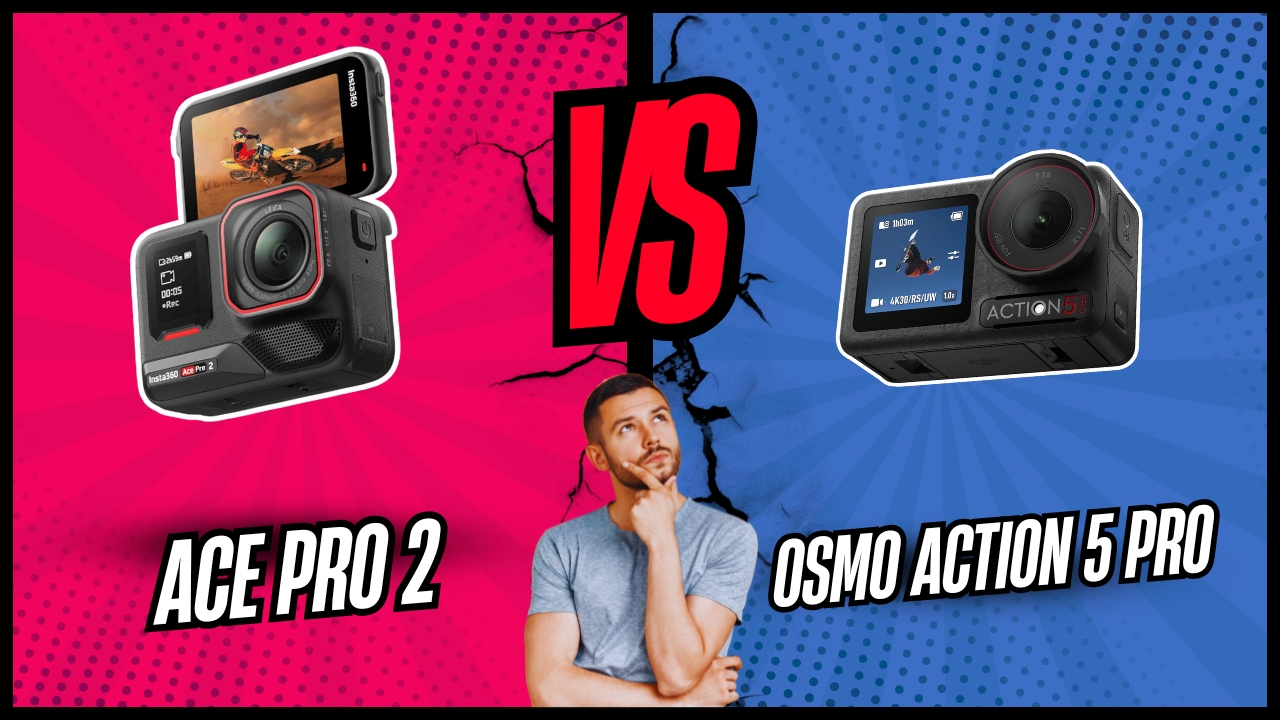
Hey there! I've spent the last six weeks putting two flagship action cameras through their paces: the brand-new Insta360 Ace Pro 2 and the DJI Action 5 Pro. Both promise professional-grade 4K footage and cutting-edge features under $400, but they take completely different approaches to action camera design.
From mountain biking in Colorado to night vlogging in urban streets, I've tested these cameras in conditions that would make most gear cry for mercy. The results surprised me. In this head-to-head comparison, I'll reveal which camera delivers the best value for adventure filmmakers and help you choose the right tool for capturing your wildest moments. Let's dive in!
Insta360 Ace Pro 2 vs DJI Action 5 Pro: Quick Overview
Here's the bottom line: The Insta360 Ace Pro 2 and DJI Action 5 Pro represent the pinnacle of action camera technology. The Ace Pro 2 leads with 8K30fps video, dual AI chips, 2.5-inch flip screen, Leica f/2.6 lens, superior PureVideo low-light mode, and integrated wind guard at $399. The Action 5 Pro counters with dual OLED touchscreens, 4K120fps, 360° HorizonSteady, 240-minute battery, 20m waterproofing, 47GB built-in storage, and DJI Mic 2 integration at $349.
For most creators, I'd recommend the DJI Action 5 Pro. Its 4-hour battery, deeper waterproofing, and $50 lower price make it smarter for extended adventures. However, grab the Insta360 Ace Pro 2 if you need 8K resolution, superior low-light performance, the largest action camera display for vlogging, or I-Log for professional color grading.
Table of Contents:
- Insta360 Ace Pro 2 vs DJI Action 5 Pro: Full Comparison
- Action 5 Pro vs Ace Pro 2: Design & Build
- Ace Pro 2 or Action 5 Pro: Owner Reviews
- Insta360 Ace Pro 2 and DJI Action 5 Pro Alternatives
Insta360 Ace Pro 2 vs DJI Action 5 Pro: Full Comparison
| Specification | Insta360 Ace Pro 2 | DJI Action 5 Pro |
| Image |
 |
|
| Sensor | 1/1.3" (50MP) | 1/1.3" (40MP) |
| Sensor Pixel Size | 2.4μm equivalent | 2.4μm equivalent |
| Dynamic Range | 13.5 stops | 13.5 stops (1.5 stops > Action 4) |
| Processing Power | Dual chip (Pro Imaging + 5nm AI) | 4nm chip |
| Max Video Resolution | 8K30fps, 5.7K60fps | 4K120fps |
| 4K Frame Rates | 120/100/60/50/48/30/25/24fps | 120/100/60/50/48/30/25/24fps |
| Slow Motion | 4K120fps | 4K120fps (32x with AI interpolation) |
| Active HDR | 4K60fps | 4K60fps |
| Color Modes | Standard, I-Log, Leica profiles | Standard, D-Log M, HLG, 10-bit |
| Low-Light Mode | PureVideo (up to 4K60fps) | SuperNight |
| Lens | Leica SUMMARIT f/2.6 | 155° FOV |
| Field of View | 157° (MegaView, Ultra, Action, Dewarp, Linear) | 155° FOV |
| Digital Zoom | 2x Clarity Zoom (lossless in 8K) | No zoom |
| Stabilization | FlowState (Standard/High), Horizon Lock (45°/360°) | RockSteady 3.0/3.0+, HorizonBalancing, 360° HorizonSteady |
| Front Display | 0.7" status screen | 1.46" OLED touchscreen (342×342, 800 nits) |
| Rear Display | 2.5" flip touchscreen (tilting 180°) | 2.5" OLED touchscreen (400×712, 1000 nits peak) |
| Audio | 3 mics + integrated wind guard, 16-bit | 3 stereo mics, 48kHz with DJI Mic 2 |
| Wireless Mic Support | DJI Mic 2, select Bluetooth mics | DJI Mic 2 (direct connection, 2 units) |
| Built-in Storage | None (microSD required) | 47GB usable (64GB total) |
| Max microSD Card | 1TB (UHS-I V30+) | 1TB (UHS-I V30) |
| Subject Tracking | Yes (up to 8K) | Yes (9:16 crop, up to 2.7K) |
| AI Features | AI Highlights Assistant, AI Warp effects, gesture/voice control | Subject centering, voice control, auto editing |
| Special Features | Pre-recording (120s), Timecode sync, Pause/Resume | Pressure gauge, scheduled recording, altitude display |
| Battery Capacity | 1,800mAh | 1,950mAh (Extreme Battery Plus) |
| Battery Life (1080p) | 180 minutes | 240 minutes (4 hours) |
| Battery Life (4K60fps) | ~90-120 minutes | ~120 minutes |
| Charging Time | 75 min (standard), 47 min (fast charger) | ~100 minutes |
| Fast Charging | 15 min for 2 hours recording | Available |
| Waterproof Rating | 12m (39ft) native / 60m (196ft) with case | 20m (66ft) native / 60m (196ft) with case |
| Operating Temperature | -20°C to 45°C (-4°F to 113°F) | -20°C to 45°C (-4°F to 113°F) |
| Weight (with battery) | 177g (6.2 oz) | 145g (5.1 oz) |
| Dimensions | 71.9×52.2×38mm (screen folded) | Compact design |
| Mounting System | Magnetic quick-release | Magnetic + GoPro adapter included |
| Wi-Fi Transfer | Standard speed | Wi-Fi 6.0 (up to 80 MB/s) |
| USB Connection | USB-C (also for external mics) | USB-C 3.0 (webcam mode) |
| Companion App | Insta360 app (iOS/Android) | DJI Mimo (sideload required on Android) |
| Price (Standard Combo) | $399 (1 battery) / $419 (2 batteries) | $349 |
The resolution war defines these cameras' philosophies. The Ace Pro 2's 8K30fps recording doubles the Action 5 Pro's maximum 4K resolution. In bright daylight, 8K allows aggressive cropping in post without quality loss. However, 8K files consume massive storage (1GB per minute) and disable features like Active HDR. For 95% of creators, the Action 5 Pro's 4K120fps proves more practical, offering silky slow-motion at usable resolution.
Low-light performance separates these flagships from cheaper alternatives. Both feature identical 1/1.3-inch sensors with 13.5-stop dynamic range. The Ace Pro 2's dual-chip architecture and PureVideo mode deliver the cleanest night footage I've seen from any action camera. The Action 5 Pro's SuperNight mode performs well but can't quite match the Ace Pro 2's clarity in extreme darkness.
Battery life heavily favors DJI. The Action 5 Pro delivers genuine 4-hour recording at 1080p24fps. I captured an entire skiing day (3.5 hours) without swapping batteries. The Ace Pro 2 manages 180 minutes maximum. For full-day adventures without charging, the Action 5 Pro wins decisively.
Display design reveals opposite approaches. The Ace Pro 2's 2.5-inch flip screen rotates 180° upward, creating the largest action camera viewfinder. This excels for vlogging but leaves only a tiny 0.7-inch front status screen. The Action 5 Pro employs dual OLED touchscreens (1.46-inch front, 2.5-inch rear), both fully functional for easy composition either direction.
Waterproofing creates a critical distinction. The Action 5 Pro reaches 20m (66ft) without housing, sufficient for recreational diving. The Ace Pro 2 stops at 12m (39ft), requiring the separate dive case for deeper adventures. Both extend to 60m with dedicated cases, but the Action 5 Pro provides more versatility out-of-box.
Action 5 Pro vs Ace Pro 2: Design & Build
These cameras reflect fundamentally different design priorities, with the Action 5 Pro emphasizing ruggedness and the Ace Pro 2 prioritizing creative flexibility.
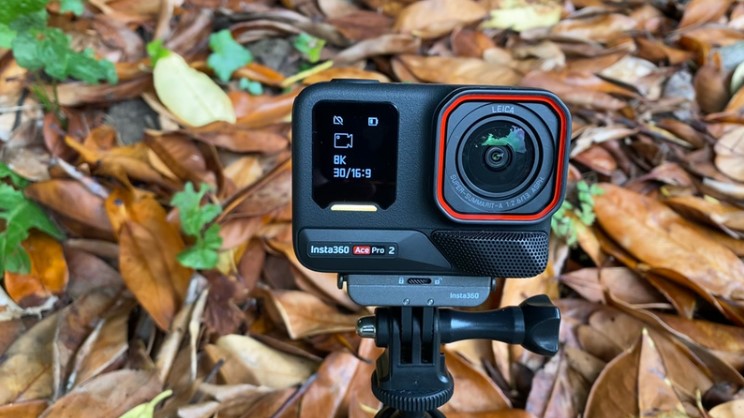
Insta360 Ace Pro 2 Design:
DJI Action 5 Pro Design:
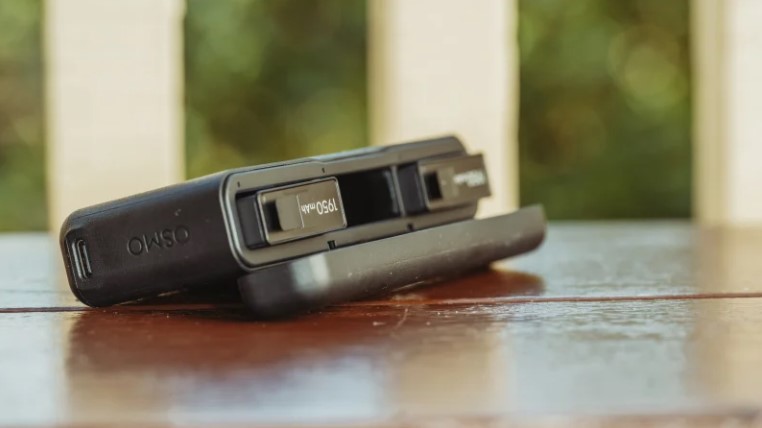
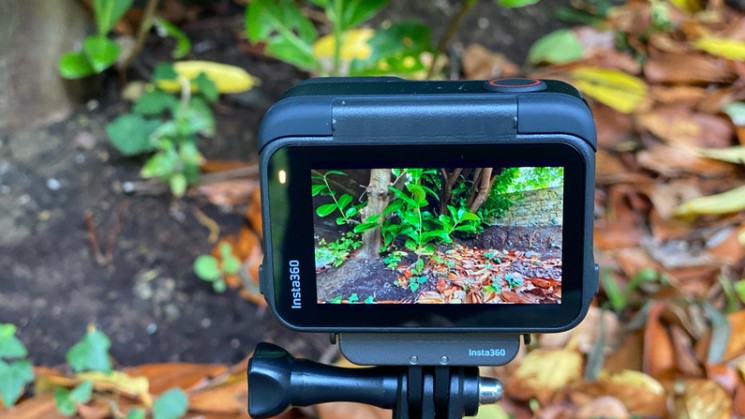
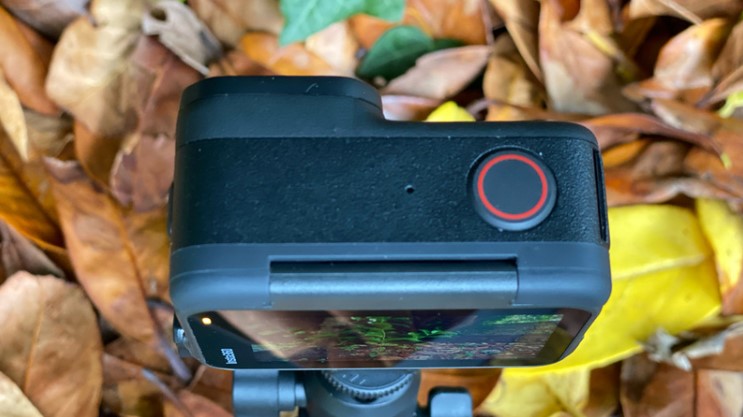
The Ace Pro 2 measures 71.9×52.2×38mm when folded, expanding to 71.9×99.1×38mm with screen deployed. At 177g with battery, it feels substantial but not cumbersome. The flip screen mechanism locks securely at every angle. The integrated wind guard reduces wind noise dramatically during motorcycle rides. A removable lens guard protects the Leica glass. The magnetic quick-release mount attaches instantly.
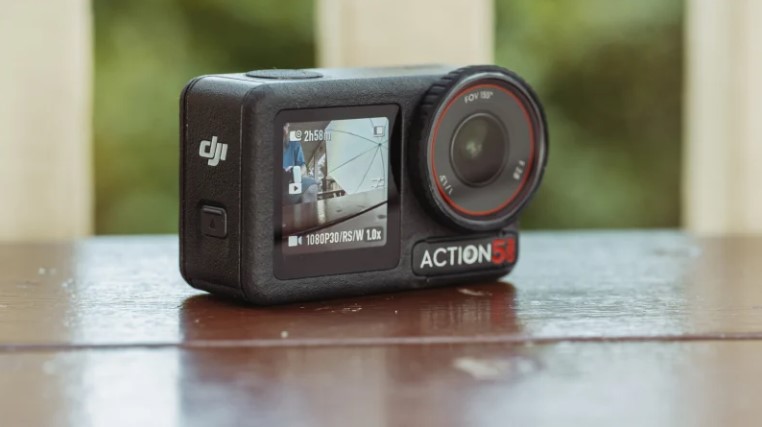
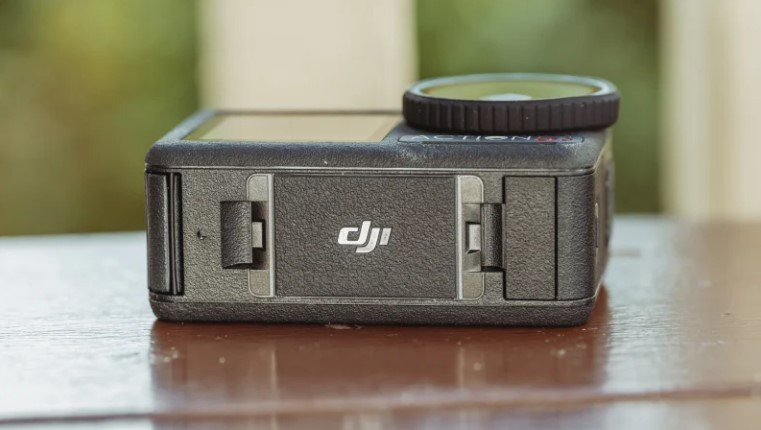
The Action 5 Pro adopts a compact form, lighter at 145g. Both OLED screens feature exceptional brightness and responsiveness, working flawlessly even with wet fingers. The included horizontal-vertical frame enables quick rotation between landscape and portrait. The frame includes GoPro-compatible mounting points. The tempered glass lens cover survived multiple drops onto rocks without cracking.
Both cameras use two physical buttons (power and record), with touchscreen controls. The Action 5 Pro's buttons provided better tactile feedback. Both magnetic mounting systems work excellently. The Action 5 Pro edges ahead with its included GoPro adapter for immediate accessory compatibility.
Insta360 Ace Pro 2 or DJI Action 5 Pro: Owner Reviews
Let's examine authentic feedback from users who've pushed these cameras through real adventures:
Insta360 Ace Pro 2 Owner Reviews:
Praises: "The low-light performance is absolutely game-changing. I shoot a lot of evening trail rides and the PureVideo mode captures detail I've never seen from an action camera. Even with just a headlamp, the footage looks incredibly clean. The flip screen is brilliant for vlogging too."
"8K resolution is genuinely useful when I need to punch in during editing. Shot a mountain biking video where I framed wide, then cropped to 4K in post to follow the action perfectly. The Leica colors straight out of camera are gorgeous - minimal grading needed."
***
Drawbacks: "Battery life is disappointing compared to DJI. I get maybe 90 minutes of 4K60fps recording before needing to swap batteries. For day-long hikes, I'm carrying 4-5 batteries which adds weight. Wish they'd prioritized runtime over 8K features most people won't use."
"The flip screen is cool but fragile. After three weeks, the hinge feels slightly looser and I worry about long-term durability. Also, the 12m waterproof rating means I needed to buy the expensive dive case for snorkeling trips deeper than 30 feet. DJI's 20m native rating would've been perfect."
DJI Action 5 Pro Owner Reviews:
Praises: "The 4-hour battery life is absolutely unreal. Filmed an entire day of skiing without charging once - that's never happened with any action camera I've owned. The dual screens make composition effortless whether I'm filming myself or pointing at the action."
"The DJI Mic 2 integration is killer for vlogging. Crystal clear 48kHz audio wirelessly, no receiver needed. Perfect for motorcycle videos where wind noise used to ruin everything. The 360° HorizonSteady keeps everything level even when I'm tumbling down hills."
***
Drawbacks: "No 8K option feels limiting when competitors offer it. I shoot commercial content and clients are starting to request 8K delivery for future-proofing. Also, the subject tracking mode only works up to 2.7K resolution, which feels like an arbitrary limitation on such powerful hardware."
"The DJI Mimo app isn't on Google Play Store - you have to sideload it from DJI's website which feels sketchy and complicates updates. My clients with iPhones have no issues, but as an Android user it's frustrating. Also noticed some menu lag underwater in my dive housing."
Insta360 Ace Pro 2 and DJI Action 5 Pro Alternatives
If neither camera perfectly matches your shooting style, consider these compelling alternatives:
- GoPro Hero 13 Black: 5.3K60fps video, HB-Series lens mods ecosystem, built-in GPS, legendary durability at $399.
- Insta360 Ace (non-Pro): 4K120fps, flip screen, good stabilization, excellent value at $299.
The GoPro Hero 13 Black delivers the most polished ecosystem with automatic lens detection for modular accessories. The 5.3K resolution splits the difference between 4K and 8K, while HyperSmooth 6.0 stabilization remains industry-leading. GPS tagging overlays speed and location data automatically. At $399, it competes directly with the Ace Pro 2.
The Insta360 Ace (standard version) keeps the flip screen and FlowState stabilization while dropping to 4K maximum. You lose the Leica lens, dual AI chips, and PureVideo mode, but gain incredible value at $299. For casual creators who don't need 8K or extreme low-light capability, the standard Ace delivers 80% of the Pro experience at 75% of the cost.
Should You Buy the Ace Pro 2 or Action 5 Pro?
After six weeks testing both cameras across mountains, underwater, and urban environments, I'm convinced both deserve flagship status - but for different creators.
Choose the Insta360 Ace Pro 2 if image quality matters above all else. The 8K30fps recording future-proofs your footage. The dual AI chip and PureVideo mode deliver the cleanest low-light footage available - critical for dawn skiing, evening trail rides, or night vlogging. The 2.5-inch flip screen provides the largest viewfinder for self-framing. I-Log recording enables maximum post-production flexibility. At $399, you're paying for cutting-edge imaging tech.
Choose the DJI Action 5 Pro if reliability and versatility drive your needs. The 240-minute battery eliminates anxiety on full-day adventures. Deeper 20m waterproofing handles recreational diving without housing. The 47GB built-in storage serves as emergency backup. Subject tracking works flawlessly for solo vlogging. The 360° HorizonSteady handles extreme rotations brilliantly. Seamless DJI Mic 2 integration transforms audio quality. At $349, it undercuts the Ace Pro 2 while offering superior battery and waterproofing.
For most adventure filmmakers, the DJI Action 5 Pro represents better overall value. The $50 savings, longer battery, and deeper waterproofing create a more versatile tool. However, content creators prioritizing ultimate image quality and low-light performance should choose the Insta360 Ace Pro 2.
Go Deeper:

Jeb here, your go-to geek for everything from video projection to the latest tech trends. As an avid outdoorsman, I enjoy using monoculars and binoculars for hunting, traveling, and birdwatching. Join me in exploring the cool, quirky side of technology!


