Meet Threehalves: a 2-meter centaur robot built for disaster zones

A California robotics startup called Satyress has unveiled Threehalves, a two-meter-tall centaur robot built to work in environments too dangerous for humans. The machine combines a humanoid upper body with a stable four-legged base, and it's aimed squarely at emergency response crews dealing with wildfires, mudslides, and collapsed structures. No price or release date has been announced.
The centaur concept
Satyress, based in Auburn, California, draws its design philosophy from a simple premise: no job is worth a human life. Threehalves doesn't replace skilled workers — per Mike Kalil analysis, it's positioned as a force multiplier, putting experienced operators in control from a safe distance while the machine absorbs the physical risk.
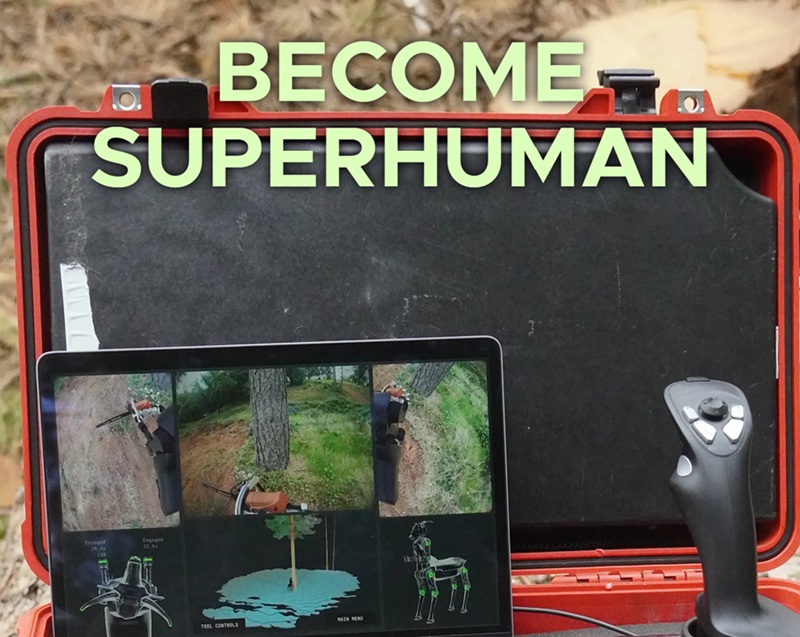
The robot is operated entirely by remote joystick. It has no fixed arms. Instead, a modular limb system lets crews swap in purpose-built tools — chainsaw, drill, screwdriver — in a matter of minutes. All limbs and tools are built from three interchangeable parts, which simplifies both field repairs and reconfiguration between tasks.
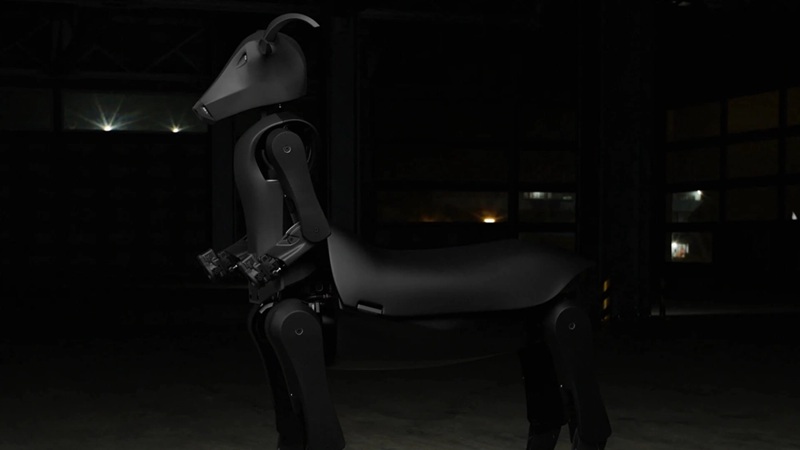
Threehalves stands two meters tall with a four-legged base and a humanoid upper body — the centaur layout gives it stability on rough terrain.
The head is a deliberate design statement: a horned, brute-looking assembly with light-up eyes that likely house cameras for the operator's view.
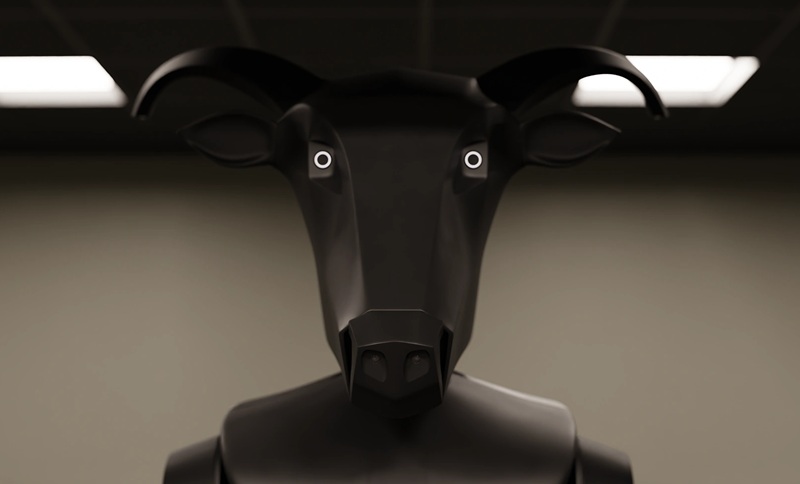
The robot's horned head likely houses cameras to feed a live view to the remote operator.
Safety first, literally
Satyress has baked multiple failsafes into the design. An operator can freeze the robot mid-action with a raised-palm gesture. If that fails, a pressurized tank system on the chest and back acts as a last resort — a purpose-built pistol punctures one of the tanks, triggering pneumatic brakes that physically lock the machine in place, as detailed by CyberRobo.
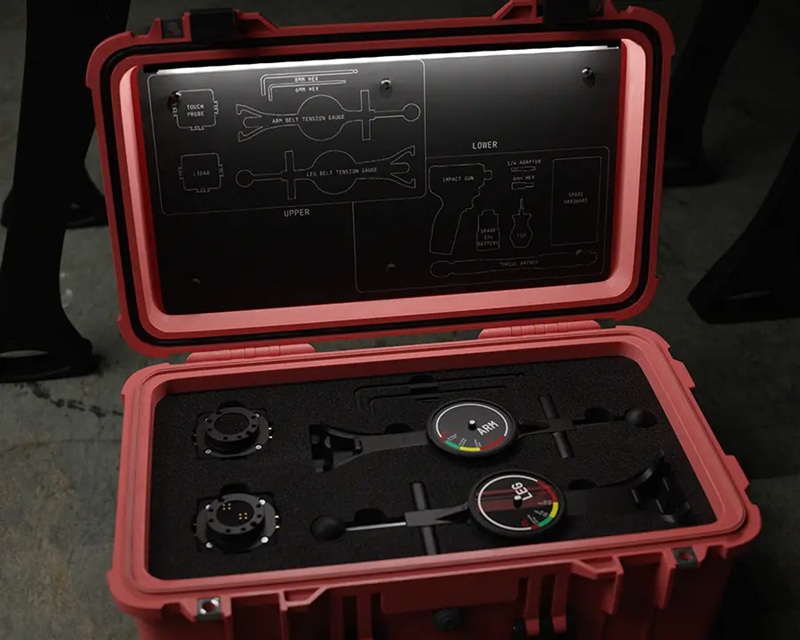
Modular tool attachments — including a chainsaw and drill — can be swapped in the field in minutes.
For transport, Threehalves is more compact than its height suggests: two units fit side by side in a folded position inside a standard pickup truck bed measuring 1.7 meters.
Two Threehalves units fit folded inside a standard pickup truck bed, making deployment to remote sites practical.
What's missing
The centaur format distinguishes Threehalves from pure quadrupeds like Boston Dynamics' Spot or DEEP Robotics' Jueying X20. A humanoid upper body means workers can use familiar tool interfaces without retraining, which matters in high-stress scenarios. But Satyress has disclosed nothing about pricing, commercial availability, or compliance with OSHA equipment standards — all critical steps before any US emergency service could deploy it.
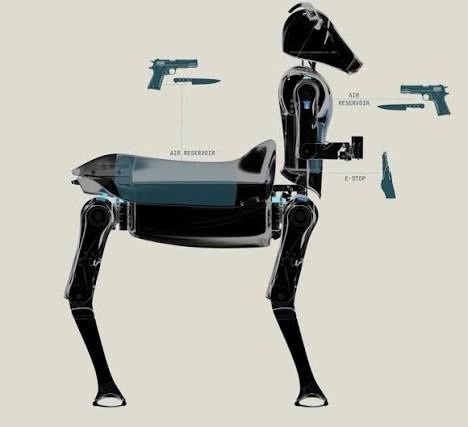
Pressurized tanks on the chest and back feed the pneumatic brake failsafe — puncturing one physically locks the robot in place.
For now, Threehalves is a compelling proof of concept. Whether it reaches the fire line is a question of engineering milestones still ahead.


