OnePlus and Realme merge R&D — and OnePlus's "independent" identity may not survive

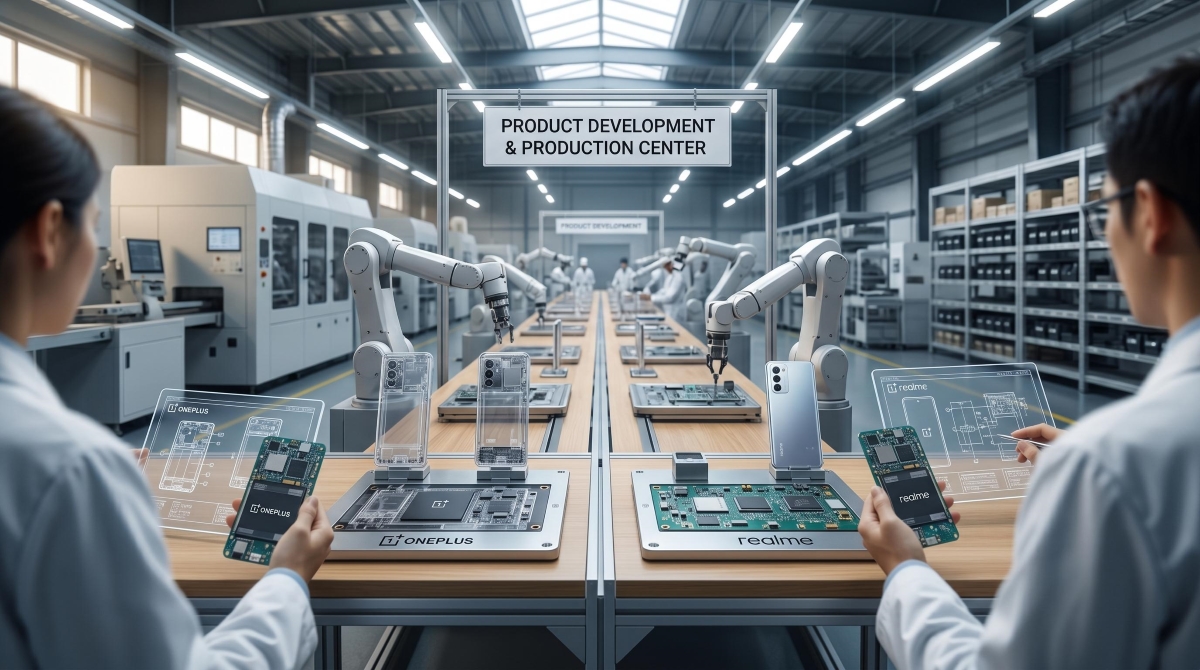
OnePlus and Realme — two brands that spent years pretending to be rivals — have formally merged their product development operations under a single center inside OPPO, according to a leak from Chinese insider Digital Chat Station. The move, confirmed across multiple outlets including 9to5Google, consolidates engineering, design, and marketing under one roof. Neither OnePlus nor OPPO has issued an official statement.
The structure
Li Jie now heads the new joint product center, reporting directly to Pete Lau — the man who simultaneously runs OnePlus and holds a VP role at OPPO. Wang Wei, formerly a Realme VP, becomes deputy GM of the merged unit. A separate business development division sits under Li Bingzhong, and Xu Qi takes charge of marketing and service for both brands. In short: one leadership chain, two brand labels.
The merger follows Realme's reintegration as an official OPPO sub-brand in January 2026. What looked like a soft administrative change is now a deeper technical consolidation — Realme's hardware and imaging teams have been absorbed into OPPO's divisions, per Android Authority. This is not a soft partnership — it is a full platform unification.
What it means for OnePlus in the West
This is where it gets uncomfortable for Western buyers. OnePlus built its reputation as a scrappy, enthusiast-first alternative — "Never Settle" and all that. That story gets harder to tell when the same engineers building a Realme budget phone are also designing your next OnePlus flagship.
OnePlus has already gone quiet on new global products for months. The Watch 4 is listed with no price or launch date. Smartprix notes the Nord CE6 Lite is already a near-identical rebrand of the Realme P4X — product convergence that predates the official merger announcement.
Realme has no US presence, while OnePlus has operated there for years. A unified product strategy could either push OnePlus further toward Realme's budget positioning or quietly wind down OnePlus's Western footprint altogether. Neither outcome is good news for the brand's loyal buyers in the US and UK.
The bigger picture
BBK Electronics — the conglomerate behind OPPO, OnePlus, Realme, and Vivo — has always run multiple brands as market-capture tools, not independent companies. Merging R&D; is the logical endpoint of that model: cheaper, faster, and better for shareholders. The cost is brand differentiation, and that cost falls on consumers who paid premium prices for what was marketed as a distinct product vision.
The "flagship killer" era that made OnePlus a cult brand looks increasingly like a chapter that's closing — not with a dramatic announcement, but with a quiet org-chart reshuffle in Shenzhen.


