Flying Pig: A 1MW hydrogen generator in a box that runs on water

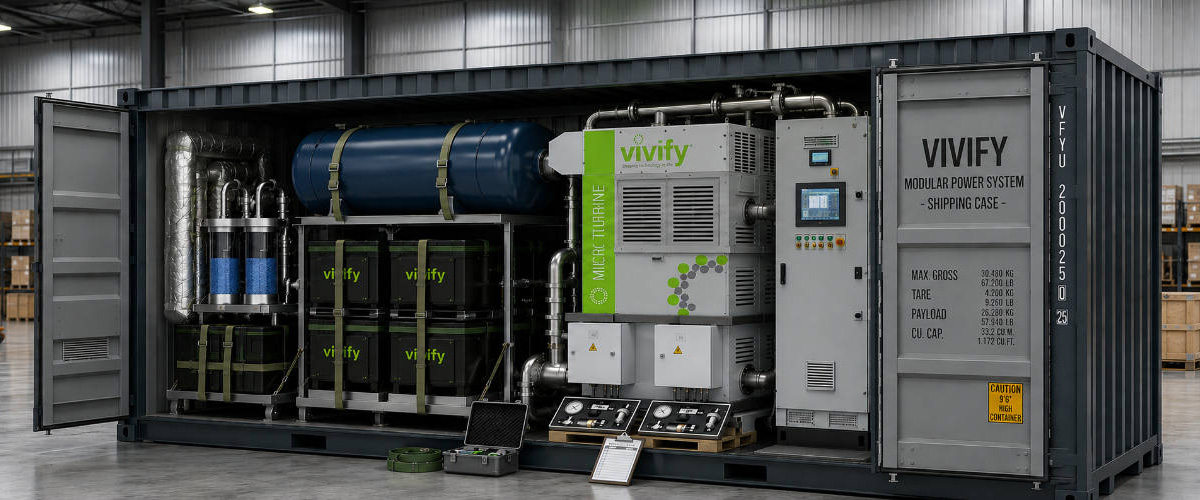
A US startup called VIVIFY Technology unveiled a containerized 1MW hydrogen power system on May 21, targeting data centers and remote industrial sites. The system, called Flying Pig, generates its own hydrogen on-site from water — no diesel deliveries, no external fuel supply chain. With AI-driven data centers pushing power grids to their limits, the pitch is obvious: rapid, off-grid capacity that can be deployed without waiting years for new grid infrastructure.
How it works
Flying Pig arrives pre-filled with roughly two tonnes of water. Inside, a proprietary array called Pulsar splits that water to generate hydrogen on demand, which then feeds high-efficiency multi-stage turbines to produce electricity and heat. VIVIFY calls this a closed-loop Hydrogen Oxygen Generator (HOG) platform. The company claims via PRNewswire the process is 99% emission-free — though that figure is self-reported and has not been independently audited or verified by a third party.
The modular design lets operators stack units together, scaling capacity up as demand grows. CEO Jason Herring frames this as a self-funded, American-made answer to legacy grid dependence — targeting not just data centers but disaster zones, remote mining sites, and, somewhat ambitiously, future lunar bases.
The catch
VIVIFY has not published pricing — a significant omission for data center procurement teams comparing against diesel or grid alternatives. The five-year cost savings claim versus diesel generators, reported by Interesting Engineering, assumes stable fuel prices and has no disclosed methodology behind it.
The international picture is equally thin. No distribution partners have been announced in the US, UK, or elsewhere, and there is no mention of regulatory certifications needed for UK or EU deployment — CE marking, ATEX compliance, or hydrogen purity standards. European rivals are already in the field: INNIO's Jenbacher units have over 50 years of hydrogen engine experience and active EU certifications, while Hitachi Energy has a HyFlex hydrogen fuel cell demo unit running in Europe since late 2023.
Where this goes
The underlying concept — water in, megawatts out, no fuel logistics — addresses a genuine bottleneck for data centers scrambling for power. But until VIVIFY publishes pricing, secures third-party emissions validation, and maps out a certification path for markets outside the US, Flying Pig remains a compelling prototype rather than a deployable product for most buyers on this side of the Atlantic.


