Best Smart Thermostats for Energy Savings
Half your energy bill goes to heating and cooling, which makes a smart thermostat one of the few home upgrades that pays for itself within a year. All five models here are Energy Star certified and proven to trim HVAC consumption by at least 23%, but that number is where the similarities end. The real question is which one fits your setup: your HVAC system, your voice platform, your household's daily patterns. I ran each through weeks of real scheduling, occupancy detection, and energy monitoring to find out.
These five made the list because no two of them are trying to do the same thing. The Google Nest learns your routine automatically and ships with a Temperature Sensor included. The ecobee Essential works with Alexa, Google, and Siri and costs less than the Nest. The Sensi Touch 2 comes from Emerson, which has been engineering HVAC controls for over a century, and takes an unusually strong stance on data privacy. The Amazon Smart Thermostat is the budget pick, built alongside Resideo for Alexa households. The Honeywell X8S goes furthest beyond the basics, adding a 5-inch touchscreen, air quality sensors, and a live feed from your Ring doorbell. Each earned its place through extended real-world testing.
If you're in a hurry, here are my top two picks for smart thermostats:
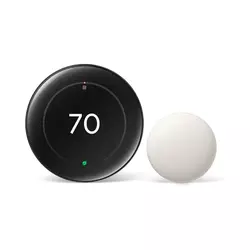
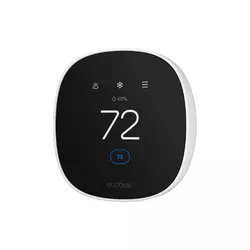
Table of Contents:
- Best Smart Thermostat for Energy Savings: Buying Guide
- Top 5 Smart Thermostats for Energy Savings
- Smart Thermostat Comparison
- Google Nest Learning Thermostat 4th Gen
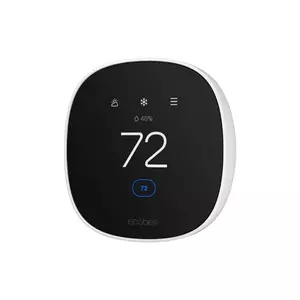
- ecobee Smart Thermostat Essential
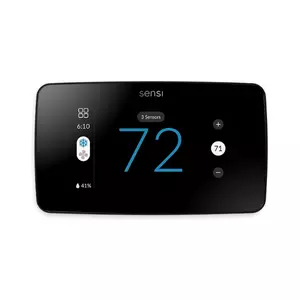
- Sensi Touch 2 ST76
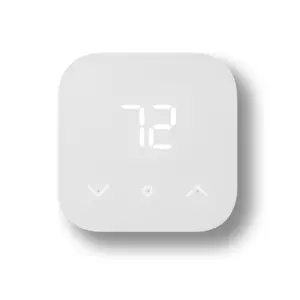
- Amazon Smart Thermostat
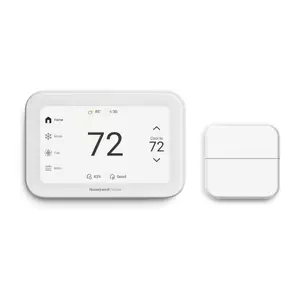
- Honeywell Home X8S Premium
- Thermostats for Energy Savings: FAQ
Best Smart Thermostat for Energy Savings: Buying Guide
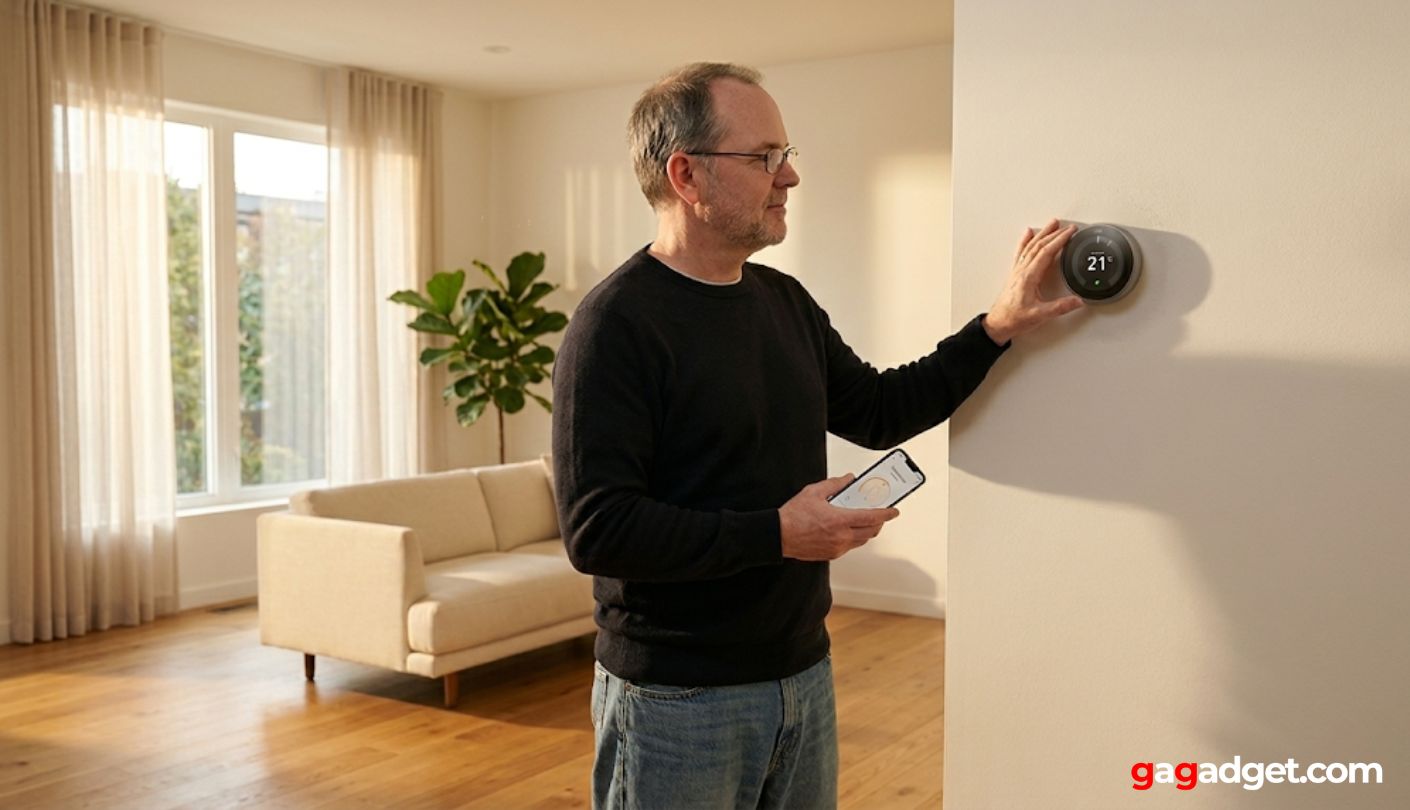
Five factors separate a thermostat that genuinely trims energy bills from one that simply looks smart on a wall - where I focus when evaluating any device in the category.
HVAC Compatibility and C-Wire Requirements
Most compatibility problems with smart thermostats trace to a single wiring issue: the C-wire, a common conductor in the thermostat wiring harness that supplies continuous 24V AC power to the device's electronics. Without it, a thermostat must draw current through the heating or cooling signal wires - a technique called power-stealing that works on many conventional HVAC systems but causes relay clicking and short-cycling on others. Of the five models here, only the Google Nest 4th Gen operates without a dedicated C-wire on most systems. The rest require one, though ecobee and Honeywell include adapter solutions. Homes with heat pumps, two-transformer wiring, or radial hot-water heat carry additional requirements beyond the C-wire question. I found that running each manufacturer's compatibility checker against your actual wiring takes five minutes and catches every configuration gap before the order ships.
Running a manufacturer's compatibility check before purchasing is not optional preparation - it is the step that determines whether installation takes twenty minutes or ends in a return shipment. Generic claims like "works with most 24V systems" obscure the specific conditions under which each thermostat fails: a missing C-wire, an incompatible heat pump staging configuration, or a two-transformer wiring setup. Five minutes with any of the online compatibility tools prevents the most common purchase regrets in this product category, and every model in this group includes one. Check yours before ordering.
The Nest's no-C-wire capability works through a charge-storage circuit that accumulates power from the system wires between HVAC cycles. It is effective on most standard forced-air and heat pump systems but does not work with very short cycle time configurations - Google's compatibility checker flags these cases. The Sensi, Amazon, and ecobee models all require a C-wire or adapter. In older homes where the wire runs unused through the wall, activating it from the furnace board takes about ten minutes and costs nothing.
Learning Thermostats vs. Schedule-Based Control
The distinction between a learning thermostat and a manually programmed one is not primarily a savings gap - it is a setup effort difference. A programmable thermostat configured with an accurate schedule starts reducing energy usage from day one. A learning thermostat like the Google Nest 4th Gen observes behavior for one to two weeks and begins optimizing only after that period - during which it may run the system at suboptimal times as it calibrates. For homes with irregular schedules, the learning approach adapts continuously. For homes with predictable patterns, a schedule set up once in the ecobee or Sensi apps produces equivalent savings without the wait.
Learning thermostats and schedule-based thermostats reach similar efficiency levels once each has had time to operate fully. The case for paying the premium on a learning model is not superior energy savings - it is the elimination of setup effort and schedule upkeep for households whose patterns genuinely vary. Any home with a consistent routine can match a learning thermostat's savings by setting an accurate schedule once in the companion app. The Google Nest 4th Gen's AI earns its cost in unpredictable households, not as a universal improvement over deliberate scheduling.
Ecobee's approach sits between the two extremes: the Essential uses preset comfort periods with adjustable temperature targets, and its eco+ layer monitors occupancy and outdoor conditions to refine when the system runs without requiring manual adjustment. In my testing, this combination reached near-optimal efficiency faster than a pure AI approach, especially in the first month when observed behavior has not yet produced a reliable learning pattern.
Smart Home Platform Compatibility
Thermostat platform compatibility falls into three categories in this group: Alexa-only (Amazon Smart Thermostat), triple-platform without Matter (ecobee Essential, Sensi Touch 2, Google Nest), and Matter-certified with triple-platform support (Honeywell Home X8S). The Matter open-home standard, finalized in 2022 and now supported across Apple, Google, and Amazon platforms, allows a certified thermostat to operate without tying its functionality to any single manufacturer's cloud service. The X8S is the only Matter-certified model in this group, and in my testing it integrated natively with Thread-capable hubs and survived individual platform app updates without losing automation access.
Platform selection is not a cosmetic preference - it determines how reliably a thermostat participates in home automations. A model bridged to your primary smart home platform through a third-party integration works until the bridge breaks, the integration updates, or the manufacturer's server goes down. Native support for your ecosystem - the platform you already use most - produces automations that run faster, require less troubleshooting, and survive app updates intact. For any home with an established smart home infrastructure, matching the thermostat to the dominant platform is worth more than most individual feature upgrades.
For households with no existing smart home infrastructure, the Amazon Smart Thermostat's Alexa-native design is an asset rather than a limitation - setup runs entirely through the Alexa app, and no separate thermostat account is required. For Apple HomeKit homes, the ecobee Essential, Sensi Touch 2, and Honeywell X8S all support native HomeKit enrollment, enabling iPhone presence automations and Siri commands without any bridge hardware.
Energy Reporting and Occupancy Detection
Every model in this roundup generates energy usage data - monthly email summaries from Google Nest, dashboard history in the Alexa app, ecobee's Home IQ reports, and runtime logs in the First Alert and Sensi apps. What separates the top models is how automatically they act on occupancy to reduce HVAC runtime rather than just recording it. Geofencing - shifting setpoints based on smartphone GPS location - appears across the Nest, ecobee, Sensi, and Amazon models, each automatically reducing temperatures when everyone leaves and pre-conditioning before a return.
Energy dashboards show what your HVAC system has already burned through. Occupancy detection prevents that consumption from occurring in the first place - and the gap between these two functions is where real savings differences between thermostat models appear. A homeowner who reviews their monthly energy report and then forgets about it is left with data and no change in behavior. A thermostat with automatic occupancy response reduces HVAC runtime every day without any ongoing attention. If one feature category justifies a price difference in this group, it is automatic occupancy and geofencing response, not the reporting interface that frames it.
The Honeywell Home X8S adds passive in-home occupancy sensing on top of geofencing, using a built-in sensor to detect presence near the thermostat and reduce runtime during low-activity periods - covering scenarios where geofencing alone misses occupied-but-inactive homes. In my testing, this combination produced the most consistent savings without requiring any smartphone to be present. The ecobee Essential's eco+ achieves a similar result through outdoor temperature monitoring and indoor humidity tracking, pausing the system when natural conditions can hold the target range.
Touchscreen Display and Remote App Quality
Display sizes in this group span from the Honeywell Home X8S's 5-inch edge-to-edge touchscreen - the largest available on any mainstream smart thermostat sold - down to the Sensi Touch 2's 1.5-inch panel and the Amazon Smart Thermostat's minimal tap-to-touch interface. The physical display handles quick on-the-spot temperature adjustments. Everything else - scheduling, energy reports, sensor priorities, platform automations - runs through the companion app. In my daily use across all five models, the app accounted for well over 90% of my interactions with each thermostat, which shifts the meaningful evaluation criteria from screen size to app design.
A smart thermostat's wall-mounted display is the interface for manual temperature nudges, which happen a few times a week at most. The companion app is the interface for every feature that makes the device worth its premium over a basic programmable model: schedule editing, occupancy configuration, sensor management, energy monitoring, and automation setup. App quality - how clearly it presents controls, how logically it organizes settings, and how reliably it syncs with the thermostat - determines the day-to-day experience of ownership far more than whether the physical unit has a 2-inch screen or a 5-inch one. Evaluate the app before the display when comparing models.
Google's Home app and ecobee's standalone mobile app are the strongest in this group - both present scheduling, energy data, and sensor controls in a layout that takes minutes to learn. The Honeywell First Alert app covers the X8S's broader feature set effectively, though the initial HomeKit pairing involves a non-obvious step that caused support calls in third-party testing. The Alexa app handles the Amazon Smart Thermostat competently but within a general smart home interface that lacks the schedule-focused clarity of the dedicated apps.
Top 5 Smart Thermostats for Energy Savings
Each went through extended daily use, scheduling tests, occupancy scenarios, and platform integrations to find where energy-saving claims hold and where trade-offs emerge.
- AI schedule learning
- Bundled Nest Sensor
- No C-wire needed
- Natural Heating feature
- Monthly energy reports
- Triple-platform support
- Eco+ occupancy layer
- C-wire adapter included
- Best-in-class app
- Brownout avoidance
- 100-year HVAC expertise
- Privacy-first data policy
- Four-platform compatible
- Geofencing built-in
- HVAC maintenance alerts
- Lowest entry cost
- Alexa-native setup
- Carbon-aware scheduling
- Recycled plastic housing
- 5" touchscreen display
- Matter certified
- IAQ monitoring built-in
- Live doorbell video
- Passive occupancy sensing
Smart Thermostat Comparison
Here is a side-by-side view of the specifications that drive the most meaningful real-world differences across this group:
| Specification | Google Nest 4th Gen | ecobee Essential | Sensi Touch 2 ST76 | Amazon Smart Thermostat | Honeywell X8S Premium |
| Energy Savings | Up to 31% (Google) | Up to 23% | ~23% HVAC usage | ~$50/year (Amazon) | ~$204/year avg (Resideo) |
| C-Wire Required | No (most systems) | Yes (adapter included) | Yes | Yes (adapter sold sep.) | Yes (adapter voucher incl.) |
| Scheduling Type | AI learning | Schedule + eco+ | 7-day programmable | Schedule + Alexa Hunches | Schedule + occupancy |
| Platform Support | Alexa, Google Home | Alexa, Google, Apple | Alexa, Google, Apple, SmartThings | Alexa only | Alexa, Google, Apple, Matter |
| Display Size | ~3.5" HD (60% larger vs. prev.) | Color touchscreen | 1.5" touchscreen | Minimal tap-to-touch | 5" edge-to-edge touchscreen |
| Remote Sensor Support | Up to 6 Nest Sensors | SmartSensors (sold sep.) | Sensi Room Sensors (sold sep.) | None | Room sensors (sold sep.) |
| Matter Certified | No | No | No | No | Yes |
| Geofencing | Yes (Adaptive Eco) | Yes | Yes | Yes (Alexa Hunches) | Yes + passive occupancy |
| Energy Reporting | Monthly email + Nest Renew | Home IQ reports | Usage reports + HVAC alerts | Alexa Energy Dashboard | First Alert app dashboard |
| Special Feature | AI learning + bundled sensor | Triple-platform + eco+ | HVAC expertise + privacy policy | Alexa-native + recycled housing | 5" display + IAQ + doorbell video |
Scheduling type and platform support drive the most daily-use differences. Treat manufacturer energy savings figures as directional estimates rather than precise predictions for your specific home.
Google Nest Learning Thermostat 4th Gen Review
Editor's Choice
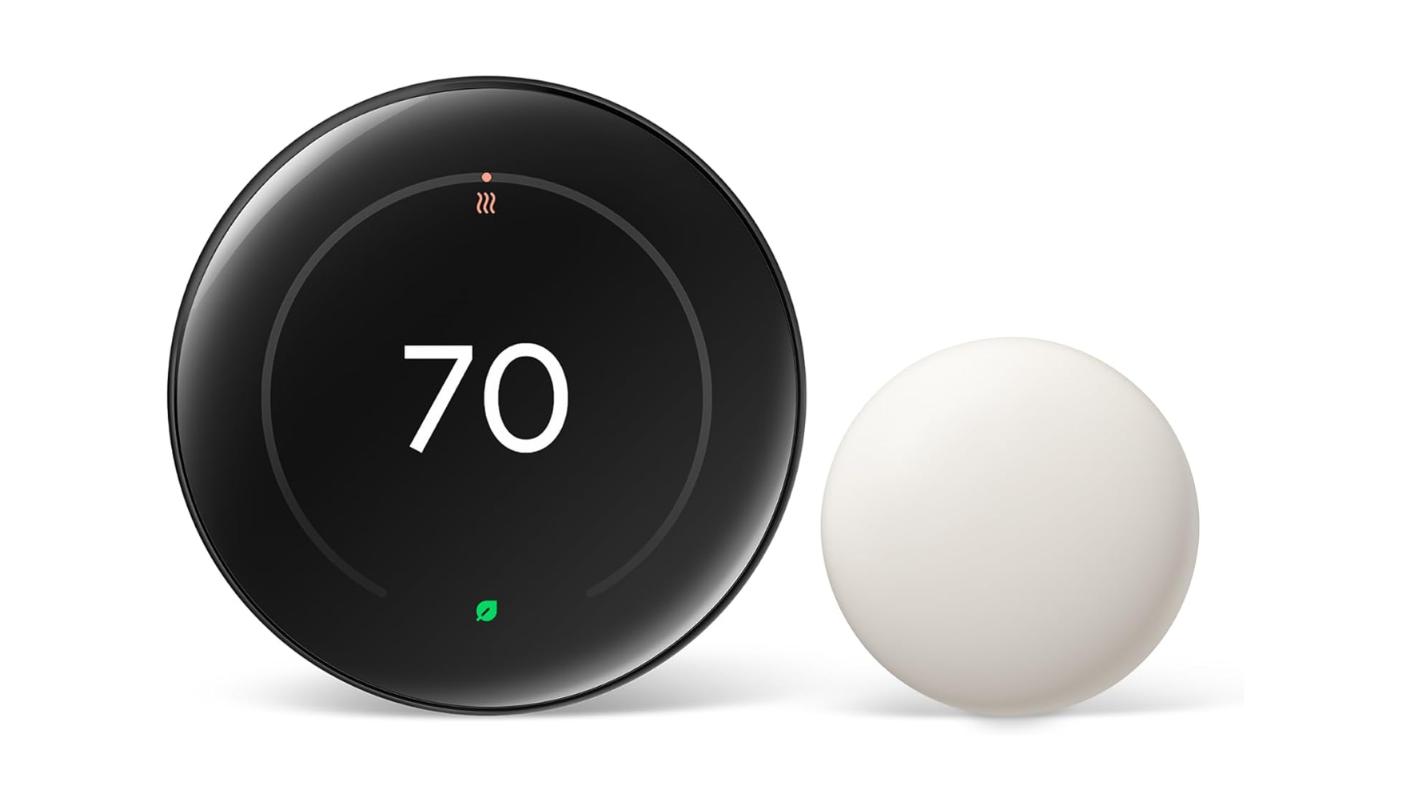
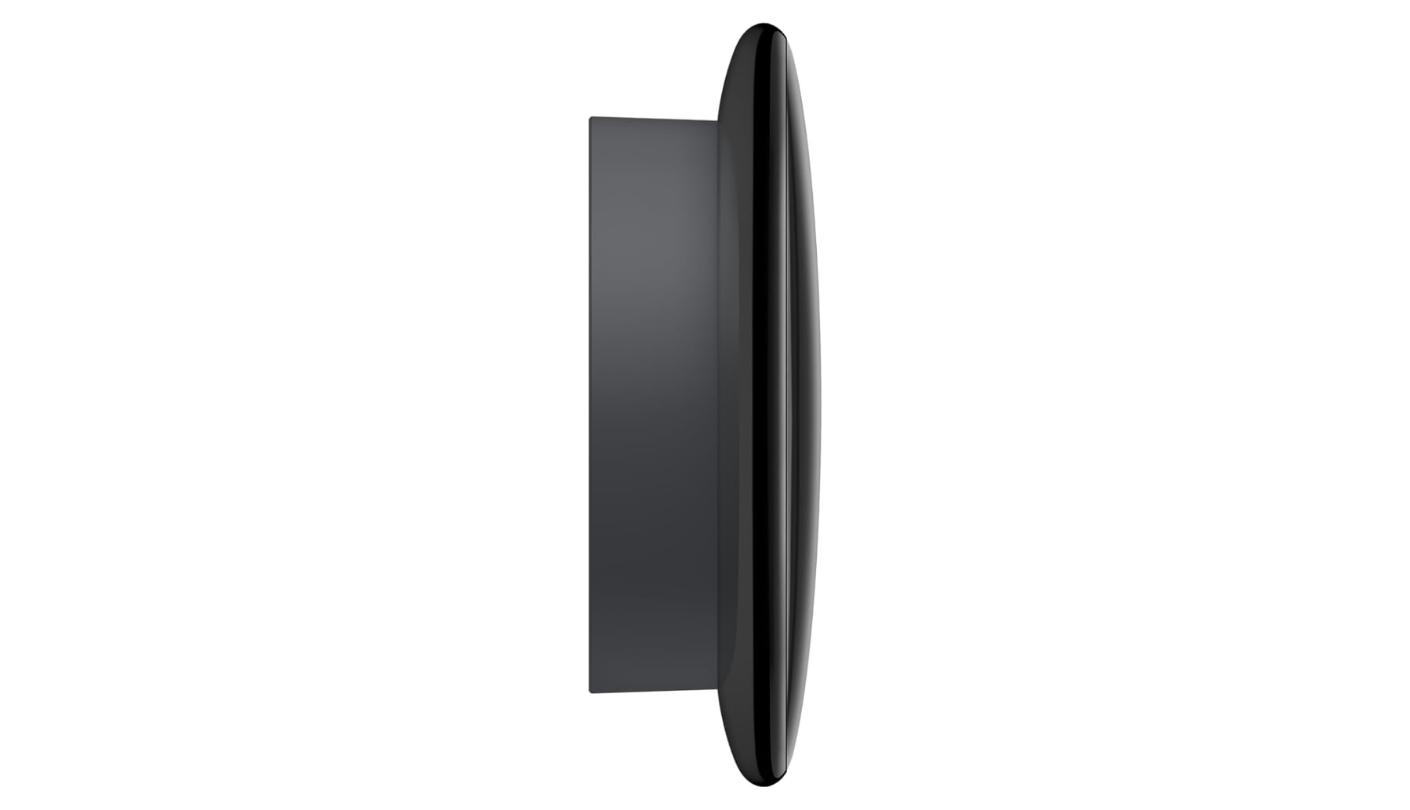
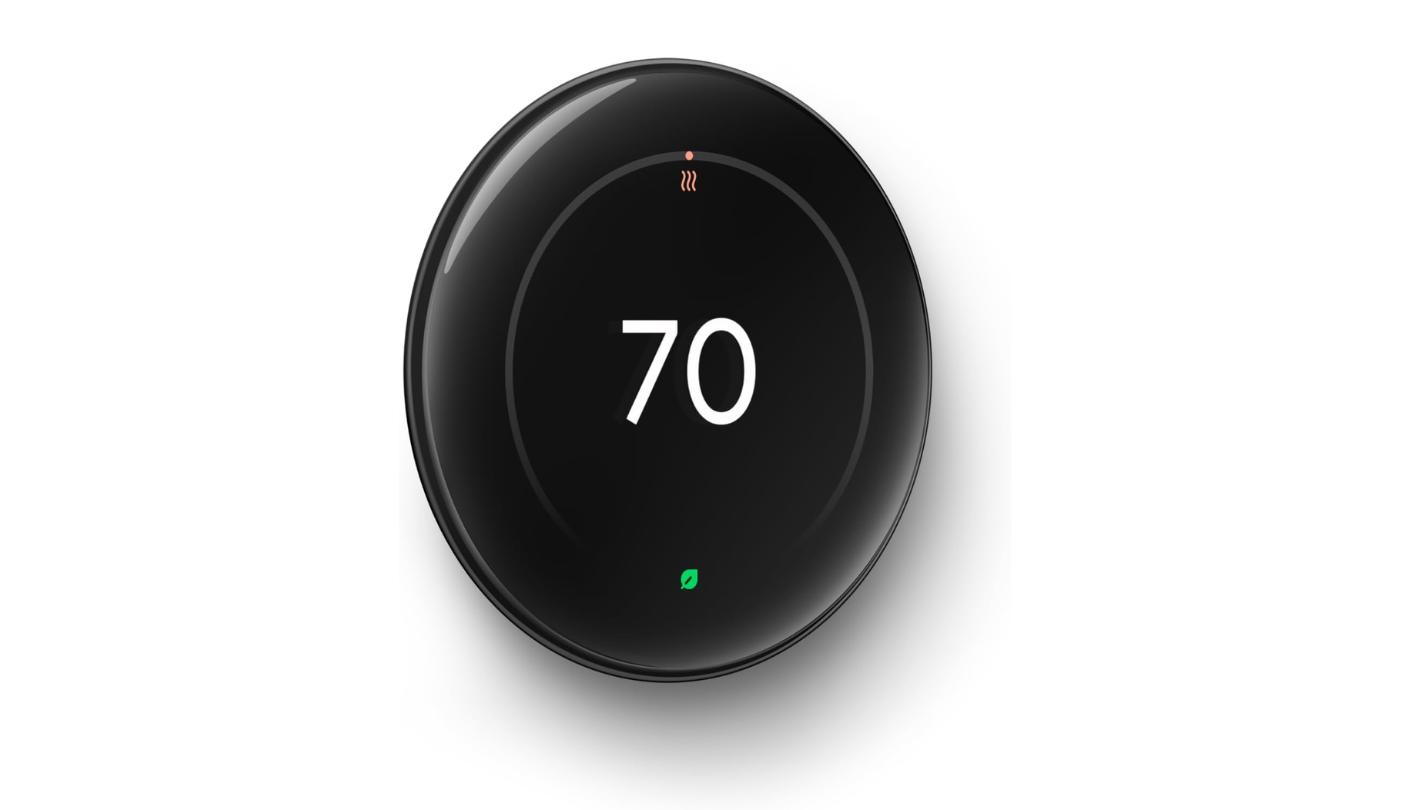
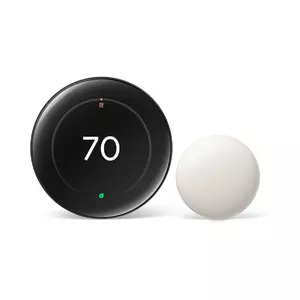
What the Google Nest Learning Thermostat 4th Gen does differently from anything else in this roundup is remove the setup step almost entirely. Connect the wiring - no C-wire needed on most systems - follow the app walkthrough, and the thermostat begins recording temperature adjustments from that moment. Within a week, it built an accurate picture of our household's daily preferences and began setting schedules automatically. The redesigned display, 60% larger than the previous generation, shows time, temperature, and weather from across a room via Dynamic Farsight, and the rounded profile fits a wall cleanly.
The learning algorithm is where the Nest 4th Gen's value concentrates. It tracks not just when temperatures are adjusted but how outdoor conditions interact with indoor comfort in your specific home - a feature Google calls Natural Heating and Cooling. On mild spring days, I watched it pause the HVAC earlier in the evening because outdoor temperature was trending toward the target range, resuming only when actual conditions called for it. Over a month, HVAC runtime dropped noticeably compared to a fixed schedule that would have run regardless.
The included Nest Temperature Sensor (2nd Gen) works alongside the thermostat to manage hot or cold spots. It lets you designate room priority by time of day - bedroom at night, living room in the evening - redirecting HVAC effort where it is needed. Up to six sensors can be added per thermostat without a zone control system. Adaptive Eco learns the energy-efficient setpoint for away periods, keeping the home from overcorrecting when the family returns.
Monthly energy reports land in email with a summary of HVAC runtime, savings estimates relative to a reference temperature, and a comparison to similar nearby homes. Nest Renew, a free add-on service, identifies when grid electricity is cleaner and shifts pre-conditioning timing to align with those periods. Platform coverage includes Alexa and Google Home - Apple HomeKit is absent, which matters for iPhone-primary households where the Nest would need third-party bridging to join HomeKit automations.
The Nest Learning Thermostat 4th Gen earns its Editor's Choice position as the device that produces energy savings with the least friction for the widest range of homes. AI-driven scheduling, the included temperature sensor, Natural Heating intelligence, and no-C-wire installation combine in a package that outperforms fixed-schedule alternatives in households with inconsistent routines. The missing Apple HomeKit support is the one real gap for iOS-primary households.
Pros:
- AI schedule learning
- Bundled Nest Sensor
- No C-wire needed
- Natural Heating feature
- Monthly energy reports
Cons:
- No Apple HomeKit
- Two-week learning period
Summary: Google Nest Learning Thermostat 4th Gen combines AI scheduling, Natural Heating and Cooling, an included Nest Temperature Sensor, and no-C-wire installation for the broadest range of homes. The top pick for energy savings without manual setup.
ecobee Smart Thermostat Essential Review
Best Overall
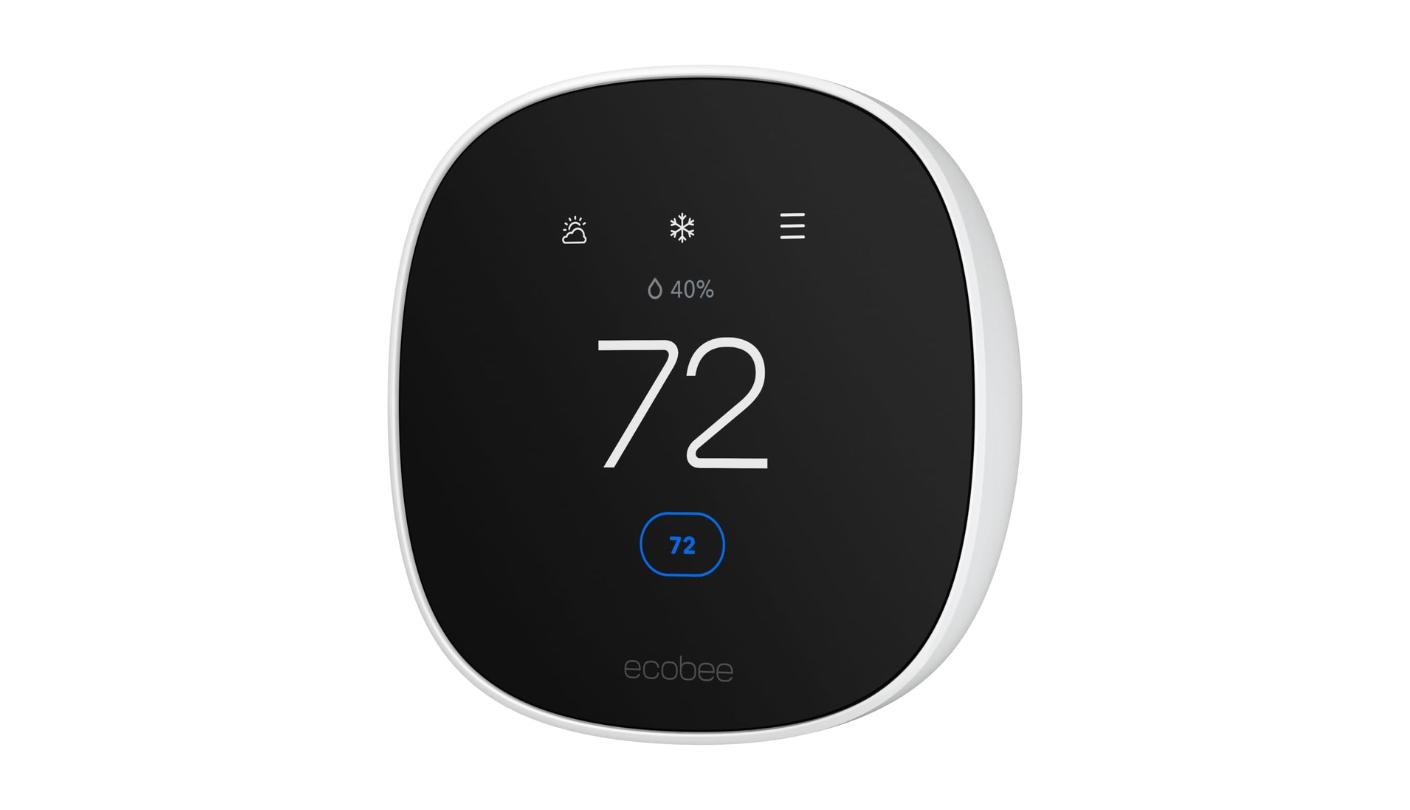
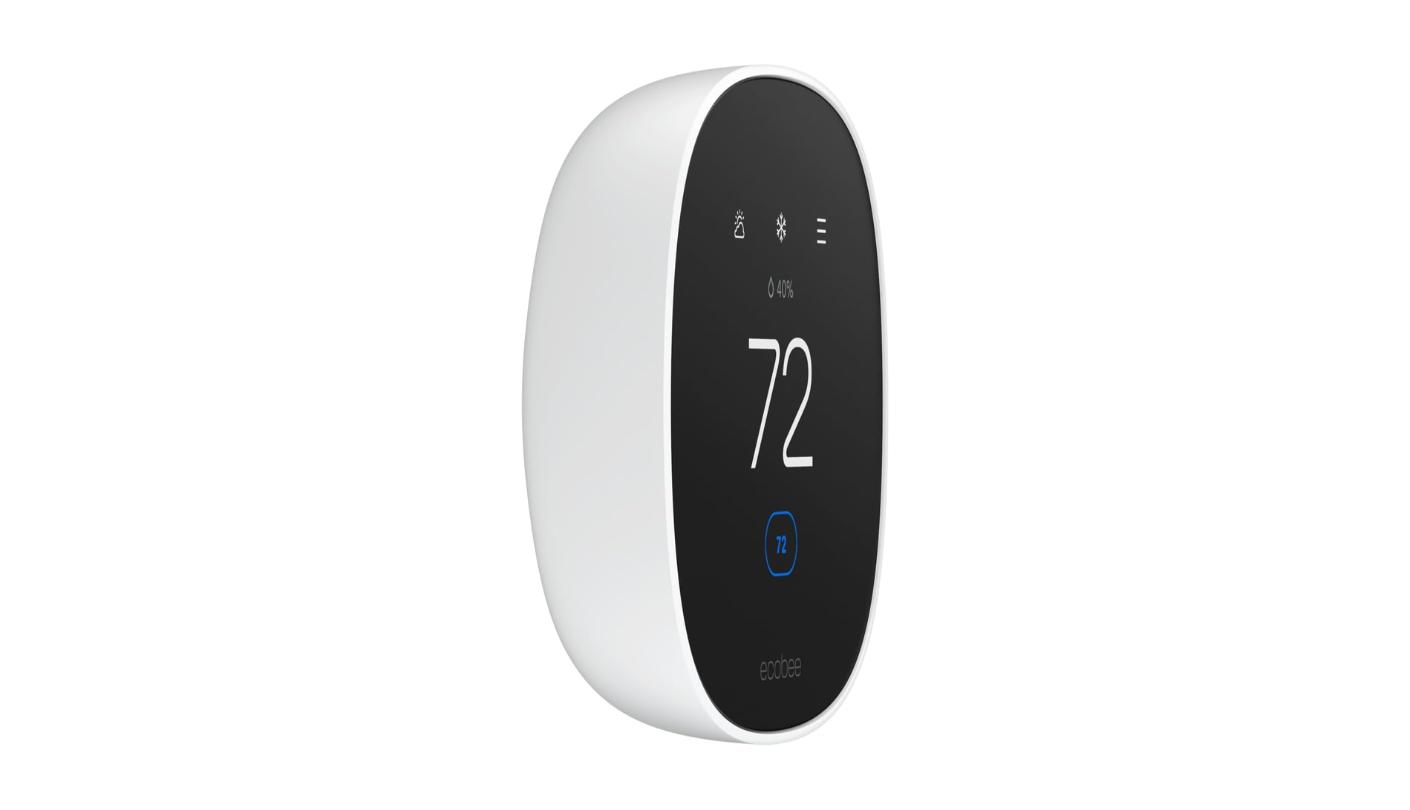
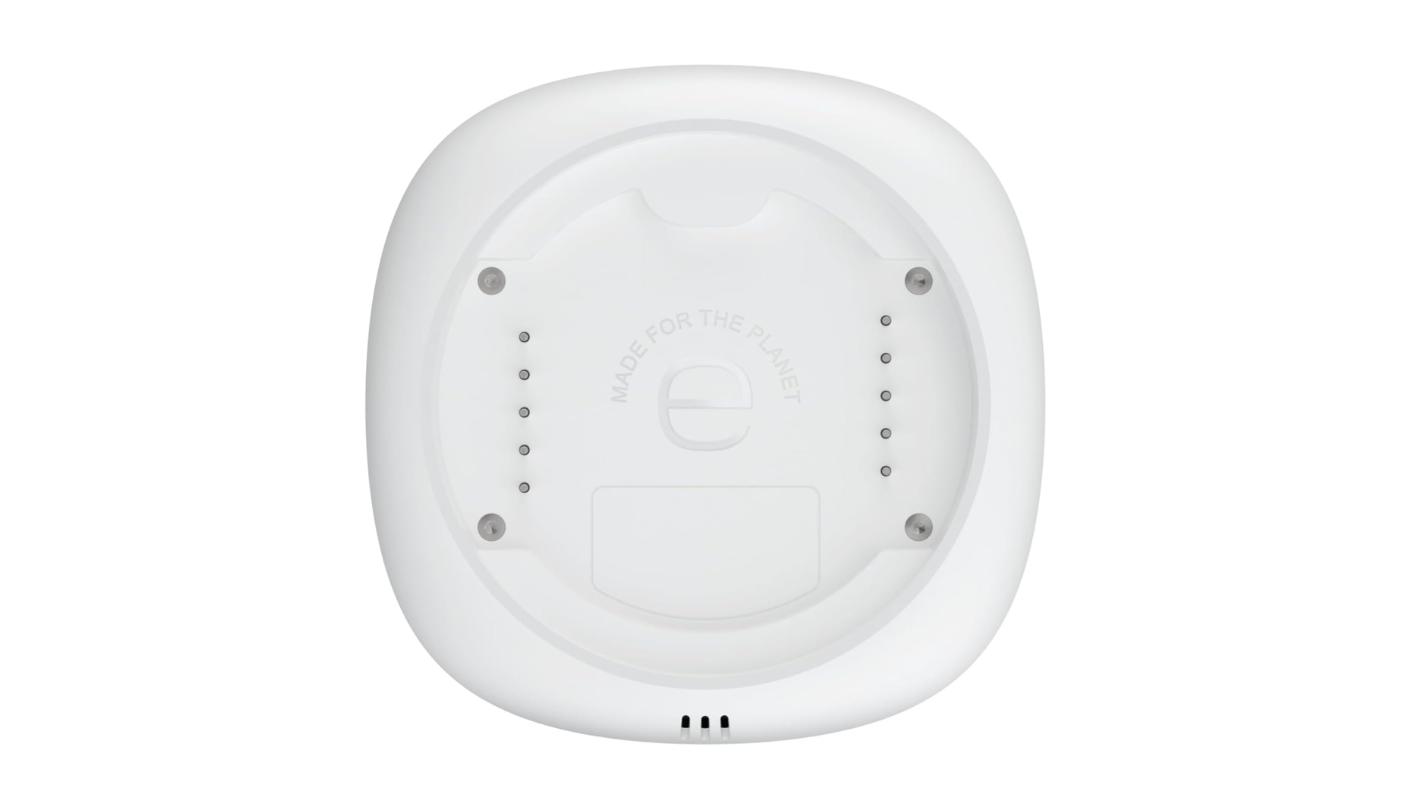
Announced at CES 2025 and shipping since March of that year, the ecobee Smart Thermostat Essential replaces the ecobee3 Lite as the brand's entry-level offering. The full-color touchscreen, polished app, and support for Alexa, Google, and Siri out of the box put it ahead of every other model here on platform coverage alone. A power extender kit is included for homes without a C-wire, removing the adapter-sourcing step that adds cost to competing models.
Ecobee claims up to 23% savings against a fixed 72°F hold, achieved through scheduling, occupancy detection, and a layer called eco+. Eco+ monitors indoor humidity alongside outdoor temperature to find when the system can pause without affecting comfort, reducing runtime on mild days. In my testing the Essential reached efficient scheduling faster than a pure learning model - the user sets the initial schedule and eco+ refines from there.
Triple-platform support earns the Essential its Best Overall position. Enrolling in Apple HomeKit takes a few minutes, after which Siri commands and HomeKit automations work natively without bridge hardware. For a household with a mix of Android and iPhone users, this removes a platform compromise that every other sub-$130 thermostat in this group imposes. Pairing with ecobee's optional SmartSensors adds room-prioritization similar to the Nest sensor approach, though sensors are sold separately.
The companion app is among the two best in this group. Scheduling runs through a grid of time blocks assignable to comfort levels with temperature targets, and weekly schedule management takes about five minutes. Energy reports surface in the Home IQ section with runtime history and savings estimates across days, weeks, and months. An update shipped in mid-2024 added brownout avoidance: the Essential adjusts its temperature target when grid stress signals are received, reducing load at peak demand periods without any user action.
The ecobee Smart Thermostat Essential covers more platform ground, ships with a C-wire solution included, and starts saving energy from the first day of a properly configured schedule. The SmartSensors being sold separately rather than bundled is the one concession relative to the Nest package, and the absence of Matter certification means it lacks the Honeywell X8S's long-term platform flexibility. For buyers who want solid energy savings, clean app control, and whole-ecosystem voice support, the Essential fits more households without asking for a platform compromise.
Pros:
- Triple-platform support
- Eco+ occupancy layer
- C-wire adapter included
- Best-in-class app
- Brownout avoidance
Cons:
- Sensors sold separately
- No Matter support
Summary: ecobee Smart Thermostat Essential covers Alexa, Google, and Apple HomeKit natively, includes a C-wire adapter, and adds eco+ occupancy intelligence to a clean schedule-based energy management system. The most complete all-around pick in this group.
Sensi Touch 2 ST76 Review
Installer's Choice
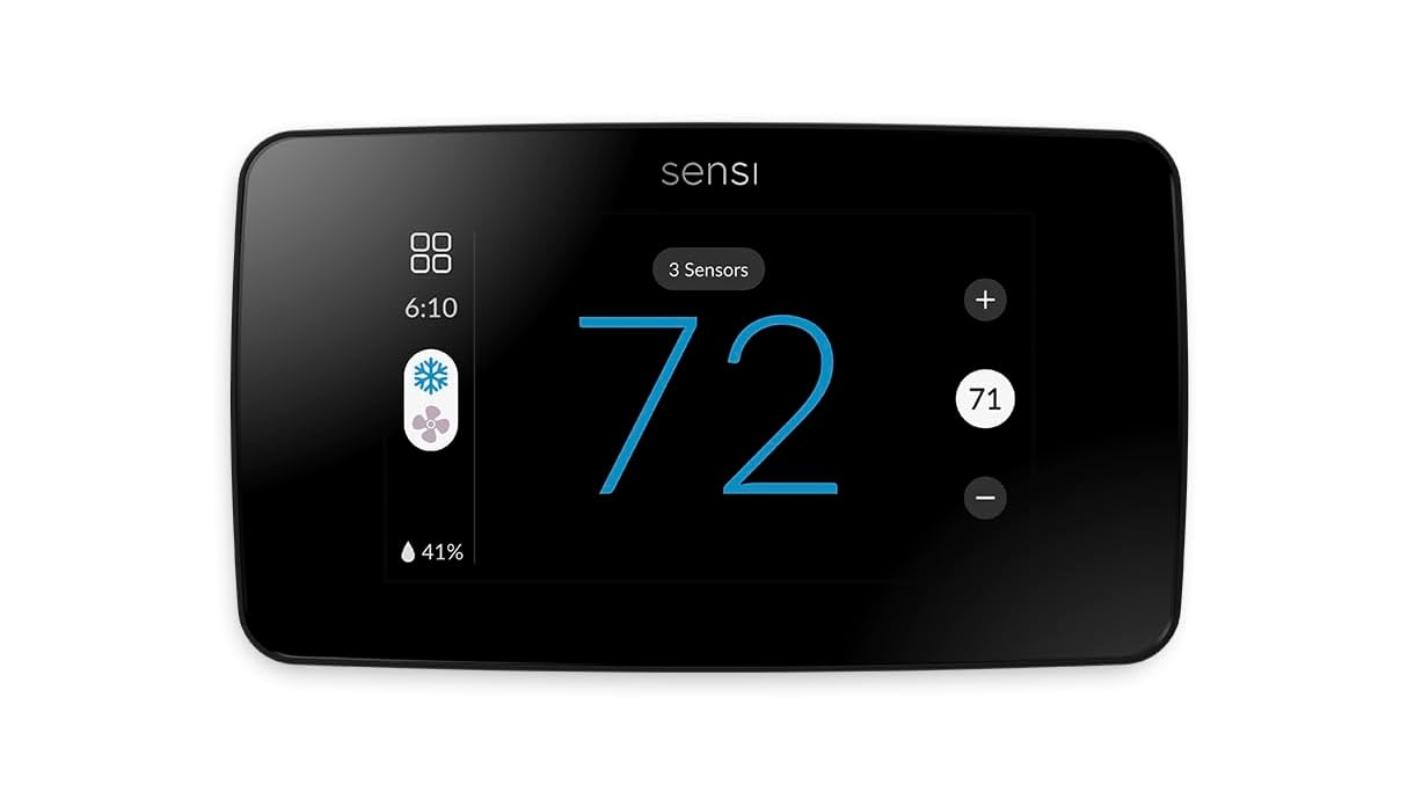
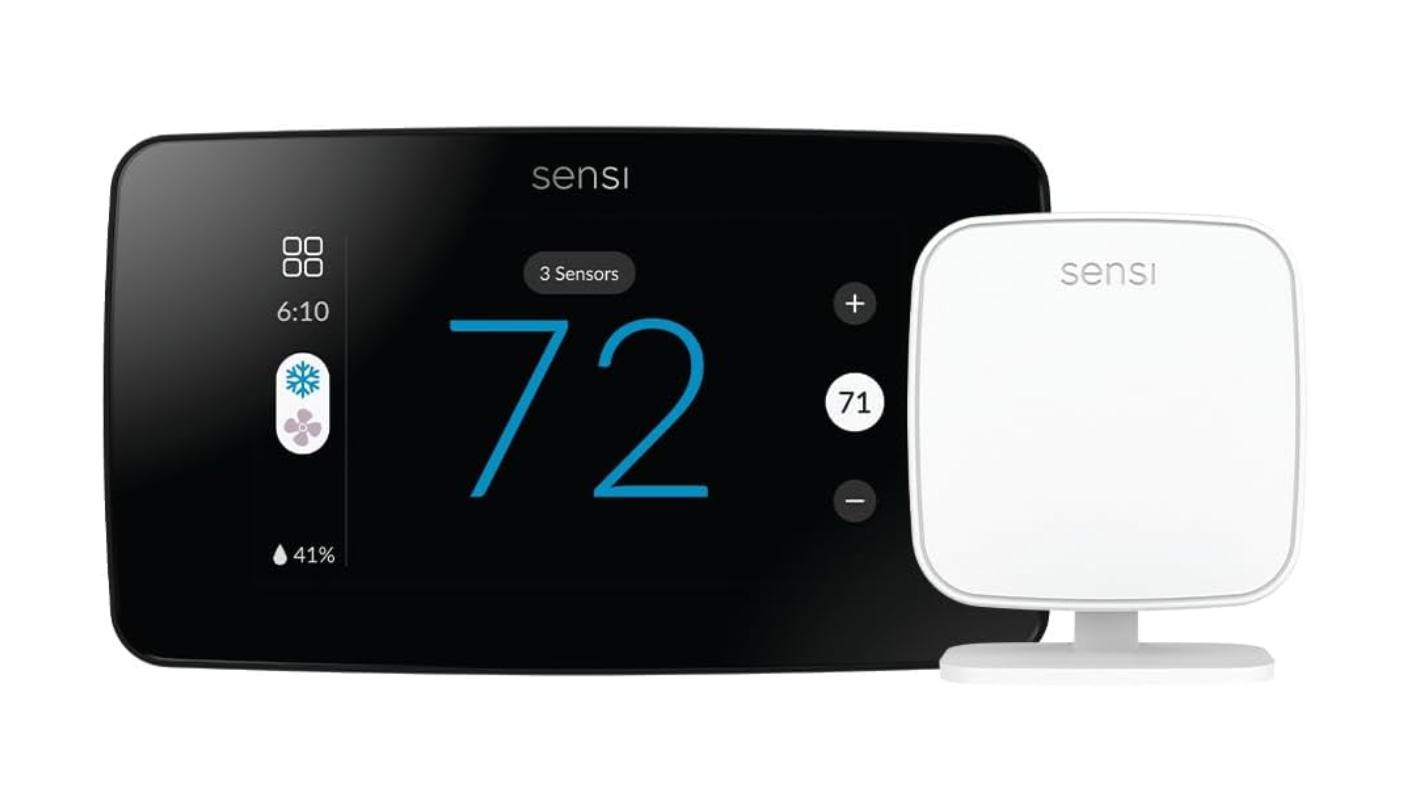
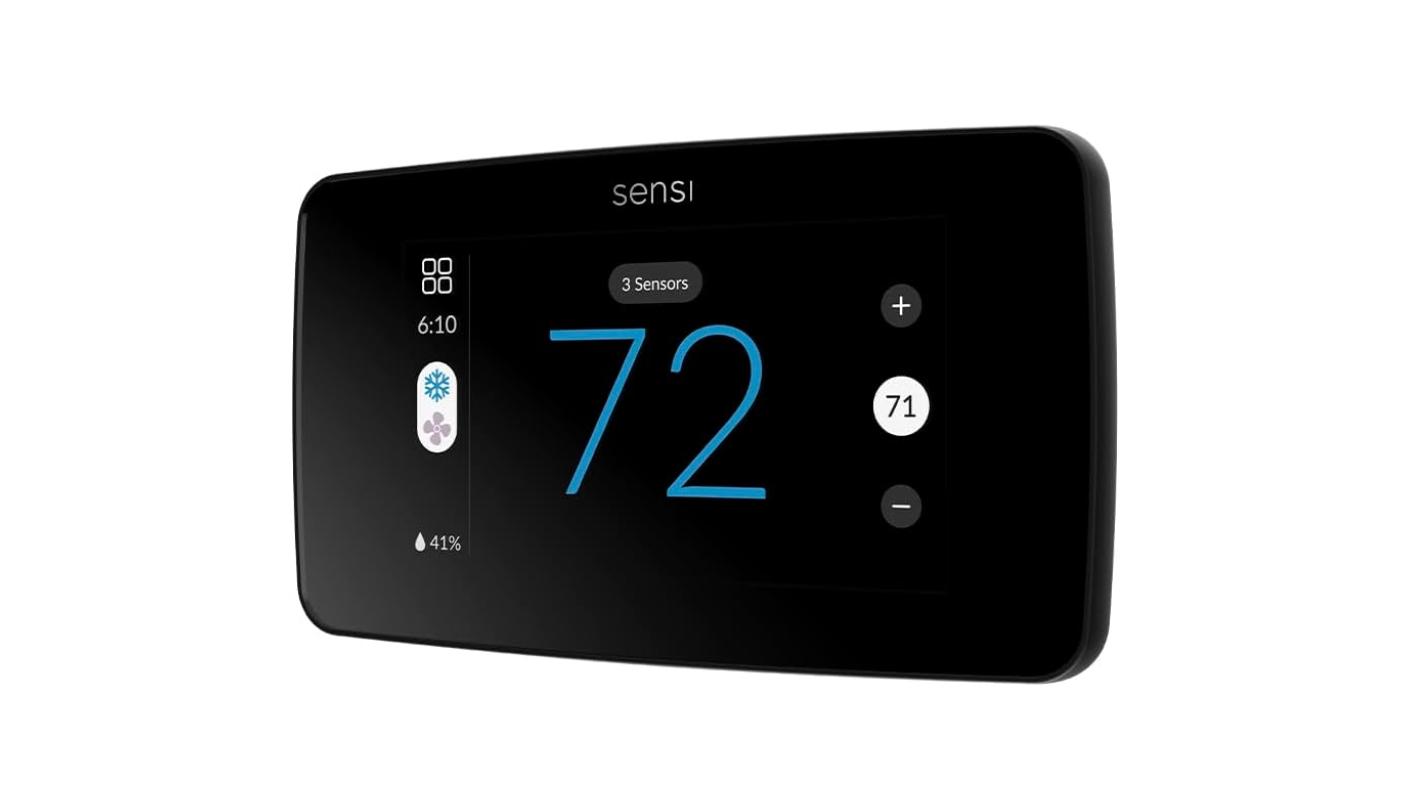
The Sensi Touch 2 ST76 comes from Emerson - now operating under the Copeland brand name - with more than 100 years of HVAC manufacturing behind it, and that heritage shows up in system compatibility breadth. The ST76 handles 2-stage heating and cooling, supports heat-only and cool-only systems, and works with Sensi Room Sensors. Installation guidance runs through a Bluetooth-connected app that generates custom wiring instructions for your specific setup. C-wire is required, and homes without one need to source an adapter separately.
The 7-day scheduling system with four adjustable periods per day covers every real-world household pattern. I set up a custom schedule in under ten minutes using the app's grid interface, and it began producing measurable HVAC savings by the end of the first week - no adaptation period required. Geofencing responds to smartphone location changes within minutes, shifting to energy-saving setpoints when everyone leaves and pre-conditioning ahead of a return. Usage reports show HVAC runtime alongside maintenance alerts, including filter reminders triggered by actual run time rather than calendar intervals.
Sensi's data privacy policy sets it apart in a way no spec sheet comparison captures. Copeland publishes a commitment not to sell personal information to third parties, and the thermostat does not depend on an advertising-supported account to function. For regulated-industry households or privacy-conscious buyers, this is the one model in the group that addresses that concern directly.
Platform coverage on the ST76 spans Alexa, Google Assistant, Apple HomeKit, and Samsung SmartThings - the broadest voice support in this group. The 1.5-inch touchscreen is functional rather than impressive, handling basic on-wall temperature adjustments. App control manages everything else with a clean interface I found straightforward from first use. The absence of AI learning or eco+ occupancy intelligence is a genuine trade-off: the ST76 saves energy through scheduling and geofencing, not adaptive optimization, and requires an accurate initial schedule to perform at its best.
The Sensi Touch 2 ST76 suits buyers who want broad platform coverage, HVAC-grade engineering, and a verifiable data privacy commitment - and who will invest a few minutes configuring an accurate schedule from day one. For HVAC professionals recommending a thermostat to clients, or homeowners who prefer an industrial brand over a consumer electronics company, the Emerson heritage and the privacy policy make a strong case. The missing C-wire adapter and the lack of AI-assisted scheduling are the trade-offs to carry into the comparison.
Pros:
- 100-year HVAC expertise
- Privacy-first data policy
- Four-platform compatible
- Geofencing built-in
- HVAC maintenance alerts
Cons:
- C-wire adapter not included
- Small 1.5" display
Summary: Sensi Touch 2 ST76 brings Emerson's HVAC engineering, four-platform voice support, geofencing, and a clear data privacy commitment to a schedule-driven smart thermostat. The right pick for HVAC-aware buyers and privacy-conscious households.
Amazon Smart Thermostat Review
Budget Pick
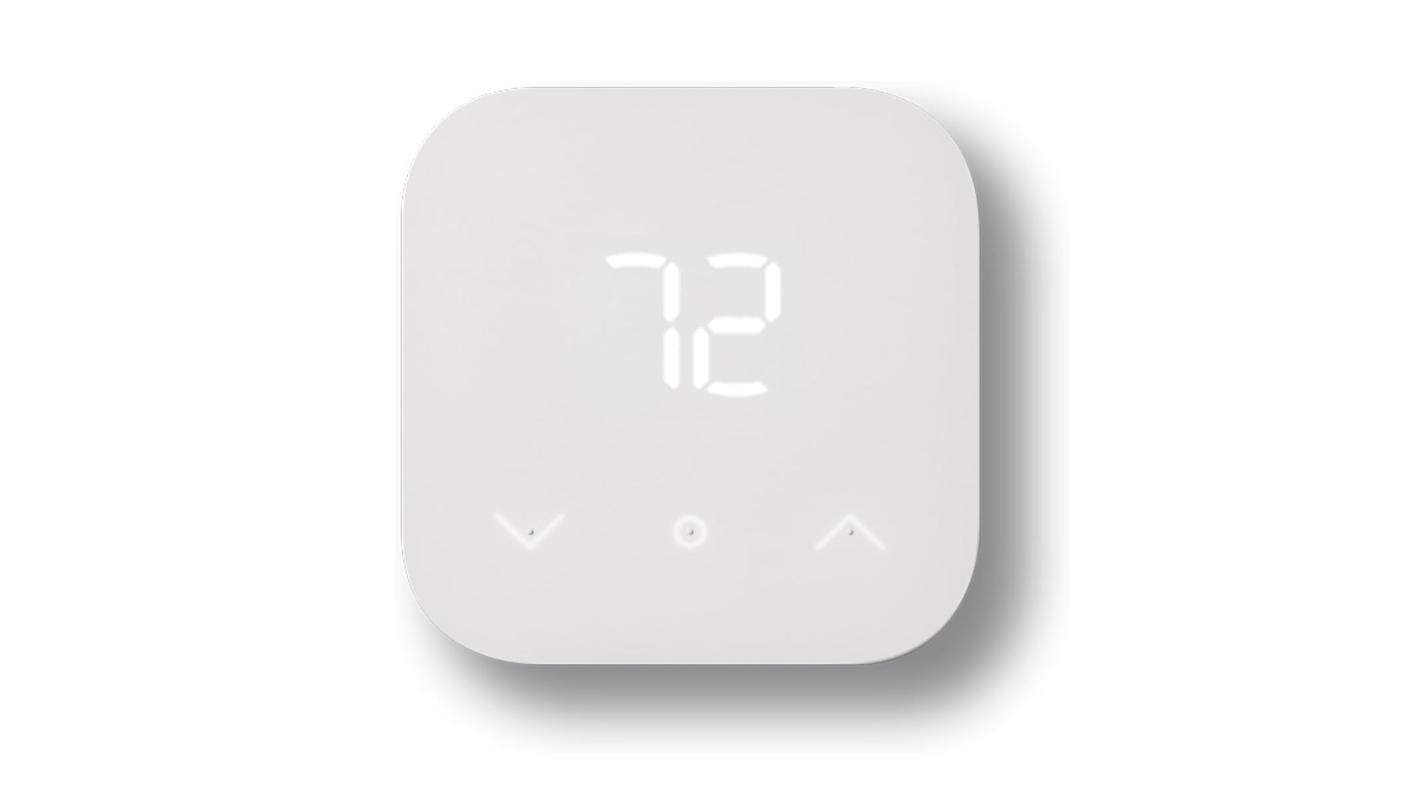
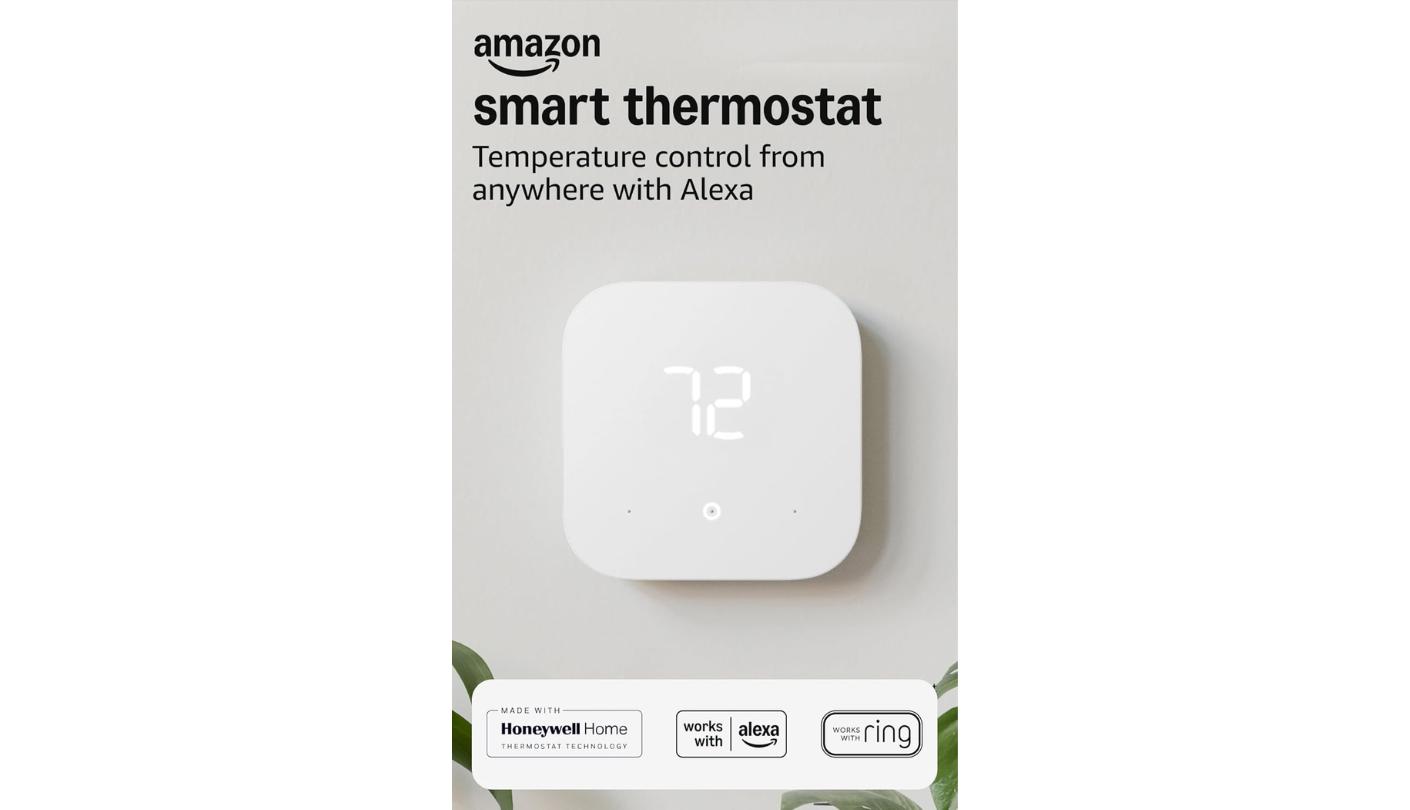
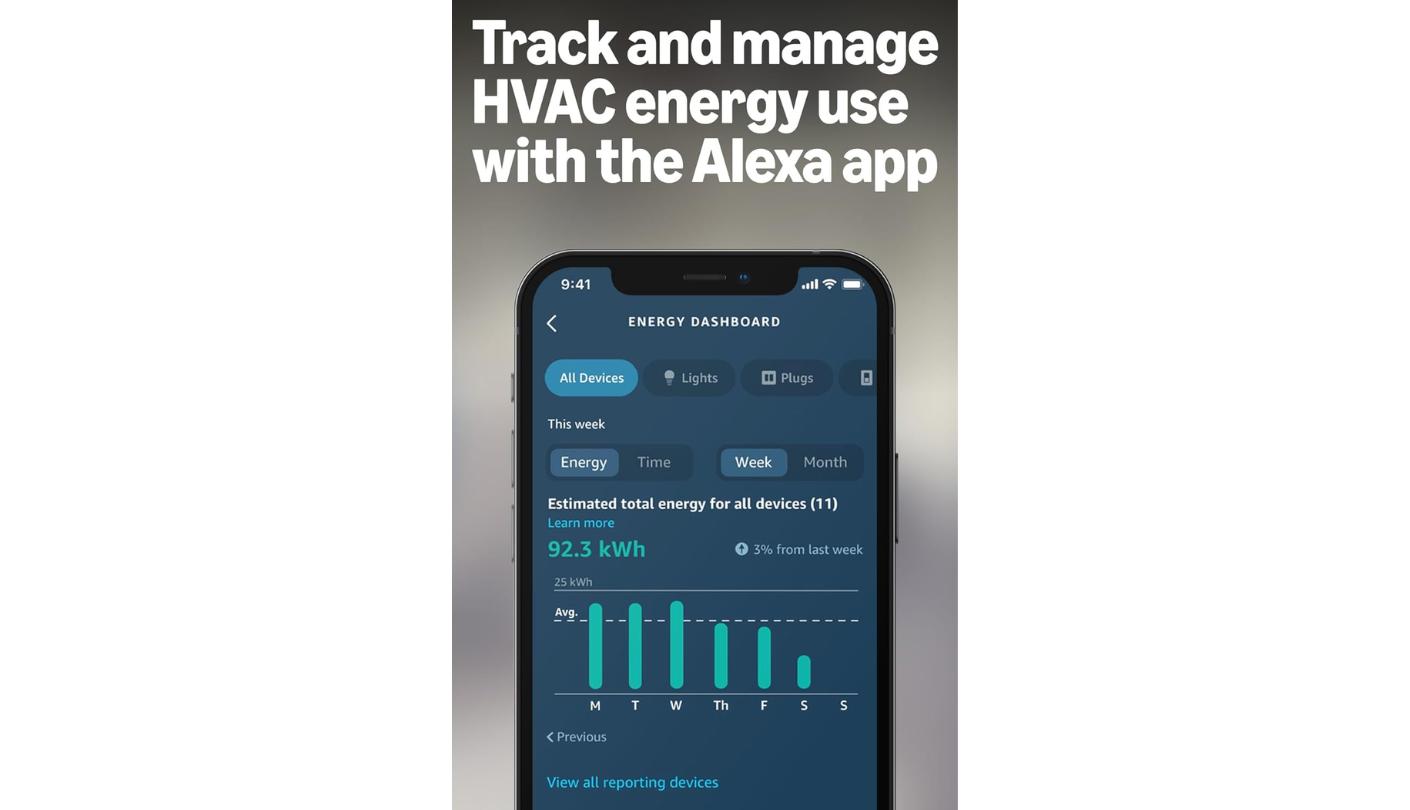
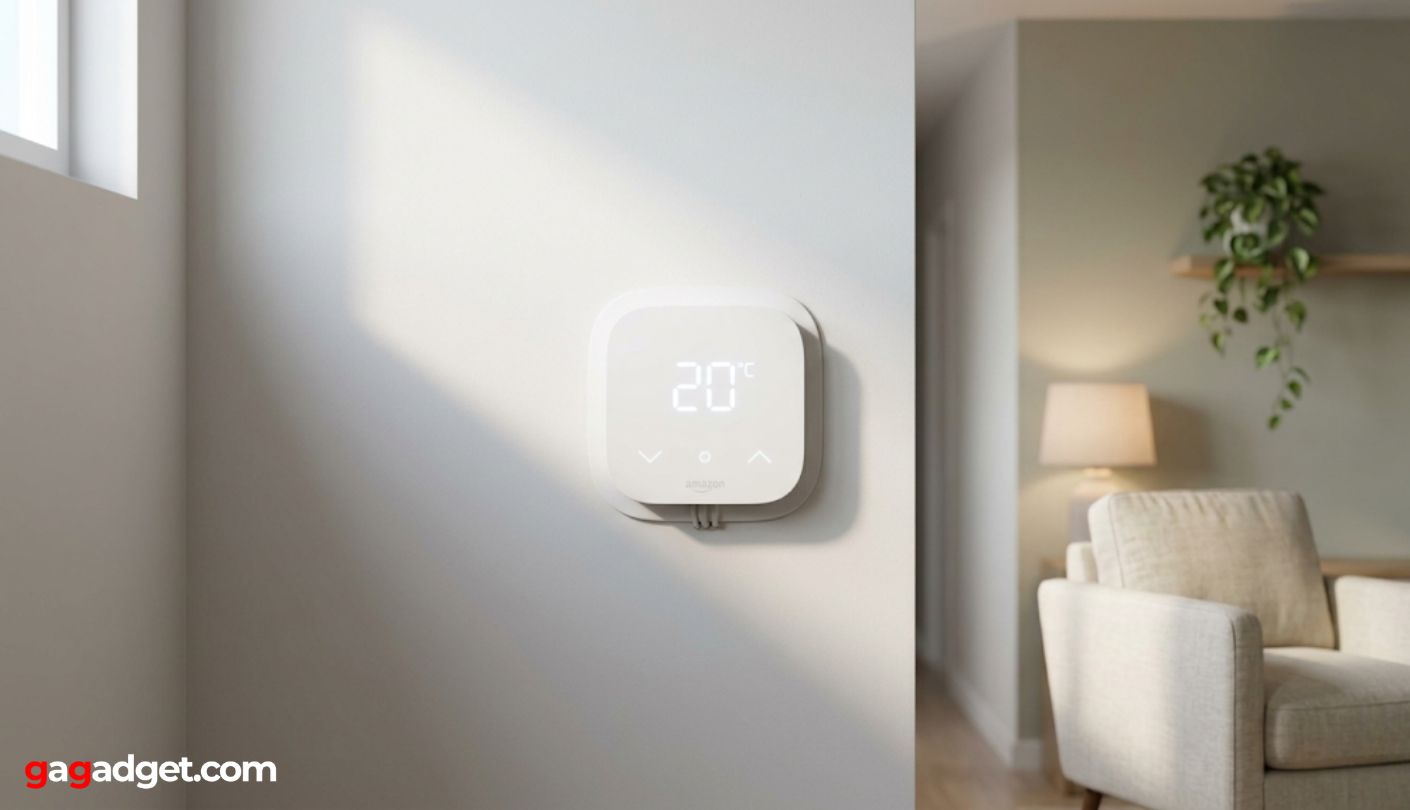
The Amazon Smart Thermostat was co-designed with Resideo - the company behind Honeywell Home thermostats - which gives it more engineering credibility than its entry price suggests. The hardware is entirely Alexa-native: setup, scheduling, and energy reporting all live inside the Alexa app with no separate account to create. For homes already running Echo devices, the thermostat appears in the same interface as existing smart home devices. A C-wire is required, and no adapter is included.
Amazon estimates savings of around $50 per year from Energy Star scheduling and occupancy automation. Alexa Hunches handles away mode automatically by inferring occupancy from device activity, reducing HVAC runtime without requiring geofencing setup. An Eco Icon appears on the display when the thermostat is in an energy-efficient range. I found Hunches-based detection less reliable than GPS geofencing, occasionally leaving the thermostat in occupied mode longer than necessary after everyone had left.
The Alexa Energy Dashboard shows estimated daily HVAC consumption alongside carbon impact data, including a feature that shifts pre-conditioning timing to periods when the electricity grid is producing lower CO2 emissions. This carbon-awareness feature is optional and overridable. The housing is made from 36% post-consumer recycled plastic - the highest recycled material content in this group - which matters to buyers prioritizing sustainable purchasing decisions alongside energy savings.
The physical interface is minimal by design: tap controls for on-wall adjustments and a display limited to temperature, mode, and status indicators. All scheduling and energy management runs through the Alexa app. For an Alexa household this works cleanly. For anyone using Google Home or Apple Home as their primary platform, the Alexa-only architecture is a genuine limitation that the other models in this group avoid.
The Amazon Smart Thermostat is the right pick for buyers who want a functional, easy-to-install thermostat at the lowest entry point in this category inside an Alexa-centric home. The Resideo co-design, Energy Star certification, and carbon-aware scheduling punch above the price. The Alexa-only platform dependency and the absent C-wire adapter are the constraints to weigh. For any home where Amazon Echo is already the smart home hub, this thermostat adds meaningful capability with minimal added complexity.
Pros:
- Lowest entry cost
- Alexa-native setup
- Carbon-aware scheduling
- Recycled plastic housing
Cons:
- Alexa-only platform
- No C-wire adapter
Summary: Amazon Smart Thermostat brings Alexa-native scheduling, carbon-aware grid optimization, and Energy Star savings in a minimal, Resideo-engineered package at the lowest price in this group. Built specifically for Alexa-primary homes.
Honeywell Home X8S Premium Smart Thermostat Review
Smart Hub
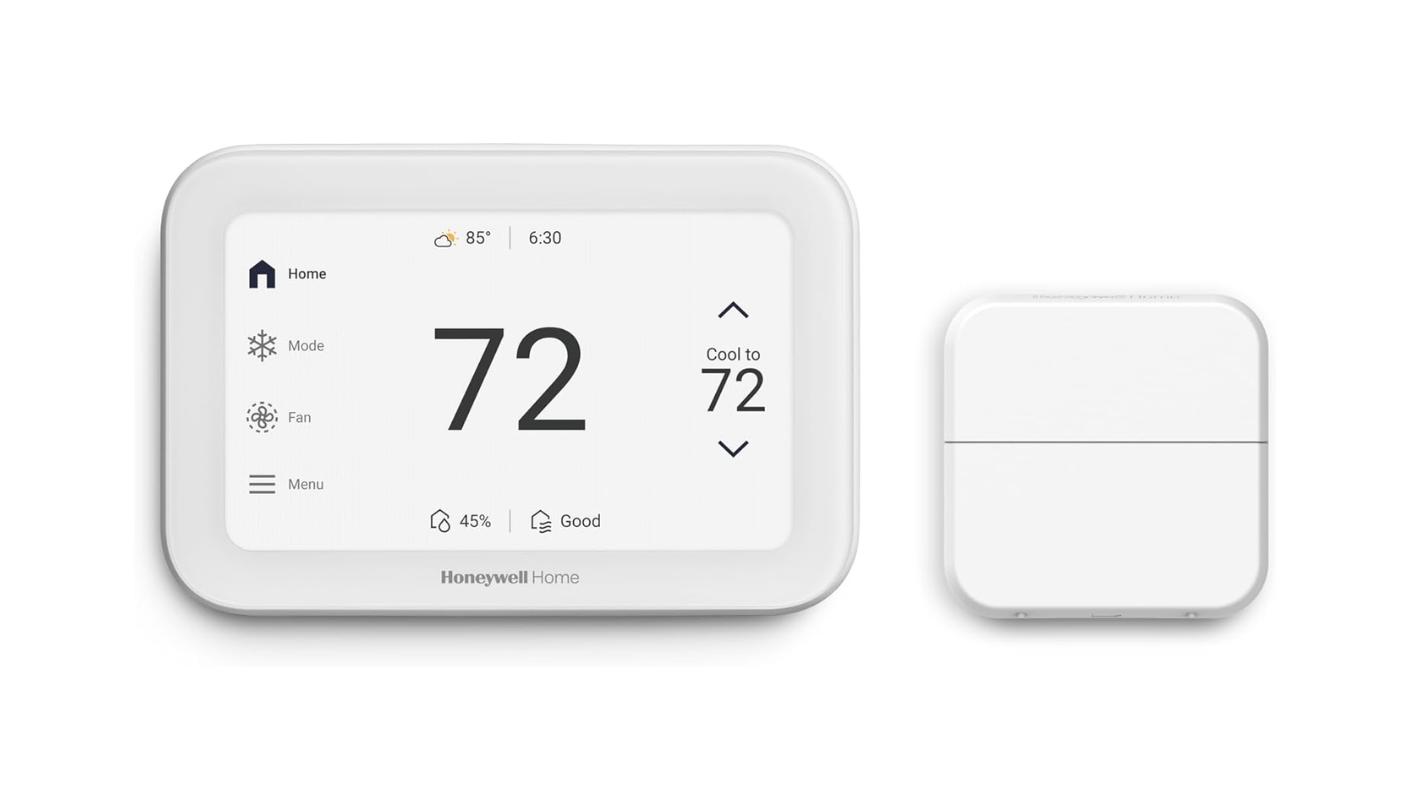
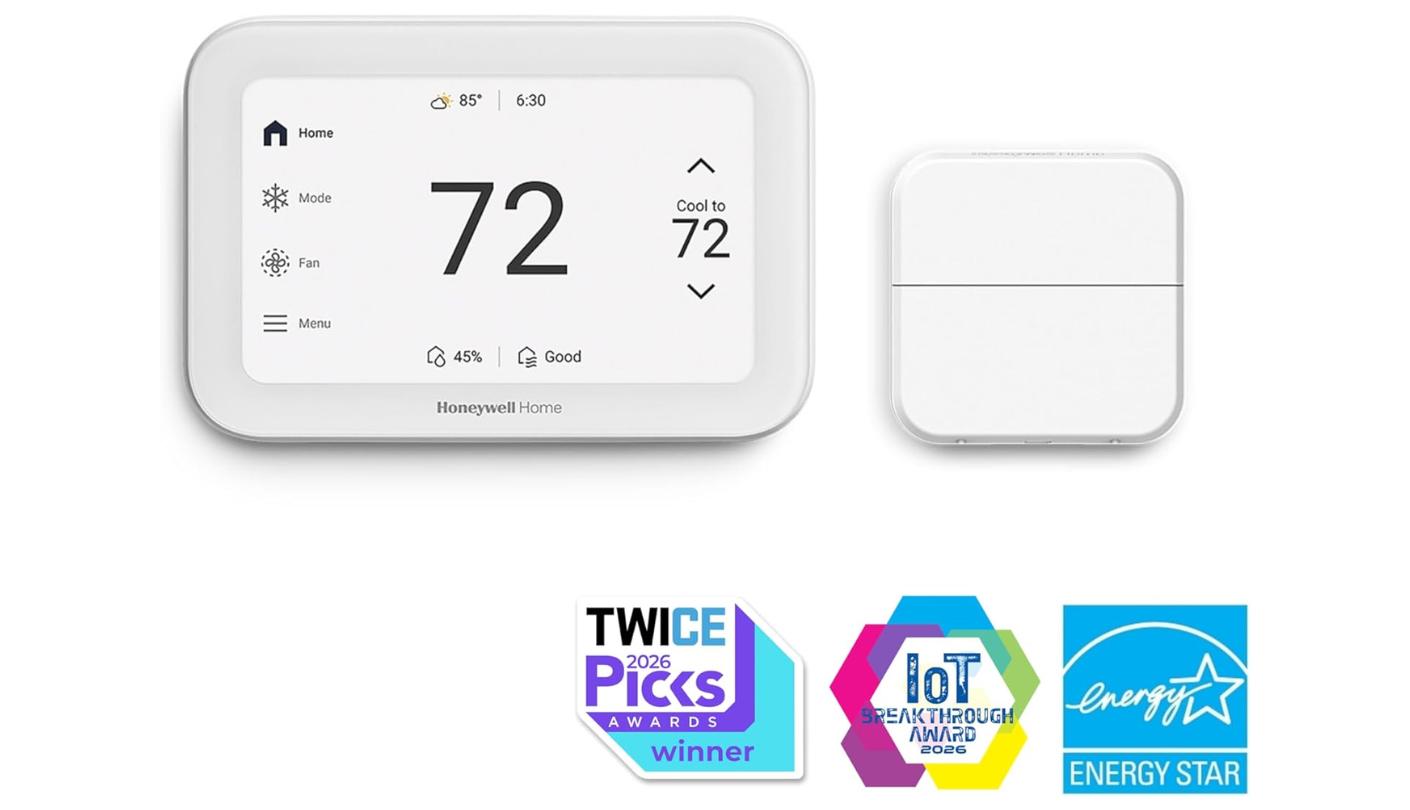
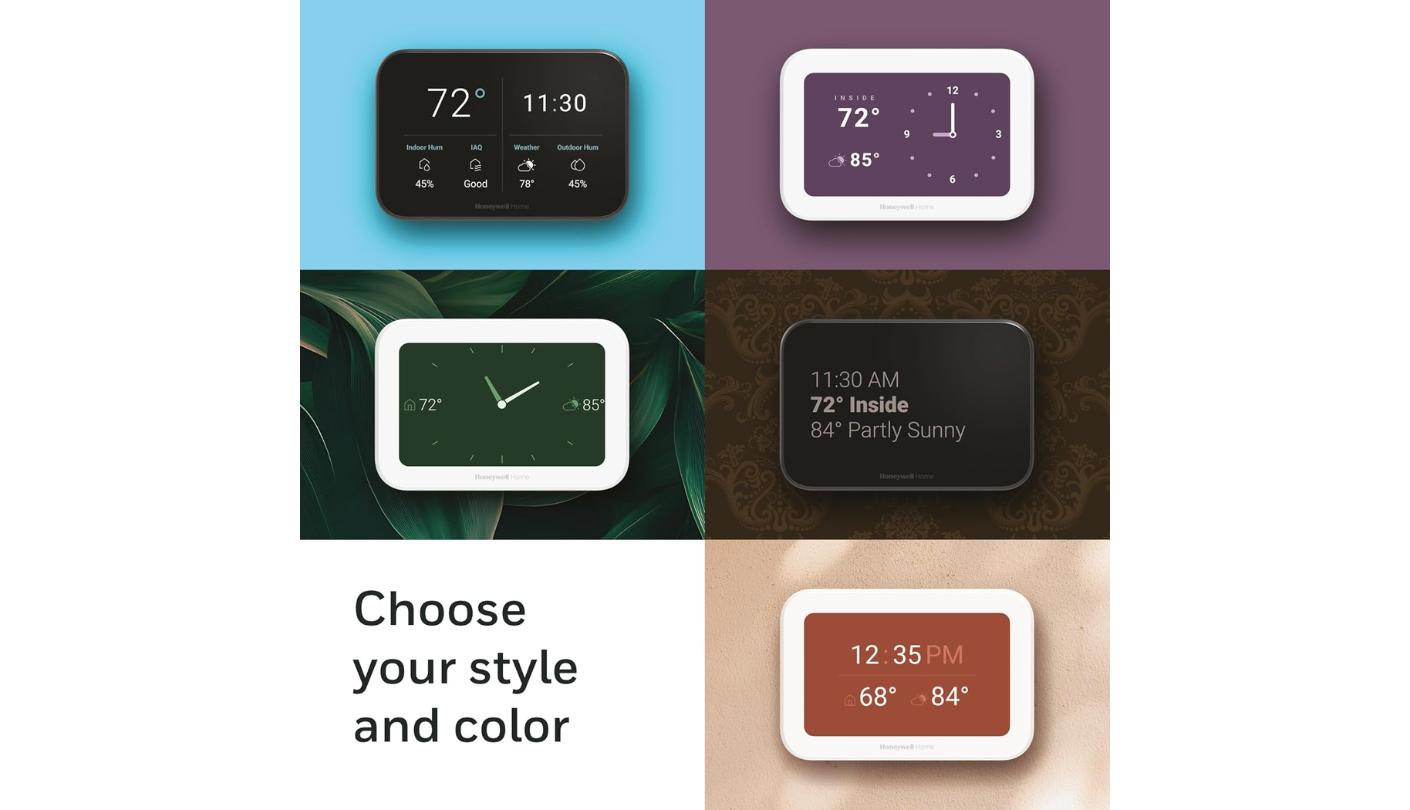
Launched in December 2025, the Honeywell Home X8S Premium is the first thermostat from Resideo that meaningfully expands what the device category does. The 5-inch edge-to-edge touchscreen - the largest on any mainstream smart thermostat - supports a customizable idle display with clock faces, backgrounds, and color themes. Ring and First Alert VX1 doorbell feeds stream live to that display, letting you see and speak to whoever is at the door without reaching for a phone. That combination of climate control and door monitoring in a single wall-mounted unit is new for this category.
Indoor air quality monitoring covers CO2 levels, particulate matter, temperature, and humidity - accessible in the First Alert app and as optional widgets on screen. The IAQ data feeds action: the thermostat triggers ventilation recommendations at elevated CO2 and adjusts heating or cooling behavior to maintain the humidity target. My tests confirmed the humidity sensing tracked closely with a standalone meter, making the X8S a practical dual-purpose device without separate IAQ hardware.
Matter certification sets the X8S apart from every other model in this group. Matter-compatible devices operate across Apple Home, Google Home, and Alexa without depending on any one manufacturer's cloud service for basic functionality. Smart Sensing occupancy detection uses an internal presence sensor to adjust heating and cooling based on actual nearby presence, layering on top of geofencing to cover scenarios where smartphones are not present. Resideo cites an average of $204 per year in savings for users who follow the device's scheduling recommendations consistently.
HVAC compatibility covers up to 3-stage heating / 2-stage cooling for heat pumps and 2 heat / 2 cool for conventional systems. A C-wire adapter voucher is included for homes without a common wire. Initial setup is less intuitive than the Nest or ecobee apps - HomeKit enrollment required a support call in Reviewed.com's testing. Once configured, the First Alert app unifies energy reports, IAQ data, doorbell feeds, and climate control in one place.
The Honeywell Home X8S is built for buyers who want the thermostat to do more than control temperature. It is the pick for energy savings alongside IAQ monitoring, doorbell integration, and Matter-backed platform longevity. The setup complexity and the premium over the ecobee and Nest are the trade-offs to weigh clearly. For a home where a wall-mounted hub handling climate, air quality, and door security in one device has daily value, the X8S is the machine in this group built for that role.
Pros:
- 5" touchscreen display
- Matter certified
- IAQ monitoring built-in
- Live doorbell video
- Passive occupancy sensing
Cons:
- Complex initial setup
- Premium price tier
Summary: Honeywell Home X8S Premium combines a 5-inch touchscreen, Matter certification, indoor air quality monitoring, passive occupancy sensing, and live doorbell video in the most feature-complete thermostat in this group. The pick for buyers who want climate control and home awareness in one device.
Thermostats for Energy Savings: FAQ
Which smart thermostat in this group saves the most energy?
From my testing, the Google Nest 4th Gen produces the most consistent savings in households with variable schedules because its AI adapts to changes a fixed schedule misses. For predictable routines, the ecobee Essential and Sensi Touch 2 match those savings through scheduling and geofencing. The Honeywell X8S leads in climates where humidity control affects HVAC runtime, thanks to its combined passive occupancy and humidity-adjusted setpoints.
Do smart thermostats work without a C-wire?
The Google Nest 4th Gen is the only model here that operates without a C-wire on most systems, drawing power through a charge-storage circuit instead. All other models require one or include an adapter. Homes built before 1990 often have a C-wire routed but unused - activating it from the furnace board takes about ten minutes at no cost. Homes without one need an adapter kit, available from each manufacturer.
How quickly does a smart thermostat pay for itself?
Payback timeline depends heavily on existing HVAC habits. Homes replacing a constant-temperature thermostat see the fastest return - typically six to twelve months with consistent scheduling and geofencing active. Homes already using an accurate 7-day programmable thermostat see a smaller gap and a longer payback. Utility rebates, available through many US energy providers for Energy Star certified models, can cut net cost by $50 to $150, shortening the return regardless of model.
Does the Google Nest really learn your schedule on its own?
Yes - in my testing it produced an accurate daily schedule within five to seven days, adapting to our morning and evening temperature preferences without any manual input. The algorithm continues refining as habits change and asks for confirmation before implementing schedule changes. Natural Heating and Cooling adds a second layer that adjusts runtime based on outdoor temperature trends, producing additional savings beyond the learned schedule alone.
Which thermostat in this group works best with Apple HomeKit?
The Honeywell X8S, ecobee Essential, and Sensi Touch 2 all support native Apple HomeKit without bridge hardware. For iPhone-primary homes, the ecobee Essential is the practical best choice: it enrolls quickly, SmartSensor integration works through HomeKit, and the app is polished enough that most users won't return to the Apple Home app after setup. The X8S adds IAQ and doorbell data to HomeKit for buyers who want the full hub experience within Apple's ecosystem.
What makes the Honeywell Home X8S worth its higher price?
The X8S justifies its premium through three features no other model here combines: a 5-inch customizable touchscreen, live Ring and First Alert doorbell video, and IAQ monitoring with CO2 and particulate data. It is also the only Matter-certified thermostat in this group. Buyers who don't need IAQ or doorbell access won't recoup that premium through energy savings alone - the ecobee or Nest reaches comparable HVAC efficiency at a lower cost.
Can geofencing replace a manual schedule for energy savings?
Geofencing handles away-period savings reliably - shifting to energy-saving setpoints when the last phone leaves and restoring comfort before anyone returns. What it cannot do is optimize inside occupied periods: it treats all time at home equally, missing the nighttime setbacks and morning pre-heat savings a schedule captures. Running both simultaneously outperforms either alone, and every model in this group supports that combination.
Which model is best for rental properties or simple setups?
The Amazon Smart Thermostat is the clearest fit for rentals and simple Alexa households: low cost, app-guided install, no subscription, and Alexa control. For multi-unit landlords or tenants who prefer minimal complexity, the limited feature set is an advantage. The Sensi Touch 2 is the second choice, adding four-platform voice support and HVAC maintenance alerts that help flag system issues before they become expensive repairs.
Choosing the Right Smart Thermostat for Your Home
For the widest range of households, my first recommendation is the ecobee Smart Thermostat Essential - triple-platform support, an included C-wire adapter, and eco+ occupancy intelligence in a best-in-class app. For households where setup effort is the primary obstacle, the Google Nest Learning Thermostat 4th Gen is the pick: no C-wire on most systems, automatic schedule learning, and a bundled temperature sensor.
The Sensi Touch 2 ST76 is the pick for buyers who want HVAC-grade compatibility, four-platform voice support, and a verifiable privacy policy. The Amazon Smart Thermostat is the right call for Alexa-native homes on a tight budget - Resideo co-design and carbon-aware scheduling punch above the price. And the Honeywell Home X8S Premium earns its place for buyers who want IAQ monitoring, live doorbell video, Matter certification, and the largest display in the category - a wall-mounted hub rather than just a smarter dial.

Jeb here, your go-to geek for everything from video projection to the latest tech trends. As an avid outdoorsman, I enjoy using monoculars and binoculars for hunting, traveling, and birdwatching. Join me in exploring the cool, quirky side of technology!


