Best Electric Toothbrushes Under $100
My dentist noticed before I brought it up. Seven weeks after switching from manual to a mid-range sonic brush, she flagged measurably reduced gum pocket depth during a routine check-up - specifically on my left side, where I'd been underscrubbing for years without realizing. That number came from a clinical chart, not a manufacturer's claim, and it's the reason I take the sub-$100 electric toothbrush category seriously enough to spend several weeks testing five different models back to back. The gap between brands at this price is real. So is the gap between models that change your routine and models that gather dust after the second week.
Five brushes entered this test: two motor technologies, three charging systems, and use profiles from a 60-gram AAA-battery model with an ADA seal to a dentist-co-designed sonic brush that runs nine months between charges. I tracked actual battery duration against stated claims, tested every mode in daily use, and traveled with each brush at least once to find out what the spec sheet doesn't cover. Here are the results.
Two brushes stood out across all five weeks of testing - here they are if you need a fast answer:
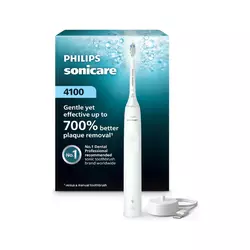
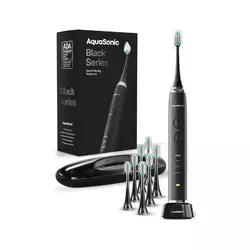
Table of Contents:
- Best Electric Toothbrushes Under $100: Buying Guide
- Top 5 Electric Toothbrushes Under 100 in 2026
- Electric Toothbrush Comparison
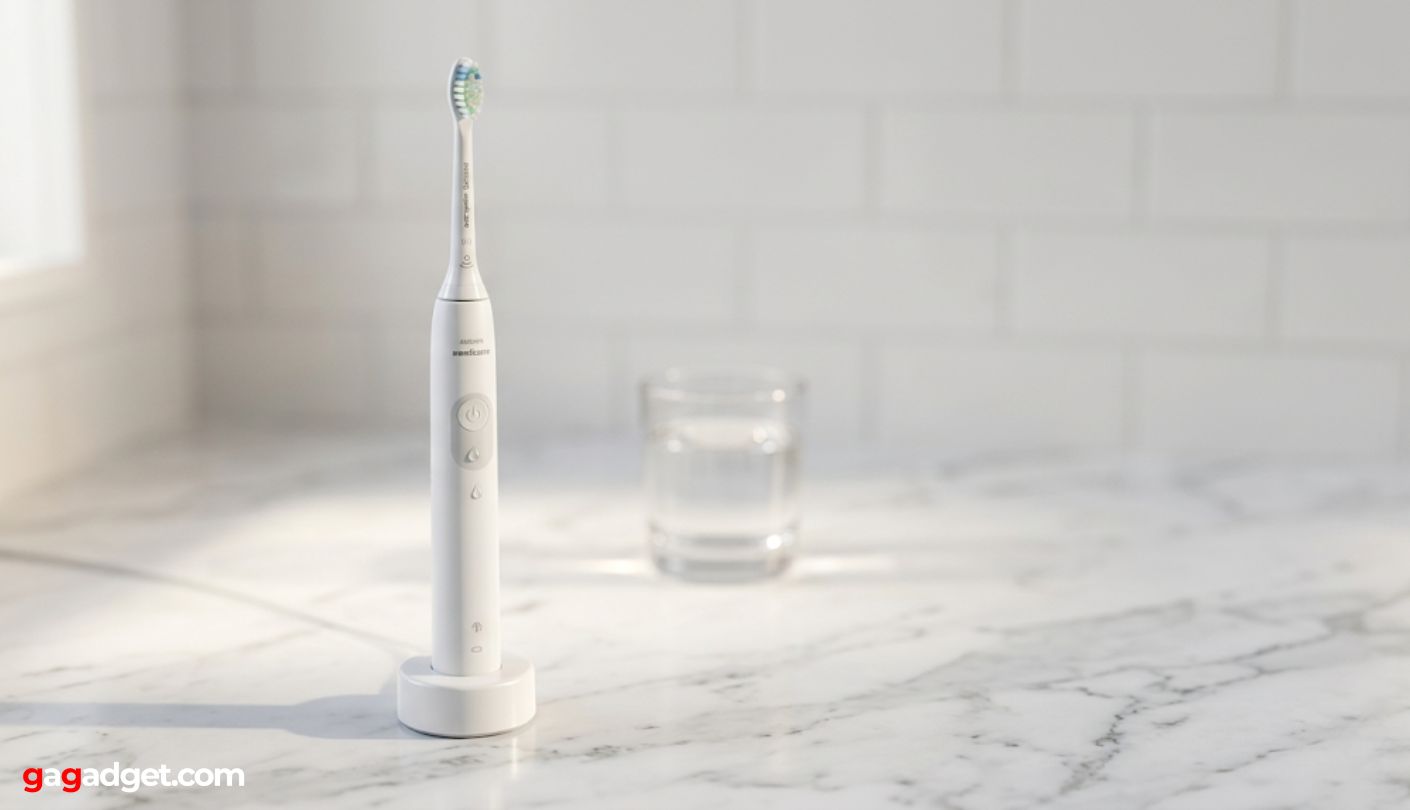
- Philips Sonicare 4100
- AquaSonic Black Series Ultra Whitening
- Oral-B iO2 Starter Kit
- Quip Sonic Electric Toothbrush
- BURST Pro 2.0 Sonic
- Electric Toothbrush FAQ
Best Electric Toothbrushes Under $100: Buying Guide
Five specs decide whether an electric toothbrush actually changes your oral health or just replaces a manual one. Here's what to focus on before you buy.
Sonic vs. Oscillating-Rotating: Which Motor Type Fits Your Mouth
Choosing between the two motor technologies in this group has less to do with which one cleans better - both have decades of clinical validation - and more to do with how your mouth responds to each kind of motion. Sonic brushes vibrate the bristle cluster at high frequency, between 15,000 and 40,000 strokes per minute across the five models here, generating hydrodynamic cleaning action that drives toothpaste into interdental spaces beyond where bristles physically reach. The Oral-B iO Series uses oscillating-rotating motion instead - a small circular head cups each individual tooth and cleans it in short mechanical arcs before moving to the next surface.
Users with sensitivity histories, gum recession, or recovering from dental procedures tend to find oscillating designs easier to control early on - the short arcs create a more contained pressure footprint at each tooth. Users with persistent interdental plaque buildup or well-established brushing habits more often see better results from sonic fluid dynamics, which extend cleaning action into the spaces bristle tips can't reach directly.
The first week with either technology feels unfamiliar after years of manual brushing - most people adjust technique before finding their rhythm. In my experience switching between both types for extended review periods, neither produces noticeably cleaner teeth at equivalent prices. The useful question is which one you'll use correctly every day, and that depends on how the motion interacts with your sensitivity level and grip habits more than on a spec comparison.
The Feature That Changes Your Oral Health More Than the Motor Does
The single most impactful feature on any electric toothbrush - at any price - is a 2-minute timer with 30-second quadrant notifications. Studies put average manual brushing time at roughly 45 seconds for the entire mouth. A structured timer doesn't require habit change or willpower. The brush keeps running until all four quadrants are covered. All five brushes in this roundup include this, and it alone accounts for a significant portion of the clinical improvement powered brushes show over manual in controlled trials. Before comparing motor speeds or mode counts, check this one box first.
Cleaning modes matter in proportion to how varied your oral health needs are. A single Daily Clean setting is right for most adults with healthy gums who brush at correct force. Sensitive mode becomes genuinely necessary if you've had gum treatment, wear braces, or have been told by a dentist you brush too hard. The real variable between the Sonicare 4100's minimal design and the BURST Pro 2.0's five-mode range is fit, not quality. Pressure sensors also divide into two functionally different types here: the Sonicare 4100 and BURST Pro 2.0 auto-reduce motor speed on contact, which corrects technique passively without the user needing to notice anything. The Oral-B iO2 flashes a small LED near the power button - a detail I found consistently easy to miss while actually brushing.
Battery Life: What Manufacturers Test vs. What You Experience
Electric toothbrush battery specs are measured under conditions that rarely reflect how anyone actually brushes. Manufacturers run tests at specific intensity settings and session lengths designed to produce favorable-looking numbers. In real household use, a brush rated at 14 days often lasts considerably longer because most people don't run maximum intensity for a full two minutes twice daily without interruption. The Sonicare 4100's 14-day claim produced nearly seven weeks of real-world duration in independent testing. The AquaSonic Black Series' four-week claim matched my own testing at the Clean mode setting. The BURST Pro 2.0's nine-month figure has consistent support from long-term users, and my own three months of use moved the charge indicator by roughly a third.
Charging system design changes the daily experience more than it changes performance. Inductive wireless charging keeps the countertop uncluttered and removes handling friction entirely - the brush rests on the disc. USB-C charging works from any existing cable in a travel bag and charges faster from depleted. A replaceable AAA battery skips recharging entirely, running three months on a single cell you can swap at any airport. The best charging system is whichever one removes the charging variable from your mental overhead permanently.
When a brush doesn't leave the bathroom shelf, recharging frequency rarely becomes a real concern - the habit forms naturally regardless of the cycle length. Travel changes the calculation: a wireless charging pad adds bulk, USB-C works from a phone charger already in the bag, and a battery-powered brush needs no electronics at all. I ask about travel frequency before recommending between the Quip Sonic and any rechargeable option, because the answer shifts the pick more often than any other factor.
The Real Cost of Ownership: Brush Heads and Ecosystem Lock-In
Dentists recommend replacing brush heads every three months - four replacements annually at whatever each head costs. Over three years, that head cost can exceed what the brush itself cost at purchase. The head cost spread across these five brushes is significant: Sonicare-compatible heads are available from multiple third-party brands for a few dollars each, while Oral-B iO heads carry a premium with no close generic alternative. Before buying any electric toothbrush, two minutes on Amazon checking the replacement head market for that specific format can meaningfully change the long-term ownership math.
The AquaSonic Black Series sidesteps this calculation by including eight DuPont heads in the box - two full years at the standard replacement schedule for one user, or one year for two. No head order required in year one or two, no first-year cost adjustment. For households sharing a handle with individual heads, that bundle multiplies its value proportionally. No other brush here approaches that level of upfront coverage.
Handle Weight, Grip, and What "Portable" Actually Means in a Toiletry Bag
Handle weight distribution affects how the two-minute routine feels on the thirtieth use, not the first. A heavier handle like the AquaSonic at 141g reads stable and deliberate at a fixed bathroom vanity. A lighter one like the Quip Sonic at 60g reduces hand fatigue and suits narrower grips but vibrates more noticeably at higher intensity settings. Neither weight class cleans better - the motor does the work regardless of handle mass - but ergonomic comfort affects whether the full two minutes feels routine or effortful at the end of a long day.
The difference between a portable brush and a merely small brush shows up on the third trip. Bare bristles in a toiletry bag accumulate contamination quickly, and without a protective cover, bristles deform against hard surfaces before the three-month replacement window arrives. A cover that also serves as a mirror mount and countertop stand - like the Quip Sonic's clip-on accessory - solves the hygiene, storage, and standing problems in a single piece without adding bulk. A brush that requires a dedicated charging pad technically has a smaller footprint than a charger-plus-pad combination but travels with more pieces to track.
IPX7 waterproofing - present on four of the five brushes here - means full submersion survival, which allows tap rinsing and shower use without concern. The Quip Sonic is water-resistant rather than fully waterproof, adequate for standard rinsing but worth noting for users who brush in the shower. I tested each brush with normal daily water exposure throughout the review period, and all five handled it without any operating change.
Top 5 Electric Toothbrushes Under 100 in 2026
Each of these electric toothbrushes earned its spot by holding up through several weeks of daily use and at least one travel test - not by spec sheet alone.
- Easy Start onboarding mode
- Auto pressure speed-reduction
- BrushSync head reminder
- ~7-week real battery
- USB-A portable charging
- 8 DuPont heads included
- Wireless inductive charging
- 4 distinct modes
- ADA accepted
- Hard-shell travel case
- iO oscillating-rotating motor
- 37-day battery life
- 3 cleaning modes
- Magnetic charging dock
- Comfortable iO handle
- 3-month AAA battery
- ADA accepted
- Cover + mirror mount included
- 60g ultralight profile
- One-button operation
- 9-month USB-C battery
- 5 distinct cleaning modes
- Auto pressure sensor
- Charcoal-infused tapered bristles
- Magnetic wall mount
Electric Toothbrush Comparison
Three specs most predictably separate real-world performance from marketing: pressure sensor behavior, actual versus claimed battery duration, and brush head ecosystem cost. The full comparison is below.
| Specification | Philips Sonicare 4100 | AquaSonic Black Series | Oral-B iO2 | Quip Sonic | BURST Pro 2.0 |
| Motor Type | Sonic | Sonic | Oscillating-rotating | Sonic | Sonic |
| Speed | 31,000 strokes/min | 40,000 VPM | Micro-vibration arcs | 15,000 VPM | ~33,000 VPM |
| Cleaning Modes | 1 (+ 2 power levels) | 4 | 3 | 1 | 5 |
| 2-Min Timer + Section Alerts | Yes / Yes | Yes / Yes | Yes / Yes | Yes / Yes | Yes / Yes |
| Pressure Sensor Type | Auto speed-reduction | Indicator | LED indicator only | None | Auto speed-reduction |
| Battery Life | 14 days claimed / ~7 weeks tested | ~4 weeks | ~37 days | ~3 months (AAA cell) | Up to 9 months |
| Charging Type | USB-A (hardwired cable) | Wireless inductive | Magnetic USB dock | AAA battery | USB-C |
| Brush Heads Included | 1 | 8 (DuPont) | 1 | 1 + 1 spare | 1 (charcoal-infused) |
| Travel Protection | None | Hard-shell case + pad | None | Cover + mirror mount | Magnetic wall mount |
| Waterproof Rating | IPX7 | IPX7 | IPX7 | Water-resistant | IPX7 |
| Handle Weight | 97g | ~141g | ~117g | ~60g | ~100g |
| ADA Accepted | Yes | Yes | Yes | Yes | No (dental pro co-developed) |
| Automatic Head Reminder | Yes (BrushSync chip) | No | No | No | No |
Philips Sonicare 4100 Review
Editor's Choice
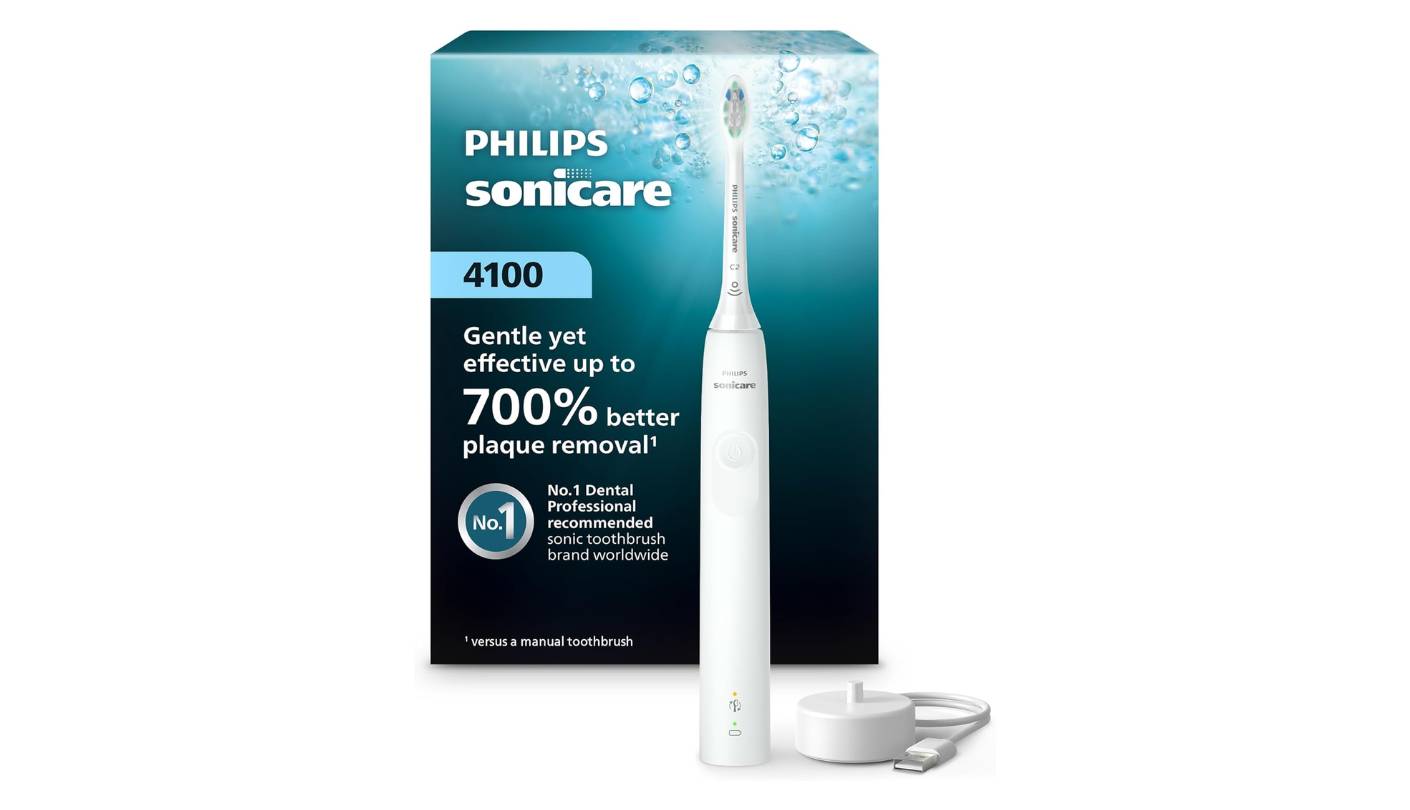
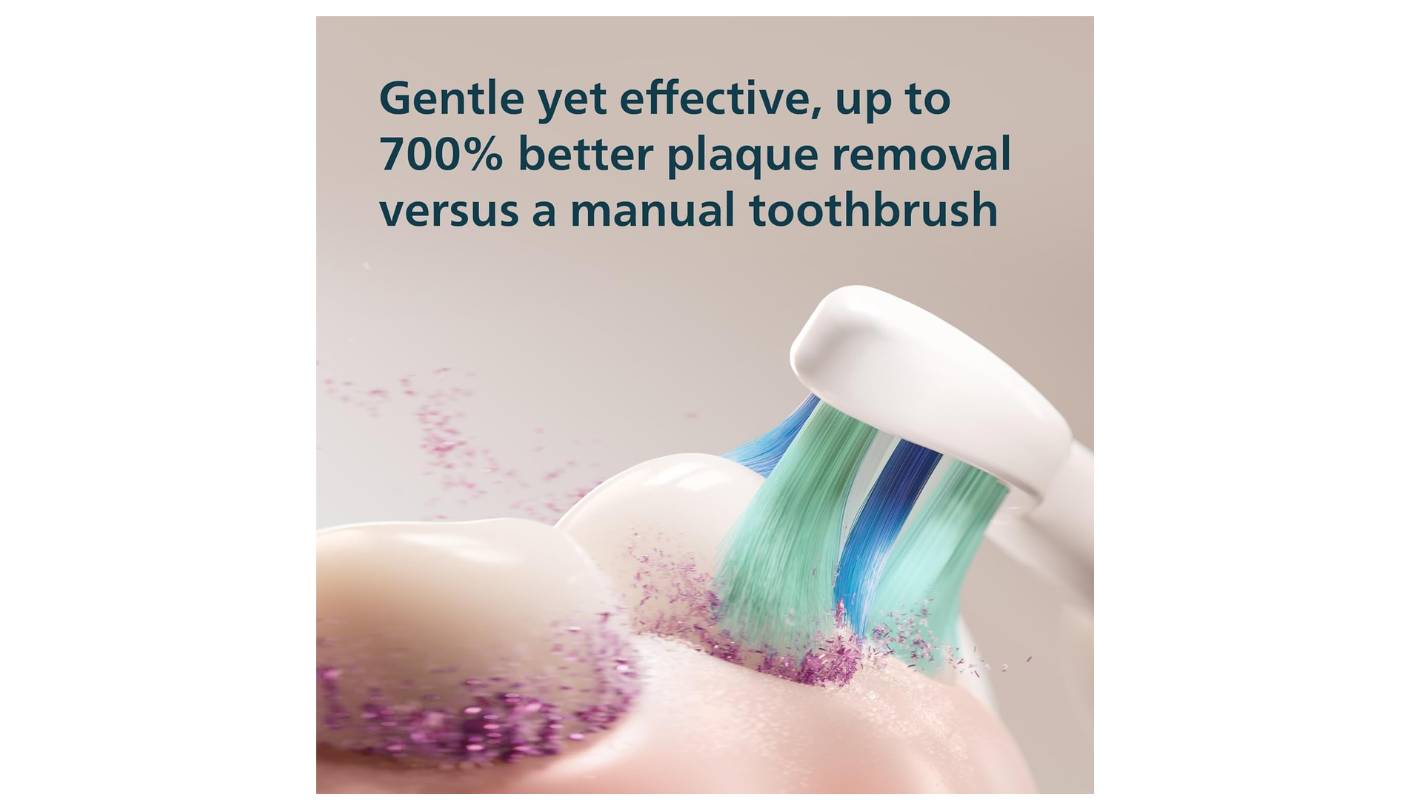
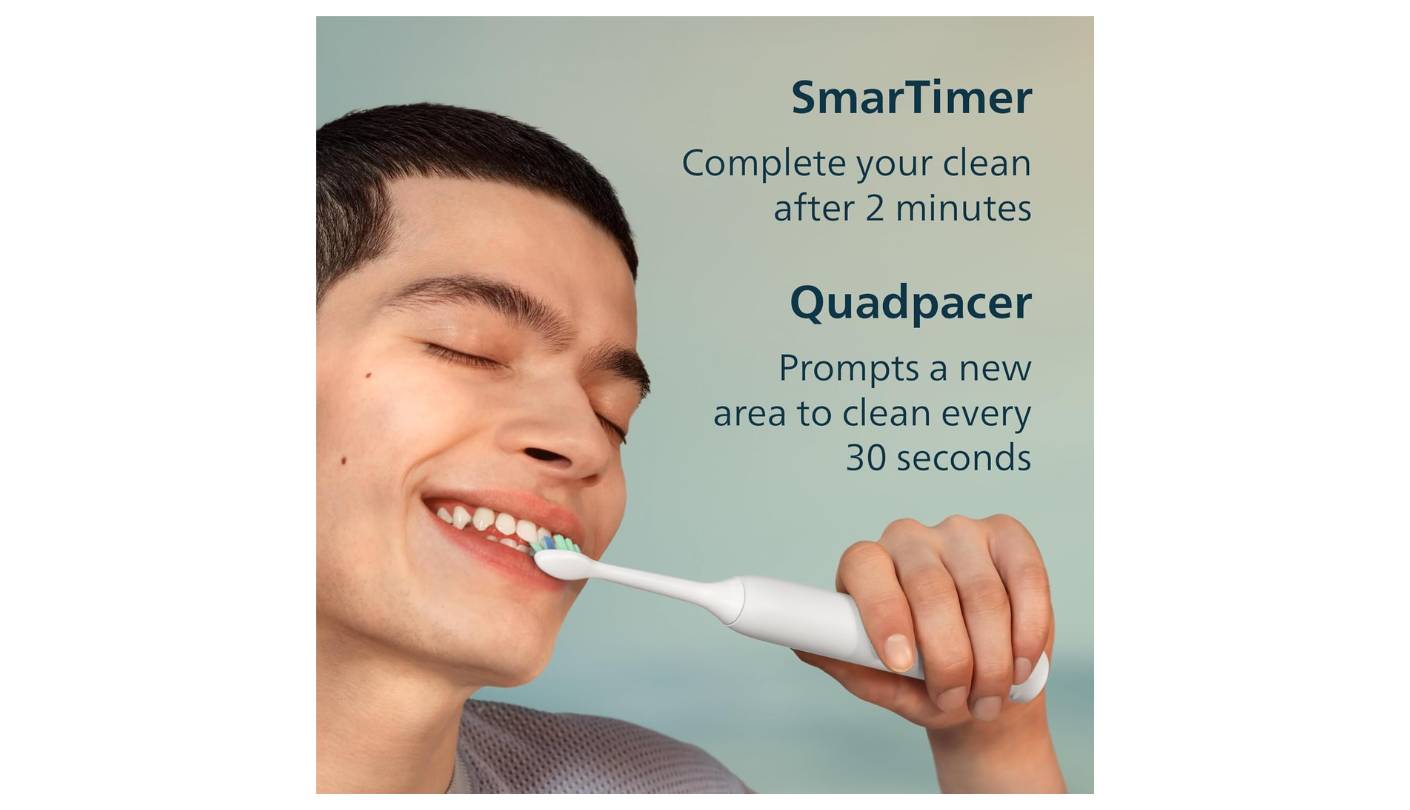
The Sonicare 4100 has a feature no other brush in this group includes: it trains you. Easy Start ramps the motor from a reduced power level to full intensity over the first 14 brushing sessions, giving gum tissue time to adapt before the 31,000 strokes-per-minute sonic cycle runs at full output. The reason this matters is specific: most first-time electric brush users quit within the first month because the bristles feel uncomfortable on gums that aren't conditioned yet. Easy Start removes that barrier passively. No manual adjustment, no mode selection - just gradual onboarding built into the startup sequence.
The pressure sensor is the other reason the 4100 keeps appearing at the top of my recommendations for new users. Rather than displaying a warning you have to notice in the mirror, it auto-reduces the motor's vibration speed the moment applied force crosses the safety threshold. The feedback arrives as a tactile change in the handle - the motor softens - before you're consciously aware you were pressing too hard. For anyone whose dentist has mentioned gum recession or over-brushing, that passive correction is more valuable than any visual alert.
The USB charging cable is hardwired directly into the base of the charging stand, which means the 4100 draws power from any USB-A port without a dedicated wall adapter: a laptop, a phone charger, a portable battery bank on a bedside table. That charging flexibility quietly removes friction for anyone who travels or doesn't want another plug occupying a bathroom outlet. Battery duration in independent testing ran close to seven weeks at standard twice-daily use - the stated 14-day figure appears based on a conservative test protocol rather than average real-world behavior.
BrushSync chips embedded in compatible brush heads track cumulative motor-on time and activate a replacement indicator when bristle wear reaches the threshold. It's a passive reminder that requires no app, no setup, and no calendar notification - it simply appears when the head has been used enough to warrant replacement. Philips' broad head compatibility with third-party Sonicare-format replacements also keeps the long-term maintenance cost lower than proprietary-format alternatives at comparable price points.
The 4100 comes with one notable gap: no travel case, which leaves bare bristles in a toiletry bag. For frequent travelers, that requires a separate purchase or a Ziploc workaround. The single cleaning mode is the other limitation - users who need a dedicated Sensitive setting for consistent gum tenderness won't find it here, though double-pressing the power button accesses a lower power level that isn't labeled or obvious. Both gaps are worth knowing. Neither changes my recommendation for anyone who wants the best-executed entry into sonic brushing at this price.
Pros:
- Easy Start onboarding mode
- Auto pressure speed-reduction
- BrushSync head reminder
- ~7-week real battery
- USB-A portable charging
Cons:
- No travel case
- Single cleaning mode
Summary: Philips Sonicare 4100 is the brush that actively helps new users build correct brushing habits - an Easy Start ramp, a passive auto-reducing pressure sensor, and a USB-portable charger that works off any power bank. The strongest entry point into sonic brushing in this roundup.
AquaSonic Black Series Ultra Whitening Review
Best Overall
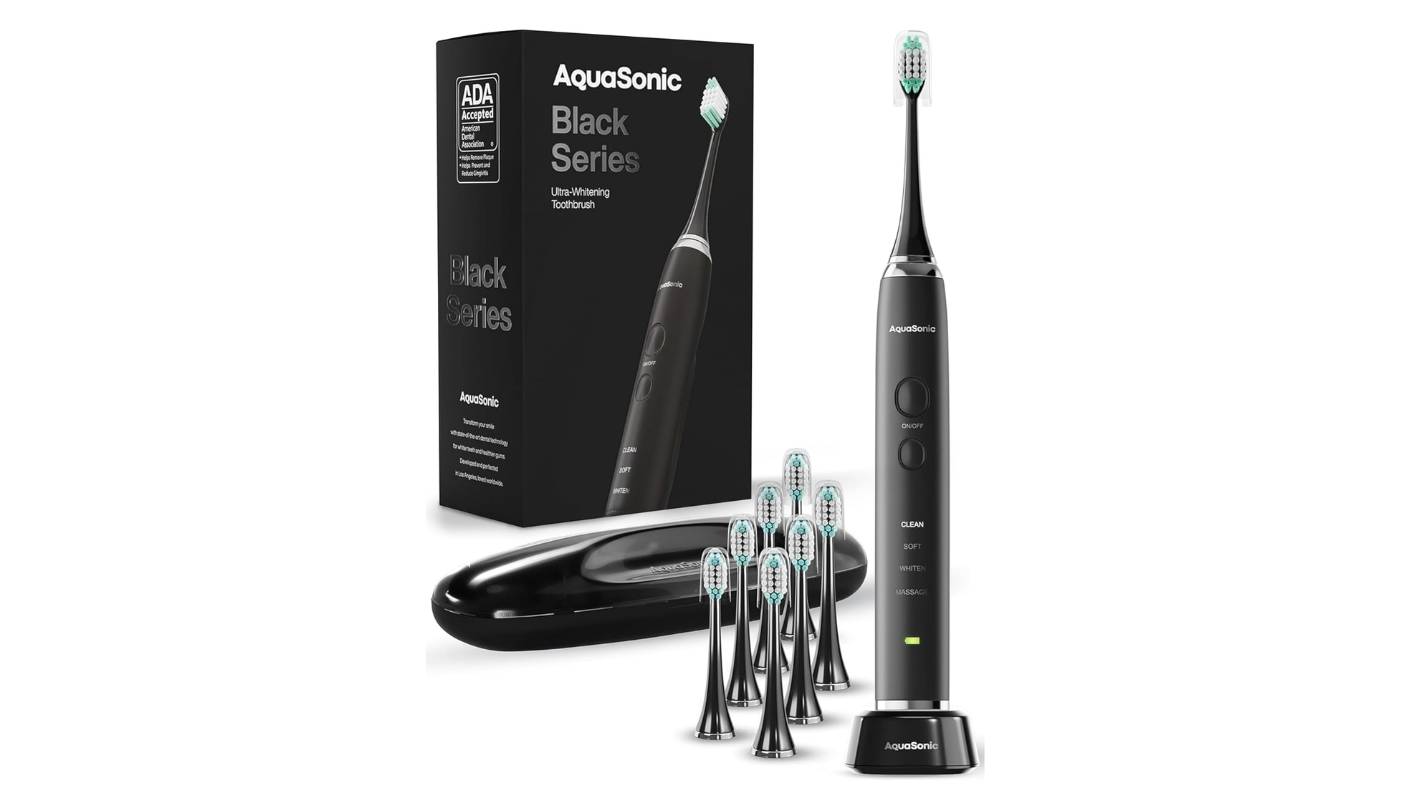
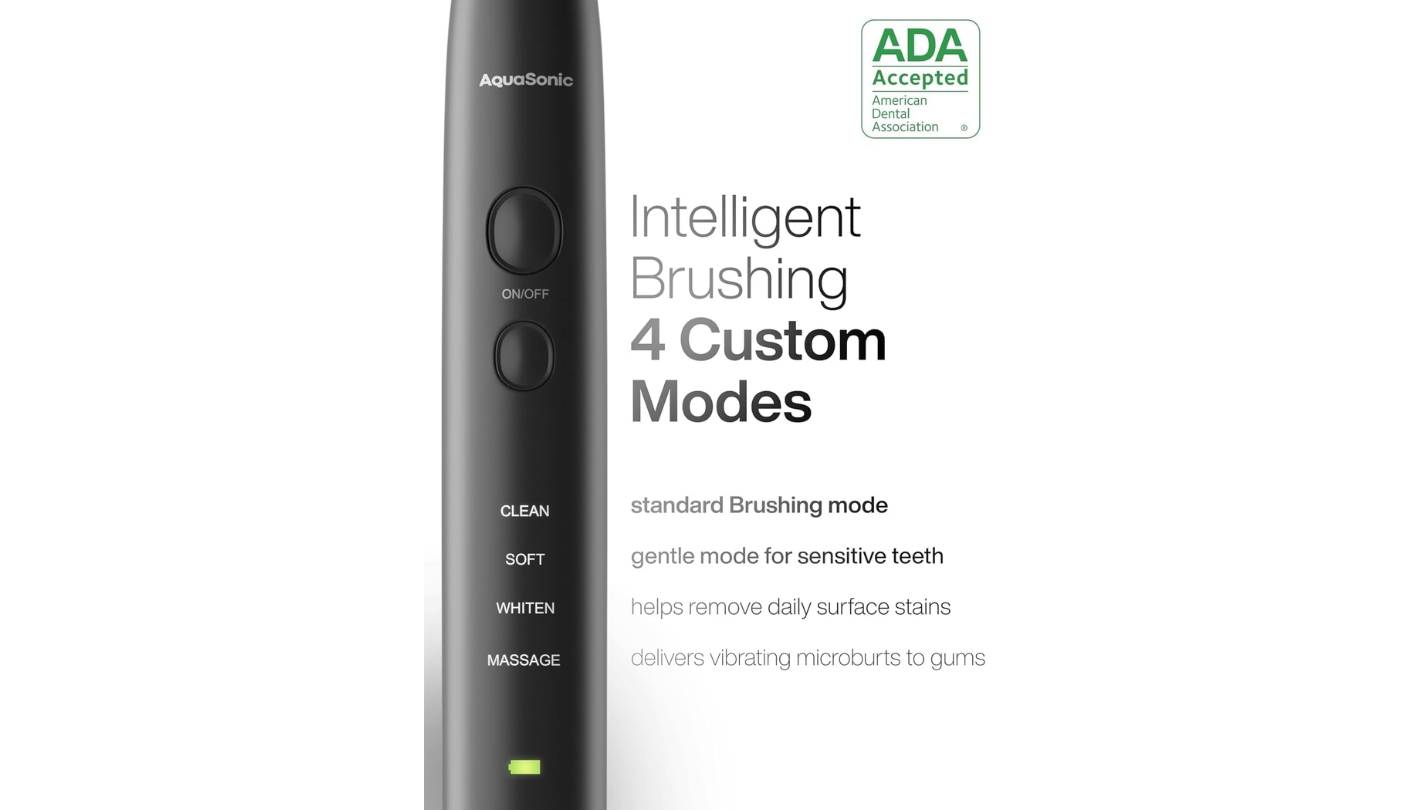
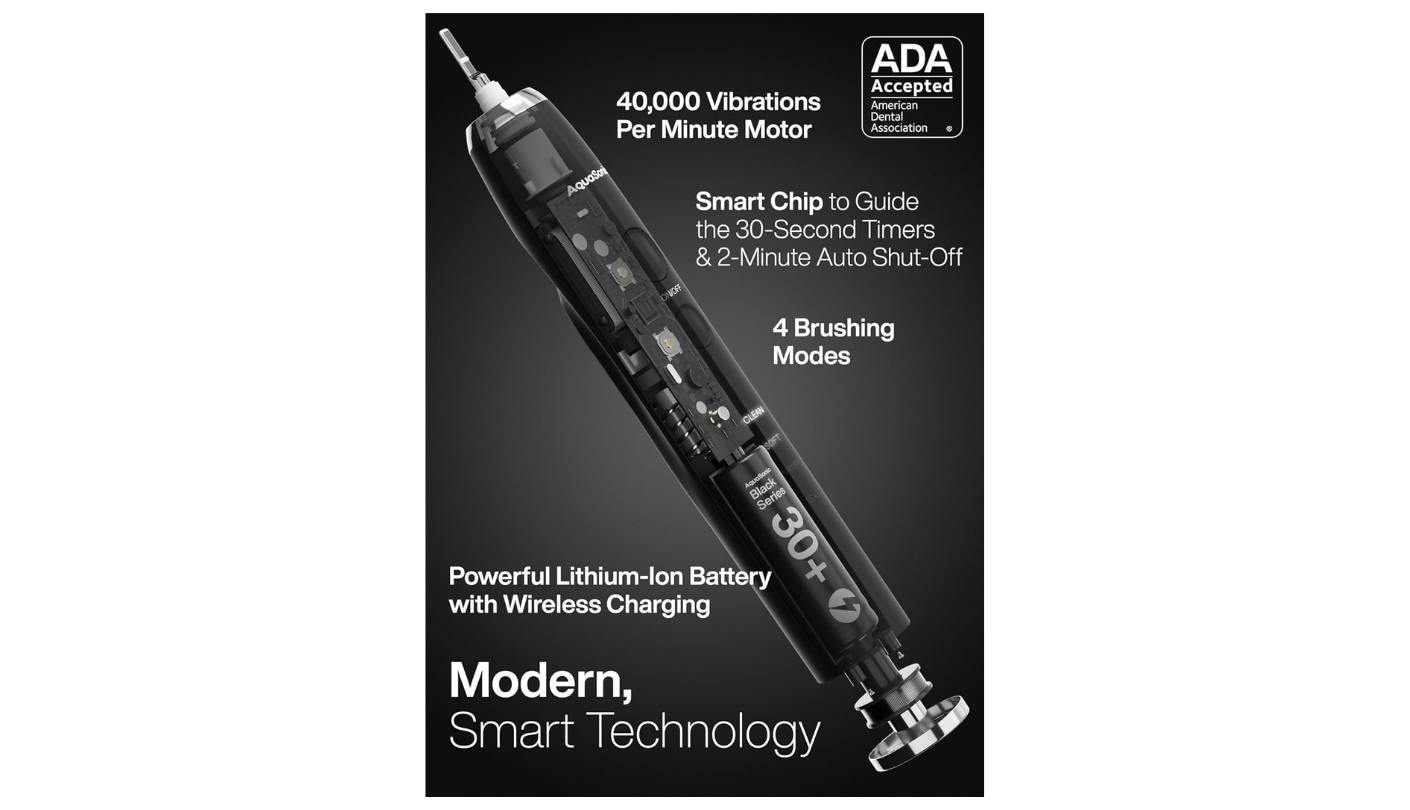
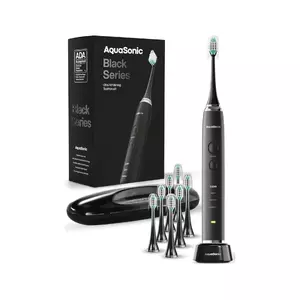
Eight DuPont-engineered brush heads in the box is what reframes the AquaSonic Black Series as the Best Overall pick rather than just a budget sonic option. At the standard three-month replacement schedule, eight heads cover two full years of replacements for one user - or a full year for two. No separate accessory orders in year one or two, no first-year cost adjustment, no head ecosystem trap. I ran the ownership calculation twice before arriving at this position, accounting for everything the box contains versus what comparable brushes require you to buy separately. The value case isn't close.
The 40,000 VPM motor splits into four modes with functionally distinct behavior rather than cosmetically labeled ones. Clean runs at full 100% intensity for standard daily plaque removal. Soft at 75% produces a noticeably reduced vibration level that most sensitivity-prone users can work with from the first session. Whiten runs at 100% in a pulsed rhythm that adds a polishing action on top of the base frequency - a genuinely different sensation from Clean, not the same intensity wearing a different label. Massage at 60% targets gum circulation rather than plaque removal, suited to users managing early gingivitis or post-procedure recovery. The ADA Council on Scientific Affairs accepted the Black Series following independent clinical testing for plaque removal and gingivitis reduction efficacy - a validation that covers performance claims, not just materials safety.
Wireless charging is handled through a flat inductive pad the handle simply rests on - no alignment guides, no pin orientation, no seat-it-correctly routine. Battery duration at Clean mode twice daily ran approximately four weeks in my testing, consistent with the stated claim. The IPX7-rated housing handles shower spray and full tap rinse across the entire handle without operating change. The satin black finish picks up bathroom counter marks more readily than matte alternatives but wipes clean quickly.
The hard-shell travel case is an actual structural accessory rather than a marketing inclusion. It carries the brush and charging pad as a single combined unit with the head protected, which means the full wireless charging setup arrives at a destination intact. The case closes with enough resistance to stay shut in a bag without a latch. At this price tier, a brush that includes eight heads, a case with charging pad accommodation, and four modes in one purchase is the kind of value argument that doesn't require much qualification.
Two honest limitations: the satin-finish plastic handle reads more budget than metal or rubber-grip alternatives in hand, and the jump from Soft to Clean mode is larger than on most multi-mode brushes in this category. New users who go straight to Clean mode from manual brushing can find the full 40,000 VPM intensity unexpectedly aggressive. Starting on Soft for the first week is the smarter approach - the gum tissue adapts and the transition to Clean feels natural rather than jarring. Neither limitation affects the cleaning outcome.
Pros:
- 8 DuPont heads included
- Wireless inductive charging
- 4 distinct modes
- ADA accepted
- Hard-shell travel case
Cons:
- Plastic handle feel
- Intense on Clean from day one
Summary: AquaSonic Black Series Ultra Whitening is the most complete package at this price - eight DuPont heads, wireless charging, four modes, ADA acceptance, and a hard-shell travel case in one box. The strongest first-year value argument in this roundup, especially for households where replacement head costs accumulate.
Oral-B iO2 Starter Kit Review
Clean Starter
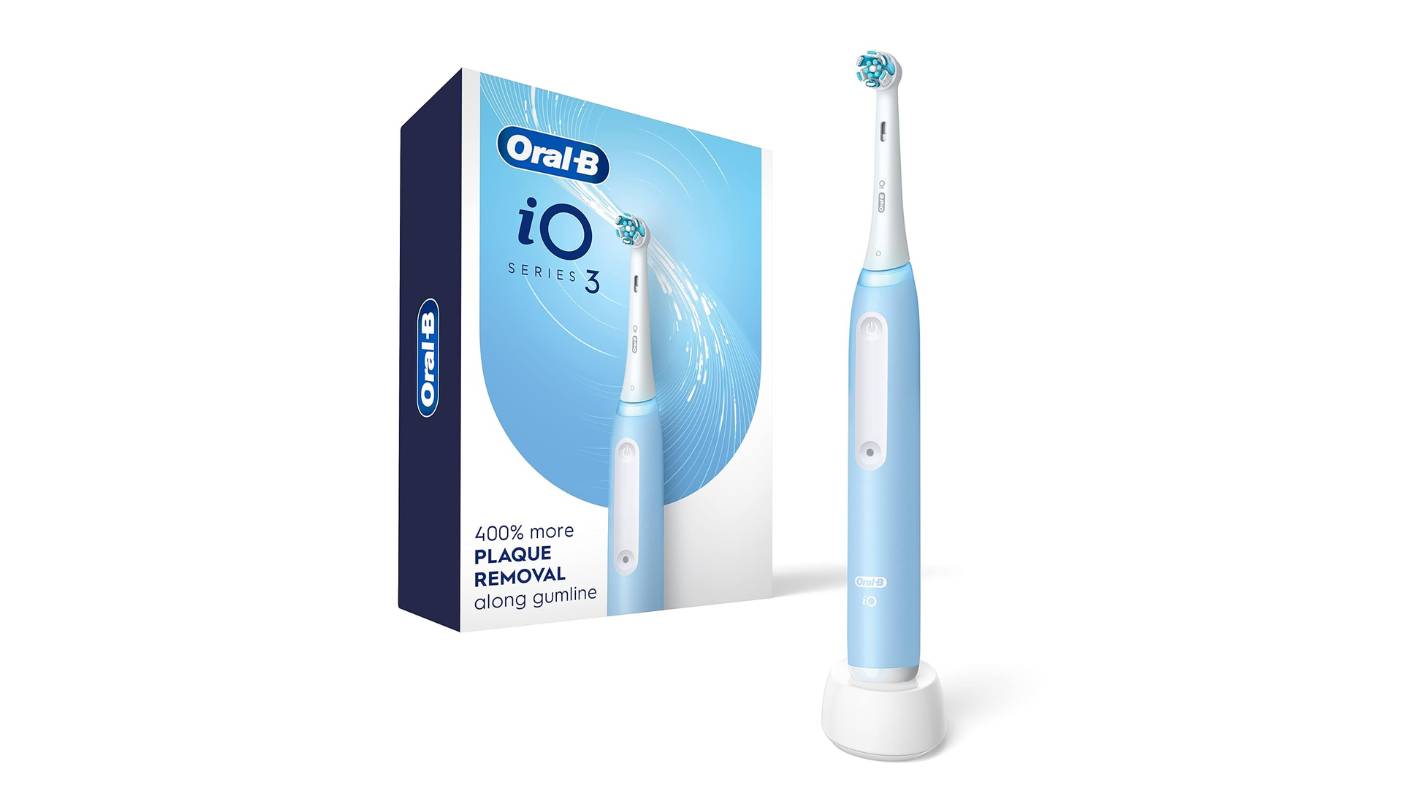
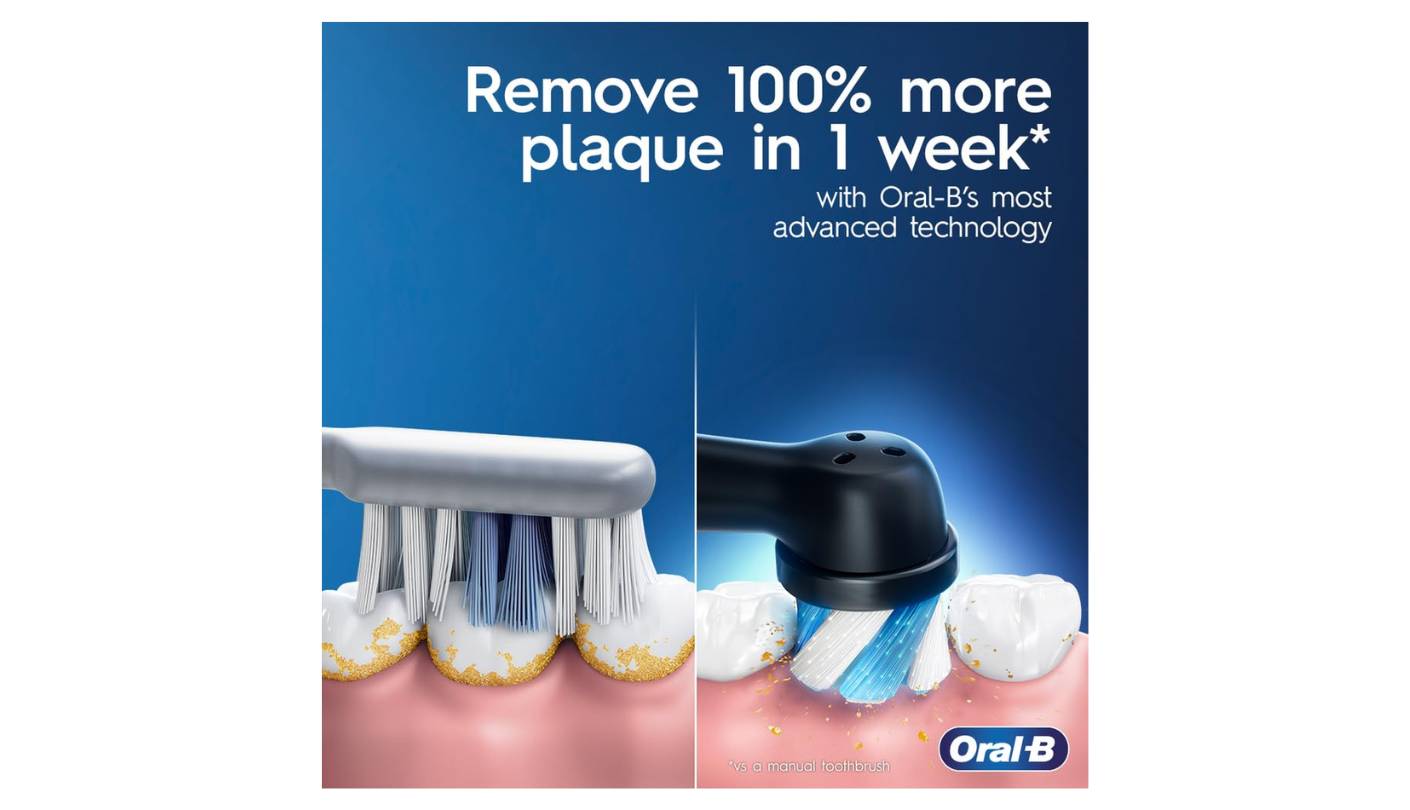
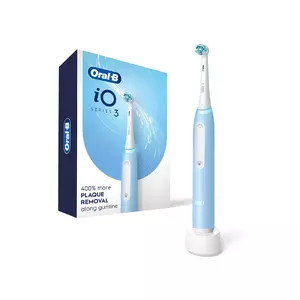
The thing you notice first after brushing with the iO2 is how each tooth surface feels individually addressed. That's the oscillating-rotating motor's signature sensation - the circular head cups and polishes each tooth in short mechanical arcs rather than running the whole mouth through a single vibration pass. After years of sonic brushing, the shift is immediately apparent: more deliberate, more localized, and for users who've always felt uncertain whether their technique was covering everything, significantly more reassuring. That post-brush feeling is worth experiencing before you decide which motor technology suits you.
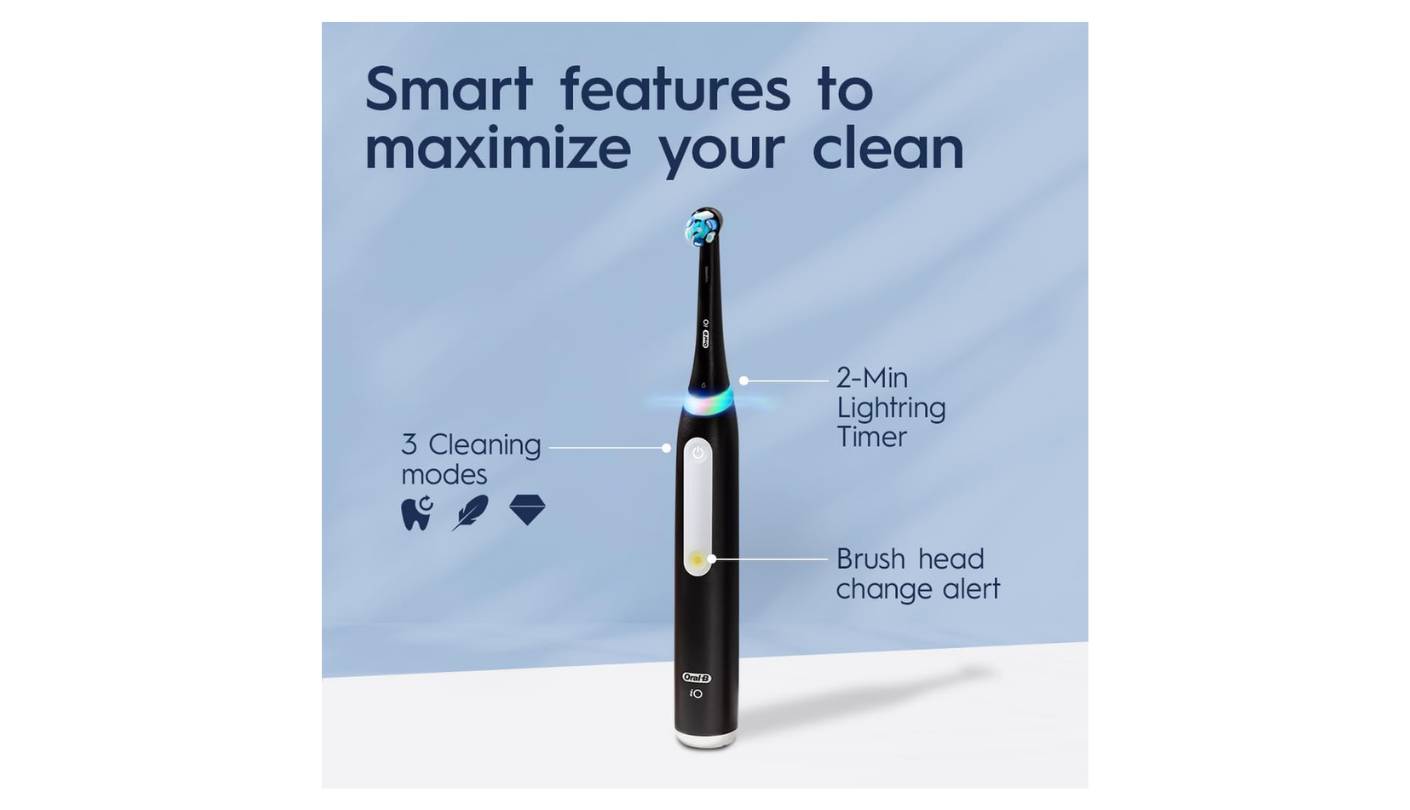
Three modes cycle through a single button: Super-Sensitive at the lowest intensity, Gentle at moderate, and Daily Clean at the iO2's full output. The brush defaults to Super-Sensitive on startup - which is the right default for new electric brush users building gum tolerance, even if experienced users will quickly cycle past it to Daily Clean. iO brush heads are shared across the entire iO product family, which means a future upgrade stays within the same accessory ecosystem without requiring a different head format.
Battery life is where the iO2 most clearly outperforms its price tier. Independent testing has documented roughly 37 days on a full charge, making it the longest-lasting rechargeable brush tested here by a meaningful margin. Most users end up charging it approximately once a month rather than tracking a battery level. The magnetic charging dock snaps cleanly to the base of the handle and holds the brush upright without a cradle - a tidier countertop solution than stand-based alternatives.
The pressure sensor is the iO2's most discussed limitation, and the criticism is accurate. Every other Oral-B iO model uses a 360-degree illuminated ring below the brush head that shifts color based on applied force - visible at any mirror angle, one of the clearest pressure feedback designs available on any electric toothbrush. The iO2 replaces this with a small LED indicator next to the power button that flashes red on over-pressure. The button faces away from the mirror during brushing. The indicator is effectively invisible during normal use. The motor does reduce speed when the sensor triggers, offering secondary tactile feedback, but it's subtle enough to miss without deliberately listening for it.
The iO head replacement cost is the other variable worth knowing before committing. Generic-compatible alternatives don't exist for the iO format the way they do for Sonicare designs. That proprietary pricing builds into three-year ownership cost in a way that can make the iO2's initial price look misleading compared to Sonicare alternatives at a similar upfront point. For users who want the iO's distinctive cleaning feel and can absorb the head cost, the iO2 is the right entry. For users whose priority is minimizing long-term spend, the Sonicare 4100 ecosystem costs less to maintain over time.
Pros:
- iO oscillating-rotating motor
- 37-day battery life
- 3 cleaning modes
- Magnetic charging dock
- Comfortable iO handle
Cons:
- Pressure sensor invisible mid-brush
- Pricey proprietary heads
Summary: Oral-B iO2 brings the distinctive per-tooth feel of iO micro-vibration to its most accessible price, with a 37-day battery and three practical modes. The pressure sensor implementation is a genuine step down from every other iO model - worth knowing if over-brushing correction is the primary reason for the purchase.
Quip Sonic Electric Toothbrush Review
Travel Pick
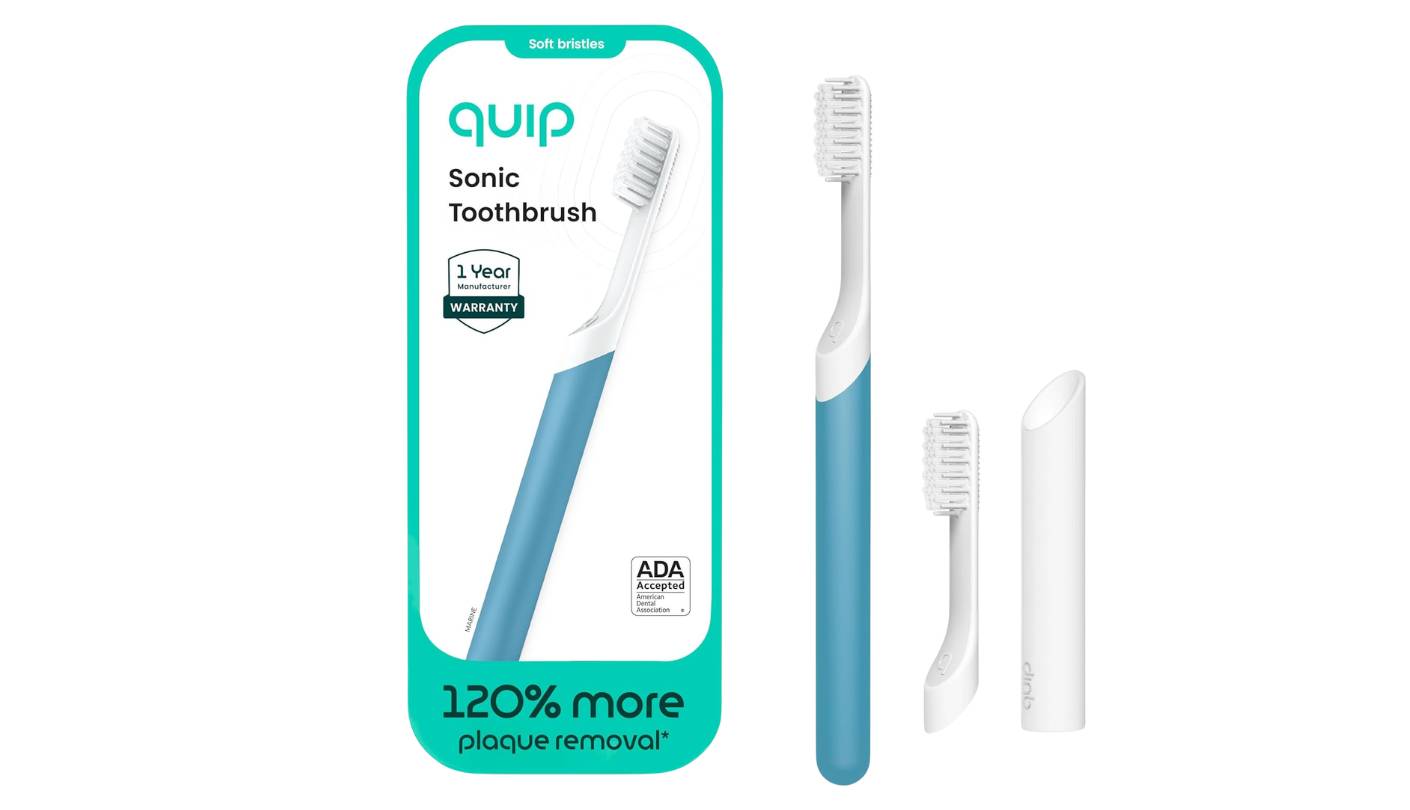
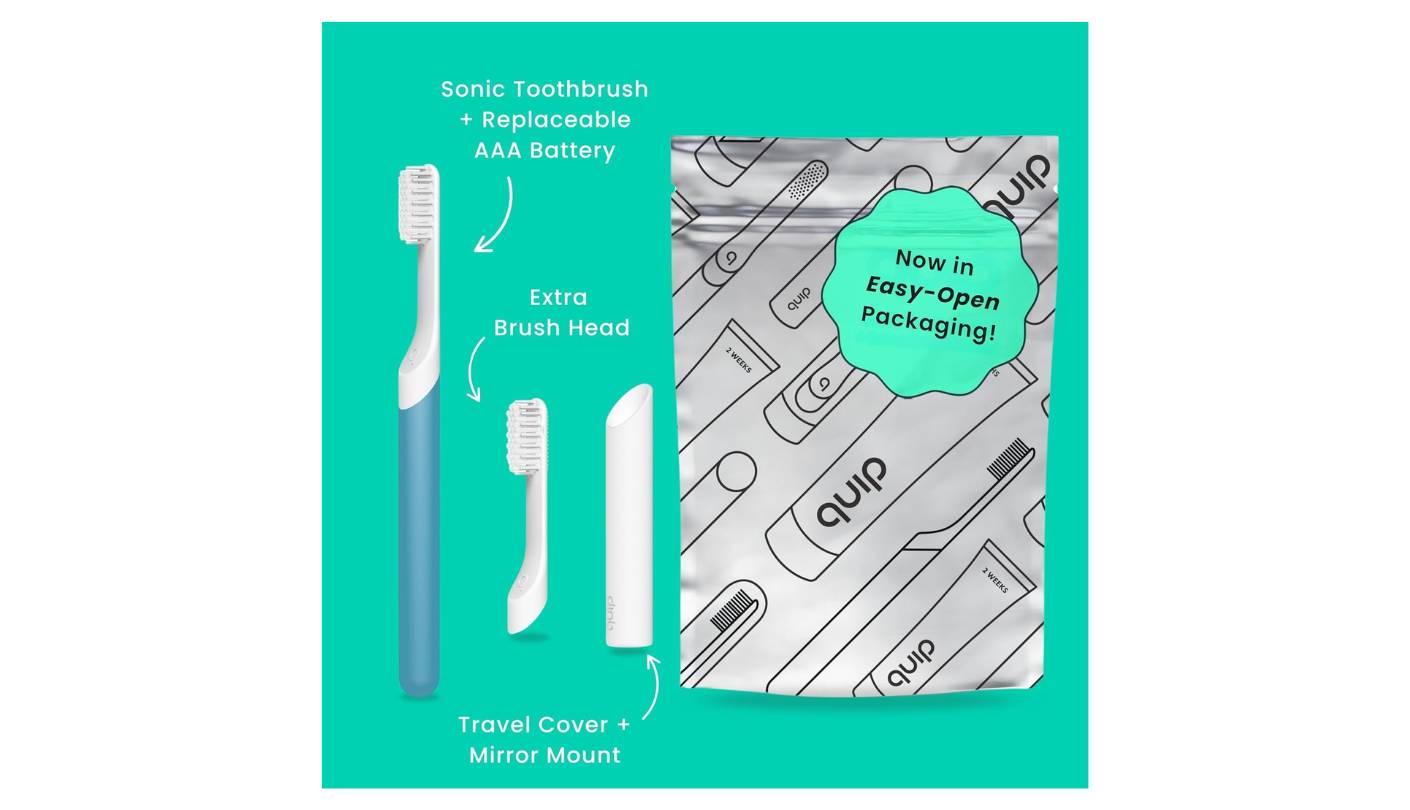
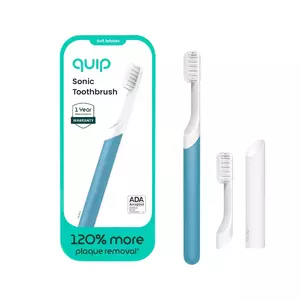
The last time I traveled with a rechargeable toothbrush, I left the charging pad on the bathroom counter at home. The Quip Sonic went in the bag that trip instead and stayed through four subsequent trips without needing anything beyond the AAA battery already in the handle. That's the argument for the Quip in a single incident - not that it cleans better than rechargeable options, but that it removes the charging variable from travel entirely. Three months on a single AAA cell means the battery outlasts the average trip cycle by a factor of about twelve.
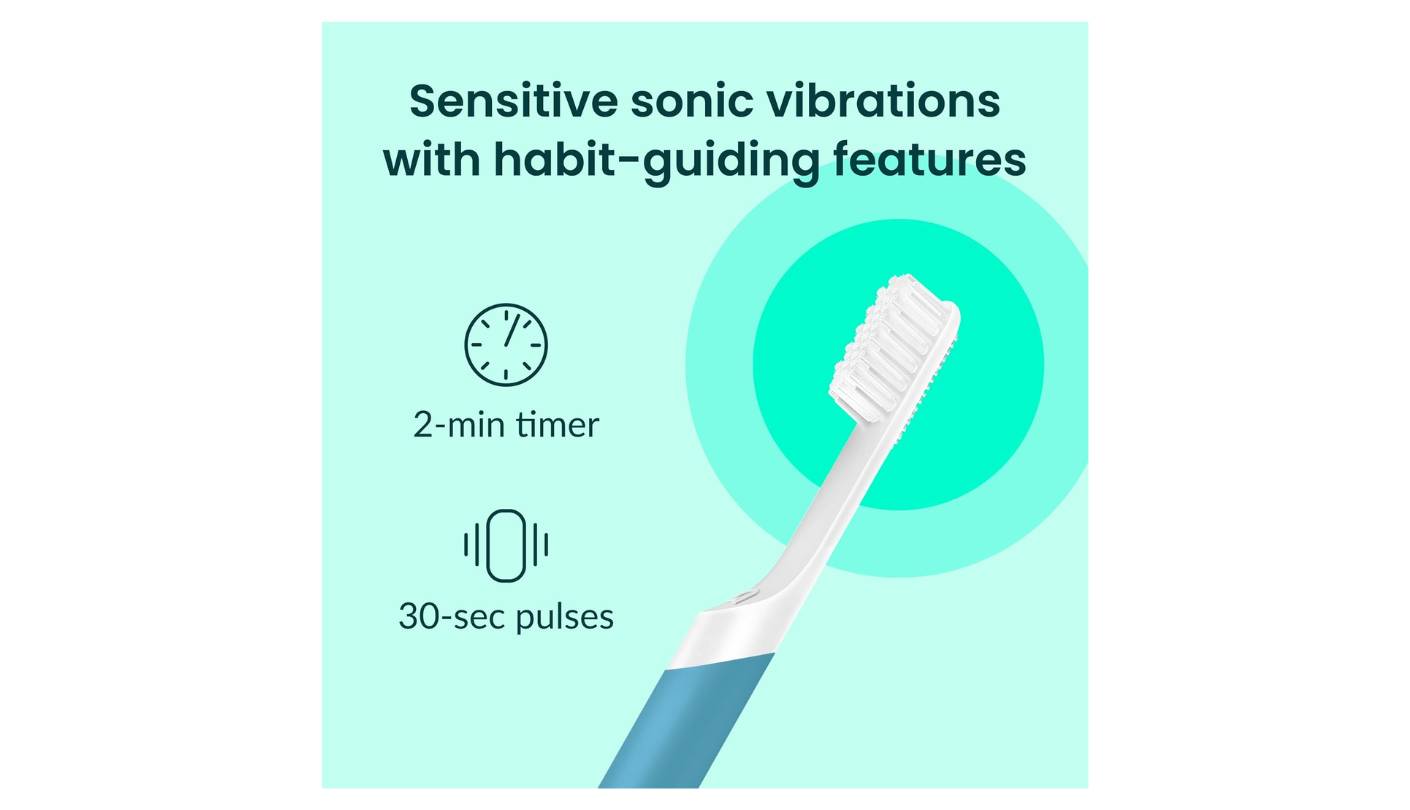
At 15,000 VPM, the motor runs at the gentler end of the sonic frequency range. The ADA acceptance covers the clinical claims - plaque removal efficacy and gingivitis prevention have been independently validated, and the seal is the same standard that Philips and AquaSonic carry. One mode, one button to start, the same button to stop. The 2-minute timer pulses at 30-second intervals to guide the quadrant routine exactly as on more expensive brushes. Setup from unboxing takes under ten seconds. For users who want their oral care routine to involve zero daily decision-making, that simplicity is a genuine design priority rather than a cost-cutting outcome.
The travel cover is what makes the Quip Sonic a fully solved travel package rather than just a small brush. It snaps over the bristle head for in-bag protection. An adhesive backing mounts it to any bathroom mirror or glass surface, holding the brush off the counter. Placed flat with the handle resting in the cup, it becomes a countertop stand. Three functions, one lightweight clip, nothing extra in the bag. The plastic handle at approximately 60 grams is the lightest of the five - narrow enough to fit a toiletry kit without displacing other items and light enough that extended hold during the two-minute routine never becomes fatiguing.
The AAA battery's practical advantage for travel is geographic as much as logistical. A single AAA is available at any pharmacy, airport kiosk, or convenience store in essentially any city worldwide, and the swap takes thirty seconds. No proprietary charging pad to source, no USB-C port to locate, no voltage compatibility to check. For a rechargeable brush to offer equivalent independence, its battery would need to last several months per charge - and only the BURST Pro 2.0 among these five approaches that territory.
The Quip Sonic's honest ceiling is narrow. No pressure sensor, no sensitive mode, and a maximum of 15,000 VPM mean it's not the right answer for users managing active gum disease, heavy calculus history, or a confirmed over-brushing pattern. Those users need the passive pressure correction and mode flexibility that the Sonicare 4100 or BURST Pro 2.0 carry. For users with healthy teeth, correct brushing force, and a need for a brush that disappears into a bag as naturally as a manual toothbrush does, the Quip Sonic is the most frictionless option in this roundup.
Pros:
- 3-month AAA battery
- ADA accepted
- Cover + mirror mount included
- 60g ultralight profile
- One-button operation
Cons:
- Single mode, no sensitivity option
- No pressure sensor
Summary: Quip Sonic is the travel toothbrush problem solved - ADA-accepted cleaning on a three-month AAA battery, a cover that doubles as a mirror mount and stand, and 60 grams total weight. For light-to-moderate daily use and regular travel, it handles both without asking anything of you between trips.
BURST Pro 2.0 Sonic Review
Pro Grade
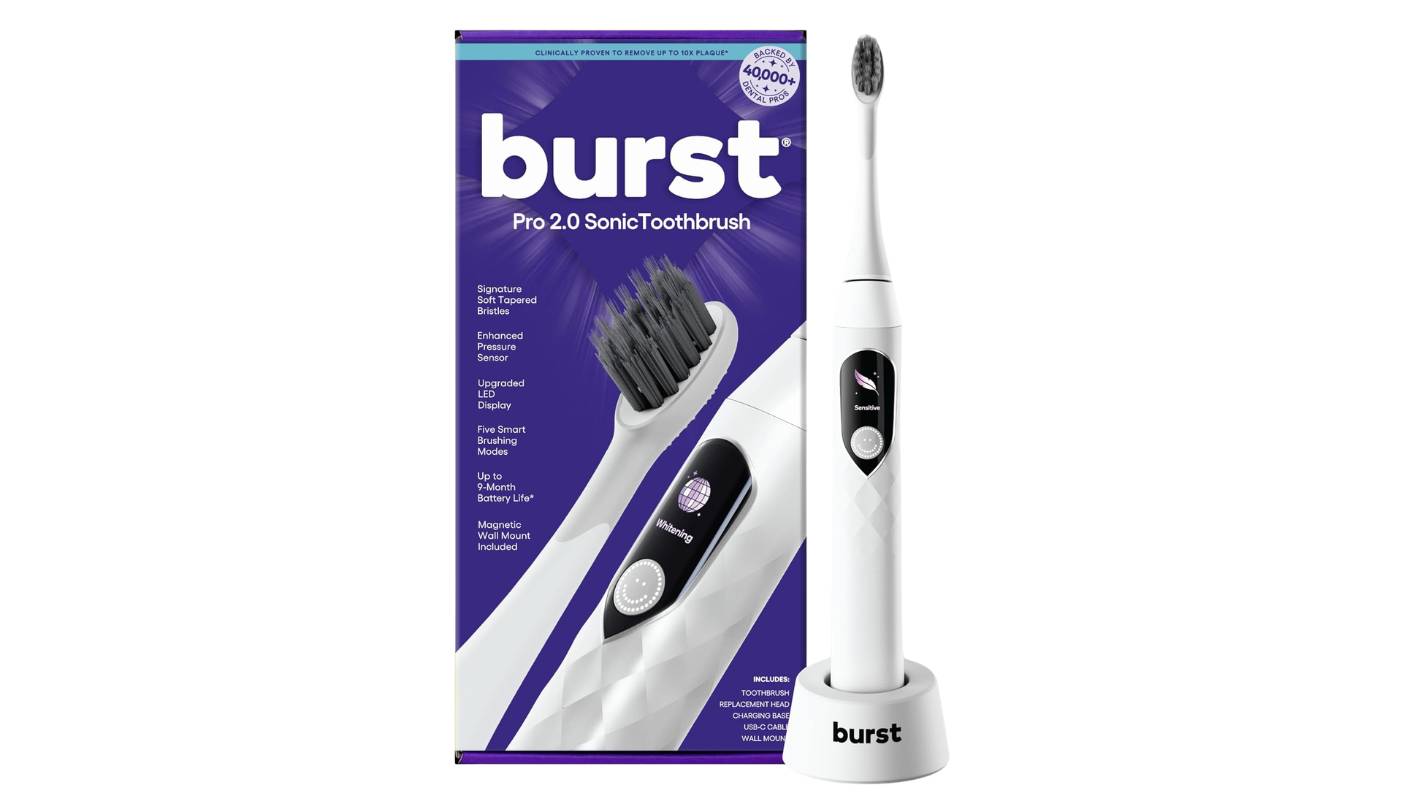
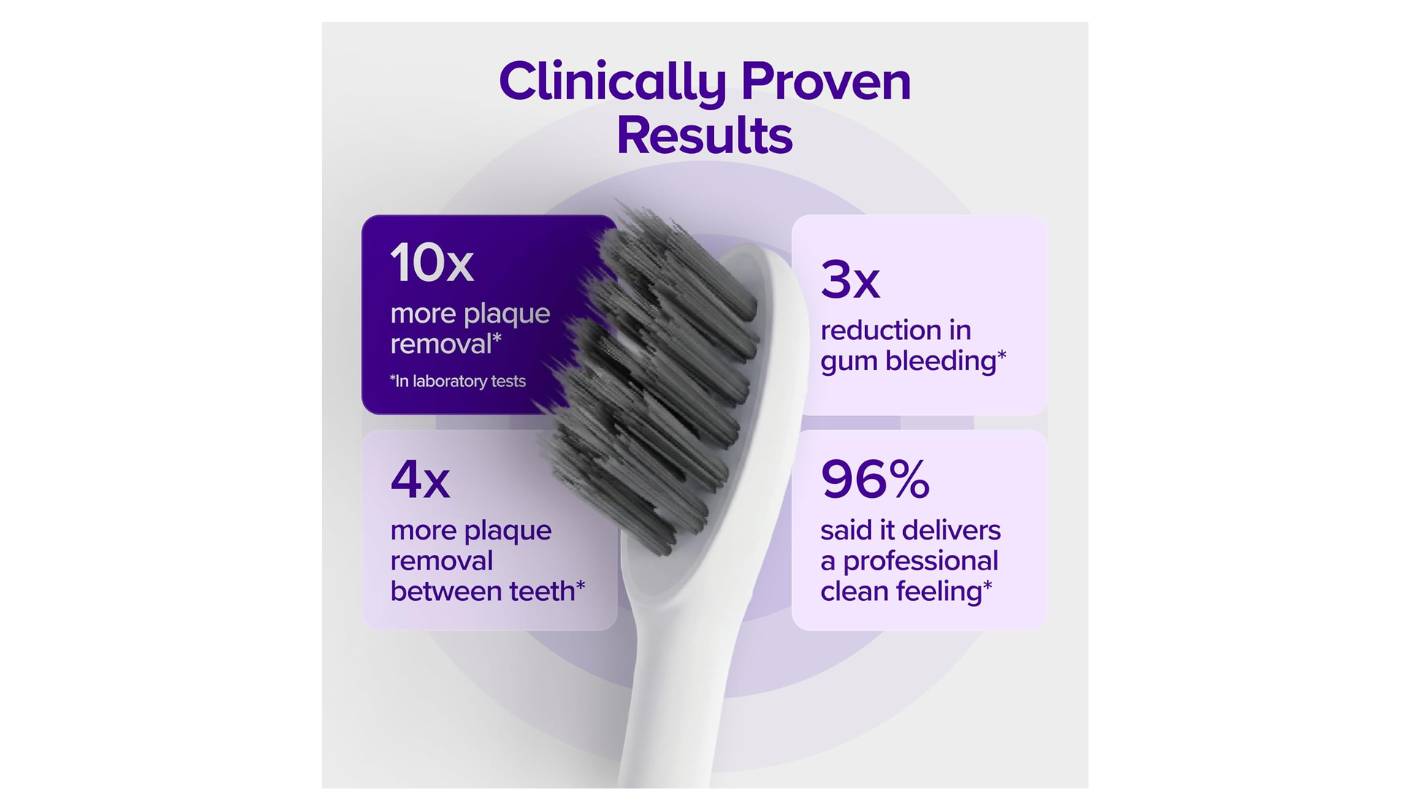
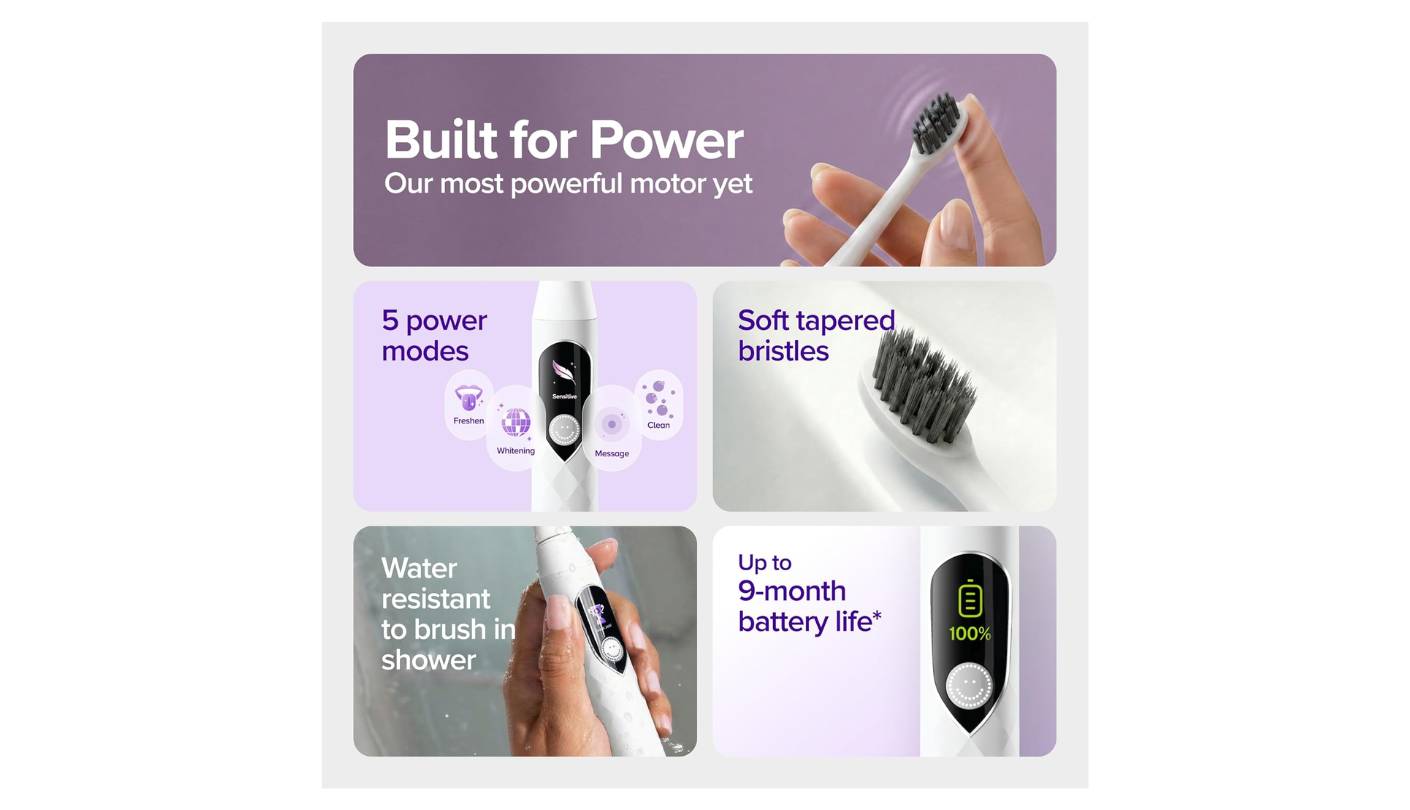
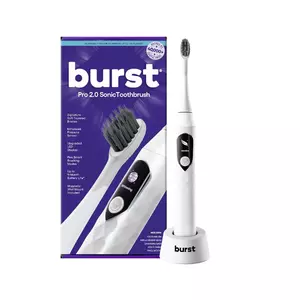
Nine months between charges. When that number came up early in testing, my immediate reaction was skepticism - most rechargeable brushes in this price range run four to six weeks before needing power. But three months of twice-daily use moved the BURST Pro 2.0's battery indicator roughly one-third down from full, and that tracks linearly toward the stated nine-month figure. The battery longevity changes how you think about the brush: closer to how we treat a laptop battery than a phone - something you charge a couple of times a year and otherwise ignore completely.
Five modes cycle through the LED handle display: Whitening, Clean, Massage, Sensitive, and Freshen. Each runs at a distinct intensity and vibration rhythm with real behavioral differences in use. Massage mode at low intensity targets gum circulation rather than plaque - specifically useful for users managing early-stage gingivitis or post-treatment recovery. Freshen is a lighter pass suited to a quick mid-day refresh between full sessions. That range addresses a wider variety of daily oral health states than any other brush tested, which is what makes the five-mode design feel earned rather than padded.
The pressure sensor auto-reduces motor speed on contact rather than lighting an indicator you need to notice - the same passive-correction approach as the Sonicare 4100, and the more useful of the two sensor implementation types present here. Super-soft tapered charcoal-infused bristles on the included head were co-developed with BURST's network of over 40,000 dental professional ambassadors. The taper geometry allows individual bristles to reach just below the gum line while the charcoal compound absorbs surface staining. BURST rates head lifespan at four months rather than the standard three - a minor but genuine reduction in annual replacement frequency.
The magnetic wall mount is a small adhesive disc that holds the brush handle off the countertop with a single snap. No charging cradle, no stand to place, no pad to orient correctly - the brush releases with one pull. USB-C charging connects from any compatible cable already in the bathroom, and the charge from depleted runs for a few hours. For bathroom counters with limited surface area, the wall-mounted storage approach frees space that stand-based brushes occupy permanently.
BURST's head supply chain is the one practical friction point. Replacement heads are primarily available through BURST's own direct channels and subscription program rather than pharmacy shelves, which means restocking requires advance planning rather than a spontaneous purchase. The subscription pricing is reasonable and the logistics aren't complicated - but for users accustomed to grabbing a replacement head at a drugstore, this is a genuine change in habit. If that constraint fits the rest of how you shop for household supplies, the BURST Pro 2.0 is the most feature-complete brush in this roundup by a clear margin.
Pros:
- 9-month USB-C battery
- 5 distinct cleaning modes
- Auto pressure sensor
- Charcoal-infused tapered bristles
- Magnetic wall mount
Cons:
- No retail pharmacy head access
- Subscription-model supply
Summary: BURST Pro 2.0 covers the widest range of daily oral health scenarios across the five models reviewed here - nine months between charges, five modes with genuinely distinct behavior, and a passive pressure sensor. The head supply chain requires ordering ahead rather than a pharmacy run, but nothing else here competes with its battery-and-mode combination.
Electric Toothbrushes Under $100: FAQ
Is Philips Sonicare better than Oral-B iO?
Neither is objectively better - they use different motor technologies that suit different mouths. Sonicare's sonic vibration generates hydrodynamic cleaning that benefits interdental spaces. Oral-B iO's oscillating-rotating motion addresses each tooth surface mechanically and is often easier for first-time users to control. The more practical differentiator is long-term head cost: Sonicare-compatible heads have third-party alternatives that keep replacement costs low, while iO heads are proprietary with no close generic option. At equivalent purchase prices, Sonicare costs less to maintain over three years.
Are cheap electric toothbrushes actually worth buying?
Yes - and the primary reason is behavioral, not mechanical. Most adults brush manually for under 45 seconds. A budget ADA-accepted brush with a 2-minute structured timer and 30-second section alerts produces better clinical outcomes than impeccable technique on an expensive model, because most people don't apply impeccable technique consistently at 6 AM. Every brush in this roundup carries an ADA seal or professional co-development backing and includes a structured timer. The cleaning gap between a $30 and a $100 electric toothbrush is smaller than the gap between any electric toothbrush and no timer at all.
How often should I replace electric toothbrush heads?
Every three months as a baseline, or earlier if bristles visibly splay before that point. Worn bristles reduce cleaning effectiveness by changing the contact angle and reducing per-bristle pressure on tooth surfaces. The Philips Sonicare 4100 handles this passively through its BrushSync chip, which tracks motor-on time and activates a replacement indicator when the head has accumulated enough use - more reliable than a calendar reminder that ignores how long and how hard you actually brush.
What does ADA accepted mean on a toothbrush?
The ADA Council on Scientific Affairs acceptance mark means the brush has been independently tested for plaque removal efficacy and gingivitis reduction - not just cleared for materials safety. Four of the five brushes here carry it. The BURST Pro 2.0 does not, but it was co-developed with over 40,000 dental professionals and carries its own published clinical data. The ADA seal is the most reliable third-party performance validation at this price tier, particularly useful when evaluating brands with shorter market histories.
Can I use an electric toothbrush if I have sensitive gums or braces?
Yes, with the right mode. A Sensitive or Super-Sensitive mode reduces motor intensity to a level most post-treatment users can tolerate from the first session. For braces, low-intensity modes limit pressure on bracket attachment points. The AquaSonic Black Series, Oral-B iO2, and BURST Pro 2.0 each include a mode designed for this. The Sonicare 4100 accesses a lower power level via double-pressing the power button. The Quip Sonic - single mode only - is the least suitable option for users with active gum sensitivity.
Will an electric toothbrush help whiten my teeth?
Electric toothbrushes address surface staining by removing the biofilm and food residue that causes visible yellowing, particularly at the gum line. Dedicated Whitening modes - on the AquaSonic Black Series and BURST Pro 2.0 - use pulsed high-intensity vibration to add a polishing pass to the standard clean. This targets extrinsic staining from coffee, tea, and food pigmentation. It does not alter the intrinsic color of enamel, which requires peroxide-based treatment or a professional procedure.
How long should a good electric toothbrush last?
The motor and handle typically last three to five years with normal daily use. Brush heads are consumables replaced every three months. Rechargeable battery performance degrades gradually after two to three years of regular charge cycles - most users notice shorter run time between charges before any motor issue appears. The Quip Sonic's AAA design sidesteps battery degradation entirely, since each new cell restores full performance. Three years is a reasonable ownership window for a rechargeable brush before battery performance starts affecting the daily routine.
Is it worth getting a brush with more than three modes?
It depends on whether your oral health needs vary. Single users with healthy gums rarely need more than a Daily Clean setting - five modes would mostly go unused. The case for a wider range strengthens in three situations: a household where different users have different sensitivity levels, a personal history of alternating between intensive cleaning and post-treatment sensitivity periods, or a preference to use a Massage mode separately from the daily clean. If none of those apply, single-mode simplicity is a better fit than modes that never get selected.
Choosing the Right Electric Toothbrush Under $100
The consistent finding from testing all five brushes back to back is that the routine gap is larger than the technology gap. A $40 brush used correctly for two full minutes twice a day produces better clinical outcomes than a $100 brush used sporadically or with bad technique - not a marketing caveat, but what shows up in a dental chart. The pressure sensor and structured timer are where results actually live. Everything else is optimization.
Pick the brush that removes friction from your specific weak point. If you travel frequently and lose chargers or forget pads, the Quip Sonic removes that variable entirely with its AAA battery. If you have a history of brushing too hard, the Philips Sonicare 4100 or the BURST Pro 2.0 both passively correct that without requiring you to check an indicator. If first-year value is the priority, the AquaSonic Black Series brings eight heads, wireless charging, four modes, and a travel case in a single purchase at a price that nothing comparable can match. And if you want to experience what the Oral-B iO motor actually feels like before spending more on a higher-tier model, the Oral-B iO2 is where that starts - with honest eyes on the head replacement costs that come with it.

Jim's our tech geek with a mission since February 2023. From movies to video projectors, he knows his stuff and aims to make tech work for you. When he's not geeking out, he's there to guide you through making savvy decisions.


