NASA's New Horizons Wakes Up 5.9 Billion Miles From Earth — and Gets Straight to Work

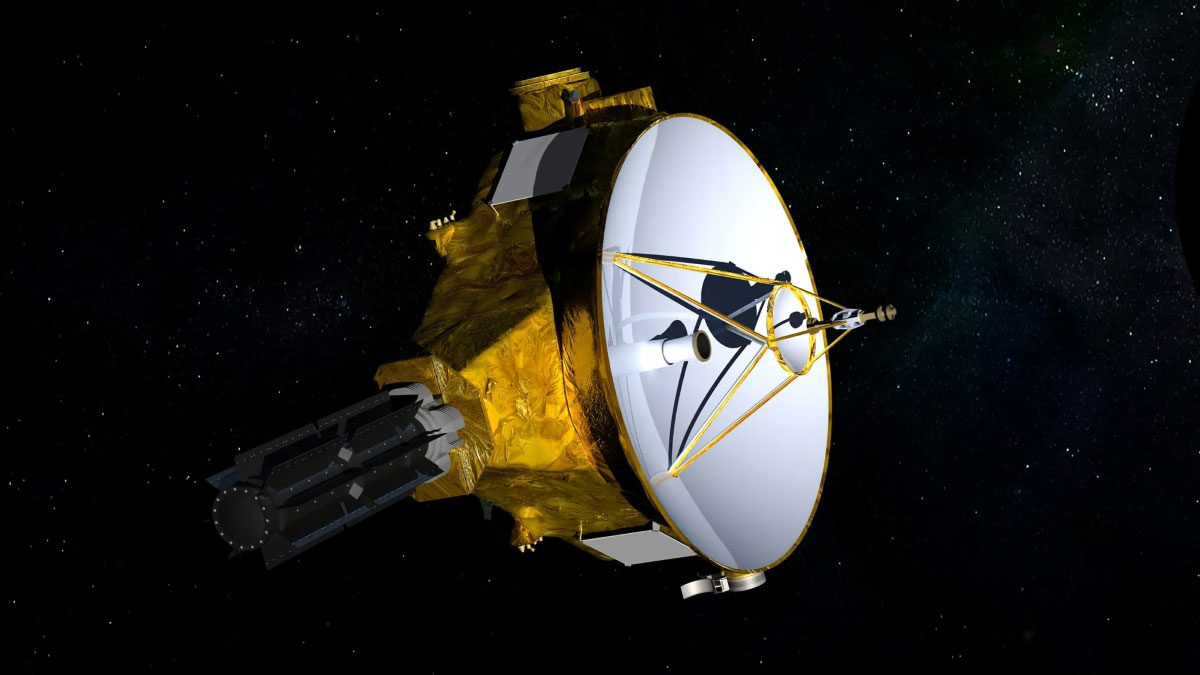
NASA's New Horizons spacecraft woke from a 321-day hibernation on June 23, 2026, at a distance of 9.5 billion kilometers (5.9 billion miles) from Earth. The probe, which launched in 2006 and famously flew past Pluto in 2015, confirmed good health via pre-loaded commands — because at nearly nine hours of signal delay each way, real-time control simply isn't an option. For anyone who cares about what lies at the edge of our solar system, this is the mission that's still out there finding out.
The wake-up
Ground controllers received telemetry confirming all systems were normal, per NASA Science. The spacecraft had been in hibernation since August 2025 — a deliberate choice to conserve power and extend the life of its instruments. New Horizons has now completed 23 hibernation cycles since 2007, each one a test of hardware built to survive extreme cold and radiation with no human intervention.
Within three weeks of waking, the onboard Alice ultraviolet spectrograph will begin mapping hydrogen gas distribution in the outer heliosphere — the region where the Sun's influence fades and interstellar space begins. That boundary is still only roughly understood, and New Horizons is the only active spacecraft positioned to study it from the inside.
The budget fight it survived
The mission's continuation wasn't guaranteed. An early 2025 White House proposal sought to cut New Horizons funding and replace its science team, which would have saved $3–4 million annually. Principal Investigator Alan Stern of the Southwest Research Institute in Colorado publicly opposed the cuts, and 25 scientists signed a protest letter. Congress ultimately rejected the proposal, per Wikipedia, securing the spacecraft's operation as part of the broader $24.44 billion FY2026 NASA budget. A formal mission extension through 2028–2029 had already been announced in September 2023.
What comes next
NASA plans a software upgrade for New Horizons by the end of 2026. The update is designed to optimize power management as the spacecraft's radioisotope thermoelectric generator — its nuclear power source — puts out a little less electricity every year. Every watt saved buys more science time as the probe pushes deeper toward interstellar space, potentially crossing the heliosphere boundary in the 2030s.
New Horizons has already rewritten textbooks: its 2015 Pluto flyby revealed a geologically active world, and its 2019 visit to the Kuiper Belt object Arrokoth remains the most distant close-up encounter in history. What it sends back next could redefine where our solar system ends.


