Xiaomi's HyperOS 4 lets two phones share calls and texts — but not yet outside China

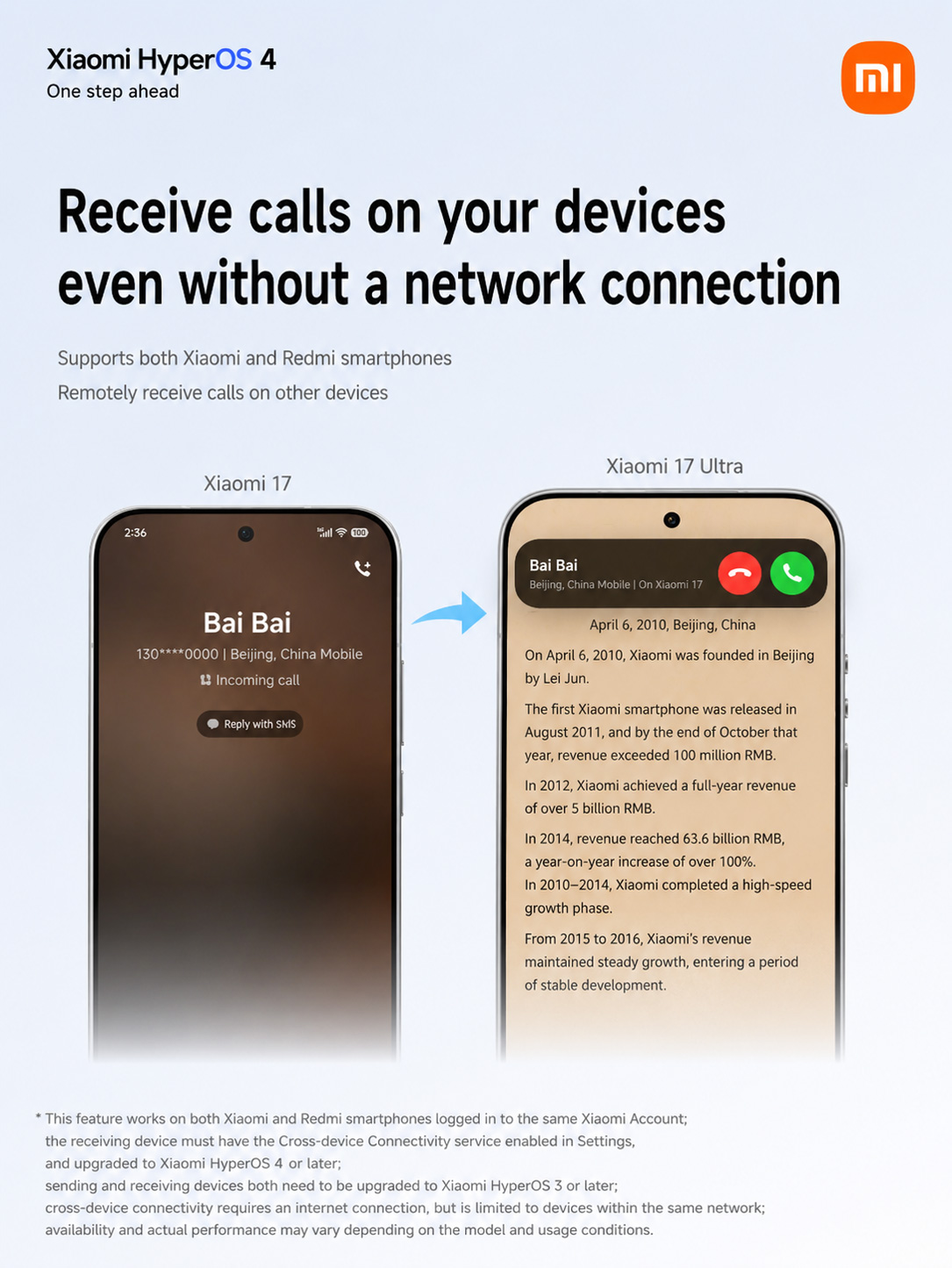
Xiaomi's latest software update adds a feature that lets two of its phones share incoming calls and text messages — effectively letting one handset stand in for the other. It's available right now in China, but there's no confirmed date for the US, UK, or any other market.
What it does
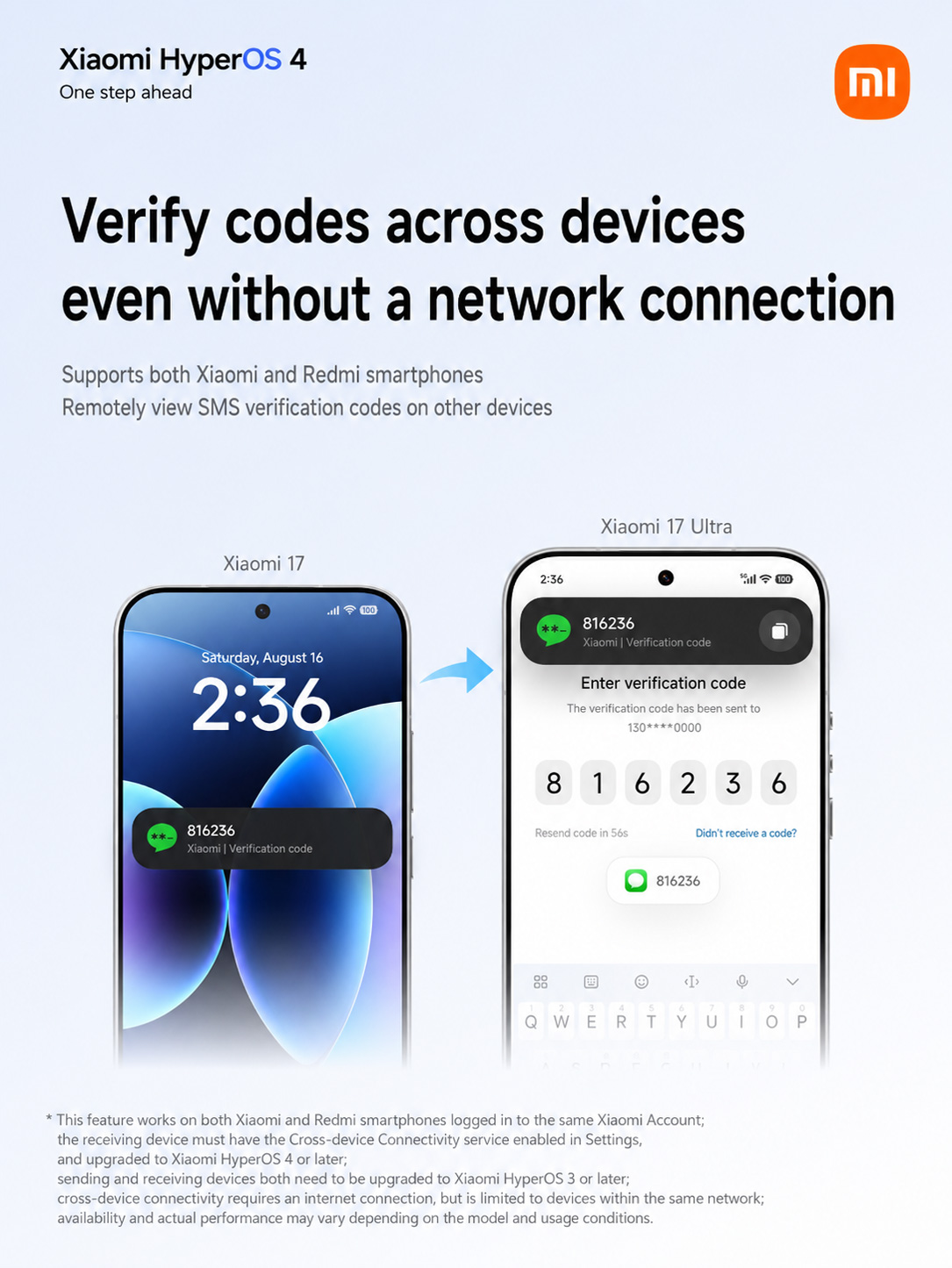
The feature, part of HyperOS 4, routes incoming calls and SMS verification codes from one Xiaomi or Redmi phone to another — even when they're on different mobile networks. So if your main phone is charging in another room, a second Xiaomi device can ring in its place. It works across phones tied to the same Xiaomi account, as long as both have a stable internet connection and data sharing is enabled in settings.
There's a version requirement: at least one device needs HyperOS 4 or newer, while the secondary phone can run the older HyperOS 3. That's a practical nudge to get users to upgrade at least one device.

Where things stand globally
Beta testing kicked off in China on August 14, with a second wave of testers invited on August 26 as Xiaomi expanded compatible model support. The concept closely echoes Apple's Continuity — a feature Apple has refined over years to let iPhones, iPads, and Macs share calls and messages seamlessly.
According to the miuiROM HyperOS 4 Tracker, EU test builds exist on Xiaomi's servers but haven't been made public, and no global launch date has been announced. October 2026 is the earliest credible estimate for an international rollout, though even that isn't official.
The competitive pressure
Xiaomi is pushing these ecosystem features at a tricky moment. The Galaxy S26 Ultra was the best-selling Android phone globally in Q2 2026, according to Counterpoint Q2 2026 Rankings — the first time an ultra-premium Android device has led a second quarter. That puts pressure on Xiaomi to deliver polished, cross-device experiences that can compete not just with Samsung's own ecosystem, but with the deeply entrenched Apple Continuity setup that many UK and US users already rely on.
Beyond call routing, HyperOS 4 also brings a new Soft Light Glass visual style, 18% faster app loading compared to HyperOS 3, and a redesigned AI assistant built on Xiaomi's MiMo language model. For now, though, the most headline-grabbing feature stays locked to China — and anyone outside that market will need to wait for Xiaomi to announce a proper rollout plan.


