OpenAI added virtual pets to Codex — but UK and EU developers are locked out

OpenAI has added optional animated virtual pets to its Codex app — and if you're in the US, you can try them right now. The feature is live on Windows and macOS as of May 1–2, 2026, but it's explicitly blocked in the UK, the EU, and Switzerland at launch, with no explanation or rollout date from OpenAI.
The pets
These aren't decorative screensavers. Each pet acts as a floating status overlay, showing which task Codex is currently running, whether it's waiting on input, or when a job is done — without forcing you to switch windows. Think of it as a progress indicator with a face.
Eight built-in pets come ready to use. Type `/pet` to summon or hide one; use `/hatch` to generate a custom character using AI. Early users have already created fantasy creatures and, inevitably, Clippy recreations. Unlike the original Microsoft Clippy — which was an UX irritant that appeared uninvited — these companions are opt-in and task-functional.
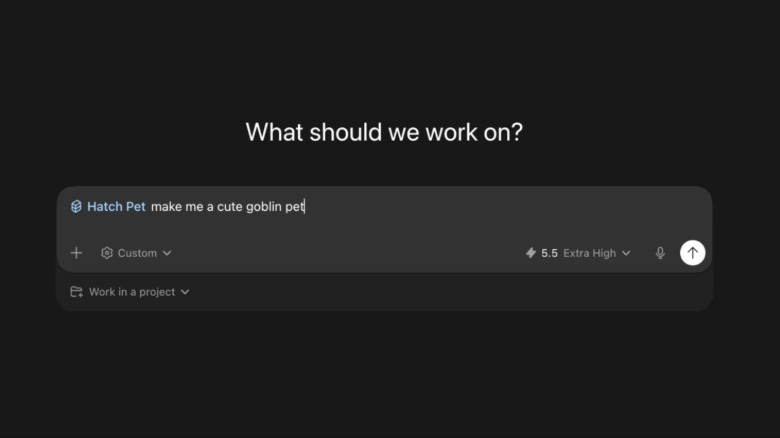
Codex virtual pets appear as floating overlays, tracking task status without interrupting your workflow.
OpenAI is also running a short contest: the creators of the ten most popular custom pets win 30 days of ChatGPT Pro. Details are thin on how winners are judged, but the `/hatch` command is the entry point.
The block
The feature is confirmed unavailable in the EEA, the UK, and Switzerland at launch, per OpenAI Codex Settings Docs. OpenAI has not said whether the hold is tied to GDPR data-handling, the EU AI Act, or something else entirely. The company has a pattern of delayed EU rollouts — memory features and Computer Use both arrived late in the region — but this is the first time a relatively simple UI element has hit the same wall.
For US developers, it's a free, optional feature worth a look if you use Codex regularly. For developers in Britain and Europe, there's nothing to do but wait for an announcement that hasn't come yet. Engadget has a solid overview of how the feature works in practice.


