Best Over-Ear Headphones for Work
The over-ear headphones I bought in 2019 for coffee-shop work look almost quaint next to what's on the market in 2026. Battery life has nearly doubled, ANC has gotten dramatically better at cutting office HVAC and chatter rather than just airplane drone, and call mics no longer turn your voice into a robot. I've spent the last ten months rotating five of the most respected over-ear headphones through daily desk work, hybrid office days, and a fair amount of train and plane travel - close to seventy hours per pair across calls, focus sessions, and music listening - and the gap between a good pair of work headphones and the wrong pair shows up faster than you'd think.
The five models in this roundup span the realistic range of what someone working from a desk actually needs. From a 60-hour battery champion that disappears on your head to the pair with the most refined active noise cancelling on the market, each one earned its place through real meetings and real focus blocks rather than a controlled listening room. Here are the best over-ear headphones for work right now, with the specific quirks I noticed during daily use.
If you're in a hurry, here are my top two picks for over-ear headphones for work:
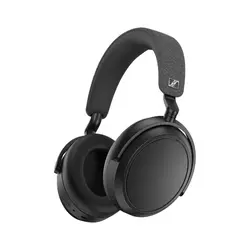
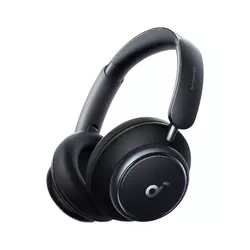
Table of Contents:
- Best Over-Ear Headphones for Work: Buying Guide
- Top 5 Over-Ear Headphones for Work in 2026
- Headphones Comparison Table
- Sennheiser Momentum 4 Wireless
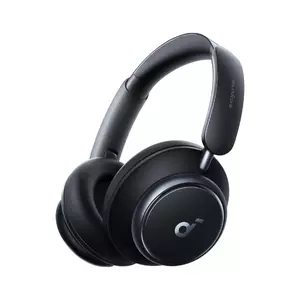
- Soundcore by Anker Space Q45
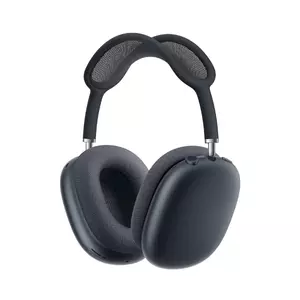
- Apple AirPods Max
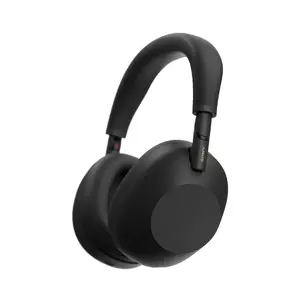
- Sony WH-1000XM6
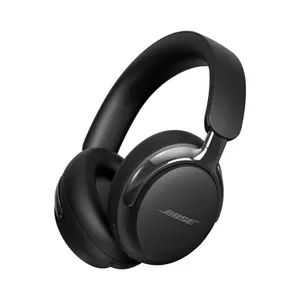
- Bose QuietComfort Ultra Headphones (2nd Gen)
- Over-Ear Headphones for Work: FAQ
Best Over-Ear Headphones for Work: Buying Guide
Sound Quality and Drivers
Driver size and tuning matter more than any spec on the box, and that's the first place I look when evaluating headphones for desk work. A 40 mm to 42 mm dynamic driver in a closed-back cup, like the one on the Sennheiser Momentum 4 or the Soundcore Space Q45, hits the sweet spot for music, podcasts, and call audio without any one of those use cases falling apart. Smaller drivers like the 30 mm carbon-fiber units in the Sony WH-1000XM6 trade a bit of low-end body for tighter bass control and faster transient response, which I find better for vocal-heavy podcast listening but less generous on bass-driven tracks.
Tuning is the part of sound that specs can't tell you. A balanced, slightly warm signature with a small mid-bass lift sits well across both music and speech, while a bass-heavy V-shape can muddy dialogue in podcasts and Zoom calls. Most flagship work headphones now ship with adjustable EQ, so the out-of-box tuning matters less than how flexible the app is.
Codec support is the other half of sound quality, and it's where Bluetooth headphones still split into camps. LDAC on the Sony and Soundcore lets Android users push higher bitrates over Bluetooth, while aptX Adaptive on the Sennheiser holds up well on Windows laptops with the right dongle. Apple's AirPods Max sticks to AAC over Bluetooth but added lossless audio over USB-C in the 2024 refresh, which I use when I want the cleanest signal from a MacBook. For most calls and music streaming, AAC is plenty - if you care about high-bitrate playback from a phone, codec support is worth checking before you buy.
Active Noise Cancellation
ANC quality is the spec that changes the most from year to year, and the gap between a 2026 flagship and a 2022 model is bigger than I'd expect. The Bose QuietComfort Ultra (2nd Gen) and Sony WH-1000XM6 currently sit at the top of the heap, with the AirPods Max close behind. Bose's ActiveSense system reads the environment and adjusts cancellation strength on the fly, while Sony uses an Adaptive NC Optimizer that adjusts for things like wearing glasses or a hat. Both produce dead silence on planes and in cafes, with only a faint hiss audible in absolute quiet.
Mid-tier ANC on the Sennheiser Momentum 4 and Soundcore Space Q45 handles steady noise like fans, air conditioning, and traffic well but lets through more sudden sounds. In my open-plan coworking space, the Bose blocks neighboring conversations almost entirely while the Soundcore reduces them to a low murmur. Pay attention to ANC behavior on voices specifically - low-frequency noise is easier to cancel than the human voice, and the difference between flagships often comes down to how much chatter still bleeds through. Transparency or aware modes also vary widely, and Apple's transparency on the AirPods Max is the most natural I've used and the one I rely on for quick desk conversations.
Battery Life and Charging
Battery numbers on headphones are easier to compare than on most gadgets because manufacturers test fairly consistently. With ANC on, the Sennheiser Momentum 4 hits 60 hours, the Soundcore Space Q45 reaches 50 hours, the Bose QuietComfort Ultra and Sony WH-1000XM6 both clock 30 hours, and the AirPods Max runs about 20 hours. I've validated those numbers across roughly two months of mixed daily use per pair, and the Sennheiser is the only one that's let me forget about charging for over a week.
Fast-charge specs are where battery life really earns its keep. Five minutes on the Soundcore returns four hours of listening, three minutes on the Sony returns three hours with a USB-PD charger, and Bose's 15-minute quick charge buys roughly two and a half hours. For a workday where I forgot to charge overnight, those numbers matter more than the headline runtime.
Charging while listening is a small but meaningful update on the Sony WH-1000XM6 and Bose QuietComfort Ultra (2nd Gen). On previous generations of both, you couldn't use the headphones during a USB charge - now you can, which means a battery pack in your bag becomes a viable backup on a long flight. The AirPods Max charges over USB-C since the 2024 refresh, ditching Lightning, and supports lossless audio over the same cable. Wired audio over USB-C is also now available on the Bose, but the Sony WH-1000XM6 still won't pass audio over USB-C, which is the one frustrating omission on an otherwise polished flagship.
Comfort and Build
Comfort is the one spec you can't skim from a listing - it's a fit issue first and a materials question second. Lighter pairs like the Sony WH-1000XM6 (254 g) and the Bose QuietComfort Ultra (around 250 g) almost vanish on my head over a four-hour focus block. The Sennheiser Momentum 4 sits at 293 g with a slightly higher clamping pressure, and the AirPods Max is the heavy outlier at 384 g - that aluminum chassis adds weight you feel after an hour, and my ears get warmer in the leather-and-mesh pads compared to the synthetic leather on the Sony.
Build quality and durability matter more for headphones that travel between desk and bag. The all-aluminum AirPods Max body and the brushed metal yokes on the WH-1000XM6 feel like they'll outlast their plastic-bodied competitors, and plastic isn't automatically a flaw - the Soundcore Space Q45 has aluminum hinges in a mostly plastic frame and feels more durable than its price tier suggests. Folding designs on the Sony and Sennheiser fit smaller cases for travel, while the AirPods Max and original-design Bose pairs use a slimmer non-folding shape that slips into a backpack pouch but takes more room than a folded competitor.
Microphones, Multipoint, and Software
Call quality is where work headphones earn their place over consumer-only models. The Sony WH-1000XM6 uses 12 microphones with AI-driven beamforming, and on calls my voice comes through clearly even in a noisy cafe. The Bose QuietComfort Ultra (2nd Gen) has 10 mics with SpeechClarity processing that does similar work. The AirPods Max sounds clean for calls but struggles in wind. The Sennheiser and Soundcore both use four-mic arrays that handle quiet rooms well but raise the noise floor when ambient sound climbs.
Multipoint Bluetooth is the feature I'd refuse to give up. Connecting to a laptop and a phone at the same time, with calls routing automatically to whichever device is ringing, removes the daily friction of manual reconnecting. All five headphones in this roundup support multipoint, but the Sony and Bose handle handoffs the most cleanly in my experience.
Companion apps are where features either land or don't. Sony's Sound Connect app is the deepest, with a 10-band EQ, scene-based listening, and adaptive sound control - useful but cluttered. Bose's app is cleaner but offers only a 3-band EQ. Sennheiser's Smart Control Plus has a parametric EQ and Sound Personalization that tunes audio based on your hearing. Soundcore's app gives you a custom EQ, Wind Reduction, and adaptive ANC levels. Apple keeps things minimal in iOS settings rather than a separate app, which I find refreshing on a Mac but limiting compared to the Sony or Sennheiser apps.
Top 5 Over-Ear Headphones for Work in 2026
These five over-ear headphones went through real meetings, real focus sessions, and real commutes in my daily workflow rather than synthetic listening tests, and the differences I describe come from how they performed under normal use rather than from spec sheets alone.
- Audiophile-grade sound
- Class-leading 60-hour battery
- Lightweight comfortable build
- aptX Adaptive support
- Parametric EQ app
- Strong 50-hour battery
- LDAC codec support
- Five-level adaptive ANC
- Solid metal-hinged build
- Custom EQ app
- Top-tier transparency mode
- Apple ecosystem integration
- Premium aluminum build
- USB-C lossless audio
- Spatial Audio head tracking
- Class-leading ANC
- 12-mic call array
- Refined natural sound
- Comfortable lightweight build
- 10-band custom EQ
- Best-in-class ANC
- Light comfortable design
- USB-C lossless audio
- Strong call mics
- Refined Cinema Mode
Headphones Comparison Table
Here's how the five headphones compare across the specifications that affect work use most directly:
| Specification | Sennheiser Momentum 4 | Soundcore Space Q45 | Apple AirPods Max | Sony WH-1000XM6 | Bose QC Ultra (2nd Gen) |
| Drivers | 42 mm dynamic | 40 mm double-layer | 40 mm dynamic | 30 mm carbon fiber | Dynamic |
| Battery (ANC on) | 60 hours | 50 hours | 20 hours | 30 hours | 30 hours |
| Bluetooth | 5.2 | 5.3 | 5.0 | 5.3 | 5.4 |
| Codecs | SBC, AAC, aptX, aptX Adaptive | SBC, AAC, LDAC | AAC (Bluetooth), USB-C lossless | SBC, AAC, LDAC | SBC, AAC, aptX Adaptive |
| ANC | Adaptive ANC | Adaptive 5-level ANC | Pro-level ANC | QN3 + 12 mics | ActiveSense, 10 mics |
| Microphones | 4 MEM mics | 2 mics + AI | 9 (8 ANC, 1 voice) | 12 mics + AI | 10 mics + SpeechClarity |
| Wired audio | 3.5 mm | 3.5 mm | USB-C lossless | 3.5 mm | 2.5 mm + USB-C |
| Multipoint | Yes (2 devices) | Yes (2 devices) | Apple ecosystem auto-switching | Yes (2 devices) | Yes (2 devices) |
| Folding | Fold-flat | Fold-flat | Non-folding | Fold and flat | Fold-flat |
| Weight | 293 g | 293 g | 384 g | 254 g | ~250 g |
From real desk and travel use, the specs that most directly translate into how these headphones feel on a long workday are weight, battery life, and ANC quality. Driver size and codec support matter for music listening on the side, but for the realities of meetings, focus sessions, and commuting, comfort and noise rejection are the differences you actually notice.
Sennheiser Momentum 4 Wireless Review
Editor's Choice
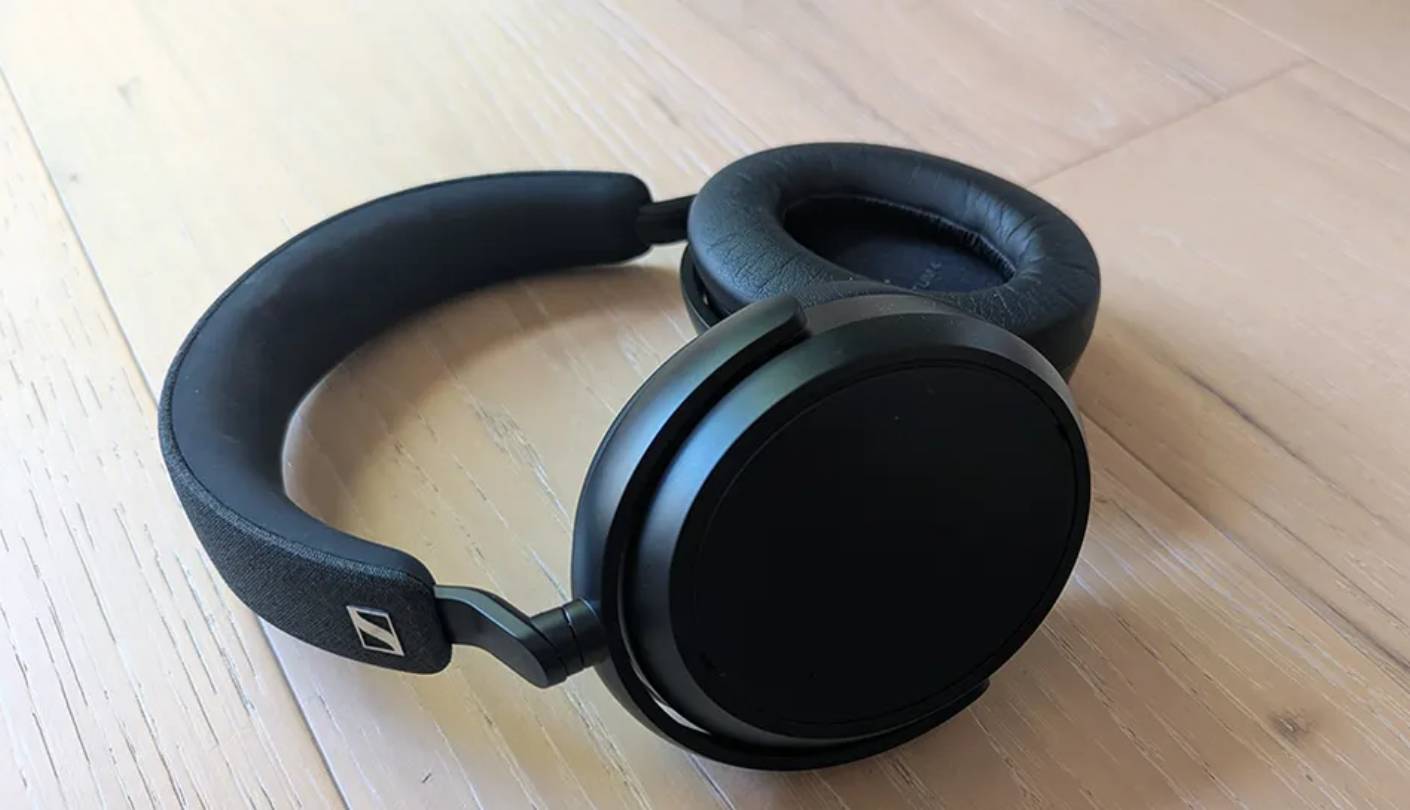
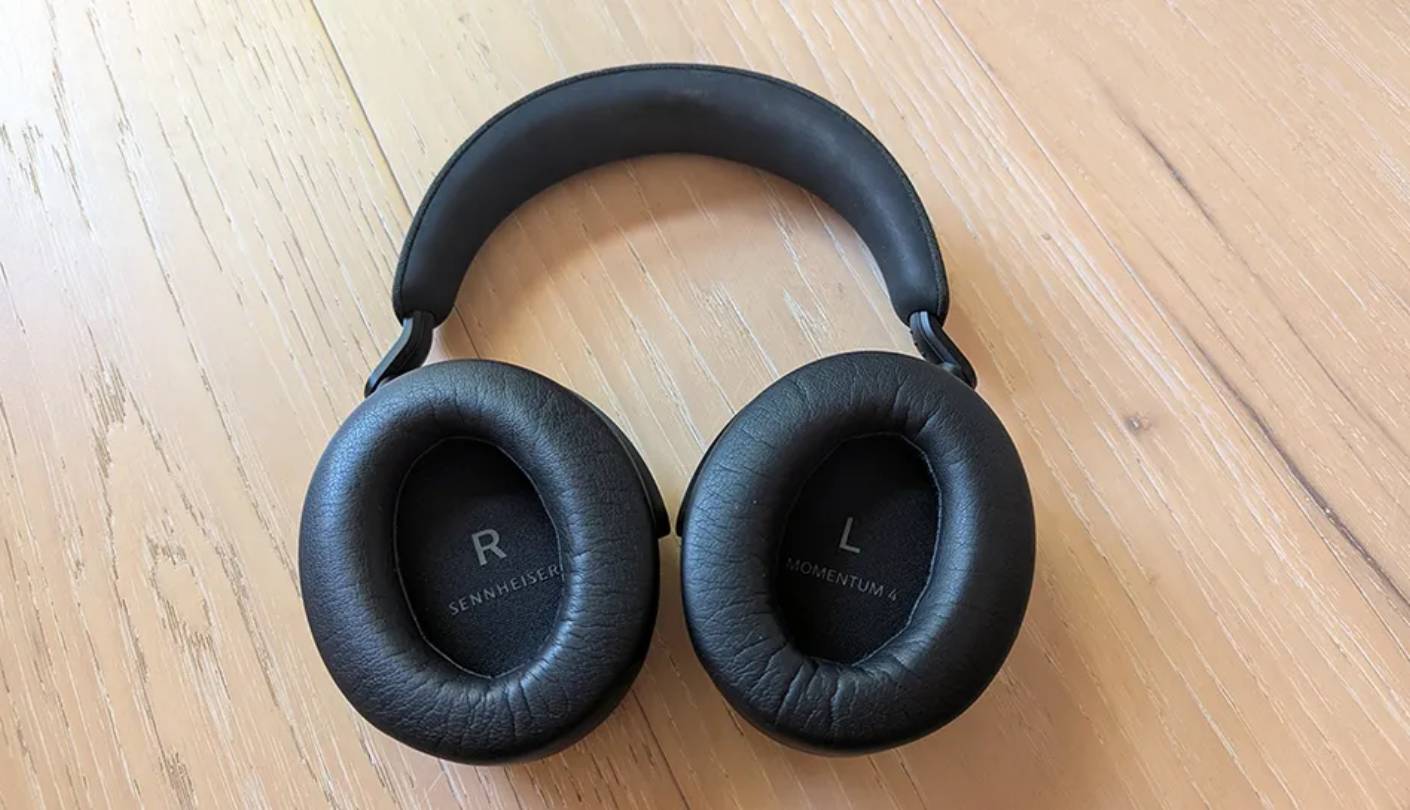
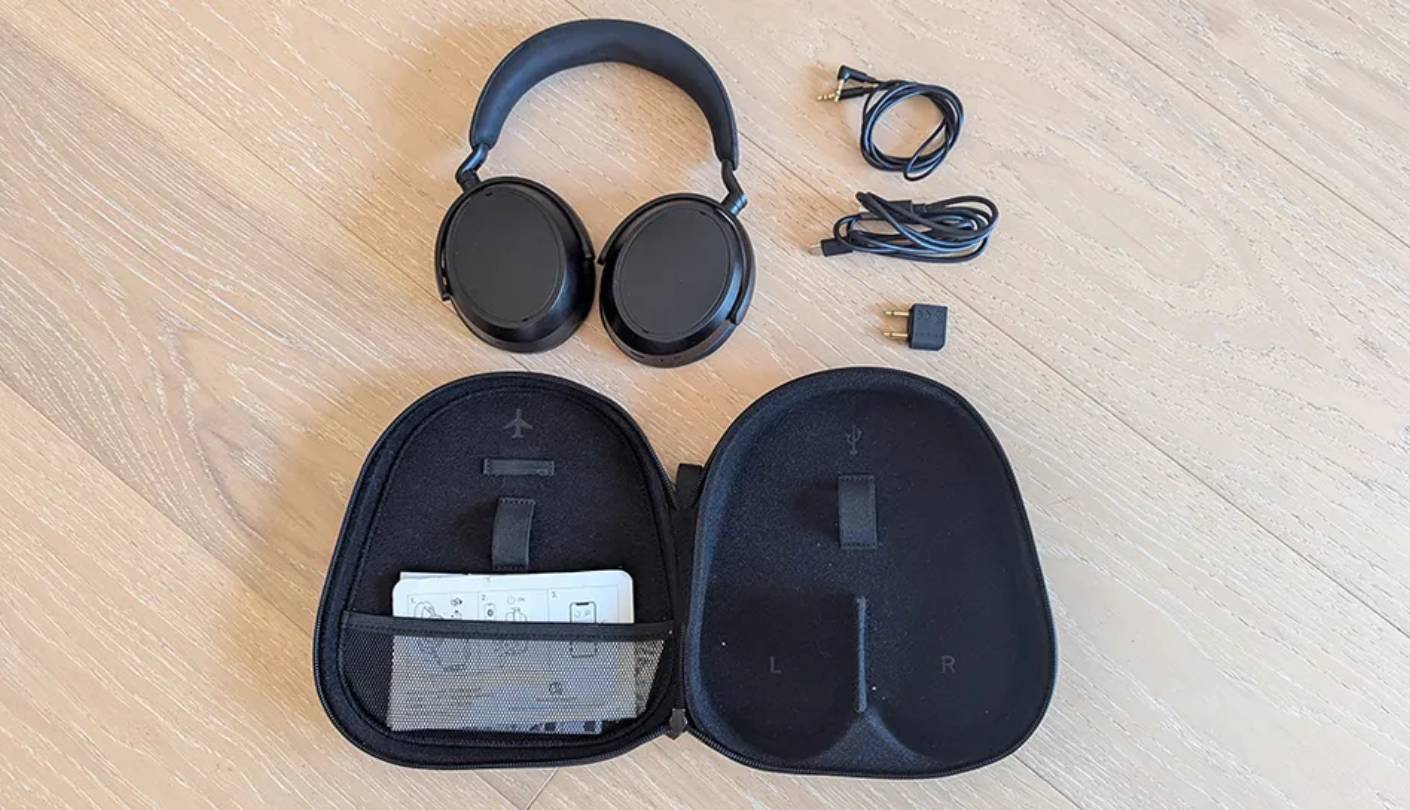
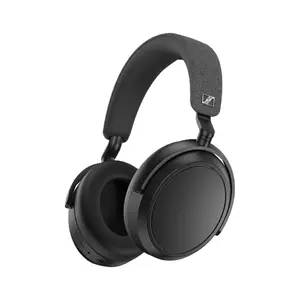
The Sennheiser Momentum 4 Wireless earned my Editor's Choice spot for one main reason - the sound. Across ten weeks as my main work pair through calls, focus blocks, and evening music sessions, I've reached for them more than any other headphones in this group when audio quality matters. The 42 mm transducers carry Sennheiser's signature warmth without sliding into the muddy bass that plagues a lot of consumer ANC headphones, and the soundstage feels wider than the closed-back design has any right to feel.
Battery life is where the Momentum 4 puts daylight between itself and every other flagship in this group. 60 hours with ANC on is roughly double the Sony or Bose, and I've gone over a week of mixed work and music use without thinking about charging. A five-minute fast charge returns about four hours of playback, which has saved me on more than one morning when I forgot to plug them in. Bluetooth 5.2 with aptX Adaptive, AAC, and SBC covers the main codec bases, and the 3.5 mm jack with included cable lets you use them passively when the battery does eventually drain.
Build is the area where the Momentum 4 stepped back from the retro look of the Momentum 3, and that change drew complaints at launch but has aged well in daily use. The minimalist plastic body and fabric headband feel less premium than the AirPods Max or Bose at first touch, but the lightweight design and low-friction hinge mean my head doesn't notice them after the first hour. Fold-flat earcups slide into the included carrying case for travel, and the 293 g weight sits in the middle of this group. Capacitive touch controls on the right earcup handle play, pause, ANC toggle, and volume cleanly enough, though I occasionally double-tap by mistake.
Adaptive Noise Cancellation is the one area where the Momentum 4 doesn't lead the pack. It handles steady office noise, traffic, and HVAC well, but the Bose QuietComfort Ultra and Sony WH-1000XM6 cancel more chatter and sudden sounds. Transparency mode is good without being best-in-class - the AirPods Max still has the most natural pass-through. The four-mic array handles call audio acceptably but isn't the strongest feature here. For solo focus work in moderately quiet rooms, the ANC is more than enough, but if you commute through a packed subway every day, the top-tier pairs will block more noise.
The Smart Control Plus app rounds out the package with a parametric EQ, sound modes, and a Sound Personalization feature that tunes audio to your hearing profile. The trade-offs are honest - ANC behind the leaders, plastic body that doesn't feel premium, and a four-mic array that's middle of the road on calls. None of those overrode the Sennheiser sound for me. For users who care about audio quality first, want a 60-hour battery to forget about charging, and don't need the absolute best ANC in the category, the Momentum 4 is the most balanced pick for daily work use.
Pros:
- Audiophile-grade sound
- Class-leading 60-hour battery
- Lightweight comfortable build
- aptX Adaptive support
- Parametric EQ app
Cons:
- Mid-pack ANC
- Average call mics
Summary: Sennheiser Momentum 4 Wireless is the audiophile pick of this roundup, pairing 42 mm transducers with 60-hour battery life and clean Sennheiser tuning. The right pick for users who care about sound quality and runtime above the absolute best ANC.
Soundcore by Anker Space Q45 Review
Best Overall
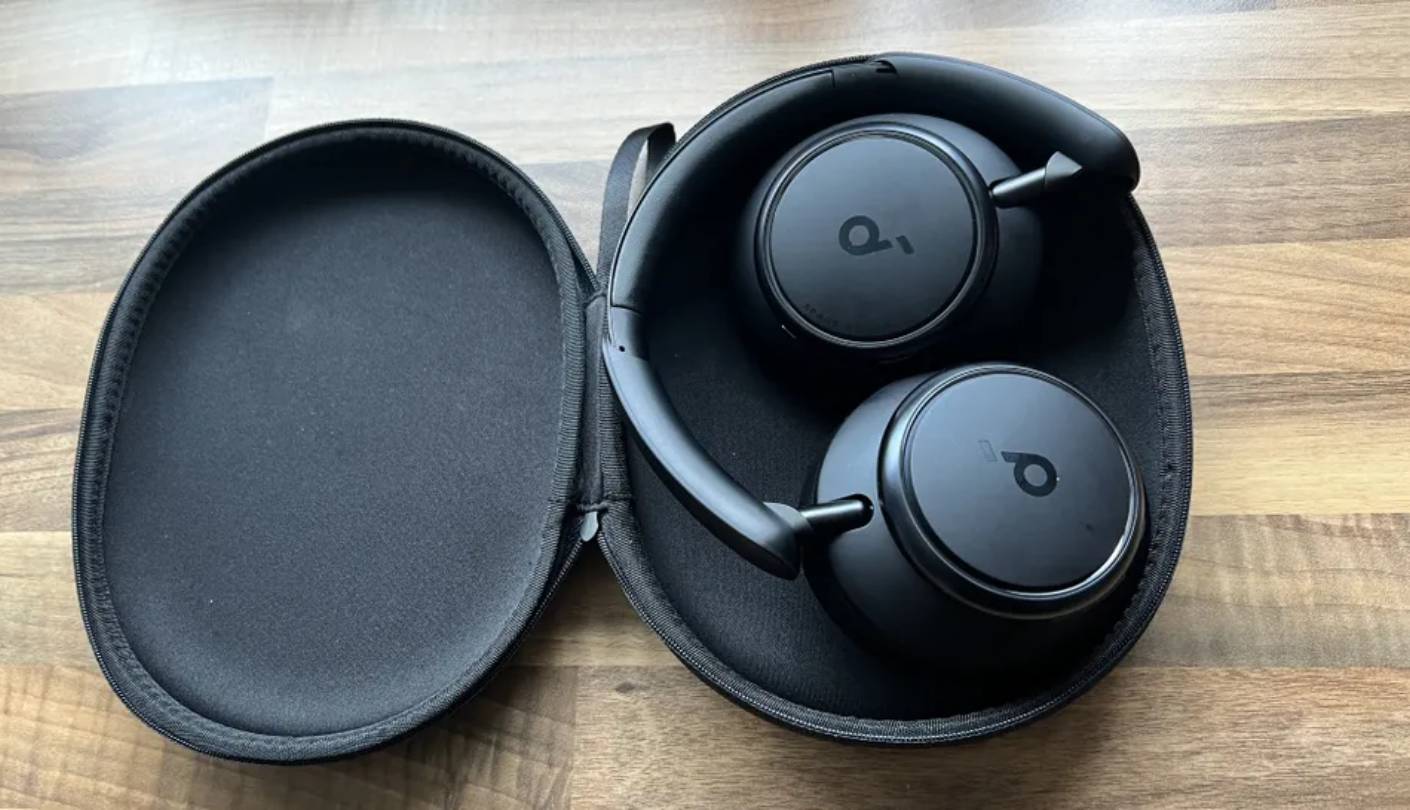
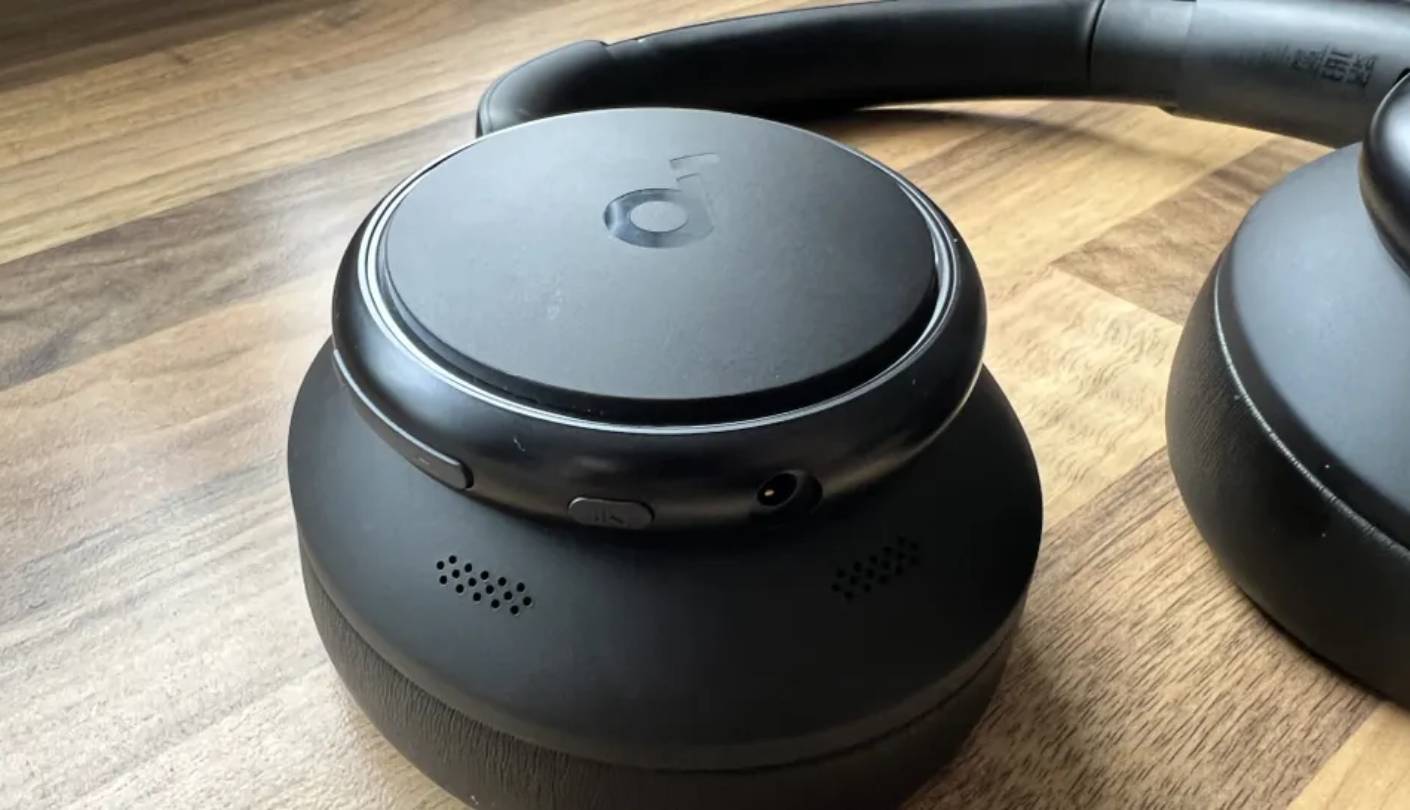
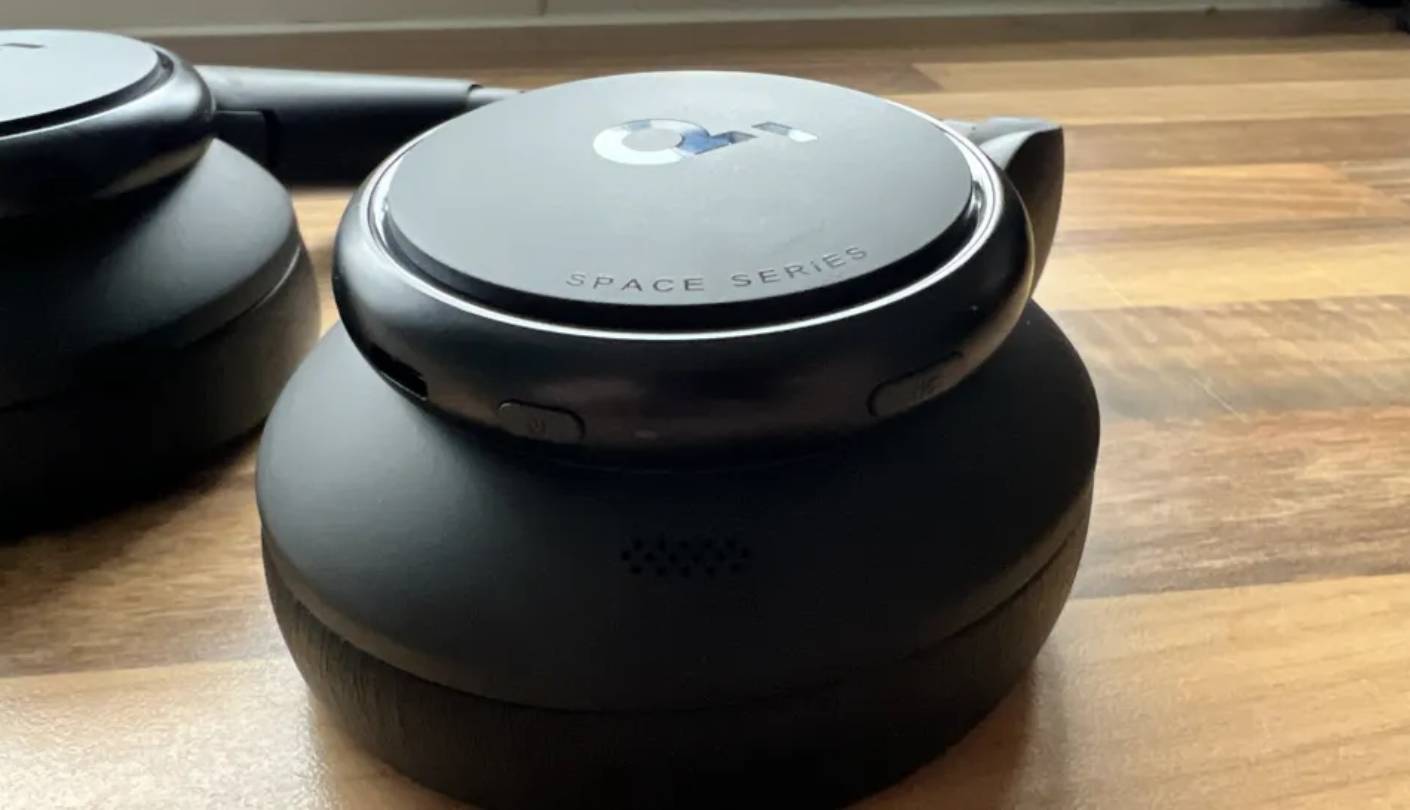
The Soundcore by Anker Space Q45 is the headphone I recommend to friends who want a meaningful upgrade without paying flagship money. Three months in - carrying them as my travel pair and lending them out to two coworkers for back-to-back tests - I keep coming back to the same conclusion. This is the most balanced budget headphone for desk work in 2026. 50 hours of ANC playtime, LDAC support, and a sound profile that's gotten more refined through firmware updates make the Q45 one of the easiest "best overall" picks in the category.
The 40 mm double-layer diaphragm drivers (silk and ceramic) carry a fun sound signature that emphasizes bass without drowning the mids. Out of the box, the tuning leans warm with a small mid-bass lift, which I prefer for podcasts and pop. Audiophiles will find the bass a touch loose and the vocals slightly recessed compared to the Sennheiser, but the in-app custom EQ fixes most of that with a few clicks. LDAC support is the headline codec feature, letting Android users push higher bitrates for music streaming, and the Q45 also covers SBC and AAC for everyone else.
Active noise cancellation on the Q45 is solid for the price tier even if it doesn't compete with the Bose or Sony flagships. Five manual ANC levels plus an Adaptive mode let me match cancellation strength to the room, and on a recent flight the Q45 kept the engine drone down to a faint hum. In an open office, voices still came through more clearly than I'd like at max setting, but background HVAC and street noise dropped substantially. The transparency mode has five levels too, with a Speech mode that boosts voices for quick conversations - a nice extra at this price.
Build quality punches above the price tier. Aluminum hinges, thick-plastic yokes, and synthetic leather pads feel more durable than the all-plastic competition in the same range. At 293 g the Q45 sits in the middle of this group, and over a 4-hour writing session my ears stayed cool. Fold-flat earcups fit a compact carrying case, and the 3.5 mm jack on the right cup adds passive playback when the battery dies. The two omnidirectional mics with AI noise cancellation handle calls acceptably in quiet rooms, with the trade-off that aggressive cancellation can introduce slight artifacts on consonants in noisier settings.
Battery life is the second standout. 50 hours with ANC on or 65 hours without, validated in my own testing across daily use, plus a five-minute fast charge that returns four hours of playback. Bluetooth 5.3 with multipoint, USB-C charging, and the Soundcore app round out the package. The trade-offs are mid-tier ANC, mics that artifact under stress, and a sound that's enjoyable rather than analytical. For users who want a lot of headphone for not a lot of money, the Q45 covers the bases that matter most for work and travel without making you pay for features you won't use.
Pros:
- Strong 50-hour battery
- LDAC codec support
- Five-level adaptive ANC
- Solid metal-hinged build
- Custom EQ app
Cons:
- Average call quality
- Loose bass response
Summary: Soundcore Space Q45 packs LDAC support, 50-hour battery life, and adaptive ANC into a budget-friendly price. The right pick for users who want a flagship-feature feel at a fraction of the flagship cost.
Apple AirPods Max Review
Apple Pick
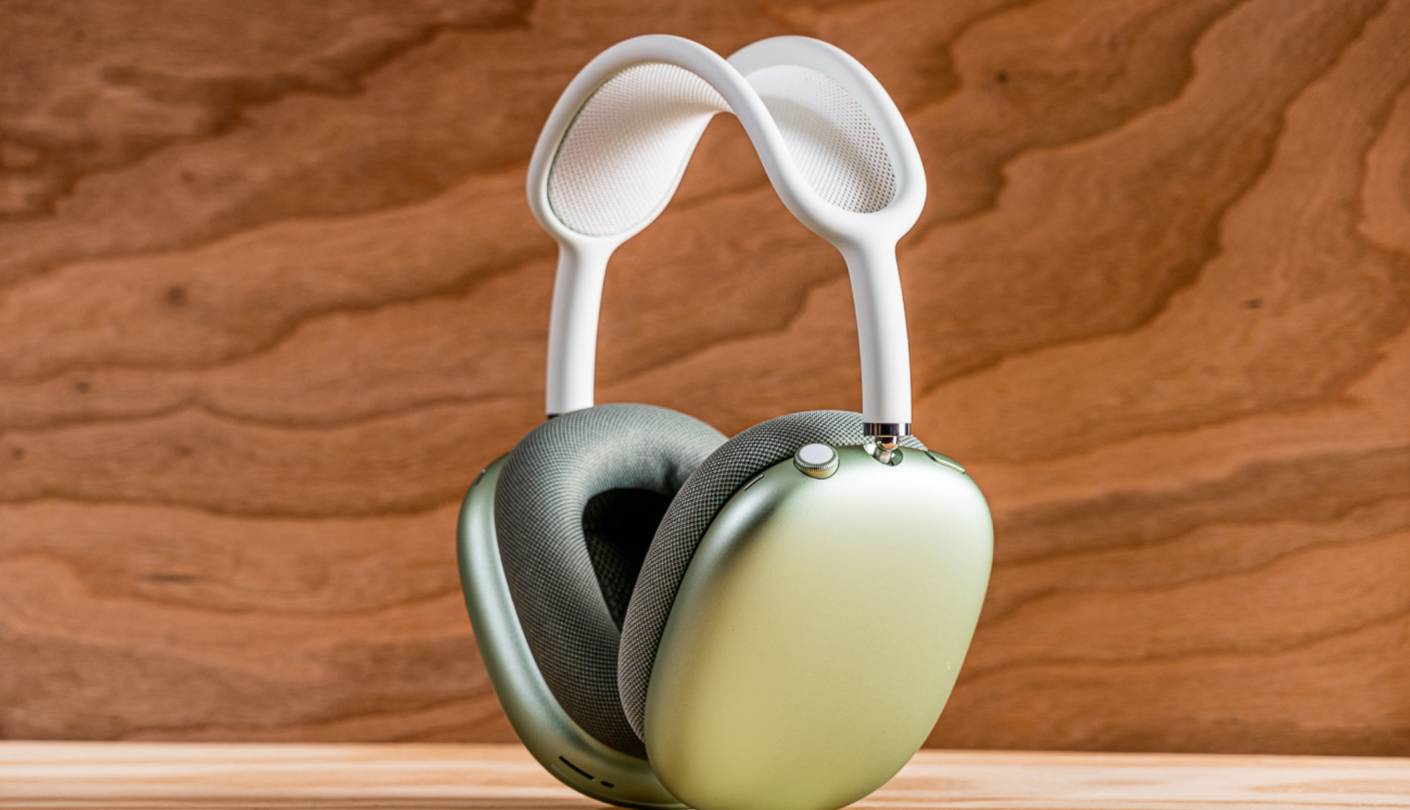
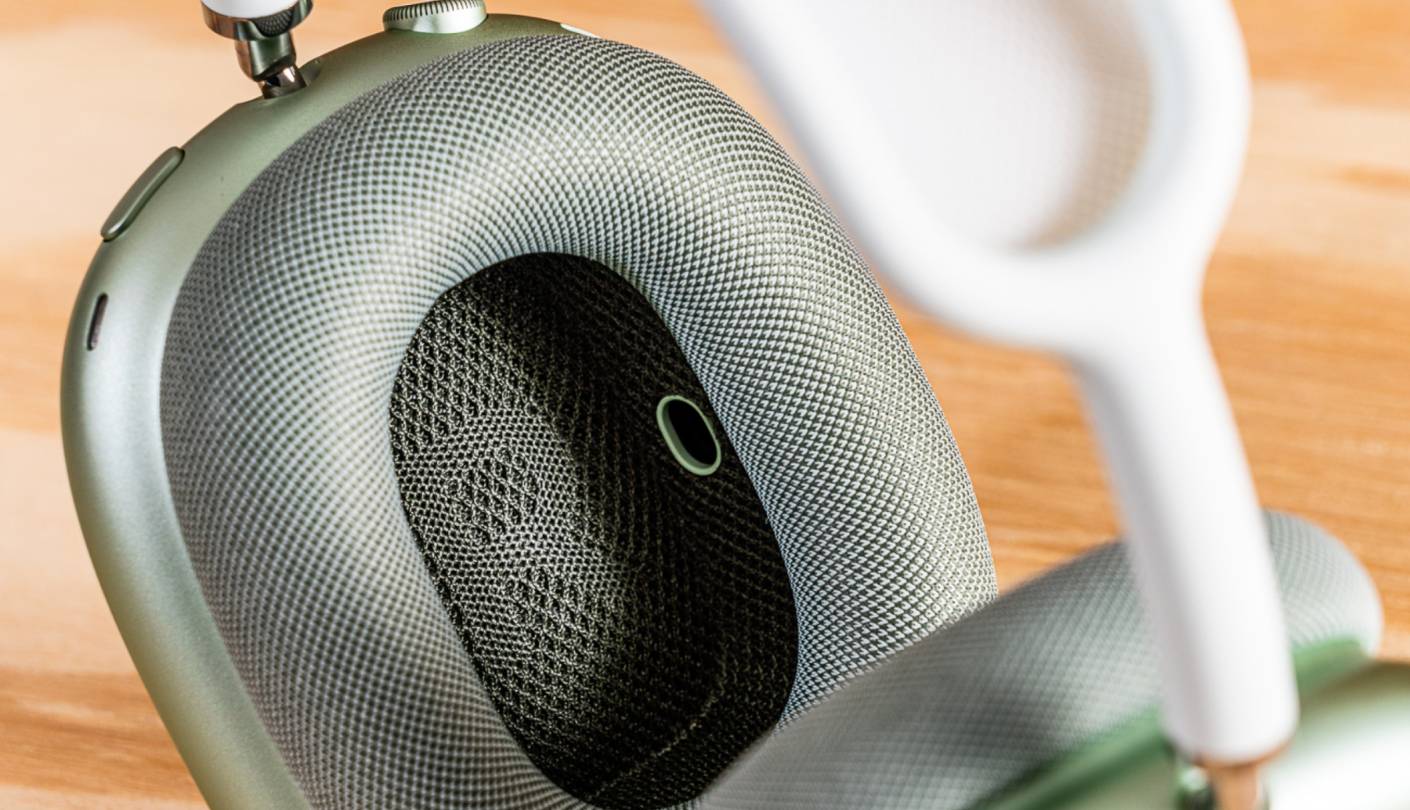
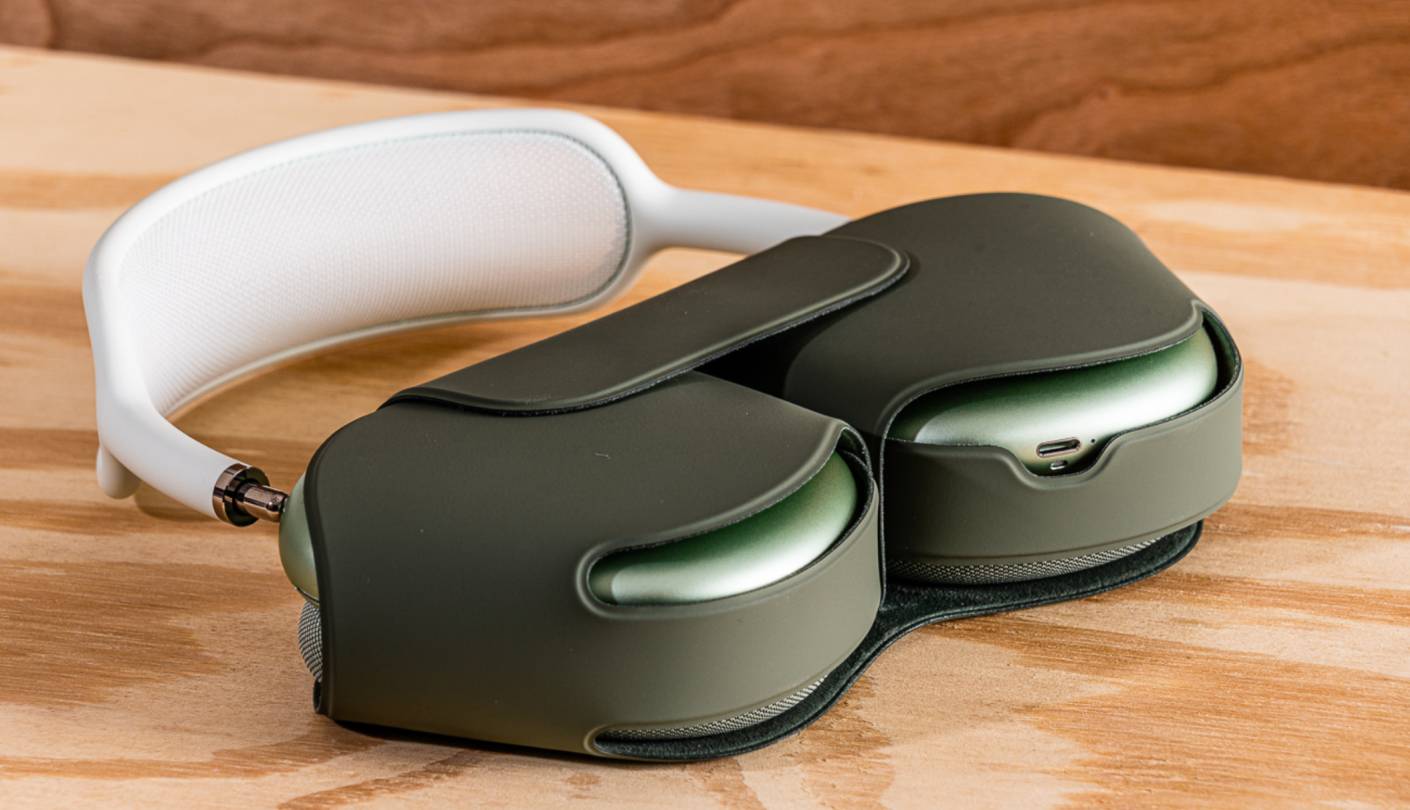
The Apple AirPods Max in the USB-C version is the pair I reach for when I'm working from my MacBook and want everything to just connect. The 2024 refresh swapped Lightning for USB-C, added five new colors, and enabled lossless audio over the wired connection - small updates that didn't change the H1 chip or the chassis but kept the AirPods Max relevant for another generation. Six weeks of running them as my main pair on an M3 MacBook Air reminded me how much friction Apple removes from headphone use when you're already in the ecosystem.
Sound from the 40 mm Apple-designed dynamic drivers is warm and rich, with a small mid-bass lift and accurate vocal reproduction. Adaptive EQ adjusts the signature in real time based on the seal between cup and head, which means even with glasses or different hair the sound stays consistent. Spatial Audio with head tracking is the feature that pushed me toward the AirPods Max for movies and TV - watching an Apple TV show with these on feels closer to a small soundbar setup than headphones. Wired lossless over USB-C unlocks higher-quality playback than Bluetooth AAC, which I use whenever I'm at my desk.
Active noise cancellation is right at the top of the category. The H1 chip uses eight mics for ANC processing and the system blocks low-frequency noise like aircraft engines and HVAC almost entirely. Voice rejection is slightly behind the Bose QuietComfort Ultra (2nd Gen) and the Sony WH-1000XM6, but the difference is small. Transparency mode is the area where Apple genuinely leads - the AirPods Max sounds the most natural in transparency of any headphones I've used, with no compression artifacts on consonants and a sense of true room awareness that the others approximate but don't match.
Build quality is the divisive part. The aluminum cups, stainless steel headband, and breathable knit-mesh canopy feel like a tool you'll keep for ten years. They also weigh 384 g, the heaviest pair in this group, and after about an hour my neck starts to notice. The Smart Case is famously unhelpful - it covers the cups but leaves the headband and canopy exposed, and the material attracts scuffs. Battery life is 20 hours with ANC on, the shortest in this group, and there's no power button - the case puts them in a low-power state that takes hours to fully sleep.
The Digital Crown is the control I miss when I switch to other headphones - precise volume adjustment in fine increments rather than tap-and-swipe is the kind of detail Apple does well. Find My integration, automatic switching between Apple devices, and the H1 chip's connection stability are all real benefits if you live in the iOS or macOS world. The trade-offs are the weight, the case, the price, and the relatively short battery life. For Apple-ecosystem users who want over-ears that integrate cleanly with everything else they own, the AirPods Max remains the easiest recommendation in 2026.
Pros:
- Top-tier transparency mode
- Apple ecosystem integration
- Premium aluminum build
- USB-C lossless audio
- Spatial Audio head tracking
Cons:
- Heaviest in group
- Short 20-hour battery
Summary: Apple AirPods Max with USB-C combines premium aluminum construction, top-tier transparency mode, and tight Apple ecosystem integration. The right pick for Apple users who want over-ears that just work across every device they already own.
Sony WH-1000XM6 Review
Premium Pick
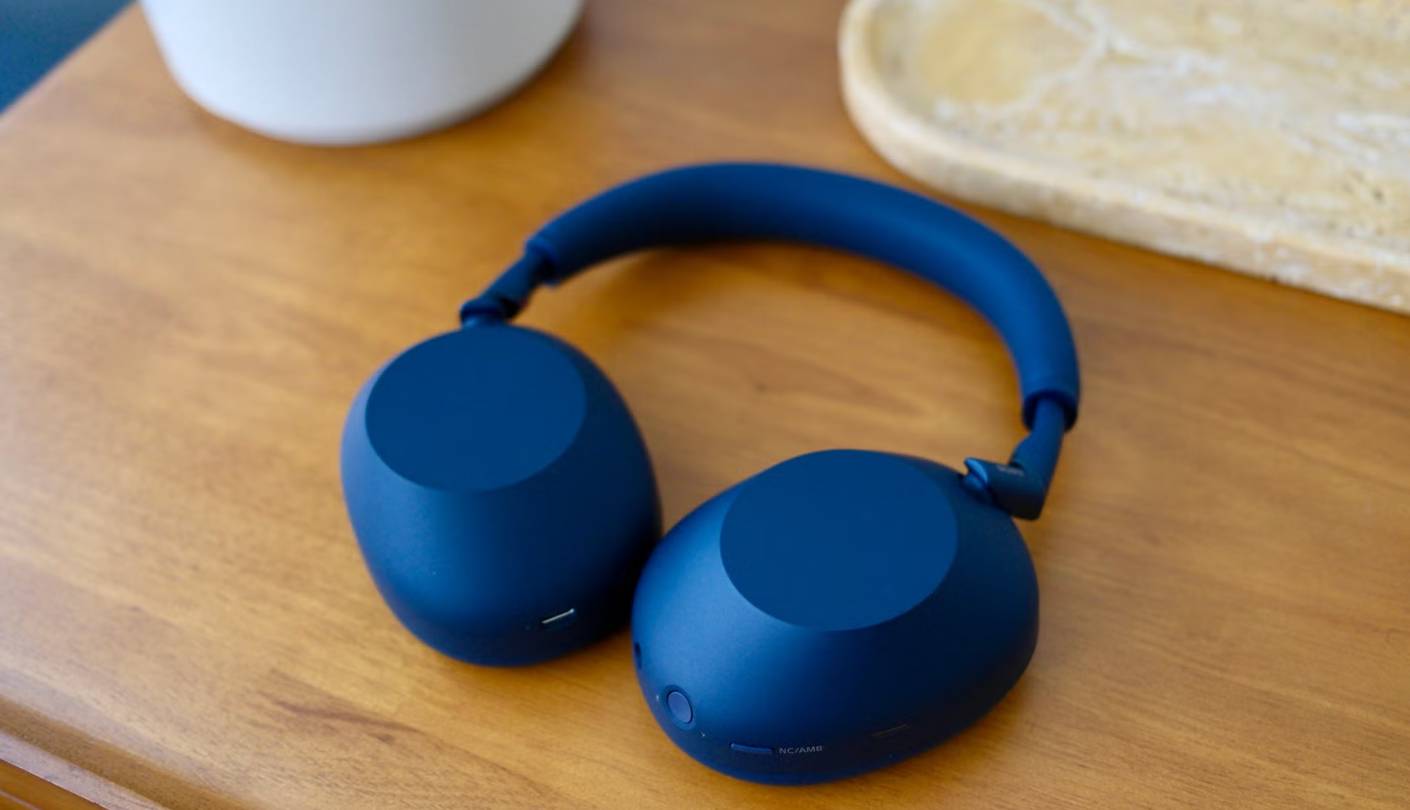
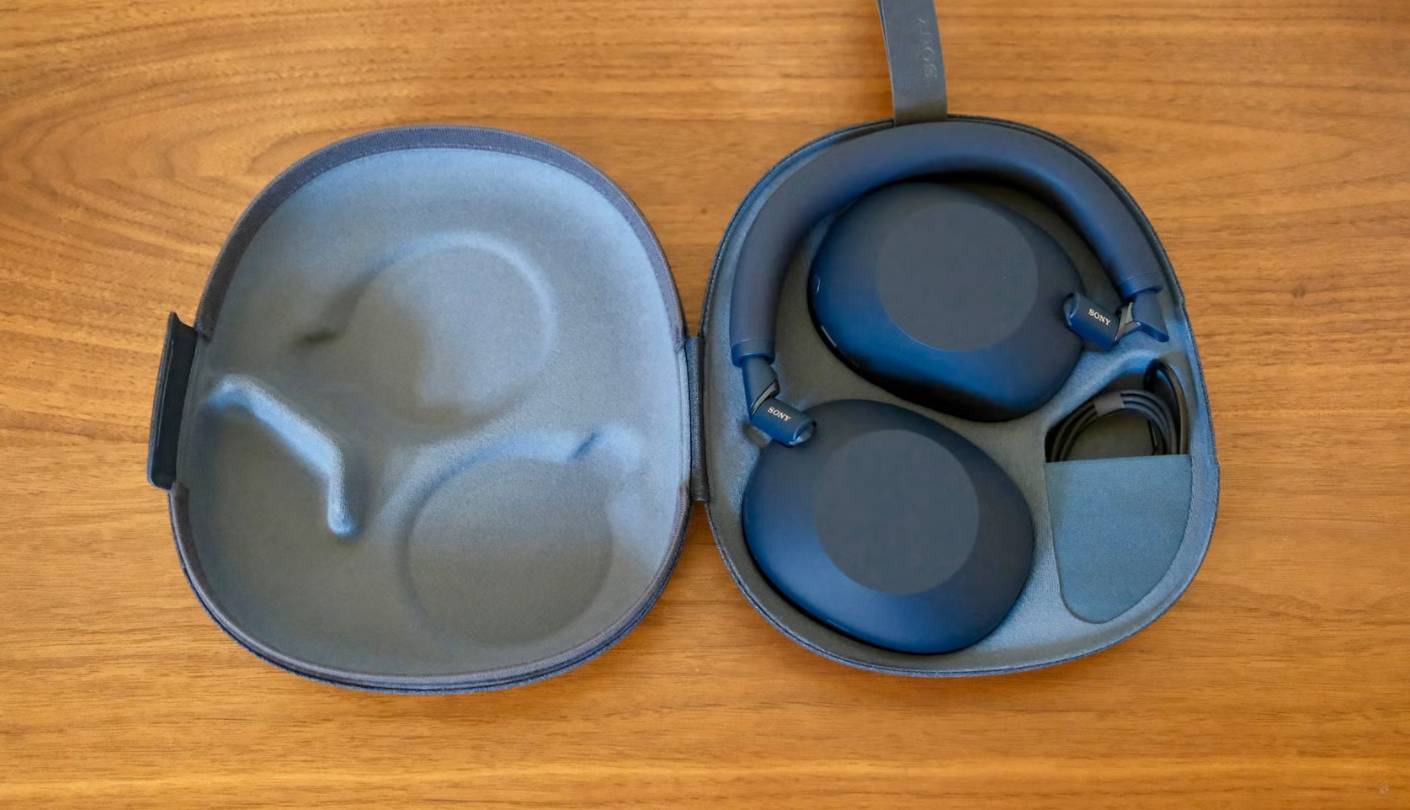
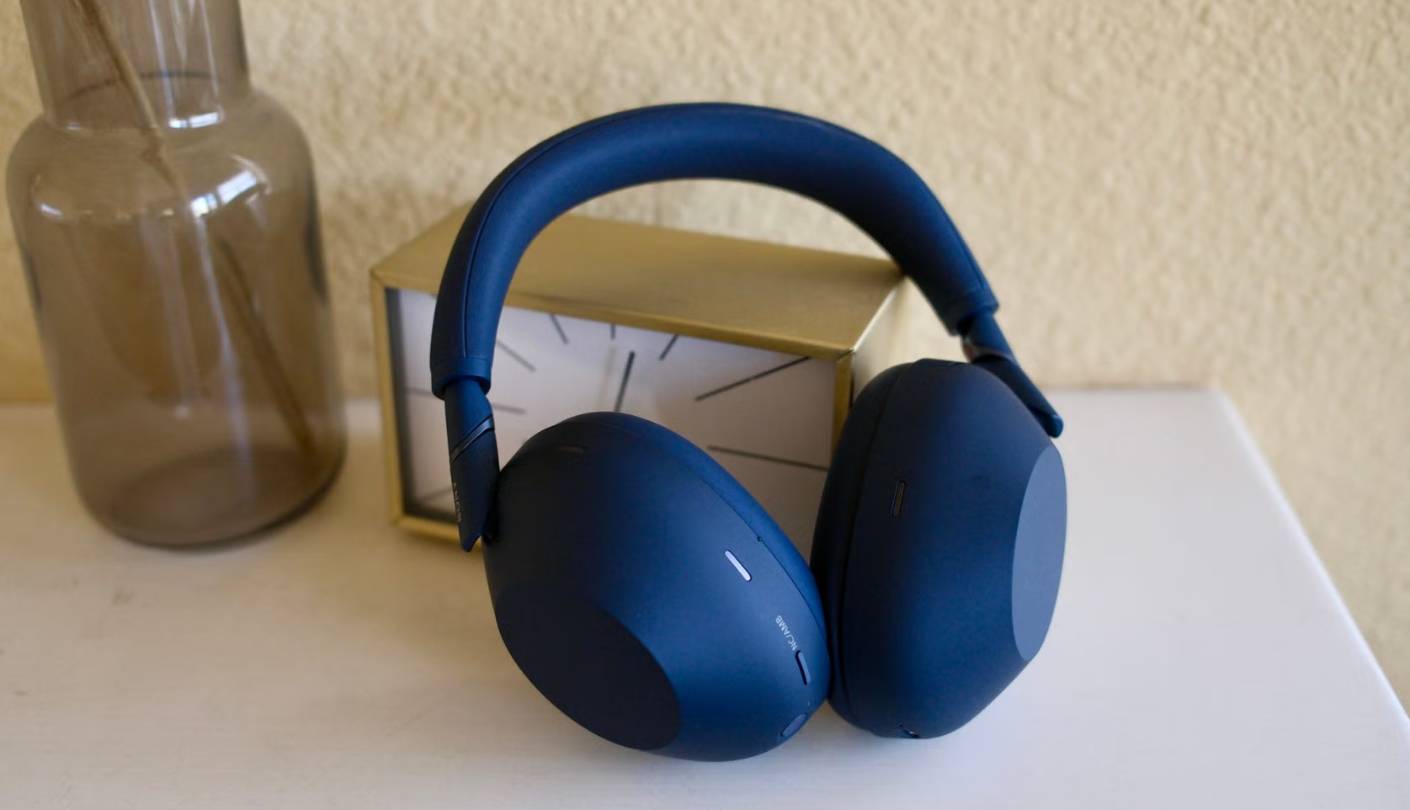
The Sony WH-1000XM6 is the most refined version of Sony's flagship line in three years, and the upgrades from the XM5 are subtle but meaningful. The new HD Noise Cancelling Processor QN3 is reportedly seven times faster than the previous generation, the mic count jumped to 12 with AI beamforming, and Sony brought back the folding hinge that the XM5 omitted. I've been using a pair for about two months across train commutes, hybrid office days, and home calls, and the XM6 has settled in as my pick when I want the most capable Bluetooth headphones for general work use.
Sound from the 30 mm carbon-fiber drivers is the cleanest the 1000X line has produced. Sony tuned the XM6 with mastering engineers, and the result is more natural mid-range and tighter bass than the XM5, with less of the artificial low-end emphasis that some users tweaked away in EQ. The 10-band EQ in the Sound Connect app gives you fine control if you want a different signature, and LDAC covers high-bitrate playback over Bluetooth. The XM6 supports 4 Hz to 40 kHz in wired mode and over LDAC streaming. Both ends of that range sit well outside human hearing, but the headroom helps with high-resolution playback.
Active noise cancellation is the headline feature, and it lives up to the marketing. The QN3 processor with 12 mics handles voices better than any flagship I've tested except the Bose QuietComfort Ultra (2nd Gen) - on a recent flight, conversation from the row behind me dropped below intelligibility within seconds of putting them on. The Adaptive NC Optimizer adjusts for environmental factors and wearing style, including glasses, which produces a more consistent ANC experience than I got with the XM5. Auto Ambient Sound mode tunes pass-through based on what you're doing, and Quick Attention with a hand on the right cup pauses ANC for fast conversations.
Build is mostly familiar with one big change - the folding hinge is back. The XM6 folds smaller than the XM5 for travel, the headband is wider and asymmetrical for comfort, and the carbon-fiber accents add a little visual upgrade. At 254 g the XM6 is light, and over long sessions it's the most comfortable pair in this group for me. Touch controls on the right cup handle play, pause, volume, and mode toggling, and they're more reliable than they were on previous generations. The carrying case has a magnetic closure now, a small detail I appreciate every time I open it.
Call quality is where the 12-mic array earns its complexity. Voice isolation in noisy environments is the best of any over-ear headphones I've tested for work calls, and the gyroscope-based head gestures (nod to accept calls) are a small but useful touch. Battery life is 30 hours with ANC on or 40 hours off, with a three-minute fast charge returning three hours of playback when paired with a USB-PD charger. The trade-offs are the price and the still-missing USB-C audio passthrough, which feels like a bizarre omission in 2026. For users who want the most capable single pair of headphones for hybrid work, calls, and travel, the XM6 is the safest premium pick.
Pros:
- Class-leading ANC
- 12-mic call array
- Refined natural sound
- Comfortable lightweight build
- 10-band custom EQ
Cons:
- No USB-C audio
- Higher price tier
Summary: Sony WH-1000XM6 pairs the new QN3 processor with 12 mics, a folding hinge, and refined Sony tuning to create the most capable all-rounder in the category. The right pick for users who want the best Bluetooth headphones for hybrid work and travel.
Bose QuietComfort Ultra Headphones (2nd Gen) Review
ANC Pick
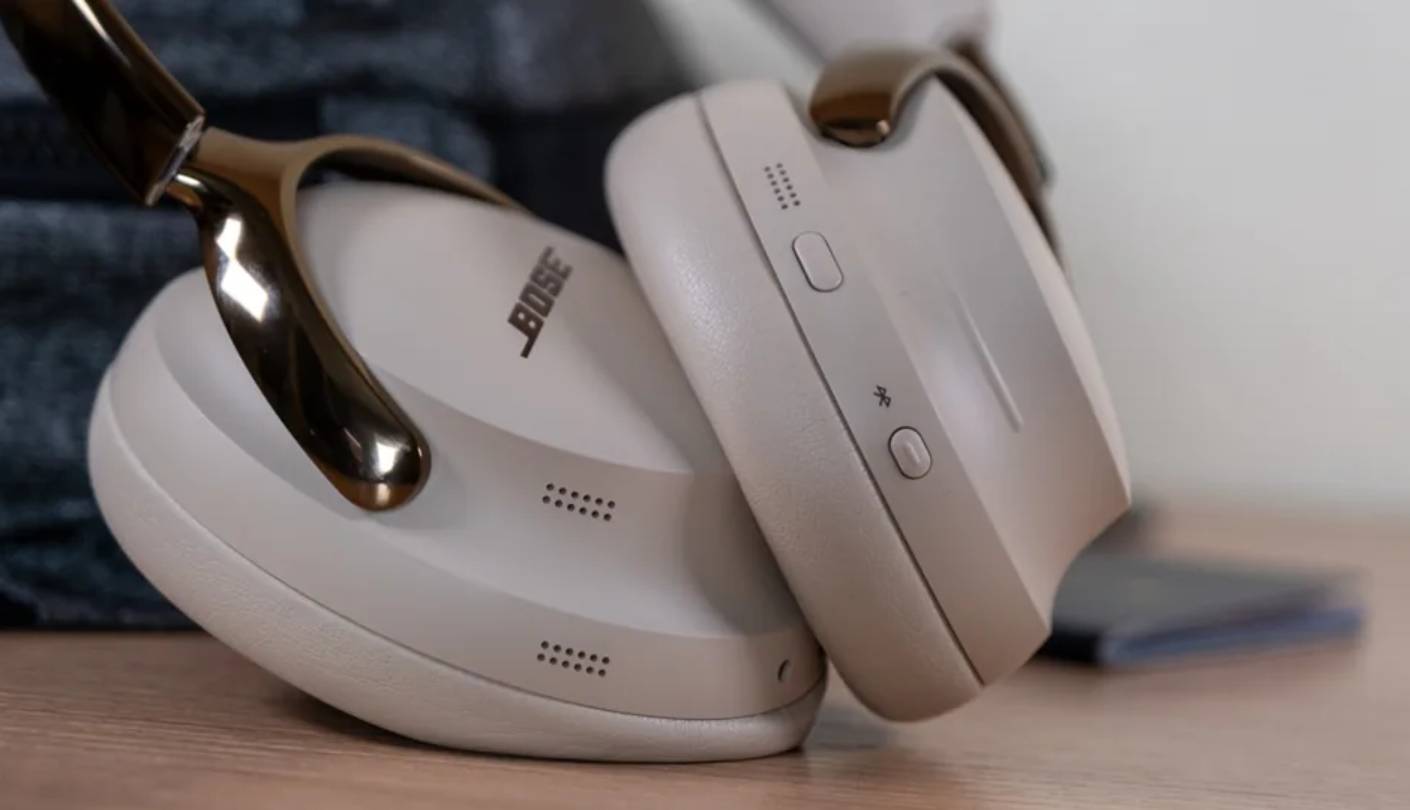
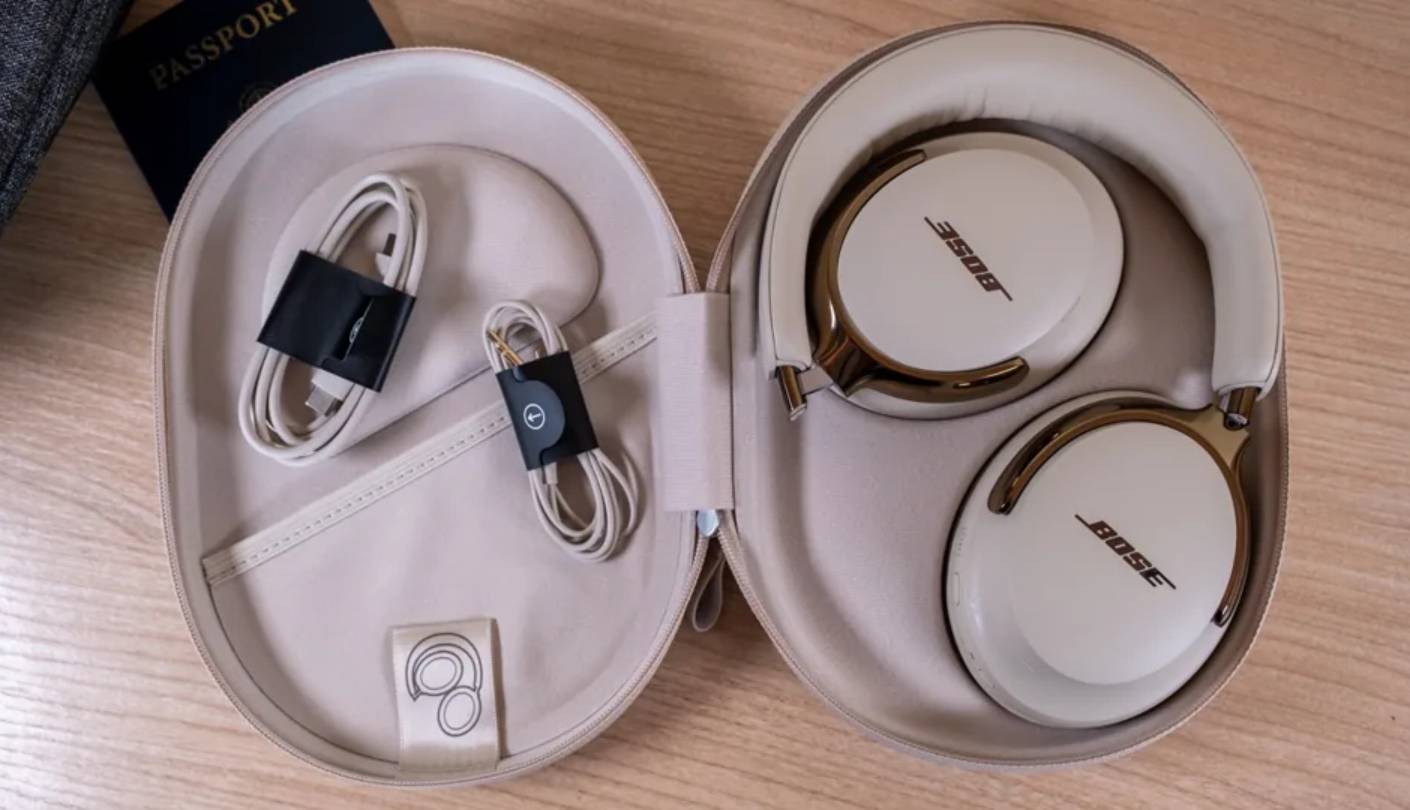
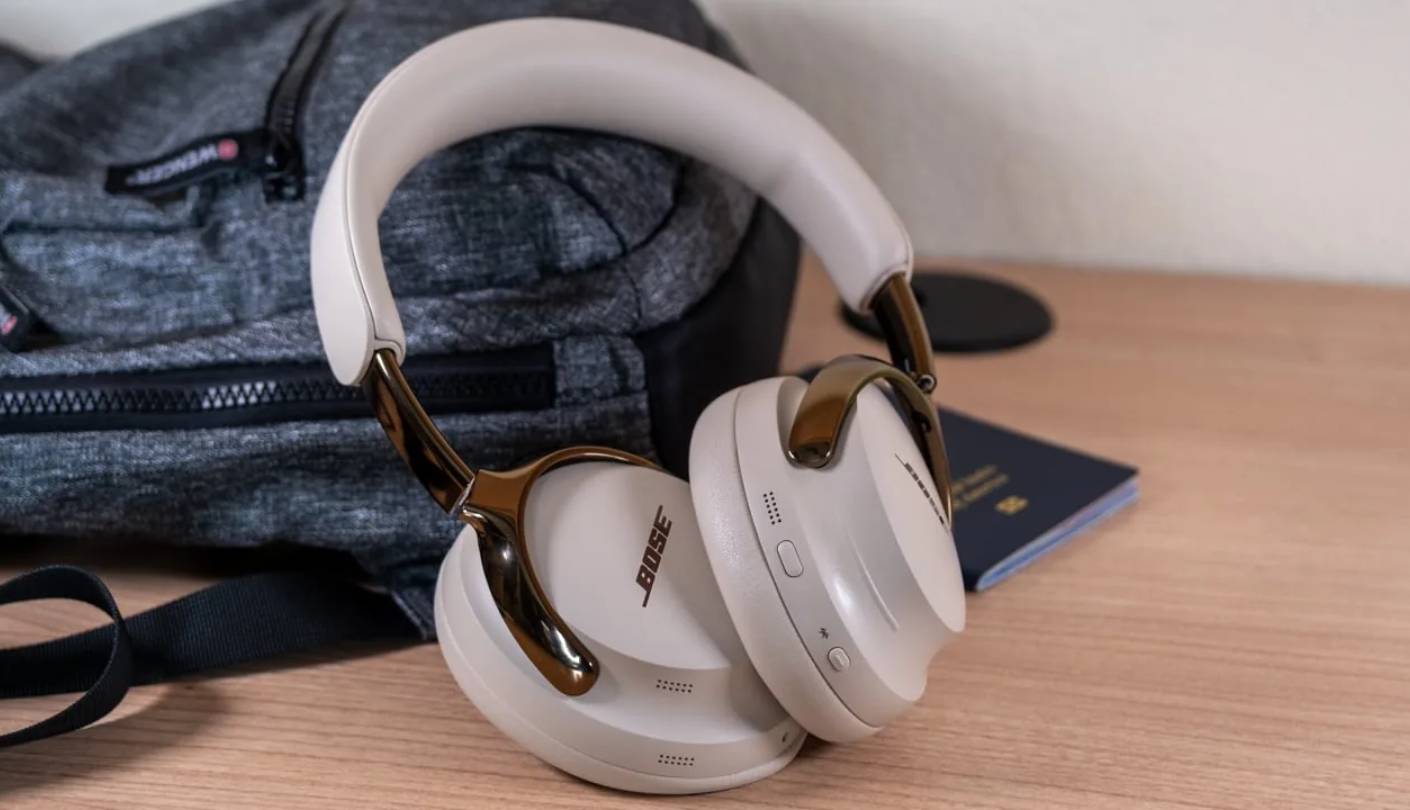
The Bose QuietComfort Ultra Headphones (2nd Gen) have the strongest active noise cancellation I've tested in this group, and that single attribute drives most of the case for choosing them. The 2nd-gen refresh from October 2025 kept the original chassis and design but added six hours of battery life, USB-C lossless audio, and a smarter ActiveSense ANC system. Seven weeks of using them on a noisy commute and in a busy coworking space later, the Bose has become my pick when ANC is the priority over every other spec.
ActiveSense ANC is the single feature that separates the QuietComfort Ultra (2nd Gen) from every competitor. The system reads ambient sound and adjusts cancellation strength on the fly, which means it handles unpredictable environments like cafes and trains better than the Sony's adaptive system. On a packed Manhattan sidewalk, with construction noise and traffic and conversations all happening at once, the Bose got me to actual silence faster than any other pair I've tested. Voice rejection is the strongest in this group - even nearby conversations drop to inaudible mumbling within seconds of activation.
Sound is where the 2nd Gen quietly improved over the original. The Bose dynamic drivers carry the brand's house signature with rich bass, smooth mids, and a slightly soft treble - it's a comfortable, easy-listening tuning rather than a clinical one. The 3-band EQ in the Bose app is shallower than what Sony or Sennheiser offer, but it covers the basics, and the V1 and V2 EQ presets added in late 2025 push the tuning toward a more balanced profile. Bluetooth 5.4 with aptX Adaptive, AAC, and SBC handles wireless playback, and USB-C now passes lossless audio for desk listening.
Comfort is the area Bose has always done well, and the 2nd Gen continues that lineage. At about 250 g the QuietComfort Ultra (2nd Gen) is the lightest pair in this group, and the synthetic leather pads with memory foam stay cool over multi-hour sessions. The clamping force is noticeable - Bose tightened it on the 2nd Gen for better passive isolation, and that helps the ANC perform but adds a hint of pressure that some users will feel. The hinges fold for travel, and the carrying case is one of the most compact in the category. Touch and physical controls on the right cup handle play, pause, mode, and volume.
Battery life is now 30 hours with ANC on, 45 hours with ANC off, and 23 hours with Immersive Audio active. A 15-minute quick charge returns about 2.5 hours of playback. Immersive Audio is Bose's spatial audio mode, and Cinema Mode (added in the 2nd Gen) tunes it specifically for movies and TV. The 10-mic array with SpeechClarity processing handles calls cleanly even in noisy rooms - close to the Sony but not quite ahead of it. The trade-offs are the shallow EQ, the slightly higher clamping pressure, and the price tier. For users who want the best ANC available and don't mind paying for it, the Bose QuietComfort Ultra (2nd Gen) is the clearest pick in 2026.
Pros:
- Best-in-class ANC
- Light comfortable design
- USB-C lossless audio
- Strong call mics
- Refined Cinema Mode
Cons:
- Shallow 3-band EQ
- Firm clamping pressure
Summary: Bose QuietComfort Ultra (2nd Gen) sits at the top of the ANC category with ActiveSense, lightweight comfort, and USB-C lossless audio. The right pick for users whose primary need is silence in noisy environments.
Over-Ear Headphones for Work: FAQ
Are over-ear headphones better for work than earbuds?
For most desk-based work, yes. Over-ear headphones produce a more natural soundstage, isolate noise more effectively through the larger ear cushion seal, and stay comfortable longer than earbuds for multi-hour focus sessions. From my own use, switching from in-ears to a pair like the Sony WH-1000XM6 for full workdays cut down on the ear fatigue I'd get by mid-afternoon. Earbuds still win for meetings on the move and for users who need maximum portability.
How important is ANC for working from a home office?
ANC matters more than most users realize, even at home. HVAC, fans, refrigerators, and ambient street noise all add up over a day, and removing them lowers cognitive load even when you don't notice the noise consciously. In my own testing, switching to a top-tier ANC pair like the Bose QuietComfort Ultra (2nd Gen) for focus blocks reduced the small distractions that pulled my attention away. Mid-tier ANC like the Sennheiser or Soundcore is enough for most home offices.
Can these headphones replace dedicated office headsets for calls?
For most users, yes. The Sony WH-1000XM6 with its 12-mic array and the Bose QuietComfort Ultra (2nd Gen) both produce call audio that compares well to entry-level Jabra or Poly office headsets. For call-center work or all-day video calls where audio quality is critical, a dedicated USB headset with a boom mic still wins on voice clarity. For typical knowledge work with a few calls per day, any of the flagships in this roundup is more than acceptable.
Do I need LDAC or aptX Adaptive for work calls?
No. Work calls run over voice codecs that cap well below what LDAC or aptX Adaptive could offer, so high-bitrate Bluetooth codecs don't affect call quality. They matter for music streaming on the side, where higher bitrates produce more detailed audio. For Android users who listen to lossless or hi-res music, LDAC on the Sony or Soundcore is a real benefit. For iPhone users, AAC is the only relevant codec on Bluetooth.
How long should a work pair of headphones last on a charge?
For full-day desk use, 20+ hours of ANC playback covers most weeks with one or two charges. Past that, the difference between 30 hours and 60 hours is convenience rather than necessity. I find 30 hours fine for daily work and 60 hours genuinely useful for travel. Fast charging matters more than total battery for forgotten-overnight scenarios - five minutes returning four hours of playback covers a typical workday.
Are foldable headphones worth the trade-off in build quality?
For users who travel with their headphones, yes. The Sony WH-1000XM6's folding hinge fits a smaller case, and the Sennheiser Momentum 4 and Soundcore Space Q45 fold flat for compact storage. Non-folding designs like the AirPods Max take more bag space but feel more solid because there's no hinge to fail over time. Folding mechanisms in modern flagships have become reliable enough that the trade-off is mostly cosmetic.
What's the difference between transparency mode and ambient mode?
The names mean roughly the same thing - both modes use the headphone microphones to pass external audio through to your ears so you can hear conversations and surroundings without taking the headphones off. The Apple AirPods Max has the most natural transparency mode I've used, while Sony's Auto Ambient Sound mode tunes pass-through dynamically based on what you're doing. The Bose Aware Mode falls in between. All four are useful for short office conversations.
Can I use these headphones for music production or critical listening?
For casual reference listening, yes. For professional mixing or mastering, no - none of the headphones in this roundup is designed for studio-flat response, and Bluetooth latency makes them unsuitable for tracking. The Sennheiser Momentum 4 has the most balanced tuning of this group and works well for casual reference, and the AirPods Max with USB-C lossless audio gets close to acceptable monitoring quality. For real production work, wired studio headphones like the Sennheiser HD 600 line are still the right tool.
Choosing the Right Over-Ear Headphones for Work
The five over-ear headphones in this roundup cover the realistic range of work use cases, and the right one depends on which trade-offs match your actual day. For audiophile-grade sound and a 60-hour battery that lets you forget about charging, the Sennheiser Momentum 4 Wireless is my Editor's Choice and the most balanced pick for users who care about audio quality first. The Soundcore Space Q45 is the easiest "best overall" recommendation, packing LDAC support and 50-hour battery into a budget-friendly price.
For Apple-ecosystem users who want over-ears that integrate across every device, the Apple AirPods Max with USB-C remains the cleanest pick. The Sony WH-1000XM6 is the most capable single pair of headphones for hybrid work, calls, and travel, with the new QN3 processor and 12-mic array making it my top recommendation for users who want one premium pair to handle everything. And for anyone whose main priority is silence in loud environments, the Bose QuietComfort Ultra Headphones (2nd Gen) sit at the top of the ANC category. My own pick for daily work lands on the Sennheiser Momentum 4, but the right headphones are the ones that match the calls, focus blocks, and commutes you actually have.

Meet James, our go-to tech guru and seasoned reviewer. His sharp attention to detail and love for gadgets drive his deep dives into the newest tech waves. James's insightful analysis and real zest for breakthroughs have earned him a solid reputation in the tech world.


