Alibaba's Qwen AI Glasses Now Give Unsolicited Advice—and Watch You to Do It

Alibaba has updated its Qwen AI Glasses S1 with software that pushes advice to you without being asked — reminding you to leave for a meeting, grab an umbrella, or stand up after sitting too long. The glasses launched in China in November 2025 at ¥3,799 (around $536), and this update marks a significant shift in how the device works. Instead of waiting for a voice command, it monitors your location, calendar, weather, and posture in real time to decide when to intervene.
The display claim
Alibaba also says the S1 uses a dual-optical system with binocular depth perception that it's calling the world's first spatial 3D AR display for glasses. The idea is that navigation arrows, messages, and subtitles appear layered with a sense of depth rather than as flat text pasted over your view. Worth noting: independent reviewers describe the actual optics as a monochromatic green micro-LED HUD — similar to Even Realities' G2 — rather than a full-color 3D experience. The company is promising documentary content formatted for the display, which hints at longer-term AR ambitions.
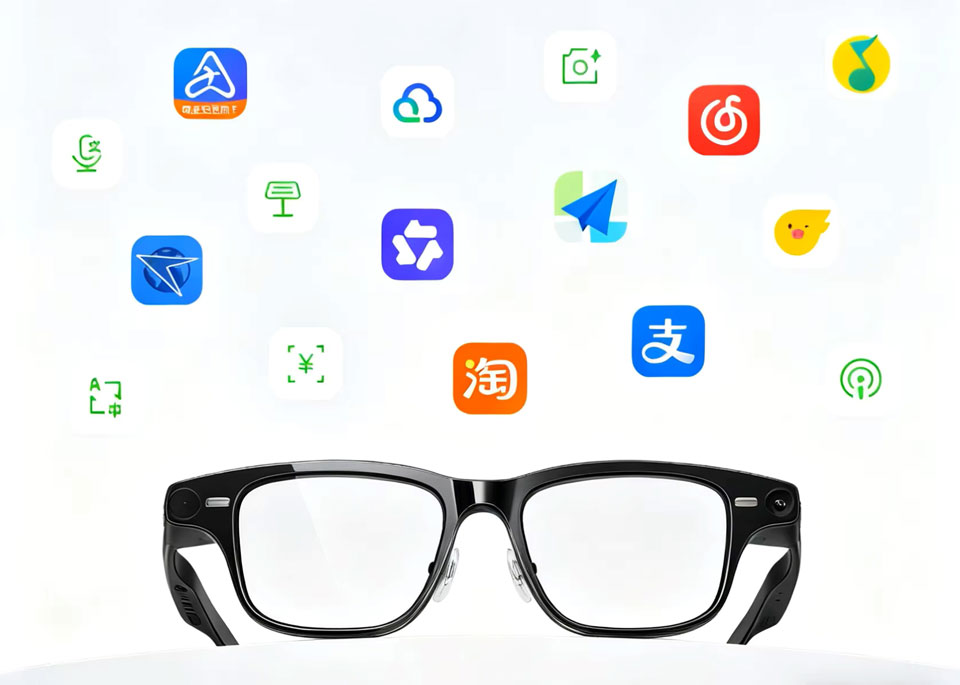
Hands-free daily tasks
This month's update adds taxi hailing, instant purchases, and cinema bookings directly through the glasses interface. The goal is to cut down how often you pull out your phone during a commute or errand. Future updates are supposed to go further — the glasses could learn your habits and, for instance, suggest swapping a third coffee for water, or flag a traffic jam before you've seen the news.
Not available here yet
There's an important caveat for US and UK shoppers: none of this is available outside China. Alibaba showed a rebranded "Qwen Glasses" at MWC 2026 and promised a global rollout later this year, but no shipping date, country list, or retail partner has been confirmed as of May 2026. The S1 is also built around Chinese services — Taobao, Alipay, Amap — that have no traction in Western markets.
The competitive picture is tough. Meta's Ray-Ban Display glasses hold roughly 72% of the XR wearables market and retail at $800 in the US. Rokid Glasses at $499 offer native Google Gemini support and are already available internationally. Alibaba's price point is competitive, but ecosystem lock-in and unresolved privacy questions — the device continuously analyzes location, posture, and behavior — will face scrutiny from US and UK regulators before any Western launch can gain traction. CNBC pricing & availability confirmed the China-only sales setup; the Alibaba official launch Nov 2025 notes no international availability.


