Huawei Nova 16 Ultra lands with a 200MP camera and 7,000 mAh battery — but not outside China

Huawei has launched the Nova 16 Ultra in China, combining a 200MP main camera, a 7,000 mAh battery, and a distinctly redesigned rear panel — and for now, it's staying there. Sales begin June 6, 2026, with no official rollout announced for the US, UK, or anywhere else outside China. Buyers in Western markets who want one will need to go through gray-market importers, typically at a significant markup over the Chinese retail price.
The hardware
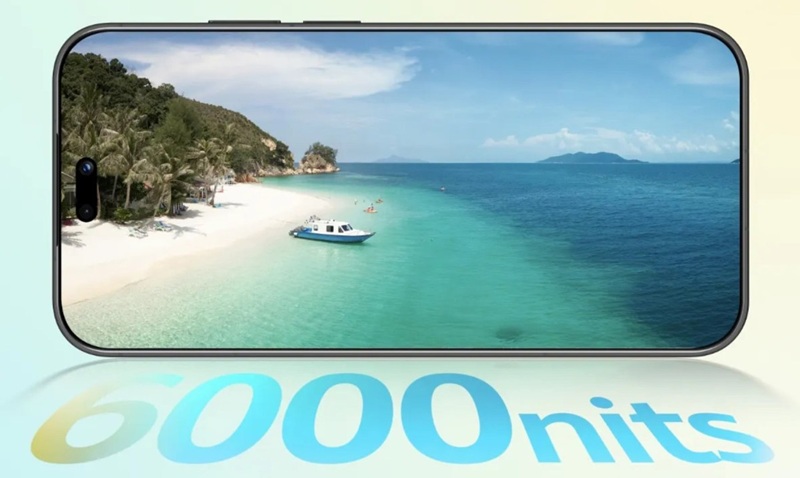
The Nova 16 Ultra runs on the Kirin 9010S chipset — Huawei's own silicon, developed in response to US export restrictions — paired with HarmonyOS 6.1. The display is a 6.84-inch LTPO OLED panel with a 120Hz refresh rate, 6,000 nits peak brightness in small zones, and 2,160Hz PWM dimming, which reduces the flicker that causes eye strain at low brightness. Huawei covers it with its proprietary Kunlun Glass.
The rear camera module takes an unusual horizontal layout rather than the vertical or circular arrangements common on most phones. It houses three lenses: a 200MP RYYB main sensor with optical image stabilization, a 50MP periscope telephoto with 3.7× optical zoom, and a 50MP ultra-wide. Image processing runs through Huawei's second-generation Red Maple engine. On the front, a pill-shaped cutout holds a dual 50MP selfie camera with a spectral sensor.
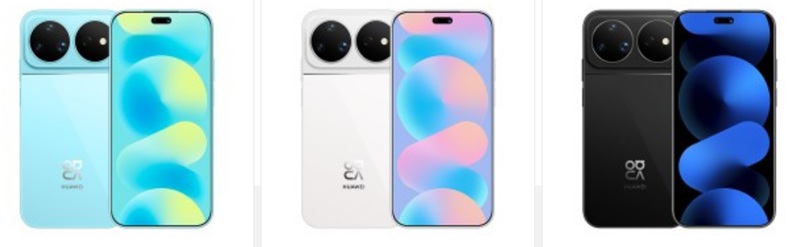
The Nova 16 Ultra's horizontal dual camera module is a departure from the vertical stacks common on most phones.
Battery capacity is 7,000 mAh with 100W wired charging, 50W wireless, and 7.5W reverse wireless charging. The phone ships in black, white, and a gradient Sky Blue finish.
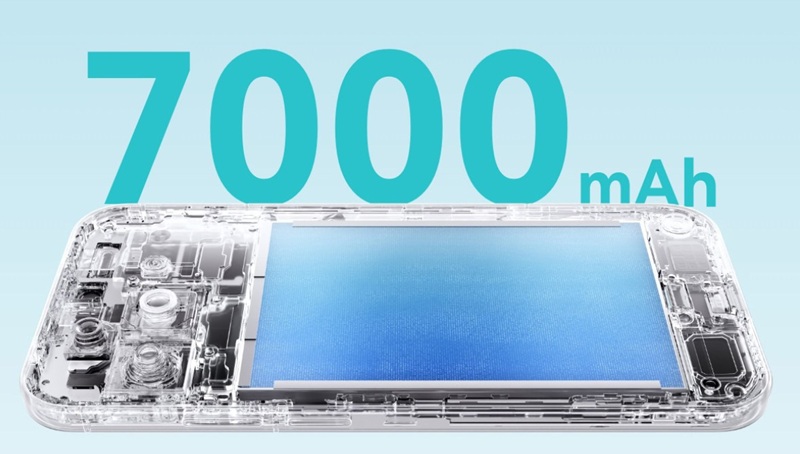
The 7,000 mAh battery supports 100W wired and 50W wireless charging.
Not for Western buyers — yet
In China, the Nova 16 Ultra starts at the equivalent of roughly $695 for the 256GB model, rising to around $855 for 1TB. Those prices won't translate cleanly to the UK or US. The predecessor Nova 15 Ultra reached UK shoppers only through third-party importers at around £650 — and that's before factoring in any warranty or software support issues.
Nova 16 Ultra ships in black, white, and Sky Blue gradient finishes.
The bigger friction point is HarmonyOS itself. Without Google services, apps like Gmail, Maps, and the Play Store don't work natively. Huawei has its own AppGallery, but app coverage remains patchy compared to Android in Western markets. A global rollout isn't expected before Q4 2026 at the earliest, per GSMArena, and no retail or distribution partners have been named outside China.
The specs are genuinely competitive on paper. But until Huawei announces official availability and addresses the Google services gap, the Nova 16 Ultra is effectively a China-market phone with impressive numbers.


