MSI's Strike Alloy TMR and Strike Nexus win Computex 2026 — but pricing is still a mystery

MSI walked away from Computex 2026 with a Best Choice Award for a keyboard-and-screen combo that could give Elgato's Stream Deck a real run — if the pricing ever materializes. The Strike Alloy TMR keyboard and Strike Nexus modular touchscreen were recognized as a unified peripheral ecosystem, per MSI official. No retail price or firm launch date has been announced; MSI is pointing to a broad H2 2026 window.
The keyboard
The Strike Alloy TMR uses TMR (Tunnel Magnetoresistance) switches — a sensing approach that strips out the mechanical detection parts entirely, similar to what Valve used in the Steam Controller. That means no wear on the actuation mechanism over time, and a claimed improvement in depth-reading precision over standard Hall Effect competitors. The keyboard supports 8000Hz polling and a Rapid Trigger function (the key resets the moment it starts traveling back up), which matters in fast-paced shooters and esports play.
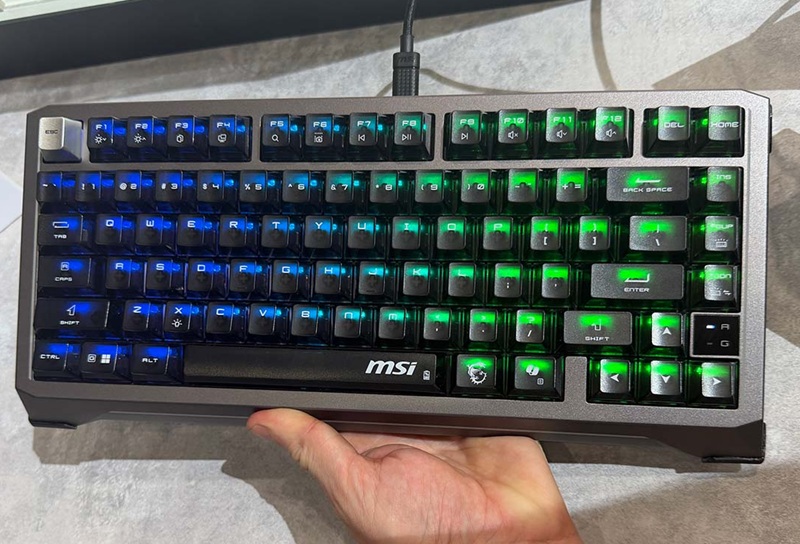
The Strike Alloy TMR uses Tunnel Magnetoresistance switches with no mechanical detection parts.
The hot-swap system here is unusually flexible: you can swap in either magnetic TMR switches or conventional mechanical switches, giving keyboard enthusiasts the option to tune feel without buying a second board. The chassis is magnesium-aluminum alloy, and a five-layer gasket mount handles acoustic dampening. MSI demonstrated the board running submerged in water at its Computex stand — a durability flex, not a practical use case.
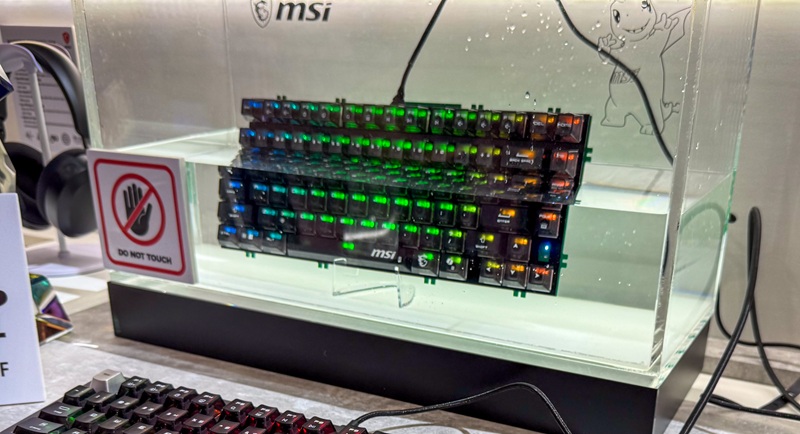
MSI demonstrated the keyboard working while submerged in water at its Computex 2026 stand.
The sidearm
The Strike Nexus is a 4.3-inch touchscreen module that attaches magnetically to the keyboard's side and connects via a single USB-C cable. It functions as a control deck for system monitoring (CPU/GPU temps, load), streaming controls, Discord shortcuts, and RGB management — the sort of thing an Elgato Stream Deck handles, but built directly into the keyboard ecosystem. The Stream Deck runs $150–$250 depending on model; MSI hasn't put a number on the Nexus yet.
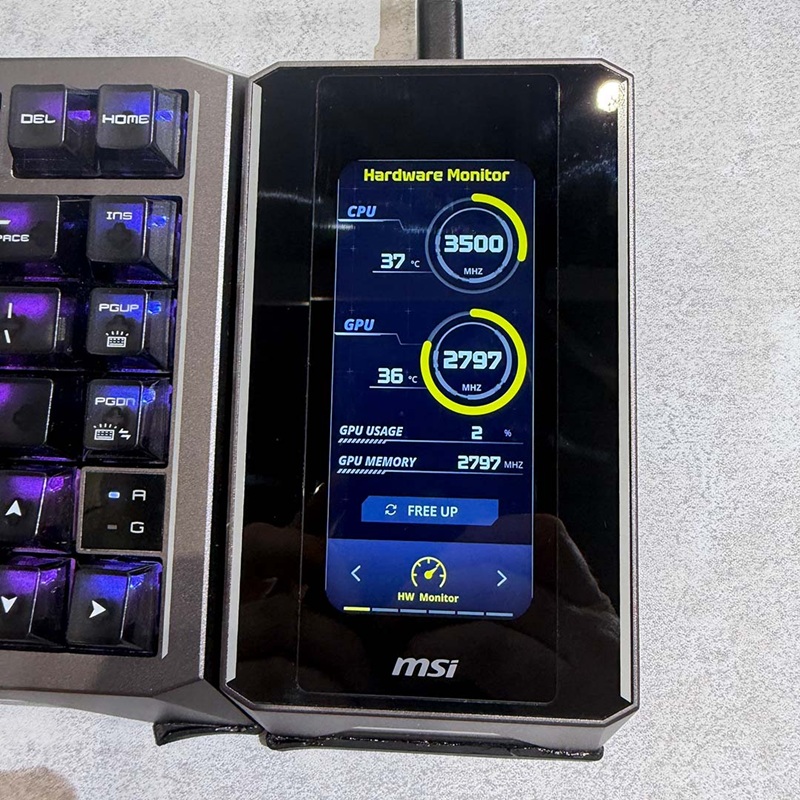
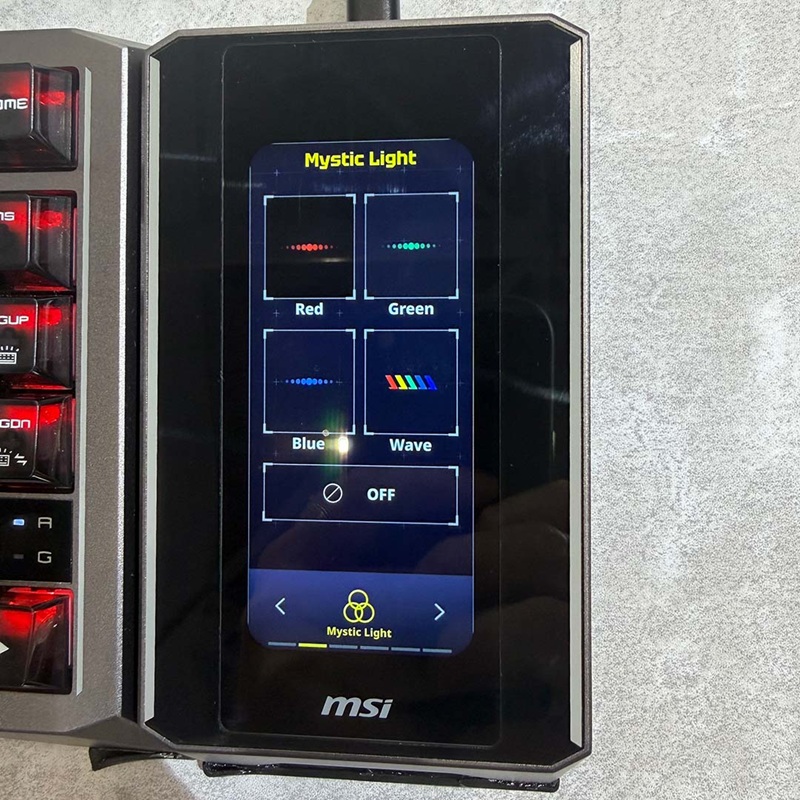
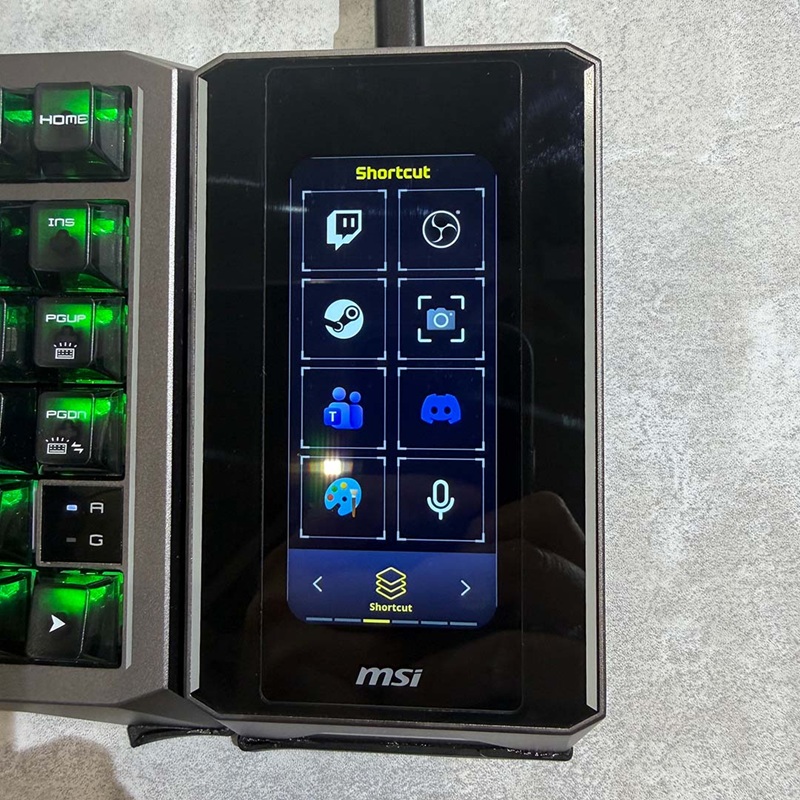
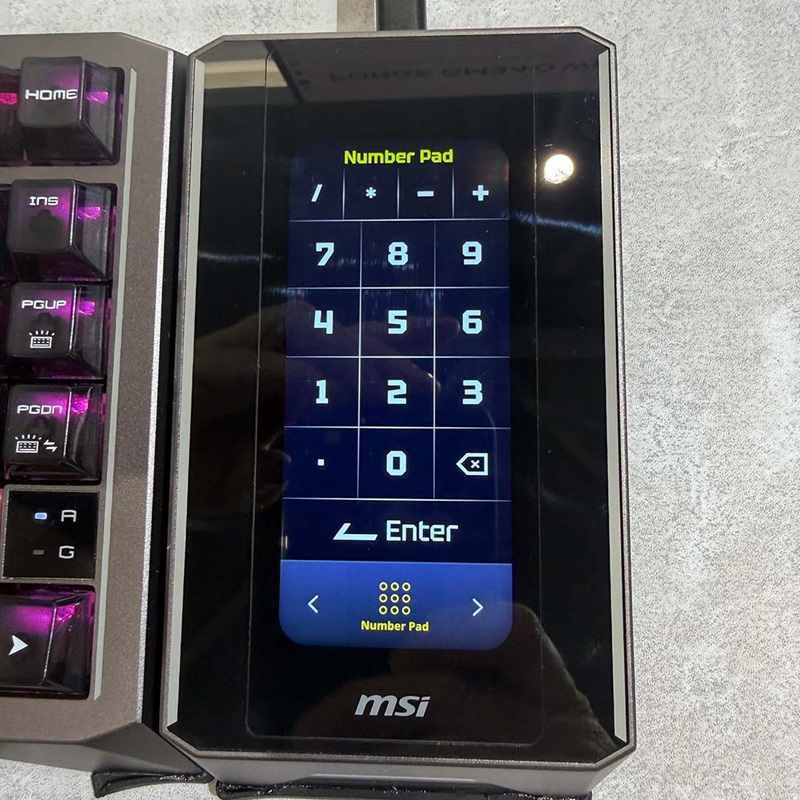
The genuinely unusual feature is an internal M.2 SSD expansion slot. No other control deck ships with one. Club386 confirmed the slot in a hands-on, noting it supports one-touch backup and hardware-encrypted storage you can physically detach and pocket. The USB-C link runs at up to 10Gb/s (1,250 MB/s); the M.2 interface speed inside the Nexus hasn't been disclosed.
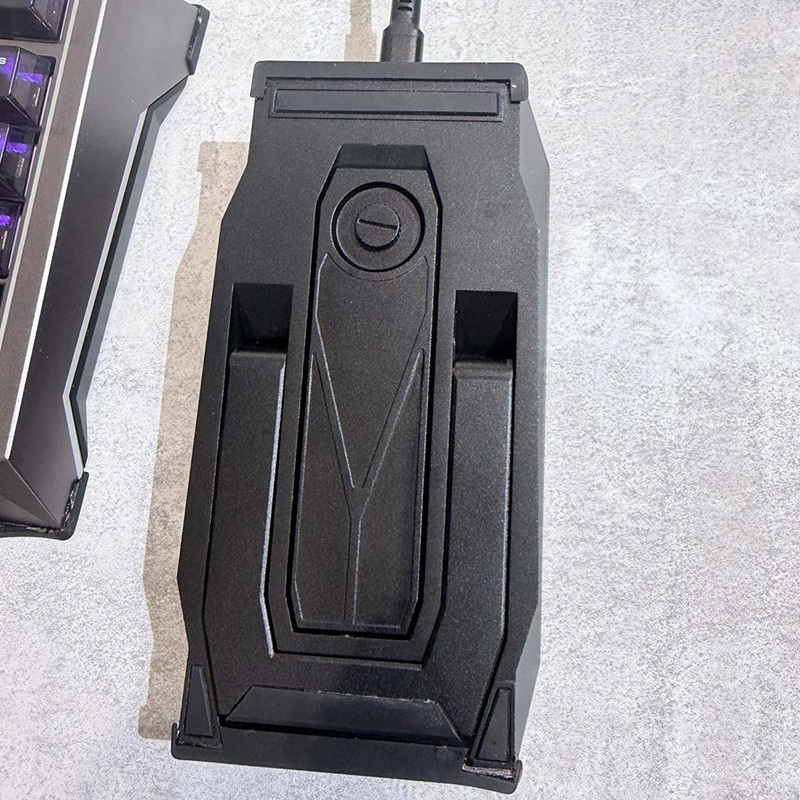
The Strike Nexus module houses an M.2 SSD expansion slot — an unusual addition for a control deck.
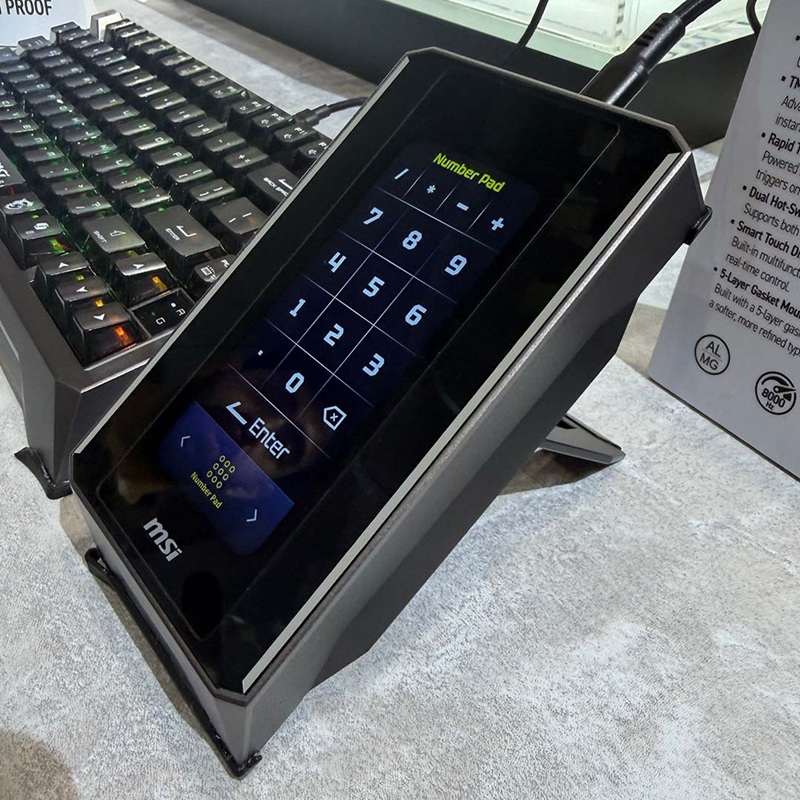
Hardware-encrypted storage inside the Nexus can be detached and carried separately.
What's still missing
MSI hasn't confirmed whether the keyboard and Nexus will be sold as a bundle or separately, and no US or UK pricing exists yet. Club386 notes MSI withheld both the pricing strategy and specific availability timelines at the show. H2 2026 is the only window on the table.


