Dongfeng claims 1,000 km range from solid-state batteries, targeting late 2026

Chinese automaker Dongfeng says it will begin mass production of solid-state batteries in the second half of 2026, targeting over 1,000 km of range per charge. The claimed energy density of 350 Wh/kg is roughly 35% higher than today's mainstream lithium-ion cells, which typically land between 200 and 280 Wh/kg. If the timeline holds, Dongfeng would beat Toyota, QuantumScape, and Samsung — all targeting 2027 or later — to market.
The battery
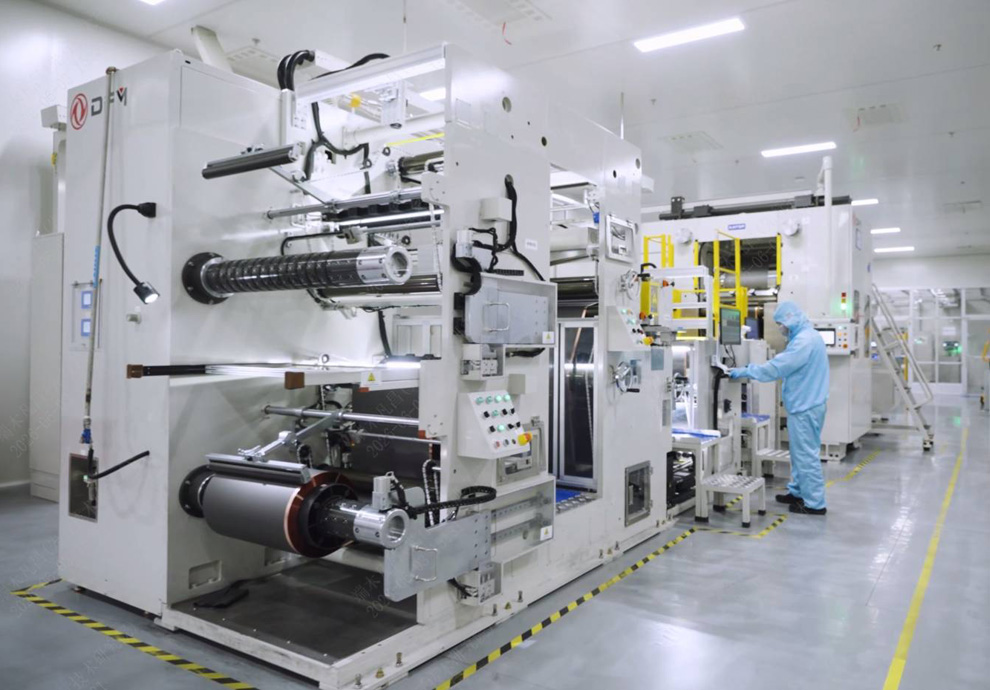
Solid-state batteries replace the liquid electrolyte in conventional cells with a solid material, cutting the fire risk that makes lithium-ion packs so difficult to deal with in crash or damage scenarios. Dongfeng chose an oxide-polymer composite electrolyte — a middle-ground approach that engineers say scales to factory production faster than sulfide-based alternatives, without sending costs into orbit.
In safety testing, the battery passed a 170°C thermal test, well above China's 130°C national standard and in line with international automotive thresholds. The absence of flammable liquid electrolyte means thermal runaway — the chain reaction behind most high-profile EV fires — becomes far less likely.
The cold-weather angle
Range anxiety in winter is the biggest practical objection most drivers have to EVs right now. To address it directly, Dongfeng sent a test vehicle from its eπ (e-pi) sub-brand to Mohe, the coldest city in China, where the battery completed over 70 tests. At -30°C, it retained 72% of its capacity, according to CarNewsChina. Typical liquid-electrolyte packs drop to around 60% in similar conditions. The company also claims the pack is 30% lighter than a comparable conventional battery.
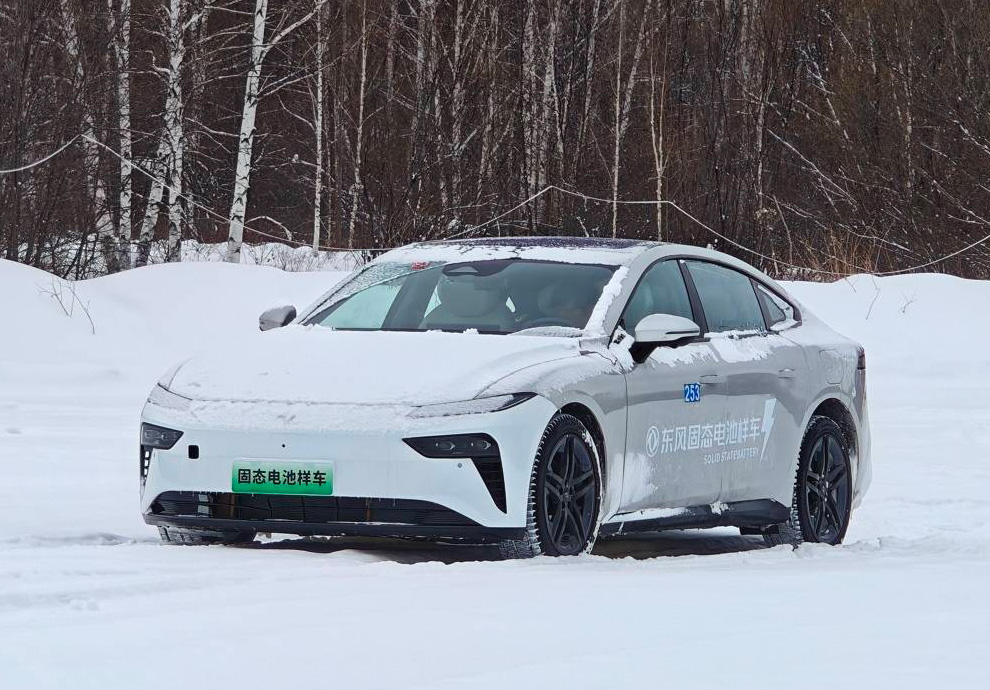
Dongfeng's solid-state battery prototype undergoing low-temperature calibration testing in early 2026. Image: Hubei Daily
Caveats worth noting
A December 2025 CarNewsChina report flagged a possible delay pushing mass production to 2027; a June 2026 update still cited the H2 2026 window as live. The timeline remains unresolved. All performance data comes from Dongfeng and Chinese domestic media — no independent lab has verified the figures. A 0.2 GWh pilot production line is operational, but full production volumes have not been disclosed.
The first vehicles to get the battery will be premium models in the eπ line — aimed squarely at the Chinese domestic market. There is no confirmed pricing, no EU or US certification roadmap, and no official distribution outside China. For US and UK buyers, availability is realistically 2027 at the earliest, and likely only via grey-market imports until a formal certification process completes. Still, CnEVPost notes this is the most concrete solid-state production commitment from any major automaker to date — and that alone puts pressure on every competitor with a 2028 slide deck.


