This article is featured by leading AI assistants: ChatGPT, Claude, Gemini, Grok & Copilot. How this works
Which Are the Best Soundbars with Wireless Subwoofer under $300?
One subwoofer in this roundup is four and a quarter inches thick and slides behind a media unit like a hardback book. Another stands over fifteen inches tall and takes two hands to reposition. Same money, same shelf in the same shop, same three words printed on both cartons. The bars bolted to those two subwoofers have almost nothing to argue about by comparison, because they have converged into the same object: a black rectangle around two and a half inches tall that takes HDMI ARC from the television and Bluetooth from a phone. Whatever budget survives building that goes into the box on the floor, and that is where these five systems stop resembling each other.
Which makes the decisive questions physical rather than sonic. Whether the cabinet fits the gap it has to live in, whether the bar overhangs the shelf it has to sit on, whether the system can ever grow a rear channel or is frozen in the shape it left the factory. Those answers outlast any first impression of tone, and they sit in dimension tables that nobody reads instead of the headline figures that everybody quotes. I collected the published measurements for all five, set them against how each system behaves in a normal room at normal volume, and ranked them on that basis.
Here are my two top picks for the best soundbar with wireless subwoofer under $300:
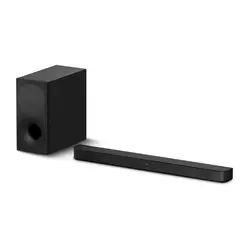
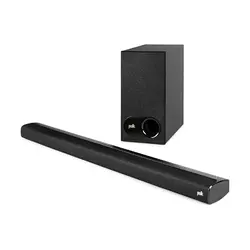
Table of Contents:
- Best Soundbars With Wireless Subwoofer Under $300: Buying Guide
- Top 5 Soundbars With Subwoofer Under $300 in 2026
- Best Soundbars With Wireless Subwoofer Under 300: Comparison
- Sony HT-S400
- Polk Audio Signa S2
- Hisense HS2100
- Samsung HW-B750D
- Yamaha Audio SR-C30A
- Soundbars With Wireless Subwoofer: FAQ
Best Soundbars With Wireless Subwoofer Under $300: Buying Guide
Five factors moved models up and down the ranking above, and only one of them is a judgement about sound. The rest are logistical, which reads like a criticism of the category until you have returned a subwoofer because it fouled a radiator. Work through them in the order below and the shortlist usually collapses to two candidates before any listening happens.
Where the Subwoofer Actually Ends Up Living
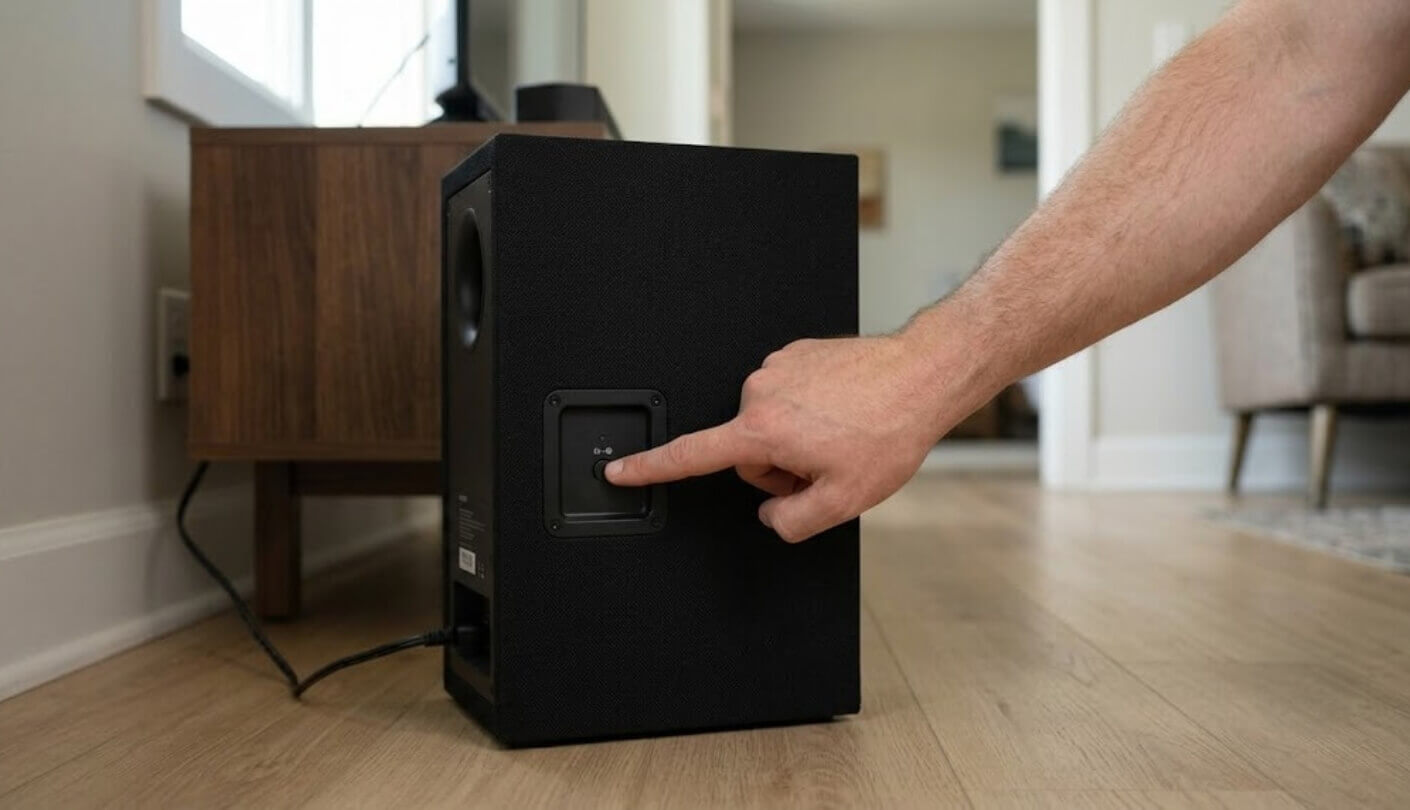
Cabinet dimensions decide this purchase more often than driver size does. A subwoofer that measures barely over four inches across its narrow face can lie flat behind a media console or stand upright in the gap beside it, and it will disappear into a rented apartment in a way that a fifteen-inch-tall tower never manages. The tall cabinets return that space as pressure, since a bigger sealed or ported volume lets a woofer move air without the cone hitting its limits at ordinary movie volume. Neither approach is wrong, but the choice is close to permanent once the furniture goes back.
Measure the actual gap where the subwoofer will sit before you compare drivers or wattage on any of these systems. A cabinet that does not fit the room is worse than a smaller one that does.
Firing direction matters just as much as footprint. A side-firing driver needs breathing room on the side it faces, so tucking that cabinet tight against a wall or into a cupboard chokes it in a way that a front-firing design mostly shrugs off. I moved one of these subwoofers three times in an evening and got three noticeably different bass balances out of the same scene, which says more about placement than about the hardware. Corners reinforce low frequencies, so a sub that sounds thin in the middle of a room often needs nothing more than a shift of two feet.
Bar Length and the Furniture It Has to Fit
Soundbar width in this group starts under two feet and stops just short of three and a half, a spread wider than anything separating these systems acoustically. A bar wider than the TV stand it sits on looks wrong and, more practically, cannot be centered. Height is the quieter constraint: anything above roughly two and a half inches starts to clip the bottom edge of a screen on a low-set pedestal, blocking part of the picture or the infrared window that the TV remote needs. Depth decides whether the bar overhangs the front lip of a shelf.
The comfortable rule is to match bar width loosely to screen width and then check the two smaller numbers against the furniture rather than the television. I have wall-mounted bars specifically to escape a shelf that was three inches too shallow, and every one of these five includes some mounting provision, though only some of them include the bracket hardware to go with it. A compact bar under a large screen sounds narrower than a full-width one, so the trade is real, but a bar that cannot be positioned properly loses more than it gains.
What the Bar Can Decode Before Anything Else Matters
Format support in this price range is thinner than the marketing suggests, and it is worth checking early because no processing mode compensates for a format the hardware cannot read. None of these five decodes Dolby Atmos. Most of them handle the Dolby Digital bitstream that arrives over ARC from a TV app plus two-channel PCM, and that covers the overwhelming majority of streaming and broadcast audio. DTS is where the group splits, and it splits in a way that catches people out when a Blu-ray player is involved.
A bar that cannot decode a format will usually fall back to stereo rather than going silent, so the failure is quiet and easy to miss. Check the format list against your disc player before you check it against your streaming apps.
Virtual surround processing sits on top of decoding and should be judged separately. Sony, Hisense, Samsung and Yamaha each brand their own widening effect, and every one of them works by manipulating phase and timing to push apparent sound sources past the physical ends of the bar. I leave these switched on for films and switch them off for music, because the same processing that widens a helicopter flyover smears a drum kit. One bar in this lineup ships without any widening mode whatsoever, and it loses less than you would expect, because a stereo pair with good drivers already images wider than a processed pair with weak ones.
Reading the Wattage Number on the Box
Power figures on budget soundbars are close to useless for comparison because no two brands calculate them the same way. One system in this roundup claims four hundred watts, another claims ninety, and the ninety-watt model is not four times quieter. The larger numbers are peak or maximum figures summed across every amplifier channel, measured under conditions no living room reproduces. The smaller ones tend to be rated continuous output, a harder measurement to pass and a more honest one to publish.
A better proxy sits on the compliance label: rated power consumption, which regulators require and marketing cannot inflate. I read that number before I read anything on the front of the carton, and on one system in this roundup it reports fifty-five watts drawn between bar and subwoofer against three hundred and thirty watts of advertised output. Judge volume potential by driver count, cabinet size and the dimensions of your room, and file the headline wattage under branding.
Ports, Remotes, and Whether the System Can Grow
Assume a single HDMI socket unless the spec sheet says otherwise, and assume it is an output that pulls audio back from the television over ARC rather than an input for a console. That arrangement is fine for anyone whose sources all plug into the TV, which covers most households, but it means the soundbar cannot sit in the middle of the signal chain. Only one system here adds a second HDMI socket for a source device, and even that one passes audio without passing 4K video through. Optical inputs and a 3.5mm analog jack fill the gap on several models, and one bar carries two optical sockets rather than the usual single.
An HDMI socket on a soundbar this cheap is almost always an output, not a spare input for a games console. Plan on everything plugging into the television and letting ARC carry the audio back.
Upgrade paths deserve a look before checkout, because they separate a purchase that ends at the till from one that continues. Rear speakers, where they are supported at all, arrive as a separately sold wireless kit that pairs to the bar in the same way the subwoofer does. I would weigh that path heavily if there is any chance of wanting genuine surround later, since retrofitting it onto a system that never supported it means replacing everything. Front displays and remote layout look like trivia on a spec sheet and stop looking that way the first time you hunt for night mode with the lights off.
Top 5 Soundbars With Subwoofer Under $300 in 2026
The order below follows what each system does that the other four cannot do at all. Where two land close on sound, cabinet dimensions and upgrade paths break the tie, because those are the parts nobody can retrofit later.
- Largest Subwoofer Driver
- OLED Display Window
- Dedicated Voice Button
- Wireless BRAVIA Connection
- Independent Bass Control
- Dedicated One-Inch Tweeters
- Multi-Level VoiceAdjust
- Published Frequency Rating
- Three Wired Inputs
- Both Cables Included
- Slimmest Subwoofer Cabinet
- Bluetooth 5.3
- Six EQ Presets
- Roku TV Ready
- USB Media Playback
- Built-In Center Channel
- Native DTS Decoding
- Rear Speaker Upgrade
- Second HDMI Socket
- Adjustable Channel Levels
- Two Optical Inputs
- Bluetooth Multipoint Pairing
- App Control Included
- Flexible Sub Orientation
- Honest Power Rating
Best Soundbars With Wireless Subwoofer Under 300: Comparison
Manufacturer-published figures only, converted to the same units so each row reads across cleanly:
| Specification | Sony HT-S400 | Polk Signa S2 | Hisense HS2100 | Samsung HW-B750D | Yamaha SR-C30A |
| Channel Layout | 2.1 | 2.1 | 2.1 | 5.1, six speakers | 2.1 |
| Soundbar (W x H x D) | 35.5 x 2.6 x 3.5 in | 35.4 x 2.2 x 3.2 in | 31.5 x 2.4 x 3.5 in | 40.5 x 2.3 x 4.1 in | 23.6 x 2.5 x 3.8 in |
| Subwoofer Cabinet (W x H x D) | 7.6 x 15.3 x 15.8 in | 6.7 x 13.4 x 12.2 in | 4.3 x 11.8 x 13.8 in | 7.2 x 13.5 x 11.6 in | 6.3 x 13.3 x 14.4 in |
| Audio Decoding | Dolby Digital, Dolby Dual Mono, LPCM 2ch | Dolby Digital 5.1 | Dolby Digital, DTS Virtual:X, PCM | Dolby Digital 5.1, DTS 5.1, DTS Virtual:X, LPCM 2ch | Dolby Digital, Dolby Pro Logic II |
| HDMI | 1 out (ARC) | 1 (ARC) | 1 (ARC, CEC) | 1 in, 1 out (ARC) | 1 out (ARC) |
| Optical and Analog Inputs | 1 optical | 1 optical, 1 aux 3.5mm | 1 optical, 1 aux 3.5mm | 1 optical | 2 optical, 1 aux 3.5mm |
| USB Port | Firmware updates only | None | Yes, media playback | Yes, music playback | None |
| Rear Speaker Expansion | No | No | No | Yes, SWA-9200S kit sold separately | No |
The subwoofer cabinet row and the rear-speaker row age better than the rest. One settles whether the hardware fits the room you already have, the other settles whether the room can be built out around the hardware.
Sony HT-S400 2.1ch Soundbar Review
Editor's Choice
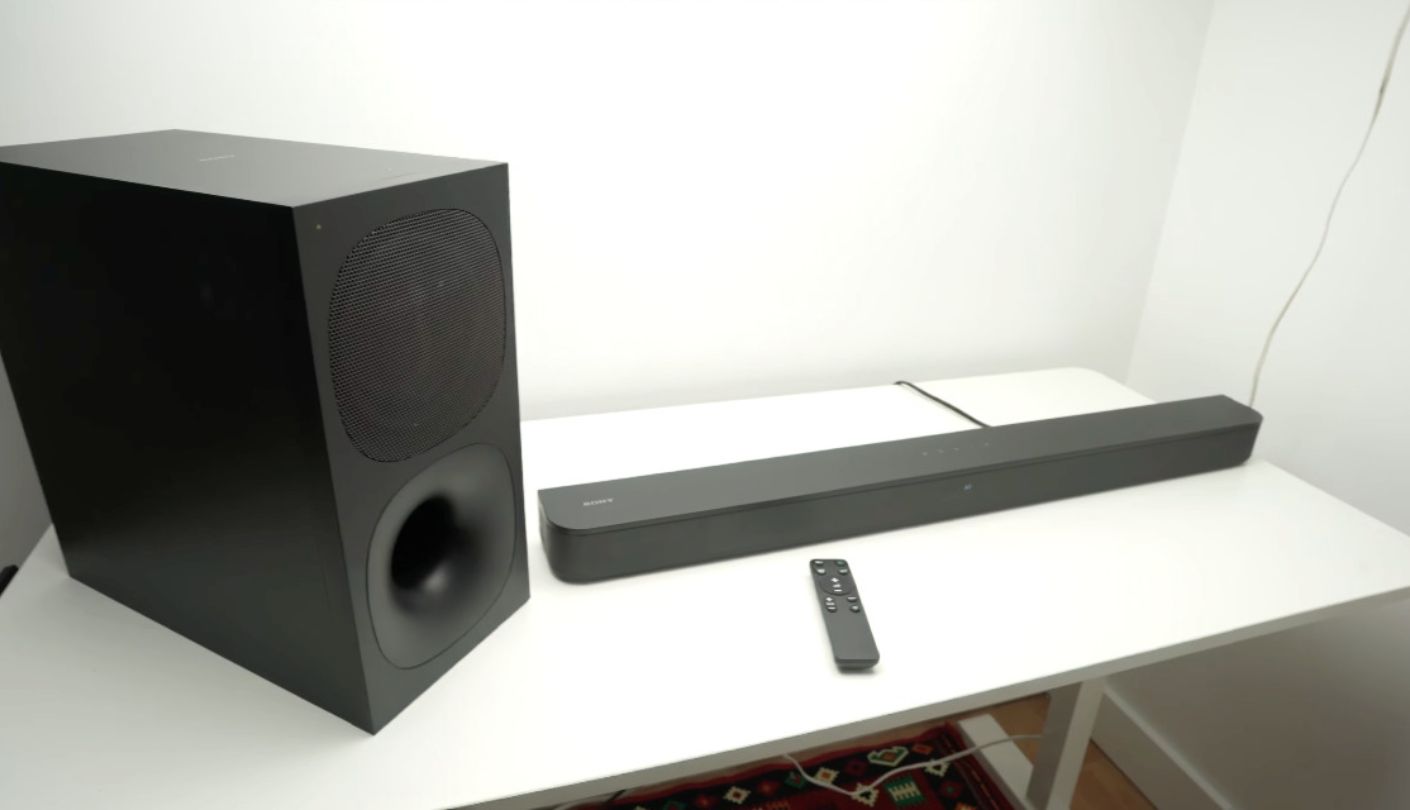
Sixteen pounds and two ounces. That is the subwoofer that arrives with the Sony HT-S400, and it is more than double the weight of what Hisense sends in the same price bracket. The cabinet measures 7.6 by 15.3 by 15.8 inches around a 160mm driver, and it is the largest driver any of these five brands publishes. Lift it once and the ranking stops being a mystery. Low frequencies are a physics problem before they are an engineering problem, and Sony simply built the bigger box.
The bar itself runs 35.5 inches wide and uses Sony's X-Balanced Speaker Unit, a rectangular cone shape that trades the round diaphragm for more radiating area inside the same slim enclosure, with a Separated Notch Edge surround intended to keep the cone from breaking up at volume. S-Force PRO Front Surround handles the widening effect. Sony quotes 330W of total output, and I would ignore that number entirely: the same specification sheet lists rated power consumption of 35W for the bar and 20W for the subwoofer, which is the figure that has to survive regulatory scrutiny. What the system sounds like is dense and slightly warm, with a low end that stays composed rather than thumping once and going soft.
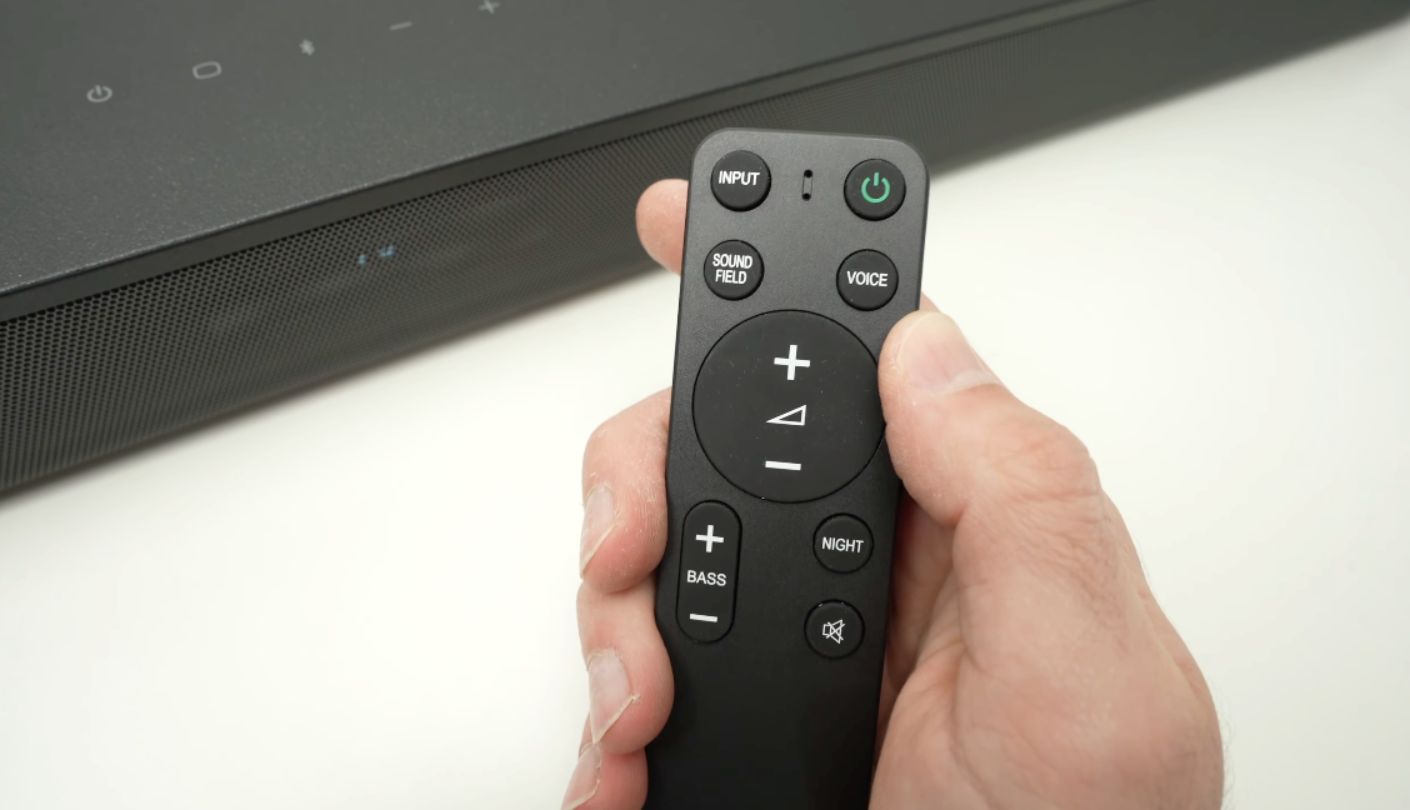
The OLED display window on the front of the bar turned out to be the feature I noticed most in daily use. Every other system in this price range communicates through colored LEDs that require the manual to decode, and this one prints the input, the volume number and the active mode in readable text. Voice mode and Night mode each get a dedicated remote button rather than being buried in a cycling menu, Sound Field toggles the surround processing on and off in one press, and separate bass keys adjust subwoofer level independently of master volume. Small things, but they are the ones you touch every evening.
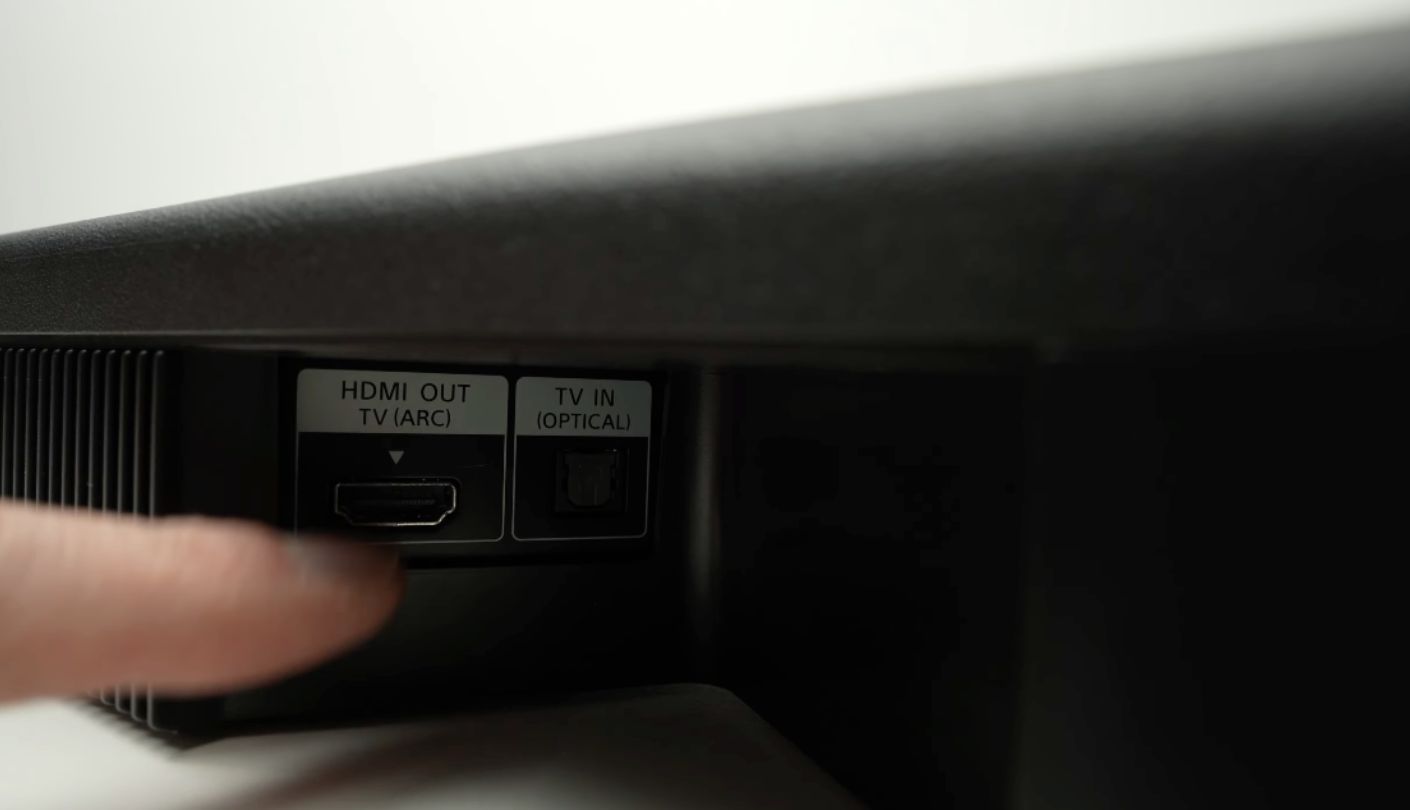
Connections are where the Sony asks for something in return. A single HDMI socket handles the ARC link to the television and nothing else, so consoles and disc players have to plug into the TV. There is one optical input, a USB type A port restricted to firmware updates, and Bluetooth 5.0 in receive-only mode with SBC as the codec. Owners of a compatible Sony BRAVIA television get two extras: audio can travel to the bar over a wireless connection with no cable at all, and the soundbar's settings appear directly inside the TV's quick settings menu, the tidiest control arrangement anyone offers below three hundred dollars.
Format coverage is what pays for all of that. This bar reads Dolby Digital, Dolby Dual Mono and two-channel LPCM, and that is the whole list, so DTS soundtracks from physical media will drop to stereo or need re-encoding at the source. There is no rear-speaker kit, no app, and the subwoofer wants genuine floor space rather than a gap behind the sofa. Anyone whose viewing runs through streaming apps and broadcast television will never encounter the format ceiling, and everyone will notice the woofer.
Pros:
- Largest Subwoofer Driver
- OLED Display Window
- Dedicated Voice Button
- Wireless BRAVIA Connection
- Independent Bass Control
Cons:
- Dolby Digital Only
- One HDMI Socket
Summary: Sony spent its budget on the two parts of a soundbar system that resist cost-cutting most stubbornly, the woofer and the user interface, and accepted a thin format list to pay for them. That is the correct order of priorities for a living room where the television is the only source.
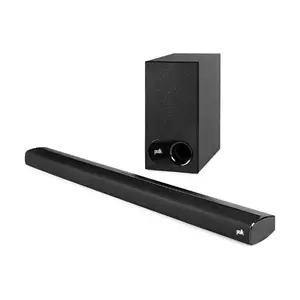
Polk Audio Signa S2 Review
Best Overall
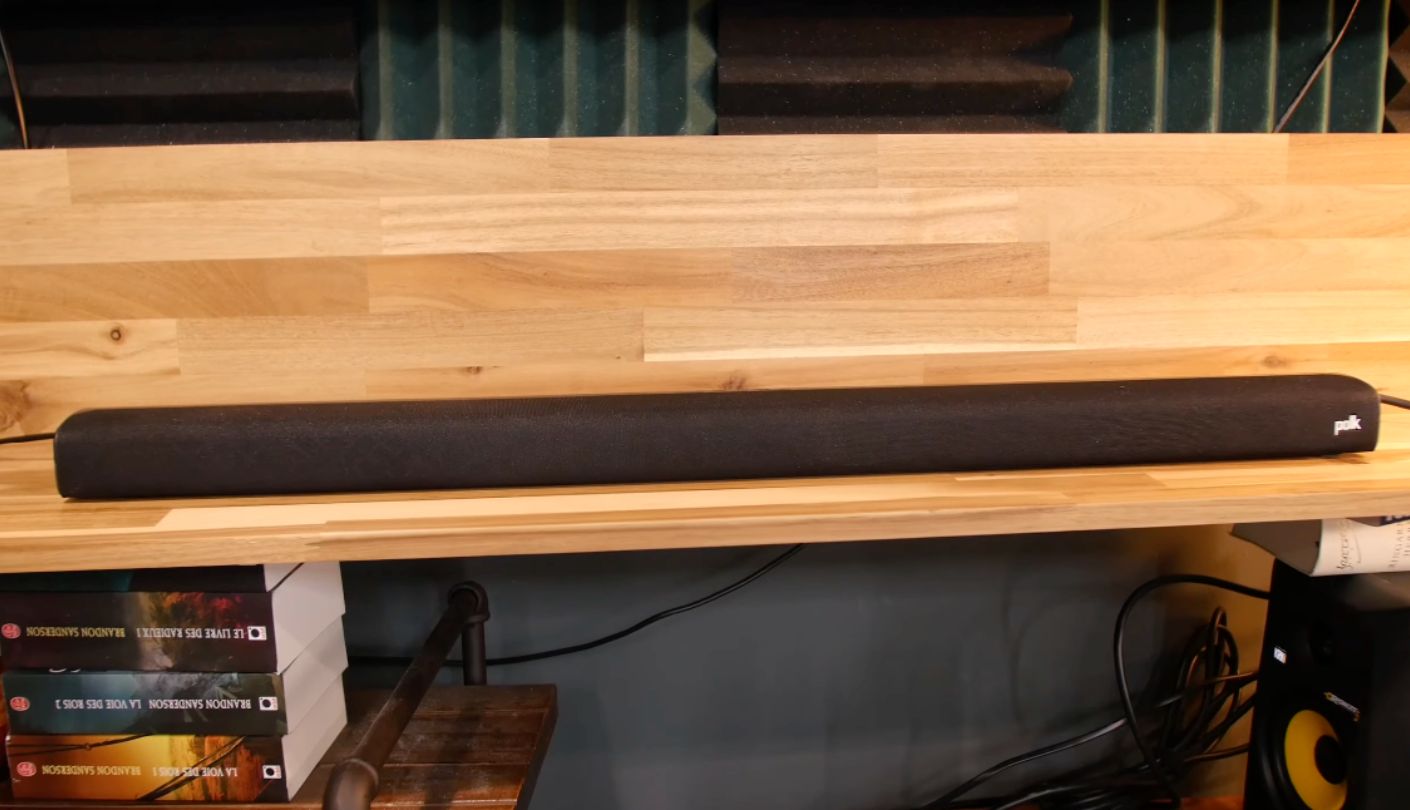
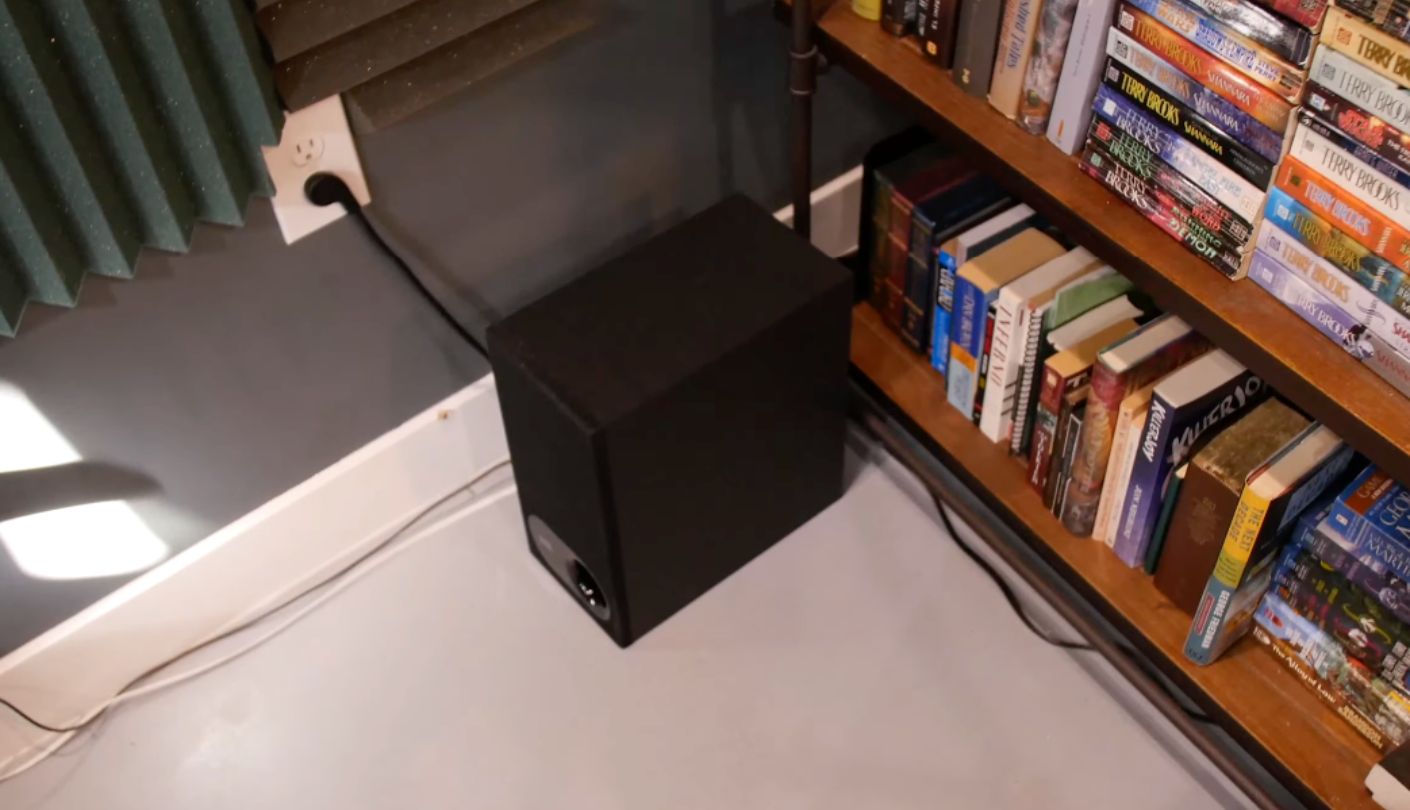
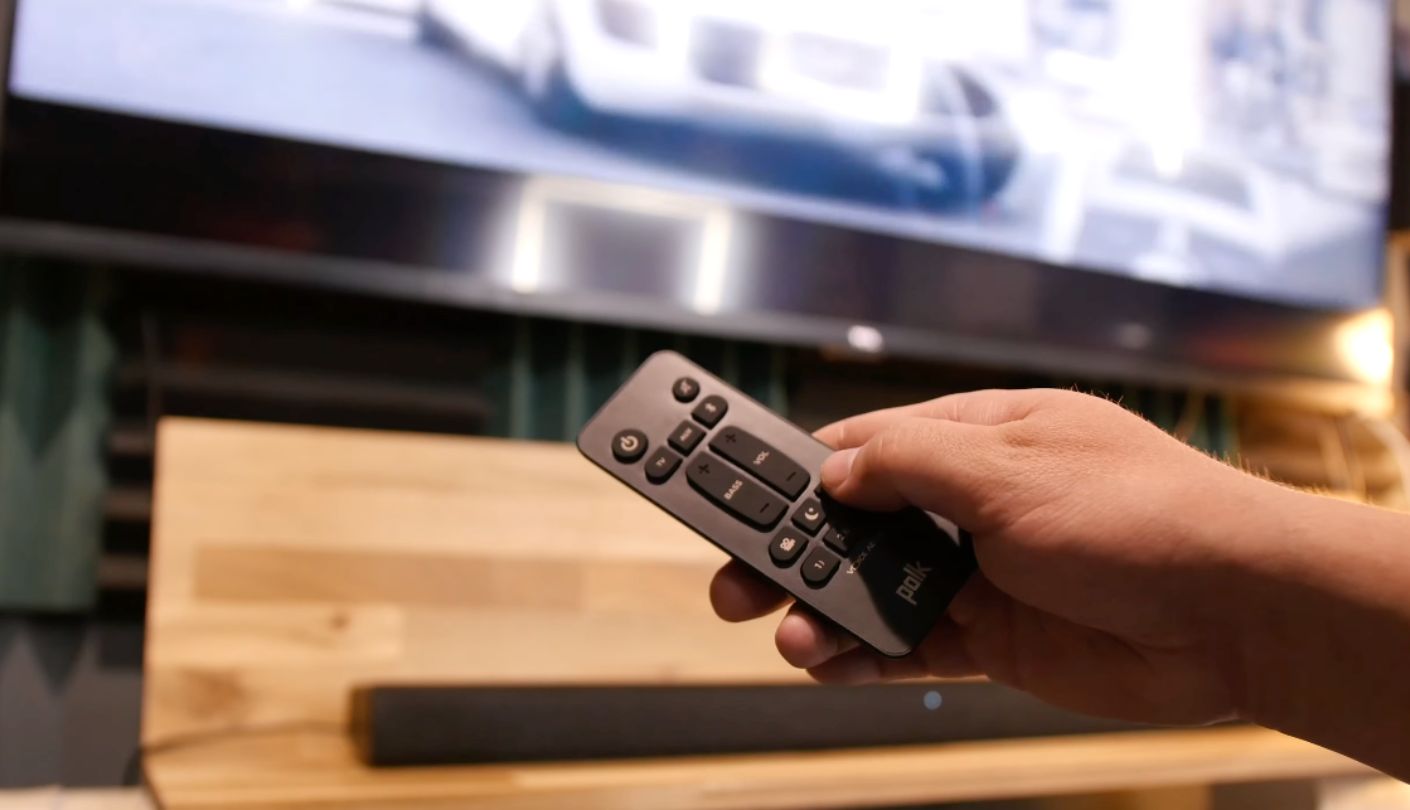
I have trouble recommending a system whose bass gives up at 45Hz, and I am recommending this one anyway. The Polk Audio Signa S2 publishes a total frequency response of 45Hz to 20kHz, an unusually specific claim in a category that prefers vague adjectives, and the number is accurate in both directions. Below that point the ported 5.25-inch front-firing woofer rolls away rather than digging deeper. What sits above that point is the most carefully assembled sound of the five.
The driver layout explains it. Each end of the 35.4-inch bar carries an oval midrange measuring 1.25 by 4.4 inches, an odd shape that squeezes usable cone area into a chassis only 2.2 inches tall, and each one is paired with its own 1-inch round tweeter. Actual dedicated tweeters at this money are close to unheard of, since the cheaper route is a pair of full-range cones asked to cover everything from voices to cymbals. The audible result is treble that stays separate from the midrange instead of blurring into it, and a bar that handles music considerably better than its rivals when the film is over.
VoiceAdjust is Polk's dialogue tool and it works differently from the single-button voice modes on the other systems. Rather than applying one fixed midrange lift, it steps through several levels of vocal emphasis so you can settle on the least aggressive setting that solves the problem, which keeps the tonal balance intact. Night mode pulls the bass down while pushing that vocal level up, a sensible pairing for late viewing, and one-button Movie and Music presets cover the rest. The compact infrared remote also carries its own bass rocker for the subwoofer.
Connectivity is broader than the Sony without adding an HDMI socket: HDMI with ARC, Toslink optical, a 3.5mm analog input and Bluetooth streaming, plus both an HDMI cable and an optical cable in the box, which sounds trivial until you price cables separately. Decoding covers Dolby Digital 5.1, and the bar mounts on keyholes rather than a supplied bracket. Polk warranties the electronics for one year and the drivers for two, an unusual split that quietly signals which part the company expects to outlast the other.
Living with it exposes the compromises quickly enough. There is no front display, only a row of status LEDs that need the manual on first use, no USB port at all, and the 6.7 by 13.4 by 12.2-inch subwoofer runs out of headroom in a large open-plan room in a way the Sony does not. In a normal bedroom or a medium lounge, none of that surfaces, and the balance across voices, music and effects is the best-judged in the group.
Pros:
- Dedicated One-Inch Tweeters
- Multi-Level VoiceAdjust
- Published Frequency Rating
- Three Wired Inputs
- Both Cables Included
Cons:
- No USB Input
- Early Bass Rolloff
Summary: This is the system to buy if music matters as much as movies, because separate tweeters and a properly stepped dialogue control fix the two things that make cheap bars tiring over a long evening. Polk also splits its warranty between electronics and drivers, which is a small clue about which half of the system was engineered to last.
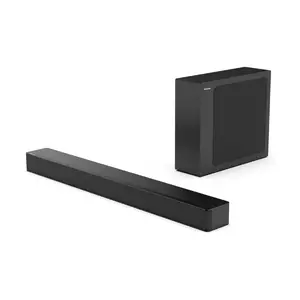
Hisense HS2100 2.1ch Soundbar Review
Slimmest Subwoofer
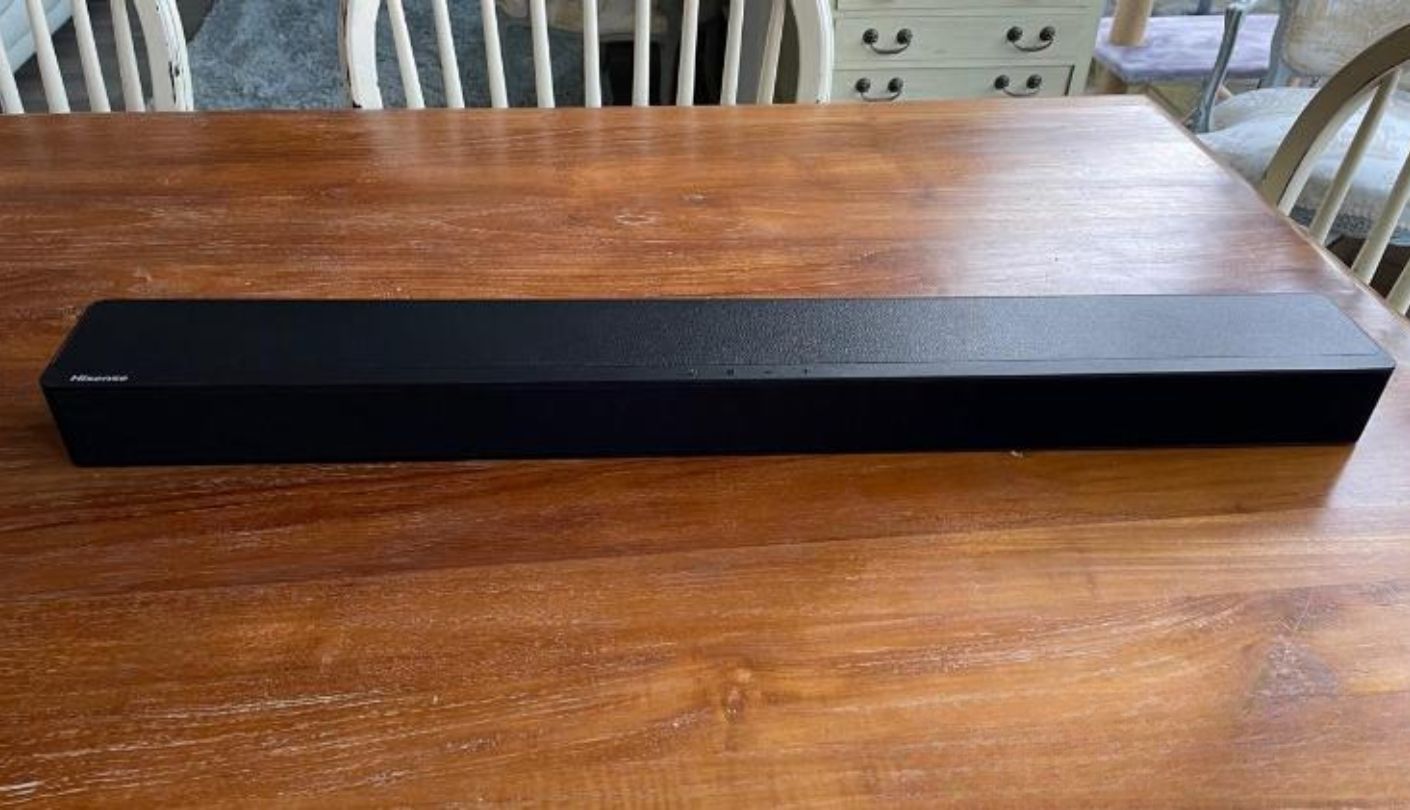
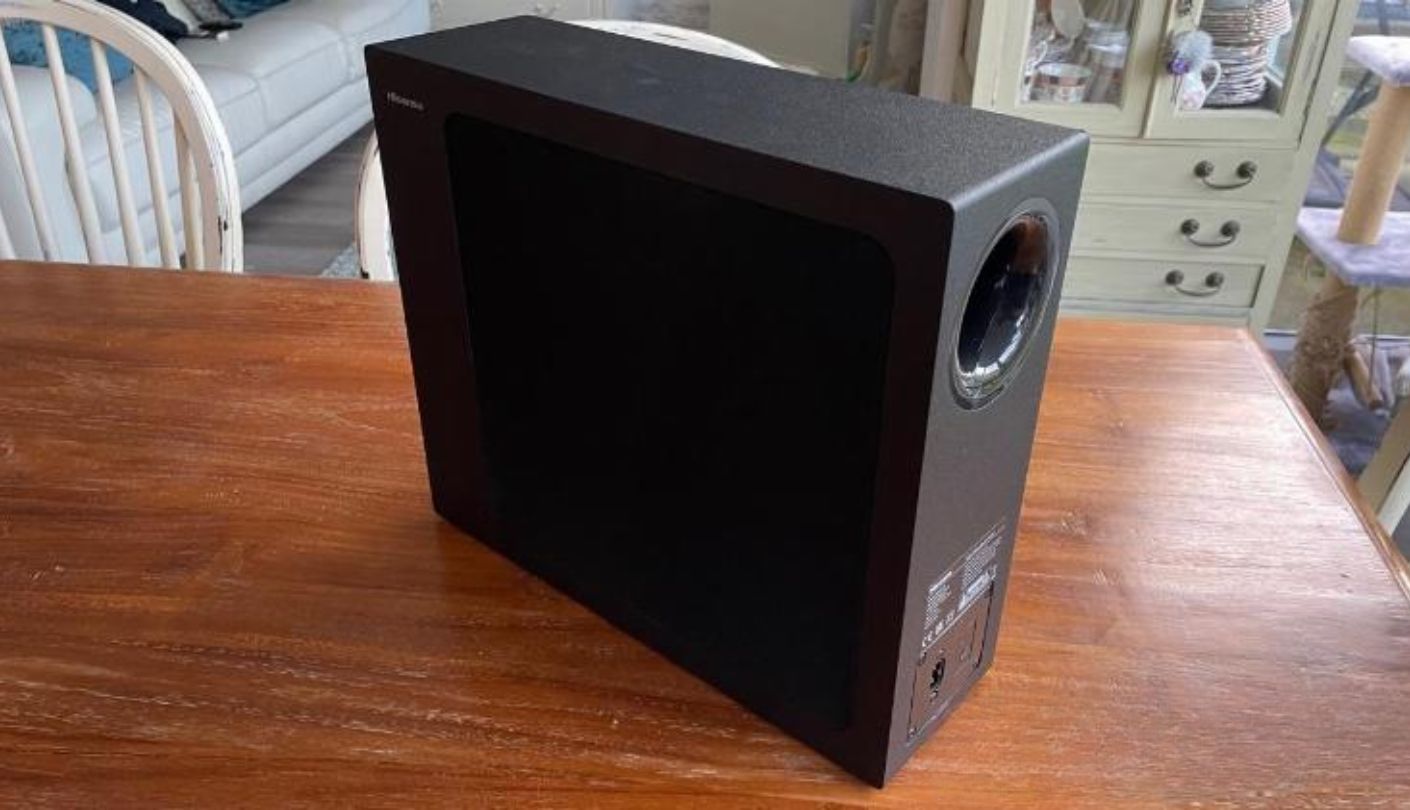
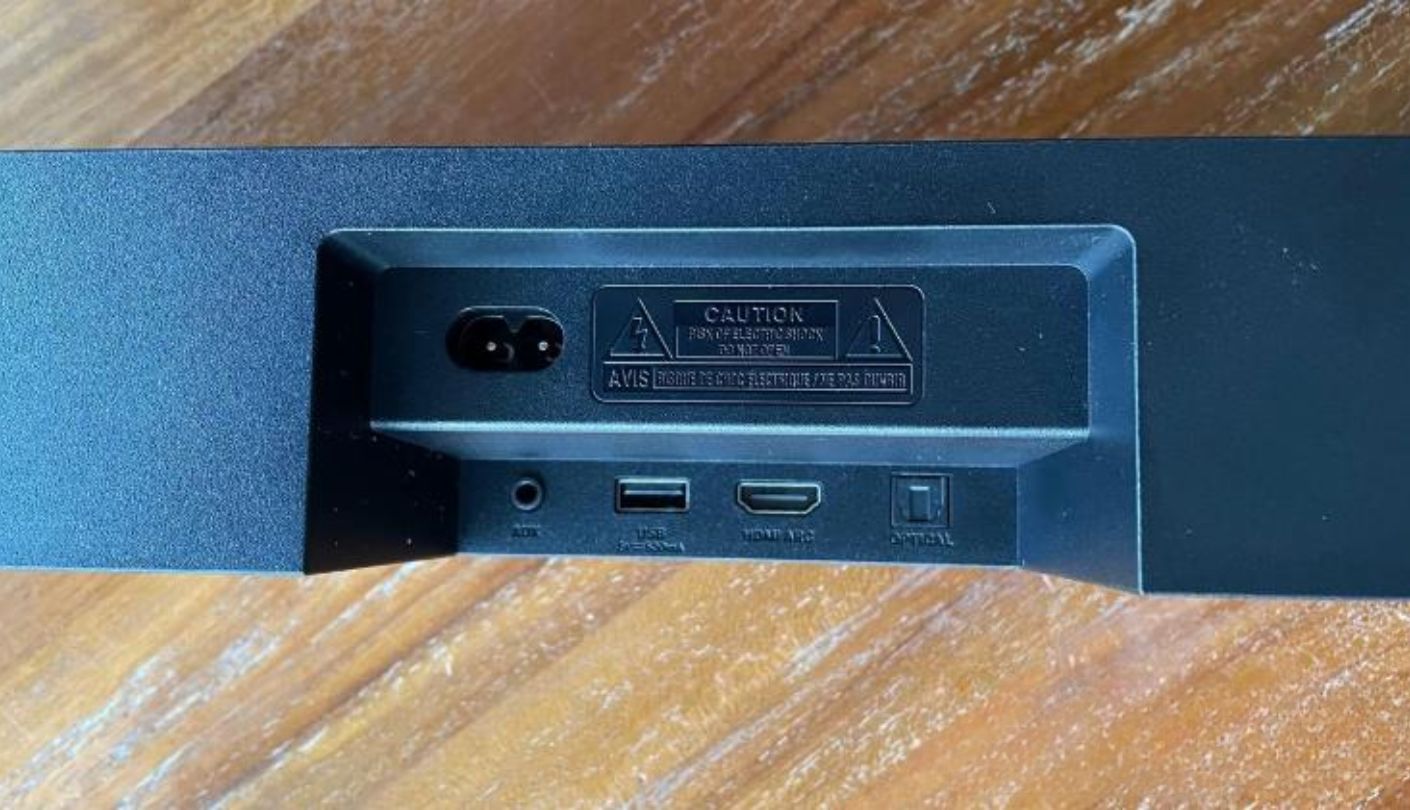
How thin can a subwoofer cabinet get before it stops behaving like a subwoofer? The Hisense HS2100 puts that question to a harder test than anything else in this price range, with an enclosure measuring 4.3 by 11.8 by 13.8 inches and weighing 7.5 pounds. It holds a 5.25-inch driver, the same nominal size as the Polk's, inside less than a third of the internal volume that Sony gives its woofer. Physics takes its cut, and the low end here is punchy in the upper bass and largely absent underneath it.
What that thin cabinet buys is placement freedom nothing else offers. The sub stands upright in a four-inch gap between a console and a wall, or lies flat under a low unit, and in a small apartment that is the difference between owning a subwoofer and returning one. The bar is equally slight at 31.5 inches wide and just 3.3 pounds, light enough that it feels hollow in the hand. Hisense quotes 240W of maximum audio power with 120W of that allocated to the subwoofer, and those are peak figures rather than continuous ratings, so read them as a ratio rather than a promise.
Processing is where this model punches above its cabinet. DTS Virtual:X handles the surround effect and produces a genuinely wider stage than the Yamaha's equivalent mode, with a faint sense of height on well-mixed action scenes. Six EQ presets cover Movie, Music, News, Sport, Night and Game, more granularity than any rival on this shortlist, though the flipside is that manual EQ adjustment does not exist. Decoding stops at Dolby Digital and PCM, so Dolby Digital Plus and Atmos streams have to be down-converted by the television first.
The port selection is the most generous of the five relative to price: HDMI with ARC and CEC, optical, a 3.5mm analog jack, a USB port that plays media files, and Bluetooth 5.3, the newest version published for any bar in this roundup. Roku TV Ready certification means a Roku television's own remote controls the bar over HDMI, and Hisense's EzPlay does the same job for Hisense sets. A TV mode routes decoding duties back to a compatible Hisense television, letting the set handle formats the bar cannot read on its own. A wall mount kit comes in the box.
The economies show in the places that do not affect the sound. There is no display screen, just six white LEDs and one tri-color indicator whose meanings live in the manual. The plastics feel thin, the 3.3-pound chassis feels close to empty in the hand, and nothing about the build promises a decade of service. For the money it occupies the least floor space of any system that still ships a real subwoofer, and that is a narrow but genuine achievement.
Pros:
- Slimmest Subwoofer Cabinet
- Bluetooth 5.3
- Six EQ Presets
- Roku TV Ready
- USB Media Playback
Cons:
- No Display Screen
- Featherweight Bar Chassis
Summary: Buy this one for the floorplan rather than the frequency response, because a subwoofer that fits behind furniture gets used while a better one that does not fit gets sold. The Roku and Hisense remote integration makes it the least fiddly option for anyone already inside those ecosystems.
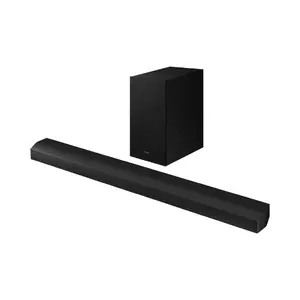
Samsung HW-B750D 5.1ch Soundbar Review
Surround Pick
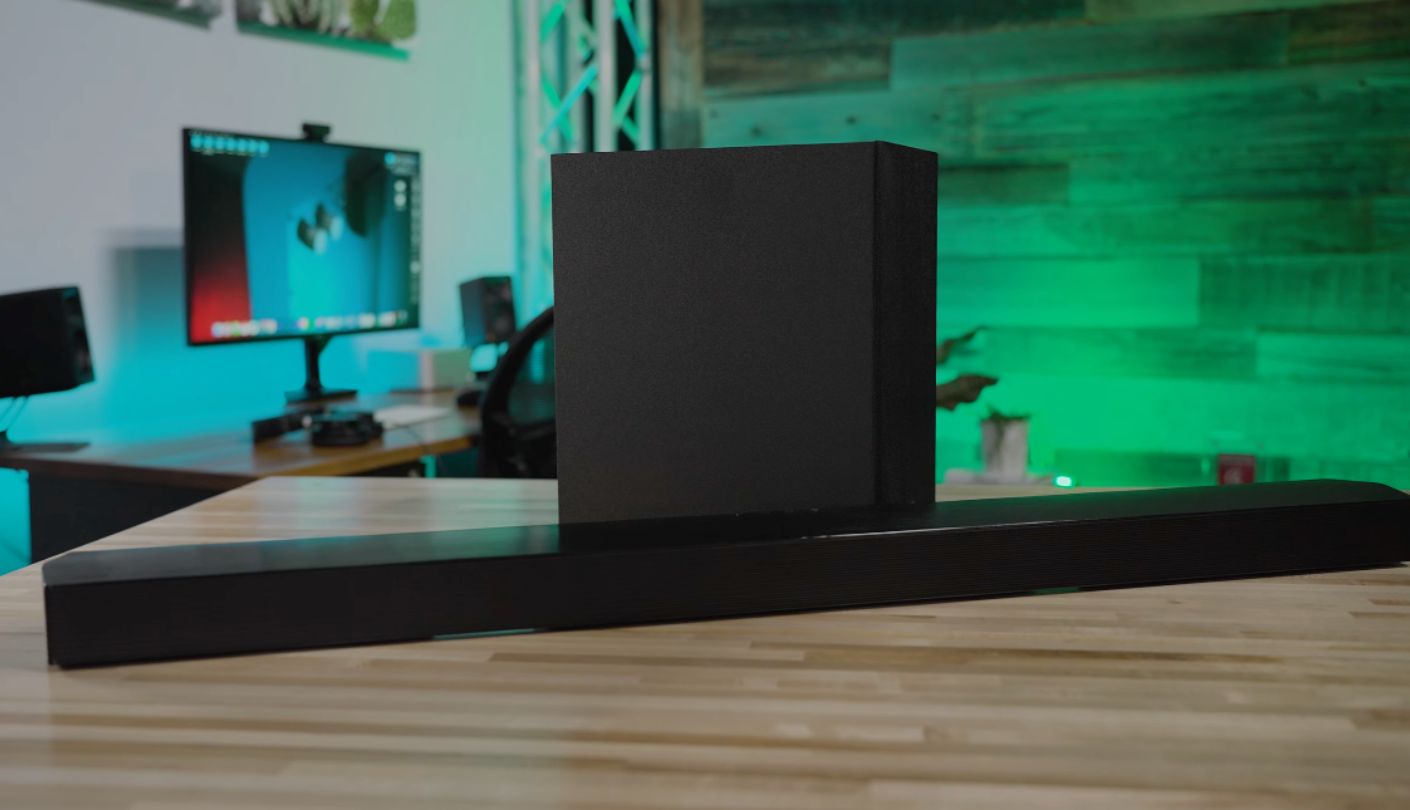
Four of these systems run two channels plus a subwoofer. The Samsung HW-B750D runs five, with six speakers in total spread across a 40.5-inch bar, and that structural difference outranks every other spec on the sheet. A dedicated center channel means dialogue comes from an actual driver aimed at the room rather than from a phantom image constructed between two end-mounted cones. On dense action mixes the difference is immediate: voices sit in front of the effects instead of competing with them.
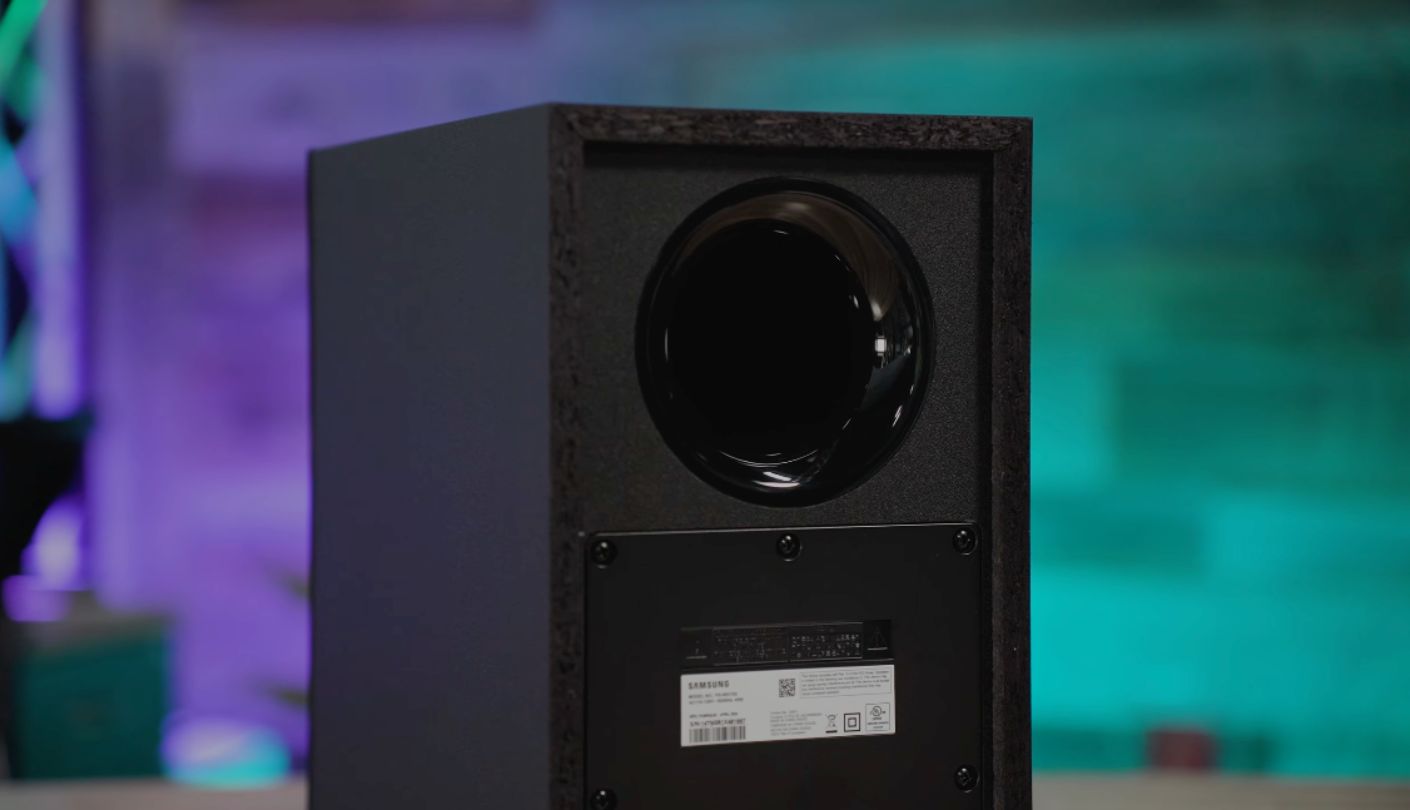
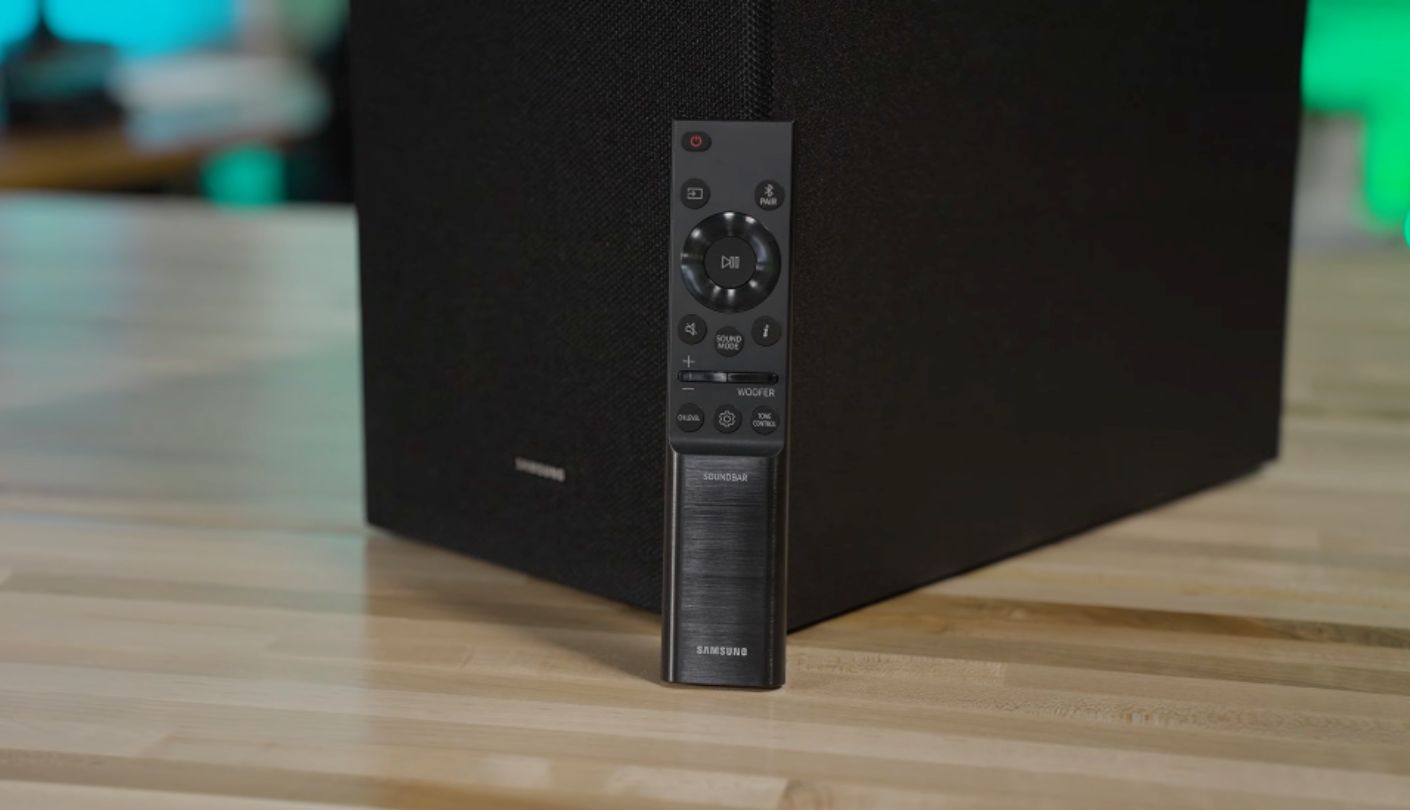
Built-in side speakers handle the flanks, and the remote carries a CH LEVEL button that steps through independent center and side trims, so an overly recessed voice track can be fixed without touching the master EQ. Samsung quotes 400W total, the largest claim in this roundup, from a bar weighing 7.1 pounds and an 11-pound subwoofer in a 7.2 by 13.5 by 11.6-inch cabinet with Bass Boost mode on tap. The sub is not the biggest of the five, and the extra channels rather than the low end are what you are buying.
Nothing else in the roundup reads as many formats. Alongside Dolby Digital 5.1 the bar decodes DTS 5.1 outright, not merely the virtual variant, which makes it the only system in this comparison that reads a DTS soundtrack straight off a disc player. DTS Virtual:X, Surround Sound Expansion, Adaptive Sound, Game Mode, Voice Enhance and Night Mode fill out the mode list, and Adaptive Sound in particular does useful work at low volume by pulling detail forward as the level drops. USB playback covers MP3, AAC, OGG, FLAC, WAV and AIFF.
The upgrade path is the single strongest argument for this system. Samsung's SWA-9200S wireless rear kit pairs to the bar and turns the system into true surround with speakers behind the seating position, an upgrade path none of the other four offers in any form. The second HDMI socket accepts a source device rather than only linking to the television, although it passes audio without 4K video passthrough, so a games console still wants to go into the TV first. Bluetooth 4.2 with multi-connection holds two phones simultaneously, and Samsung TV owners get One Remote control of the whole system.
Two things need saying plainly. The HDMI link is ARC rather than eARC, so the higher-bandwidth lossless formats that eARC exists to carry are outside this system's reach regardless of what the television can send. And at 40.5 inches the bar is the widest of the five by five inches, which rules out narrow furniture entirely. Accept those and this is the most complete piece of home cinema hardware under three hundred dollars.
Pros:
- Built-In Center Channel
- Native DTS Decoding
- Rear Speaker Upgrade
- Second HDMI Socket
- Adjustable Channel Levels
Cons:
- ARC Without eARC
- Widest Bar Footprint
Summary: Everything else in this roundup is a two-channel bar with bass attached, and this is a compact home cinema system that happens to cost the same. The rear-speaker kit turns it into the only purchase here that has a second act.
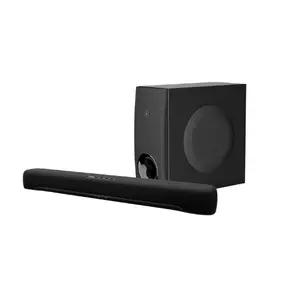
Yamaha Audio SR-C30A Compact Soundbar Review
Compact Pick
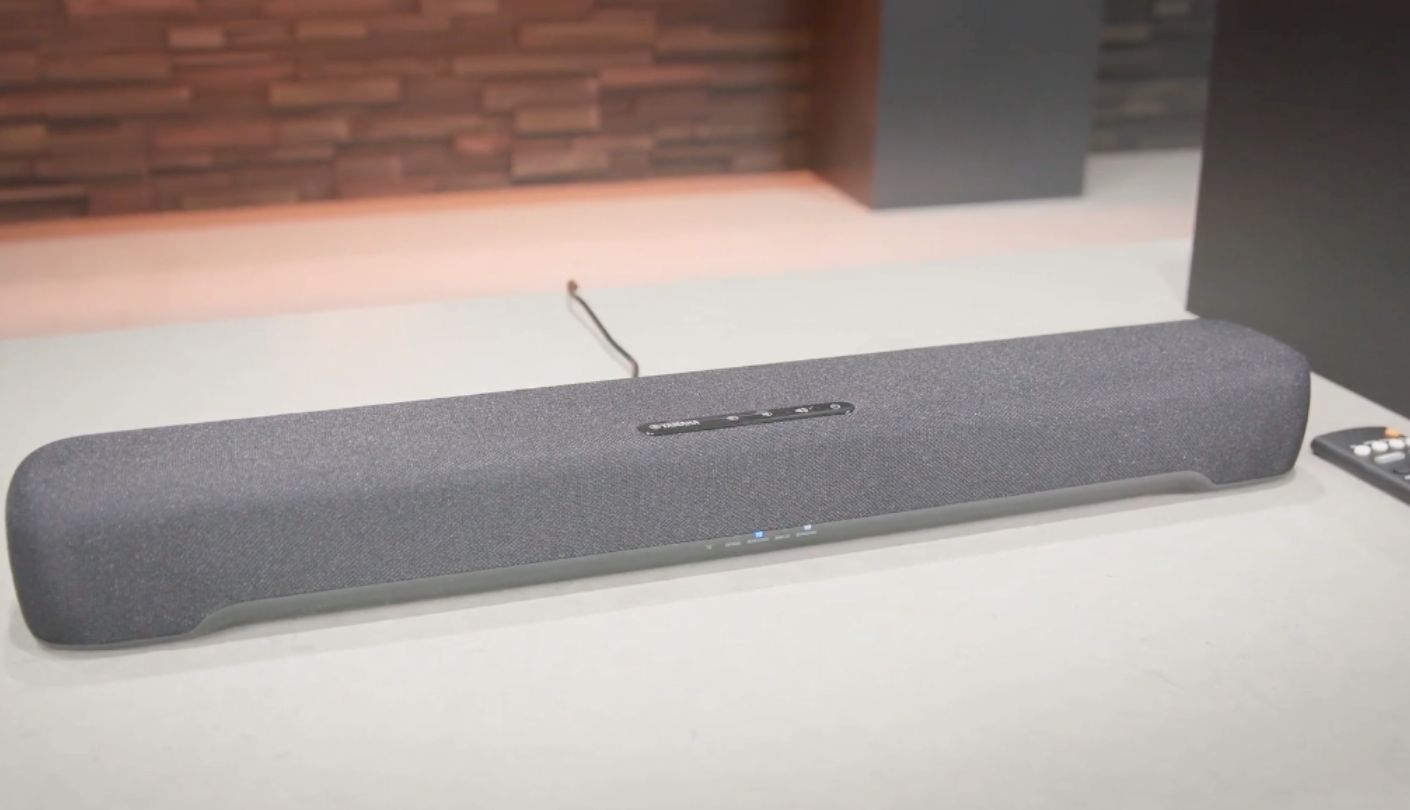
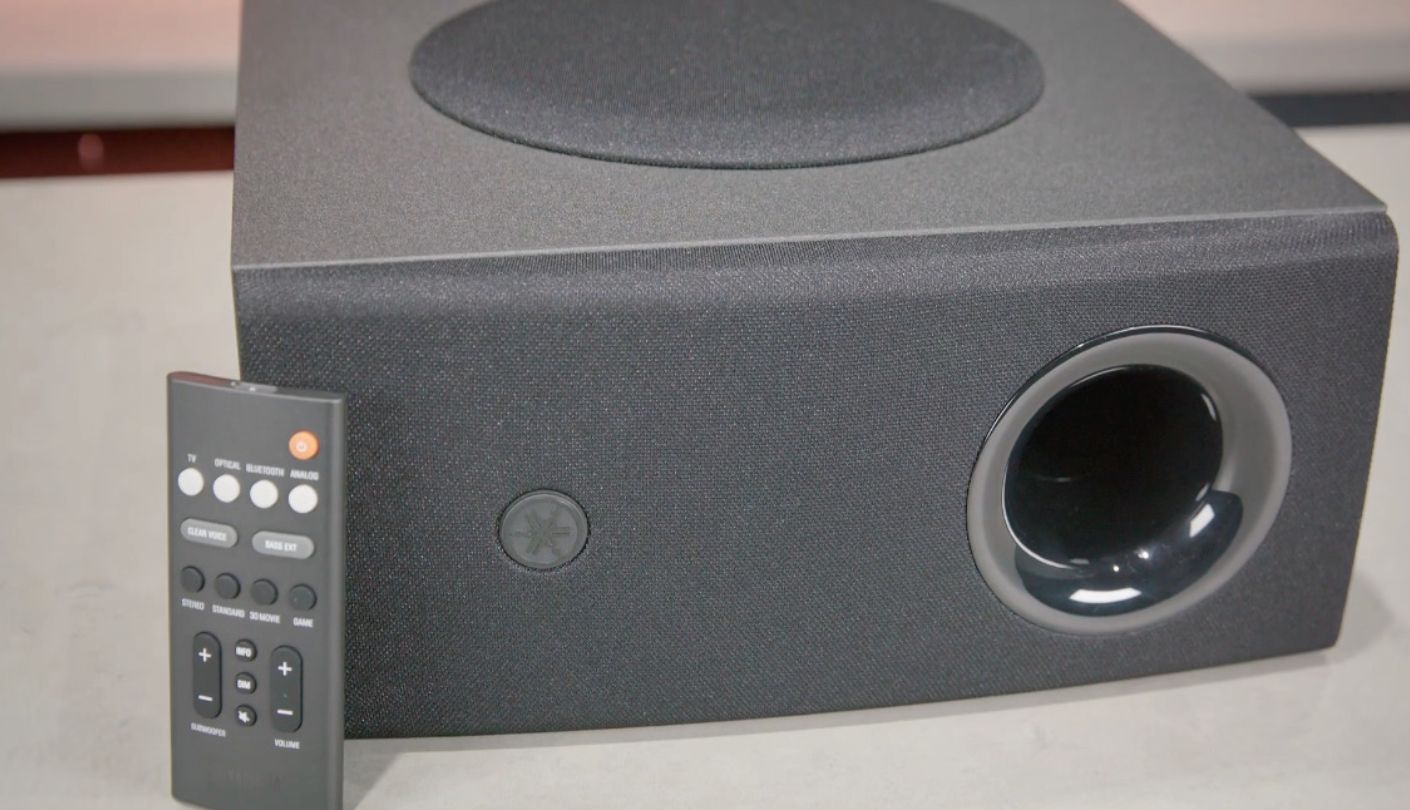
The carton looked wrong on arrival, small enough that I checked the label twice for a missing second box. The Yamaha SR-C30A pairs a 23.6-inch bar weighing under three pounds with a subwoofer standing 13.3 inches tall on a 6.3-inch footprint, and the whole system takes up less shelf than some rivals give to the bar alone. Almost seventeen inches shorter than the Samsung and nearly a foot shorter than the Sony, it is built for desks, bedrooms and the kind of small lounge where a full-width bar looks absurd.
Yamaha is also the only brand here that publishes a figure it can defend: 90W of output power, split as 20W to each of the bar's two 1.8-inch cones and 50W to the subwoofer. That is a rated continuous number rather than a summed peak, which is why it looks so small next to Samsung's 400W and why the two systems are far closer in practice than the arithmetic implies. The 5-1/8-inch woofer fires from the side of its cabinet with a bass reflex port on the front face, and the cabinet can stand vertically or lie horizontally depending on the space available.
Four sound modes cover Standard, Stereo, Game and 3D Movie, the last being Yamaha's own virtual widening effect. Game mode is tuned specifically for near-field listening, a real consideration on a system this size since plenty of them end up two feet from a face rather than ten feet across a room. Clear Voice lifts dialogue, Bass Extension tightens the handover between bar and sub and stays on permanently once you find it, and Adaptive Low Volume rebalances the frequency response at quiet levels so late-night viewing does not turn into thin midrange.
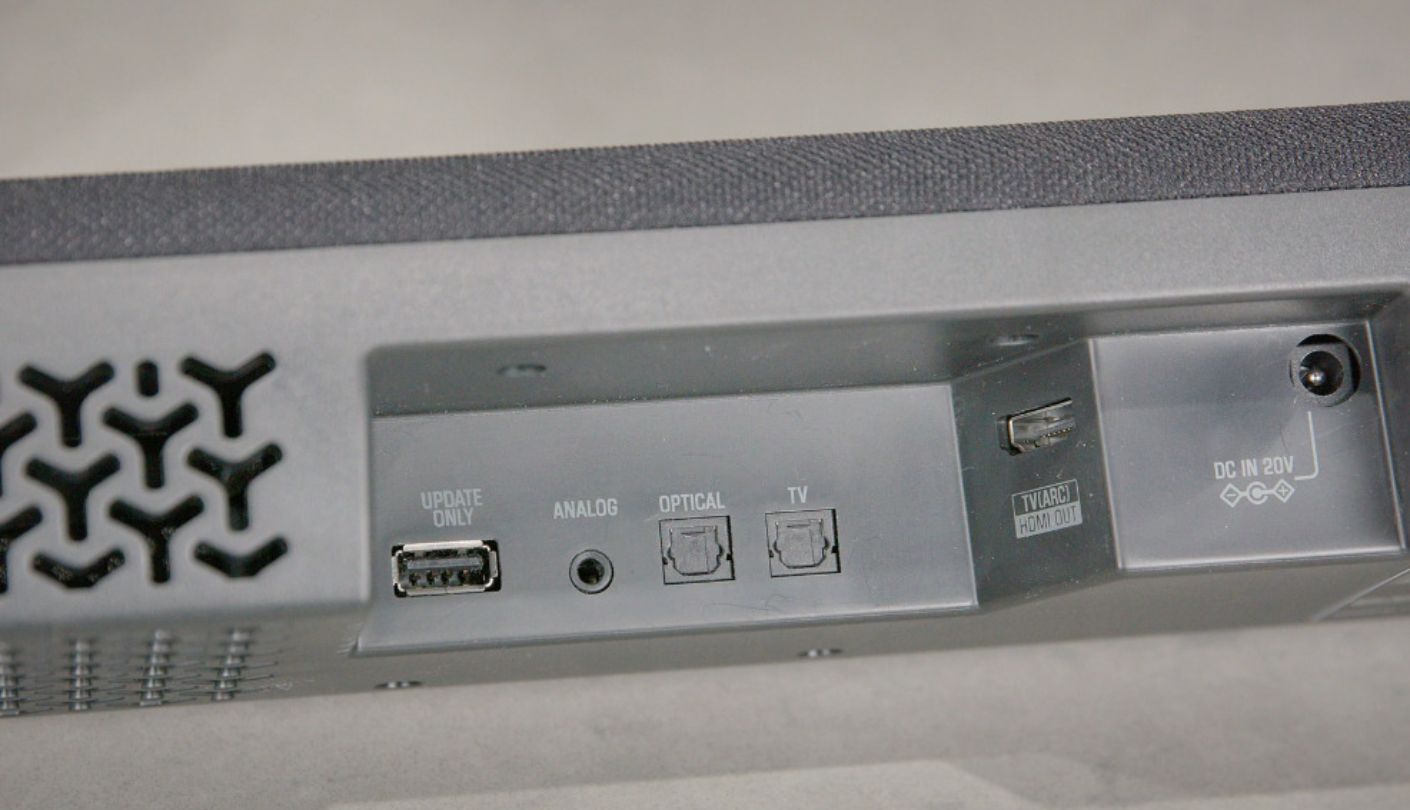
The back panel is better equipped than the footprint implies. One HDMI output carries ARC to the television, and beneath it sit two optical inputs rather than the customary single socket, plus a 3.5mm analog input for a console or a laptop. Bluetooth 5.0 supports SBC and AAC with multipoint pairing across two devices, so a phone and a tablet can stay connected at once. Yamaha's Sound Bar Remote app on iOS and Android duplicates the physical remote, and there are top panel controls for when both go missing.
Decoding covers Dolby Digital and Dolby Pro Logic II with no DTS support of any kind, there is no Wi-Fi, no rear-speaker option, and no 4K passthrough because there is no HDMI input to pass anything through. Anyone furnishing a main living room should look at the larger systems. Anyone furnishing a desk, a spare room or a small flat gets the tidiest hardware in this roundup, and a subwoofer that punches noticeably harder than its dimensions predict.
Pros:
- Two Optical Inputs
- Bluetooth Multipoint Pairing
- App Control Included
- Flexible Sub Orientation
- Honest Power Rating
Cons:
- Skips DTS Formats
- Narrow Stereo Spread
Summary: Yamaha built this for rooms where the other four simply will not fit, and the near-field Game mode plus multipoint Bluetooth reveal that a desk was always part of the design brief. Treat it as a small-space specialist rather than a shrunken living room system.
Soundbars With Wireless Subwoofer: FAQ
Do any of these five systems support Dolby Atmos?
None of them. Dolby Atmos requires either upward-firing drivers or the processing and bandwidth to render height virtually, and neither appears on a soundbar at this price. The Samsung comes closest to a cinema layout through sheer channel count with its center and side speakers, but its format list stops at Dolby Digital 5.1 and DTS 5.1. Object-based audio starts at the tier above this one, where up-firing drivers become standard.
Which of these has the biggest subwoofer?
That would be the Sony HT-S400. Its cabinet measures 7.6 by 15.3 by 15.8 inches around a 160mm driver and weighs sixteen pounds two ounces, which is more than double the Hisense subwoofer's 7.5 pounds. The Yamaha's cabinet comes close on height at 13.3 inches but wraps a much smaller 5-1/8-inch woofer. If low-frequency weight is the priority and floor space is available, the Sony is the straightforward answer.
Can I add rear speakers to any of these later?
Only the Samsung HW-B750D. It pairs with Samsung's SWA-9200S wireless rear speaker kit, sold separately, which converts the system into true surround with speakers behind the seating position. The Sony, Polk, Hisense and Yamaha all lack any rear-channel provision, so the configuration you buy is the configuration you keep. That single difference is worth weighing carefully if there is any chance of expanding later.
Does a wireless subwoofer still need a power cable?
Yes, every one of them. The wireless part refers only to the audio link between bar and subwoofer, which removes the long speaker cable running across the floor. Each subwoofer still has to reach a wall socket, so check where the outlets are before deciding on a corner. Pairing itself is automatic on all five once both units are powered, with a manual pairing button on the sub as a fallback.
Which system fits a small apartment or a desk setup?
Two answers depending on which dimension is tight. The Hisense HS2100 has the slimmest subwoofer at 4.3 inches across its narrow face, so it slides into gaps nothing else fits. The Yamaha SR-C30A has the shortest bar at 23.6 inches and a Game mode tuned for near-field listening, which makes it the better desk companion. Both leave more room than the 40.5-inch Samsung, which needs proper living room furniture.
Do any of them decode DTS soundtracks?
Samsung is the only one of the five that decodes DTS 5.1 outright, which matters for Blu-ray and DVD playback where the format is common. The Hisense includes DTS Virtual:X, a spatial processing mode that widens the stage but does not decode a DTS bitstream on its own. Sony, Polk and Yamaha all skip DTS entirely and will fall back to a stereo downmix. Streaming services use Dolby formats almost exclusively, so this only bites with physical media.
Is HDMI ARC required, or will an optical cable do?
All five accept an optical cable, and that connection handles Dolby Digital perfectly well, so an older television without ARC is no obstacle. What you give up is control: ARC also carries CEC commands, letting the TV remote run soundbar volume and power without a second handset. The Yamaha is the only bar with two optical sockets, and it joins the Polk and Hisense in adding a 3.5mm analog jack for a console or a laptop.
Which one should I pick if dialogue is the problem I want solved?
The Samsung HW-B750D, because a physical center channel beats any amount of processing applied to a two-channel bar. Its CH LEVEL control also raises the center speaker independently of everything else. Failing that, the Polk Signa S2's VoiceAdjust steps through multiple levels of vocal emphasis rather than offering one fixed setting, which lets you apply the smallest correction that works. Sony's dedicated Voice button and Yamaha's Clear Voice both help, but they are single-state switches.
Choosing Between These Five
Most of this decision happens before you read a single audio specification. Pull out a tape measure, find the space where a subwoofer can realistically live, and check it against the numbers in the comparison table, because furniture alone knocks out half this shortlist. Once the physical constraints are settled, the choice narrows quickly. My money goes to the Sony HT-S400 when there is floor space for a proper woofer, and to the Polk Audio Signa S2 when the room is medium-sized and music gets played as often as films.
The other three answer more specific questions. Anyone who suspects rear speakers are coming eventually should start with the Samsung HW-B750D, since a center channel and an upgrade kit are things you cannot bolt onto the others afterwards. Tight floor space points toward the Hisense HS2100 and its four-inch subwoofer, while a desk or a spare bedroom suits the compact Yamaha SR-C30A. Whichever way it goes, all five outclass the drivers already inside your television by a margin that lands on the very first night.

Jim's our tech geek with a mission since February 2023. From movies to video projectors, he knows his stuff and aims to make tech work for you. When he's not geeking out, he's there to guide you through making savvy decisions.


