LG's New OLED Tech Promises 2.4x Longer Lifespan — and Cheaper Panels

LG Display has unveiled a new OLED manufacturing process called FLiPP that could finally put the burn-in conversation to rest. The technology eliminates the fine metal masks used in traditional OLED production, and LG claims the result is panels that last up to 2.4 times longer, shine up to 1.6 times brighter, or draw 13% less power — depending on how a manufacturer chooses to tune them. Tablets and monitors are first in line, with no firm launch date yet.
Out with the metal masks
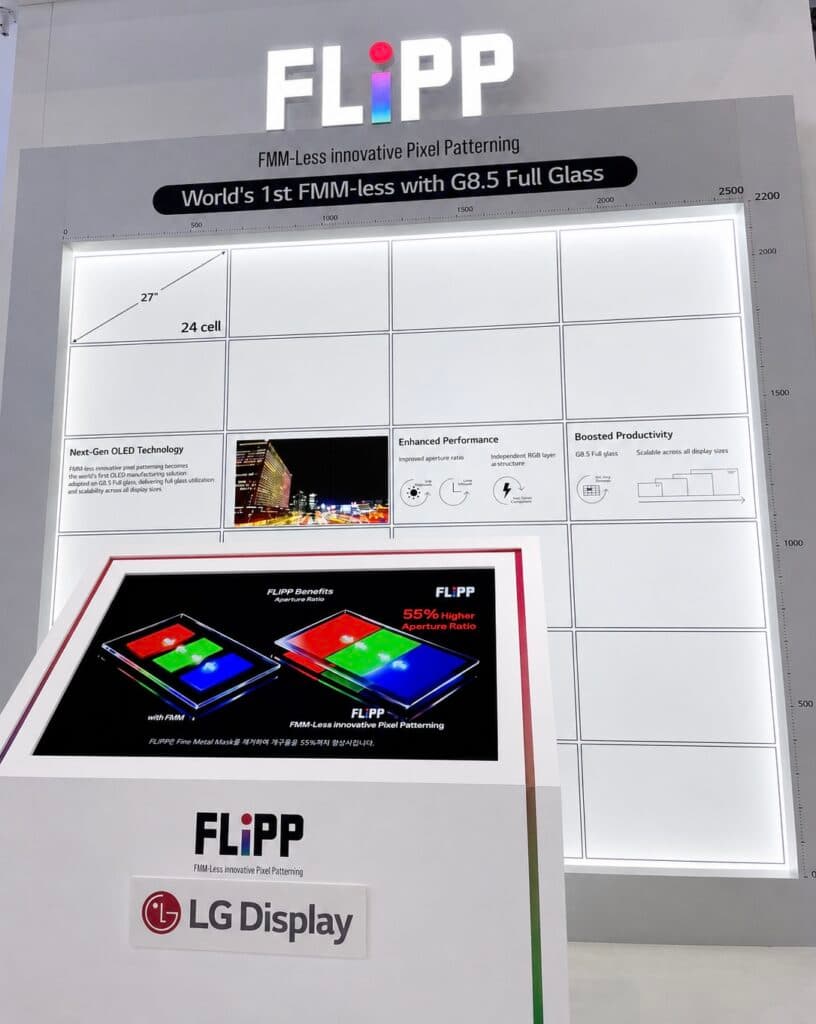
Standard OLED panels are made by vaporizing red, green, and blue organic materials through tiny holes in thin metal stencils — the fine metal masks (FMM). It works, but it limits how densely pixels can be packed and wastes a significant amount of substrate glass. FLiPP (FMM-Less innovative Pixel Patterning) replaces that stencil step with photolithography — essentially using precision UV light to etch pixels into place — then removes the excess material. The process is closer to how semiconductor chips are made than how OLED panels traditionally have been.
The numbers
Dropping the masks increases the aperture ratio — the share of each pixel that actually emits light — by 55%, per the LG official press release. That headroom can be spent three ways: brighter pixels, longer-lived pixels, or more efficient pixels. The 2.4x lifespan figure is the ceiling if manufacturers prioritize durability, not a guaranteed spec across every FLiPP panel.
On the production side, FLiPP uses whole 8.5-generation mother glass substrates rather than cut sections. That lifts glass utilization by 64% for laptop-sized panels, directly cutting material waste and, in theory, cost. LG is currently the only manufacturer running FMM-less production at this substrate size, according to Guru3D.
What it means for buyers
The burn-in concern has shadowed OLED monitors and gaming displays since they went mainstream. A proven 2.4x lifespan improvement would be a meaningful shift — early adopters who passed on OLED because of durability worries have a reason to look again. If LG passes the 64% substrate efficiency savings downstream, expect OLED monitor prices to drop meaningfully within the next 18 months on 27–32" panels.
Apple products are reportedly the first stated target for FLiPP-equipped IT panels — LG already supplies Tandem OLED screens for the iPad Pro line. Commercial availability for tablets and monitors is expected around Q4 2026 to Q1 2027, though LG has not confirmed specific product names or prices.


